
Reviewed · WALKING TOURS
Private Amsterdam WW2 walking tour
Two hours can change how you see Amsterdam. This private WW2 walking tour maps the Jewish story in the city with a Jewish WWII focus you can actually follow on foot, from historic worship spaces to deportation landmarks. I like how the route feels efficient: you get guided context at each stop, with most entries noted as free, so you spend your time understanding instead of figuring things out.
One caution: Anne Frank House admission is not included, so if you want to go inside, you’ll need extra planning. Also, since this is a private guide-led experience, the personality and delivery style matter; I saw both high praise and one sharp complaint about a specific guide name (Aaron), so it’s smart to pay attention to guide fit when you book.
In This Review
- Key highlights at a glance
- Starting at Amstel 51C: a tight 2-hour WW2 route that stays human
- Portuguese Synagogue: where the Amsterdam Jewish story begins
- Auschwitz Monument: making deportation part of the map
- Verzetsmuseum Amsterdam: resistance explained through a Jewish lens
- Hollandsche Schouwburg: the deportation camp story in city form
- De Plantage and the Spinoza Monument: pause, look around, connect the streets
- Dam Square and the Royal Palace: the city’s center after occupation
- Anne Frank House: the one stop you must plan separately
- Guides matter: Aaron, James, Masha, Stan, and why you should care
- Price and value at $126.31: what you’re really paying for
- Practical tips for a respectful WWII walk in Amsterdam
- Should you book this Amsterdam WW2 walking tour?
- FAQ
- How long is the private Amsterdam WW2 walking tour?
- Is this a private tour or shared with other people?
- What language is the tour offered in?
- Where do we meet for the tour?
- What are the main stops on the route?
- Is admission included for the stops?
- Are food and drinks included?
- Are service animals allowed?
- What is the cancellation policy?
Key highlights at a glance
- Private tour for your party means the pace and questions can match your group
- Amstel 51C (1018 EJ) meet-up keeps the start point central and easy to reach
- Jewish history across multiple WWII sites links synagogues, deportation, and resistance
- Most stops are quick with free admission noted, so you cover a lot in about 2 hours
- Dam Square and the Royal Palace add a strong post-occupation city contrast
- Anne Frank House is the one major add-on, since it’s not included
More of Amsterdam street by street, on foot
- Amsterdam Anne Frank: Small-Group Walking Tour & Local Guide
★ 4.8 · 12,789 reviews - Anne Frank’s Story – Guided Walking Tour through Amsterdam
★ 5.0 · 11,619 reviews - Absolutely Amsterdam – the Essential Introductory Walking Tour
★ 5.0 · 3,629 reviews - Amsterdam: Anne Frank Guided Walking Tour in DE/EN/IT/ES
★ 4.9 · 3,107 reviews
Starting at Amstel 51C: a tight 2-hour WW2 route that stays human
You meet at Amstel 51C, 1018 EJ Amsterdam, and the tour ends back at the same starting point. That simple loop matters. You get an organized walking arc through central areas without feeling like you’re hopping across town.
The tour is listed at about 2 hours, and the stops are mostly brief. That can be a drawback if you want long, museum-style time at each place. But it’s also why this works: you’re meant to grasp connections—how community life, occupation pressure, deportations, and resistance fit together—without getting stuck in one exhibit for half a day.
It’s also private, so only your party participates. In practice, that makes it easier to ask things like: Why these specific buildings? What happened here, not just generally? And if your group includes someone who needs things explained more slowly, you can do that.
Portuguese Synagogue: where the Amsterdam Jewish story begins
The walk starts at the Portuguese Synagogue, a site tied to the Jewish community of Amsterdam and specifically the Sephardic community. This is where the story grows roots. You’re not starting with horror; you’re starting with a community that shaped city life during the Dutch Golden Age.
The big idea here is contrast. The synagogue reflects how large and well-established the community was when Amsterdam was at the height of its prosperity. Today it remains an active place of worship and a tourist stop too, which gives the visit an extra layer: you’re not looking at history from behind glass only—you’re standing in a living religious space.
The stop runs about 10 minutes, and the entry is noted as free (admission ticket free). That means you’ll likely get guided context rather than a deep self-guided visit. If your group wants to linger, you’ll have to do that on your own outside the tour time.
Practical tip: treat this stop as your “orientation” checkpoint. If you’re curious about Jewish life in Amsterdam before deportations, ask your guide to connect those early details to what comes later in the route.
Auschwitz Monument: making deportation part of the map
Next comes the Auschwitz Monument. This stop’s focus is the Jewish deportation story—why people were taken, what the monuments are meant to mark, and how that history fits into Amsterdam’s wartime reality.
This is one of those places where the biggest value isn’t a single fact. It’s the guide’s ability to explain the meaning of the memorial while you’re standing in the right spot. A 10-minute stop can feel short, but when you’re linking scenes through the city, short stops help you keep momentum and context.
Admission is noted as free here too, so you’re paying mainly for interpretation and pacing. If you tend to read slowly or need a moment before you absorb emotionally heavy information, mention that at the start. Private tours make that easier to manage.
More private tours with a guide to yourself


Verzetsmuseum Amsterdam: resistance explained through a Jewish lens
Then you head to Verzetsmuseum Amsterdam, focusing on Jewish resistance. This is a smart pairing after the deportation focus. It prevents the story from becoming one-note tragedy.
Resistance can sound abstract, so this stop is valuable when the guide breaks it down into practical forms: who resisted, what help looked like, and how the city’s conditions shaped choices. Again, the stop is about 10 minutes with free admission noted, so the tour likely keeps things moving rather than turning it into a full museum visit.
If your group is strong on curiosity, this is the moment to ask for names, dates, or a short “how it worked” explanation. A good guide can connect resistance back to everyday life—fear, secrecy, networks, and risk.
Hollandsche Schouwburg: the deportation camp story in city form
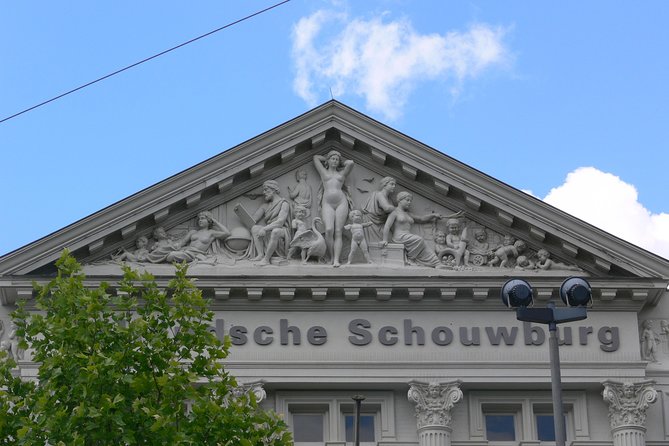
At Hollandsche Schouwburg, the emphasis shifts to the deportation camps. The way this location hits you can depend on what you bring into it emotionally, but the structure of the stop should help: you’ve already learned about community life and the deportation concept, so now the guide can make it concrete.
The tour keeps this stop around 10 minutes and notes free admission. That tells you the intention: you’re not doing a full deep dive into every document or exhibit. You’re getting a guided framework that helps you understand why this address matters.
A thoughtful guide will also help you avoid two common mistakes:
1) treating deportation sites like generic “war history”
2) seeing people only as victims and not as complex humans making decisions under impossible pressure
If you want the most value from this stop, ask a question like: What made Amsterdam’s deportation system work in practice? Your guide should be able to translate the horror into understanding.
De Plantage and the Spinoza Monument: pause, look around, connect the streets
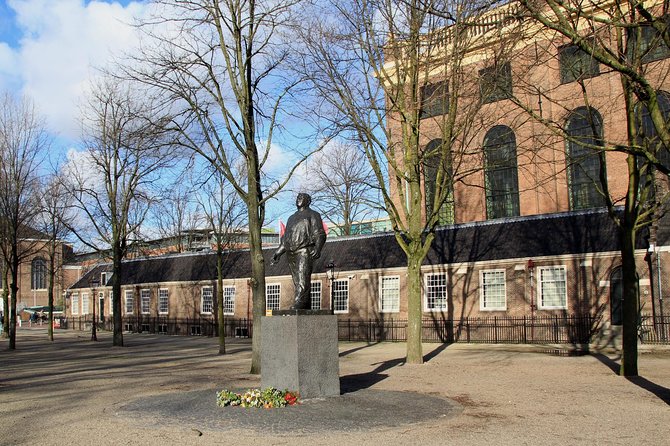
After the heavy stops, the route gives you breathing room in a different way at De Plantage and then the Spinoza Monument. Here you’re shown the Plantage area and its history, and then you learn about the Spinoza Monument.
Why this matters: walking through the area you’ve just been studying helps your brain file things correctly. Instead of “I visited sites,” it becomes “I understand how these neighborhoods sat in the city.” For many people, that spatial memory is what makes history stick.
These stops are also about 10 minutes each, with free admission noted. So you’ll likely get a guided narrative rather than a long stroll. Still, even a short walk in the right streets can help you see Amsterdam as a layered place—beautiful, complicated, and scarred.
If it’s raining or cold, this is also where you’ll feel the value of a guide’s pacing. A good guide keeps the movement going but doesn’t rush your ability to look and reflect.
Dam Square and the Royal Palace: the city’s center after occupation
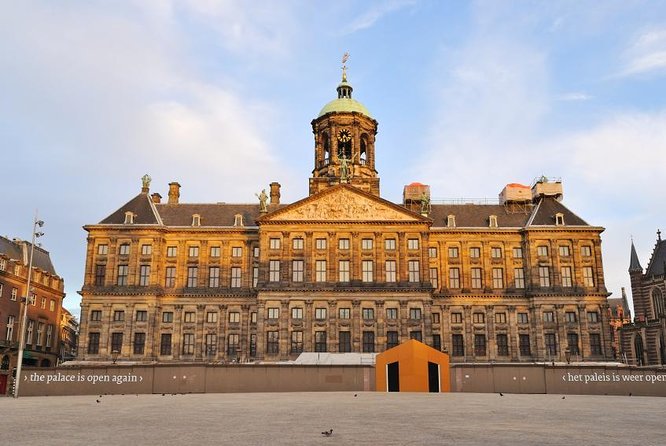
Then you reach Dam Square, home to major landmarks including the Dam Square monument and then the Royal Palace Amsterdam. This is a different mood, and that’s the point.
The guide has you explore the Dam Square monument (about 10 minutes) and then the Royal Palace Amsterdam (about 5 minutes). Even if you don’t go inside, being in the square where national symbolism is concentrated can help you feel the contrast. The story you learned earlier was about displacement and oppression. Now you’re looking at how the city projects identity and power.
Admission is noted as free for these stops too. So again, you’re paying for interpretation and route flow.
Quick thought to keep in mind: a place doesn’t erase the past by becoming famous. It carries the past, sometimes quietly, sometimes not.
Anne Frank House: the one stop you must plan separately
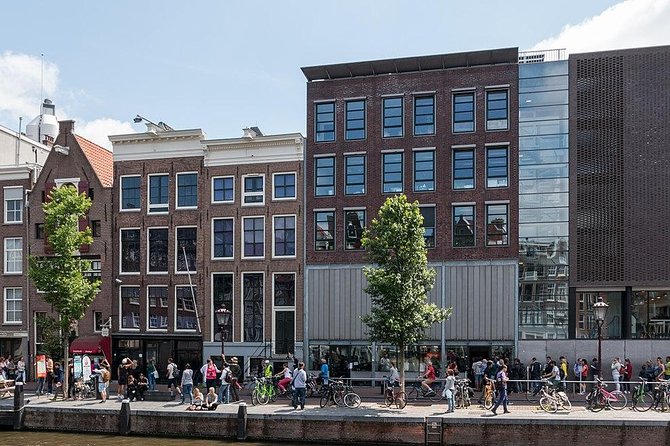
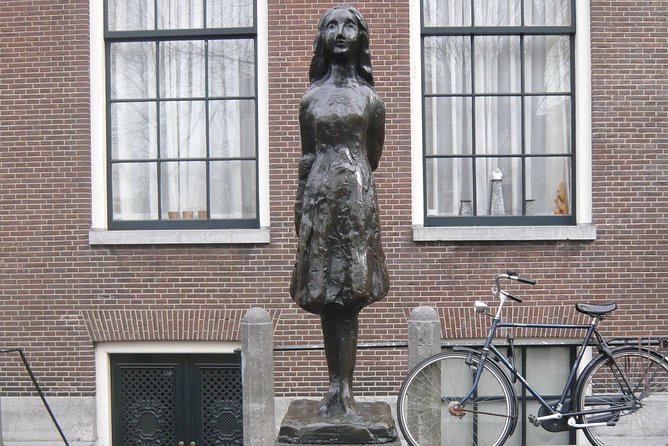
At the Anne Frank House, your guide tells you more about the Anne Frank story. But here’s the key detail: Anne Frank House admission is not included.
So what does that mean for you? You’ll get contextual guidance, but if you want to go inside the house, you’ll need to arrange the ticket separately. This is the main “budget and planning” catch in an otherwise smooth route.
Also, since this is one of Amsterdam’s most in-demand experiences, it’s worth thinking about timing before your tour day. Your guide can likely point you to the best next step, but the logistics aren’t part of the tour price.
If your group’s top priority is the house itself, you might consider booking that separately and using this walking tour as the context that makes the visit hit harder.
Guides matter: Aaron, James, Masha, Stan, and why you should care
This tour is led by a local guide, and the quality seems to vary by person. I saw standout praise for guides with specific names like James, Masha, and Stan—people described their storytelling, interaction, and strong Second World War context.
I also saw a serious complaint tied to one guide name: Aaron. The criticism wasn’t about the places. It was about how the guide acted—cold, condescending, and disrespectful toward Americans. That kind of tone can absolutely ruin the emotional experience of walking through WWII history.
So here’s my practical advice: when you book, look for any ability to request a different guide or confirm who will lead your tour. If that option isn’t available, at least message ahead and ask about the guide’s approach—especially if you’re traveling with kids, if you want a careful tone, or if you’re sensitive to sarcasm.
Private tours are supposed to feel personal. You want the guide on your side.
Price and value at $126.31: what you’re really paying for
At $126.31 per person for about 2 hours, this isn’t a budget stroll. You’re paying for three things:
- Privacy (your party only)
- A local guide who connects sites into a story
- A smart, time-efficient route that covers multiple key locations
The route also notes free admission tickets for several stops, which can improve value. That’s helpful because it reduces add-on costs and keeps you on-track.
Still, there’s a cost reality to be aware of. Anne Frank House isn’t included, and the tour also lists food and drinks as not included. So factor in those extras if you plan to do Anne Frank inside and if your group gets hungry during the walk.
If you’re comparing this to a museum-only day, this tour offers something museums don’t: a city-level cause-and-effect path. The price makes sense when you want context and direction, not just quiet time in one building.
Practical tips for a respectful WWII walk in Amsterdam
This is emotionally serious, so comfort and focus matter.
- Wear shoes you can move in for short bursts between stops. The stops are brief, so you’ll spend a lot of time walking.
- If it’s cold or wet, plan for it. One guide was praised for not missing a beat in nasty weather, but your experience will be better if you show up dry and warm.
- Keep expectations straight about time. With many stops around 10 minutes, this tour is built for connections, not long museum hours.
- If you need accessibility accommodations, note that it says most travelers can participate and you’re near public transportation. Still, confirm details with the provider if your needs are specific.
- Service animals are allowed, which is a big practical plus for many families.
And bring curiosity. When the guide points to a building or monument, ask what changed here—before vs during occupation, or resistance vs deportation. That’s where the walk tends to feel most worthwhile.
Should you book this Amsterdam WW2 walking tour?
Book it if you want a structured, guided walk that links Jewish community history, deportation, resistance, and the city’s symbolic center in a tight time window. It’s a good match if you’re short on days in Amsterdam and you want your WWII learning to feel connected rather than scattered.
Skip it or plan carefully if your priority is spending lots of time inside Anne Frank House, because admission isn’t included. Also, if you’re very sensitive to guide tone, do a quick check that your guide is a good fit—there’s a documented example where one guide’s attitude was a deal-breaker for a customer.
If you want the city’s WWII story explained with a personal touch and you’re okay with a brisk pacing, this private walk is one of the more practical ways to do it.
FAQ
How long is the private Amsterdam WW2 walking tour?
The tour is listed at about 2 hours.
Is this a private tour or shared with other people?
It is a private tour/activity, and only your group participates.
What language is the tour offered in?
The tour is offered in English.
Where do we meet for the tour?
The meeting point is Amstel 51C, 1018 EJ Amsterdam, Netherlands.
What are the main stops on the route?
The route includes the Portuguese Synagogue, the Auschwitz Monument, Verzetsmuseum Amsterdam, Hollandsche Schouwburg, De Plantage, the Spinoza Monument, Dam Square, Royal Palace Amsterdam, and a stop at Anne Frank House for the story.
Is admission included for the stops?
Admission is noted as free for several stops. Anne Frank House admission is not included.
Are food and drinks included?
No, food and drinks are not included.
Are service animals allowed?
Yes, service animals are allowed.
What is the cancellation policy?
You can cancel for a full refund up to 24 hours in advance of the experience’s start time.
More Amsterdam Walking Routes






More Tours in Amsterdam




More Tour Reviews in Amsterdam






Just added: fresh Amsterdam tour reviews





Walking Tours, compared.
 ★ 4.8Amsterdam Anne Frank: Small-Group Walking Tour & Local GuideFrom $2912,789 reviews
 ★ 5.0Anne Frank’s Story – Guided Walking Tour through AmsterdamFrom $3911,619 reviews
 ★ 5.0Absolutely Amsterdam – the Essential Introductory Walking TourFrom $53,629 reviews
 ★ 4.9Anne Frank Guided Walking Tour in DE/EN/IT/ESFrom $283,107 reviews
 ★ 4.8Anne Frank Guided Small Group Walking TourFrom $282,722 reviews
 ★ 4.9Cultural Highlights Walking TourFrom $302,629 reviews
 ★ 4.2Ganja Walking TourFrom $402,127 reviews
 ★ 5.0Anne Frank Walking Tour Amsterdam Including Jewish Cultural QuarterFrom $751,879 reviews
Browse the lists this tour appears in