
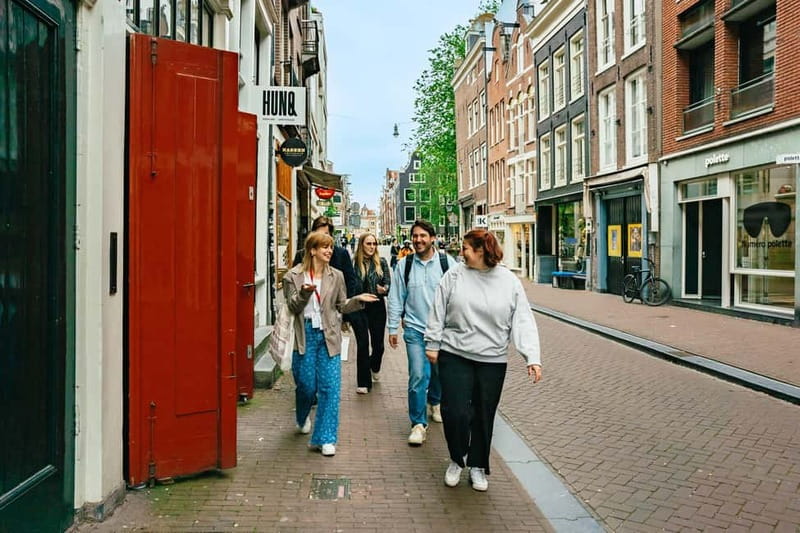
Reviewed · WALKING TOURS
Amsterdam: Cultural Highlights Walking Tour
Dam Square sets the tone in two hours. I like how this guided walk uses real city landmarks to explain Amsterdam’s shifts over time, from medieval daily life to the Golden Era to World War II and today’s more tolerant, mixed culture. I also love the practical end-of-tour help, like what foods to chase and which districts make the most sense to explore by bike. One consideration: it’s still a walking tour through central streets, so wear comfy shoes and bring an umbrella—Amsterdam weather can go sideways fast.
My favorite part is that the guide isn’t just naming places; they’re pointing out what those places meant and what to look for as you move along. Expect stops across classic downtown scenes, including Begijnhof’s peaceful courtyard, with photo moments and short explanations at each one. The tour is priced as a straightforward orientation walk (about $30), and you won’t pay admission at the sights, which makes it feel like good value rather than a stack of ticket fees.
In This Review
- Key Highlights Worth Your Time
- Dam Square Start: Finding the guide at the National Monument
- Royal Palace, Nieuwe Kerk, and the old Post Office: Power and daily life in one block
- Beurs van Berlage and Magna Plaza: From trading wealth to modern shopping streets
- Torensluis Bridge and Multatuli: The city’s colonial echoes in plain view
- Anne Frank Monument, Westerkerk, and Homomonument: How Amsterdam remembers and argues with itself
- De Negen Straatjes and Spui Square: Streets that teach you how to wander
- Begijnhof: The calm pause where the city slows down
- Amstel River finish at the National Monument: The city’s name, water, and remembrance
- Price, pacing, and who should book this walk
- Should you book Amsterdam’s Cultural Highlights Walking Tour?
- FAQ
- How long is the Amsterdam cultural highlights walking tour?
- Where do we meet?
- What does the tour cost?
- Are there any admission fees during the tour?
- What’s included in the price?
- Are food and drinks included?
- What languages are available?
- What should I bring?
- Is the tour wheelchair accessible?
Key Highlights Worth Your Time
- Dam Square launch point that sets the historical context immediately at the National Monument
- Story-first guiding, linking buildings to the people who lived and worked here
- Canal-area details you’ll notice better after the tour (and you can photograph them fast)
- Begijnhof courtyard as a calm contrast to the busy center
- Amstel River pay-off that connects Amsterdam’s name to the waterway
- Guide tips for what to eat and which areas to explore by bike after the walk
More of Amsterdam street by street, on foot
- Amsterdam Anne Frank: Small-Group Walking Tour & Local Guide
★ 4.8 · 12,789 reviews - Anne Frank’s Story – Guided Walking Tour through Amsterdam
★ 5.0 · 11,619 reviews - Absolutely Amsterdam – the Essential Introductory Walking Tour
★ 5.0 · 3,629 reviews - Amsterdam: Anne Frank Guided Walking Tour in DE/EN/IT/ES
★ 4.9 · 3,107 reviews
Dam Square Start: Finding the guide at the National Monument
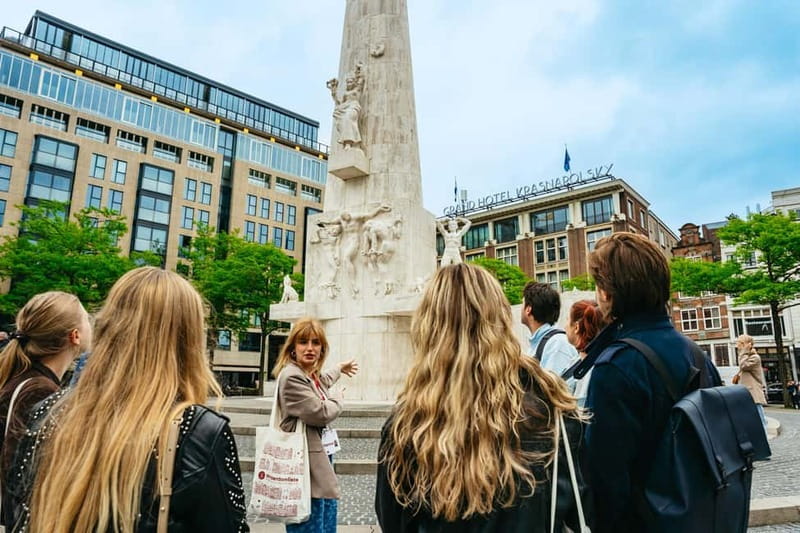
You begin at the National Monument at Dam Square. Look for the big white pillar/obelisk, and find your guide on the stairs wearing a red name tag. This matters more than you’d think: the center is busy, and you’ll want to start on time so the guide can keep the pacing smooth.
From the first minutes, you get the Amsterdam “why.” Dam Square isn’t just a postcard location. It’s the symbolic center where the city grew, and your guide uses it as a reference point for everything that comes later—power, commerce, faith, and everyday life all get tied back here.
The first thing I’d tell you to do: stand still for a moment and scan the buildings around the square before you move on. Your guide will point out what to notice, and once you do, the rest of the walk clicks into place.
Royal Palace, Nieuwe Kerk, and the old Post Office: Power and daily life in one block
After Dam Square, the walk moves along the sights near the Royal Palace and the New Church (Nieuwe Kerk). This stretch is where Amsterdam looks “official”—palace-level grandeur mixed with the city’s public face.
What I like about the way you’re guided here is the mix of tones. It’s not only about kings and monuments. Your guide also connects these grand sites to the real city rhythm: merchants, shop sellers, and ordinary people living with very different levels of comfort. That contrast is a strong theme on the tour, and it keeps the landmarks from feeling like empty labels.
You’ll also stop around the former main post office area—another reminder that this city ran on information, trade, and movement long before smartphones. Expect short, focused explanations, not a lecture you can’t use later when you’re wandering on your own.
Practical tip: If it’s cold or rainy, keep your umbrella handy but be ready for slippery steps near square-level transitions. You’ll be stopping for photos, so pack footwear that won’t hate wet cobblestones.
Beurs van Berlage and Magna Plaza: From trading wealth to modern shopping streets
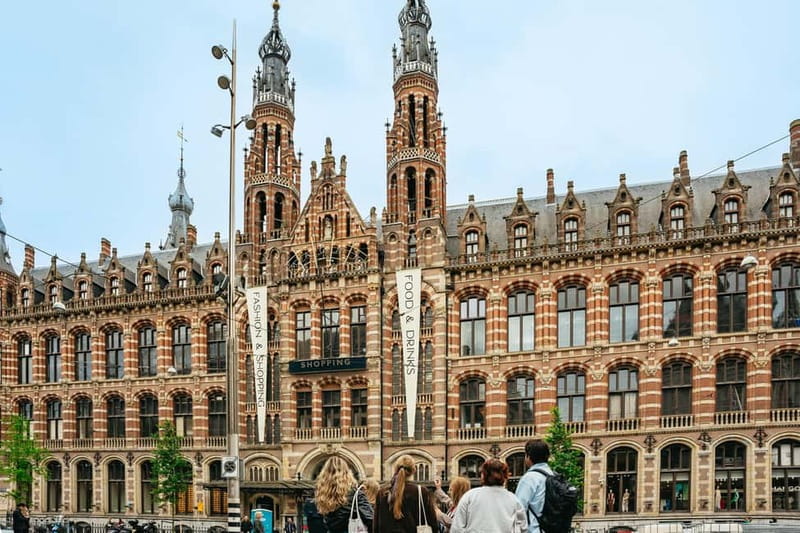
Midway, you get a pause near Beurs van Berlage, a well-known business landmark. The value here is learning what Amsterdam valued: trade, finance, and the human networks that made those things work. Your guide frames buildings like this as “infrastructure for ambition,” not just architecture to admire.
Then the walk shifts toward the newer rhythms of central streets around Magna Plaza. This isn’t a random detour. It helps you see that Amsterdam’s core still runs on business and consumer life—just updated in style. If you’re trying to understand where the city fits today, this mix helps.
If you’re the type who likes to ask questions, this is a good place to do it. The guide’s format usually leaves room for quick answers, and the best tours are the ones where you can steer your curiosity.


Torensluis Bridge and Multatuli: The city’s colonial echoes in plain view
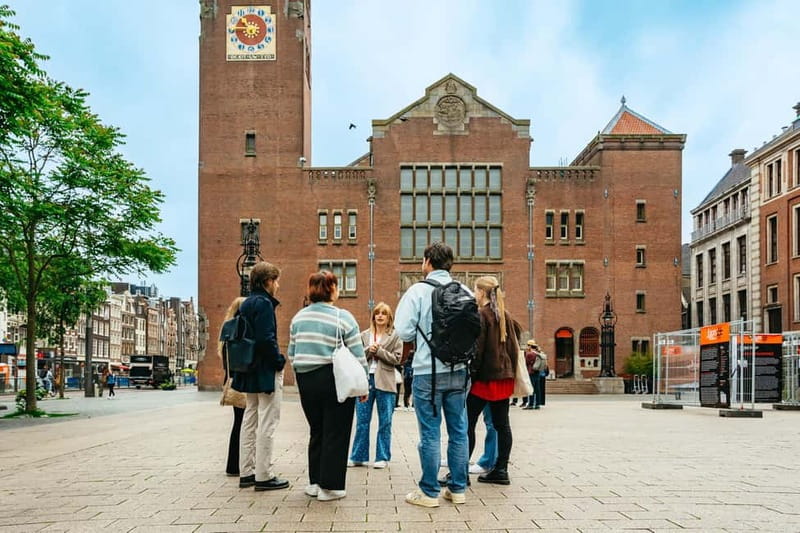
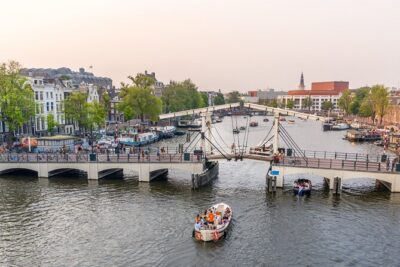
One of the smarter stops is at Torensluis Bridge. Your guide connects it to more than just a crossing point. You’ll hear about the statue of Multatuli and how it ties into the colonial era—an uncomfortable but important thread when you’re trying to understand Amsterdam as a trading power.
Also on this stretch: a look at one of the tiniest houses in the city. That stop works because it’s physical. It takes “history” out of abstract time and into square meters, cramped spaces, and the kind of housing people actually had to manage.
If you want a tour that makes you look at buildings differently, this is one of those moments. You’ll start noticing scale and survival choices. And once you do, the canal-house scenes later on will land harder.
Anne Frank Monument, Westerkerk, and Homomonument: How Amsterdam remembers and argues with itself
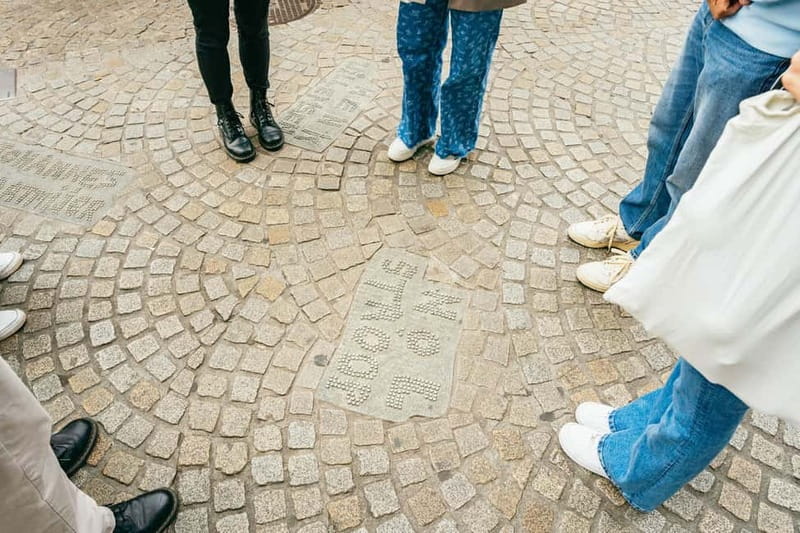
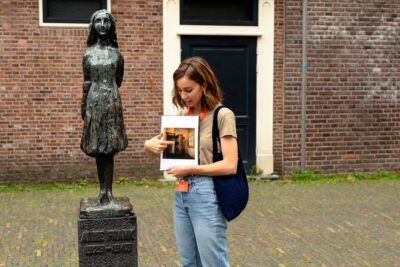
As the walk progresses, you pass major memorial and cultural markers, including the Anne Frank Monument, plus stops near Westerkerk and the Homomonument. This isn’t a sightseeing list; it’s a storyline about how the city processes trauma and identity.
World War II’s impact on Amsterdam’s people is one of the bigger narrative points your guide covers. The tour then threads forward to the present-day idea of tolerance and multicultural life—how Amsterdam tells its story now, and what it chooses to highlight.
The Homomonument is especially meaningful because it’s political without being preachy. It’s a reminder that acceptance didn’t arrive by magic. It was argued for, fought for, and remembered in stone.
My advice for you: Take a minute at each memorial stop even if you only do it for yourself. It helps your brain switch gears from “photo mode” to “understanding mode.” The guide’s stories hit better when you give them 60 seconds of silence.
De Negen Straatjes and Spui Square: Streets that teach you how to wander
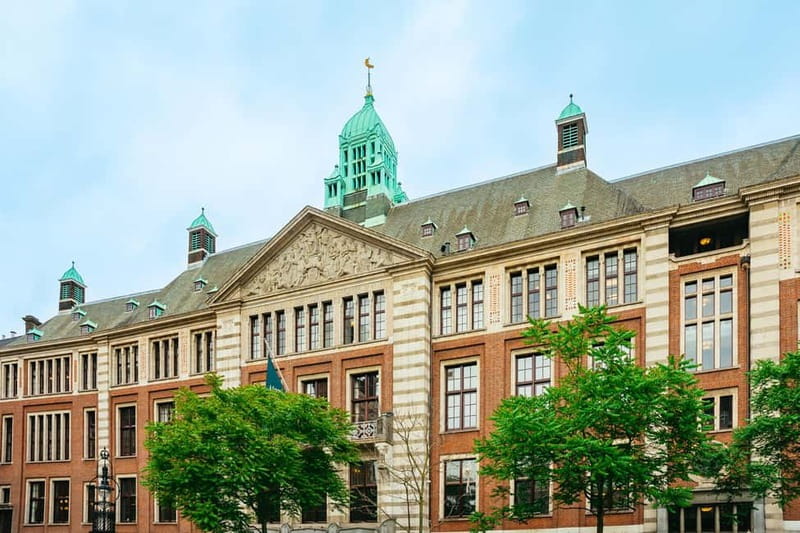
Near the De Negen Straatjes area, you’ll get a short guided look and then move toward Spui Square. These are the kinds of places where you could easily spend hours on your own—shops, side streets, and canal-adjacent charm.
The tour’s value is that it helps you read the space. Your guide points out patterns—architectural choices that were popular in the past, plus how design affects daily life. After that, you’ll likely find yourself walking with better instincts: where to turn, what angles to photograph, and which streets feel comfortable to explore without stress.
You’ll also learn about foods to try and which districts are better to tackle by bike. That part is gold if you’re only in Amsterdam for a short time, because it turns the city from a list into a plan.
Begijnhof: The calm pause where the city slows down
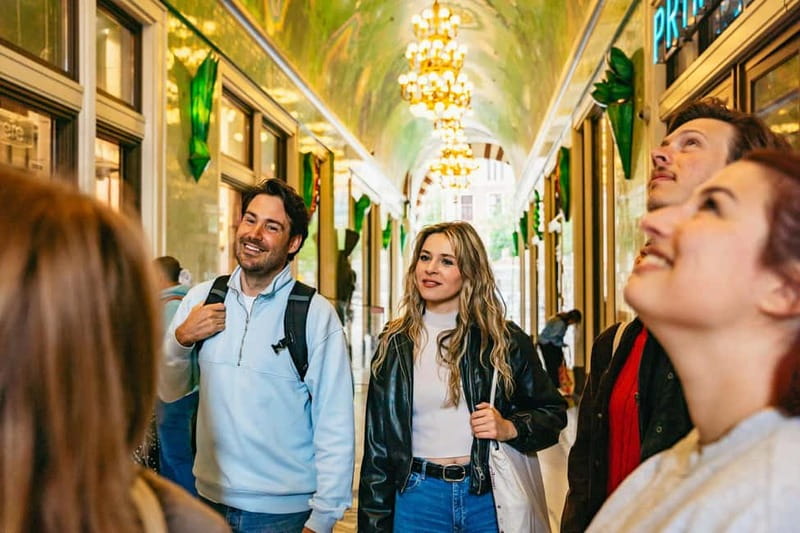
The walk ends with a highlight stop at Begijnhof, often described (fairly) as a pearl of Amsterdam. You’ll cross toward it via nearby squares and then reach the courtyard itself.
What makes this stop work is contrast. Amsterdam’s downtown can feel loud, fast, and crowded. Begijnhof is quieter and more enclosed, so it feels like the city takes a breath. Your guide explains the significance of the courtyard and why it matters in Amsterdam’s cultural makeup.
You’ll get photo time here, but I’d also encourage you to do something simple: stand and look around before taking pictures. The small details become easier to notice once you’re not trying to capture everything at once.
If you’re traveling with kids, this stop is also a good reset point. It’s not long, but it’s different enough from the street scenes that it keeps attention from flagging.
Amstel River finish at the National Monument: The city’s name, water, and remembrance
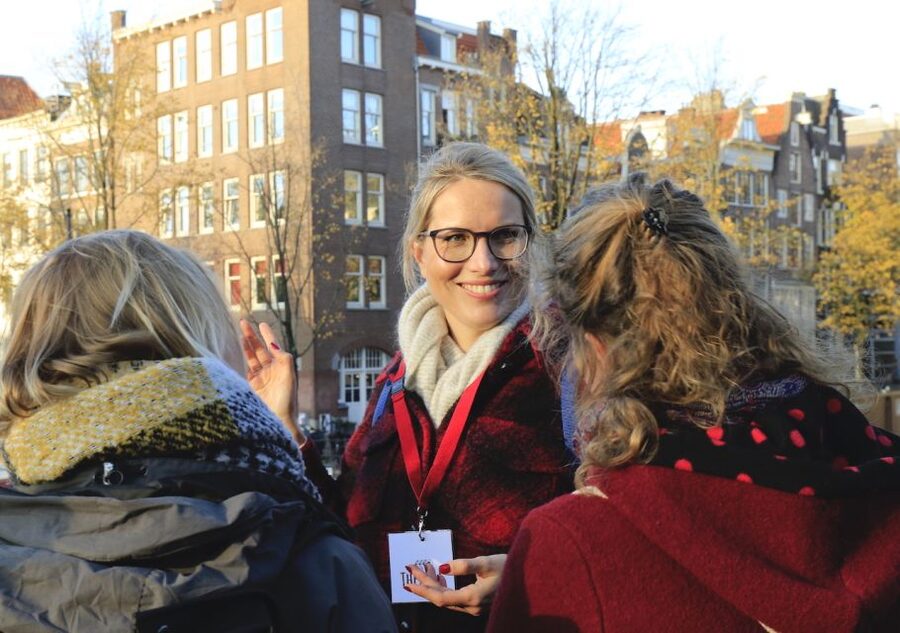
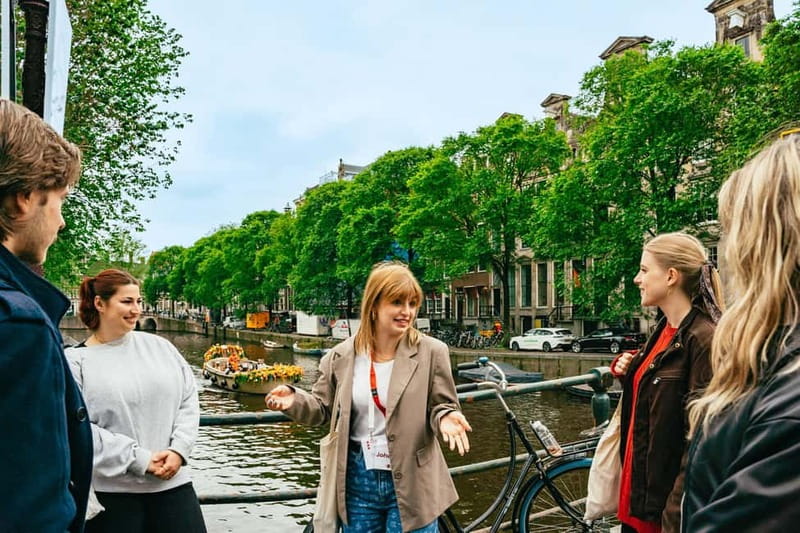
On the way back, the tour brings you to the Amstel River—the waterway the city’s name is tied to. That segment matters because it gives you the “geography story.” Amsterdam didn’t just happen in place; it grew with the river and the canals that followed.
Finally, you return to the National Monument. You’ll learn that it began as a remembrance site for World War II victims and is now a memorial to all victims who lost their lives in any war worldwide. It’s a strong emotional finish, even for people who thought they were only there for architecture and photos.
I like how the tour closes the circle: start at the monument, explore what made the city what it is, then come back to the same symbol with a new understanding.
Price, pacing, and who should book this walk
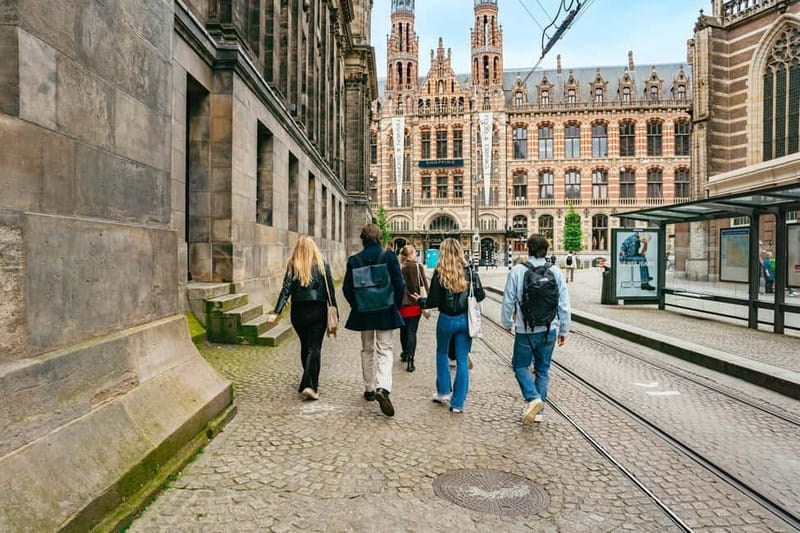
At about $30 per person for a 2-hour experience, this tour hits a sweet spot: you’re buying orientation and context, not a long museum day. The fact that you won’t pay admission fees during the walk makes the value feel more honest. You’re paying for the guide’s ability to connect places and stories, and the sights themselves stay accessible.
Pacing is another strength. It’s set up as a walking tour with frequent short guided moments and photo stops. That style keeps energy from dropping, and the stops help you process what you saw instead of just rushing past it.
Group size can vary. The tour can be private, and many experiences feel small enough that you’re not swallowed by a crowd. Some people have had very small group moments, which usually means more Q&A and less waiting for the whole group to catch up.
This is a great fit if:
- You’re in Amsterdam for the first time and want your bearings fast
- You like history that connects to real places, not timelines on a page
- You want practical suggestions for what to do next (especially food and biking areas)
- You prefer short stops with stories instead of long lectures
It may be less ideal if:
- You dislike walking for two hours, even at a moderate pace
- You’re expecting lots of entry tickets or indoor time (this one is built for outside sights)
- You’re looking for only art or only politics (the tour blends both)
One small note: your guide covers multiple topics across medieval life, the Golden Era, WWII, and modern tolerance. That variety is a plus for most people, but if you want one narrow theme, you might prefer a specialized tour instead.
Should you book Amsterdam’s Cultural Highlights Walking Tour?
Yes, if you want a smart, well-paced orientation that turns famous downtown sights into something you understand. The biggest payoff is the way the guide connects buildings to people and events—then leaves you with practical next-step ideas for eating and exploring.
If you’re the kind of traveler who likes to ask questions, you’ll probably enjoy the format. And if the weather is rough, plan to bring your umbrella and just treat it as Amsterdam being Amsterdam.
FAQ
How long is the Amsterdam cultural highlights walking tour?
It lasts about 2 hours.
Where do we meet?
Meet on the stairs of the National Monument at Dam Square. It’s the big white pillar/obelisk, and the guide wears a red name tag.
What does the tour cost?
It’s $30 per person.
Are there any admission fees during the tour?
No. Admission fees are not required during the tour, and the sights can be visited for free.
What’s included in the price?
The walking tour, the guide, and city tax are included.
Are food and drinks included?
No. Food and drinks are not included.
What languages are available?
The live guide is available in English, German, and Italian.
What should I bring?
Bring comfortable shoes, an umbrella, and water.
Is the tour wheelchair accessible?
Yes, it is wheelchair accessible.
More Amsterdam Walking Routes





More Tours in Amsterdam



More Tour Reviews in Amsterdam






Just added: fresh Amsterdam tour reviews





Walking Tours, compared.
 ★ 4.8Amsterdam Anne Frank: Small-Group Walking Tour & Local GuideFrom $2912,789 reviews
 ★ 5.0Anne Frank’s Story – Guided Walking Tour through AmsterdamFrom $3911,619 reviews
 ★ 5.0Absolutely Amsterdam – the Essential Introductory Walking TourFrom $53,629 reviews
 ★ 4.9Anne Frank Guided Walking Tour in DE/EN/IT/ESFrom $283,107 reviews
 ★ 4.8Anne Frank Guided Small Group Walking TourFrom $282,722 reviews
 ★ 4.2Ganja Walking TourFrom $402,127 reviews
 ★ 5.0Anne Frank Walking Tour Amsterdam Including Jewish Cultural QuarterFrom $751,879 reviews
 ★ 5.0Amsterdam Highlights Walking Tour: Small Group ExperienceFrom $361,132 reviews
Browse the lists this tour appears in