
Reviewed · RED LIGHT DISTRICT TOURS
Private Amsterdam Red Light District and Coffee Shop Tour
Red Light District, but explained like a lesson. This private walking tour turns a loud neighborhood into a calm, historically grounded walk, with your guide setting the tone so nothing feels awkward. I especially like the relaxed pace and personal attention you get when it’s just your group.
I also like how the tour tackles the big questions head-on—Dutch law and why Amsterdam is so tolerant about both prostitution and marijuana. Instead of vague rumors, you get a real sense of what the rules are and how the coffee shop culture fits into daily life.
One possible drawback: the experience is built as a focused circuit in about 2 hours (roughly up to 2.5). If you want an ultra-detailed, go-everywhere-to-find-everything kind of exploration, this route may feel like it keeps things more selective.
In This Review
- Key things I’d highlight before you go
- Damrak Orientation: how you start in Amsterdam’s old core
- What your guide sets out to do (and why it works)
- Red Light District history and the legal picture you’ll hear clearly
- The Dam and the City Built on Trees idea
- Old Town context: why this part feels older than it looks
- Pub The Ape (Int Aepjen): a rare survivor from 1540
- Waag: Amsterdam’s gate, then guild headquarters
- The smallest house and the VOC storage-to-living story
- Condomerie since 1987: the neighborhood’s blunt, modern edge
- Coffee shop culture: what you’re learning as you walk
- Upgrade option: Erotic Museum vs. a coffee shop stop
- Private tour value: where the extra money actually goes
- Timing and pacing: a good fit for your Amsterdam itinerary
- Who should book this (and who should think twice)
- Should you book the Private Amsterdam Red Light District and Coffee Shop Tour?
- FAQ
- FAQ
- How long is the Red Light District and coffee shop walking tour?
- Where does the tour start and end?
- Is this tour private or shared?
- What language is the tour offered in?
- What is included in the price?
- Is admission included?
- Is there an upgrade option?
- What if I need to cancel?
- Is it easy to reach and can I bring a service animal?
Key things I’d highlight before you go
- Private group, slower pace: you can ask questions without feeling rushed.
- Law and culture explained directly: prostitution is legal, and marijuana is tolerated—handled in a respectful way.
- Old-town stops that change how you see the area: Waag, Pub The Ape, and the smallest house add context.
- Coffee shop access with your guide: the tour includes a coffee shop culture focus, plus an optional upgrade.
- Short and workable: a 2-ish hour walk that fits a first Amsterdam evening.
The old town after dark: more Red Light District walks
- Amsterdam: Red Light District Tour in DE/EN/IT/ES/FR
★ 4.9 · 7,136 reviews - Amsterdam: Red Light Secrets Museum Entry Ticket
★ 4.2 · 5,722 reviews - Amsterdam Red Light District & Coffee Shop Tour
★ 4.6 · 4,134 reviews - Amsterdam: Red Light District Pub Crawl with Unlimited Shots
★ 4.1 · 2,130 reviews
Damrak Orientation: how you start in Amsterdam’s old core
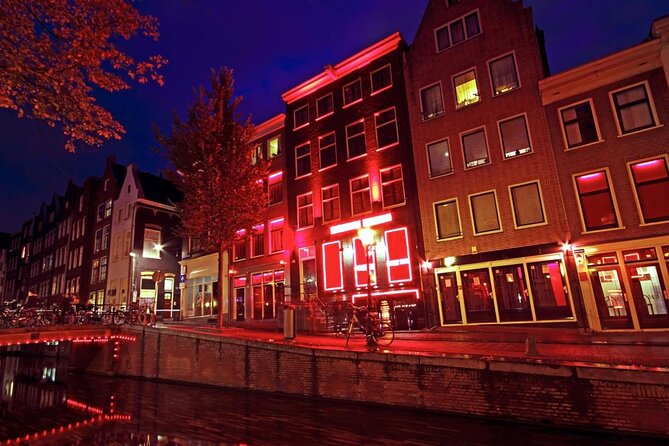
You meet at Damrak (1012 Amsterdam). It’s a practical choice because Damrak is central, easy to reach, and it gives you a quick “this is where we are” feeling before you get into the Red Light District area.
This matters more than it sounds. Amsterdam’s streets can feel like they all look the same until you learn how the city grew and why certain buildings survived. A good guide doesn’t just point things out; they give you a mental map so the neighborhood stops being a blur.
Because the tour ends back at Damrak, you don’t feel stranded. You can keep exploring right after without needing to re-orient or fight transit logistics.
What your guide sets out to do (and why it works)
This tour isn’t about shock value. The strongest thread running through the experience is a respectful, “here’s how it really works” approach—with a bit of humor and lots of context.
The core goal is simple: help you understand Amsterdam’s tolerant attitudes through facts and local law, then connect those facts to what you’re seeing in the neighborhood. That is what makes the walk feel more useful than just wandering.
You’ll also notice that the guides seem to tailor the tone to the group. People on family outings have said it stays comfortable even with teenagers, and that questions can be answered without awkward side-stepping. Guides like Saskia, Guido, Luis, Robin, Ben, Esther, Catherine, Fia, and Aarie are named in feedback, and what they share is a consistent style: explain it, keep it respectful, and move at a pace where you can actually listen.
Red Light District history and the legal picture you’ll hear clearly
The tour’s center of gravity is the Red Light District walk. You learn the history of the area and how Amsterdam’s systems treat it—especially around prostitution and marijuana.
The exact points covered are straightforward:
- Prostitution is legal in Amsterdam.
- Marijuana is tolerated.
Hearing those statements out loud, with context instead of gossip, is one of the biggest value adds. You stop thinking of the neighborhood as a single sensational label and start seeing it as a regulated part of the city’s social and legal landscape.
It also helps you read the area more calmly. If you go in expecting confusion, you’ll get it anyway. But with the explanations layered in as you walk, your brain has something solid to hold onto.
More of the coffeeshop side of Amsterdam

The Dam and the City Built on Trees idea
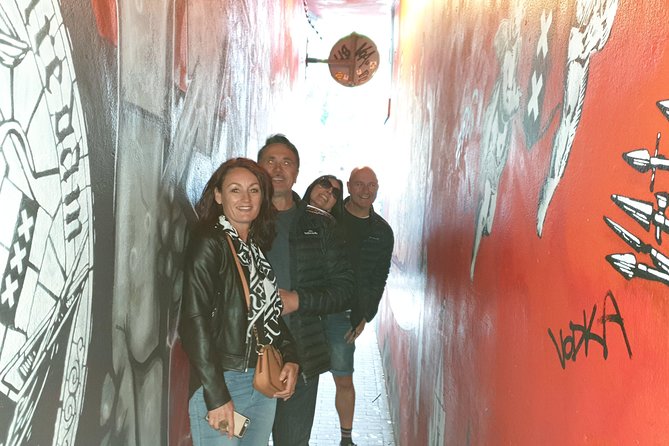
One of the most interesting stops is tied to the Dam area, often described as Amsterdam being the city built on trees. Here’s the practical reason your guide gives for the look and stability of the city:
Amsterdam’s soil includes thick layers of fen and clay. To build safely, houses are set on wooden piles driven down until they reach a solid sand layer—about 11 meters deep. The piles are pushed through clay, peat, and water, down to that first layer of sand.
It’s a great moment in the tour because it takes you from moral and legal questions into something physical: Amsterdam is literally engineered to stay standing. When you understand that, the city’s odd angles and crowded building footprint feel less mysterious.
Old Town context: why this part feels older than it looks
The tour also frames the Red Light District area as part of Amsterdam’s Old Town, calling out that it’s among the city’s oldest sections. That’s important because it changes how you process what you see.
If the neighborhood were just a modern invention, you could dismiss it as a current fad. But hearing that this is tied to the oldest parts of the city makes it feel more like something Amsterdam has handled over time—changing, adapting, and surviving long enough to become woven into the city fabric.
This is one of those “wait, that makes sense” moments. You start noticing how today’s storefronts and uses sit next to older structures and older layouts.
Pub The Ape (Int Aepjen): a rare survivor from 1540
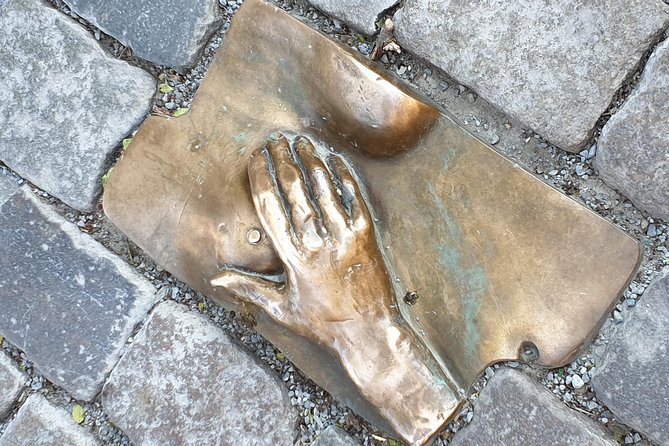
Pub The Ape—Int Aepjen—is one of those stops that turns your camera from curiosity to proof.
You’ll learn it was built around 1540 and is one of only two remaining wooden buildings in Amsterdam. The reason it’s special is linked to disaster and planning: after a major fire in 1452, the government decided buildings should have brick facades.
So this pub isn’t just a quirky landmark. It’s a surviving artifact from a time when construction rules were different—and when wooden buildings were still part of the city’s normal look.
If you like street-level history you can see with your own eyes, this is a highlight. And even if you don’t care about pubs, it’s a window into how Amsterdam learned the hard way and changed its building culture.
Waag: Amsterdam’s gate, then guild headquarters
Another stop is the Waag. It used to be one of the city gates, part of the defensive wall, built around the 1400s. The tour also points out that it’s the second oldest building in Amsterdam.
Later on, Waag shifted roles. Your guide explains it became a place where guilds and craftsman organizations set up shop within and around the square.
This is one of the best examples of how Amsterdam reuses space. A building originally meant for defense becomes a center for organized work. That “old purpose, new function” feeling is exactly what you want in a tour like this—because it keeps the Red Light District from feeling like an isolated bubble.
The smallest house and the VOC storage-to-living story
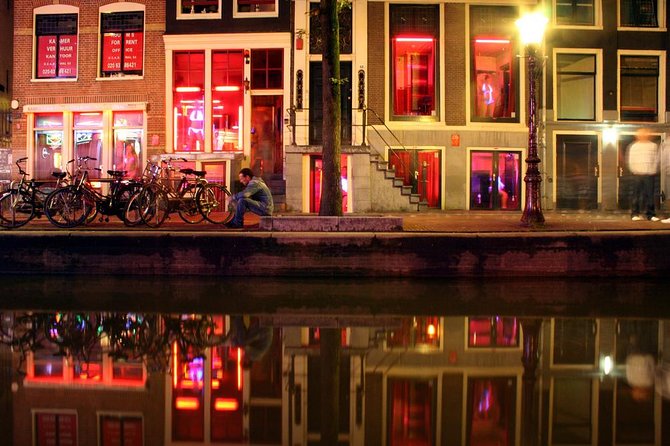
The tour includes a visit to the smallest house of Amsterdam, built around the 1700s. The key story here is how it moved between uses.
First, it was used for storage for the VOC trading company. Later, people started living in it for a long time.
Even if you’ve seen canal houses before, this stop adds perspective. Amsterdam’s history isn’t just art museums and grand facades. It’s trade logistics, tight space, and people making do—then living with the consequences for generations.
Condomerie since 1987: the neighborhood’s blunt, modern edge
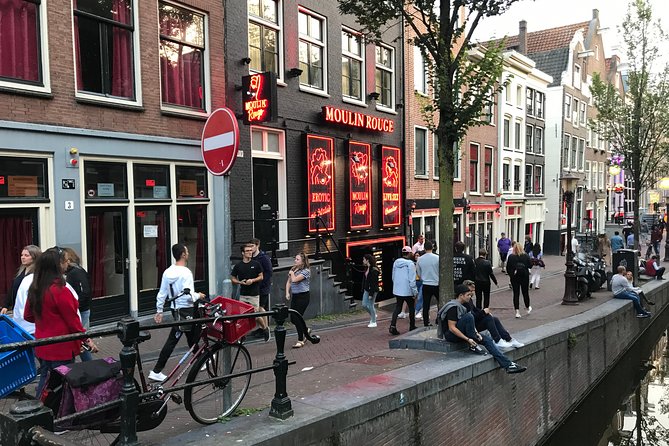
In the middle of all that older-building context, the tour swings toward something very current: The Condomerie. The tour describes it as the world’s first specialized condom shop, in place since 1987.
It’s presented as a site that shows the area’s matter-of-fact approach to sex-related commerce. You can also choose different sizes, including customized condoms, and the shop offers special types.
Whether you go in or just look from the sidewalk, it’s a useful contrast stop. You’re seeing how Amsterdam can be practical and commercial about topics that other places keep hidden behind euphemisms.
Coffee shop culture: what you’re learning as you walk
This is a Red Light District tour with a coffee shop culture focus, and it’s worth understanding what that means for your expectations.
You’re not just walking past coffee shops. You’re learning how this culture fits into Amsterdam’s tolerance and laws, with a guide explaining the local logic behind it. Some versions of the experience also include the chance to go into a coffeeshop with your guide, and the tour may offer an upgrade option tied to that.
If you’re curious but unsure how to ask questions, the guide’s presence is a big advantage. You can get straightforward explanations without having to test your way through unfamiliar rules, signage, and customer expectations.
Upgrade option: Erotic Museum vs. a coffee shop stop
The tour offers an upgrade so you can add either:
- a visit to the Erotic Museum, or
- a coffee shop visit with your guide.
That choice is really about your vibe. If you want a museum-style lesson, pick the museum upgrade. If you’d rather connect coffee shop culture to real street-level life, pick the coffeeshop add-on.
Either way, doing it as a private tour helps. You aren’t stuck in a rigid group flow that assumes the whole room wants the same thing.
Private tour value: where the extra money actually goes
At $41.60 per person for about 2 hours (roughly up to 2.5), this isn’t the cheapest Amsterdam walk. But the value is in the way it runs.
Here’s what you’re paying for:
- Private group time, not just a ticket and a pace you can’t control
- a guide who can keep things respectful and comfortable
- the chance to ask questions and get practical context, including suggestions for the rest of your trip and where to eat
People repeatedly say it’s worth booking privately because it makes it easier to go inside relevant places with the guide, instead of just getting pointed at them from the sidewalk.
And the rating is strong—4.8 with 763 reviews—with a 93% recommendation rate, which usually means the approach and tone are landing well.
Timing and pacing: a good fit for your Amsterdam itinerary
This tour is timed so you can do it without turning your day into a full production. A 2-hour walk is perfect when:
- you want a first big orientation evening,
- you’d rather learn than read,
- or you’re short on time but still want context.
A small note: because it’s a short circuit, you’re not likely to see every street detail. Think of it as a guided path through the neighborhood’s most meaningful points, not a full perimeter tour.
Who should book this (and who should think twice)
You’ll probably love it if you want:
- clear explanations about law and tolerance,
- a guided walk with humor and respect,
- and historical stops that help you see how Amsterdam’s past shaped the present.
It may be less ideal if you’re looking for an ultra-detailed exploration where you spend lots of time in one pocket of the district. One concern mentioned is that the tour can feel limited in scope compared with what some people expect from the neighborhood itself.
Should you book the Private Amsterdam Red Light District and Coffee Shop Tour?
If your goal is to understand Amsterdam, not just watch it from a distance, I think this is a smart booking. The biggest win is the combination of law-focused context plus landmark history, wrapped in a private, comfortable pace.
Book it if you value a guided approach that keeps things respectful while still being honest. Skip—or choose a different type of tour—if you want an all-day, street-by-street exploration with no limits on where you go.
FAQ
FAQ
How long is the Red Light District and coffee shop walking tour?
It runs about 2 hours (approximately), and the walking tour portion is described as around 2.5 hours.
Where does the tour start and end?
Both the start and end are at Damrak, 1012 Amsterdam, Netherlands.
Is this tour private or shared?
It’s a private tour/activity, meaning only your group participates.
What language is the tour offered in?
The tour is offered in English.
What is included in the price?
You get a local guide and a guided walking tour. Food and drinks are not included.
Is admission included?
The historical walking tour portion is listed as admission ticket free.
Is there an upgrade option?
Yes. There is an upgrade option to visit the Erotic Museum or to visit a coffeeshop with your guide.
What if I need to cancel?
You can cancel for a full refund up to 24 hours in advance. If you cancel less than 24 hours before the experience starts, the amount paid won’t be refunded.
Is it easy to reach and can I bring a service animal?
Service animals are allowed, and the meeting point is near public transportation.
More Tour Reviews in Amsterdam


The Coffeeshop Side of Amsterdam



The Red Light District After Dark



Just added: fresh Amsterdam tour reviews




Red Light District Tours, compared.
 ★ 4.9Red Light District Tour in DE/EN/IT/ES/FRFrom $287,136 reviews
 ★ 4.2Red Light Secrets Museum Entry TicketFrom $175,722 reviews
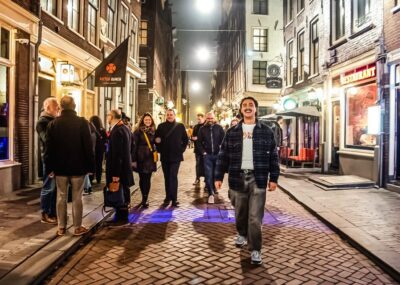 ★ 4.6Amsterdam Red Light District & Coffee Shop TourFrom $294,134 reviews
 ★ 4.1Red Light District Pub Crawl with Unlimited ShotsFrom $242,130 reviews
 ★ 4.5Amsterdam Red Light District Pub CrawlFrom $241,497 reviews
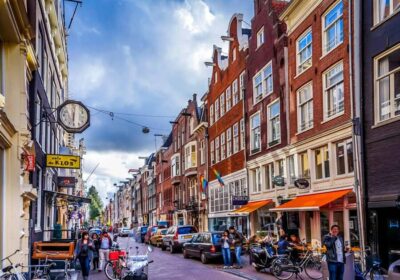 ★ 4.6Red Light District Tour in English or GermanFrom $341,228 reviews
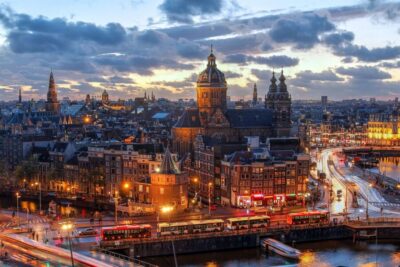 ★ 4.1After Dark Red Light District TourFrom $571,030 reviews
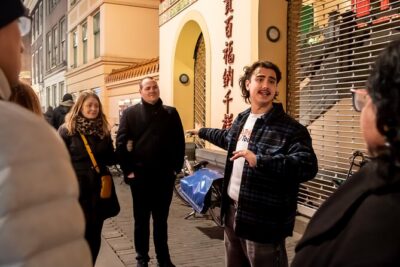 ★ 4.5Red Light District guided tour (TOP RATED)From $34588 reviews
Browse the lists this tour appears in