
Reviewed · ANNE FRANK & JEWISH QUARTER
Amsterdam Walking Tour:Anne Frank, History & Liberal Culture
Amsterdam has a darker side, and it teaches. On this Anne Frank, History & Liberal Culture walk, Antonis turns central streets into story lanes, linking WWII fear with Amsterdam’s habit of thinking out loud. You’ll get Secret Annex VR later, but the real hook is the way the city’s liberal spirit gets explained through practical details, not just dates.
I especially love the guide style: Antonis uses humor and chalk-drawn visuals to make history feel like a living conversation. Two big wins for me are the stop-by-stop context for the Jewish Quarter and the calm pacing that gives you time to look at canals, bridges, and architecture instead of rushing for photos.
One thing to consider: it’s a walking tour with no wheelchair suitability noted, and it runs about 3 hours on your feet. Also, the Holocaust-related parts may feel intense for some people, even when presented thoughtfully.
In This Review
- Key highlights to look for
- Walking with Antonis: the liberal Amsterdam lesson
- From Kattengat to the first stories at the HIV/AIDS monument
- Amsterdam Centraal and the art of reading the city in motion
- Tony’s Chocolonely: food with a social mission
- Bridges and water: where Amsterdam’s engineering becomes personality
- Jewish Quarter context and the WWII connection that lands
- Magere Brug, then a turning point at the Holocaust Names Monument
- Zuiderkerk and Nieuwmarkt Square: culture, survival, and public space
- VR coffee break: Secret Annex from your living-room chair
- The small souvenirs that make it feel real
- Food, pace, and what to bring so it stays enjoyable
- Is this tour good value at $40 for 3 hours?
- Who should book this Anne Frank, history, liberal culture walk
- Should you book?
- FAQ
- How long is the tour?
- What is the meeting point?
- Is the VR experience included, and do I have to do it?
- What’s included in the price?
- How much does it cost?
- Is the tour suitable for wheelchair users?
Key highlights to look for
- Antonis storytelling that connects WWII events to Amsterdam’s modern liberal mindset
- Water management and city engineering explained through what you can actually see
- Leaning houses and canal life that make the architecture click fast
- Anne Frank access without tickets via an optional Secret Annex VR stop
- Polaroid + stamped postcard so you leave with more than a memory
- Food and bar recommendations that feel local, not generic
Deeper into the Jewish Quarter and the war years
- Amsterdam Anne Frank: Small-Group Walking Tour & Local Guide
★ 4.8 · 12,789 reviews - Anne Frank’s Story – Guided Walking Tour through Amsterdam
★ 5.0 · 11,619 reviews - Amsterdam: Anne Frank Guided Walking Tour in DE/EN/IT/ES
★ 4.9 · 3,107 reviews - Amsterdam: Anne Frank Guided Small Group Walking Tour
★ 4.8 · 2,722 reviews
Walking with Antonis: the liberal Amsterdam lesson
If you’ve ever felt Amsterdam’s reputation is a little too neat, this tour helps. The vibe isn’t about checking boxes. It’s about understanding how a city can be both practical and humane—how people build systems to survive, and then argue for freedoms within those systems.
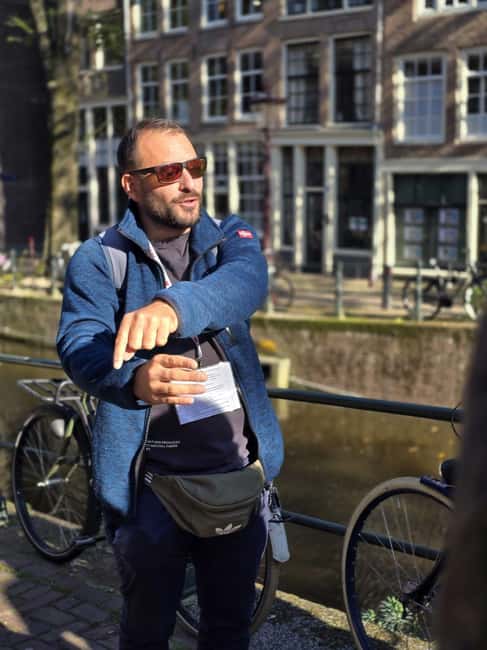
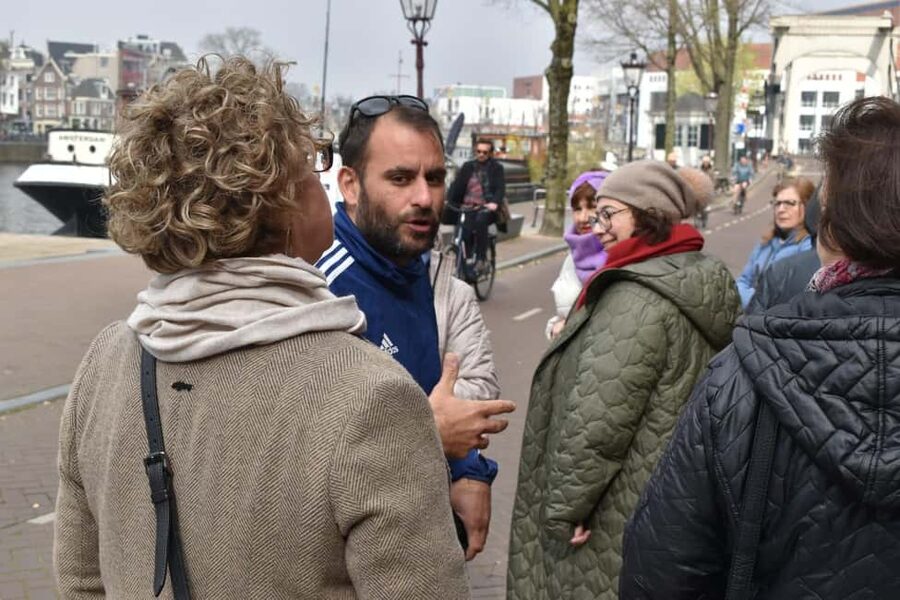
Antonis is the engine here. His approach is part street guide, part history teacher, part friend who tells you what most guidebooks skip. You’ll get explanations for why the city looks the way it does, and then you’ll connect those ideas to the culture: open-mindedness as a daily habit, not just a slogan. One of the strongest moments is how WWII history is framed alongside the city’s liberal culture, so it doesn’t read like a sealed chapter.
The format also matters. It’s small—think a tiny group size—so you can ask questions without shouting over a crowd. The tour length (about 3 hours) is long enough to feel like you’re learning Amsterdam, but short enough to still plan an evening afterward.
From Kattengat to the first stories at the HIV/AIDS monument
You start near De Silveren Spiegel in the Kattengat area. The first minutes set the tone: this is Amsterdam as a place of communities and change, not just old stones and canal views.
The HIV/AIDS monument stop is only around 10 minutes, but it’s a meaningful one. It signals that Amsterdam’s liberal culture isn’t abstract. It’s built from real social movements and public conversations. Even if you know the headline facts, this framing helps you understand why the city tends to treat debate as part of civic life.
This early setup is useful for first-time visitors. It trains your eyes: you start looking for how people live together, how policies shape daily behavior, and how communities respond when times get hard.
Amsterdam Centraal and the art of reading the city in motion
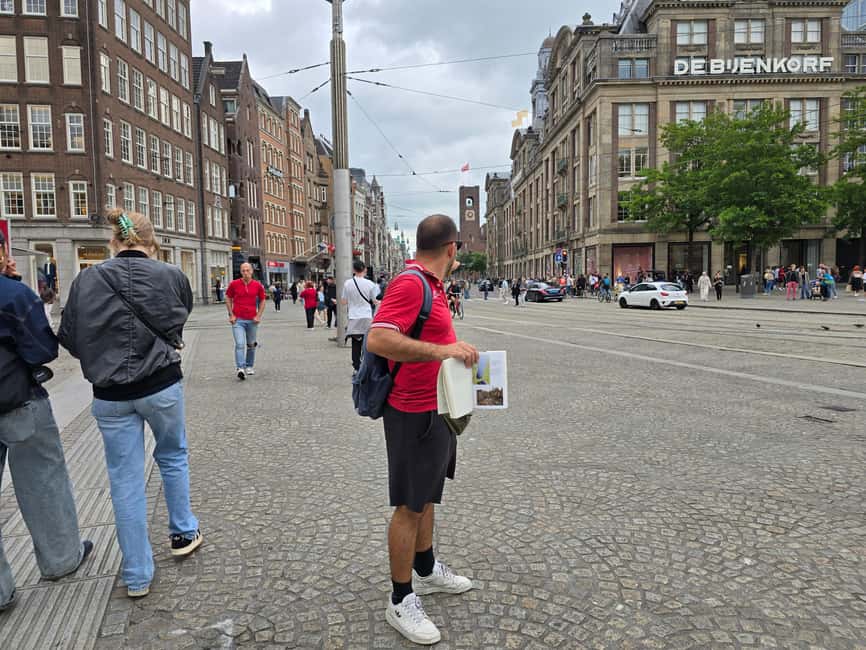
Next, you pass through the orbit of Amsterdam Centraal Station. You’ll get a photo stop with guided context (about 10 minutes). Stations are perfect for storytelling because they compress so many layers—trade, travel, migration, and everyday movement.
This isn’t a deep architectural lecture at Centraal, but it’s a practical pause. Antonis uses this moment to help you orient: how the city’s layout influences neighborhoods, how canals create both connections and boundaries, and how the street plan reflects centuries of problem-solving.
If you’re the type who likes to understand a place rather than just see it, you’ll appreciate these quick “how to read Amsterdam” moments. They make the rest of the walk easier because you know what you’re looking at.
More of Amsterdam street by street, on foot



Tony’s Chocolonely: food with a social mission
You’ll stop at Tony’s Chocolonely Superstore for a short photo and guided glance (around 5 minutes). Even that brief stop works because it’s not only about candy. It’s about a modern Dutch stance: questioning systems, pushing for fairness, and turning public awareness into everyday products.
This is where the tour’s “liberal culture” theme becomes tangible. You’ll hear how ideas about education and progress show up in modern life, not only in politics or museums. It also helps you shift from WWII-only mode into the big picture: Amsterdam doesn’t just remember; it debates and builds.
If you’re hungry later, you’ll be glad you noticed this kind of place early. Antonis’ later recommendations for bars and restaurants build on the same theme: local spots where people actually go.
Bridges and water: where Amsterdam’s engineering becomes personality
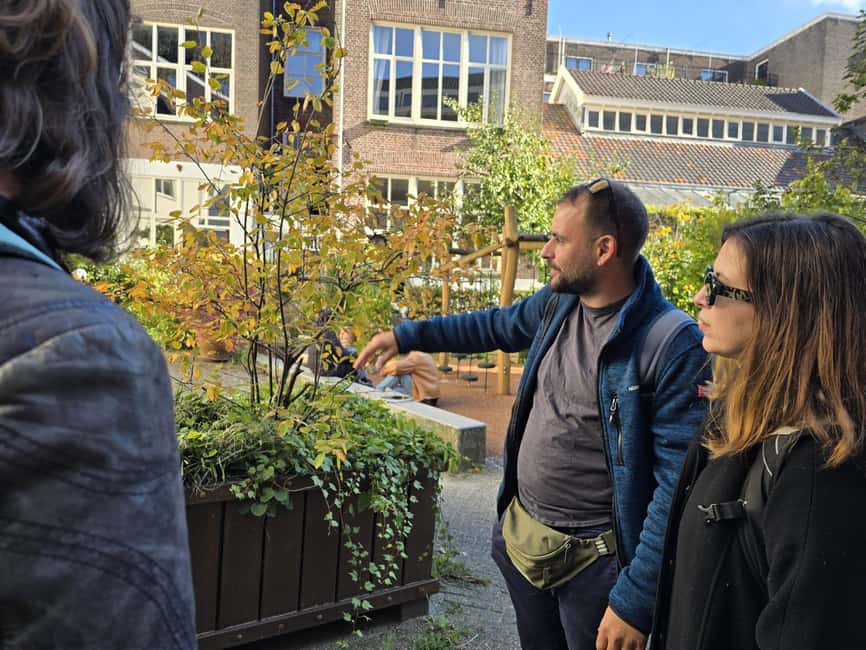
Several canal bridge stops make up the middle of the walk, including an area around the Aluminium Bridge and then Staalmeestersbrug. Expect about 15 minutes at each of these bridge points, with the tour slowing down for explanations and photos.
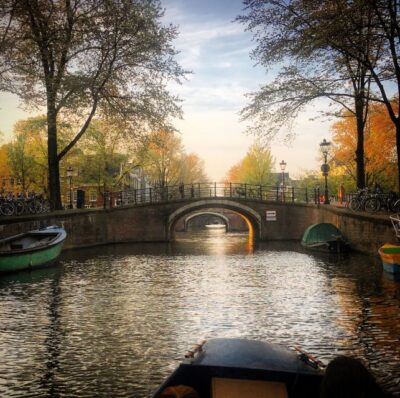
This is one of the most valuable parts of the whole experience. Amsterdam is famous for canals, but the real story is the water management behind them. You’ll learn how the city’s relationship with water shapes everything: where buildings can stand, how streets develop, and why certain structures look the way they do.
Antonis also connects water management to the architecture you’ll see next—especially the talk about leaning houses and the charm of life around houseboats. Even if you’ve seen photos online, this tour helps you understand the why: the city is a work-in-progress, and nature and engineering have been negotiating for centuries.
Practical tip: take a second here and look beyond the bridge. The small details—how homes meet canals, how edges are reinforced, how streets curve—make the “liberal culture” story feel real. Humans survive by systems; systems also reflect values.
Jewish Quarter context and the WWII connection that lands
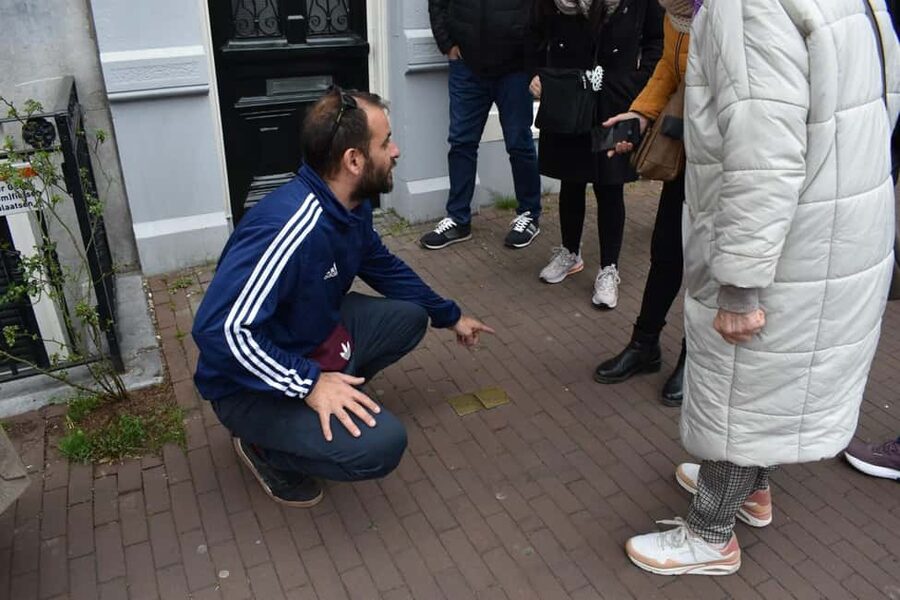
The tour enters the Jewish Quarter for about 15 minutes of guided focus. This is where the walk turns from “history backdrop” into “why this matters.”
You’ll get context that supports what comes later, including Holocaust-related stops. The guide’s style helps: the information is delivered like a coherent story, not a list of facts. You’ll also notice the way Amsterdam’s liberal identity fits into the larger narrative—how a society can protect some people while others are targeted, and how choices made by ordinary communities become part of the record.
This is also a good time for you to decide how you want to handle the emotional weight. If you want to ask questions, this small-group format makes it easier. If you’d rather listen quietly and process, that works too. Antonis’ tone stays respectful.
Magere Brug, then a turning point at the Holocaust Names Monument
You’ll stop at Magere Brug for a short photo moment and guided tour segment (around 10 minutes). It’s one of those Amsterdam bridges that looks cinematic—thin lines, strong reflections—but Antonis doesn’t let it become just a postcard.
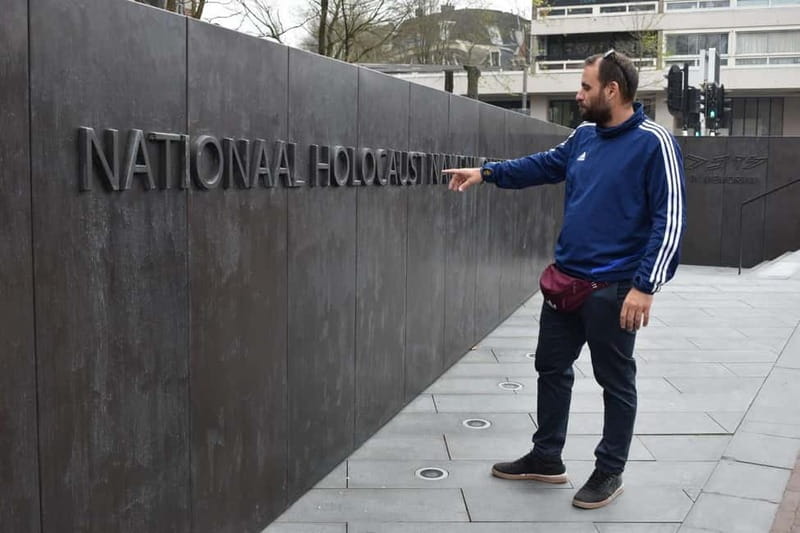
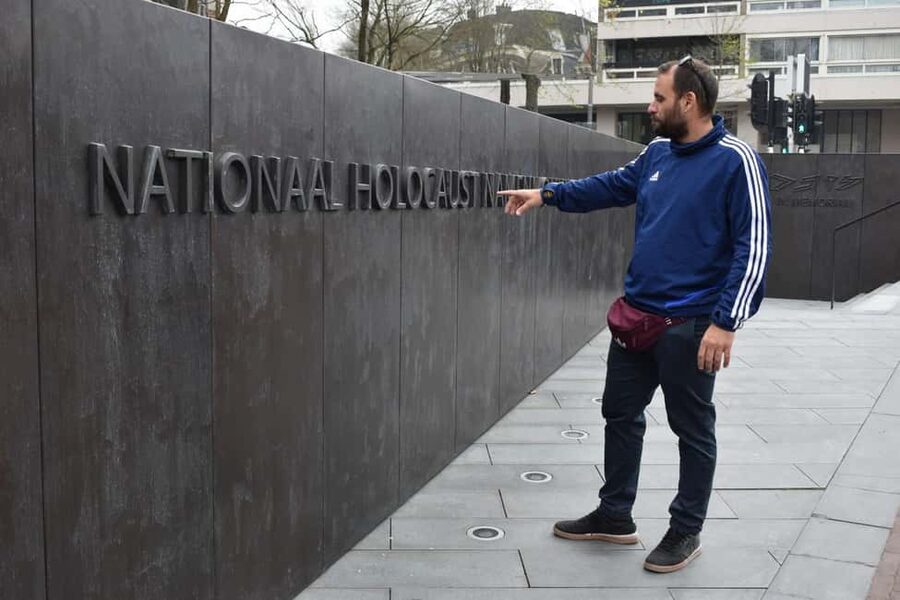
He uses the beauty as contrast. Right after, you’ll reach the National Holocaust Names Monument, with about 15 minutes of guided time. This is a reflective stop. The idea isn’t only to look, but to think: the monument is about names and memory, and it places WWII reality in a public space.
If you want a tour that connects Anne Frank’s story to the larger context without turning it into a spectacle, this part is a strong match. You’ll also get the framing that leads into the VR experience, so it doesn’t feel disconnected or tacked on.
Bring your camera if you like, but also give yourself a moment to put it away. The point here isn’t the shot; it’s the meaning.
Zuiderkerk and Nieuwmarkt Square: culture, survival, and public space
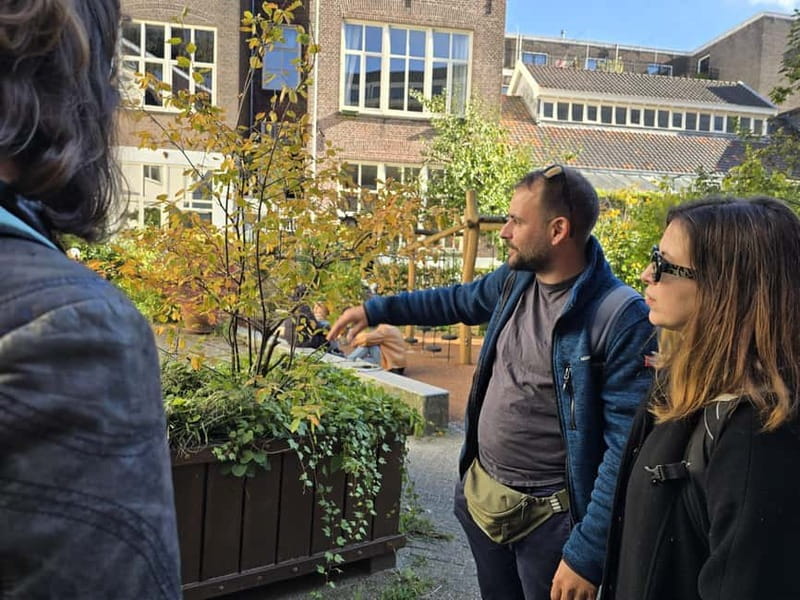
Later, you’ll pass through the area around Zuiderkerk for about 10 minutes and then reach Nieuwmarkt Square for around 15 minutes. These stops are more than scenery. They show how public space works in Amsterdam: gathering places, civic identity, and street life tied to major historical shifts.
Antonis weaves in the city’s progress-and-education angle here. The Netherlands’ education system gets mentioned as a contributor to how the country develops—how learning, debate, and responsibility shape civic outcomes. You’ll understand why that fits this route: when communities build systems for knowledge, they’re also building tools for tolerance and resilience.
At Nieuwmarkt Square, you’ll get a guided rhythm that’s friendly for photos but not photo-obsessed. You can look around, ask questions, and still feel like you’re moving through a story rather than a walking route.
VR coffee break: Secret Annex from your living-room chair
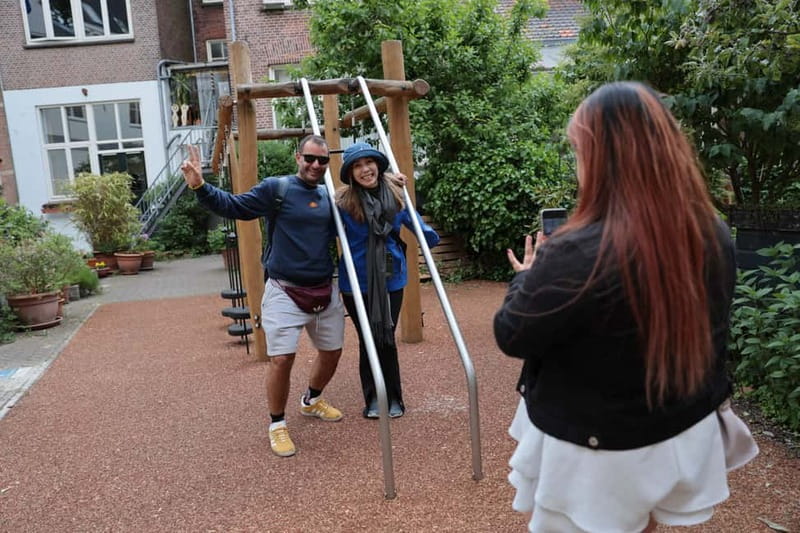
The tour ends (or almost ends) with a cozy coffee stop where the VR experience happens. Coffee and conversation are included, and the VR is presented as optional.
A couple practical notes based on how it’s set up: there’s only one VR setup, so you may see a short wait depending on your group’s timing. The good news is the moment is calm. Even if you skip VR, you still get the thoughtful break and the chance to ask more questions.
The VR experience focuses on the Secret Annex. For many people, this is the smartest workaround if you weren’t able to get Anne Frank House tickets. It’s also a different type of learning—spatial, not just verbal. You’ll likely come away understanding not only what happened, but what it must have felt like to live in those tight, hidden spaces.
If you do VR, don’t rush. Let it land before you switch back into sightseeing mode. This tour does a nice job of pacing emotion, reflection, and then everyday Amsterdam again.
The small souvenirs that make it feel real
This tour has a few extras that go beyond the normal “thanks for coming” package. You’ll receive a small Polaroid during the walk and a postcard with a personalized handwritten message and an official stamp.
Why I like this: it gives your memory a physical anchor while the story is still fresh. A photo is nice, but the postcard message feels like a note from someone who actually paid attention to what you were learning.
You’ll also get something sweet—either chocolate or stroopwafel—and a recommendations list from Antonis for nearby bars and restaurants. Those are the kinds of details you can use immediately, especially if you want a low-effort night plan after a day of walking.
Food, pace, and what to bring so it stays enjoyable
This tour is about walking, with a relaxed pace and frequent stops. Still, you’ll want to be ready for 3 hours on your feet. The tour is not listed as suitable for wheelchair users, so you’ll want to match your route comfort level to the distance and stop frequency.
Bring:
- Comfortable shoes (you’ll thank yourself later)
- Water (especially on warm days)
- A camera if you like bridge-and-canal photos
- Weather-appropriate clothing (Amsterdam weather loves surprises)
The tour also includes snacks only in the form of the sweet item, so plan to eat a real meal on your schedule after you finish at Waag. The finish point matters: Waag puts you in a central area where it’s usually easy to keep going by foot.
Is this tour good value at $40 for 3 hours?
At $40 per person, the price feels fair when you look at what’s included: a live local guide, coffee, a sweet treat, the Polaroid, a postcard with handwritten message and an official stamp, and the VR experience.
This isn’t just a “walk and watch.” You’re paying for guided context in small-group format plus a special add-on (VR) that many people struggle to access through standard ticketing. For first-time visitors who want both Amsterdam’s liberal culture thread and Anne Frank-related understanding, you’re getting a lot of value in a short time.
If you’re the type who hates crowds and prefers learning in conversation, this kind of small-group structure is usually the best use of your money in Amsterdam.
Who should book this Anne Frank, history, liberal culture walk
I’d book it if you:
- Want more than museum dates and want street-level context
- Like learning with a guide who uses humor and visuals
- Care about understanding liberal culture through real civic stories
- Want Secret Annex VR as a ticket-friendly alternative
- Prefer small-group tours where your questions actually get answered
You might skip it if you dislike walking or if you want a completely light, carefree Amsterdam experience. The route includes serious WWII and Holocaust material, and while it’s presented in a guided, reflective way, it isn’t meant to be cheerful.
Should you book?
If your goal is to understand Amsterdam as a place where systems, social values, and history all connect, this tour is a strong choice. The standout for me is the way Antonis ties together water management, leaning houses and canal life, Dutch progress through education, and then brings it all into focus with Anne Frank’s WWII story and the National Holocaust Names Monument.
For $40, you’re not just buying a route. You’re buying a guided thread from central Amsterdam to memory, plus souvenirs and a coffee pause that makes the stories stick. If that sounds like your style, book it.
FAQ
How long is the tour?
The tour runs for about 3 hours.
What is the meeting point?
You meet in front of the restaurant De Silveren Spiegel.
Is the VR experience included, and do I have to do it?
VR is included, and it’s described as optional. The experience is done during the coffee stop.
What’s included in the price?
Included items are the local tour guide, a list of recommendations, chocolate or a biscuit, a mini Polaroid photo, a postcard with a personalized handwritten message and an official stamp, the VR experience, and coffee.
How much does it cost?
It costs $40 per person.
Is the tour suitable for wheelchair users?
No, it is not suitable for wheelchair users.
More Tours in Amsterdam






More Tour Reviews in Amsterdam






The Jewish Quarter, Explored Further




Just added: fresh Amsterdam tour reviews





Anne Frank & Jewish Quarter, compared.
 ★ 4.8Amsterdam Anne Frank: Small-Group Walking Tour & Local GuideFrom $2912,789 reviews
 ★ 5.0Anne Frank’s Story – Guided Walking Tour through AmsterdamFrom $3911,619 reviews
 ★ 4.9Anne Frank Guided Walking Tour in DE/EN/IT/ESFrom $283,107 reviews
 ★ 4.8Anne Frank Guided Small Group Walking TourFrom $282,722 reviews
 ★ 5.0Anne Frank Walking Tour Amsterdam Including Jewish Cultural QuarterFrom $751,879 reviews
 ★ 5.0Anne Frank’s Last Walk & See Anne Frank House in Virtual RealityFrom $42957 reviews
 ★ 4.7Dutch WWII Resistance Museum Entry TicketFrom $21951 reviews
 ★ 5.0Anne Frank and Jewish Quarter Amsterdam Private Walking TourFrom $157684 reviews
Browse the lists this tour appears in