
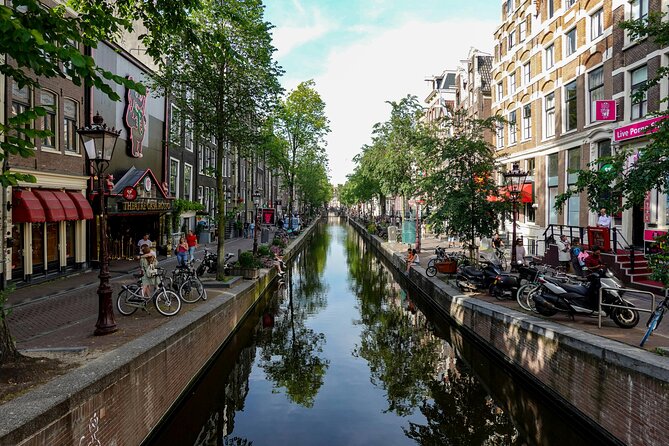
Reviewed · RED LIGHT DISTRICT TOURS
Amsterdam Walking Tour: Explore the Red Light District
Night markets can wait. Amsterdam’s adults-on-the-street tour is tonight. This guided walk threads De Wallen (the Red Light District) together with historic neighborhoods and landmarks like Oude Kerk Amsterdam and a major Chinese Buddhist temple. It’s a one-stop way to get context, not just screenshots—plus your guide throws in local tips for what to see, where to eat, and how to plan the rest of your visit.
Two things I like a lot: first, the small group cap (no more than 15) makes it easier to ask questions and keep the pace comfortable. Second, the route doesn’t treat the Red Light District as the whole story; you also get religious and cultural stops that broaden what you think you’re coming to see.
One drawback to keep in mind: the timing can feel short, and in at least one case a guide issue caused a bad experience. So I’d plan to arrive a few minutes early and keep your phone handy if your guide contacts you—this tour’s value depends heavily on the guide actually being there.
In This Review
- Key things you’ll notice on this Amsterdam walk
- Red Light District at 7:30 pm: what you’re really buying
- Where you meet on Prins Hendrikkade (and why the start matters)
- The group size advantage: ask questions, keep up, don’t feel rushed
- Stop-by-stop: how each place fits into the bigger Amsterdam story
- Café the Schreiertower: sailors’ goodbye rituals
- Zeedijk: an old street that became Chinatown
- Amstel: the river that powered trade
- De Wallen (Red Light District): trade and faith in the oldest quarter
- Oude Kerk Amsterdam: the city’s oldest church
- Fo Guang Shan He Hua Temple: a major Chinese Buddhist temple
- Restaurant-Café In de Waag: city gate, weigh house, guild hall
- Anne Frank House and Queer Garden: what to do if you want more
- Price ($32) and how it stacks up for what you get
- Guide quality is the whole game (and one lesson from a bad moment)
- Practical tips to make the most of your night
- Who this tour fits best
- Should you book this Amsterdam Red Light District walking tour?
- FAQ
- What’s the meeting point and start time?
- How long is the walking tour?
- How much does it cost and what’s included?
- What’s the group size limit?
- Do I need any extra tickets for stops?
- Is the tour offered in English and near public transportation?
- What’s the cancellation policy?
Key things you’ll notice on this Amsterdam walk
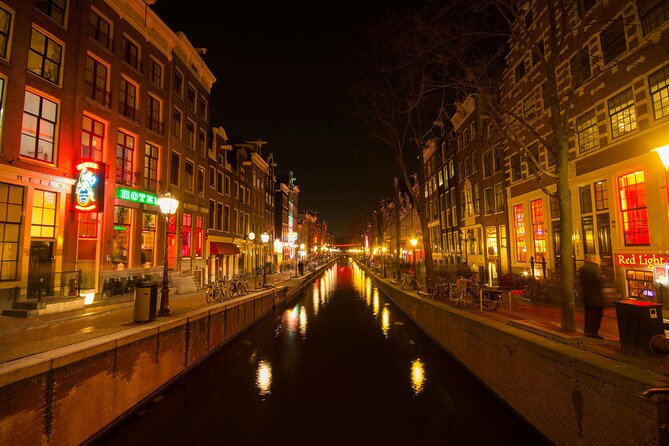
- Small-group format (max 15): easier questions and a more human pace at night.
- De Wallen context, not just scenes: trade, religion, and nightlife framed across centuries.
- A route that mixes eras: you’ll pass through older streets and architecture before and after the Red Light District.
- Surprise stops beyond Amsterdam center: a major Chinese Buddhist temple and the old city-gate building at In de Waag.
- Guide tips that matter: you’ll get practical ideas for sightseeing, shops, and cafes around town.
- A heads-up from a guide: Norm specifically suggested Googling Tower of Tears ahead, since it’s not always clearly signed.
The old town after dark: more Red Light District walks
- Amsterdam: Red Light District Tour in DE/EN/IT/ES/FR
★ 4.9 · 7,136 reviews - Amsterdam: Red Light Secrets Museum Entry Ticket
★ 4.2 · 5,722 reviews - Amsterdam Red Light District & Coffee Shop Tour
★ 4.6 · 4,134 reviews - Amsterdam: Red Light District Pub Crawl with Unlimited Shots
★ 4.1 · 2,130 reviews
Red Light District at 7:30 pm: what you’re really buying
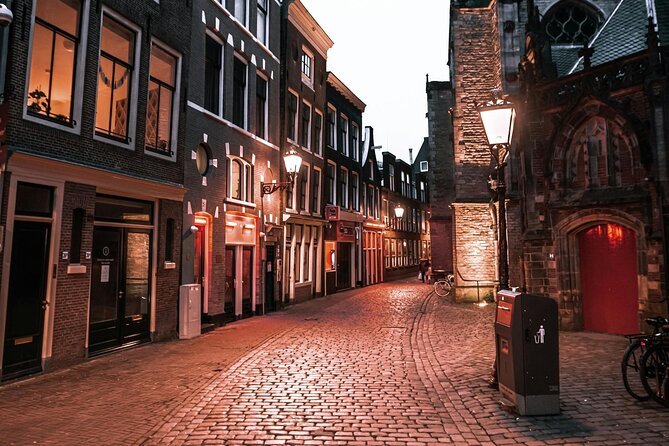
This tour is scheduled to start at 7:30 pm, which changes the feel compared with a daytime walk. At night, the area looks more like what most people imagine—but the guide’s job is to keep it grounded. You’re not just wandering among neon lights and windows. You’re learning how this part of Amsterdam has long mixed commercial activity, religious life, and entertainment.
The vibe is also practical. Expect mostly walking and short stops—enough time to orient yourself and understand the why behind what you’re seeing. If you’re the type who hates doing a big sightseeing day with zero context, you’ll like this more than a casual stroll.
Where you meet on Prins Hendrikkade (and why the start matters)
You’ll meet at Prins Hendrikkade 94 95, 1012 AE Amsterdam, and the walk ends back at the meeting point. That loop matters because it keeps things simple: you don’t have to figure out transport or a second meetup location after 70 minutes or so.
It’s also helpful that the meeting area is described as near public transportation. Amsterdam can be a walking city, but late evening plus crowds can drain you fast. A transit-friendly start makes it easier to stay sane before and after.
The group size advantage: ask questions, keep up, don’t feel rushed
This is capped at 15 travelers, and the tour is described as guaranteed small group with no more than 15. That small cap is the difference between a guide who can actually talk with you and a guide who has to herd people.
In real life, it shows up in how you move through tighter streets. Short pauses work better, and your guide can tailor explanations to what you’re curious about. One review specifically praised Norm for taking time to engage each participant, which is exactly what you want in a topic that can get uncomfortable or misunderstood.
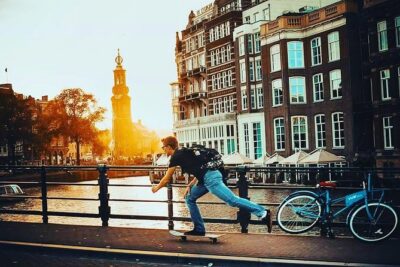
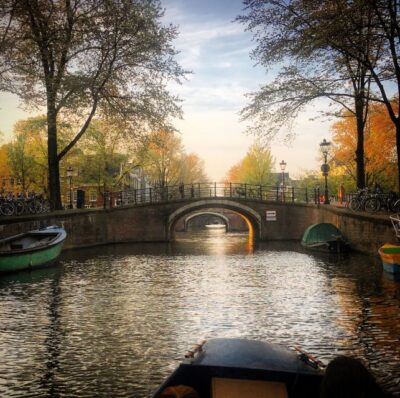
More of Amsterdam street by street, on foot




Stop-by-stop: how each place fits into the bigger Amsterdam story
Below is what you can expect as you move through the route. Times are listed per stop, and the overall experience is described in different ways, so I’d mentally budget some extra walking time around the fixed stops.
Café the Schreiertower: sailors’ goodbye rituals
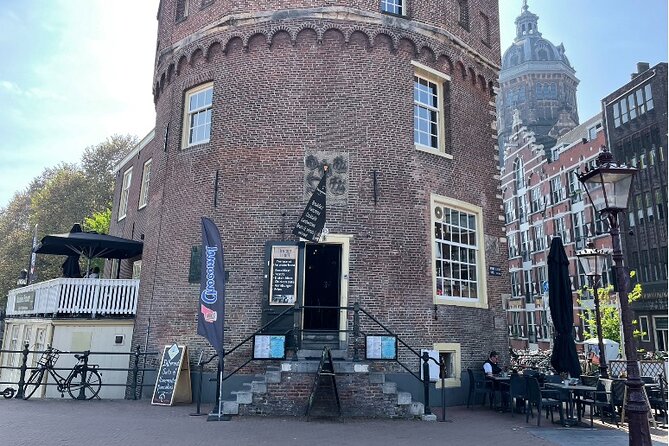
The walk starts with Café the Schreiertower. This stop focuses on the emotional side of Amsterdam’s maritime past—specifically, where sailors’ wives once waved goodbye to ships leaving from the port.
It’s a small stop, but it does something important: it reminds you that Amsterdam wasn’t built only by commerce and canals. It was also built by relationships, departures, and lives that changed when someone left for sea. Even if you’re mainly there for De Wallen, this early context keeps the night from turning into pure spectacle.
Zeedijk: an old street that became Chinatown
Next is Zeedijk, one of the city’s oldest streets. The theme here is transformation: it was once tied to Amsterdam’s medieval defense wall, and now it’s associated with Chinatown.
This helps you spot a pattern in Amsterdam. Neighborhood identity shifts over time, and you see it in streets that keep their bones while changing their stories. It’s also a useful warm-up before you hit the Red Light District, because you’re learning how to read the city as layered—not as a single theme park.
Amstel: the river that powered trade
Then you’ll see the Amstel—the river that gave the city its name and once powered mills that supported early trade. This is a short moment, but it’s a key one because it connects Amsterdam’s economy to its geography.
If you’ve visited other parts of the Netherlands, you already know water matters here. This stop is your reminder that Amsterdam’s growth wasn’t just about luck or architecture. It was powered by location, and the river was part of that engine.
De Wallen (Red Light District): trade and faith in the oldest quarter
The big stop is the Red Light District (De Wallen). The framing is what makes this tour valuable: the oldest part of the city where trade, religion, and nightlife have coexisted for centuries.
Here’s how I’d think about it if you’re nervous or unsure: the guide isn’t just explaining what people do here now. They’re giving the historical structure around why this district exists and how it developed.
You’ll walk through the area for about 15 minutes. That’s enough time to get your bearings and understand the meaning behind the street layout and long-standing presence of commerce and belief systems. It’s also enough time to step back if the atmosphere feels intense.
Oude Kerk Amsterdam: the city’s oldest church
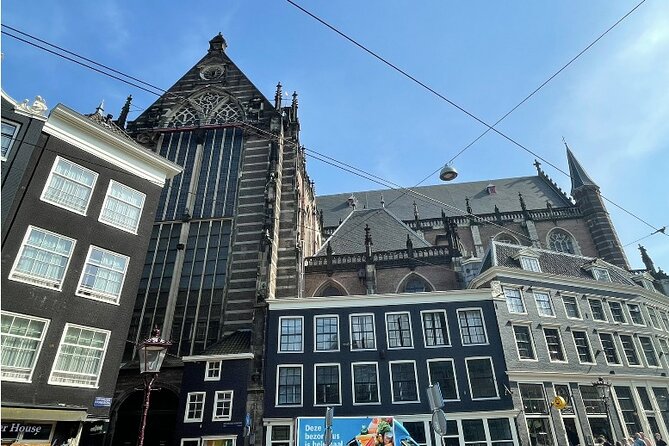
After De Wallen, you visit Oude Kerk Amsterdam, founded in the early 14th century. You’ll hear why it mattered at a time when the building was once surrounded by water and wooden houses.
This is a smart placement in the itinerary. It changes the mental channel from nightlife back to older civic life—so you don’t leave with only one story. It also helps you connect Amsterdam’s religious architecture to the city’s geography, not just to a building photo.
Fo Guang Shan He Hua Temple: a major Chinese Buddhist temple
Next is Fo Guang Shan He Hua Temple, described as the largest Chinese Buddhist temple in Europe, built in traditional style and inaugurated in 2000.
This stop is a reminder that Amsterdam’s cultural footprint isn’t limited to Dutch heritage. A large temple like this also gives you a break from the intensity of the previous streets. Even if you don’t know much about Buddhism, you can still appreciate how the architecture communicates place and identity.
Restaurant-Café In de Waag: city gate, weigh house, guild hall
Finally, you’ll end at Restaurant-Café In de Waag. The building’s past roles are the highlight here: it served as a city gate, a weigh house, and later a guild hall.
This is one of my favorite types of stops: a single building that reflects changing needs over time. You can walk past places in Amsterdam and never realize their previous jobs. This one makes the transformation visible—gate to commerce control to community business space—before you wrap up back where you started.
Anne Frank House and Queer Garden: what to do if you want more
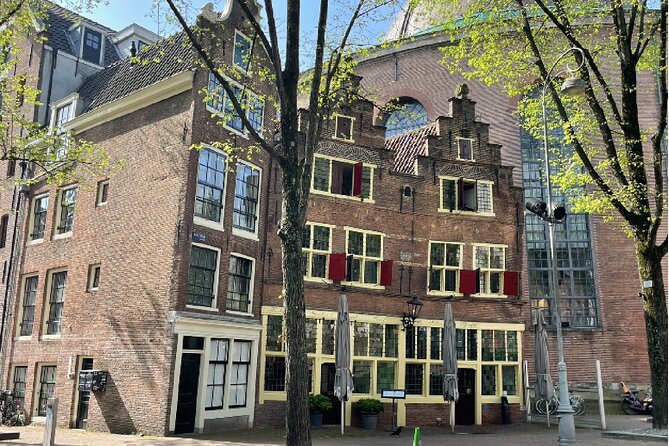
The tour’s highlights mention Anne Frank House with extra cost, plus Queer Garden. That tells you this isn’t meant to be an ultra-compact ticket bundle where everything is included.
If Anne Frank House is a priority for you, plan the timing separately. The tour can help with context, but extra-cost attractions often need their own schedule and ticketing. If you want Queer Garden, treat it like a neighborhood add-on you can slot around your walking day rather than something you should expect to be the main focus of the route.
Price ($32) and how it stacks up for what you get
At $32 per person, this sits in the mid-range for a guided city walk. The biggest value drivers aren’t just the stops—they’re the guide and the structure.
Here’s what you’re paying for:
- a professional guide doing short, high-impact explanations
- a small group cap (max 15)
- practical tips for sightseeing, shops, and cafes around Amsterdam
- a route that mixes the Red Light District with other major landmarks
One caution for budget planning: the info you’re given also describes the walking tour as 2.5 hours even though the itinerary feels like it totals about 1 hour 15 minutes of listed stop time. In practice, that kind of mismatch often means there’s more walking time than the per-stop minutes suggest. Either way, the guide-led format helps you get more mileage out of the time you spend out at night.
If you want a self-guided stroll, you can certainly do that for free. But if you want context and a plan for the rest of your evening, this price starts to make sense.
Guide quality is the whole game (and one lesson from a bad moment)
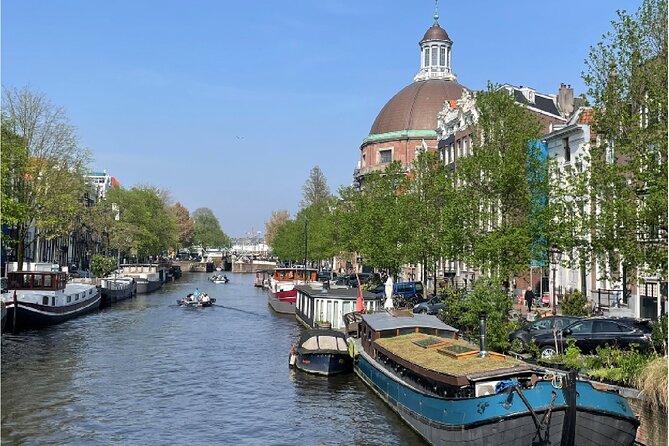
Most signals point to strong guide performance, including a 4.7 rating and 95% of travelers recommending the experience. One review praised Norm for engaging everyone and communicating with the tour operator in advance. That’s a big deal, because a good guide brings clarity to a topic that can otherwise feel chaotic.
But I’d be honest with you: one negative review describes a guide change followed by a guide who didn’t show, with communication issues after the fact. That doesn’t mean it will happen to you. It does mean you should treat the start time seriously.
My practical advice:
- arrive early, so you’re not stuck waiting
- keep your phone accessible in case you’re asked for a contact number
- have a Plan B nearby for what you’ll do if something is delayed
Practical tips to make the most of your night
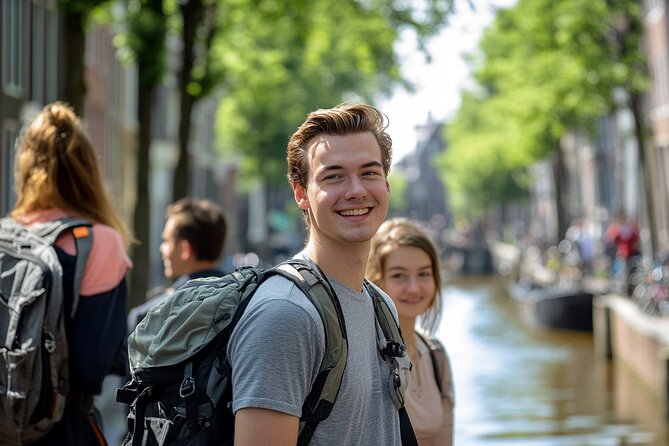
A nighttime walking tour can feel long if you’re uncomfortable. Based on the route and stop style, you’ll likely be mostly outside, moving from one landmark cluster to another.
Here are the simple prep moves that pay off:
- Wear shoes you trust. The route includes several older street segments and short transfers on foot.
- If you’re curious about specific buildings, do quick pre-reading. One review’s great pro tip from Norm: Google Tower of Tears ahead, since the building isn’t always signed clearly that way.
- If the Red Light District portion makes you uneasy, remind yourself this tour is framed historically. You can take a breath, keep moving with the group, and let the guide do the explaining.
Who this tour fits best
This is best for:
- first-timers in Amsterdam who want context before they judge what they’re seeing
- people who like history but don’t want a museum day
- travelers who enjoy walking tours with small group interaction
- anyone planning to visit other parts of the city afterward and wants local tips for shops and cafes
It might be a tough fit if:
- you dislike walking at night
- you want a deep, long-form museum style experience (this is a walk with stops, not a sit-down lecture)
- you’re easily overwhelmed by adult-themed nightlife imagery, even with historical framing
Should you book this Amsterdam Red Light District walking tour?
I think you should book it if you want a structured, guided look at De Wallen plus major nearby landmarks like Oude Kerk and Fo Guang Shan He Hua Temple, all in one evening with a small group. The $32 price becomes more reasonable when you factor in the guide and the practical street-level orientation.
Skip it or weigh it carefully if you’re the type who needs long duration and very clear schedules, because the overall time info you’ll see can vary in how it’s presented. And as with any small-group tour, do your part: show up early and stay reachable so the guide and operator can connect if needed.
If your goal is to walk in with questions and walk out with better understanding, this is a solid way to do it.
FAQ
What’s the meeting point and start time?
The tour meets at Prins Hendrikkade 94 95, 1012 AE Amsterdam, Netherlands, and it starts at 7:30 pm. It ends back at the meeting point.
How long is the walking tour?
It’s listed as about 1 hour 15 minutes, and it’s also described as a 2.5-hour guided walking tour. Plan for extra time on your feet.
How much does it cost and what’s included?
The price is $32.00 per person. It includes a professional guide and the guided walking tour.
What’s the group size limit?
This tour has a maximum of 15 travelers, with a guaranteed small group.
Do I need any extra tickets for stops?
Admission tickets are listed as free for the stops in the route. Anne Frank House is mentioned as extra cost.
Is the tour offered in English and near public transportation?
Yes, it’s offered in English and it’s described as near public transportation. Service animals are allowed.
What’s the cancellation policy?
You can cancel for a full refund up to 24 hours in advance. Canceling within 24 hours isn’t refundable.
More Tours in Amsterdam






More Tour Reviews in Amsterdam






The Red Light District After Dark



Just added: fresh Amsterdam tour reviews





Red Light District Tours, compared.
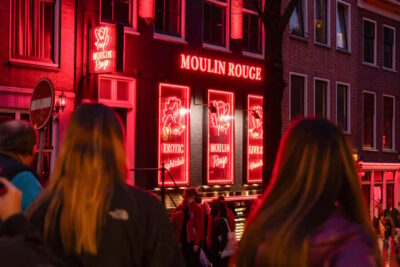 ★ 4.9Red Light District Tour in DE/EN/IT/ES/FRFrom $287,136 reviews
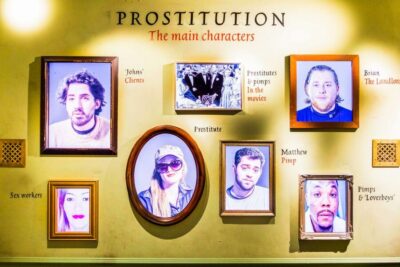 ★ 4.2Red Light Secrets Museum Entry TicketFrom $175,722 reviews
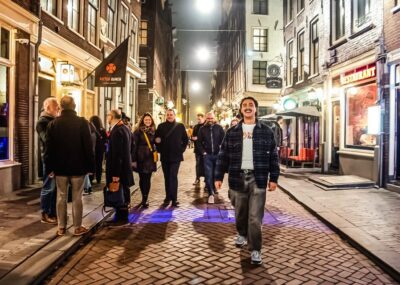 ★ 4.6Amsterdam Red Light District & Coffee Shop TourFrom $294,134 reviews
 ★ 4.1Red Light District Pub Crawl with Unlimited ShotsFrom $242,130 reviews
 ★ 4.5Amsterdam Red Light District Pub CrawlFrom $241,497 reviews
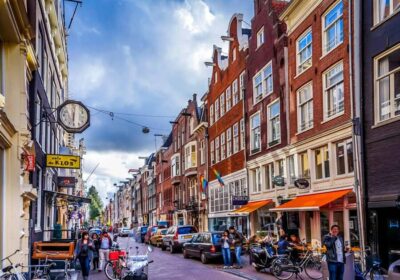 ★ 4.6Red Light District Tour in English or GermanFrom $341,228 reviews
 ★ 4.1After Dark Red Light District TourFrom $571,030 reviews
 ★ 5.0Private Amsterdam Red Light District and Coffee Shop TourFrom $41763 reviews
Browse the lists this tour appears in