
Reviewed · RED LIGHT DISTRICT TOURS
Amsterdam: Red Light District Tour in English or German
Neon windows meet real street history. This 2-hour Amsterdam Red Light District walking tour (in English or German) gives you the full picture of how the area works, from signage and red-tinted windows to the rules and stories behind them, while you move through Old Town lanes and canals toward Dam Square. I like that it’s guided, so you’re not guessing what you’re seeing, and I also like how it connects the district to everyday city life, not just headlines.
One caution: this is still a working part of the city, so some topics and sights may feel uncomfortable. Also, it’s not suitable for people with mobility impairments because it’s mainly on foot through narrow streets and alleys.
In This Review
- Key Things You’ll Get From This Red Light District Tour
- Red Light District, Explained Clearly on a Short Walk
- Starting Points Around Old Town and What They Mean for Your Day
- Red-Tinted Windows, Neon Signs, and the Rules Behind the Scene
- Oude Kerk, Canals, and the Old Amsterdam You Don’t See From Photos
- Narrow Streets, Canal-Belt Lanes, and the Narrowest Street Moment
- Amsterdam Chinatown, Nieuwmarkt Square, and the Market-Energy Stops
- Condomerie and Dam Square: Wrapping Up in the Most Central Way
- Coffee Shop History: Finding the First One on Your Way
- Live Guides and the Pace That Makes It Work
- Price and Value: Why $34 Can Feel Like More Than a “Walk”
- Who This Red Light District Tour Is For (and Who Should Skip It)
- Should You Book This Amsterdam Red Light District Tour?
Key Things You’ll Get From This Red Light District Tour
- A focused 2-hour walk so you get context without burning a whole day
- Red-lit windows and neon signs explained with the legal and cultural side
- Historic stops beyond the streetfronts, including Oude Kerk and canal-belt streets
- Coffee shop history on your route, including the first coffeeshop of Amsterdam
- Central route timing, generally ending around Dam Square
- Live guide in multiple languages (English, German, Spanish, Dutch), with private or small-group options
The old town after dark: more Red Light District walks
- Amsterdam: Red Light District Tour in DE/EN/IT/ES/FR
★ 4.9 · 7,136 reviews - Amsterdam: Red Light Secrets Museum Entry Ticket
★ 4.2 · 5,722 reviews - Amsterdam Red Light District & Coffee Shop Tour
★ 4.6 · 4,134 reviews - Amsterdam: Red Light District Pub Crawl with Unlimited Shots
★ 4.1 · 2,130 reviews
Red Light District, Explained Clearly on a Short Walk
Amsterdam is famous for canals, bikes, and bicycles everywhere. It also has a street scene people often avoid talking about. This tour is designed for the curious, the respectful, and the practical: you walk through the area with a guide who explains what you’re looking at and why it exists.
The setting is very real. You’ll see the famous windows with their red tint and the neon that draws attention from every angle. But the value here is that you learn the bigger framework—how the city views the trade, how laws shaped it, and how daily life functions around it.
Price-wise, $34 for 2 hours is in line with what you’d pay for a solid guided walk in Amsterdam’s core. The difference is that you’re not just collecting “scenes.” You’re getting a guided interpretation of one of the city’s most misunderstood neighborhoods.
Starting Points Around Old Town and What They Mean for Your Day
This tour uses multiple meeting options, so you can fit it into your schedule without zigzagging across town. Depending on what you book, you might start around the Basilica of Saint Nicholas (Prins Hendrikkade), Voyager Hotel Amsterdam (also Prins Hendrikkade), Leidse Square, or the Condomerie area.
That matters because Amsterdam is compact, but walking time adds up fast—especially when you’re also trying to see museums, canals, and markets. Starting closer to where you already plan to be makes the whole day smoother.
Most stops are on foot, and the pacing is designed for a 2-hour duration. If you’ve ever tried to follow a self-guided route while dodging groups, bikes, and random detours, you’ll appreciate having a guide who keeps you moving with purpose.
Red-Tinted Windows, Neon Signs, and the Rules Behind the Scene
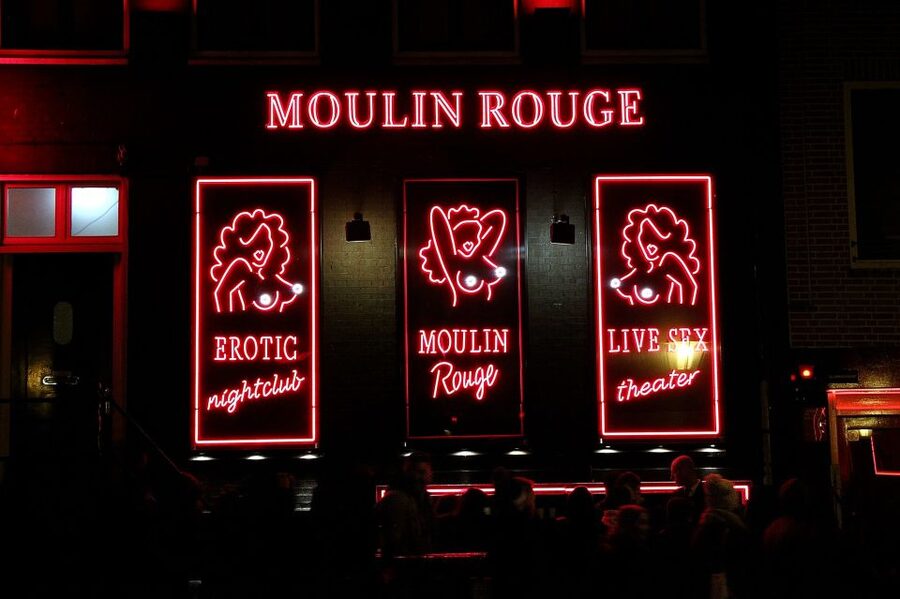
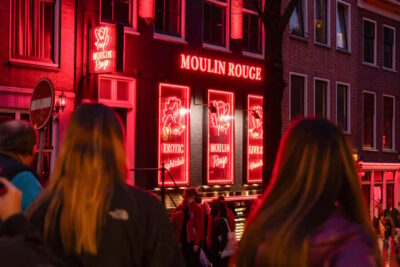
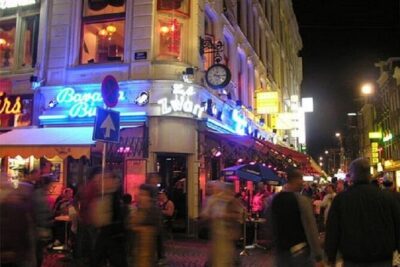
The heart of the tour is the Red Light District streets themselves. You begin by walking through the area’s most recognizable visuals—those red-lit windows and the neon signs—and your guide explains what’s legal, what’s cultural, and how Amsterdam’s approach differs from the way outsiders often imagine it.
This is where a guide earns their pay. Without context, you might only see storefronts and misunderstand what the neighborhood represents. With context, you start to connect the dots: the trade isn’t just “there,” it’s part of a system shaped by regulation and city planning, and it’s surrounded by everyday life.
I especially like that the tour doesn’t pretend it’s only history. It also discusses more recent controversies, which helps you understand why people argue about this area even while it continues to operate.
And yes, you should expect narrow streets and alleyways. That’s normal here. Your job is to look, listen, and be respectful—your guide will set the tone so you feel comfortable walking through.



Oude Kerk, Canals, and the Old Amsterdam You Don’t See From Photos
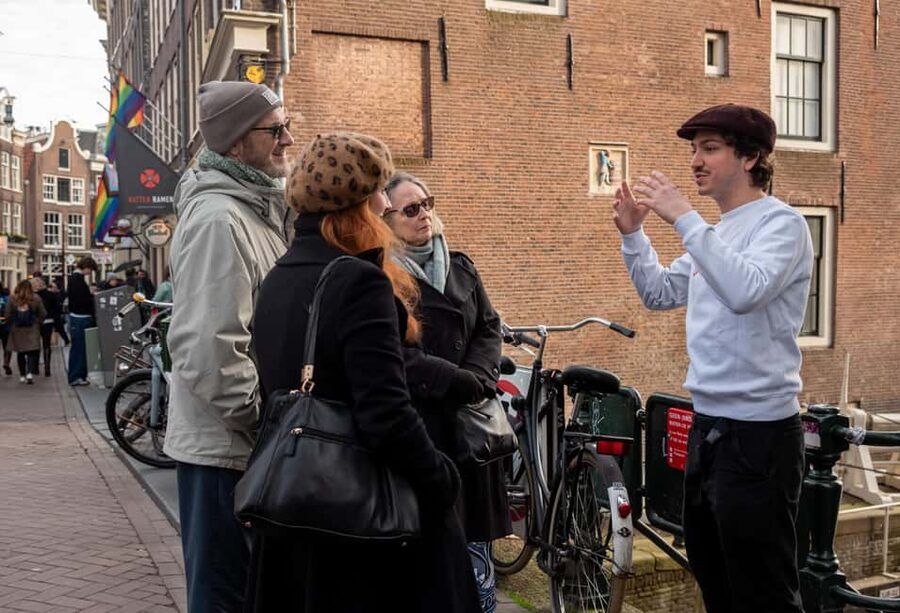
One reason this tour works is that it doesn’t stay stuck at the streetfronts. As you move from the most famous parts into surrounding Old Town lanes, you’ll pass major landmarks and historic backdrops that change how the district feels.
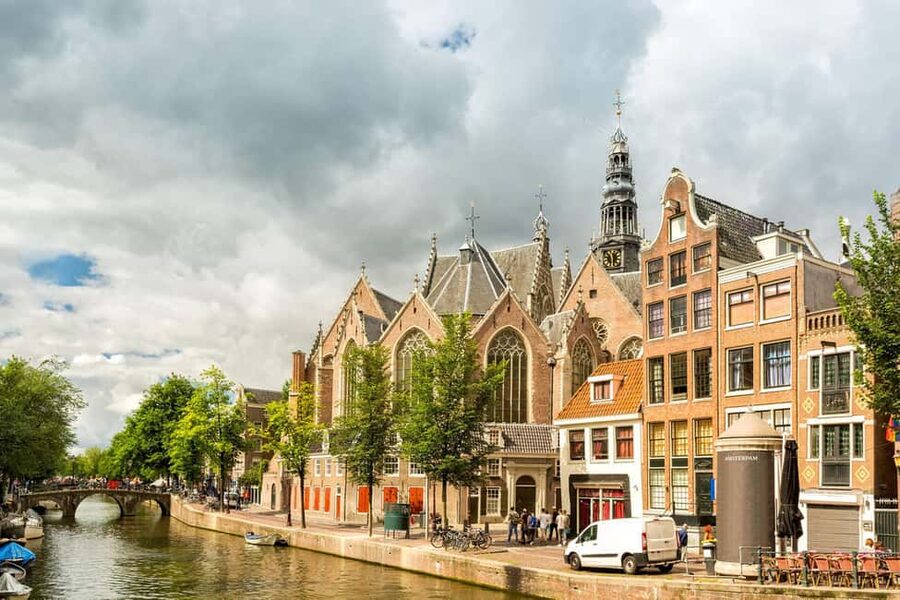
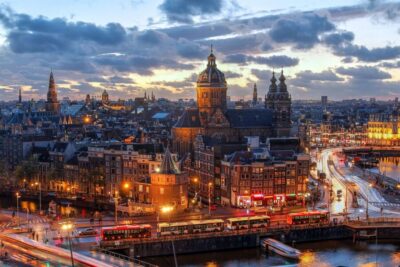
A big stop is Oude Kerk. The tour route highlights it as the oldest building in Amsterdam, which adds weight to the walk. When you stand near places like this, the Red Light District stops looking like an isolated “attraction” and starts looking like a piece of the same centuries-old city fabric.
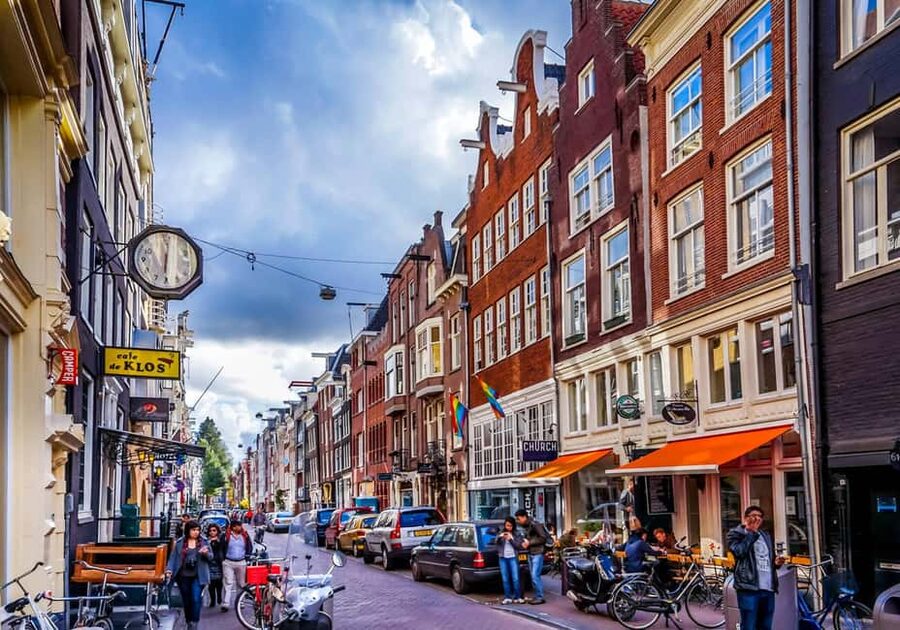
You’ll also see canals and old houses as part of the route through the Grachtengordel canal-belt area. Amsterdam’s canal city is its own kind of storytelling, and even if you’ve seen canals from a boat, walking these streets makes the city feel tighter and more human.
Another piece I like: you’re guided through “quiet” corners—historic buildings and cultural landmarks that often slip past visitors who rush straight to the most obvious sights.
Narrow Streets, Canal-Belt Lanes, and the Narrowest Street Moment
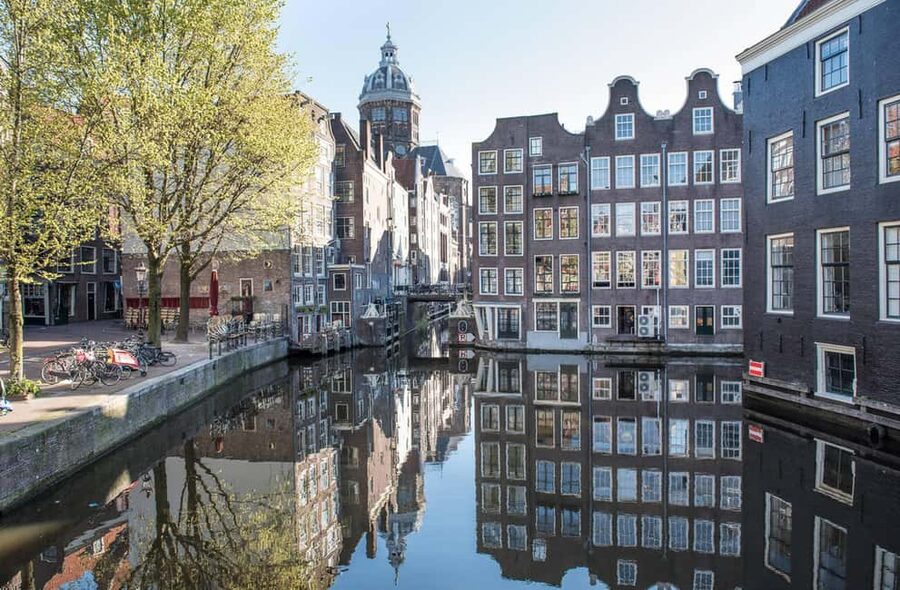
Amsterdam’s streets have a way of pulling you forward. Even if you start with a plan, you end up following the geometry—turn, turn, tight lane, then suddenly a canal view appears.
This tour includes walking along some of the most distinctive street layouts, including mention of the narrowest street in Amsterdam. That kind of stop does two helpful things: it gives you a concrete sense of scale, and it helps you understand why the district developed the way it did in a city of canals and old plots.
In practical terms, this is also why you should wear comfortable shoes. It’s a short tour, but the ground is uneven in spots, and the walking is continuous enough that you’ll feel it if your feet aren’t ready.
Amsterdam Chinatown, Nieuwmarkt Square, and the Market-Energy Stops
The route also threads through areas that don’t fit the standard idea of the Red Light District. You’ll pass through Amsterdam Chinatown, stop near Nieuwmarkt Square, and walk by Amsterdam Flower Market.
These pauses matter because they show the district in a bigger neighborhood context. The Red Light District isn’t surrounded by emptiness—it sits near cultural corners, old squares, and commercial spots that make Amsterdam feel like a living city rather than a single-themed attraction.
It also gives you moments to reset your brain. After windows and neon, it helps to see a church area, a market area, or a square where the city’s daily rhythm looks different. Your guide uses those transitions to keep the story going instead of treating each stop like a separate “scene.”
Condomerie and Dam Square: Wrapping Up in the Most Central Way
A couple of the named route points—Condomerie and Dam Square—act like anchors. You’re not wandering indefinitely; you’re moving between recognizable hubs while your guide ties everything together.
You’ll spend a short time around Dam Square as part of the tour. It’s a fitting finish because Dam Square is easy to return to at the end of a walking experience. From there, you can shift to the rest of your day without needing to plan a complicated next move.
One detail worth noting: depending on your starting option, the tour’s drop-off locations can match your starting points. So even though the tour generally winds up near Dam Square, you’re not necessarily stuck far from where you began.
Coffee Shop History: Finding the First One on Your Way
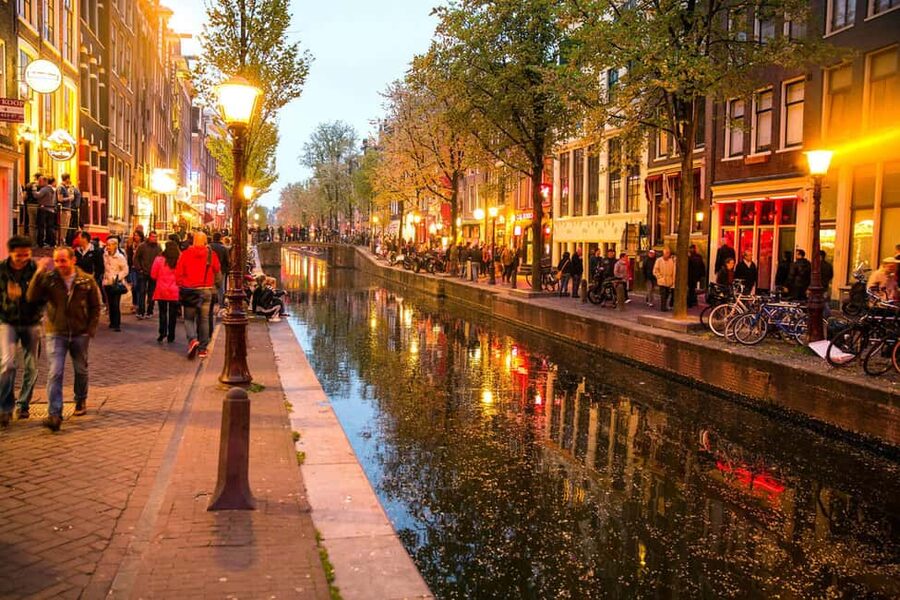
The tour includes a key highlight: you’ll find the first coffeeshop of Amsterdam along your route. This is one of those stops that changes how you think about “coffee shops” in Amsterdam.
For many visitors, coffee shops are mostly a cultural shorthand. But walking through the story of how it started—while you’re already learning about the neighborhood’s legal and social framework—gives you a clearer view of how different parts of Amsterdam’s nighttime culture developed side by side.
If you’re interested in the human side of the city—how rules, economics, and culture meet—you’ll probably enjoy this stop more than you expect. It turns a label into a timeline.
Live Guides and the Pace That Makes It Work
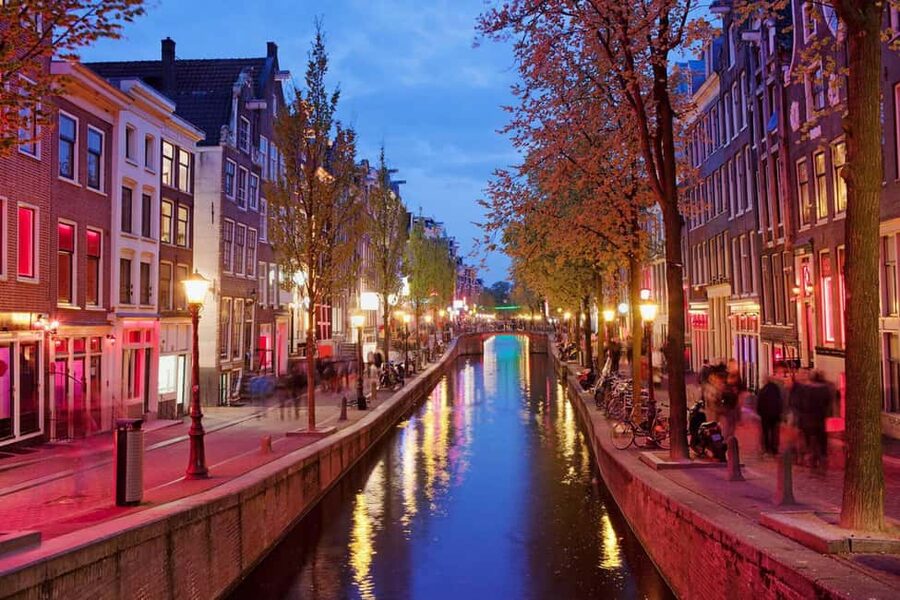
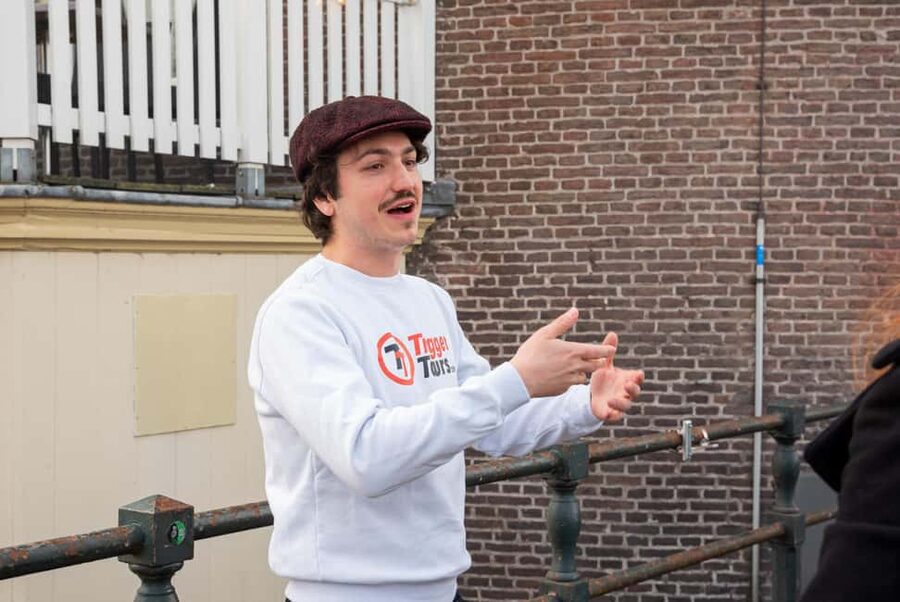
This tour is led by a professional live guide and runs in English, German, Spanish, and Dutch. There are also private or small-group options, which can make a big difference in a dense area where everyone’s trying to hear while walking.
From the guide names appearing in the available feedback, you might encounter guides such as Ben, Robin, Sophia, Adam, Aarre, Jay, Andrea, Pilar, Sandro, and Xander. The common thread is how the guides handle questions and pace the walk. Several comments highlight that guides were on time, friendly, and able to answer questions without rushing the group.
If you tend to ask lots of questions (or you just want the freedom to stop and listen), small groups help. It’s easier to hear over the street noise, and you can ask follow-ups instead of nodding along.
Also, plan for weather. People doing this walk in January-style cold note that a later departure can feel better for a long outdoor stroll. If you can choose times, pick the slot that leaves you less time freezing in motion.
Price and Value: Why $34 Can Feel Like More Than a “Walk”
At $34 per person for 2 hours, the real question is what you’re paying for. You’re paying for interpretation: a guide who can point out what you’re seeing (windows, signs, landmarks) and explain how it fits into Amsterdam’s rules, culture, and past-to-present changes.
If you just stroll the area yourself, you might see plenty—but you may miss why the city treats it the way it does. This tour saves you that guesswork, and it also saves time. Instead of mapping a route and studying background material after the fact, you get the context as you go.
It’s also a good “orientation” experience if it’s your first time in Amsterdam. Even with no interest in the topic itself, you’ll leave with a stronger sense of the city’s layout: Old Town lanes, canal-belt streets, and the way major hubs like Dam Square connect everything.
Who This Red Light District Tour Is For (and Who Should Skip It)
I’d recommend this tour if you want a guided, respectful look at a neighborhood that’s often treated like a rumor. It’s also a good fit if you like history that connects to present-day reality—laws, culture, and daily life, not just old buildings.
It may not fit if you’re looking for a light, party-style evening. The walk includes discussions of the industry and controversies, so it can be serious in tone. It also isn’t suitable for people with mobility impairments due to the walking conditions.
If you’re sensitive to uncomfortable topics, I suggest you go in with the right mindset: this is a context tour. You’re learning how Amsterdam works, not treating the area like a spectacle.
Should You Book This Amsterdam Red Light District Tour?
I’d book it if you want meaningful context in a short time and you’re comfortable walking through a working neighborhood with a guide leading the way. The combination of red-tinted windows, legal and cultural explanations, and historic stops like Oude Kerk makes it more than a simple “see the sights” route.
Skip it if walking through narrow streets and hearing frank discussion of adult topics isn’t your style. And if mobility is an issue, find a different kind of Amsterdam tour that can match your pace.
If you book, bring good shoes, expect a steady walk, and treat it like what it is: a guided look at how a complex city corner fits into Amsterdam’s real life.
More Tours in Amsterdam



More Tour Reviews in Amsterdam






The Red Light District After Dark





Just added: fresh Amsterdam tour reviews





Red Light District Tours, compared.
 ★ 4.9Red Light District Tour in DE/EN/IT/ES/FRFrom $287,136 reviews
 ★ 4.2Red Light Secrets Museum Entry TicketFrom $175,722 reviews
 ★ 4.6Amsterdam Red Light District & Coffee Shop TourFrom $294,134 reviews
 ★ 4.1Red Light District Pub Crawl with Unlimited ShotsFrom $242,130 reviews
 ★ 4.5Amsterdam Red Light District Pub CrawlFrom $241,497 reviews
 ★ 4.1After Dark Red Light District TourFrom $571,030 reviews
 ★ 5.0Private Amsterdam Red Light District and Coffee Shop TourFrom $41763 reviews
 ★ 4.5Red Light District guided tour (TOP RATED)From $34588 reviews
Browse the lists this tour appears in