
Reviewed · RED LIGHT DISTRICT TOURS
Amsterdam Red Light District and City Center Walking Tour
Amsterdam’s nightlife has a history lesson. This 2-hour Red Light District and city-center walk is a practical way to understand what you’re seeing, guided by a real expert. I like the small-group pace and the fact that the stories connect sex work, the rules around windows, and coffeeshop culture to the street-level reality. One drawback: it’s an adult neighborhood, so if that topic makes you uneasy, this may not be your best use of time.
You meet at Geldersekade 2 (1012 BH), and the tour loops back to the same spot. You get multiple start times, an English guide, and a mobile ticket—useful in a city where plans can shift fast.
What I really like is the balance of night atmosphere with day-to-day Amsterdam landmarks. You’ll move from De Wallen to the older core of town, including the Waag, a surviving wooden pub (Int Aepjen / Pub The Ape), and the city’s famous “built on trees” engineering story.
In This Review
- Quick hits before you go
- Why this 2-hour De Wallen walk helps you navigate Amsterdam fast
- What you’ll learn about windows, laws, and coffeeshop culture
- Geldersekade 2 logistics: start time, mobile ticket, and group size
- Stop-by-stop: De Wallen narrow streets and the stories behind the lights
- Practical consideration
- The Dam-area lesson: Amsterdam’s wooden poles and “built on trees”
- Int Aepjen (Pub The Ape): surviving wooden building from 1540
- Waag: the city gate that later became a guild and crafts hub
- Smallest House of Amsterdam: VOC storage to long-term living
- A condom shop since 1987: modern retail in an old-city frame
- Price and value: what $31.24 buys you in Amsterdam
- Who this walk suits (and who should rethink it)
- When you should book this specific experience
- FAQ
- How long is the Amsterdam Red Light District and City Center walking tour?
- What is the price per person?
- Where do I meet the guide?
- Is the tour offered in English?
- Is there a group limit?
- Is a mobile ticket used?
- Is it recommended for limited mobility?
- Can I cancel for a full refund?
- Should you book this Amsterdam Red Light District and city-center walk?
Quick hits before you go
- De Wallen at night: you see the district in the lighting and rhythm it was designed for.
- Rules, windows, and coffeeshop culture: you get the context instead of just the visuals.
- Old Town stops beyond the sex district: Dam-area engineering, Waag, and wooden architecture.
- Small group (max 16): easier to ask questions and keep the walk comfortable.
- Stops that mix old and new: VOC-era spaces, then a condom shop that’s been around since 1987.
The old town after dark: more Red Light District walks
- Amsterdam: Red Light District Tour in DE/EN/IT/ES/FR
★ 4.9 · 7,136 reviews - Amsterdam: Red Light Secrets Museum Entry Ticket
★ 4.2 · 5,722 reviews - Amsterdam Red Light District & Coffee Shop Tour
★ 4.6 · 4,134 reviews - Amsterdam: Red Light District Pub Crawl with Unlimited Shots
★ 4.1 · 2,130 reviews
Why this 2-hour De Wallen walk helps you navigate Amsterdam fast
This tour works because it treats Amsterdam like one place, not a set of separate attractions. Yes, De Wallen is the headline, but the walk also threads you through older city landmarks so the neighborhood feels anchored in Amsterdam’s long timeline.
It also respects how you’ll actually experience Amsterdam. You’re not stuck reading a museum label for two hours. You walk narrow streets, you see recognizable historic buildings, and your guide puts the pieces together so you’re not left guessing what’s legal, what’s tradition, and what’s just marketing.
What you’ll learn about windows, laws, and coffeeshop culture
The guide portion is the main value here. You’ll hear the real stories behind De Wallen—not only the obvious storefronts, but the way the district is managed and regulated. The tour specifically covers coffeeshop culture and sex work industry context, and it aims to explain how the laws affect what you see in the windows.
That matters because the district can look chaotic if you treat it like a postcard. With the right framing, you start noticing the patterns: where things are permitted, how the rules shape street life, and how the city balances tourism with enforcement.
You’ll also get a sense of how the neighborhood became what it is over time. One of the best outcomes of this kind of guided walk is learning what changed, why it changed, and how that history still shows up in the street layout and signage today.
Geldersekade 2 logistics: start time, mobile ticket, and group size
Start is Geldersekade 2, 1012 BH Amsterdam, and the tour ends back at the meeting point. It runs about 2 hours, which is short enough to fit into your first night or a quick morning-to-afternoon shuffle.
There’s a mobile ticket, and you can choose from multiple start times. Booking ahead is wise because this is popular (it’s commonly booked well in advance), and night tours are often the ones that fill up first.
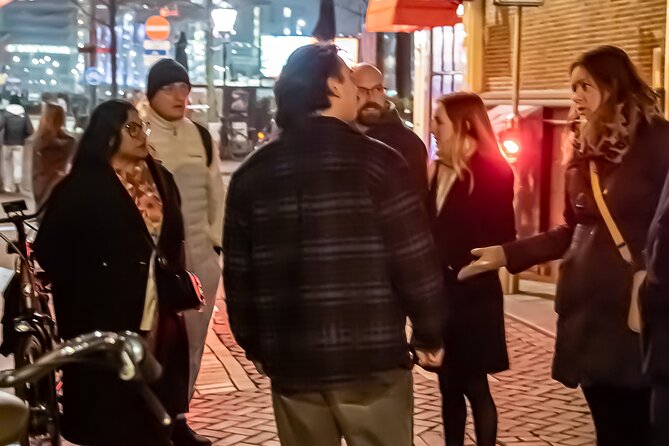
The group max is 16. That’s big enough for energy, small enough for a guide to keep track of everyone. If you like asking questions instead of just watching, this group size is a real practical advantage. Reviews also highlight guides who pay close attention to the group and keep things organized, with names like Robin, Gio, and Aaron coming up as examples of friendly, capable guiding.
More of Amsterdam street by street, on foot





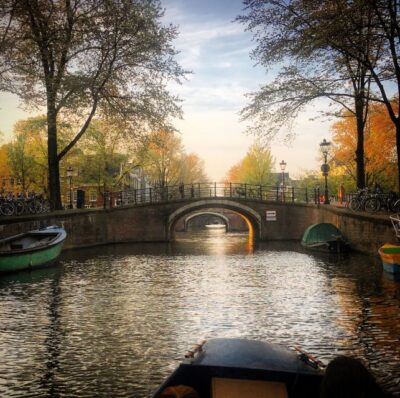
Stop-by-stop: De Wallen narrow streets and the stories behind the lights
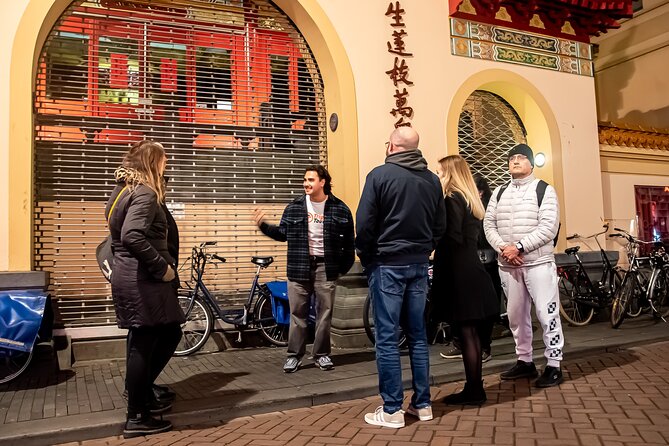
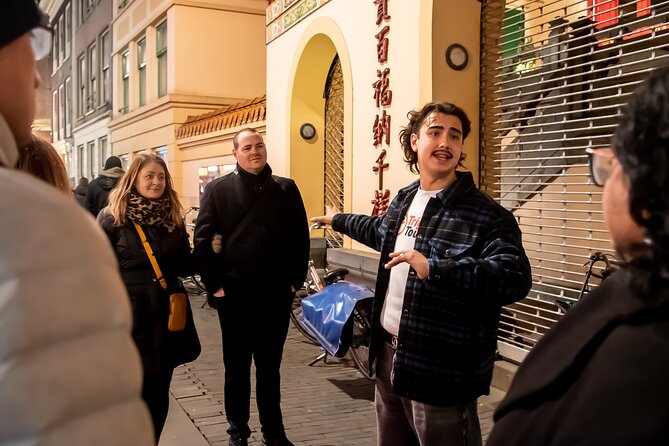
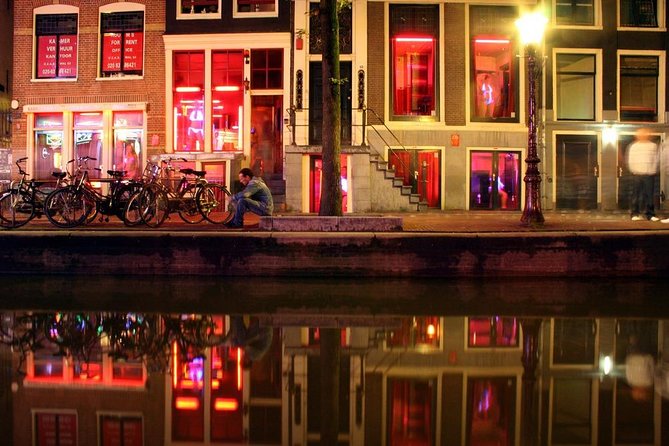
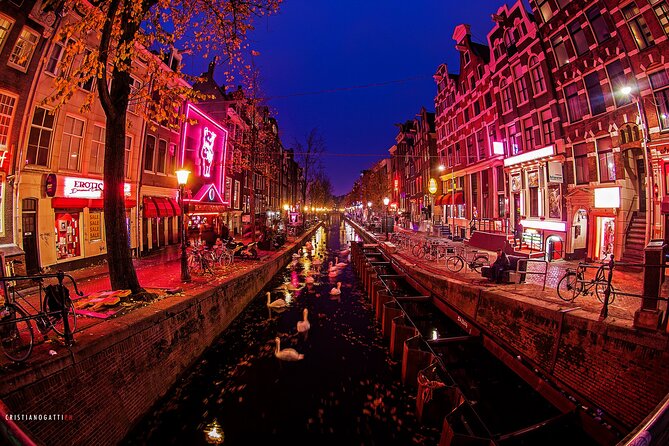
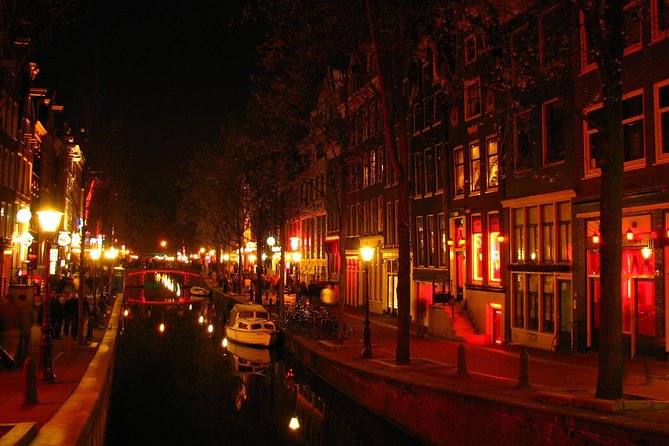
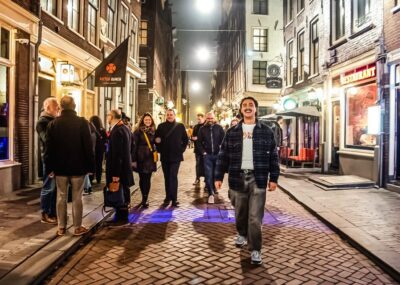
Your first stop is the Red Light District (De Wallen) at night. This is the moment when Amsterdam’s famous adult nightlife stops being an abstract idea and becomes a real street experience.
Your guide walks you through narrow streets and explains coffeeshop culture alongside the sex work industry. The point isn’t shock; it’s comprehension. You’ll learn how the district’s regulations shape what’s visible, how windows are used, and why visitors often misunderstand what they’re seeing without the basic legal context.
A good thing about a focused start like this: it sets the tone for the rest of the walk. Once you understand what De Wallen is trying to do (and what it’s allowed to do), you can shift from reacting to observing.
Practical consideration
Because this is an adult neighborhood, you should be mentally ready for subject matter that’s not for everyone. The tour is guided and context-heavy, but it’s still built around an area most people know mainly for nightlife. If you prefer strictly “traditional sights” only, you might feel like you’re spending too much time in one theme.
The Dam-area lesson: Amsterdam’s wooden poles and “built on trees”
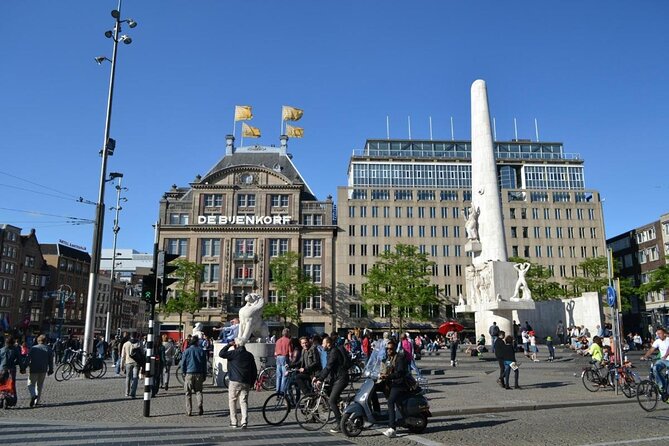
From the district, the walk moves toward key Old Town history, including the Dam area story often summarized as Amsterdam built on trees.
Here’s the big idea you’ll hear: Amsterdam’s soil is thick fen and clay, so many buildings rest on wooden foundation piles. Those piles are driven down roughly 11 meters to reach solid sand. That’s the engineering reason so much of the city can exist as it does on reclaimed waterways and soft ground.
I love this kind of stop because it changes how you see the city. Instead of thinking Amsterdam is just charming canals and tight streets, you learn it’s also a city that solved serious ground problems centuries ago. It explains why the city looks the way it does and why certain building styles became common.
It also connects to the Red Light District in a useful way. If the area is part of the oldest parts of town, the street-level landmarks aren’t floating in time—they’re part of a city foundation system that’s been there for generations.
Int Aepjen (Pub The Ape): surviving wooden building from 1540
One of the most memorable stops is Pub The Ape, also known by its Dutch name Int Aepjen. This place is described as built around 1540 and one of only two remaining wooden buildings in Amsterdam.
Why you’ll care: buildings can’t survive fires forever, and Amsterdam’s past includes major destruction. In this case, a big fire in 1452 led the government to push toward brick facades afterward. So when you see a surviving wooden structure, you’re looking at a rare link to a building era that almost didn’t make it.
This stop is more than a photo moment. It helps you understand how policy shaped architecture. Fire risk didn’t just change what was built—it changed what was allowed to stand.
Waag: the city gate that later became a guild and crafts hub
Next up is the Waag. The Waag used to function as one of Amsterdam’s city gates, part of the defensive wall, built around the 1400s. It’s also described as the second oldest building of Amsterdam.
Later, it wasn’t just a gate structure. It became a place where guild and craftsman organizations set up inside the Waag and around the square. That means this building is a “social infrastructure” example—defense first, then commerce and trade systems.
If you’ve ever wondered why Amsterdam’s historic centers feel like they grew around squares and trade nodes, this stop answers that. It shows how city power shifts over time: from walls and gates to working spaces for artisans and organized business.
Smallest House of Amsterdam: VOC storage to long-term living
You’ll also hear about the smallest house of Amsterdam, built around the 1700s. The story goes that it first served as storage for the VOC trading company, then later became a long-term home for people who lived there.
This is a great stop for two reasons. First, it makes the city’s trading history feel physical. Second, it shows how space worked in dense urban Amsterdam—when land was expensive and the city kept growing, small structures still found a purpose.
It also adds a human angle after the adult district. You go from a modern, heavily regulated street scene to a compact building narrative rooted in trade and everyday living.
A condom shop since 1987: modern retail in an old-city frame
The walk ends (with another stop) at what’s described as the world’s first condom shop specialized for condoms, in place since 1987. The point is to show how contemporary Amsterdam still puts business in plain sight, even in areas loaded with historical meaning.
You’ll hear that you can get size customized condoms and special varieties. The tour uses this as a marker of how the city handles adult commerce and keeps it part of the street economy rather than hiding it.
I like this kind of final stop because it ties the night district’s realities back to a broader theme: Amsterdam constantly mixes old structures with modern functions. You’re not just learning about the past; you’re seeing how the present keeps working inside the same urban frame.
Price and value: what $31.24 buys you in Amsterdam
At $31.24 per person for about two hours, the value comes down to one thing: guidance quality plus a tight route.
You’re paying for an English-speaking expert to connect several topics that usually get separated in tourist life—De Wallen, coffeeshop culture, district rules, and then Old Town landmarks like the Waag, Int Aepjen, and the smallest house. If you tried to stitch that together alone, you’d likely either miss the legal context or spend time wandering without a clear story line.
Also, small-group format helps the price feel more fair. With a maximum of 16, you’re not battling for attention at every stop. You’re more likely to get direct answers and feel like the guide is tracking the whole group.
If you’re the type who enjoys practical orientation—what am I looking at and why does it work this way—this is the kind of tour that justifies the cost quickly.
Who this walk suits (and who should rethink it)
This tour is a strong fit if you want your first Amsterdam nights to make sense fast. You’ll get bearings in the Dutch capital, learn how the district is managed, and still come away with real city-center history.
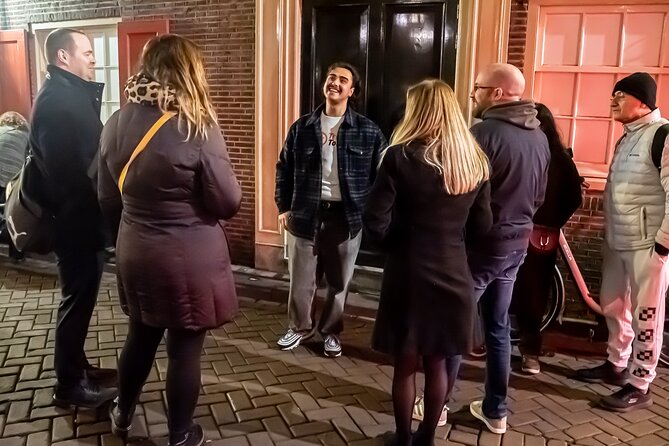
It’s also a good choice for people who like questions. The tour format and small group size are designed for a guided conversation style, and the guiding style described with names like Gio, Aaron, and Robin suggests the guide keeps people involved rather than lecturing from a distance.
That said, it’s not recommended for travelers with limited mobility. If you need step-free routes, this might be harder than you expect because the walk is in the older street network around the Red Light District.
And if adult themes make you uncomfortable even with context, you’ll probably prefer a different kind of Amsterdam tour.
When you should book this specific experience
Book it if:
- You want context over shock.
- You plan to see De Wallen at night anyway, and you’d rather understand it than just look at it.
- You’re also interested in Old Town landmarks, including wooden building survival stories and the Waag’s role as a gate and later a guild center.
Avoid it if:
- You’re looking only for classic museum-style attractions.
- Adult topics would genuinely derail your enjoyment.
- Mobility needs make walking-based night tours a bad match.
FAQ
How long is the Amsterdam Red Light District and City Center walking tour?
It runs for about 2 hours.
What is the price per person?
The price is $31.24 per person.
Where do I meet the guide?
You meet at Geldersekade 2, 1012 BH Amsterdam, Netherlands.
Is the tour offered in English?
Yes, it’s offered in English.
Is there a group limit?
The tour has a maximum of 16 travelers.
Is a mobile ticket used?
Yes, it uses a mobile ticket.
Is it recommended for limited mobility?
No, it is not recommended for travelers with limited mobility.
Can I cancel for a full refund?
Yes. You can cancel up to 24 hours in advance for a full refund.
Should you book this Amsterdam Red Light District and city-center walk?
If your ideal Amsterdam trip includes both street-level reality and city history, book it. The route gives you De Wallen context at night, then balances it with older landmarks like the Waag, Int Aepjen/Pub The Ape, and the city’s “built on trees” engineering story. At $31.24 for a guided small group, it’s a good value if you want understanding, not just images. Just be honest about whether adult themes are comfortable for you before you commit.
More Tours in Amsterdam






More Tour Reviews in Amsterdam






The Red Light District After Dark




Just added: fresh Amsterdam tour reviews





Red Light District Tours, compared.
 ★ 4.9Red Light District Tour in DE/EN/IT/ES/FRFrom $287,136 reviews
 ★ 4.2Red Light Secrets Museum Entry TicketFrom $175,722 reviews
 ★ 4.6Amsterdam Red Light District & Coffee Shop TourFrom $294,134 reviews
 ★ 4.1Red Light District Pub Crawl with Unlimited ShotsFrom $242,130 reviews
 ★ 4.5Amsterdam Red Light District Pub CrawlFrom $241,497 reviews
 ★ 4.6Red Light District Tour in English or GermanFrom $341,228 reviews
 ★ 4.1After Dark Red Light District TourFrom $571,030 reviews
 ★ 5.0Private Amsterdam Red Light District and Coffee Shop TourFrom $41763 reviews
Browse the lists this tour appears in