
Reviewed · WALKING TOURS
Amsterdam: Private World War Two History Walking Tour
Names and streets remember the war. This private Amsterdam WWII history walking tour turns famous squares and quiet corners into clear stories about the Nazi occupation. I like that it is taught by retired historians and stays personal with a group size of four, so your questions actually get time.
I also like the way the tour uses specific, local evidence: photos from Dutch resistance fighters, the story of the Wehrmacht’s entry, and a street-by-street approach to Jewish victims. The one drawback to plan for is that it does not include visits to the Anne Frank House, the Resistance Museum, or the Hollandsche Schouwburg, so you may want other time on your trip if those are must-sees.
In This Review
- Key highlights at a glance
- Meeting at Prinsengracht 263, Without the Usual Detour
- Private Group Up to Four: How the Tour Feels in Real Time
- Wehrmacht Arrival and the Grand Hotel Story You’ll Remember
- Dam Square on May 7, 1945: A Loud Moment With a Clear Clock
- Winter of Hunger: Food Drops and the Cost of Survival
- One Amsterdam Street: Names, Photos, and a Small Book You Keep
- Deportations to Auschwitz and Sobibor: The Facts the Tour Connects
- The Auschwitz Violin Player Statue: Why Memorial Art Hits Hard
- Coffee Break and Paper Notes: Small Logistics, Real Comfort
- Price and Value: Is $188 for a Private Tour Worth It?
- Who Should Book This WWII Amsterdam Walk
- Should You Book This Amsterdam WWII History Walking Tour?
- FAQ
- How long is the Amsterdam WWII private walking tour?
- Where does the tour start?
- What is the group size limit?
- Is the tour guided in English?
- Does the tour use an audio system?
- Which museums are not visited during this tour?
- Can I bring cancellation flexibility?
Key highlights at a glance
- Private group up to 4: personal attention without a crowd
- No audio system: you hear the guide, ask questions freely
- Dam Square focus on May 7, 1945: a major moment you can understand in context
- Winter of hunger food drops: daily survival, not just battles and dates
- One Amsterdam street’s victim list: names and photos in a small keep-sake book
- Auschwitz violin player statue: memorial art that makes the past feel present
More of Amsterdam street by street, on foot
- Amsterdam Anne Frank: Small-Group Walking Tour & Local Guide
★ 4.8 · 12,789 reviews - Anne Frank’s Story – Guided Walking Tour through Amsterdam
★ 5.0 · 11,619 reviews - Absolutely Amsterdam – the Essential Introductory Walking Tour
★ 5.0 · 3,629 reviews - Amsterdam: Anne Frank Guided Walking Tour in DE/EN/IT/ES
★ 4.9 · 3,107 reviews
Meeting at Prinsengracht 263, Without the Usual Detour
You start on Prinsengracht, in front of the old Anne Frank House at 263, with the guide holding a big notebook. The meeting spot is not random. It sets the tone: this is Amsterdam’s wartime story, seen from street level.
You’re also close enough to get your bearings fast, because Prinsengracht is a reliable landmark line in the city. If you arrive early, you can take a moment just to orient yourself along the canal streets, then settle in for walking and discussion. The tour is about three hours, and it may run a bit longer depending on questions and the pace you choose.
One simple tip: bring an umbrella. Amsterdam weather loves to change its mind, and you’ll be walking the whole time.
Private Group Up to Four: How the Tour Feels in Real Time
This tour is designed for small groups: never more than 4 people. That matters more than it sounds. In a big group, you ask one question and wait. Here, you can keep asking. It also means the guide can steer the conversation if your interests lean toward events, people, or places.
The tour is led in English by a live guide, and it’s given by three retired historians with a passion for the German occupation. In the feedback, the guide Peter Schaapman is singled out for being excellent and for having stories that feel both precise and human. If you value a direct, conversation-style walk, this format is a good match.
There’s another practical choice I appreciate: no audio system. You don’t need to wear anything, and you’re not fighting background noise. Of course, you still need to hear the guide, so if you’re hard of hearing, it’s worth planning seating distance on the sidewalk and staying attentive.
They also walk at a pace you choose. If you need mobility support, the tour is wheelchair accessible. The advice is to email in advance so they can plan the coffee stop and the route.
Wehrmacht Arrival and the Grand Hotel Story You’ll Remember
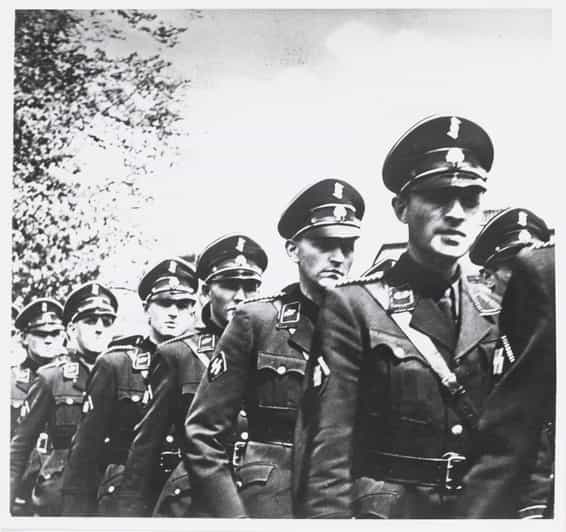
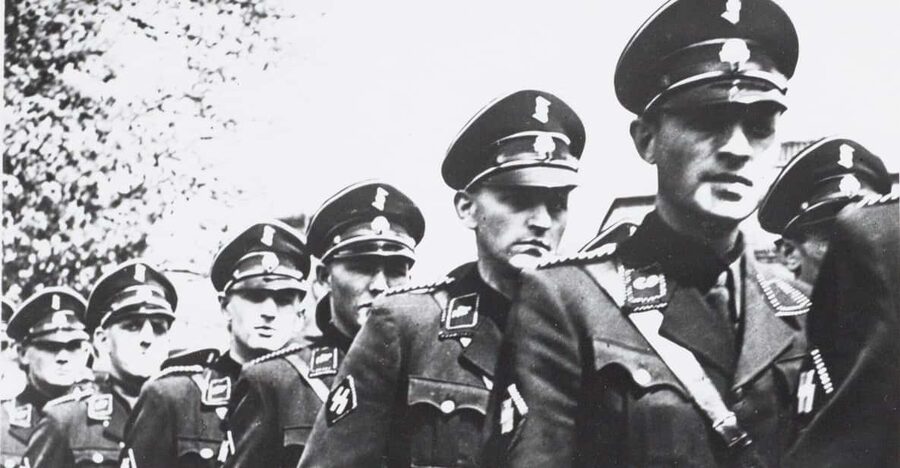
A big early theme is the entry of the German army (the Wehrmacht). What makes this tour more than a list of wartime facts is that it anchors the occupation in very specific Amsterdam locations.
You’ll be shown photos of the German arrival and you’ll talk through what those images meant at the time. One key moment is the story of the welcoming of the German army at what used to be the town hall, now The Grand Hotel. The guide also connects this to a later shift in the city’s mood: the Canadian army was later cheered.
That contrast is powerful. It’s easy to think of history as one straight line. Here you see the city changing in real time—first submission and occupation, then release. And because the tour doesn’t rush, you can keep the emotional weight of those scenes in your head while you move.
More private tours with a guide to yourself


Dam Square on May 7, 1945: A Loud Moment With a Clear Clock
The tour pays close attention to the shooting incident on Dam Square on May 7, 1945. Even if you’ve heard the date before, you’ll likely appreciate how the guide frames it in place and in sequence.
Dam Square is one of those sites where everything looks simple from a distance. The guide helps you slow down and recognize what happened there, and why it mattered in the immediate aftermath of liberation. That’s also where the previously mentioned Canadian army moment comes back into the story, since the mood shift becomes part of the same space-based narrative.
If you tend to skim plaques on your own, this is where having a historian matters. You’re not just reading facts—you’re understanding how a single square can hold multiple layers of meaning, one right after another.
Winter of Hunger: Food Drops and the Cost of Survival
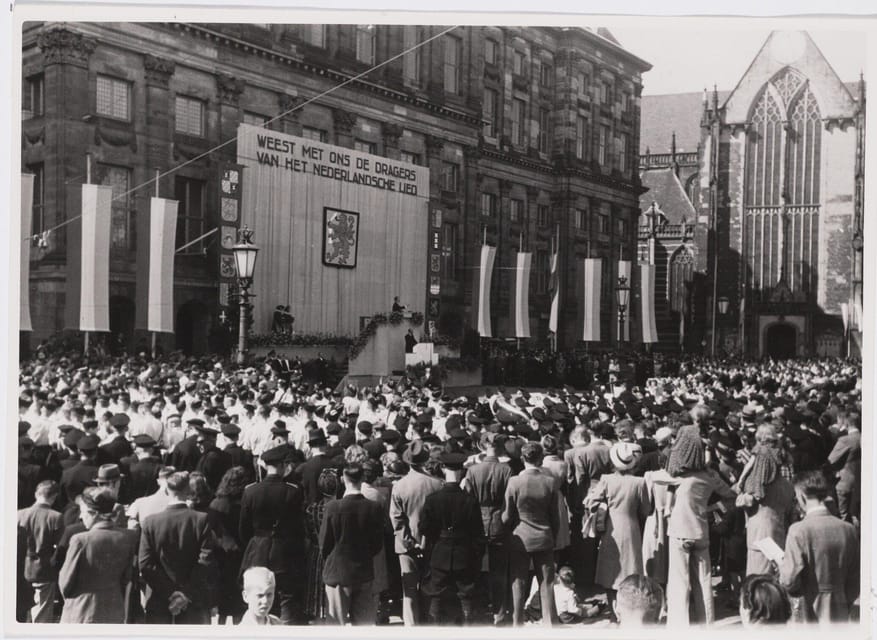
One of the most sobering parts of the tour is also one of the most specific: the food dropping during the winter of hunger. This section is valuable because it’s not about uniforms. It’s about bodies, days, and the difference between having food and not having food.
I like that the tour doesn’t treat hunger as a background detail. It talks about it as part of how occupation changed everyday life. That’s often missing in quick tours that focus mostly on major dates and monuments.
Also, this kind of topic is exactly why the tour works as an off-the-beaten-path experience. You get the feeling that Amsterdam’s wartime story isn’t only written in big, famous memorials. It’s also present in the city’s smaller reminders—stories that make you look again at places you thought you already understood.
One Amsterdam Street: Names, Photos, and a Small Book You Keep
This is the section that stays with me the longest, because it is so personal in its method.
The guide selects all the Jewish residents of one Amsterdam street and prepares a small book for you with photos and names. That approach turns tragedy into something you can actually hold onto—real people, not only broad statistics. The tour also aims to show all Jewish victims in an Amsterdam street, using preserved documentation.
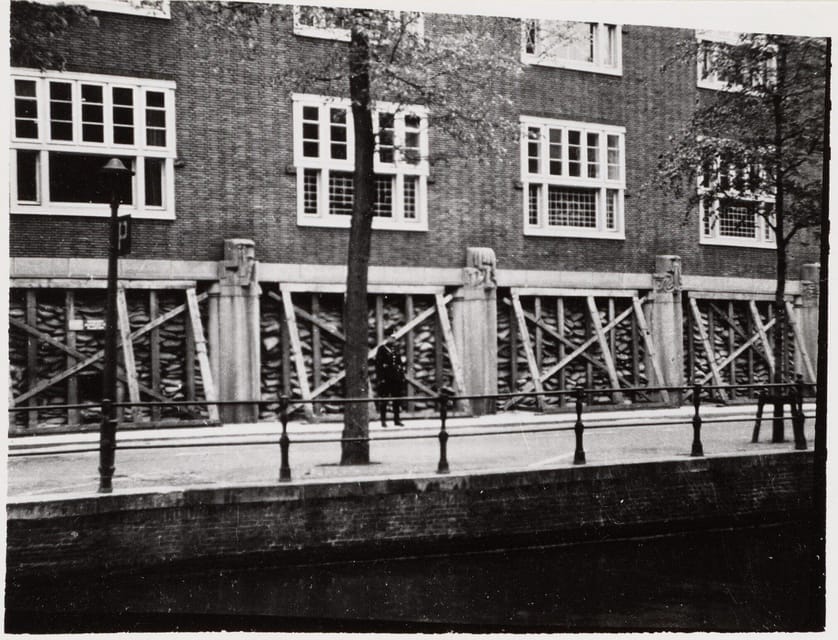
On top of that, the walk includes photos that were preserved and taken by Dutch resistance fighters. You’ll see some of those photos at the locations connected to them, and the guide explains the background of what’s pictured.
If you’re the type of visitor who wants history to feel exact, this part delivers. If you’re worried about becoming overwhelmed, it can help to take the tour at a steady pace rather than rushing through. The guide gives you time for questions, and you can pause mentally when you need to.
Deportations to Auschwitz and Sobibor: The Facts the Tour Connects
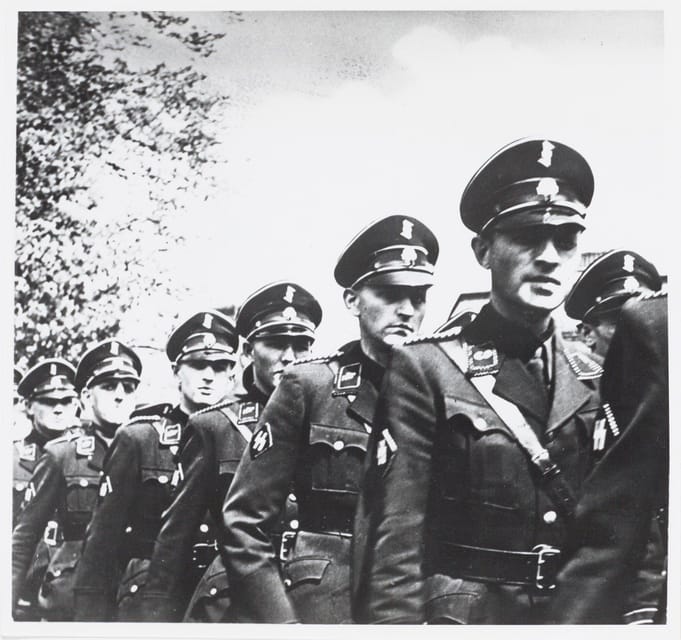
The tour does not stop at the local level. It follows the consequences of occupation and deportation by discussing the deportations of the Jewish population and their fate in extermination camps, including Auschwitz and Sobibor.
You get the sense that the guide is carefully connecting the streets you walk with the scale of what those departures led to. That connection is the point. Otherwise, Amsterdam becomes an abstract setting rather than the starting point of an unimaginably cruel system.
This portion is also where the tour’s structure matters: it keeps moving between places, evidence, and outcomes, instead of bouncing around without a thread. The result is clearer context as you walk.
The Auschwitz Violin Player Statue: Why Memorial Art Hits Hard
Another highlight is seeing a statue of the famous violin player from Auschwitz. Even without extra context, a memorial sculpture forces you to slow down and pay attention, because it’s asking you to remember a person and a story—not just a location.
Here, the guide connects that statue to the wider deportation story you’ve been hearing. For me, this is where the tour balances facts with a kind of human symbolism. If you like moments where art becomes a memorial tool, you’ll probably appreciate this stop.
And it’s a reminder that history is not only stored in museums. Sometimes it’s in the open air, at street level, where you have no option but to confront it.
Coffee Break and Paper Notes: Small Logistics, Real Comfort
Halfway through the walk, you’ll get a short break for coffee and/or a restroom. Refreshments aren’t included, but the break is built into the experience so you’re not sacrificing comfort while learning heavy material.
It’s also okay if you treat the break like an extension of your day. The tour may run a little longer, and you can also eat something during the coffee stop, like a late breakfast. That flexibility matters, especially if your schedule includes other activities later.
You’ll also receive information on paper during the tour that you can keep. That’s more useful than it sounds. When the subject matter is emotionally intense, it helps to have something solid you can reread later rather than trying to rely on memory alone.
Price and Value: Is $188 for a Private Tour Worth It?
The price is $188 per group up to 4 for about three hours. For many people, that sounds like a lot until you do the simple math in your head.
- If you fill the group with three friends or family, your per-person cost drops a lot.
- If you’re booking solo or as a pair, you’re paying closer to the full amount, which is more expensive than a standard group tour.
So the value depends on your travel style. I see this as best for:
- Small groups who want a private pace and space for questions
- People who care about WW2 details tied to exact Amsterdam addresses
- Visitors who don’t want to rely on audio headsets, and prefer a direct conversation
Also, remember what you are paying for: retired historians, a no-audio walking format, a paper keep-sake, and a structured focus on Nazi occupation sites in Amsterdam that you won’t get from a generic “city highlights” tour.
Who Should Book This WWII Amsterdam Walk
I think this tour fits best if you:
- Want to go off the beaten path and focus specifically on the Nazi occupation of Amsterdam (1940–1945)
- Like learning through specific places, photos, and named victims
- Prefer a small group setting where questions are welcome
- Are comfortable with the fact that this is about traumatic events
If you’re only interested in the most famous museum experiences, you might feel frustrated because this walk explicitly does not include the Anne Frank House, the Resistance Museum, or the Hollandsche Schouwburg. In that case, consider pairing this tour with other visits on separate days so your itinerary matches your interests.
Should You Book This Amsterdam WWII History Walking Tour?
If your goal is to understand Amsterdam during the Nazi occupation through street-level evidence and personal storytelling, I’d say yes—this is exactly the kind of tour that gives you more than landmarks. The private size, the paper notes you keep, and the naming of victims on a specific street make it feel concrete.
Book it if you want a thoughtful, history-forward walk with a guide like Peter Schaapman who can connect events, locations, and evidence without turning the subject into a lecture.
Skip it (or pair it carefully) if you’re expecting a museum day. This tour’s focus is different, and it does not replace those major institutions.
FAQ
How long is the Amsterdam WWII private walking tour?
It lasts about 3 hours, and it may extend a bit. There’s also a coffee/restroom break about halfway through.
Where does the tour start?
The tour starts at 9:30 A.M. in front of the old Anne Frank House on Prinsengracht 263. The guide has a big notebook in hand.
What is the group size limit?
The group size is never more than 4 people, so you get personal attention and time for questions.
Is the tour guided in English?
Yes. The tour offers a live English guide.
Does the tour use an audio system?
No. There is no audio system. The tour is designed for a personal, live approach.
Which museums are not visited during this tour?
This tour does not visit the Anne Frank House, the Resistance Museum, or the Hollandsche Schouwburg. Tickets for those museums are not included.
Can I bring cancellation flexibility?
Yes. You can cancel up to 24 hours in advance for a full refund, and you can also reserve now & pay later if that option is available.
More Amsterdam Walking Routes






More Tours in Amsterdam




More Tour Reviews in Amsterdam






Just added: fresh Amsterdam tour reviews





Walking Tours, compared.
 ★ 4.8Amsterdam Anne Frank: Small-Group Walking Tour & Local GuideFrom $2912,789 reviews
 ★ 5.0Anne Frank’s Story – Guided Walking Tour through AmsterdamFrom $3911,619 reviews
 ★ 5.0Absolutely Amsterdam – the Essential Introductory Walking TourFrom $53,629 reviews
 ★ 4.9Anne Frank Guided Walking Tour in DE/EN/IT/ESFrom $283,107 reviews
 ★ 4.8Anne Frank Guided Small Group Walking TourFrom $282,722 reviews
 ★ 4.9Cultural Highlights Walking TourFrom $302,629 reviews
 ★ 4.2Ganja Walking TourFrom $402,127 reviews
 ★ 5.0Anne Frank Walking Tour Amsterdam Including Jewish Cultural QuarterFrom $751,879 reviews
Browse the lists this tour appears in