
Reviewed · WALKING TOURS
Amsterdam: Private Introduction Walking Tour (TOP RATED)
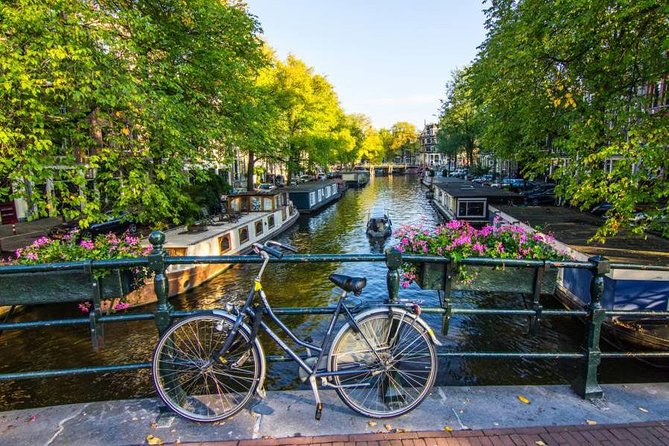
Amsterdam makes sense on foot. I love how this private walk covers central Amsterdam with a clear route from Centraal Station to the canal ring, and I also like the way guides tackle coffee shop culture and the Red Light District in plain language. The trade-off: it’s a steady route with few/no scheduled breaks, so bring water and a snack.
I also appreciate the pacing options: you can choose morning or afternoon departures, which makes it easy to slot in on your first day. The standard meet-up is Park Plaza Victoria Amsterdam on Damrak, and for selected hotels there’s pickup and drop-off.
What really makes this feel worth the time is the small-group, question-friendly style led by guides such as Ben, Guido, James, Andrea, Aaron, and Robin. One practical note: Anne Frank House is discussed, but admission isn’t included, so you’ll plan that visit separately if you want to go inside.
In This Review
- Key things to know before you go
- Entering Amsterdam through Centraal Station
- Zeedijk’s old pubs and China Town’s temple pause
- Nieuwmarkt and the Waag: markets, gates, and daily snacks
- Oude Kerk: Amsterdam’s oldest building and identity talk
- Beursplein and Beurs van Berlage: money, corporations, and the stock exchange
- Dam Square to Begijnhof: power and a quiet courtyard world
- Anne Frank House context: what you’ll get and what you won’t
- The canal ring at Grachtengordel: why Amsterdam’s canals matter
- Rembrandtplein: art names, nightlife energy, and a sense of scale
- Portuguese Synagogue: Jewish Amsterdam and the Golden Age footprint
- Coffee shop culture and the Red Light District, handled with context
- Price, time, and what you get for $39.20
- Who this tour suits best (and who might skip it)
- Should you book this Amsterdam private introduction walking tour?
- FAQ
- How long is the Amsterdam private introduction walking tour?
- Where does the tour start, and where does it end?
- Is this tour private?
- What is included in the price?
- Is Anne Frank House admission included?
- What if the weather is poor?
Key things to know before you go
- A true central-city route that links major squares, churches, markets, and canals into one easy first-day loop
- Coffee shop culture and the Red Light District handled as part of Amsterdam’s history and identity, not as a shock stunt
- Jordaan-adjacent storytelling, with context for how the city grew and what life looked like in different eras
- Historic stops that are actually different: Oude Kerk, Beursplein/Beurs van Berlage, Begijnhof, and more
- Small-group feel on a private tour, so questions don’t get swallowed by a crowd
- Flexible guide energy, including humor and sometimes practical tips like where to eat next
More of Amsterdam street by street, on foot
- Amsterdam Anne Frank: Small-Group Walking Tour & Local Guide
★ 4.8 · 12,789 reviews - Anne Frank’s Story – Guided Walking Tour through Amsterdam
★ 5.0 · 11,619 reviews - Absolutely Amsterdam – the Essential Introductory Walking Tour
★ 5.0 · 3,629 reviews - Amsterdam: Anne Frank Guided Walking Tour in DE/EN/IT/ES
★ 4.9 · 3,107 reviews
Entering Amsterdam through Centraal Station
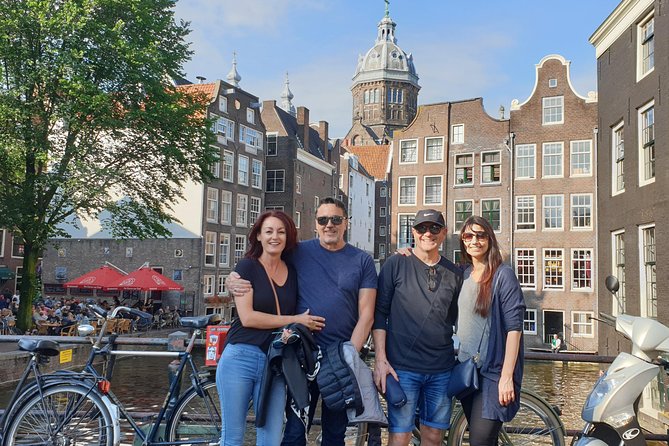
If you’re new to Amsterdam, starting at Centraal Station is smart. It’s not just a transportation hub; it’s where the city funnels visitors into its grid of neighborhoods, canals, and main streets. A good guide uses that moment to set context fast: how to read directions, how canals shape movement, and why so many buildings here look like they’ve been arguing with each other for centuries.
This tour is built for orientation. You’ll get a walking path that connects big landmarks without needing to plan every turn yourself. I like that it doesn’t treat Amsterdam as one-note scenery. Instead, it frames the city as a place where trade, religion, politics, and everyday habits all leave physical clues.
There’s also a flexibility angle. The tour notes that hotel meet-up is possible if you request it, and hotel pickup/drop-off is offered for selected hotels. That can be a lifesaver if you’re arriving with luggage or you don’t want to fight tram and street navigation before your first walk.
Zeedijk’s old pubs and China Town’s temple pause
From Centraal, you head toward Zeedijk, a street known for some of the oldest pubs in Amsterdam. This stop is where the tour starts mixing “what you see” with “what it means.” You’re not just hearing facts; you’re learning why certain streets become gathering places and how Amsterdam’s social life developed.
You’ll also pass into the area associated with China Town, where you have the chance to visit a Buddhist temple. This is one of those moments where Amsterdam stops feeling like a single cultural bubble. It becomes a layered port city—people arrived, settled, adapted, and built communities that still show up in street-level details.
A practical tip: this is the kind of stretch where you may want to slow down for photos, then mentally switch back into listening mode. The guide’s job is to translate what looks similar from one street to the next—so try not to multitask too much.
Nieuwmarkt and the Waag: markets, gates, and daily snacks
Next comes Nieuwmarkt, anchored by the Waag, a building dating to the 15th century. For first-timers, that’s the value of this tour: it takes the city’s “cool old stuff” and turns it into a timeline you can remember. The Waag isn’t treated as a random landmark; it’s part of how Amsterdam managed trade, movement, and civic life over time.
Nieuwmarkt also has a daily street market vibe, and you’ll get a chance to try Dutch traditional snacks. I like this stop because it’s not all museum energy. It’s Amsterdam as it’s lived: smells, quick bites, and that sense of everyday rhythm.
Watch your timing here. Market sampling is easy to overdo, especially if you’re hungry. The route keeps moving, so if you want that extra snack round, plan for it now rather than later.
More private tours with a guide to yourself




Oude Kerk: Amsterdam’s oldest building and identity talk
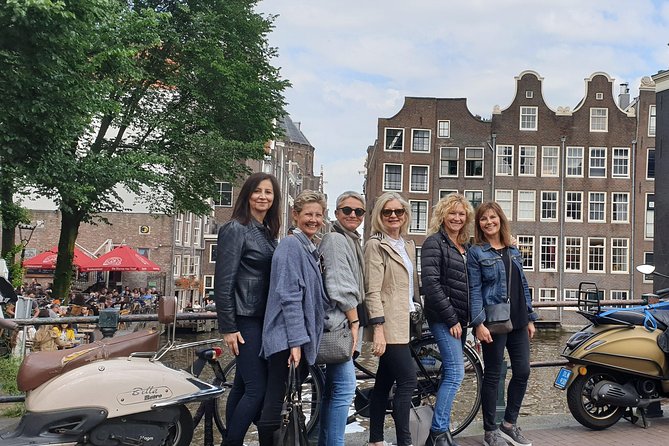
At Oude Kerk (the Old Church), the tour moves into the big idea behind the old stones: how Amsterdam’s story connects to Dutch identity. This isn’t delivered as a dry lecture. It’s framed as a way to understand why certain institutions, beliefs, and public spaces mattered—and how those choices shaped city life.
Oude Kerk is Amsterdam’s oldest building, so it helps you anchor everything you’ve already learned at Zeedijk and Nieuwmarkt. Suddenly, the city feels less like a photo set and more like a place with long memory.
One consideration: churches and historic interiors can be emotionally serious spaces. If your group is chatty or distracted, it can be tempting to rush. Slow down anyway. Even if you don’t go inside (you won’t always be able to depending on the day and the route), the guide’s explanation is what makes this stop click.
Beursplein and Beurs van Berlage: money, corporations, and the stock exchange
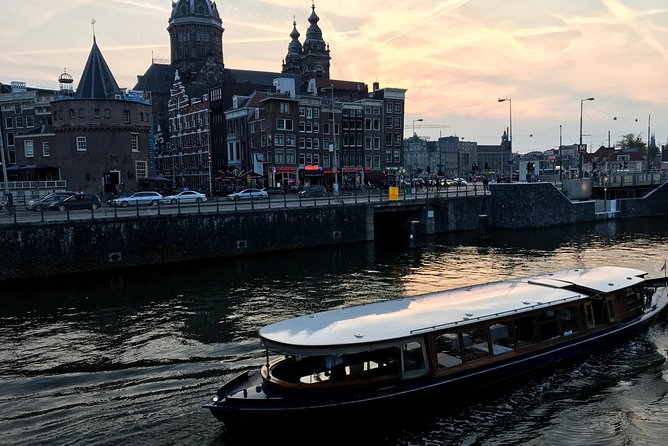
Beursplein is next, with the Beurs van Berlage on the Damrak as the backdrop. This is one of the more “thinky” stops, but it’s worth it because it helps you decode modern Amsterdam. You’ll hear how the Dutch developed the modern corporation concept and how the world’s first stock exchange ties into this era.
If you’ve ever wondered why Amsterdam gets linked to finance and global trade, this is where the dots start connecting. It’s also a reminder that the Netherlands built power through systems—rules, contracts, and trade networks—long before “startup” was a buzzword.
It’s also a good break-from-the-crowd stop in the sense that the guide gives you a new lens. Instead of only asking what something looks like, you’ll ask why Amsterdam built it there and how people used it.
Dam Square to Begijnhof: power and a quiet courtyard world
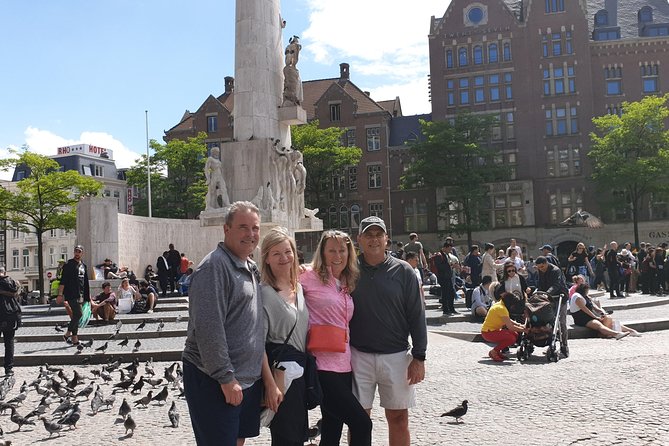
Dam Square is the center of Amsterdam, and the tour doesn’t shy away from the big symbols. You’ll see the Royal Palace, the Nieuwe Kerk, and the National Monument, tied to National Remembrance Day. This is a strong “look up” moment because the buildings around the square crowd your attention in the best way.
From there, you shift to a totally different mood at the Begijnhof. This is one of those Amsterdam experiences that feels like it belongs to another century: a courtyard with historic buildings organized around small, private dwellings, plus a hidden church you can visit inside the enclosed space. The tour highlights it as one of the oldest hofjes in Amsterdam.
This contrast is the point. Amsterdam’s public life shows up at Dam Square. Its quieter, community-centered side shows up at Begijnhof. I love when a tour does that, because it gives you a city that has both spectacle and calm.
Don’t underestimate the walking distance between emotional extremes. If you’re sensitive to crowd levels or you need a moment to breathe, this stop is your release valve—use it.
Anne Frank House context: what you’ll get and what you won’t
The tour includes Anne Frank House as a storytelling stop, with the guide sharing more about Anne Frank’s story. But here’s the key practical point: the tour notes that admission isn’t included.
So you should think of this as context, not a ticketed museum visit. If you want to go inside, you’ll need to plan that separately. That said, having the story explained while you’re nearby can make your later visit feel more personal and grounded.
If your schedule is tight, this is still useful. You get the emotional and historical framing without losing half a day to queues and timed entry—though you’ll still want to book Anne Frank House itself if it’s on your must-do list.
The canal ring at Grachtengordel: why Amsterdam’s canals matter
Next up: the Canal Ring (Grachtengordel). This is where the city stops being a set of monuments and becomes a system. The guide talks about how and why the canal ring was constructed, and that’s the kind of detail that makes photos make sense later.
Canals aren’t just pretty lines here. They relate to how Amsterdam moved goods, managed land, controlled water, and organized growth. When you understand the “why,” you stop seeing canals as decoration and start seeing them as infrastructure.
This is also a helpful mental shortcut for navigation. Once you understand the canal ring concept, you can orient yourself faster on your own after the tour. That means fewer wrong turns and less time staring at Google Maps like it owes you money.
Rembrandtplein: art names, nightlife energy, and a sense of scale
At Rembrandtplein, the guide ties the square to Rembrandt van Rijn, who owned a house nearby. This stop gives you a cultural marker: even though you’re on a walking introduction tour, Amsterdam still refuses to be purely academic. Art lives right inside the street plan.
Rembrandtplein is also home to many pubs and nightclubs, so you’ll notice the mood shift. It’s a big square where energy gathers, and it’s a reminder that Amsterdam’s past and present overlap constantly.
If you’re not into nightlife, don’t worry. The tour isn’t asking you to go out. It’s using the location to teach city rhythm—where people gather, how neighborhoods feel, and why squares matter more here than in some other cities.
Portuguese Synagogue: Jewish Amsterdam and the Golden Age footprint
The final historic stop is the Portuguese Synagogue, with a focus on the Jewish community of Amsterdam. The tour highlights the Sephardic community as one of the largest and richest in Europe during the Dutch Golden Age, and explains how that prosperity influenced their major synagogue.
The synagogue remains an active place of worship and is also a popular tourist attraction. That’s another contrast stop, like Begijnhof: Amsterdam shows you faith as daily life, not just a relic.
This is a powerful ending because it broadens the city story beyond the usual street-level postcards. You finish with a deeper understanding of how communities contributed to Amsterdam’s identity—and how those contributions are visible in architecture you can point to.
Coffee shop culture and the Red Light District, handled with context
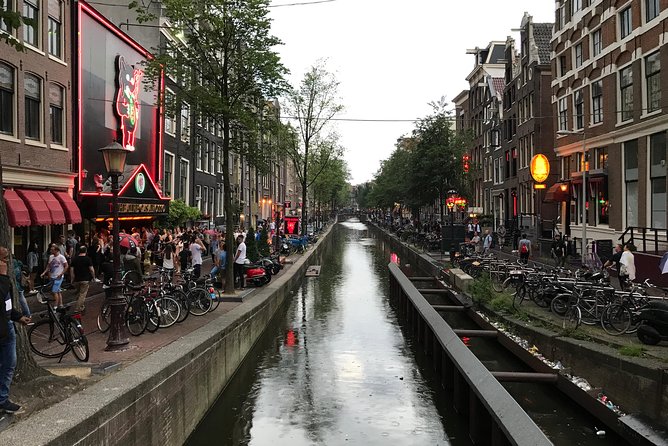
One of the listed highlights is learning about Amsterdam’s coffee shop culture and the Red Light District. The value of including these themes on a first visit is that you avoid the “only one angle” problem.
Instead of treating them like taboo spectacles, the guide frames them as part of how Amsterdam’s social rules and legal frameworks evolved. You’ll hear explanations that help you make sense of what you’re seeing rather than only reacting to it.
A consideration: if you’re easily uncomfortable with explicit or adult-themed neighborhoods, this may not feel gentle. It’s better to know that going in. At the same time, the tour’s approach is about understanding, not shock.
Price, time, and what you get for $39.20
The price is $39.20 per person for about 2 hours 30 minutes. I think that’s fair for what you get: a structured route through major central highlights, plus a local guide who connects buildings to the city’s “why.”
What makes it better value is how it can work as a private tour (only your group participates, if you choose that option). Private doesn’t always mean less walking, but it usually means more chances to ask questions and steer the conversation toward what you care about—history, culture, politics, or how the city developed.
Included items:
- local guide
- hotel pickup and drop-off for selected hotels
- private tour if your option includes it
Not included:
- food and drinks
- Anne Frank House admission
So budget for a snack or drink if you get hungry mid-walk. The route doesn’t build in a food break, and one review note specifically calls out that there are no breaks, so bring water and a snack.
Who this tour suits best (and who might skip it)
This is ideal if you:
- want a first-day orientation across central Amsterdam
- like your sightseeing mixed with stories and city context
- prefer a guided plan instead of wandering until you feel lost
- travel solo, as a couple, or with a small group and want a personal feel
It can be less ideal if you:
- need frequent sit-down breaks or a slow, museum-style pace
- strongly dislike adult-themed neighborhood content
- plan to spend long hours at Anne Frank House and need the ticket included (it’s not)
Also, walking pace varies by guide and group energy. One theme in the guidance: it’s not strenuous, but it is continuous.
Should you book this Amsterdam private introduction walking tour?
Book it if you want a high-impact first look at Amsterdam with stops that actually connect to the city’s development. The best part is that you leave with a mental map: you know where the big landmarks sit, you understand how the canal ring fits into the bigger story, and you get context for neighborhoods people often misunderstand.
Skip or rethink it if you’re arriving craving long breaks, or if you want everything to center only on churches and museums with tickets. This tour is about direction and meaning fast—and that’s exactly what a good introduction should do.
FAQ
How long is the Amsterdam private introduction walking tour?
It runs for about 2 hours 30 minutes.
Where does the tour start, and where does it end?
The tour starts at Centraal Station and ends back at the meeting point.
Is this tour private?
Yes. It’s described as a private tour/activity, with only your group participating.
What is included in the price?
A local guide is included. Hotel pickup and drop-off is available for selected hotels. A private tour is included if you select the private option.
Is Anne Frank House admission included?
No. Anne Frank House is discussed on the tour, but admission is not included.
What if the weather is poor?
The experience requires good weather. If it’s canceled due to poor weather, you’ll be offered a different date or a full refund.
More Amsterdam Walking Routes






More Tours in Amsterdam




More Tour Reviews in Amsterdam






Just added: fresh Amsterdam tour reviews





Walking Tours, compared.
 ★ 4.8Amsterdam Anne Frank: Small-Group Walking Tour & Local GuideFrom $2912,789 reviews
 ★ 5.0Anne Frank’s Story – Guided Walking Tour through AmsterdamFrom $3911,619 reviews
 ★ 5.0Absolutely Amsterdam – the Essential Introductory Walking TourFrom $53,629 reviews
 ★ 4.9Anne Frank Guided Walking Tour in DE/EN/IT/ESFrom $283,107 reviews
 ★ 4.8Anne Frank Guided Small Group Walking TourFrom $282,722 reviews
 ★ 4.9Cultural Highlights Walking TourFrom $302,629 reviews
 ★ 4.2Ganja Walking TourFrom $402,127 reviews
 ★ 5.0Anne Frank Walking Tour Amsterdam Including Jewish Cultural QuarterFrom $751,879 reviews
Browse the lists this tour appears in