
Reviewed · WALKING TOURS
Amsterdam Private Historical Walking Tour
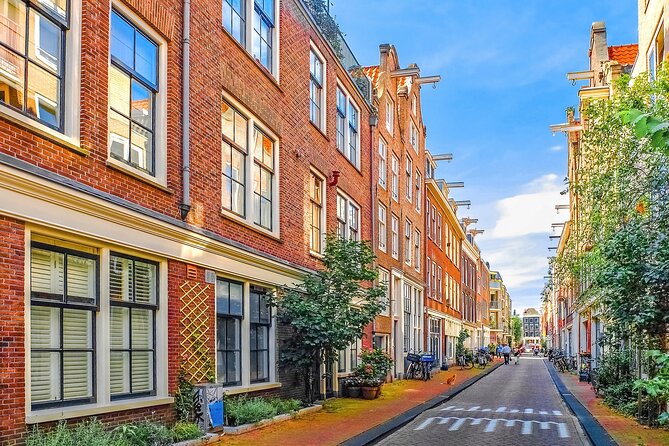
Two hours, ten landmark stories, and no wasted steps. This private Amsterdam historical walking tour packs the center of the city into a tight route, with an English-speaking guide focused on what you’re looking at and why it matters. It’s the kind of walk that helps you understand the city fast, then gives you ideas for what to do next.
I especially like the stop selection. You start right at Dam Square, then glide through major landmarks like the Royal Palace and the New Church before the route slides into quieter, more character-filled corners. I also like that you end near the Jordaan with practical local food recommendations, so the tour doesn’t just stop when the walking does.
One thing to consider: the pacing is brisk. Most stops are brief, so if you’re hoping for lots of inside time or long museum-style explanations, you’ll need to plan extra time beyond the tour.
In This Review
- Key points to know before you go
- Private pacing across Amsterdam’s core landmarks
- Dam Square to the Royal Palace: where your walk begins
- The New Church and Begijnhof: mixing grand sights with quiet corners
- Multatuli, fair trade, and a cheese-tasting moment
- Munt Tower and Nieuwmarkt: reading Amsterdam through street markers
- Bloemenmarkt and Spui: the flower market and the book-market square
- Jordaan finish near Anne Frank House and food ideas
- How the guide turns short stops into real meaning
- Price and value: is $156.88 per person worth it?
- Who should book this tour (and who might skip it)
- Should you book this Amsterdam private historical walking tour?
- FAQ
- How long is the Amsterdam private historical walking tour?
- Is this tour private?
- Where does the tour start and end?
- What’s included in the price?
- What language is the tour offered in?
- Can I cancel for a full refund?
Key points to know before you go
- Private guide, just your group: easier questions, slower moments when you need them
- Dam Square focus: you get oriented at Amsterdam’s most central crossroads
- Begijnhof + Nieuwmarkt stops: you see both showpiece sites and calmer old-city squares
- Statue of Multatuli with fair-trade context: plus a cheese-tasting moment
- Bloemenmarkt is front and center: the largest floating flower market in the world
- Ends near Anne Frank House/Jordaan: built-in ideas for where to eat afterward
More of Amsterdam street by street, on foot
- Amsterdam Anne Frank: Small-Group Walking Tour & Local Guide
★ 4.8 · 12,789 reviews - Anne Frank’s Story – Guided Walking Tour through Amsterdam
★ 5.0 · 11,619 reviews - Absolutely Amsterdam – the Essential Introductory Walking Tour
★ 5.0 · 3,629 reviews - Amsterdam: Anne Frank Guided Walking Tour in DE/EN/IT/ES
★ 4.9 · 3,107 reviews
Private pacing across Amsterdam’s core landmarks
This tour is designed for people who want history without getting stuck in information overload. You’re not sharing the experience with a crowd, so the guide can keep the story moving at a pace that fits your group. In a city where getting from one end to the other can be a mini project, this format is a smart way to build a clear mental map.
It runs about 2 hours and follows a compact route through the most central areas. That matters because Amsterdam’s charm is all about sequence—where you turn, what you notice next, and how the streets connect. A private walk helps you connect those dots while the landmarks are still fresh.
You’ll also appreciate the friction-free basics. The tour uses a mobile ticket, and it includes a private guide plus all fees and taxes. That reduces the usual travel math headaches and keeps your attention on the streets instead of the paperwork.
Dam Square to the Royal Palace: where your walk begins
The tour starts at Dam Square (Dam, 1012 Amsterdam), and right away it frames the area as the practical starting point for understanding the city. You’ll spend about 15 minutes here, with the guide pointing out the Dam itself and connecting nearby landmarks to the early story of Amsterdam.
Dam Square is one of those places where it’s easy to feel like you’ve arrived at a postcard. The real value of this first stop is not the view—it’s learning how to read the space. With the guide’s direction, you start noticing the layout and the relationships between buildings, squares, and routes. That makes everything later feel less random.
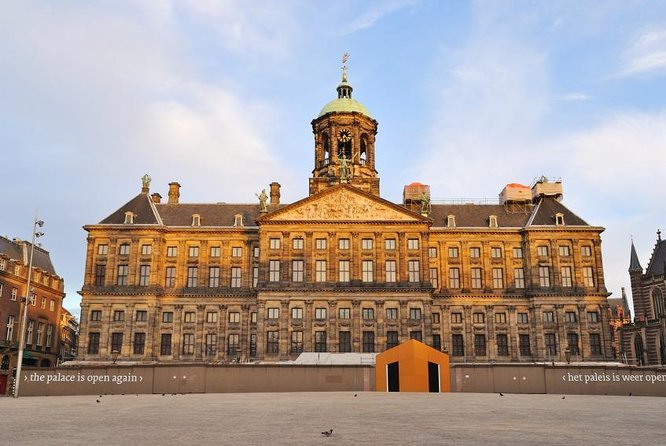
From there, you move to Royal Palace Amsterdam for about 10 minutes. Even if you mostly view it from the outside, the guide’s job is to explain what you’re seeing and how it fits into the city’s power shifts over time. This is where a good guide pays off: the palace becomes more than a big facade. It becomes a landmark you understand.
A practical tip: if you’re taking photos, do it at the pace the guide sets. Dam Square is visually busy, and it’s easy to waste time shooting everything. Ask yourself one question instead: what’s the feature the guide is having you look at? If you capture that one first, you’ll feel more grounded for the next stops.
The New Church and Begijnhof: mixing grand sights with quiet corners
Next comes The New Church, with about 5 minutes assigned to the site. The tour keeps it short here on purpose. In a 2-hour walk, you can’t give every landmark a full museum dose, so the guide focuses on the essentials—enough context that the name and location start making sense.
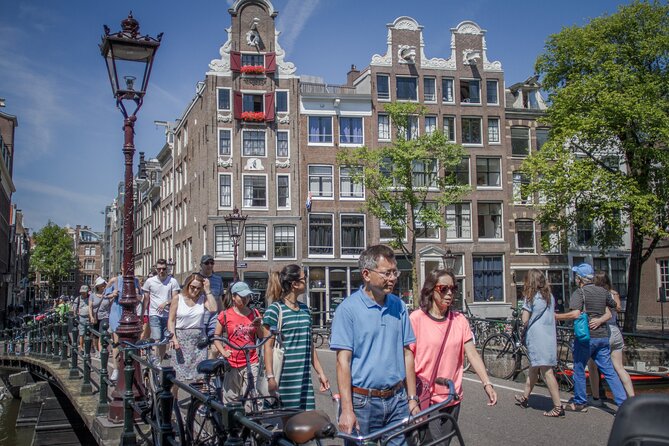
Then you shift gears to Begijnhof for another 5 minutes. This is one of the best “contrast” points on the route. After Dam Square’s intensity, Begijnhof is the kind of place where you feel the air change. The guide gives you plenty to talk about here, and that’s the point: you learn to connect Amsterdam’s public face to its quieter, more human scale.
Even with limited time, Begijnhof works because it teaches you how Amsterdam often hides the calm behind the busy. You learn to look for entrances and courtyards, not just street views. That alone makes your later self-guided strolling easier—you’ll spot these little pockets without needing directions every five minutes.
If your group likes atmosphere as much as facts, this stop is a win. If you’re only chasing big monuments, it may feel like a palate cleanser rather than the main course—but that’s why it’s useful.
More private tours with a guide to yourself
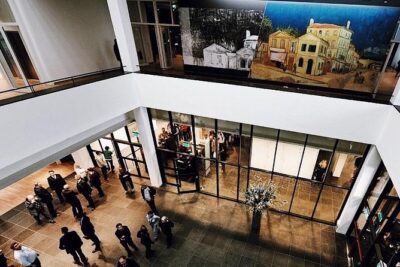
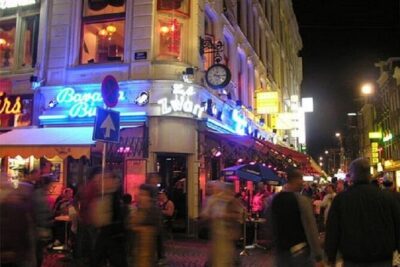
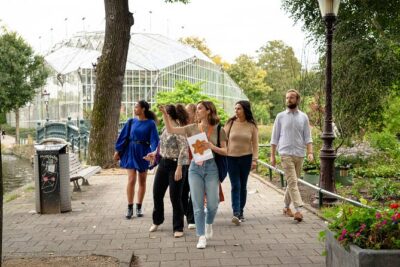

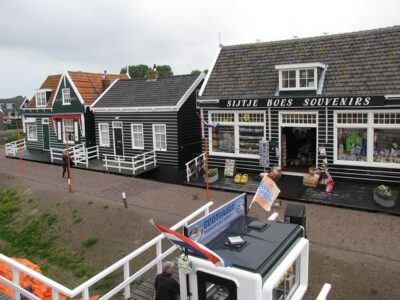
Multatuli, fair trade, and a cheese-tasting moment
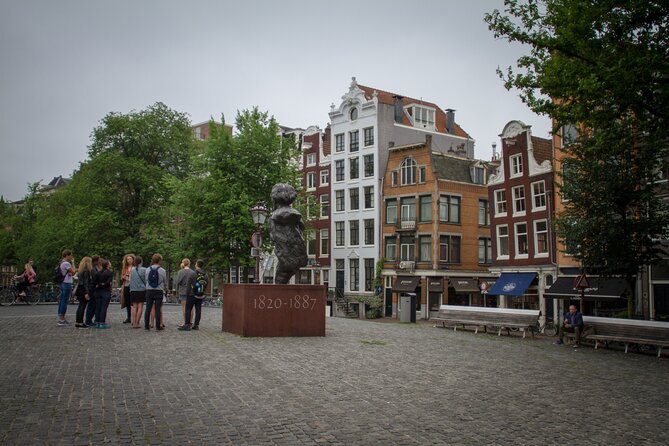
The walk then moves to the Statue of Multatuli area, again for about 5 minutes. This stop is memorable for two reasons: it ties a person’s story to social ideas, and it connects those ideas to something you can experience through food.
The tour includes information about the start of the fairtrade movement, and it also includes a cheese tasting moment at this point. That combination is smart. It turns an abstract concept—fair trade—from a term you’ve heard into a story you can actually recall.
One practical note: food and beverages are listed as not included. So if your group is snack-minded, keep your expectations flexible and follow the guide’s cues about what’s part of the experience versus what might cost extra. Either way, this stop is built to be a conversation starter, not just a photo spot.
Munt Tower and Nieuwmarkt: reading Amsterdam through street markers
After the Multatuli stop, you’ll reach Munt Tower (Munttoren) for around 5 minutes. This is another quick landmark moment, but it’s placed well in the route. The guide uses it to help you understand how the city’s structure still shows older time layers.
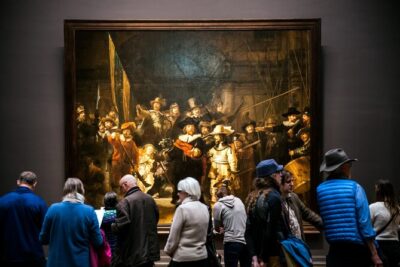
Right after that, you arrive at Nieuwmarkt, with about 10 minutes. This is one of the longer segments, which tells you the tour considers it important. Nieuwmarkt is known for its open square feel, and the standout detail here is the de Waag building in the middle. The guide also connects it to Rembrandt, specifically noting that Rembrandt came there to paint back in the earlier days.
I like this stop because it gives you something visual to remember. You’re not just hearing “history happened here.” You’re seeing a physical marker that has remained in place long enough to become part of the city’s identity. Rembrandt’s connection makes the location feel specific instead of generic.
A small strategy that helps: at Nieuwmarkt, look for how the square frames the central structure. Once you get that layout, you can reproduce it in your head later when you walk away. That’s how this tour earns its value: it makes later wandering more confident.
Bloemenmarkt and Spui: the flower market and the book-market square
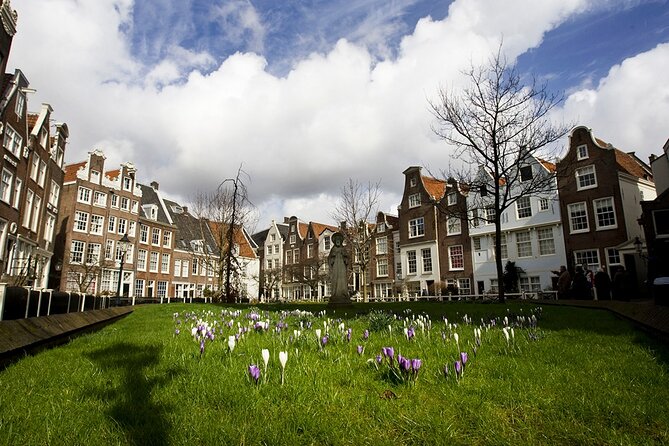
Then it’s on to Bloemenmarkt for about 5 minutes—and yes, it’s the tour’s big moving-signal highlight. The guide calls it the largest floating flower market in the world, and the short stop is enough to get you oriented and recognize why this place became famous.
What I like about putting Bloemenmarkt on a historical route is the theme. Flowers may not sound historical, but the location and the idea show Amsterdam’s mix of commerce, canals, and tradition. A quick stop here gives you a visual memory you can carry into the rest of your day.
Next you go to Spui, also about 5 minutes. The guide explains the miracle of Amsterdam that happened nearby and points out that a book market is held at this square. Even without a long stop, this is a useful connection. It reminds you Amsterdam isn’t only art museums and big monuments. It’s also everyday culture: books, ideas, and community habits.
If you’re planning photo time, Spui is usually easier than Dam Square. It’s less chaotic, and it supports slower looking. Use the guide’s focus to decide what to capture—then step away and let the square work its magic for a minute.
Jordaan finish near Anne Frank House and food ideas
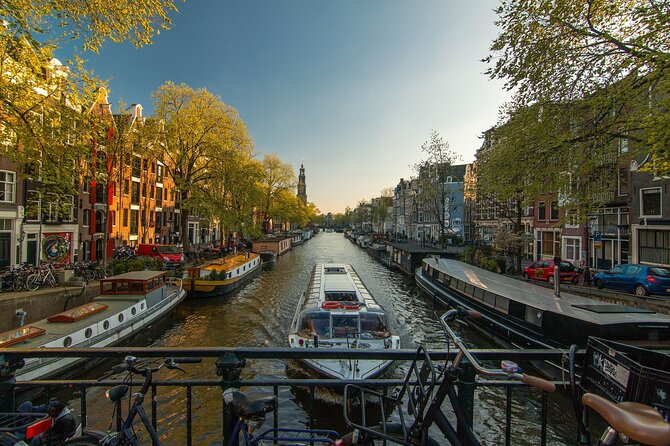
The tour wraps up near Koningsplein, and the guide includes recommendations for local food in the Jordaan area, close to the Anne Frank House. That finish is practical. You’re ending where you’re already thinking about eating and exploring next, so the tour becomes a springboard rather than a closed loop.
Koningsplein is a strong last move because it helps you flow into nearby streets without needing a big detour. If you’re the type who likes to keep momentum, this ending makes it easier to move from sightseeing mode into meal mode.
Also, finishing near the Anne Frank House area is useful for first-timers. Even if you don’t plan to go inside that attraction, the neighborhood is where you can get a feel for Amsterdam’s more lived-in character.
How the guide turns short stops into real meaning
The biggest reason this tour scores so highly is the guide’s skill at turning brief encounters into lasting understanding. One of the guide styles you may experience includes lively, detailed explanations that cover not just architecture and landmarks, but also how Amsterdam’s story connects to current life.
In the experiences I’ve seen with this tour, guides such as Henk and Sylvia are praised for keeping things animated while still staying factual and clear. That combo matters. If a guide is too dry, short stops feel like checkboxes. If a guide talks without structure, you leave with fun but no understanding.
Here, the guide’s method is to give you enough background to recognize patterns. You start noticing what to look for: the relationship between civic spaces and important buildings, the way squares anchor neighborhoods, and how landmarks reflect changing priorities. When you get that, you don’t just remember names. You remember how the city works.
Price and value: is $156.88 per person worth it?
At $156.88 per person, this isn’t a bargain-basement walk. But it also isn’t priced like a full-day private event with museum entries and transportation. The value is in what’s included and what you avoid.
Included in the price are a private guide and all fees and taxes. Also, the stops are presented with free admission tickets for what you’re visiting on the route. That’s important, because it reduces the risk of a tour that looks cheap until you realize you’re paying entry fees on top.
The main missing piece is simple: food or beverages aren’t included (tips aren’t included either). If you budget for a drink or snack during your Amsterdam day, you won’t get surprised.
Where the price makes the most sense is if you want fast orientation plus focused history. If you’re doing Amsterdam for the first time, you’ll likely find that the clarity you gain helps you plan the rest of your day more intelligently. And because it’s private, the cost per person can feel more reasonable when shared among a small group.
One more practical note: this experience tends to book ahead. On average, it’s booked about 86 days in advance, so don’t wait until the last minute if your dates are set.
Who should book this tour (and who might skip it)
This is a strong fit for:
- People who want a 2-hour orientation to the center of Amsterdam
- Anyone who prefers a structured route instead of wandering aimlessly
- Those who like history with real-world connections, including fair-trade themes and food moments
- First-timers who want help understanding the city layout quickly
You might want something else if:
- You want long indoor visits and deep museum time
- Your group needs a slower, sit-down pace for every stop
- You’re only interested in one or two major sights and don’t care about the smaller story stops
For most people, the short stop format is a plus. It keeps you moving while the guide helps you notice what matters.
Should you book this Amsterdam private historical walking tour?
Book it if you want a smart, private way to learn the city center in about two hours, with free-entry stops, an English-speaking guide, and a finish near the Jordaan/Anne Frank House area for food planning. It’s also a great choice if you value guidance that helps you navigate later on your own.
Hold off if you’re hoping for lots of inside time or long stays at a single museum or church. This is built for efficient storytelling and route clarity, not for lingering all day.
If your goal is to leave Amsterdam knowing where you are and why key places matter, this one does the job.
FAQ
How long is the Amsterdam private historical walking tour?
The tour runs for about 2 hours.
Is this tour private?
Yes. This is a private tour/activity, and only your group participates.
Where does the tour start and end?
It starts at Dam Square (Dam, 1012 Amsterdam) and ends at Koningsplein in Amsterdam.
What’s included in the price?
A private guide and all fees and taxes are included.
What language is the tour offered in?
The tour is offered in English.
Can I cancel for a full refund?
Yes, you can cancel for a full refund up to 24 hours in advance of the experience’s start time.
More Amsterdam Walking Routes



More Tours in Amsterdam



More Tour Reviews in Amsterdam


Just added: fresh Amsterdam tour reviews




Walking Tours, compared.
 ★ 4.8Amsterdam Anne Frank: Small-Group Walking Tour & Local GuideFrom $2912,789 reviews
 ★ 5.0Anne Frank’s Story – Guided Walking Tour through AmsterdamFrom $3911,619 reviews
 ★ 5.0Absolutely Amsterdam – the Essential Introductory Walking TourFrom $53,629 reviews
 ★ 4.9Anne Frank Guided Walking Tour in DE/EN/IT/ESFrom $283,107 reviews
 ★ 4.8Anne Frank Guided Small Group Walking TourFrom $282,722 reviews
 ★ 4.9Cultural Highlights Walking TourFrom $302,629 reviews
 ★ 4.2Ganja Walking TourFrom $402,127 reviews
 ★ 5.0Anne Frank Walking Tour Amsterdam Including Jewish Cultural QuarterFrom $751,879 reviews
Browse the lists this tour appears in