
Reviewed · WALKING TOURS
Amsterdam: History, Hidden Gems & Future Eco-Walking Tour
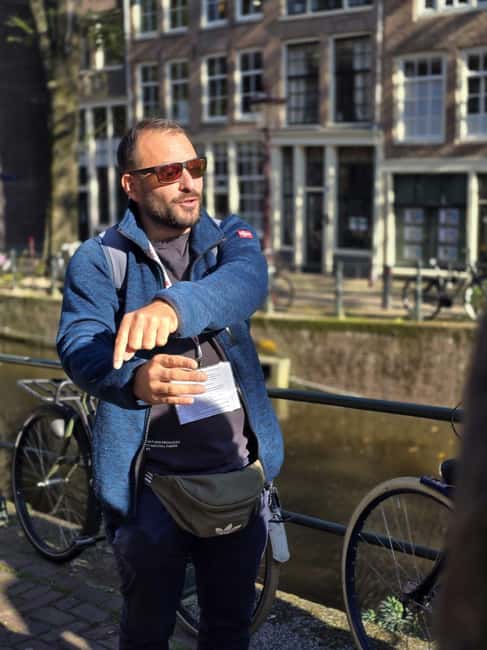
Amsterdam runs on water, and this tour shows you why fast. You’ll connect the city’s origins—dams, dikes, and wind energy—to big cultural shifts in a way that feels like street-level storytelling, not a classroom lecture.
I really like the small group (max 8) and the hands-on style: chalk drawings on the street, historical maps, and iPads that overlay old paintings onto modern scenes. One potential drawback: you’ll be on cobblestones for two hours, so comfy shoes and layers matter.
In This Review
- What you’ll like most (and what to watch for)
- Key highlights I’d plan around
- A 2-hour eco-walk through Amsterdam’s turning points
- Meeting at De Zilveren Spiegel: where to start without stress
- Chalk drawings and street maps: water & wind made Amsterdam possible
- iPads over paintings: seeing the Golden Age where it actually happened
- From early settlers to WWII: resilience you can feel in the streets
- The 1970s culture shift and the politics of protest
- Green mindset section: education, sustainability, and daily eco details
- Quiet routes, courtyards, and real city rhythm
- How the tour ends: social impact places and a handwritten A’DAM postcard
- Price and value: what $29 buys you (and what it doesn’t)
- Who this tour suits best (and who might want a different style)
- A note on guides and pace
- Should you book Amsterdam: History, Hidden Places & Future eco-walking?
- FAQ
- How long is the tour?
- What’s the meeting point?
- How big is the group?
- What languages is the tour offered in?
- What should I bring?
- Is food included?
- Are there any restrictions on recording?
What you’ll like most (and what to watch for)
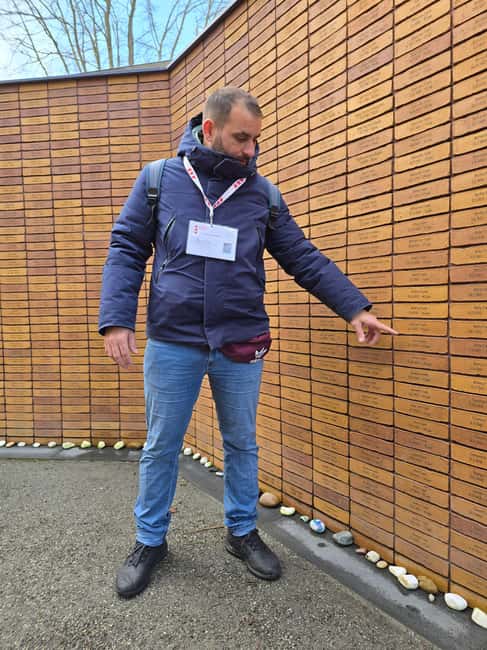
I also love that the walk favors quieter streets and hidden courtyards, then ends with practical ideas for where to spend time after the tour—social impact cafes, shops, and breweries. Just note that it’s not built as a slow, sit-down museum pace; the guide moves briskly to avoid the busiest areas.
More of Amsterdam street by street, on foot
- Amsterdam Anne Frank: Small-Group Walking Tour & Local Guide
★ 4.8 · 12,789 reviews - Anne Frank’s Story – Guided Walking Tour through Amsterdam
★ 5.0 · 11,619 reviews - Absolutely Amsterdam – the Essential Introductory Walking Tour
★ 5.0 · 3,629 reviews - Amsterdam: Anne Frank Guided Walking Tour in DE/EN/IT/ES
★ 4.9 · 3,107 reviews
Key highlights I’d plan around
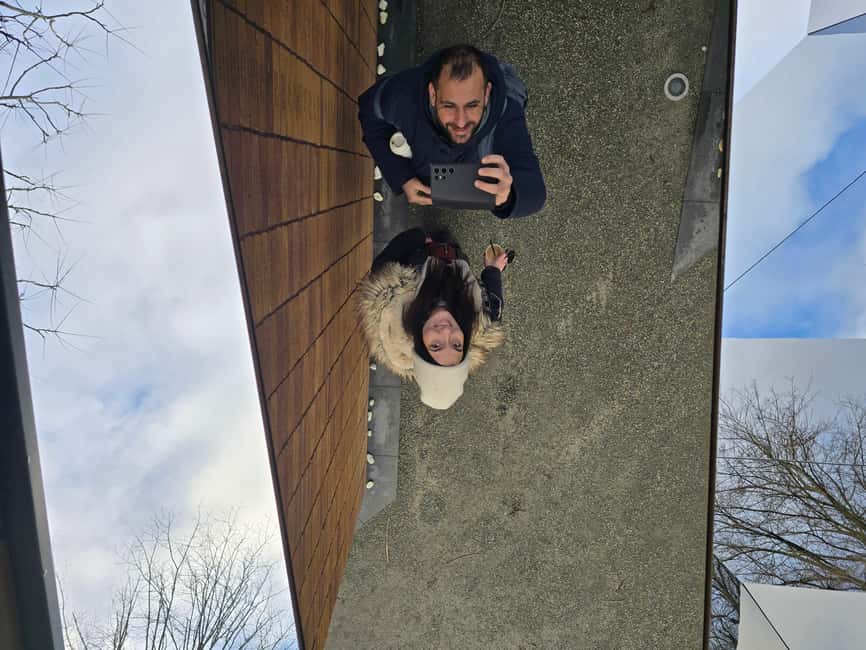
- Water-and-wind start: chalk and maps explain how Amsterdam stays dry below sea level
- iPad art overlays: you see Golden Age paintings mapped onto today’s streets
- Big history in tight time: early settlers, the first dam, the Golden Age, WWII, and the 1970s
- Eco-politics made human: education, protest culture, and how sustainability shows up in daily life
- Quiet routes over crowd time: you pass landmarks but spend most of your steps away from congestion
- A token at the end: you get a handwritten postcard from historic A’DAM
A 2-hour eco-walk through Amsterdam’s turning points
This tour is for you if you want Amsterdam’s story told with street tools and city details you can actually picture. At $29 for two hours, it’s priced like a typical walking tour, but it leans into interactive tech (iPads) plus on-the-ground visuals (chalk), so you spend your time learning instead of just listening.
The group stays small—up to 8 people—which changes the feel. You can ask questions, the guide can shape the pace, and it’s easier to hear the “why” behind each era.
Meeting at De Zilveren Spiegel: where to start without stress
You meet the guide in front of De Zilveren Spiegel at Kattengat 4. Arrive about 10 minutes early so you’re not rushing across the canals looking for the first chalk mark on the pavement.
Also, plan your kit before you go. You’ll want comfortable shoes for cobblestones, a reusable water bottle (there’s free refill water along the way), and layers because Dutch weather can shift quickly.
Still deciding? A few more Amsterdam tours worth a look



Chalk drawings and street maps: water & wind made Amsterdam possible
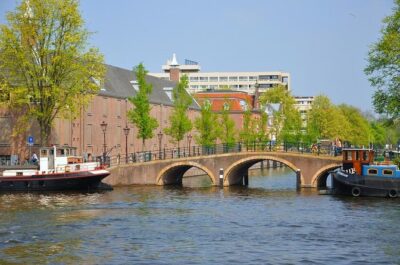
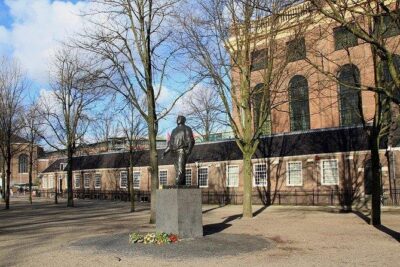
The tour begins with the “foundation” story: water and wind. The guide will show you the early engineering logic that let a city exist below sea level—using chalk sketches right on the street and historical maps you can compare to what you see today.
This part matters because it explains Amsterdam’s choices. When you understand the dam-and-dike setup, you’ll stop thinking of canals as decoration and start seeing them as survival infrastructure.
You’ll also connect windmills to energy in a very direct way. The big idea is that the Dutch didn’t treat the environment as an afterthought; they built systems around it, and that shaped how the society organized itself.
iPads over paintings: seeing the Golden Age where it actually happened
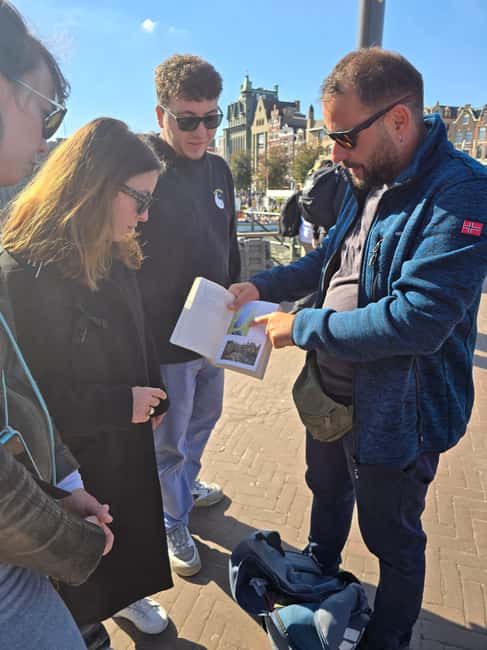
Next comes the visual time travel. Using iPads, the guide overlays historical paintings onto modern streets so you can line up what artists depicted with the city you walk through now.
I like this approach because it trains your eye. You start noticing proportions, old sightlines, and how the “same corner” can hold totally different meanings across centuries—wealthy merchant power in the 17th century, then later shocks and rebuilding.
The Golden Age section also connects people to systems: commerce, culture, and the way money and ideas shaped the streets. When you can picture those layers, Amsterdam stops feeling like a single theme and starts feeling like an argument the city kept rewriting.
From early settlers to WWII: resilience you can feel in the streets
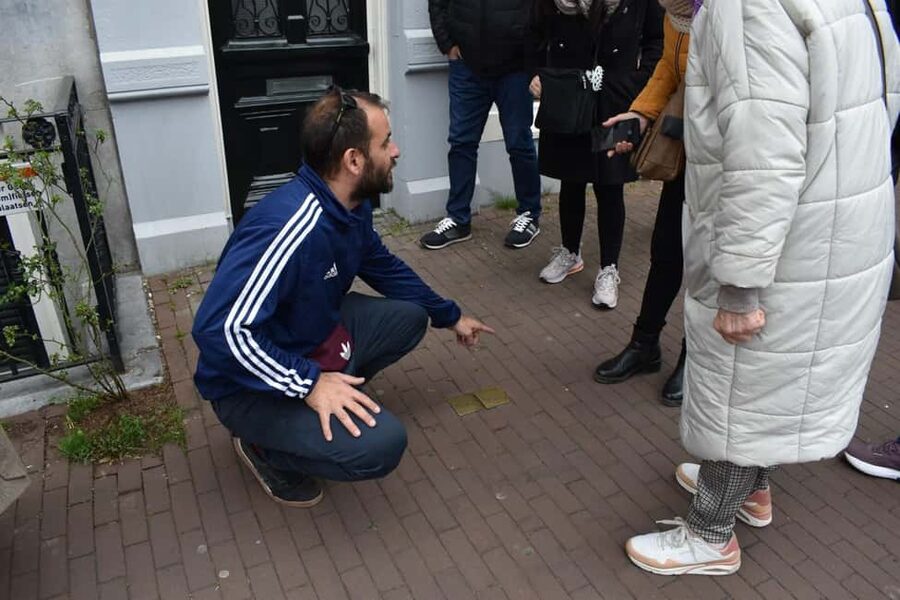
After the Golden Age, the tour moves through the city’s survival moments. You’ll learn about the earliest days of Amsterdam’s growth, the significance of the first dam and dikes, and then the scars and resilience tied to World War II.
What makes this more than a timeline is how the guide connects events to attitudes. You’re not just memorizing dates; you’re picking up why people made certain choices, and how those choices echo forward into today’s civic culture.
The 1970s culture shift and the politics of protest
One of the most useful parts is how the tour jumps to the explosion of liberal culture in the 1970s. The guide links social movements and protests to the Amsterdam you recognize today—how “public life” developed, how people learned to push back, and why activism became part of the city’s identity.
This is where Amsterdam’s reputation makes sense. You’ll see that openness isn’t only a vibe; it’s tied to decisions, debates, and lots of people refusing to stay quiet.
If you enjoy political history that doesn’t read like a textbook, you’ll probably get a lot out of this section—especially because the guide brings the story back to street-level examples.
Green mindset section: education, sustainability, and daily eco details
Then you get to the eco angle, and it’s not handled like a lecture about recycling. The guide explains why the Netherlands is known for sustainability in both policy and daily behavior, and how education encourages eco-friendly thinking from a young age.
You’ll also hear about green politics—and how past and present choices are built to secure the future. As you walk, you stop when you spot inspiring urban eco details and talk through how those choices show up in real life.
This part works best if you like “systems thinking”: the idea that sustainability isn’t only tech or rules, it’s also habits and schooling and public pressure.
Quiet routes, courtyards, and real city rhythm
Amsterdam can be intense in the most touristed zones, so I appreciate that the walk prioritizes quiet local streets. You’ll still pass essential historic landmarks, but the guide doesn’t linger in the busiest areas.
Instead, you’ll spend time in places that feel lived-in: secret courtyards and smaller urban garden spaces. The tour also makes room for street musicians or artists when they pop up, which keeps the walk from feeling like a staged set.
This is also where a small group helps again. In a crowd, you can’t hear stories. In a quieter lane, you can actually pay attention.
How the tour ends: social impact places and a handwritten A’DAM postcard
You finish with a practical handoff. The guide provides a selected list of social impact cafes, shops, and breweries to visit afterward, so your trip keeps supporting local community work even after the walk ends.
You’ll also receive a handwritten postcard from historic A’DAM. It’s simple, but it works as a souvenir you’ll actually remember to write or keep.
Price and value: what $29 buys you (and what it doesn’t)
For $29 and two hours, you’re paying for a guide plus interactive tools. Since the tour includes chalk, maps, and iPads, it’s not just “someone walking and talking”—you get visuals that change how you understand what you see.
What’s not included is also clear: no food, no drinks, and no hotel pickup/drop-off. If you’re hoping for a meal stop, you’ll want to plan that yourself after the tour.
Also, because it’s built to escape crowds quickly, don’t expect long stays at the most famous sites. This tour is about context and connections—great if you want a foundation before you explore on your own.
Who this tour suits best (and who might want a different style)
This works especially well if you’re the type who likes your history explained through “how the city works.” It’s ideal for curious couples, solo travelers, and friends who want an engaging mix of engineering, art, WWII resilience, and modern politics.
If you dislike walking on uneven cobblestones or you need lots of seated time, consider that tradeoff. Two hours is doable for most people with good shoes, but it’s still steady walking, and Dutch weather can change fast.
A note on guides and pace
The energy you’re aiming for is clear from past tours: guides like Antonis are described as warm, extra helpful, and attentive to details beyond basic history—restaurant and market hints, plus guidance for people who plan to live in Amsterdam. One account also describes the guide extending the tour by an extra hour, which suggests the pacing can flex if the group is engaged.
If you’re going solo, that’s also worth noting: at least one booking experience shows the tour continued even when the group was just one person, with the guide treating the day like it still mattered.
Should you book Amsterdam: History, Hidden Places & Future eco-walking?
If you want an Amsterdam overview that makes the city’s choices make sense—water first, then art overlays, then politics and sustainability—this is a strong pick. I’d book it early in your trip because it gives you a mental map you can carry into museums, canal walks, and neighborhood wandering.
Skip it only if you need a slow-paced tour with lots of sitting breaks, or if cobblestones are a deal-breaker. Otherwise, this is a smart value way to learn Amsterdam’s why, not just its what.
FAQ
How long is the tour?
It lasts 2 hours.
What’s the meeting point?
Meet the guide in front of De Zilveren Spiegel at Kattengat 4. Arrive 10 minutes early.
How big is the group?
It’s a small group with a maximum of 8 participants.
What languages is the tour offered in?
The live guide speaks English and Greek.
What should I bring?
Bring comfortable shoes, a camera (if you want photos), a water bottle (there are places to refill), and weather-appropriate layers.
Is food included?
No. Food and drinks are not included.
Are there any restrictions on recording?
Video recording is not allowed.
More Amsterdam Walking Routes






More Tours in Amsterdam




More Tour Reviews in Amsterdam






Just added: fresh Amsterdam tour reviews





Walking Tours, compared.
 ★ 4.8Amsterdam Anne Frank: Small-Group Walking Tour & Local GuideFrom $2912,789 reviews
 ★ 5.0Anne Frank’s Story – Guided Walking Tour through AmsterdamFrom $3911,619 reviews
 ★ 5.0Absolutely Amsterdam – the Essential Introductory Walking TourFrom $53,629 reviews
 ★ 4.9Anne Frank Guided Walking Tour in DE/EN/IT/ESFrom $283,107 reviews
 ★ 4.8Anne Frank Guided Small Group Walking TourFrom $282,722 reviews
 ★ 4.9Cultural Highlights Walking TourFrom $302,629 reviews
 ★ 4.2Ganja Walking TourFrom $402,127 reviews
 ★ 5.0Anne Frank Walking Tour Amsterdam Including Jewish Cultural QuarterFrom $751,879 reviews
Browse the lists this tour appears in