
Reviewed · CANAL CRUISES
Amsterdam: Historic City Sightseeing Canal Cruise
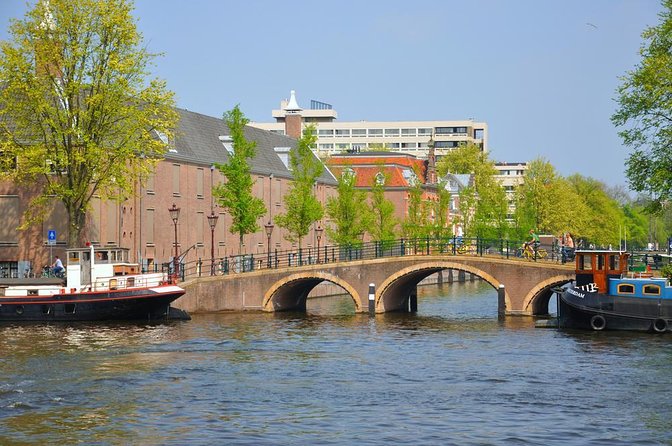
Amsterdam’s canals can feel like a maze at first. This short cruise gives you an instant map, one bend at a time, while you glide past the UNESCO-listed Canal Ring and beyond. It’s a smart move when your day is packed and you still want the classic Amsterdam views.
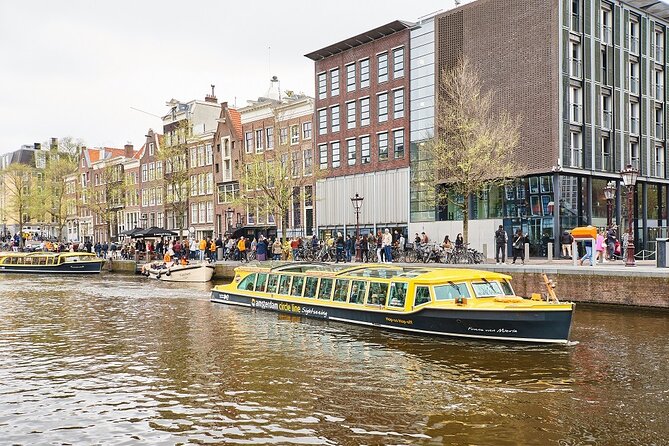
I love how easy it is to start: the meeting point is right in front of the Anne Frank House, so you can stack plans with minimal hassle. I also like that the ride is short but packed with variety, from landmark canal architecture to cultural stops along the water.
One thing to consider: it’s mostly audio narration, and a few people found it hard to hear or the language switching didn’t always feel smooth. If you’re sensitive to sound quality, plan to sit where you can hear best and show up a few minutes early.
In This Review
- Key things that make this cruise worth your time
- A 1-hour canal cruise that helps you actually understand Amsterdam
- Where you board: Anne Frank House is a giant help
- Museum of the Canals and the Canal Ring viewpoint
- Anne Frank Huis and Westerkerk: two sides of central Amsterdam
- Houseboat Museum at Hendrika Maria: canal living, but from a cozy hold
- Leidsegracht, De Beulingsloot, and the tiny canal texture
- Canal houses and a bridge with milk-market history
- Brouwersgracht and the northern edge of the canal belt
- A Lutheran church turned concert hall, then Amsterdam Centraal by water
- IJ and EYE Filmmuseum: modern Amsterdam, built to be seen from water
- Posthoornkerk and the Amstel: churches and river museums in one sweep
- Stopera and the opera story behind the name
- Price, timing, and how to get the best hour
- Who should book this canal cruise (and who might skip it)
- Should you book this Amsterdam canal cruise?
- FAQ
- Where does the cruise meet?
- How long is the canal cruise?
- What language is the tour offered in?
- Do I need a paper ticket?
- Is the group size small?
- Is it suitable for most people?
- Is the cruise near public transportation?
- Are service animals allowed?
- Can I get a refund if I cancel?
- What happens if I don’t hear the audio well onboard?
Key things that make this cruise worth your time
- Anne Frank House meeting point makes the cruise easy to fit after (or before) your museum visit
- UNESCO Canal Ring views from the water give you a cleaner sense of Amsterdam’s layout
- 400+ years of city landmarks in a compact 1 hour, including churches and opera/ballet spaces
- Houseboat Museum experience shows how canal living can actually feel from the inside
- Route blends old and new Amsterdam, from canal belt houses to modern EYE Filmmuseum
- Group size stays limited (up to 68), so it doesn’t turn into a chaotic stampede
More time on the water: other Amsterdam canal cruises
- Amsterdam Luxury Canal Cruise + Unlimited Drinks & Bites option
★ 5.0 · 30,518 reviews - Amsterdam: Heated Canal Cruise with Unlimited Drinks & Bite
★ 4.5 · 21,431 reviews - Amsterdam: 75 Minute City Canal Cruise with Audio Guide
★ 4.4 · 19,938 reviews - Amsterdam: City Centre Canal Cruise including Audioguide
★ 4.3 · 16,901 reviews
A 1-hour canal cruise that helps you actually understand Amsterdam
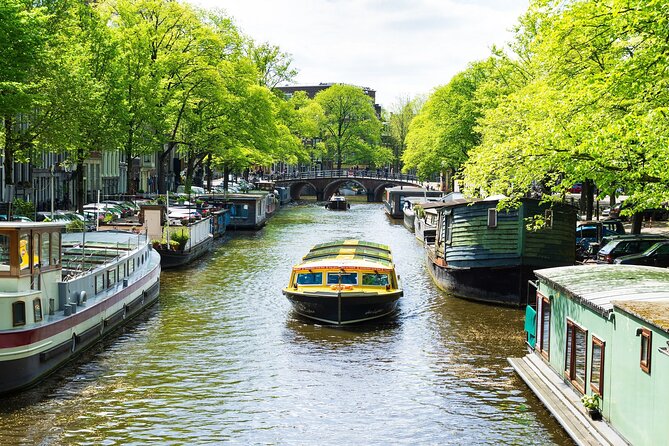
If Amsterdam is your first stop in the Netherlands, a canal cruise can do more than look pretty. In one hour, you pick up the basic pattern: canal belt neighborhoods, the way major waterways connect, and where big sights sit relative to each other.
This one is priced at $18.71 per person, and the value comes from compression. You get a guided-style overview without spending hours walking in crowds or backtracking through the canal maze. For many people, that’s the whole point: you come away with bearings, not just photos.
The duration is about an hour, which also means you can pair it with a museum day. Several people did exactly that—visit the Anne Frank House one day and cruise nearby the next—because the meeting point is so central.
Where you board: Anne Frank House is a giant help
The meeting point is easy to find—out front of the Anne Frank House. That’s not just convenient trivia. It reduces stress, and in Amsterdam that matters, because the city rewards planning.
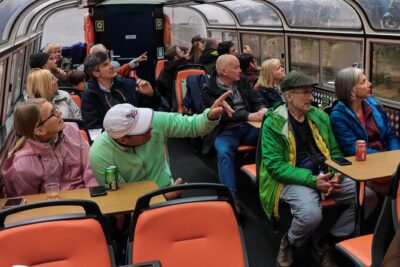
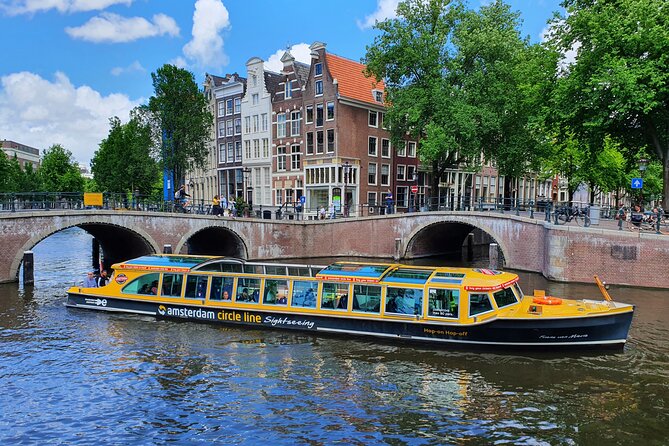
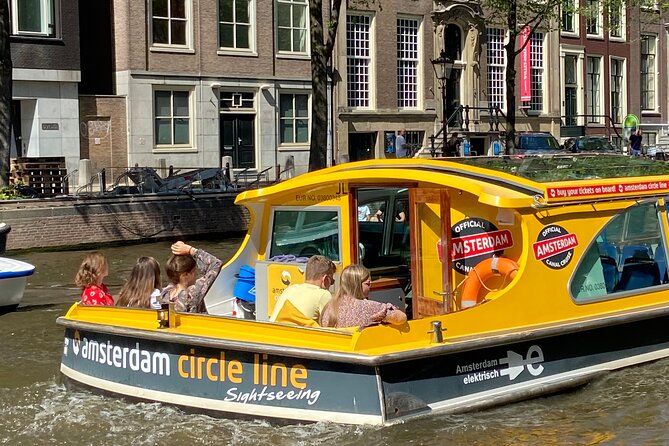
You’ll use a mobile ticket, and the cruise is offered in English. The boat itself is comfortable and offers the option to stay inside or outside, which is useful when the weather flips from sunny to chilly.
Two practical tips from the overall experience:
- Don’t be late. People consistently mention it’s easy to locate, but you still need time to board and get settled.
- If sound matters to you, try to get a seat where the narration reaches you clearly. Some folks said the rear seats could mean audio is harder to hear.
Museum of the Canals and the Canal Ring viewpoint
The cruise begins with the idea of time travel through the canal system—back around 400 years. That matters because the canal architecture isn’t random. The Canal Ring is a planned part of Amsterdam’s history, and seeing it from water helps the buildings line up in your mind.
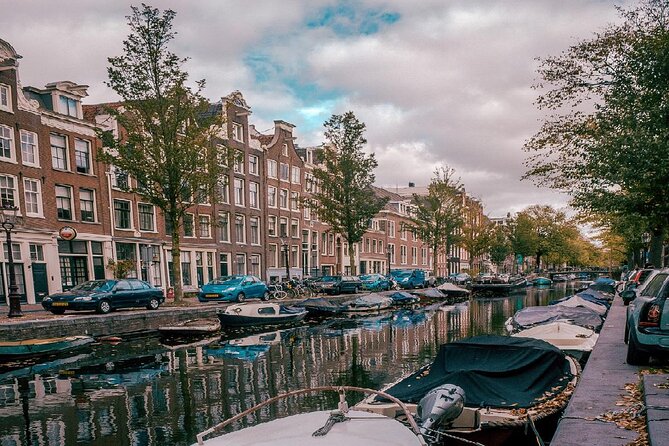
As you float along, you’ll pass recognizable canal elements: narrow waterways, tall canal houses, and bridges that mark neighborhood boundaries. This is the kind of view you can’t fully replicate from the sidewalk, because streets flatten perspective.
You’ll also get a mix of churches and cultural buildings, which is a big reason this cruise works for first-timers. It’s not only about canals as scenery; it’s about what the canals connected in real life—trade, neighborhoods, and important civic spaces.
Cover more ground: other Amsterdam sightseeing passes
Anne Frank Huis and Westerkerk: two sides of central Amsterdam
The Anne Frank House stop is more than a landmark checkbox. It’s tied to the story of the Secret Annex, where Anne Frank and others hid during World War II. The building sits on the Prinsengracht, close to the Westerkerk, so you get that classic central-canal setting even if you don’t step into the museum during the cruise.
This part of Amsterdam can feel intense. That’s why it helps to treat the cruise as orientation. You can use it to see where everything is, then decide whether you want to go deeper on another day.
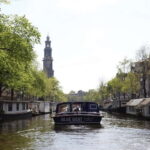
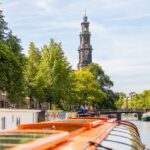
Next up is the Westerkerk, a Reformed church within Dutch Protestant Calvinism. Even from the water, you can understand how churches anchor the canal belt. The Westerkerk’s location in the Grachtengordel neighborhood—between Prinsengracht and Keizersgracht—places it right in the heart of how Amsterdam’s streets and waterways interlock.
Houseboat Museum at Hendrika Maria: canal living, but from a cozy hold
One of the most memorable stops on this route is the Houseboat Museum. You don’t just see a houseboat; you get context for what canal living looks like.
The museum is in the Hendrika Maria, a former cargo ship built in 1914. The cargo hold has been turned into a cosy living space with conveniences—and yes, people find it surprisingly spacious.
For you, this is a great “reality check” if Amsterdam’s canals make you assume everything is narrow and cramped. From the water, the canal houses look tight. The houseboat museum adds an alternate picture: life adapted to the canal economy and its shape.
Leidsegracht, De Beulingsloot, and the tiny canal texture
After the big-name sights, the route slows down on the feel of the city. Leidsegracht is a cross-canal that connects major canals like Herengracht, Keizersgracht, Prinsengracht, and Lijnbaansgracht. That makes it useful for orientation: it shows how neighborhoods connect without you walking a kilometer to figure it out.
Then you pass De Beulingsloot, one of the oldest and shortest canals in central Amsterdam. The value here isn’t that it’s famous—it’s that it shows scale. Amsterdam has wide, grand canals and then these smaller cuts that feel almost intimate.
If you’re the kind of traveler who likes details—bridge shapes, building fronts, and the way water bends the city—these segments are where you’ll notice the most.
Canal houses and a bridge with milk-market history
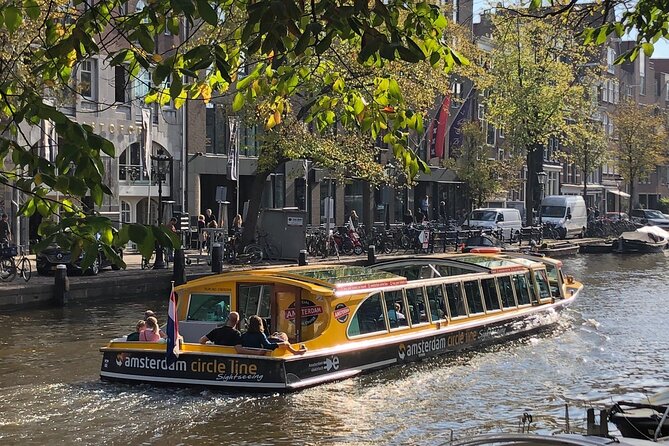
The cruise also highlights canal houses that feel like they should have a story attached. One example is the Bartolotti House on Herengracht (170–172), built around 1617. It was tied to wealth and trade through Willem van den Heuvel tot Beichlingen and the merchant Giovanni Battista Bartolotti.
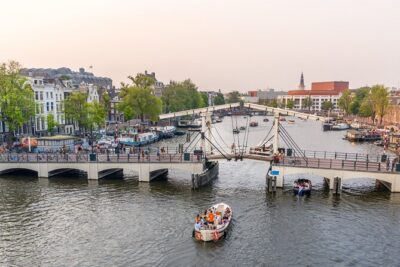
But my favorite kind of Amsterdam curiosity tends to be the bridges, and this route includes one with serious backstory: the Melkmeisjesbrug. There have been bridges here for centuries, with cartographers like Balthasar Florisz. van Berckenrode (1625), Joan Blaeu (1649), and Daniël Stalpaert (1662) recording it on maps.
The bridge’s modern history starts in 1883, when a pedestrian drawbridge was replaced by a permanent bridge after shipping largely ended. Later, it was renewed in 1903 using a paraboolligger bridge with iron sickle girders, and updated again in 1966 with a steel version.
It’s named after the milk market once held there. A sign with a milkmaid marked a later catering establishment, and the bridge is likely where the first type Amsterdammertje was placed.
Even if you don’t care about milk-market trivia, these details help you see Amsterdam as a layered place, not a set of postcards.
Brouwersgracht and the northern edge of the canal belt
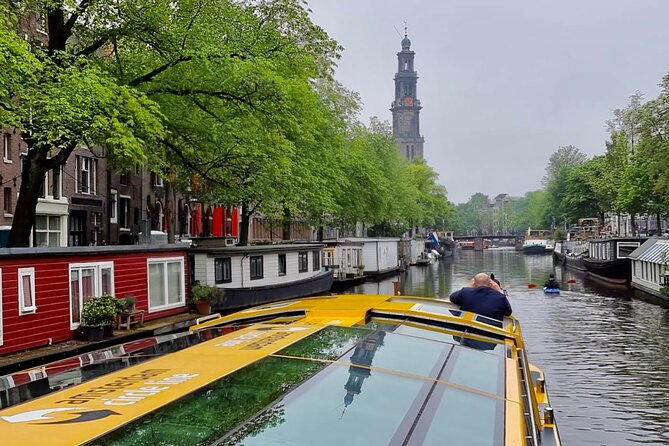
Brouwersgracht is part of the canal belt logic. It connects the Singel with the Singelgracht and marks the northwestern border of the Grachtengordel.
This is also tied to neighborhood boundaries, separating parts of the Jordaan area from what’s just beyond. The route passes it in a way that makes those edges feel real, not just lines on a map.
And if you like walking street energy, Brouwersgracht has been voted the most beautiful street in Amsterdam by readers of Het Parool (out of 150 nominations). While you’re seeing it by water, the vote helps explain why people like it when they step out onto the banks.
A Lutheran church turned concert hall, then Amsterdam Centraal by water
This cruise doesn’t only show quiet chapel exteriors. It includes a church with a long, complicated building life.
One church on the route was designed by Adriaan Dortsman and opened in 1671. It was nearly destroyed in 1822 and rebuilt in 1826. The organ was built by J Batz in 1830 and restored in 1983 by Flentrop Orgelbouw.
Later, Lutherans left in 1935 and it became a concert hall. In 1975 a tunnel was built by the neighboring Sonesta Hotel (now the Renaissance Amsterdam Hotel) for hotel access, and the hotel rents the church from the Lutheran church, which still owns it. In 1993 the dome caught fire and it was restored again.
From the water, you get a sense of how Amsterdam repurposes spaces instead of starting from scratch. That theme keeps showing up across the route.
Then you hit Amsterdam Centraal, designed by Pierre Cuypers, also known for the Rijksmuseum. One useful detail: it’s believed Cuypers focused mainly on the station building’s decoration, leaving structural design to railway engineers. Seeing it from the IJ area makes the station feel like part of the waterfront story, not just a transportation hub.
IJ and EYE Filmmuseum: modern Amsterdam, built to be seen from water
The IJ is Amsterdam’s waterfront waterway, formerly a bay. This is where the cruise shifts tone—still scenic, but more modern and open.
The EYE Filmmuseum is a highlight here. The building was designed by Delugan Meissl Associated Architects, and it includes two gallery exhibition spaces plus a cinema setup: one 300-seat cinema, two 127-seat cinemas, and a smaller intimate cinema of about 67 seats.
If you’re visiting multiple museums, this stop helps you understand Amsterdam isn’t stuck in the 1600s. It’s a city that keeps building cultural anchors along its waterways.
Posthoornkerk and the Amstel: churches and river museums in one sweep
The Posthoornkerk is designed by P.J.H. Cuypers and was established in stages, replacing an earlier hidden church called De Posthoorn. Construction moved from 1860–1863 for the choir, transept, crossing tower, and nave, then the two-tower front was completed between 1887 and 1889.
It’s also a lesson in constraints: the church could not be built free-standing, so it was made extra high. To use limited space efficiently, galleries sit above the side aisles. The exterior is neo-Gothic, while the interior draws from the late Romanesque Munsterkerk in Roermond.
Next, the route brings you to the Amstel. This river flows into the IJ, and it’s the water tied to events like the Liberation Day concert and rowing matches, plus boat parades connected to major festivals.
One museum stop here is Hermitage Amsterdam, a branch of the Hermitage Museum in Saint Petersburg. It sits on the banks of the Amstel in the former Amstelhof, a classical-style building from 1681. The satellite includes exhibition halls and rooms, plus lecture halls, offices, staff accommodations, and a restaurant.
The numbers are big enough to matter: the full complex is around 12,846 m², while exhibition space covers about 2,172 m², split across two large exhibition halls and smaller rooms.
For you, this is valuable because it shows Amsterdam’s museum culture isn’t just in standalone buildings. It’s built along water, and you’re seeing why that matters.
Stopera and the opera story behind the name
The finale leans into civic and cultural Amsterdam at the Stopera. This complex houses the Amsterdam city hall and the Dutch National Opera and Ballet.
It was designed by Wilhelm Holzbauer and Cees Dam, and the name Stopera comes from a protest slogan: Stop the Opera. It isn’t a portmanteau of city hall and opera. The opera house has never used the name in its communication, but the fact that the building was a target of protest gives you a real sense of how people argued about culture and public spaces.
From the water, you’ll get a clear final hit of architecture and purpose—this isn’t just canal scenery. It’s a city designed to hold big public life beside the canals.
Price, timing, and how to get the best hour
The cruise runs about an hour and costs $18.71 per person. In practical terms, this is a good buy if:
- you want a fast overview without committing to a longer tour
- you’re using the cruise to plan your next day on foot
- you don’t want to wrestle with transit after museums
Audio length matters. Several people say the narration is about right for the time, but a few also say it can be hard to hear, especially in certain seating areas. So if you’re planning to rely on the commentary for details, aim to sit where sound reaches you best.
Timing can help the mood. One person mentioned booking for sunset and getting both daytime and nighttime views with pretty lights. You don’t need a perfect schedule, but if you can choose a later departure, it can make the last part of the hour more dramatic.
Also, booking about 14 days in advance is typical on average. If you’re traveling in peak season or on a weekend, earlier booking is a smart hedge.
Who should book this canal cruise (and who might skip it)
This cruise is a great fit for:
- first-timers who want orientation fast
- time-pressed travelers who still want a classic canal experience
- solo travelers who prefer not to do long walking loops
- families who want a smooth ride and can handle a short duration
It’s less ideal if:
- you want fully live, interactive guiding all the way through
- you strongly prefer high-audio clarity and are easily frustrated by sound issues
- you expect very deep historical storytelling for every single building in sequence
There’s also been at least one case where departure plans were disrupted by events like the Pride Parade in the canal, so if you’re going on a major holiday weekend, keep your expectations flexible and allow extra time.
Should you book this Amsterdam canal cruise?
Yes—if you’re using it for orientation and efficiency. The location by the Anne Frank House, the mix of canal belt sights plus modern waterfront stops, and the tight one-hour format make it a solid value at $18.71.
Before you go, set yourself up for success:
- arrive a bit early so you can find a seat where audio works for you
- if you’re sensitive to sound, don’t assume the back of the boat is automatically best
- think of the cruise as your map, then choose museum time where it matters most for you (especially if Anne Frank House is on your list)
If your main goal is a quick, scenic, informative overview with minimal planning, this is an easy yes.
FAQ
Where does the cruise meet?
The meeting point is easy to find in front of the Anne Frank House.
How long is the canal cruise?
It runs for about 1 hour.
What language is the tour offered in?
The experience is offered in English.
Do I need a paper ticket?
No. You’ll use a mobile ticket.
Is the group size small?
It has a maximum of 68 travelers.
Is it suitable for most people?
Most travelers can participate.
Is the cruise near public transportation?
Yes, it is near public transportation.
Are service animals allowed?
Yes, service animals are allowed.
Can I get a refund if I cancel?
You can cancel for a full refund up to 24 hours in advance of the experience start time.
What happens if I don’t hear the audio well onboard?
Some people found the narration hard to hear, so choose your seat carefully and plan to rely on the visible sights as well as the narration.
More Tour Reviews in Amsterdam

See More in a Day

Back on the Canals: More Amsterdam Cruises



Just added: fresh Amsterdam tour reviews




Canal Cruises, compared.
 ★ 5.0Amsterdam Luxury Canal Cruise + Unlimited Drinks & Bites optionFrom $1830,518 reviews
 ★ 4.5Heated Canal Cruise with Unlimited Drinks & BiteFrom $1821,431 reviews
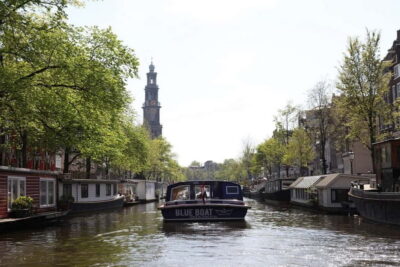 ★ 4.475 Minute City Canal Cruise with Audio GuideFrom $1819,938 reviews
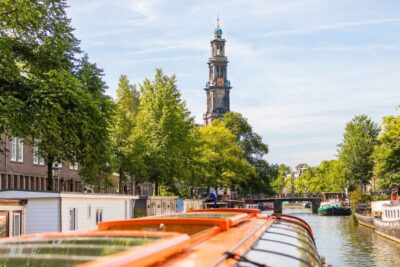 ★ 4.3City Centre Canal Cruise including AudioguideFrom $1716,901 reviews
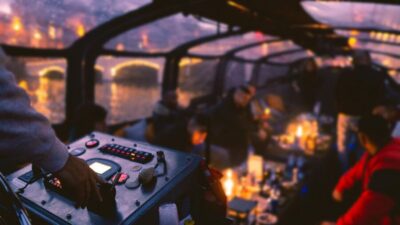 ★ 4.7Covered Canal Booze Cruise with Unlimited DrinksFrom $185,435 reviews
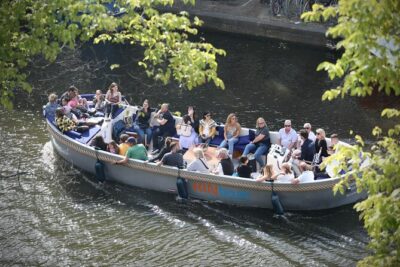 ★ 5.0Amsterdam Canal Cruise in Open Boat with Unlimited Drinks OptionFrom $214,976 reviews
 ★ 5.0Amsterdam Newest Canal Cruise with local guide and small groupFrom $214,735 reviews
 ★ 4.6Van Gogh Museum Ticket and City Canal CruiseFrom $473,899 reviews
Browse the lists this tour appears in