

Reviewed · WALKING TOURS
Amsterdam: History, Culture & Hidden Gems Walking Tour
Eight centuries of Amsterdam street stories.
This walking tour is interesting because it connects the dots between trade, religion, tolerance, and change without turning the city into a theme park. Two things I really like are the way the guide frames each neighborhood with context, and the honest approach to places people think they already understand, like the Red Light District. One consideration: it’s still a walking tour, so if your fitness is limited, the cobblestones and steady pace may feel like a lot over three hours.
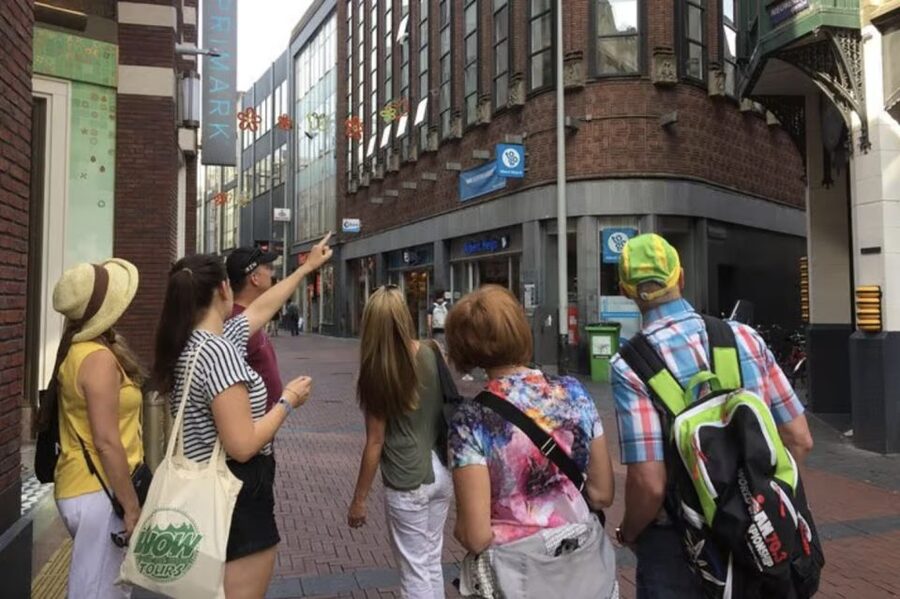
You start at Beursplein, a small square with big historical weight, and you end at Dam Square, where power and public life have been colliding for centuries. I also like that there are no museum-style stops built in, so you’re not stuck in ticket lines—you’re out in the streets, reading the city with a local’s commentary. If you prefer a tour that includes lots of paid entries, you may feel slightly restrained since most highlights are seen from outside.
In This Review
- Key things you’ll notice on this Amsterdam history walk
- Beursplein: Where Amsterdam’s trade empire starts
- Passing the Red Light District with a respectful history
- Chinatown to Nieuwmarkt: walls, the Waag, and Rembrandt’s guild world
- The Jewish Quarter’s Portuguese Synagogue: refuge and resilience
- Canal-side power: the Dutch East India Company and the Golden Age
- Dam Square: the city’s political heart in one walk
- The guide’s value: context you can use the next day
- Price, pacing, and what $38 buys you in Amsterdam
- Who should book this tour (and who might skip it)
- Should you book this Amsterdam History, Culture & Hidden Gems Walking Tour?
- FAQ
- How long is the Amsterdam History, Culture & Hidden Gems Walking Tour?
- What’s the meeting point for the tour?
- Is the tour in English?
- Does the tour include entry into attractions or sites?
- Is food or drinks included?
- How much does the tour cost?
- Is the tour suitable for low fitness levels?
- Does the tour include a dog companion?
- Is there free cancellation?
Key things you’ll notice on this Amsterdam history walk
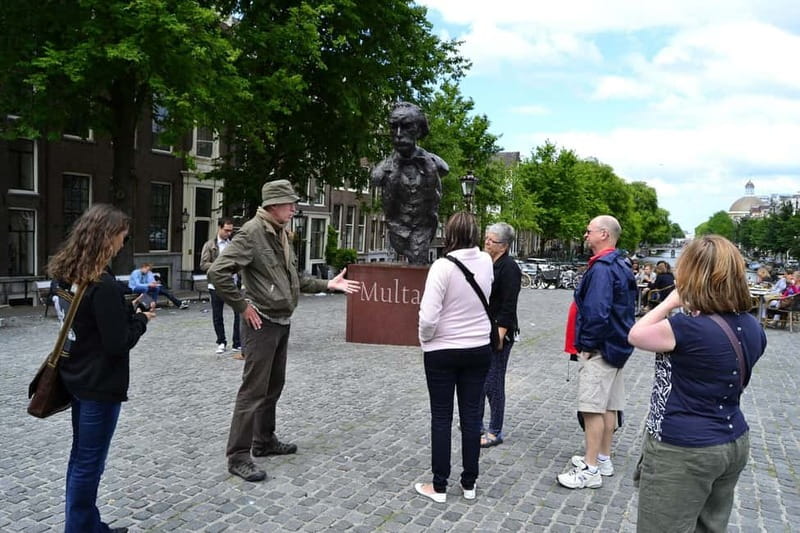
- Beursplein first: you’ll start at the city’s trading heart, where the world’s first stock exchange shaped Amsterdam’s identity.
- Red Light District with context: you’ll get a respectful history that explains why this area became what it is.
- Nieuwmarkt details you can spot: medieval wall traces, the Waag building, and the guild connection near Rembrandt’s world.
- Portuguese Synagogue view: you’ll learn how refuge and community shaped the Jewish Quarter’s legacy.
- Dutch East India Company echoes: you’ll connect canal-side grand façades to the Golden Age and its global reach.
- Dam Square as a timeline: you’ll finish at Royal Palace territory, where ceremonies, protests, and public punishment all happened.
More of Amsterdam street by street, on foot
- Amsterdam Anne Frank: Small-Group Walking Tour & Local Guide
★ 4.8 · 12,789 reviews - Anne Frank’s Story – Guided Walking Tour through Amsterdam
★ 5.0 · 11,619 reviews - Absolutely Amsterdam – the Essential Introductory Walking Tour
★ 5.0 · 3,629 reviews - Amsterdam: Anne Frank Guided Walking Tour in DE/EN/IT/ES
★ 4.9 · 3,107 reviews
Beursplein: Where Amsterdam’s trade empire starts
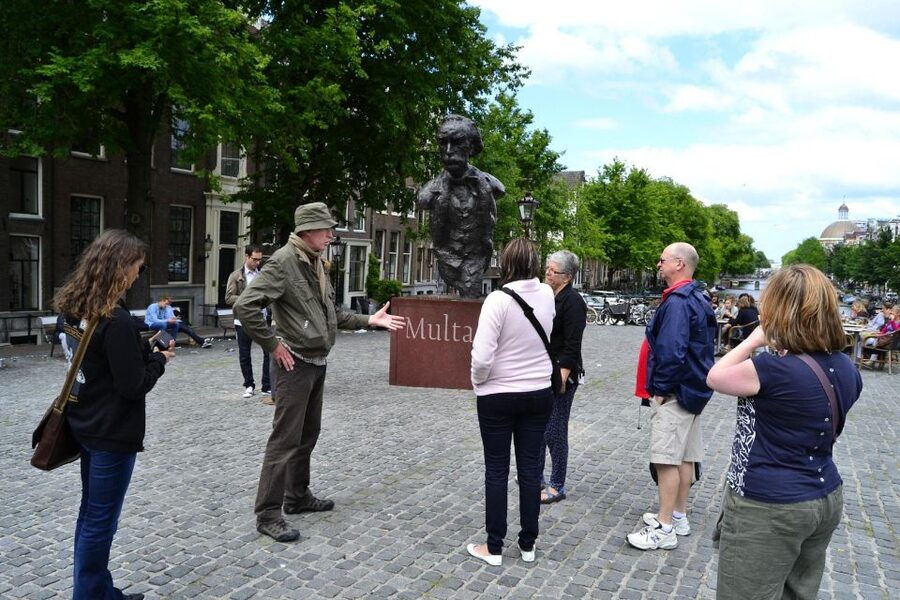
Most first-time Amsterdam visitors learn the “what” before the “why.” This tour flips that. You begin at Beursplein, a modest square made famous by what it represents: Amsterdam’s merchant power. Even if you’re not a finance person, the story lands because the guide explains how trade wasn’t just background noise—it was the engine that funded institutions, art, and (eventually) the city’s attitude toward mixing ideas and people.
From Beursplein you get a sense of the timeline. The square evolved into a global financial powerhouse and sits at the center of Amsterdam’s merchant legacy. You’ll see how a place can feel small while still carrying world-changing influence. That’s a great mindset for the rest of the walk, because you’ll keep spotting “origin stories” as you move.
I like that this opening doesn’t rush. It gives you context so the later contrasts make sense: medieval churches near modern windows, historic walls under newer streets, and old power structures living on in new ways.
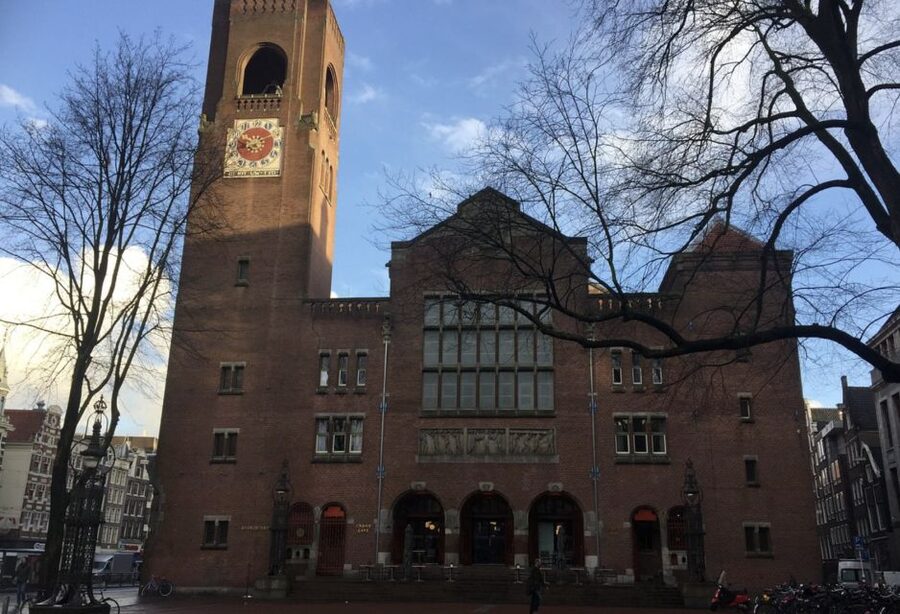
Practical tip: Beursplein is between Dam and Central Station, and it’s easy to find if you anchor to landmarks like the large clock tower and businesses across the square (Body World and Primark are good reference points).
Passing the Red Light District with a respectful history
Next comes one of Amsterdam’s most talked-about neighborhoods. The key here is tone. You’re not doing a shock tour, and you’re not being asked to stare. Instead, you get a grounded look at how the area formed over time, layered with older buildings and shifting city rules.
As you walk, the guide’s angle matters: they describe the neighborhood as part of Amsterdam’s longer story of tolerance and social change. The city’s approach is complicated, not slogan-simple, and you’ll hear it explained in a human way rather than a moral lecture. You’ll also notice the contrast that makes Amsterdam special: medieval church silhouettes can sit near modern shop windows and brightly lit street scenes, all within the same few blocks.
This is also where you start understanding why the guide’s job is so important. Facts alone won’t do it. You need someone to connect what you see to what you’re missing.
If you want a tour that helps you navigate sensitive areas without getting weird, this is a strong fit. Just be ready for the fact that you’re walking through a neighborhood that can feel busy and visually intense, even with a respectful explanation.
Chinatown to Nieuwmarkt: walls, the Waag, and Rembrandt’s guild world
After the Red Light District, the walk moves into areas where Amsterdam’s cultural mix feels tangible. You go toward Chinatown, then land at Nieuwmarkt, where history shows up physically.
Nieuwmarkt isn’t just a place to snack or shop. It’s a crossroads that reflects trade, immigration, and the ways communities reshape a city. Here you’ll see remains of Amsterdam’s medieval walls, which gives you a real anchor for how the city used to be fenced and defined. When you can picture the old boundaries, it gets easier to understand why certain neighborhoods developed where they did.
You’ll also be pointed toward the Waag building, one of those recognizable landmarks that becomes more meaningful when you know its setting. And the guide brings in a Rembrandt thread that you won’t get from a generic “photo stop” tour: you’ll learn about the spot where Rembrandt’s painter’s guild once gathered. That detail is gold because it turns art history from a museum label into something connected to street-level life and working communities.
One of the best things about this segment is how it teaches you to look. After Nieuwmarkt, you’ll start noticing clues: signage, building shapes, street alignments, and the way different eras overlap in the same block. It makes the rest of Amsterdam feel less like random sightseeing.
Where this can be tough: cobblestones and uneven sidewalk surfaces are more common in older areas, so comfortable shoes matter more here than you might think.
Still deciding? A few more Amsterdam tours worth a look



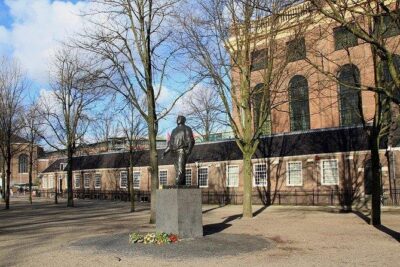
The Jewish Quarter’s Portuguese Synagogue: refuge and resilience
As the walk continues, you move near the Jewish Quarter, where the Portuguese Synagogue provides one of the clearest visual reminders that Amsterdam’s story includes refuge, resilience, and cultural contribution.
You’ll learn what the synagogue silhouette represents and how the Jewish community’s presence influenced the city across centuries. The guide doesn’t treat it like a single dramatic chapter. Instead, the story is woven into the broader theme of transformation—how Amsterdam’s identity kept changing as different communities found ways to build lives in the city.
This section tends to land emotionally because it’s specific. It’s not just “Amsterdam was tolerant.” It’s more like: tolerance was practiced in real institutions, real neighborhoods, and real community networks. When you hear it this way, you understand why the earlier talk about religion and tolerance wasn’t abstract.
If you care about history that respects people rather than just highlighting monuments, you’ll likely appreciate how this stop is handled.
Canal-side power: the Dutch East India Company and the Golden Age
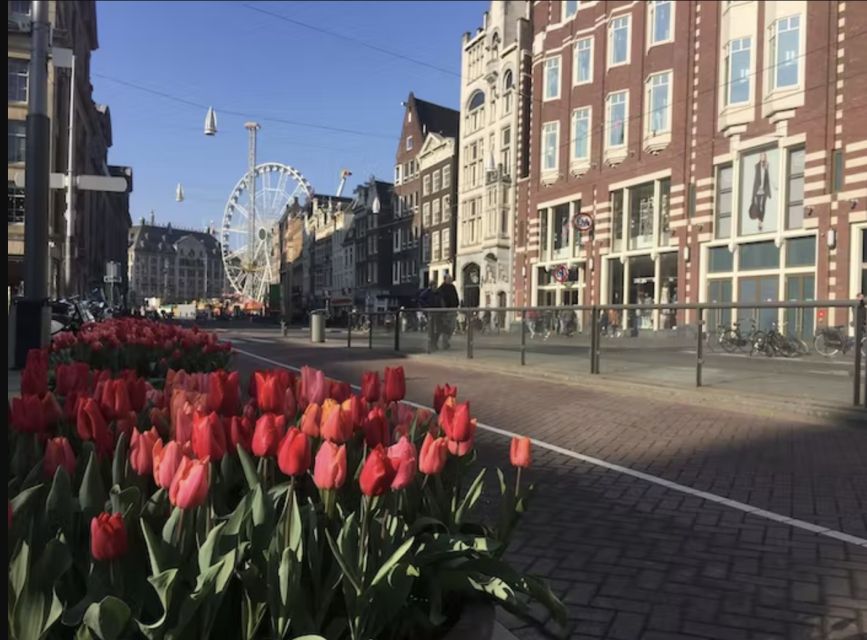
One of Amsterdam’s biggest visual signatures is the way the wealth of the Golden Age still lingers in façades along the canals. This tour helps you read that wealth. As you stroll, you’ll pass grand canal homes once owned by families connected to the Dutch East India Company.
This is where the tour’s “trade to transformation” theme becomes concrete. You’ll hear how global commerce helped build fortunes, and you’ll also understand the uncomfortable truth that expansion and power come with ethical tradeoffs. The guide frames it so you can appreciate the architecture while still grasping what made it possible.
I like this approach because Amsterdam can sometimes feel like a postcard. The East India Company story pulls you back into cause-and-effect. You stop seeing buildings as decoration and start seeing them as outcomes of political choices, risk-taking, and international connections.
If you’ve ever wondered why Amsterdam’s history feels so tied to the wider world, this is your answer on foot.
Dam Square: the city’s political heart in one walk
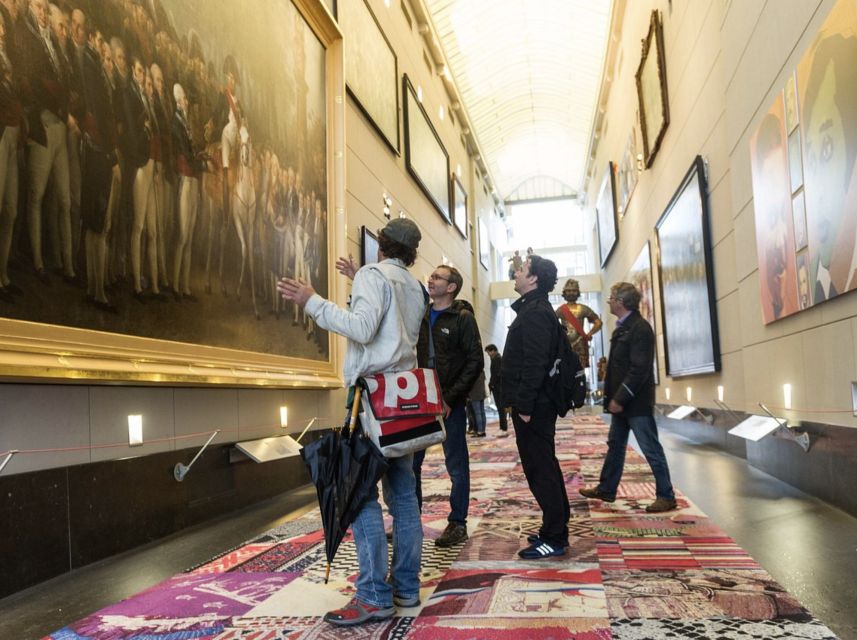
Every great Amsterdam walk eventually ends up at Dam Square, and this one uses it as a fitting closing point. You’ll stand near the Royal Palace, and the guide explains that the area’s role goes beyond royal pageantry.
Dam Square has witnessed ceremonies, but also protests, public executions, and celebrations. Hearing that list while you’re standing in the open space makes the square feel like a stage for how society works—sometimes in orderly ways, sometimes not. The tour connects politics and public life to the city’s long memory.
It’s a clever ending because you’ve just traveled through trade, neighborhoods, religion, and artistic life. Dam Square pulls it all together under one theme: Amsterdam has always been changing, and public space is where those changes show up.
If you want a last stop that doesn’t just feel like a place to buy fries, this works well.
The guide’s value: context you can use the next day
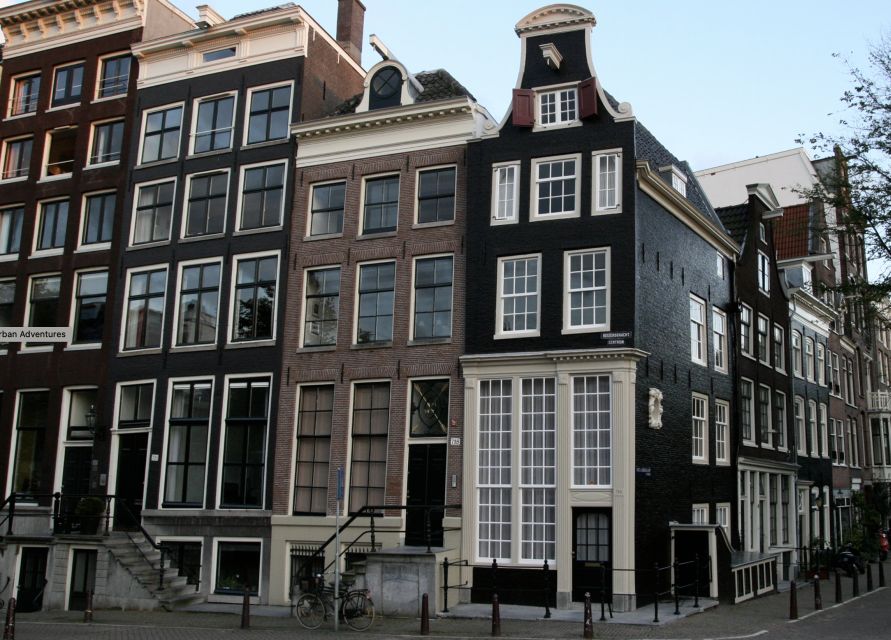
The tour’s headline is history, but its real strength is interpretation. You’re not just hearing dates. You’re learning how to connect street scenes to bigger ideas—how commerce shaped neighborhoods, how faith shaped community, and how city tolerance evolved alongside conflict and economic power.
In past groups, guides have included an American expat living in Amsterdam for 30+ years, and at least one guide named David has been specifically praised for clear explanations (and even running a bit longer when questions kept coming). There’s also been an American guide with Wisconsin ties who shared practical pointers beyond the history—like how to navigate the city and where to focus for food later. That kind of street-smart add-on is worth its weight, because it helps you turn a fun first day into smarter sightseeing the rest of your trip.
What I recommend: treat this tour like a map for your memory. After, when you pass another canal house, another old church, or another street name that sounds like trade, ask yourself what story the guide would connect to it. That’s how you get the most out of a 3-hour walk.
Price, pacing, and what $38 buys you in Amsterdam
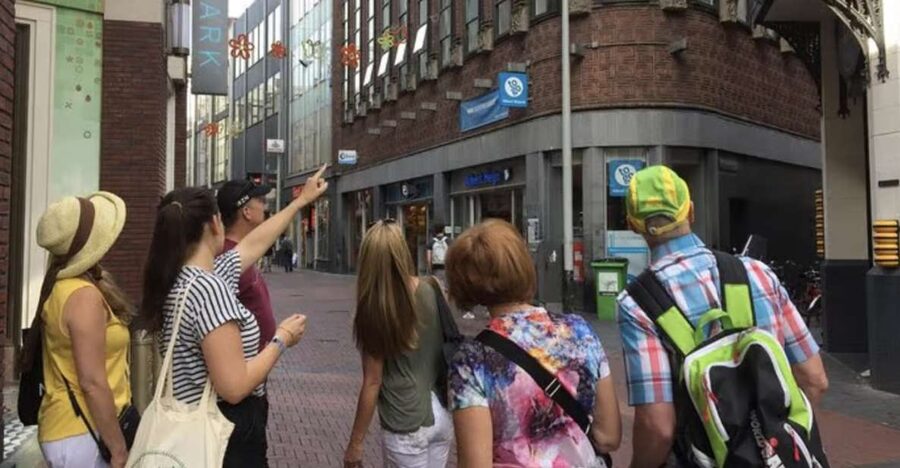
At $38 per person for 3 hours, you’re paying for a local English-speaking guide plus a city tax component. You’re also not paying for attractions or site entries, which changes the value equation.
Here’s how I’d think about it:
- If you want an orientation walk that helps you understand neighborhoods fast, the price-to-time ratio is strong. Three hours is long enough to cover real ground and short enough not to drain your day.
- If you expect to enter museums, churches, or paid sites during the tour, this may feel like “mostly walking and explanations.” In that case, budget additional time and tickets for the specific places you care about most.
The pace is best for people with decent walking ability. The tour is described as not suitable for low fitness, so if you’re nursing an injury, struggle with stairs, or hate cobblestones, plan carefully. The route is in older parts of town, and those surfaces are not forgiving.
What to bring: comfortable shoes, layers (Amsterdam weather changes fast), and a charged phone or camera. Also, since there’s no built-in food stop, you might want to snack before or after so the walk stays enjoyable.
Who should book this tour (and who might skip it)
This is a good match if you:
- want an Amsterdam history tour that goes beyond the usual postcard route
- like respectful storytelling, especially around sensitive neighborhoods
- enjoy learning how neighborhoods connect to trade, religion, and city politics
- are visiting for the first time and want a framework for the rest of your stay
You might skip it if you:
- need fully seated sightseeing, or you struggle with long walking times
- want lots of included entry tickets and inside-the-building time
Should you book this Amsterdam History, Culture & Hidden Gems Walking Tour?
Yes, if you want a thoughtful, street-level history walk that actually teaches you how to read Amsterdam. The starting point at Beursplein gives you a strong foundation in trade and finance, the Red Light District segment is handled with context rather than gimmicks, and the finish at Dam Square ties everything into public life.
If you’re on a first visit, I’d book this early in your trip. It helps you navigate neighborhoods with more meaning, so your later self-guided wandering feels smarter and less random.
If you’re the type who loves dates, architectural details, and human stories connected to specific places, this tour will feel like money well spent for what you get in three hours.
FAQ
How long is the Amsterdam History, Culture & Hidden Gems Walking Tour?
It lasts 3 hours.
What’s the meeting point for the tour?
The meeting point is Beursplein, a small square with a large clock tower. It’s between Dam and Central Station.
Is the tour in English?
Yes, the tour is guided in English by a local English-speaking guide.
Does the tour include entry into attractions or sites?
No. There is no entry into attractions or sites.
Is food or drinks included?
Food and drinks are not included. If the group makes a stop, you’ll cover it yourself.
How much does the tour cost?
The price is $38 per person, and one part of the cost includes a tourist city tax of 1.50 EUR per person.
Is the tour suitable for low fitness levels?
No, it’s not suitable for people with low levels of fitness.
Does the tour include a dog companion?
A one doggie companion can be included at certain times, as part of the tour details.
Is there free cancellation?
Yes. You can cancel up to 24 hours in advance for a full refund.
More Amsterdam Walking Routes






More Tours in Amsterdam




More Tour Reviews in Amsterdam






Just added: fresh Amsterdam tour reviews





Walking Tours, compared.
 ★ 4.8Amsterdam Anne Frank: Small-Group Walking Tour & Local GuideFrom $2912,789 reviews
 ★ 5.0Anne Frank’s Story – Guided Walking Tour through AmsterdamFrom $3911,619 reviews
 ★ 5.0Absolutely Amsterdam – the Essential Introductory Walking TourFrom $53,629 reviews
 ★ 4.9Anne Frank Guided Walking Tour in DE/EN/IT/ESFrom $283,107 reviews
 ★ 4.8Anne Frank Guided Small Group Walking TourFrom $282,722 reviews
 ★ 4.9Cultural Highlights Walking TourFrom $302,629 reviews
 ★ 4.2Ganja Walking TourFrom $402,127 reviews
 ★ 5.0Anne Frank Walking Tour Amsterdam Including Jewish Cultural QuarterFrom $751,879 reviews
Browse the lists this tour appears in