
Reviewed · WALKING TOURS
Amsterdam Highlights and History Walking Tour (MUST DO)
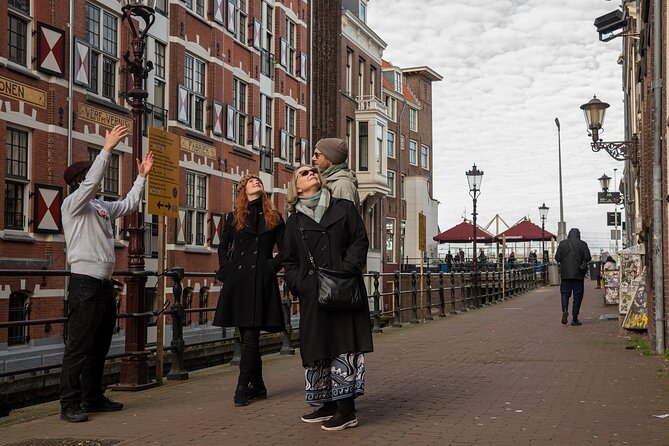
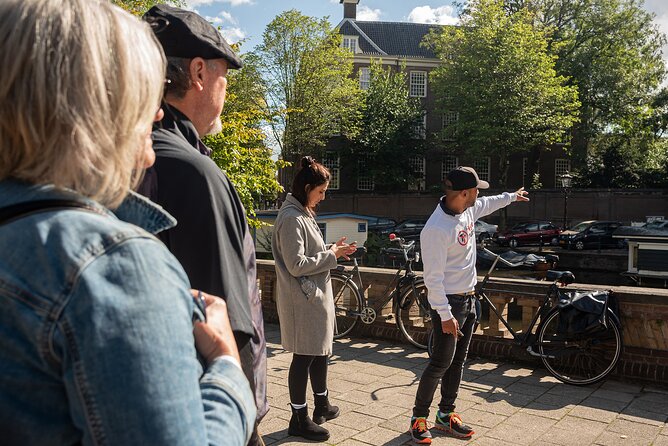
Amsterdam feels like it is already telling stories. This walking tour stitches major landmarks into a clear, first-time-friendly storyline—starting at Dam Square and looping through the canal ring area, historic courtyards, and the Royal Palace zone. I like that it is a small group (max 15) so questions do not get lost, and I also like how the guiding style brings the city to life—whether you get Andrea, Gio, Aaron, David, Aarre, or James.
The main thing to consider is simple: this is still a two-hour stand-and-walk experience. You will be on your feet, and you need to stay alert around bicycles as you move through busy central streets.
In This Review
- What Makes This Tour a Smart Amsterdam First Pick
- Price and Value: $26.91 for Two Hours That Actually Add Up
- Where You Start at Damrak and Why It Matters
- Stop 1: Dam Square, the Political and Cultural Center
- Stop 2: The Canal Ring (UNESCO) and the City’s Engineering Story
- Stop 3: A 14th-Century Courtyard Linked to the Beguines
- Stop 4: Old Church, from Catholic Roots to Protestant Use
- Stop 5: The Royal Palace Area and Dutch Classicism in Context
- Stop 6: Nieuwmarkt Square, Old City Walls and Today’s Daily Life
- Guides: Why the Right Voice Makes the Whole Tour Work
- Pace, Timing, and the Real-Life Things to Plan For
- What’s Included—and What You’ll Need to Sort Out
- Who This Tour Fits Best (and Who Might Want Something Else)
- Should You Book This Amsterdam Highlights and History Walking Tour?
- FAQ
- How long is the Amsterdam Highlights and History Walking Tour?
- Where is the meeting point for the tour?
- Is the tour offered in English?
- How many people are in the group?
- Is food and drinks included?
- Do I need a printed ticket?
- What is the cancellation policy?
What Makes This Tour a Smart Amsterdam First Pick
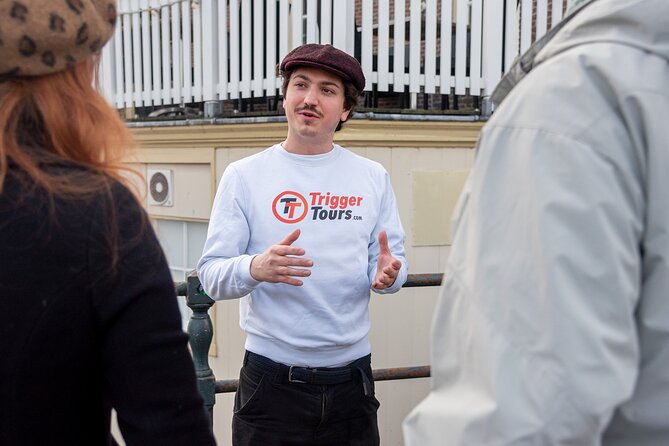
- Small group, real attention: With up to 15 people, the guide can slow down when you have questions and keep the pace comfortable.
- Iconic stops with context: Dam Square, the canal ring, the Old Church, and the Royal Palace area become easier to understand when someone explains what you are seeing.
- A practical “orientation” route: You get an efficient sense of where key sights sit relative to each other, which helps you plan the rest of your trip.
- Guides who work the crowd: Names like Andrea, Gio, David, and James show up in the feedback—people clearly liked how animated and responsive the guides were.
- History told through streets: The tour is built around real locations, not museum facts floating in space.
More of Amsterdam street by street, on foot
- Amsterdam Anne Frank: Small-Group Walking Tour & Local Guide
★ 4.8 · 12,789 reviews - Anne Frank’s Story – Guided Walking Tour through Amsterdam
★ 5.0 · 11,619 reviews - Absolutely Amsterdam – the Essential Introductory Walking Tour
★ 5.0 · 3,629 reviews - Amsterdam: Anne Frank Guided Walking Tour in DE/EN/IT/ES
★ 4.9 · 3,107 reviews
Price and Value: $26.91 for Two Hours That Actually Add Up
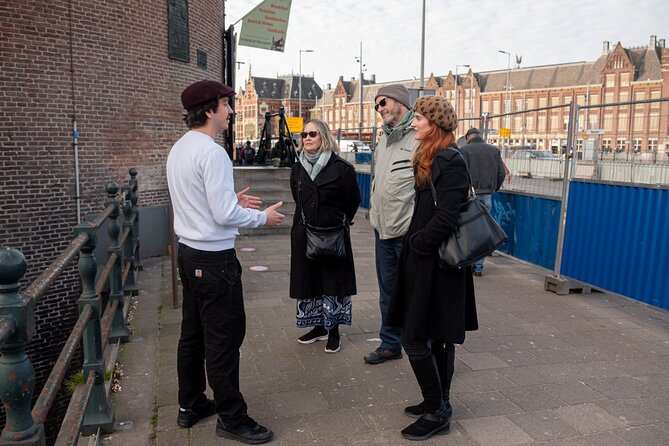
At about $26.91 per person for roughly 2 hours, the value here comes from two things: time efficiency and the guide’s storytelling. In central Amsterdam, seeing the highlights is easy—understanding them in a way that helps you navigate your next days takes guidance.
This tour is also designed like a “grab the basics fast” experience. You are not paying for a long, exhaustion-heavy day. You are paying for a structured walk through the places that define the city’s look and power: civic life at Dam Square, water-and-urban planning in the UNESCO canal ring, religion and repurposing at the Old Church, and royal authority near the Royal Palace.
Where You Start at Damrak and Why It Matters
You meet at Damrak 1-5, 1012 TM Amsterdam and the tour ends back at the same meeting point. That round-trip structure is handy when your day is packed, because you are not forced to figure out a new pickup location at the end.
Because the meeting area is near public transportation, it is easier to tack this onto the rest of your itinerary—especially if you are coming from the train area or you plan to wander on foot afterward. You also get a mobile ticket, which is one less thing to juggle.
Stop 1: Dam Square, the Political and Cultural Center
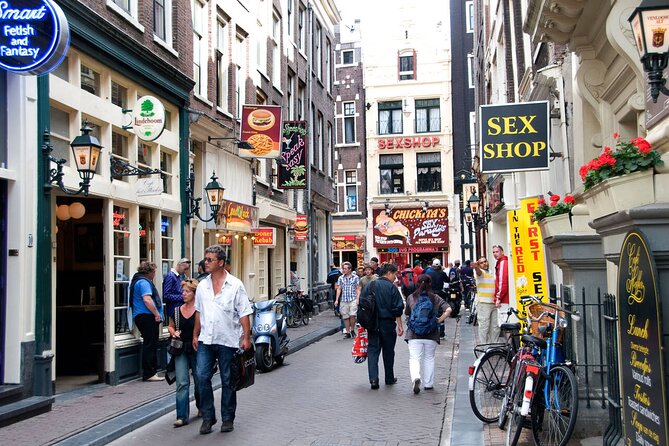
Dam Square has been a focal point for centuries, and the tour uses it as your “anchor stop.” If Amsterdam feels like a maze of canals and narrow streets, this is where the maze gets explained: why this spot mattered, and how civic and cultural power played out here.
What I like about using Dam Square first is that it gives you a mental map early. Once you understand that this is the center of attention historically, the rest of the walk makes more sense. You start noticing how buildings and squares are positioned, not just what they look like.
Possible drawback: Dam Square is also an active city zone. So you’ll want comfortable footwear right away and the patience to work around crowd flow.
Still deciding? A few more Amsterdam tours worth a look



Stop 2: The Canal Ring (UNESCO) and the City’s Engineering Story
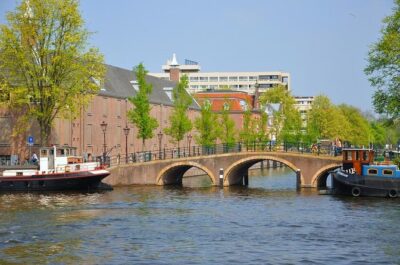
Next comes the canal ring, a UNESCO World Heritage Site and one of Amsterdam’s most picturesque areas. The value here is not only the photos (you will get those), but the explanation of why these canals shaped the city and how planning and engineering made them work.
Canals can look purely scenic at first. A good guide turns them into infrastructure you can understand. You begin to see how waterways connect neighborhoods and why Amsterdam built upward around water rather than away from it. For first-time visitors, that shift in thinking makes later canal walks feel smarter.
Two practical tips for this section:
- Keep your camera ready, but do not stop moving when the group needs to cross or reposition.
- Expect narrow spaces and bike traffic in parts of the central canal belt.
Stop 3: A 14th-Century Courtyard Linked to the Beguines
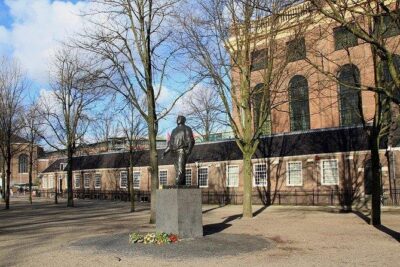
This stop is a quiet-feeling change of pace: a historic courtyard dating back to the 14th century, described as one of the oldest and best-preserved parts of Amsterdam. The tour connects the space to the Beguines, religious women who lived in a semi-monastic community.
What makes this meaningful is the contrast. Amsterdam’s public highlights can feel like power and commerce on the surface. A courtyard connected to the Beguines shifts the story to everyday faith, community life, and how people organized themselves long before modern neighborhoods existed.
You will likely appreciate this stop most if you enjoy history that is local and human-scale. It is not just “old building, big deal.” It is about how ordinary community structures lasted—and what survives now.
Stop 4: Old Church, from Catholic Roots to Protestant Use
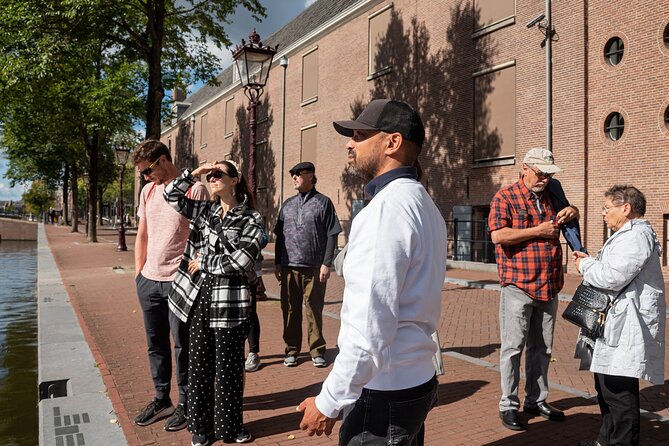
The Old Church dates back to the 13th century and is Amsterdam’s oldest surviving building. It began as a Catholic church, later used by Protestant congregations, and now functions as a cultural center.
This is the kind of transformation that makes Amsterdam feel real. The same walls that once served one religious community can serve a different purpose later. With a guide explaining what changed and why, the building stops being a postcard and starts being a timeline you can see.
One good reason this stop matters for first-timers: it helps you understand how cities evolve without losing their physical identity. Amsterdam did not reset completely—it reused, repurposed, and kept moving.
Stop 5: The Royal Palace Area and Dutch Classicism in Context
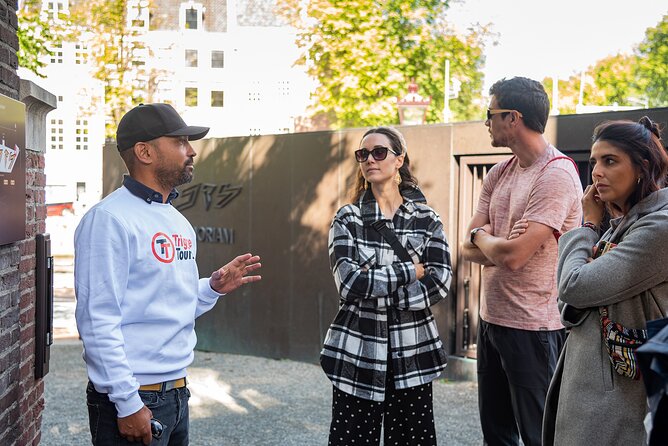
The tour then heads toward the Royal Palace, originally built as a town hall in the 17th century. Today it is one of three palaces used by the Dutch royal family and is open to public tours.
Even if you do not enter during your walk, the explanation matters. You get the sense of how civic buildings and royal power overlap in the city’s story. The style—Dutch classicism—also helps you recognize what you are seeing when you later spot related architecture around town.
A small consideration: palace-area sights are often photo-friendly but also surrounded by traffic and people. You may need to accept that you will not always have a perfect, wide shot from every angle. That is normal in a central walking route.
Stop 6: Nieuwmarkt Square, Old City Walls and Today’s Daily Life
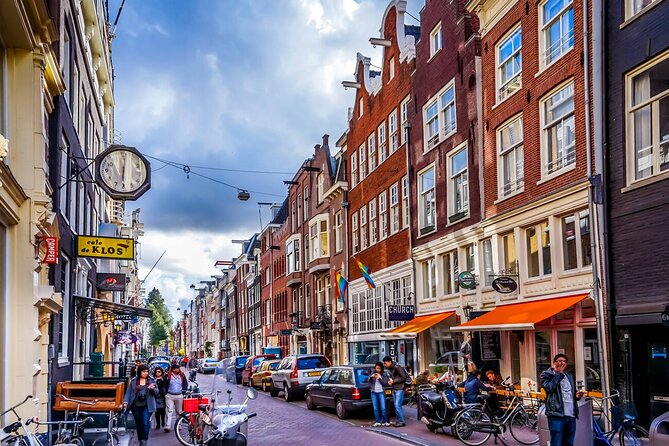
You finish near Nieuwmarkt, a square that today feels like a local meeting place with cafes and a daily market. Historically, it was the site of Amsterdam’s 17th-century city walls, which helps explain why this area behaves like a hinge point in the city’s structure.
This stop is valuable because it connects past and present in one view. You can stand in the same general area where old defensive boundaries once existed and watch how the space functions now as commerce and gathering. It is the kind of wrap-up that makes the route feel coherent.
If you enjoy markets and people-watching, Nieuwmarkt is also a nice transition point for the rest of your day. You get your history, then you can keep going with food and shopping on your own.
Guides: Why the Right Voice Makes the Whole Tour Work
The consistency in feedback is about the guide. People praised the guides as engaging, responsive, and well informed—so the route feels more like a story walk than a checklist.
Names that stood out in the feedback include:
- Andrea (praised for knowledge and a comfortable pace)
- Gio (praised for passion and delivering highlights in a way that clicks)
- Aaron (praised for an engaging personality and extensive history)
- David (praised for going above and beyond on questions)
- Aarre (praised for fascinating historical significance)
- James (praised for mixing historical data with monuments in an easy way)
For you, that matters because the biggest “difference” in a city walking tour is often not the landmarks—it is the narrator. When a guide can answer your questions and explain why buildings matter, you leave with a mental framework that makes your remaining Amsterdam days easier.
Pace, Timing, and the Real-Life Things to Plan For
The tour runs about 2 hours and stays at a moderate walking pace. That is good news if you want highlights without feeling sprinty. The tradeoff is you should plan to stand, walk, and keep attention on the street environment.
A key point from the experience feedback: you need to be comfortable on your feet for the full duration, and you should watch for bicycle traffic. Amsterdam is used to cyclists moving through spaces that pedestrians share. If you tend to slow down while reading signs or looking up at buildings, build in a little extra focus so you can keep moving with the group.
Also, because this is a small-group experience (max 15), the group pace can vary slightly depending on your guide and how fast the group moves between stops. The good part: it usually stays human-sized rather than “herded.”
What’s Included—and What You’ll Need to Sort Out
Included:
- A local guide
- A tour covering Amsterdam’s highlights
Not included:
- Food and drinks
So I treat this like a smart morning or mid-afternoon building block. Do it when you can still eat afterward without scrambling. Bring water if you are sensitive to heat or you expect to walk around after.
Since the tour ends where it starts, you can plan a meal nearby or jump into another neighborhood walk without complicated logistics.
Who This Tour Fits Best (and Who Might Want Something Else)
This is a great match if:
- You are in Amsterdam for the first time and want a grounded orientation
- You enjoy history and want it tied to real landmarks, not abstract facts
- You like small groups and the chance to ask questions
- You want an efficient route that covers the kind of sights you will keep seeing in photos later
It may be less ideal if:
- You are not comfortable walking for two hours total
- You want a fully seated experience
- You strongly dislike bicycle traffic environments and would rather choose a different style of tour
Should You Book This Amsterdam Highlights and History Walking Tour?
Yes, if you want a fast, clear introduction to central Amsterdam with a guide who can explain what you are actually looking at. The pricing is reasonable for the amount of guided time, and the small-group limit is a real quality signal.
Book it now especially if your schedule is tight. The average booking timing is about 57 days in advance, which suggests it can fill up when people plan their Amsterdam days. If you’re choosing one “easy win” tour early in your trip, this one is built for that role.
FAQ
How long is the Amsterdam Highlights and History Walking Tour?
It runs for about 2 hours (approx.).
Where is the meeting point for the tour?
The start is Damrak 1-5, 1012 TM Amsterdam, Netherlands.
Is the tour offered in English?
Yes, it is offered in English.
How many people are in the group?
The tour has a maximum of 15 travelers.
Is food and drinks included?
No, food and drinks are not included.
Do I need a printed ticket?
You get a mobile ticket.
What is the cancellation policy?
You can cancel for a full refund if you cancel at least 24 hours in advance. If you cancel less than 24 hours before the start time, the amount paid is not refunded.
More Amsterdam Walking Routes






More Tours in Amsterdam




More Tour Reviews in Amsterdam






Just added: fresh Amsterdam tour reviews





Walking Tours, compared.
 ★ 4.8Amsterdam Anne Frank: Small-Group Walking Tour & Local GuideFrom $2912,789 reviews
 ★ 5.0Anne Frank’s Story – Guided Walking Tour through AmsterdamFrom $3911,619 reviews
 ★ 5.0Absolutely Amsterdam – the Essential Introductory Walking TourFrom $53,629 reviews
 ★ 4.9Anne Frank Guided Walking Tour in DE/EN/IT/ESFrom $283,107 reviews
 ★ 4.8Anne Frank Guided Small Group Walking TourFrom $282,722 reviews
 ★ 4.9Cultural Highlights Walking TourFrom $302,629 reviews
 ★ 4.2Ganja Walking TourFrom $402,127 reviews
 ★ 5.0Anne Frank Walking Tour Amsterdam Including Jewish Cultural QuarterFrom $751,879 reviews
Browse the lists this tour appears in