
Reviewed · ANNE FRANK & JEWISH QUARTER
Amsterdam: Anne Frank and World War II Walking Tour (TOP RATED)
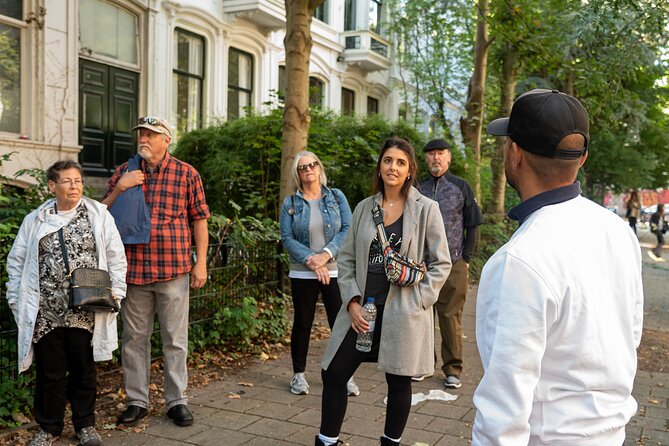
Shoes on cobblestones, stories in your head. This Anne Frank and WWII walking tour ties the Holocaust to real places in Amsterdam’s Jewish Quarter, with a local guide who keeps you moving and asking questions. I like how it turns a name you know into street-level context, starting with Jewish community life and ending at major memorial spots.
Two things I especially like: the small-group feel (max 15) that makes it easier to hear every detail, and the pacing that actually gives you time to look around and take photos without feeling rushed. You’re not stuck in one building all day; you walk the neighborhood like you’re reading a timeline.
One drawback to weigh: Anne Frank House tickets are not included, so if that’s your main goal, you’ll need to plan that visit separately. Also, it’s a walking tour, so younger kids may tire out on a 2-hour stretch.
In This Review
- Key highlights worth your attention
- Why This Jewish Quarter Walk Works Better Than Just Reading About WWII
- Start Location, Timing, and What 2 Hours Feels Like in Real Life
- Portugese Synagoge: Jewish Amsterdam Before the War Hits
- Auschwitz Monument: How Amsterdam Marks Deportation Memory
- Verzetsmuseum Amsterdam: Resistance Isn’t an Afterthought
- Hollandsche Schouwburg and De Plantage: Seeing Deportation in the Neighborhood
- Spinoza Monument: A Philosophy Marker in a Memory-Heavy Route
- Dam Square and De Schaduwkade: The City’s Big Memory Spaces
- What Makes the Guides Matter: Personal Story, Tight Answers, Good Pace
- Free Stops and Short Visits: How to Get Value Without Extra Admissions
- Price and Booking Timing: Why $29.45 Can Make Sense
- Who This Tour Suits (and Who Should Think Twice)
- Should You Book This Amsterdam Anne Frank and WWII Walking Tour?
- FAQ
- FAQ
- How long is the Amsterdam Anne Frank and WWII walking tour?
- What is the price per person?
- What is included in the ticket price?
- Is the Anne Frank House entrance ticket included?
- How big is the group?
- What if the weather is bad?
Key highlights worth your attention
- Portugese Synagoge context first: learn how the Sephardic community shaped Amsterdam before the war crushed everything
- Memorial stops tied to deportation: Auschwitz Monument and Hollandsche Schouwburg keep the timeline painfully clear
- Verzetsmuseum Amsterdam stop: resistance becomes part of the story, not just dates and names
- You finish at major public memory sites: Dam Square and De Schaduwkade bring the story back to the city’s open spaces
- Guides can bring it close: many guests highlight energetic guides who answer questions and share personal angles
Deeper into the Jewish Quarter and the war years
- Amsterdam Anne Frank: Small-Group Walking Tour & Local Guide
★ 4.8 · 12,789 reviews - Anne Frank’s Story – Guided Walking Tour through Amsterdam
★ 5.0 · 11,619 reviews - Amsterdam: Anne Frank Guided Walking Tour in DE/EN/IT/ES
★ 4.9 · 3,107 reviews - Amsterdam: Anne Frank Guided Small Group Walking Tour
★ 4.8 · 2,722 reviews
Why This Jewish Quarter Walk Works Better Than Just Reading About WWII
Amsterdam can be gorgeous. That’s part of the problem and part of the power here. You’re walking through a normal-looking city while hearing what happened nearby—sometimes only blocks away.
This tour is built to give you shape to the story. Instead of jumping straight to the best-known name, you start with community life and the physical places Jews lived, prayed, and resisted. Then the guide pulls you forward through deportation-related sites and the resistance theme, so you understand the sequence rather than just the outcome.
Expect a thoughtful, sober tone. This isn’t entertainment, but it is a well-structured walk that helps you process what you’re seeing. And because the stops are mostly outdoors or at dedicated memorial locations, you can hold the moment without being packed into a single room.
If you’re trying to understand Anne Frank in context—how Amsterdam’s Jewish life changed, and how the wider WWII machinery reached into daily streets—this format makes that easier.
Start Location, Timing, and What 2 Hours Feels Like in Real Life
The tour meets at Amstel 51C, 1018 EJ Amsterdam. It ends back at the meeting point, so you’re not left stranded across town.
Duration is about 2 hours. The itinerary is laid out in short segments (around 10 minutes per stop), which matters because you get enough time to notice details and ask questions, but not so much you lose the thread. Still, it’s a walk tour. In good shoes, it’s fine for most people. If you’re bringing kids, you should assume they may run out of energy before the story ends.
It’s offered in English, and the group is capped at 15 travelers. That small size is a practical advantage: you can hear the guide, and the guide can keep moving without everyone falling behind.
You’ll also use a mobile ticket, and the meeting point is near public transportation—helpful if you’re pairing this with other Anne Frank or city-center plans.
Portugese Synagoge: Jewish Amsterdam Before the War Hits
Stop one is the Portugese Synagoge (listed as free to enter for the stop). This is a smart opener because it shifts you from horror to humanity first.
The guide explains the history of Amsterdam’s Jewish community, especially the Sephardic community during the Dutch Golden Age—one of the largest and richest Jewish communities in Europe in that era. You’re also reminded that this synagogue isn’t just a museum prop. It remains an active place of worship and is a well-known tourist attraction.
What I think you’ll get most from this stop is perspective. It’s easier to understand what was targeted when you first see what was there: community institutions, religious life, and a sense of established presence.
Practical tip: since this is a religious site, be ready for simple etiquette. Keep voices low, watch your footing, and don’t treat the building like a photo backdrop only.
More of Amsterdam street by street, on foot
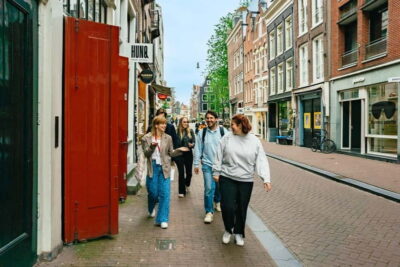
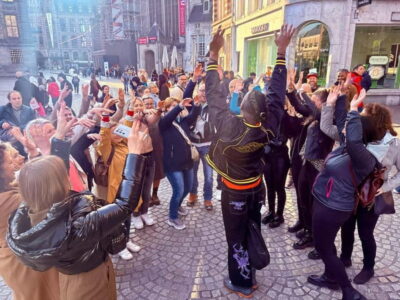

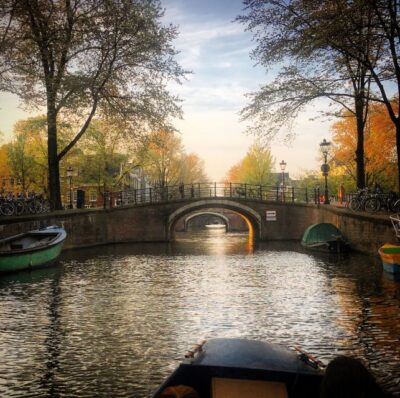
Auschwitz Monument: How Amsterdam Marks Deportation Memory
Next comes the Auschwitz Monument. Even though you’re only there briefly, the theme is heavy: Jewish deportation, and how Amsterdam remembers those taken from the city.
This stop works because it compresses the emotional weight into a single focal point. You’re not just walking through abstract history—you’re stopping at a dedicated reminder. The guide uses this moment to connect the larger WWII story to Amsterdam’s Jewish reality.
Because the stop is short, don’t expect a long lecture here. Instead, use it as a moment to reset mentally before you move on to resistance and deportation sites.
If you tend to get overwhelmed by memorials, that’s normal here. Just pace yourself. The tour keeps moving, but you can pause and take a breath without feeling like you’re “slowing the group.”
Verzetsmuseum Amsterdam: Resistance Isn’t an Afterthought
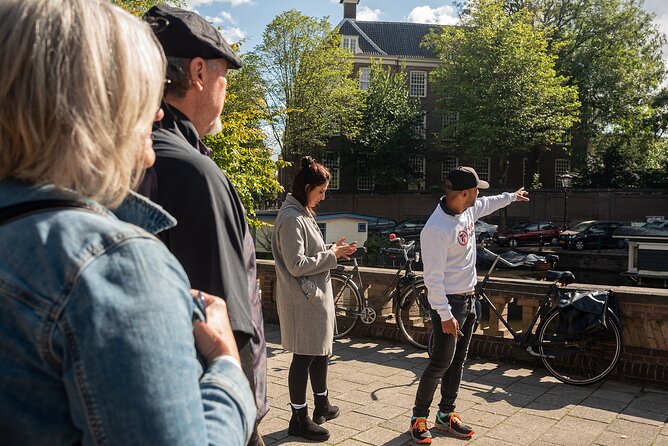
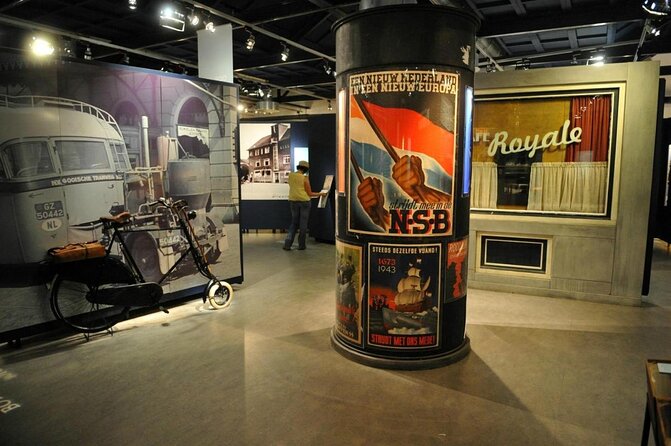
After the deportation focus, you’ll stop at Verzetsmuseum Amsterdam to talk about the resistance of the Jewish community.
This is important. Many WWII stories focus on persecution first, then end on liberation. Here, the resistance theme reminds you that people weren’t only victims in the story—they also organized, responded, and tried to survive with purpose.
Even if you don’t plan to go inside the museum itself, the walking stop gives you historical framing you can carry forward. It helps you interpret later sites, because resistance explains why some people had choices, even when those choices were tragically limited.
A good guide will also connect resistance to the street-level reality of Amsterdam. Look at the surroundings and think about how secret, local decisions can be made in ordinary neighborhoods.
Hollandsche Schouwburg and De Plantage: Seeing Deportation in the Neighborhood
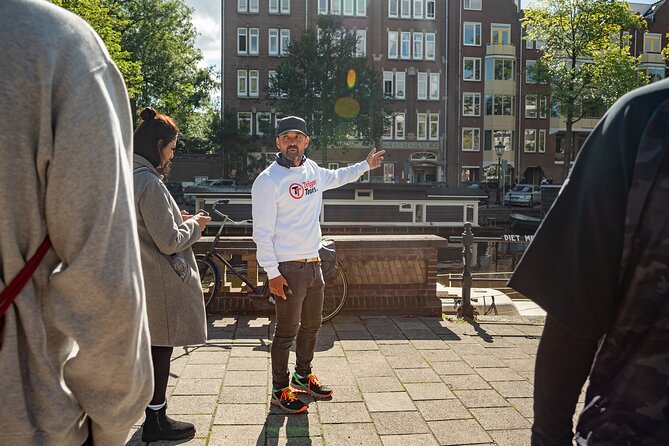
One of the most intense stops on the walk is Hollandsche Schouwburg. This is where the tour discusses deportation camps.
The value of bringing you here on a walking route is that the building sits within the city. You’re not reading it like an exhibit label. You’re seeing a place that, in wartime, meant forced separation and imprisonment.
From there, you move to De Plantage, described as an area tour with history and context. Plantage is where the neighborhood feel returns. You’ll look at the area and take in how the story played out in actual living spaces, not just in isolated “history sites.”
This pairing matters: deportation location first, then neighborhood context. It makes the story feel less like a movie and more like what it was—people living their lives until the system crushed in.
If you need a moment after Hollandsche Schouwburg, Plantage is a good place to regroup. The guide can keep the timeline moving while you steady yourself.
Spinoza Monument: A Philosophy Marker in a Memory-Heavy Route
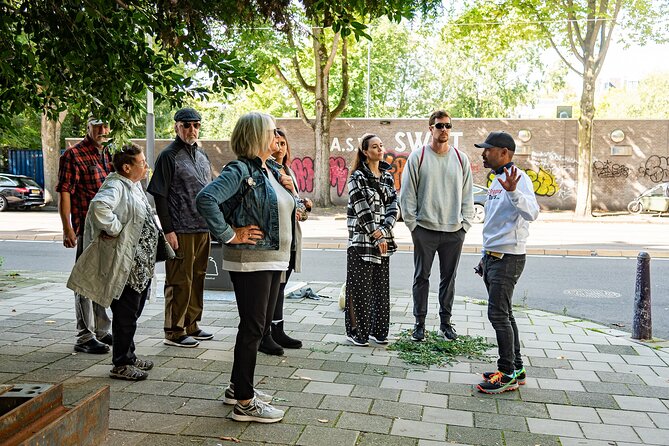
Next is the Spinoza Monument. The tour gives background connected to the monument, grounding the walk with a name tied to ideas and Jewish intellectual life.
This stop can feel like a breather, but not a break from reality. It’s another reminder that Amsterdam’s Jewish presence wasn’t only about one tragedy—it included culture, thought, and community contributions that outlasted wartime violence.
If you’re the type who likes to understand the “why” behind names and symbols, Spinoza gives you that. If you’re mostly focused on the WWII sequence, treat it as a waypoint that helps you remember there were identities beyond victimhood.
Dam Square and De Schaduwkade: The City’s Big Memory Spaces
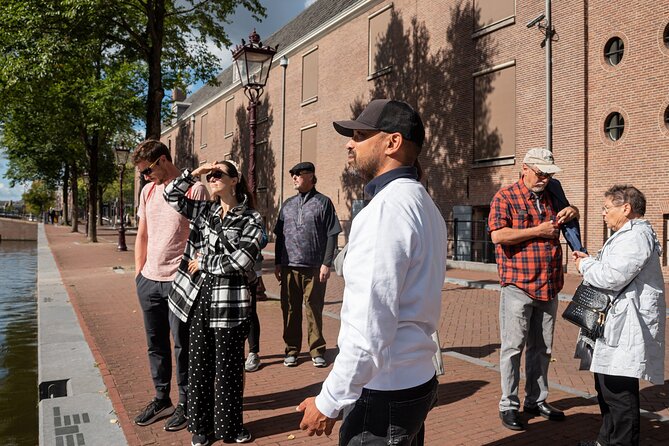
The tour then walks to Dam Square and the Royal Palace area. Dam Square is central and famous, and that’s useful. Your guide uses this big public space to help you think about memory at city scale—how a place people pass every day can also hold commemorative meaning.
From there, you move to De Schaduwkade monument. This stop is another deliberate memorial point tied to the WWII story, keeping your attention on remembrance rather than sightseeing.
Ending at Dam Square and finishing back near the start location makes it easier to plan the rest of your day. You get the emotional load handled earlier, then you’re free to eat, walk, and see the city’s typical highlights afterward.
What Makes the Guides Matter: Personal Story, Tight Answers, Good Pace

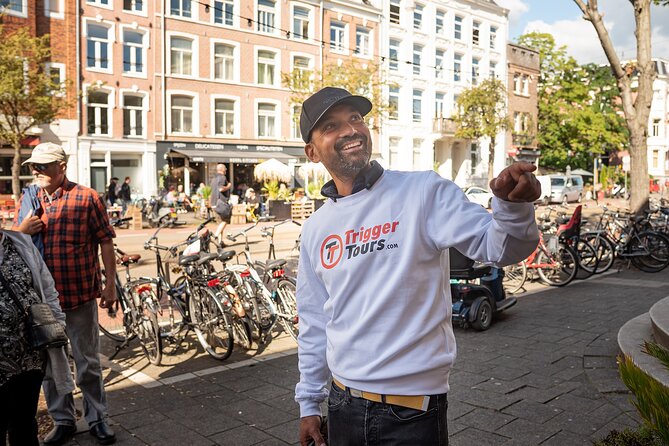
A big part of the success of this tour is the guide style. Many guests name guides such as Aaron, James, Keese, Josha, Masha, Peter, Stan, and Misha. Across those names, the common thread is clear: guides who can explain events in plain language and keep the group engaged.
You’ll likely appreciate guides who:
- keep a strong pace without rushing your attention
- answer questions on the spot
- connect the Anne Frank story to the surrounding WWII sites
- bring it personal, sometimes through family history stories
One review noted a guide sharing personal family context, which is exactly the kind of detail that can make history feel less distant. Another highlight was guides staying flexible with timing so the day still feels workable.
If you care about Q&A, this is one of the best formats for it. With small groups, you’re not shouting questions into the void.
Free Stops and Short Visits: How to Get Value Without Extra Admissions
Most of the itinerary stops are marked as admission ticket free, including the synagogue stop and the memorial-focused locations. That’s a big value win because you’re paying for guided context, not entry fees.
But there’s a clear line to understand: the Anne Frank House entrance ticket is not included. The tour title may make you think the museum visit is part of the deal, but it isn’t. If you want to see the Anne Frank House itself, you must add that separately.
So how do you judge value here?
- At $29.45 per person, you’re paying for a tight guided walk that explains the neighborhood history you’d otherwise miss.
- You’re not spending extra on multiple paid admissions for this specific tour.
- The time cost is modest: about 2 hours, which fits into a typical Amsterdam day without swallowing it whole.
If you already plan to visit Anne Frank House, this walk becomes the upgrade. It gives you the background that helps the museum feel clearer and more personal. If you don’t plan to visit the house, you can still get a lot from the walk itself, since the guide focuses on Anne Frank and the WWII story in Amsterdam.
Price and Booking Timing: Why $29.45 Can Make Sense
This tour costs $29.45, and it’s described as often booked about 58 days in advance on average. That doesn’t mean you can’t find last-minute space. It does suggest it’s a popular add-on during high season.
Whether it’s worth booking early depends on your travel rhythm:
- If you’re traveling during busy months or want a specific time, booking ahead helps.
- If your schedule is flexible, you may be able to pick a time that fits your Anne Frank House plan and the rest of your day.
Also, you’ll get a mobile ticket, which is simple. No printed tickets needed.
Who This Tour Suits (and Who Should Think Twice)
This experience is a strong fit if you want:
- a walking tour format with frequent context stops
- Anne Frank and WWII explained through the actual streets and memorial markers
- a small group experience with room for questions
- a tour you can pair with a later Anne Frank House visit
It may not be the best fit if:
- you need a fully indoor, low-walking plan
- your top priority is a museum entry bundled with the tour price
- you’re bringing very young kids who may struggle with the walking time
One thing I’d tell families: have a plan for energy. The route is short on paper, but it adds up in real legs.
Should You Book This Amsterdam Anne Frank and WWII Walking Tour?
I’d book it if you want to understand Anne Frank in context and you like learning while you walk. The combination of Jewish community background, deportation-linked memorial stops, and resistance framing makes this more than a surface-level “see the sites” tour.
Book it even if you’re just passing through, because 2 hours is manageable and the stops are set up to guide your attention. It’s also good value because so many stops are free to view, and you’re paying for a local guide to connect the dots.
Just don’t assume the Anne Frank House is included. If you care about that specific visit, plan it separately, then use this walk to make the museum stop mean more.
If you’re ready for a sober, thoughtful route through memory sites—while still getting photo time and clear explanations—this is a solid choice.
FAQ
FAQ
How long is the Amsterdam Anne Frank and WWII walking tour?
It runs for about 2 hours.
What is the price per person?
The tour price is $29.45 per person.
What is included in the ticket price?
A local guide is included.
Is the Anne Frank House entrance ticket included?
No. The Anne Frank House ticket is not included.
How big is the group?
The tour has a maximum of 15 travelers.
What if the weather is bad?
The experience requires good weather. If it’s canceled due to poor weather, you’ll be offered a different date or a full refund.
More Tours in Amsterdam




More Tour Reviews in Amsterdam





The Jewish Quarter, Explored Further




Just added: fresh Amsterdam tour reviews





Anne Frank & Jewish Quarter, compared.
 ★ 4.8Amsterdam Anne Frank: Small-Group Walking Tour & Local GuideFrom $2912,789 reviews
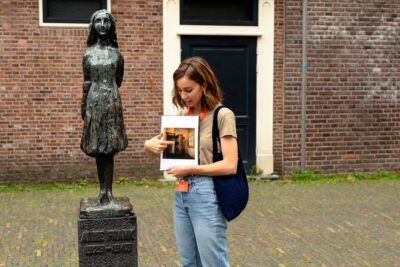 ★ 5.0Anne Frank’s Story – Guided Walking Tour through AmsterdamFrom $3911,619 reviews
 ★ 4.9Anne Frank Guided Walking Tour in DE/EN/IT/ESFrom $283,107 reviews
 ★ 4.8Anne Frank Guided Small Group Walking TourFrom $282,722 reviews
 ★ 5.0Anne Frank Walking Tour Amsterdam Including Jewish Cultural QuarterFrom $751,879 reviews
 ★ 5.0Anne Frank’s Last Walk & See Anne Frank House in Virtual RealityFrom $42957 reviews
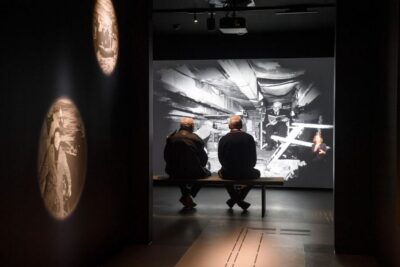 ★ 4.7Dutch WWII Resistance Museum Entry TicketFrom $21951 reviews
 ★ 5.0Anne Frank and Jewish Quarter Amsterdam Private Walking TourFrom $157684 reviews
Browse the lists this tour appears in