
Reviewed · WALKING TOURS
Amsterdam 2 Hour History Walking Tour
Amsterdam makes sense on foot. This 2-hour small-group walk ties together the city’s big themes—water, faith, trade, and politics—using clear stories and plenty of humor, all while you’re moving between landmarks. I especially like the relaxed pace and how the guide keeps the facts easy to follow.
What I love most is the combination of fun history facts plus practical on-the-street context, so you leave with mental maps that stick. The one thing to consider is that the route includes the Red Light District area, so if you prefer to avoid that kind of neighborhood, you might want to plan your mindset (or choose a different tour).
In This Review
- Key things to know before you go
- Entering Amsterdam: How the 2-Hour Format Helps You Get Oriented
- Hit the Bricks to Dam Square: The Route and Why the Ending Matters
- Canal Ring (Grachtengordel): The Water-and-Work Story You’ll Actually Remember
- De Wallen (Red Light District): Learning the Why, Not Just the Headlines
- Dam Square: The Fight Against the Water (and What That Means Culturally)
- South Church and the Begijnhof: Reform, Faith, and a Quiet Courtyard Break
- Jodenbreestraat: Jewish Quarter History with Respect for the Weight
- East India Company HQ (Bushuis – Oost-Indisch Huis): How a Small Country Built Trade Power
- Stopera Pier (Modern City Hall): Pride, Even When the Building Isn’t Pretty
- Royal Palace Amsterdam: Orange vs Red, White, and Blue
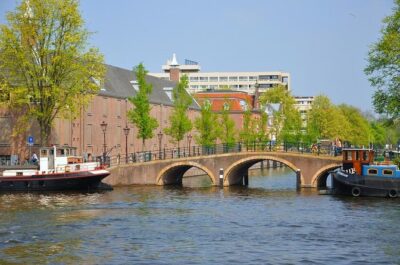
- Groenburgwal and the Monet Bridge Photo Moment (Short Stop, Big Payoff)
- Price and Value: What $30.04 Buys You in Amsterdam Time
- Practical Tips That Make This Walk Easier (and More Enjoyable)
- Who Should Book This History Walk, and Who Might Prefer Another Option
- FAQ
- How long is the Amsterdam 2 Hour History Walking Tour?
- What language is the tour offered in?
- Where does the tour start and end?
- What time does the tour begin?
- Is this a small-group tour?
- Is admission included for all stops?
- Is bottled water included?
- What happens if weather is poor?
- Are service animals allowed?
Key things to know before you go
- Small group (max 10) keeps the vibe friendly and questions welcome
- History with humor makes serious topics feel easier to process
- Monet bridge photo stop is short, timed, and actually worth it
- Canal Ring + Dam Square give you the water-and-power story fast
- Royal Palace ticket isn’t included, so you’ll plan if you want to go inside
- Good weather matters, since it’s an outdoor walking route
More of Amsterdam street by street, on foot
- Amsterdam Anne Frank: Small-Group Walking Tour & Local Guide
★ 4.8 · 12,789 reviews - Anne Frank’s Story – Guided Walking Tour through Amsterdam
★ 5.0 · 11,619 reviews - Absolutely Amsterdam – the Essential Introductory Walking Tour
★ 5.0 · 3,629 reviews - Amsterdam: Anne Frank Guided Walking Tour in DE/EN/IT/ES
★ 4.9 · 3,107 reviews
Entering Amsterdam: How the 2-Hour Format Helps You Get Oriented
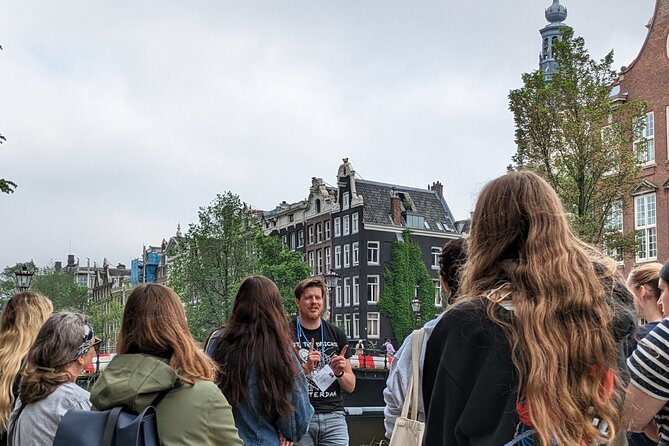
This is the kind of tour that works when you want Amsterdam to make sense quickly. Two hours is long enough to connect major pieces of the story—why the Dutch are who they are, and why the city looks the way it does—without draining your energy for the rest of the day.
You’ll move at a laidback pace rather than a sprint. That matters in Amsterdam, where streets can feel crowded and landmarks can blur together. The short stops also help you focus: each spot gets a clear theme, then you’re off to the next one.
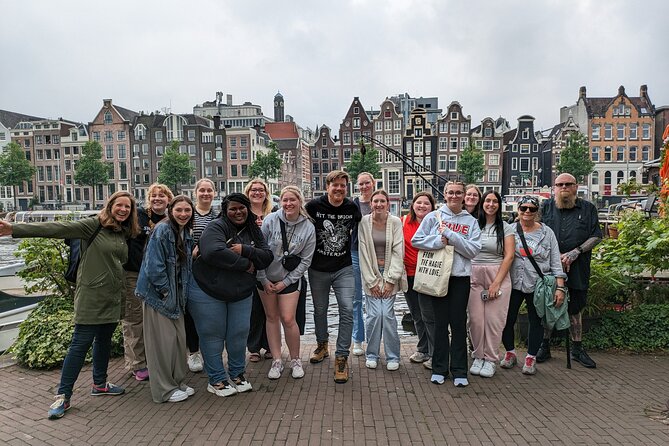
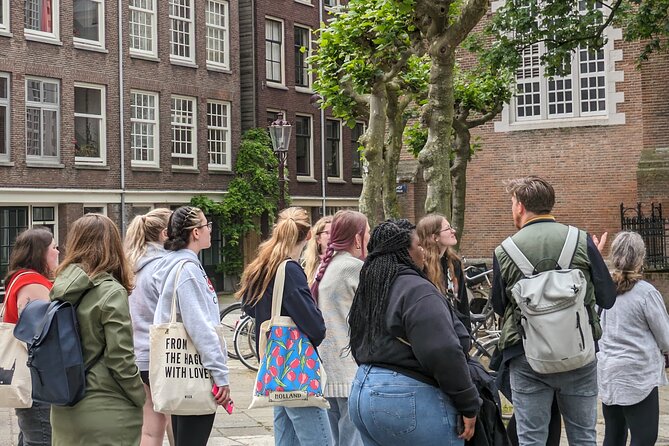
Also, the “small group” size changes the experience. You’re not just watching a guide talk into the void. You can ask questions and feel socially comfortable, which comes through in the best kind of group atmosphere—people chatting, then learning, then grabbing photos before moving on.
Hit the Bricks to Dam Square: The Route and Why the Ending Matters
The walk starts at Hit the Bricks Walking Tours at Prinsenstraat 13, and it ends at Dam Square. That end point is a big deal for practical travel days: Dam Square is one of the city’s central hubs for tram and other transit connections, and it’s an easy place to regroup or pivot to your next activity.
The tour runs at 11:00 am and lasts about two hours. Since it’s a walking route, your timing matters: you’ll want to schedule this early enough that you can benefit from the tips right away—where to go next, what to notice, and how to avoid wasting time on things that don’t match your interests.
One extra detail that can make the meeting point moment more fun: the guide team is known for having a friendly cat named Koko. If you arrive a few minutes early, you might get a quick hello before the group lines up.
Canal Ring (Grachtengordel): The Water-and-Work Story You’ll Actually Remember
Your first stop is the Canal Ring, the famous canal belt that defines how Amsterdam feels. The guide’s focus here isn’t just pretty waterways. It’s how the Dutch had to learn to live with the water—and how that shaped thinking, planning, and even the sense of control (and compromise) people developed over centuries.
This is a smart place to start because it sets the tone for everything you’ll hear later. When you understand why water is central to Amsterdam’s identity, the rest of the tour stops make more sense: the politics, the city planning, and even the national mentality.
You also get a clean “starter map” for your own wandering afterward. After the canal story, you’ll be able to look at the city and say: ah, I know why they built this here, why it mattered, and why it still shapes daily life.
Still deciding? A few more Amsterdam tours worth a look

De Wallen (Red Light District): Learning the Why, Not Just the Headlines
The Red Light District stop is brief, but it’s handled as history and social context rather than shock value. You’ll hear what the neighborhood is, how it developed, and how Dutch society looks at it.
That approach can be surprisingly useful. Amsterdam is famous for a lot of things, but this area is often reduced to stereotypes. Getting the “why it’s there” explanation helps you see the district as part of the city’s reality—complex, controversial, and historically grounded.
Practical note: this is not the stop to treat as a quick photo scavenger hunt while tuning out the guide. The guide’s framing is part of the value. If you feel uncomfortable, you can still stay respectful and focused on the explanation; just keep your own boundaries in mind.
Dam Square: The Fight Against the Water (and What That Means Culturally)
Dam Square is Amsterdam’s central square, and it’s also where you learn about the Dutch fight against the water. It’s one of those topics that can sound abstract until it’s tied to daily life and national identity.
This stop helps you connect the canal story to something bigger: the idea that the Dutch developed a culture of planning, engineering, and long-term thinking. In other words, it’s not only about dams and canals. It’s about how a society builds confidence through problem-solving.
If you like your tours to give you takeaways you can use immediately, Dam Square delivers. Once you understand the water theme here, you’ll spot the same logic repeating through the city.
South Church and the Begijnhof: Reform, Faith, and a Quiet Courtyard Break
Two of the tour stops slow the pace emotionally and visually.
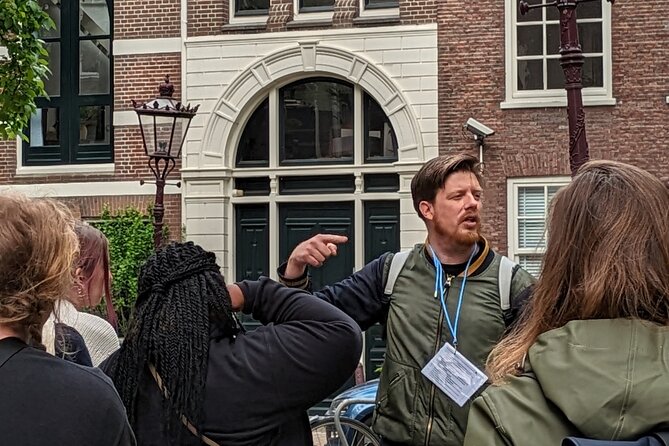
First is the South Church area, where you’ll learn how the Dutch moved from Catholic to Protestant. The guide also points you toward the serene inner courtyard next to the church. That courtyard break matters. After the city’s busier streets, it gives your brain a reset button so the ideas have room to land.
Then comes the Begijnhof, a kind of secret garden in the middle of the city. You’ll learn about the beguine sisters who helped build it. This is a standout change of tempo: you go from big public history to a smaller, calmer world.
If you’re the type who enjoys architecture and atmosphere, these stops are where you’ll feel Amsterdam’s layers in a very real way. You’ll come away seeing that the city isn’t just canal views and museums—it has pockets of lived-in quiet that shaped daily life too.
Jodenbreestraat: Jewish Quarter History with Respect for the Weight
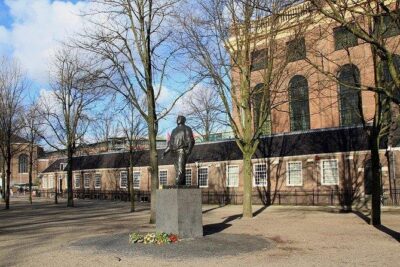
At Jodenbreestraat, the tone shifts to something much heavier. This stop focuses on the tragic fate of Jewish people who lived in Amsterdam before and during the war, including the hardship of the Hunger Winter.
This is exactly the kind of stop that benefits from a guide: the information needs context, and the guide’s role is to keep it clear and respectful in a public space. The short timing doesn’t mean it’s “light.” It means the story is framed so you can carry it forward without feeling lost in details.
If you’re sensitive to difficult history, go in knowing it’s part of Amsterdam’s full story. You don’t need to force emotion. You just need to be present enough to understand what you’re learning.
East India Company HQ (Bushuis – Oost-Indisch Huis): How a Small Country Built Trade Power
Next up is the former headquarters of the Dutch East India company, the Bushuis / Oost-Indisch Huis. This is where the tour connects national growth to global trade: spices, competition, and the idea that even a small country could leverage ambition and organization to become a major power.
It’s also a reminder that empire isn’t some distant abstract thing. It started with business decisions and locations like this one—places where strategy could be planned.
The guide keeps it grounded: you hear how the Dutch moved from being local traders to becoming central players in world trade, all while fighting for their own existence and independence. That thread makes the rest of Amsterdam’s political confidence feel less mysterious.
Stopera Pier (Modern City Hall): Pride, Even When the Building Isn’t Pretty
On the banks of the Amstel river, you’ll see the modern city hall area, often nicknamed Stopera. Here the guide explains why locals call it that and why, despite the building’s reputation for looks, it’s still treated with pride by Amsterdammers.
That’s a neat cultural lesson in itself. Amsterdam isn’t only about old buildings and classic canals. It’s also about how people relate to modern identity. This stop teaches you to look at the city as a living place, not a postcard museum.
If you’ve ever wondered why locals defend buildings outsiders find ugly, this is your “oh, I get it” moment.
Royal Palace Amsterdam: Orange vs Red, White, and Blue
The Royal Palace stop is quick, but it gives you context on how the Dutch royal family came to be. You’ll also hear how French connections fit into the story, and why the national color is orange while the flag is red, white, and blue.
One practical detail: the Royal Palace admission isn’t included. So if you want to go inside, you’ll plan for that separately. Even if you don’t, the flag and royal-family context still helps you interpret what you see in the city—especially around celebrations and public imagery.
Groenburgwal and the Monet Bridge Photo Moment (Short Stop, Big Payoff)
The tour ends with a famous photo stop near the Monet bridge at Groenburgwal. You’ll get a quick window to take a shot that looks like it could be a travel ad.
This stop is timed and brief, so it’s best to be ready before you reach it. If you’re picky about photos, bring your patience. If you’re just hoping for one great angle, it’s exactly the kind of stop that delivers without dragging your schedule.
Price and Value: What $30.04 Buys You in Amsterdam Time
At about $30.04 per person for roughly 2 hours, this tour sits in the value zone for first-time orientation. You’re paying for three things: an expert local guide, a route that connects several of Amsterdam’s biggest themes, and tips that help you travel smarter afterward.
The included guide time is key. A short, well-taught walk beats trying to piece together major themes alone while you’re tired and surrounded by distractions. And the tour adds practical guidance: where to spend your time next and how to notice what matters.
Two other value notes:
- You’ll receive tips and tricks to get the most out of your Amsterdam trip.
- You may be able to request discount codes for other tours from the same provider.
What’s not included is also important. Bottled water isn’t provided, and the Royal Palace admission isn’t included. Since there are refill opportunities along the way, bring a refillable bottle so you don’t waste time hunting for a place to buy water.
Practical Tips That Make This Walk Easier (and More Enjoyable)
Wear shoes you don’t mind using on city pavement. This is a walking tour, and comfort affects your enjoyment more than most people expect.
Bring a refillable water bottle. The tour doesn’t list bottled water as included, and you’ll want a simple hydration plan.
If you don’t like feeling rushed, take advantage of the small group size. Ask questions when you genuinely have them, not just when you think you should. It’s a conversational setup.
Finally, be emotionally ready for mixed topics. Amsterdam can jump from cheerful canals to serious war history in minutes. That’s the point of a history walk—but you’ll enjoy it more if you go in with that in mind.
Who Should Book This History Walk, and Who Might Prefer Another Option
Book it if you’re:
- Visiting for the first time and want a fast, connected introduction
- Interested in how Dutch identity links to water management, trade, faith, and politics
- Hoping for a guide who mixes serious info with humor (the vibe is repeatedly described as funny and engaging)
- Short on time but still want real context, not just photos
You might skip or adjust if you:
- Want to avoid the Red Light District area entirely
- Expect museum-grade detail at every stop. This is more about orientation and stories than extended indoor time
- Plan to visit the Royal Palace. Since entry isn’t included, you’ll need to budget separately if you want that add-on experience
The bottom line: this is a smart “first legs” tour. It helps you steer your next day instead of wandering blindly.
FAQ
How long is the Amsterdam 2 Hour History Walking Tour?
It lasts about 2 hours.
What language is the tour offered in?
The tour is offered in English.
Where does the tour start and end?
It starts at Hit the Bricks Walking Tours, Prinsenstraat 13, 1015 DA Amsterdam, and it ends at Dam Square, Dam, 1012 Amsterdam.
What time does the tour begin?
The start time is 11:00 am.
Is this a small-group tour?
Yes. The maximum group size is 10 travelers.
Is admission included for all stops?
Most stops are marked as free. Royal Palace Amsterdam is noted as admission not included.
Is bottled water included?
No. Bottled water is not included, and the tour notes there are stops to refill a bottle.
What happens if weather is poor?
This experience requires good weather. If it’s canceled due to poor weather, you’ll be offered a different date or a full refund.
Are service animals allowed?
Yes, service animals are allowed.
More Amsterdam Walking Routes






More Tours in Amsterdam




More Tour Reviews in Amsterdam






Just added: fresh Amsterdam tour reviews





Walking Tours, compared.
 ★ 4.8Amsterdam Anne Frank: Small-Group Walking Tour & Local GuideFrom $2912,789 reviews
 ★ 5.0Anne Frank’s Story – Guided Walking Tour through AmsterdamFrom $3911,619 reviews
 ★ 5.0Absolutely Amsterdam – the Essential Introductory Walking TourFrom $53,629 reviews
 ★ 4.9Anne Frank Guided Walking Tour in DE/EN/IT/ESFrom $283,107 reviews
 ★ 4.8Anne Frank Guided Small Group Walking TourFrom $282,722 reviews
 ★ 4.9Cultural Highlights Walking TourFrom $302,629 reviews
 ★ 4.2Ganja Walking TourFrom $402,127 reviews
 ★ 5.0Anne Frank Walking Tour Amsterdam Including Jewish Cultural QuarterFrom $751,879 reviews
Browse the lists this tour appears in