
Reviewed · WALKING TOURS
Amsterdam: 2.5-Hour Historic Private Walking Tour
A great city walk starts with the right route. This private 2.5-hour Amsterdam tour strings together the places that explain how the city grew—gable stones, narrow back streets, old gateways, and the bend of the Amstel River. I especially like the chance to see landmark homes like the House of Riga and to wander into quieter corners around the Begijnhof. One thing to consider: this is still real walking, and you need to handle at least 45 minutes on your feet without sitting.
If you’ve been to Amsterdam before, this is the kind of tour that can still feel fresh. Jan (your guide) can adjust the route if you already know the big sights, and he tends to point out details most people miss. The trade-off is that the route is built for walking and viewpoints, so you won’t get a strict museum-by-museum checklist.
In This Review
- Key Highlights You’ll Notice Right Away
- Starting at the Victoria Hotel (and why pickup matters)
- East-Center Facades: gable stones, Riga House, and the Hidden Church
- Red Light District lanes and Nieuwmarktsquare’s late-1400s gateway
- Rembrandtsquare to the Amstel River: Seven Bridges viewpoints
- Spui streets to the Begijnhof: quiet courtyards and civic art
- Price and value: $283 for a private group up to 4
- Pacing, walking comfort, and the kind of traveler this suits
- What the guide style adds (and why Jan gets high marks)
- Should you book this private Amsterdam historic walk?
- FAQ
- Where does the tour start?
- Is pickup included?
- How long is the tour?
- What languages are offered?
- Is food or drink included?
- Can I join if I have trouble walking?
Key Highlights You’ll Notice Right Away
- Gable stones and historic facades: a visual way to understand how Amsterdam marked wealth and identity.
- House of Riga and the former Hidden Church: stories tied to buildings you’ll pass on any other trip.
- Red Light District lanes plus Nieuwmarkt: a contrast between street life and older city gates.
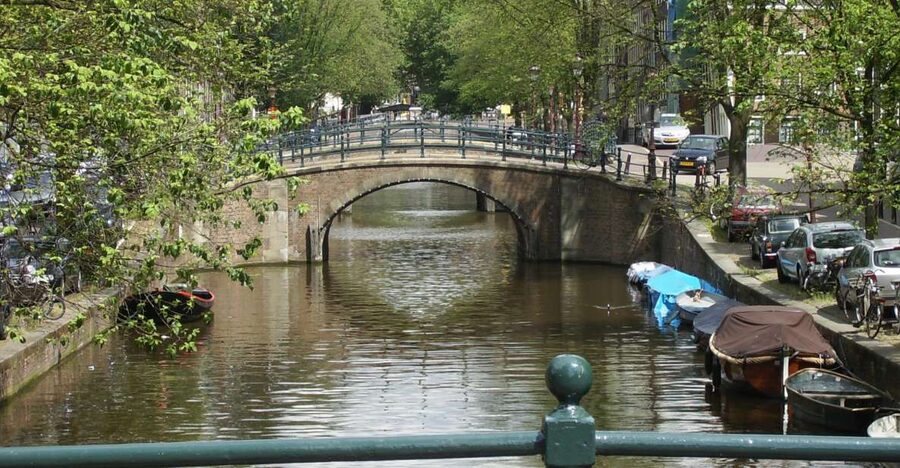
- Amstel River intersections and Seven Bridges: classic Amsterdam angles from street level.
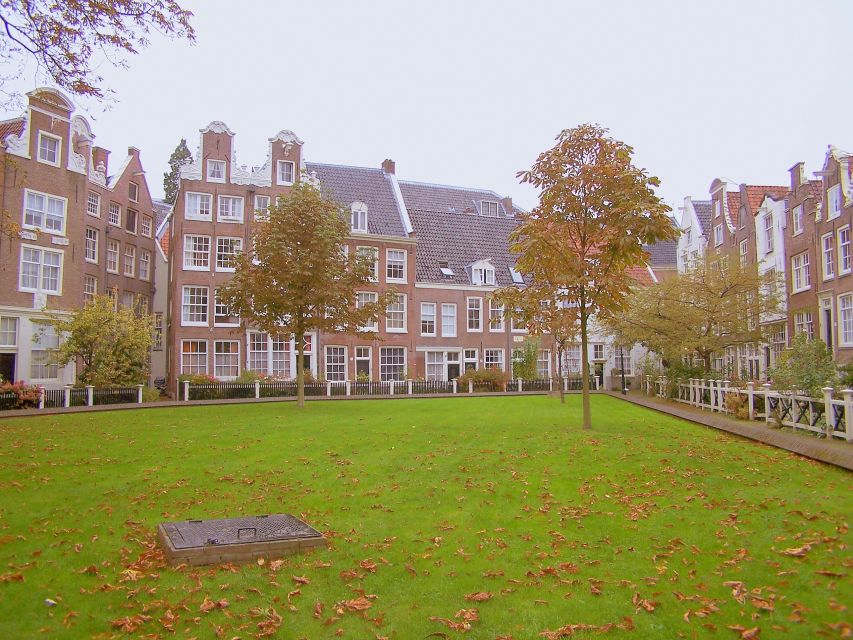
- Begijnhof courtyard and Civic Guards Gallery: calm inner courtyards paired with art tied to civic life.
- Squares for a planned breather: you get a rest stop at either Rembrandtsquare or Amstelveld.
More of Amsterdam street by street, on foot
- Amsterdam Anne Frank: Small-Group Walking Tour & Local Guide
★ 4.8 · 12,789 reviews - Anne Frank’s Story – Guided Walking Tour through Amsterdam
★ 5.0 · 11,619 reviews - Absolutely Amsterdam – the Essential Introductory Walking Tour
★ 5.0 · 3,629 reviews - Amsterdam: Anne Frank Guided Walking Tour in DE/EN/IT/ES
★ 4.9 · 3,107 reviews
Starting at the Victoria Hotel (and why pickup matters)
The tour meets at the Victoria Hotel, right across from Amsterdam Central station. That’s a smart starting point because it’s easy to find and it also helps you get your bearings fast. If you want convenience, pickup is included from any hotel, railway station, or other agreed meeting spot in central Amsterdam, so you’re not wasting the early minutes hunting for the correct corner.
From the start, the pacing is built for stories that connect places. You’ll move through the eastern side of the center, where you can easily spot the city’s layers—old neighborhoods, formal squares, and canals that feel tightly woven into everyday life. This tour is private, so you can ask questions as you go, not after the fact.
The group size is capped at up to 4, which changes the feel immediately. You’re not competing for attention, and the guide can slow down if you want to examine a doorway, a carved gable, or a street layout you’d otherwise rush past.
East-Center Facades: gable stones, Riga House, and the Hidden Church
One of the best things about this walk is how it teaches you to read Amsterdam. Instead of treating buildings like backdrops, the guide turns them into clues: what the stonework says, what the location meant, and why certain spots became important.
Early on you’ll see a large collection of gable stones, those carved or painted markers that many Dutch cities used to identify buildings and families. They’re the kind of detail you often miss when you’re just photographing from the sidewalk, but on a guided walk you learn what to look for and why those ornaments mattered.
Then comes the House of Riga, a named stop that gives the facade more meaning than a quick photo. You also pass by the former Hidden Church, which adds an extra layer to the neighborhood’s story—Amsterdam isn’t only about its canals and postcard squares. It’s about survival, belief, and the choices people made when public life was complicated.
A practical note: this early section includes narrow streets and close-packed architecture. If you’re expecting wide open views the whole time, adjust your mindset. The beauty here is in the tight streets, the turning corners, and the way the city can feel almost theatrical when you’re close to the buildings.
Red Light District lanes and Nieuwmarktsquare’s late-1400s gateway
Yes, this tour includes time in and around the Red Light District—but the point isn’t shock. The point is geography. The neighborhood’s lanes show how Amsterdam’s center is built for foot traffic and small-scale movement, not big tour-bus shortcuts.
As you walk through narrow streets, you also get contrast: the city’s oldest urban structure sits only a few turns away from streetfront nightlife. That contrast is useful because it helps you understand how quickly the center can change character while staying in the same small area.
Next you reach Nieuwmarktsquare, including the area tied to a former city gateway dating back to the late 1400s. Even if you don’t see the original gateway today in its complete form, the square’s role as a historic entry point is the story. This is one of those moments where the guide helps you connect the dots between the city’s medieval layout and the modern street pattern you’re walking through.
If you prefer a route that feels purely “art and architecture,” this stop might still be fine—just go into it as a lesson in how neighborhoods overlap. The guide keeps it focused on place and context, not sensationalism.
More private tours with a guide to yourself




Rembrandtsquare to the Amstel River: Seven Bridges viewpoints
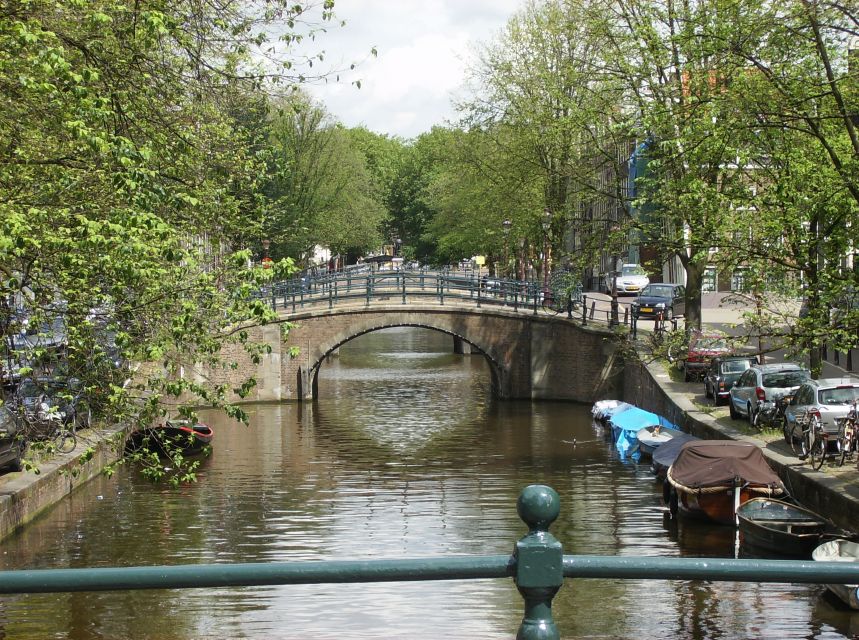
After Nieuwmarkt, you’ll pass Rembrandtsquare and continue toward the Amstel River and the Seven Bridges area. This is where Amsterdam gets cinematic in a different way. Instead of ornate buildings, you’re reading the city through movement—how the river bends, how bridges connect street grids, and how those intersections create the famous “Amsterdam angles” people chase with cameras.
This part also gives you one of the more practical benefits of a private guide: you’re not just walking past viewpoints. You’re walking with a plan for where to stop long enough to understand what you’re seeing. The guide directs your attention so the bridges and river crossings feel like part of the city’s logic, not random photo opportunities.
And you get a break. The tour includes a pause at either Rembrandtsquare or Amstelveld, depending on timing and the flow of the walk. That break matters more than it sounds. If you’re exploring Amsterdam, you can easily run into “I’m tired but I still need to see everything.” This one schedules the stop so you can reset without derailing the rest of the tour.
Spui streets to the Begijnhof: quiet courtyards and civic art
From the river area, the tour heads toward Spui, passing mansions with late-century ornaments. This section helps you see that Amsterdam didn’t stop in the medieval period. The city kept evolving, and the decorative details on these buildings reflect later tastes and changing prosperity.
Then you reach the Begijnhof courtyard. This is one of those Amsterdam experiences that works because of the contrast. You move from busier streets into a quieter, enclosed feeling where the courtyard layout changes how sound carries and how you naturally slow down. The guide’s storytelling gives the courtyard context so it feels purposeful, not just pretty.
Nearby is the Civic Guards Gallery, where you’ll see original paintings (not reproductions). That matters because it connects the art to civic identity. Civic guards weren’t random history trivia; they were part of how the city organized itself and presented order and pride. Seeing original works in a related setting helps you connect architecture, community, and art in the same frame.
If you like tours where you learn how a city’s social structure shows up in streets and buildings, this is a strong payoff. And if you’re the type who likes to step away from crowds, this is one of the calmer stretches of the route.
Price and value: $283 for a private group up to 4
The price is $283 per group, with a private setup for up to 4 people. On paper, that can sound steep if you compare it to group tours. But with a private guide, you’re paying for time with the right person—and for a route that can adapt.
Here’s the simple math: if you split this with 4 people, you’re looking at about $71 per person. If it’s just 2 people, it’s about $142 each. So the value depends heavily on whether you can travel with someone else.
Where I think this tour earns its cost is in the detail work. Jan is the kind of guide who pays attention to what you might already know and then tries to show you something new—like hidden churches, back courtyards, and small lanes that many people walk by without noticing. When a guide adjusts the route for your interests, you’re not paying for random sightseeing. You’re paying for selective attention.
One more consideration: there’s a small chance the route includes a short stop at the Amsterdam Museum area (one guide version included a brief museum visit). If that happens, you get more formal context layered onto the walking experience. If it doesn’t, you still have strong architecture-and-streets storytelling.
Pacing, walking comfort, and the kind of traveler this suits
This tour is built for people who can walk comfortably. You need to be able to walk for at least 45 minutes without sitting down, and it isn’t suitable for mobility impairments.
That doesn’t mean you’ll be running the whole time. It means the tour is paced as a single walking experience with a scheduled break at a major square. You should plan on comfortable shoes and a simple mindset: this is about moving through the city slowly enough to notice, not about resting every ten minutes.
It’s a great fit if:
- You want a private experience with room to ask questions.
- You enjoy architecture details like gable stones and carved facades.
- You like history told through buildings and street layout, not just a list of dates.
- You’ve been to Amsterdam before and you’d rather see quiet lanes and inner courtyards than re-hit the busiest corners.
If you want minimal walking and maximum sitting, or if you’re traveling with mobility limitations, you’ll likely feel frustrated. The tour’s strength is also its constraint: it’s a walking tour.
What the guide style adds (and why Jan gets high marks)
The guide is the center of gravity here. People consistently highlight how friendly, punctual, and adaptable the guide can be. Jan’s approach includes taking into account what you already know, then selecting what to emphasize next. That’s an underrated skill, because Amsterdam has so many repeating “top ten” elements that a one-size route can feel stale.
You’ll also get a focus on places that are easier to miss on your own: narrow streets, back courtyards, and churches tucked behind ordinary facades. The tour feels like someone is showing you the city the way locals might move through it, not only like the city looks from the main streets.
The only caution I’d give is route efficiency. One review noted the route could be optimized. In real life, that can happen with any walking route depending on timing, foot traffic, and the exact streets chosen that day. If you’re the type who wants the tightest “see the main stuff, skip the rest” route, ask your guide about your priorities at the start.
Should you book this private Amsterdam historic walk?
I’d book it if you want a 2.5-hour private guide who can connect architecture, squares, and river viewpoints into one story you’ll remember. It’s especially worth it if you can split the group price with friends or family, and if you’re comfortable walking without frequent sitting.
Skip it (or look for something else) if you need lots of seated breaks, have mobility limitations, or you only want very famous museum-style stops. This isn’t a checklist tour. It’s a thoughtful walk through the layers of Amsterdam—gable stones to courtyards to the Amstel—guided in a way that makes details matter.
FAQ
Where does the tour start?
The meeting point is the Victoria Hotel, opposite Amsterdam Central station.
Is pickup included?
Yes. Pickup is included from any hotel, railway station, or other agreed upon location in central Amsterdam.
How long is the tour?
The duration is 2.5 hours.
What languages are offered?
The live guide speaks Dutch and English.
Is food or drink included?
No. Food and drinks are not included.
Can I join if I have trouble walking?
You need to be able to walk for at least 45 minutes without sitting down, and it isn’t suitable for people with mobility impairments.
More Amsterdam Walking Routes






More Tours in Amsterdam




More Tour Reviews in Amsterdam






Just added: fresh Amsterdam tour reviews





Walking Tours, compared.
 ★ 4.8Amsterdam Anne Frank: Small-Group Walking Tour & Local GuideFrom $2912,789 reviews
 ★ 5.0Anne Frank’s Story – Guided Walking Tour through AmsterdamFrom $3911,619 reviews
 ★ 5.0Absolutely Amsterdam – the Essential Introductory Walking TourFrom $53,629 reviews
 ★ 4.9Anne Frank Guided Walking Tour in DE/EN/IT/ESFrom $283,107 reviews
 ★ 4.8Anne Frank Guided Small Group Walking TourFrom $282,722 reviews
 ★ 4.9Cultural Highlights Walking TourFrom $302,629 reviews
 ★ 4.2Ganja Walking TourFrom $402,127 reviews
 ★ 5.0Anne Frank Walking Tour Amsterdam Including Jewish Cultural QuarterFrom $751,879 reviews
Browse the lists this tour appears in