
Reviewed · WALKING TOURS
Walking Tour about Golden Age Architecture, private local guide
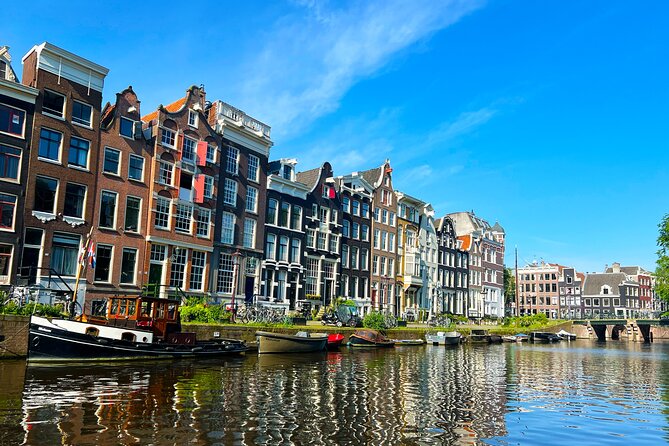
Golden Age Amsterdam gets a lot easier to read when you have a local guide. This private walking tour is built around the city’s 17th-century design brain: merchant power, canal-belt engineering, and the small architectural details you’d miss wandering on your own. I especially love how the walk pairs iconic landmarks with canal-belt buildings you can actually compare side by side, and I also like that the guide explains the hows and whys, not just the what.
There is one catch to know up front: it is about 1.5 hours on foot, and it is not recommended if you use a walker or have trouble walking and standing that long.
In This Review
- Key highlights worth your time
- Golden Age Amsterdam starts at Dam Square
- The Royal Palace: town hall roots and the clay problem
- Huis Bartolotti and the canal-belt “money look”
- Torensluis: four façades, baroque attitude, and why houses lean
- De Dolphijn and the names behind the door
- Ronde Lutherse Kerk: the Renaissance dome idea, in context
- Prinsengracht warehouses: architecture built for lifting cargo
- Jordaan and the gevelstenen: reading façade stone stories
- Westerkerk: Calvinist simplicity, spire power, and Rembrandt’s connection
- Price, timing, and who this tour fits best
- The small touches that make the experience feel special
- Should you book this Golden Age architecture walking tour?
- FAQ
- How long is the walking tour?
- Is this tour private or shared?
- What language is the guide using?
- Where does the tour start and end?
- Do I need to pay for entrance tickets at the stops?
- Is bottled water included?
- What if I cancel? Can I get a full refund?
- Is the tour suitable if I use a walker or have mobility issues?
Key highlights worth your time
- Private guide just for you: one-on-one style attention so you can ask questions while you’re looking at the façades.
- Golden Age design, explained on the street: you’ll connect building style to wealth, trade, and how Amsterdam was built.
- Canal-belt stops with real architectural clues: houses like De Dolphijn and the warehouse look of Prinsengracht.
- Crooked-house context at Torensluis: the guide ties the leaning buildings to soft ground and smart adaptations.
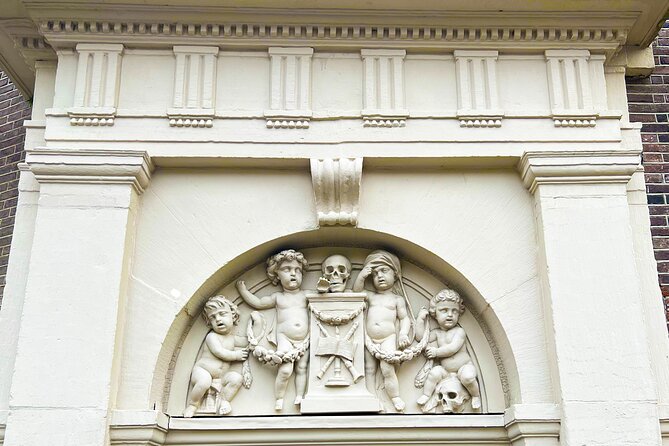
- Facade stones in the Jordaan: you’ll learn what gevelstenen are and how to spot their stories.
- Westerkerk’s spire and symbolism: Calvinist simplicity on the inside, imperial crown and Rembrandt links on the outside.
More of Amsterdam street by street, on foot
- Amsterdam Anne Frank: Small-Group Walking Tour & Local Guide
★ 4.8 · 12,789 reviews - Anne Frank’s Story – Guided Walking Tour through Amsterdam
★ 5.0 · 11,619 reviews - Absolutely Amsterdam – the Essential Introductory Walking Tour
★ 5.0 · 3,629 reviews - Amsterdam: Anne Frank Guided Walking Tour in DE/EN/IT/ES
★ 4.9 · 3,107 reviews
Golden Age Amsterdam starts at Dam Square
Dam Square is one of those places you think you already know from photos. The surprise here is how fast the guide connects it to the real engine of Amsterdam’s growth: the 1600s when the city became a global trade hub and started building to match its new status. You start with the big picture—why prosperity mattered—then the walk zooms back in to architecture.
This opening works well because it sets the pattern for the rest of the tour. You are not just collecting pretty buildings. You’re learning how Amsterdam’s merchants used design as messaging. Even when you’re standing in a busy public square, you’ll get a sense of what trade wealth looked like in stone, brick, and window rhythm.
The Royal Palace: town hall roots and the clay problem
Next comes the Royal Palace Amsterdam, and it’s a great choice because it shows how power changes costume. The building originally began as the city’s town hall during the Dutch Golden Age, which explains why it feels so official and commanding. Later, it became the royal residence, but the earlier identity still shows through.
Here’s what I like most about this stop: you get architecture plus engineering in the same breath. The guide discusses Dutch neoclassical style—how it looks and what shapes it—and then points to the practical difficulty of building on clay and marshy ground. That matters because Amsterdam is famous for water, but the real story is how people made water-friendly foundations work city-wide.
If you’re the type who wonders why buildings lean a bit or why the city feels like it’s floating, pay attention here. You’ll carry that lens to the next canal-belt areas, especially where the guide mentions crooked houses later.
Huis Bartolotti and the canal-belt “money look”
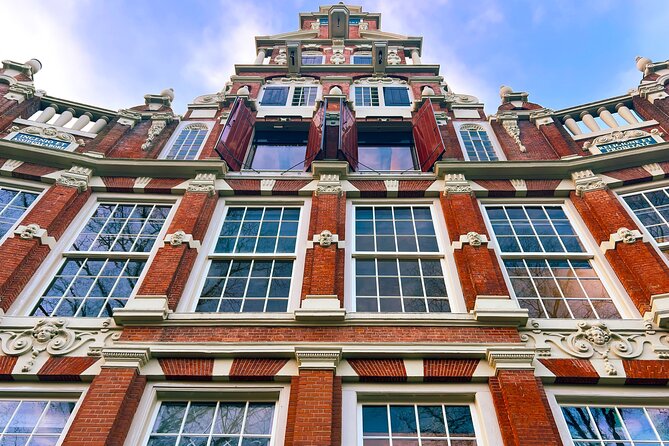
Walking along the canal belt is where Amsterdam’s Golden Age architecture starts feeling less like a history lecture and more like a visual language. Huis Bartolotti is a strong example of 17th-century Dutch baroque. You’ll see the bold red brick and the elegant façade, plus the more sculptural touches in sandstone.
The guide also gives you the trading angle. Bartolotti’s original owner had strong ties with Italy, and you can feel that influence in the ornate style. You learn to look beyond surface decoration and ask: who paid for this, and why does it show up on this side of the canal?
This is also a good moment to slow down and watch how the guide points out details. Many tours rush past façades. This one trains your eyes to spot what makes a building feel expensive even when it looks like it’s just “nice brickwork.”
More trips where a local runs the whole day



Torensluis: four façades, baroque attitude, and why houses lean
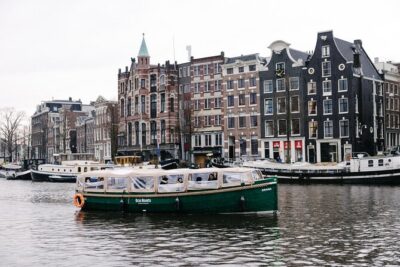
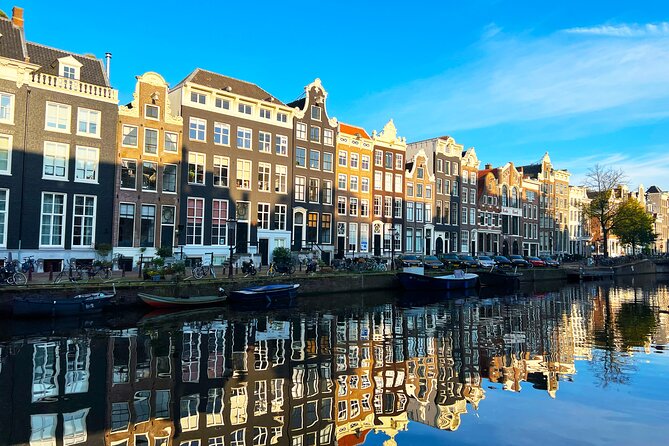
Torensluis is a perfect bridge stop because it gives you that rare thing: a clear view of multiple façades in one glance. The guide points out four distinct front designs that were popular with the mercantile class in the Golden Age. It’s a fast way to understand how baroque style got adapted in the Netherlands—less theatrical than some places, but still dramatic in detail and contrast.
Then comes the part that makes Amsterdam feel slightly like a magic trick: crooked houses. The guide connects their leaning shapes to the city’s soft, marshy ground. You don’t just hear the word crooked. You learn why it happens and what it means about how Amsterdam’s foundations behave over time.
If you’ve ever looked at a crooked façade and thought, Is that intentional? you’ll leave Torensluis with a better answer.
De Dolphijn and the names behind the door
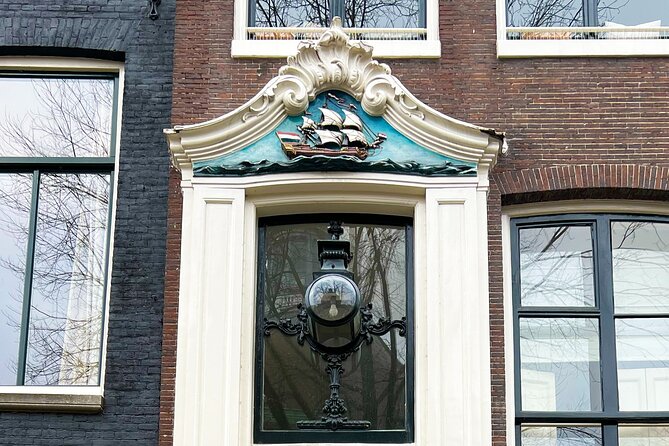
De Dolphijn adds a fun layer, because the house’s name isn’t random branding. It references a dolphin symbol of wealth, tied to Amsterdam’s maritime trade during the Golden Age. In other words: this isn’t just a home with pretty windows. It’s a signal to the city about status and success.
The guide also connects it to a specific historical person: Frans Banning Cocq. His later fame is tied to Rembrandt’s The Night Watch, so the story links architecture to art and to the people who paid for the buildings around the canal belt.
Practically, this stop is short, but it’s high impact. When you’re walking through Amsterdam’s canal areas, it’s easy to forget that every building once belonged to someone with a job, a network, and a story. De Dolphijn helps you remember that.
Ronde Lutherse Kerk: the Renaissance dome idea, in context
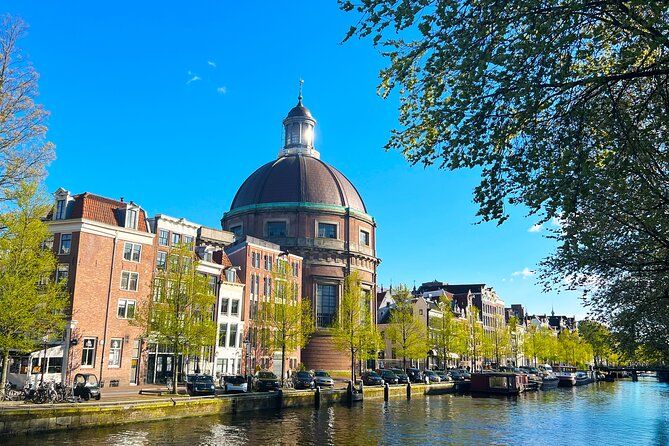
The walk then includes a stop at Ronde Lutherse Kerk. The emphasis here is the architectural shift the guide points to: domes as a height of achievement during the Renaissance period. Even though this stop is brief, it helps you see the bigger timeline playing out in the city.
This is one of those “keep it in your mental folder” moments. After a string of Dutch Golden Age merchant façades, it’s useful to step back and notice how different eras made different statements—sometimes through grand structural forms, not just through façade ornament.
If you love cross-era comparisons, you’ll appreciate how the guide threads the story instead of treating each building as an isolated postcard.
Prinsengracht warehouses: architecture built for lifting cargo
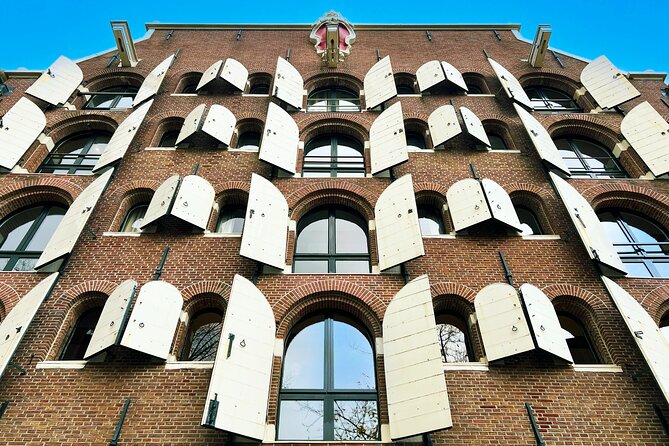
Prinsengracht is where you really start seeing how trade shaped buildings. The warehouses along the canal show the Golden Age logic in a very practical way. The guide focuses on how the buildings were designed for commerce, with tall, steeply pitched gables, large windows, and wooden hoisting beams on the roof.
Those beams are the key detail for understanding the function. They were used to lift heavy cargo from ships docked along the canal. So even if the façades look relatively clean and not overly decorated, you can read their purpose immediately once the guide points it out.
Another useful thing: you learn why some exteriors look simple. Clean lines and minimal ornamentation fit the utilitarian job these buildings had to do. Yet the grand scale still hints at wealth and power. It’s a reminder that Amsterdam’s Golden Age wasn’t only about fancy.
If you want a quick test for whether a guide is worth it, this is a great spot to judge. A good guide makes you see “warehouse” buildings as architecture, not as boring storage.
Jordaan and the gevelstenen: reading façade stone stories
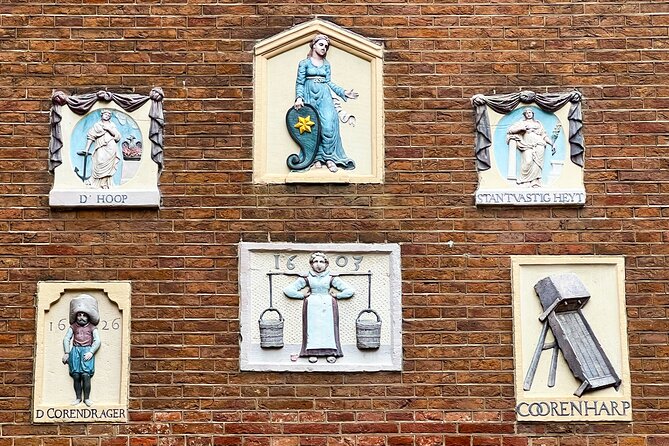
The Jordaan segment is one of the smartest parts of this tour because it teaches you how to look. Instead of only pointing at major landmarks, the guide focuses on gevelstenen—facade stones embedded in façades of Golden Age buildings.
These small plaques matter because they often carry information. They can communicate how a building was used, the profession of the owner, or other details about the people living and working there. Many gevelstenen also include intricate carvings, so it’s both functional identification and street-level storytelling.
The area itself helps too. Jordaan in the 17th century was tied to craftsmen and laborers, with residential life mixed with commercial workshops and small shops along narrow canals. By the time you’re walking here with your new “facade stone” lens, the neighborhood starts making sense as an ecosystem, not just a picturesque street grid.
One practical tip: slow down during this section if you like photos. The guide’s focus encourages you to stand close to the buildings, and gevelstenen are the kind of detail that vanish if you keep moving at tour-speed.
Westerkerk: Calvinist simplicity, spire power, and Rembrandt’s connection
You wrap up near Westerkerk, and it’s a strong ending because it’s both visually dramatic and historically loaded.
The guide explains that Westerkerk was constructed as a Calvinist church for a growing population. The interior, as described here, is large and airy with a simple, elegant design typical of Calvinist worship spaces. That contrast is important: Amsterdam’s religious architecture follows different rules than the merchant houses you saw earlier.
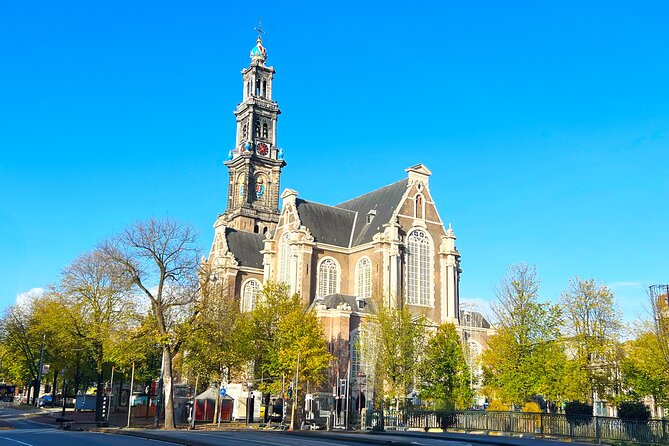
Then there’s the spire. The tower rises about 85 meters (280 feet) above the Jordaan district, completed in 1638 and crowned with the imperial crown symbolizing Amsterdam’s status since the 15th century. The guide also mentions the clock and its chimes, which are described in Anne Frank’s diary.
And yes, Rembrandt’s name comes into it too. Westerkerk is the final resting place of Rembrandt van Rijn. Even if you’ve only seen his work in museums, it’s grounding to connect an artist to a specific location in the city.
This ending works well because you finish with a landmark that gives you a mental anchor for the rest of your trip. After learning why trade and engineering shaped the city, you leave understanding why a church could also be a statement piece.
Price, timing, and who this tour fits best
At $73.59 per person for about 1.5 hours, you’re paying for a private local guide and a tightly themed walk focused on architecture you can actually see. It is not a long tour, but it’s built to pack in a lot of “compare and understand” moments: palace-to-merchant-house-to-warehouse-to-church-to-neighborhood details.
The tour is offered in English, uses a mobile ticket, and supports service animals. It also helps that it is private—only your group participates—so you won’t feel like you’re squeezed between strangers while you’re trying to photograph a façade stone or ask a follow-up question.
Timing matters here. This kind of guided architecture walk is best when you can give it your eyes and your questions. If you’re the kind of traveler who likes architecture explanations and wants to make the canal belt click, this is a good match.
Health and movement reality check: the tour is not recommended if you use a walker, and it’s also not recommended if you have trouble walking and standing for the full 1.5 hours. Mobility aids are not available, so if you need extra support, it’s worth thinking carefully before booking.
Also worth noting: the price is per person, so if you’re traveling with friends or family, you’ll generally get better value when the group sticks together and you all want the same focus.
The small touches that make the experience feel special
One theme shows up clearly in the feedback: the guide approach makes the architecture easier to spot and easier to understand. People highlight how the guide doesn’t just recite dates. They explain what you’re looking at and why it exists, including design and engineering stories that many walks skip.
You’ll also benefit from the way the guide handles questions. The tour style is friendly and patient, so it works even if you’re the type who asks lots of follow-ups while standing right in front of a façade. And if you’re traveling as a small group, the one-on-one nature means you can linger at the places you care about most—like the gevelstenen in Jordaan.
The guide’s English is also specifically praised, which matters because architecture explanations land better when you can follow them without mental translation.
Finally, it’s a route that ends near Westerkerk, next to the Anne Frank House area. That’s useful because it can help you plan the rest of your day without crisscrossing the city.
Should you book this Golden Age architecture walking tour?
Book it if you want an Amsterdam that’s more than canals and bicycles. You’ll learn the building logic behind the city: how merchant wealth shaped façades, how ground conditions influenced design outcomes, and how practical commerce got engineered into architectural form.
Don’t book it if walking 1.5 hours is hard for you. This is a street-focused experience with no mobility aids available, and it’s not set up for walkers.
If you’re aiming for a first good architecture introduction to the canal belt—especially one that teaches you to notice façade stones and warehouse hoisting details—this private Golden Age walk is a very strong choice.
FAQ
How long is the walking tour?
It lasts about 1 hour 30 minutes.
Is this tour private or shared?
This is a private tour. Only your group will participate.
What language is the guide using?
The tour is offered in English.
Where does the tour start and end?
It starts at Royal Palace Amsterdam, Nieuwezijds Voorburgwal 147, 1012 RJ Amsterdam, and ends at Westerkerk, Prinsengracht 279, 1016 DL Amsterdam, near the famous church next to the Anne Frank House.
Do I need to pay for entrance tickets at the stops?
Admission tickets at the listed stops are marked free.
Is bottled water included?
No, bottled water is not included.
What if I cancel? Can I get a full refund?
You can cancel for free up to 24 hours in advance for a full refund. Canceling less than 24 hours before the start time is not refundable.
Is the tour suitable if I use a walker or have mobility issues?
It is not recommended if you use a walker, or if you have trouble walking and standing for 1.5 hours. Mobility aids are not available.
More Amsterdam Walking Routes






More Tours in Amsterdam




More Tour Reviews in Amsterdam






Just added: fresh Amsterdam tour reviews





Walking Tours, compared.
 ★ 4.8Amsterdam Anne Frank: Small-Group Walking Tour & Local GuideFrom $2912,789 reviews
 ★ 5.0Anne Frank’s Story – Guided Walking Tour through AmsterdamFrom $3911,619 reviews
 ★ 5.0Absolutely Amsterdam – the Essential Introductory Walking TourFrom $53,629 reviews
 ★ 4.9Anne Frank Guided Walking Tour in DE/EN/IT/ESFrom $283,107 reviews
 ★ 4.8Anne Frank Guided Small Group Walking TourFrom $282,722 reviews
 ★ 4.9Cultural Highlights Walking TourFrom $302,629 reviews
 ★ 4.2Ganja Walking TourFrom $402,127 reviews
 ★ 5.0Anne Frank Walking Tour Amsterdam Including Jewish Cultural QuarterFrom $751,879 reviews
Browse the lists this tour appears in