
Reviewed · VAN GOGH MUSEUM TOURS
Rembrandt & Van Gogh Amsterdam walking experience
Amsterdam’s paintings start with street corners. This 2-hour small-group walk threads famous Dutch art stories through the streets themselves, so you’re not just hearing facts you’re seeing the places that shaped them, with plenty of photo-friendly viewpoints along the way. It also works as a smart first pass through the city center, helping you get your bearings fast.
The only real catch: the Rijksmuseum is not included (it costs €22.50 per person if you want to visit), so plan that add-on ahead if it’s on your must-do list.
In This Review
- Key highlights at a glance (Rembrandt and Van Gogh, on foot)
- Why this walk feels different from a typical art tour
- Where the tour starts: Prins Hendrikkade 95 to a city-center art thread
- Stop 1: Weeping Tower for painterly scenes and a big viewpoint
- Stop 2: Nieuwmarkt—another art-inspired street scene moment
- Stop 3: Trippenhuis for Rembrandt’s connections and Rijksmuseum context
- Stop 4: South Church—how Italy influenced Dutch painting
- Stop 5: Museum Het Rembrandthuis—Rembrandt’s home site and the art market rise
- Stop 6: Oudemanhuispoort—Vermeer links and what you’ll see at the Rijksmuseum
- Stop 7: Staalstraat—French painter inspiration plus a look at industry
- Stop 8: Tivoli Doelen Amsterdam Hotel—Frans Hals and the only Amsterdam painting story
- Stop 9: Blauwbrug—finish at a classic Amsterdam photo view
- What makes the guide’s approach matter (and why the photos help)
- Art museums afterward: how this walk sets you up for the Rijksmuseum
- Who should book this Rembrandt and Van Gogh walking experience
- Should you book? My take
- FAQ
- How long is the Rembrandt and Van Gogh Amsterdam walking experience?
- Is the tour offered in English?
- How many people are in the group?
- Is there a museum ticket included?
- Where does the tour start and end?
- Are admissions required at the listed stops?
- Can I cancel and get a full refund?
Key highlights at a glance (Rembrandt and Van Gogh, on foot)
- Max 15 people: a small group that keeps the pace relaxed and the questions coming.
- Mobile ticket: you’ll have what you need on your phone for a smooth start.
- Free entry built into the stops: each listed viewpoint/site is marked free for admission.
- A walking route made for orientation: you finish near Blauwbrug, between Rembrandt Square and Waterloo Square.
- Art + place connection: the guide uses prepared visuals to tie each story to what you see outside.
- Easy win for non-experts too: you don’t need to be an art scholar to get a lot out of it.
More hours with Van Gogh and the masters
- Amsterdam: Van Gogh Museum Ticket and City Canal Cruise
★ 4.6 · 3,899 reviews - Amsterdam: Van Gogh Museum Ticket & Canal Cruise
★ 4.5 · 3,304 reviews - Van Gogh Museum Amsterdam Exclusive Tour w/ Reserved Entry
★ 5.0 · 1,760 reviews - Van Gogh Museum Tour Reserved Entry Semi Private
★ 5.0 · 1,437 reviews
Why this walk feels different from a typical art tour
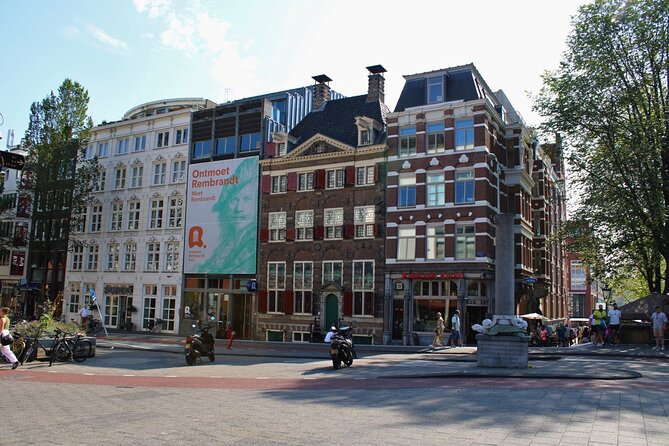
Amsterdam can be visually overwhelming at first. You see canal views, brick facades, church spires, and gabled houses—then you try to match that to paintings you’ve studied back home. What I like about this experience is that it flips that order. You start outdoors, look up and around, and then the art stories snap into place.
This route is also built for real-world travel. It’s short enough to fit neatly into your day (about 2 hours), and the group size caps at 15, which keeps things conversational instead of lecture-style. That matters because the best part of any art walk is when the guide can respond to what you’re noticing in the street.
One more practical perk: the tour ends at Blauwbrug, which is a handy central drop-off. From there you’re well positioned to keep exploring on your own or make the jump to a museum afternoon.
Where the tour starts: Prins Hendrikkade 95 to a city-center art thread
The meeting point is Prins Hendrikkade 95, 1012 AE Amsterdam. Arrive a few minutes early because the start is a specific address on a busy stretch. Once you’re with the guide, you’re in for a steady walking flow with short stops—mostly 10 to 15 minutes each—so you spend more time moving through the areas that inspired art, and less time waiting.
This is also where the “getting oriented” benefit kicks in. The route moves through places that anchor Amsterdam’s cultural geography: squares, historic passages, and recognizable viewpoints.
Stop 1: Weeping Tower for painterly scenes and a big viewpoint
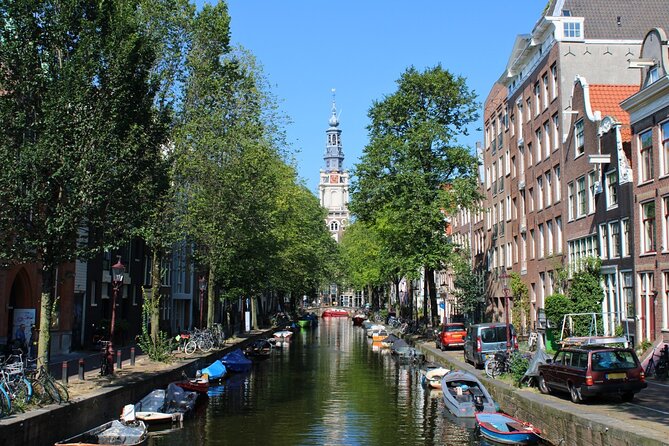
At the Weeping Tower, you get a quick intro to how artists were drawn to particular settings—then you’re treated to one of those Amsterdam moments that makes you stop mid-sentence and just look. The tour keeps this stop to about 15 minutes, with admission marked free, so it works well even if you don’t want to get bogged down.
What to watch for: the tower and the surrounding streetscape that viewers would have recognized from a day-to-day vantage point. This is the kind of stop that improves your photo results because the city’s angles do half the work for you.
More of Amsterdam street by street, on foot




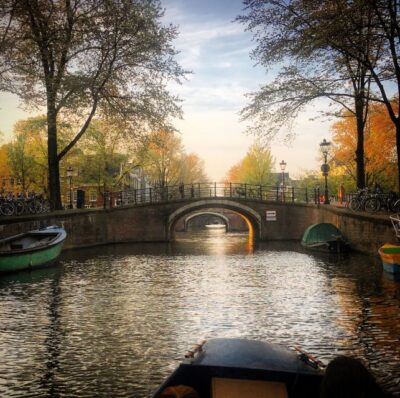
Stop 2: Nieuwmarkt—another art-inspired street scene moment
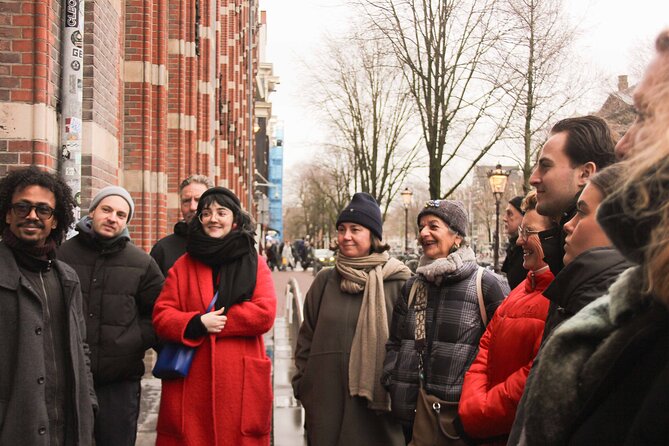
Next is Nieuwmarkt, another 15-minute pause with free admission. This stop continues the same theme: the buildings, the streets, and the visual rhythm of the neighborhood are not random backdrops. They’re part of the story artists returned to, again and again.
If you’re coming to Amsterdam for the first time, this second stop often becomes a baseline. You start learning what “feels like Amsterdam” when you see it around you—not just in a museum.
Stop 3: Trippenhuis for Rembrandt’s connections and Rijksmuseum context
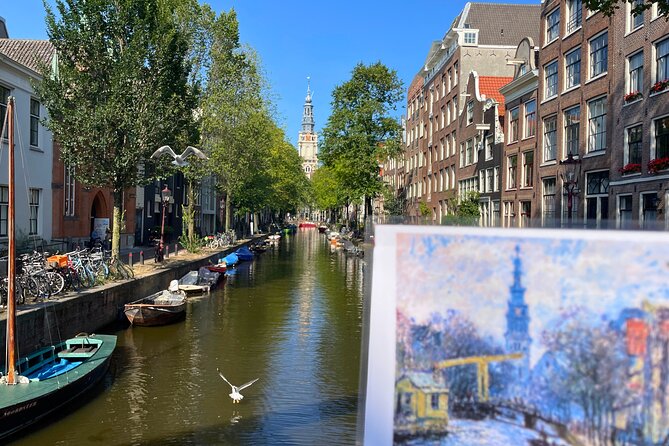
At Trippenhuis, the focus shifts toward Rembrandt. The tour highlights who Rembrandt painted here, and it also brings in the Rijksmuseum’s history and the notable figures who once passed through its halls.
This is a useful stop even if you don’t plan to buy a Rijksmuseum ticket immediately. Why? Because the tour’s big strength is making the museum visit feel less like wandering and more like following a story with names and reasons.
Practical note: this stop is only about 15 minutes, so if you’re the type who loves lingering at details, you might want to circle back later—especially if you’re planning that museum visit.
Stop 4: South Church—how Italy influenced Dutch painting
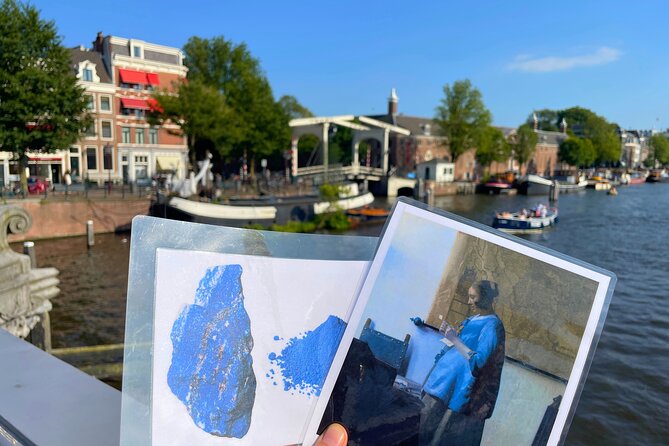
At the South Church, you’re looking at the influence of Italy on 17th-century Dutch painting, including a technique that helped propel artists to fame. This is one of those stops that explains a puzzle many people have without realizing it: how Dutch painters managed to achieve such intensity and drama in their scenes.
Keep expectations realistic. This is not a chalkboard lesson. It’s a street-level, conversation-style explanation tied to why the style mattered and how it traveled across borders.
Stop 5: Museum Het Rembrandthuis—Rembrandt’s home site and the art market rise
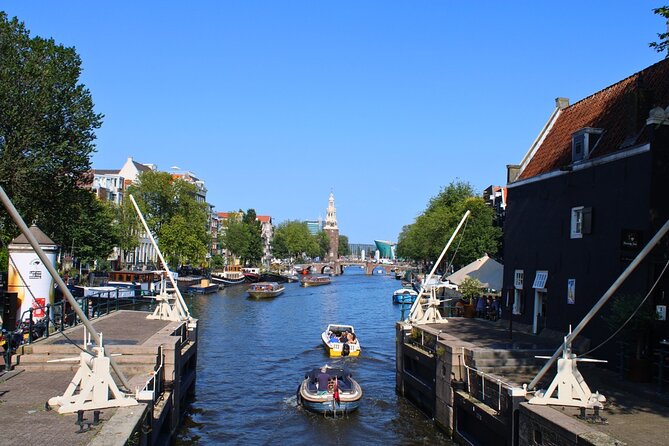
Next up is Museum Het Rembrandthuis, the former site of Rembrandt’s famed 17th-century home. The tour uses this point to talk about his life and also the rise of the Dutch art market—the kind of success that wasn’t only about talent, but also about demand.
What makes this stop click is the balance. You get the “artist as person” angle (what it meant to live where he lived) and the “artist as professional” angle (how the market helped him thrive). It’s a quick 15-minute visit on foot, but it sets you up to understand what you’ll see later in larger museum collections.
If you’re visiting the Rijksmuseum afterward, this stop often becomes a mental bridge. You go in already knowing how artists fit into the city’s economics and social life.
Stop 6: Oudemanhuispoort—Vermeer links and what you’ll see at the Rijksmuseum
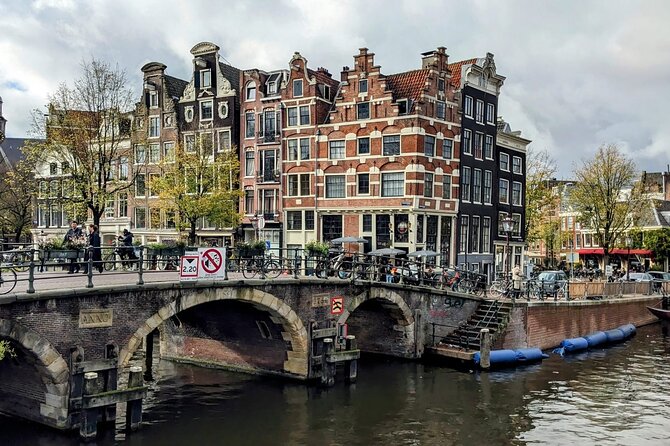
At Oudemanhuispoort, the tour points you toward the world of Vermeer and also mentions a famed collection now displayed at the Rijksmuseum. This is one of the better “preview” moments because it turns a museum ticket from a generic experience into a targeted one.
The stop runs about 10 minutes and is marked free for admission. So it’s short, but it’s designed to give you a names-and-ideas hook you can carry into the next part of the day.
If you’re not sure you’ll have time for the Rijksmuseum, this stop is still worth it. It helps you understand what the museum is actually doing for Dutch art—why it matters, and why certain artists keep showing up.
Stop 7: Staalstraat—French painter inspiration plus a look at industry
At Staalstraat, the tour connects the influence of a renowned French painter on these artistic giants and also points toward one of Amsterdam’s thriving industries. That combo is smart because it avoids a common mistake: treating art history like it happened in isolation.
Even in a short 10-minute stop, the angle is practical. You start seeing art as part of a bigger system—patrons, production, and the working city.
Stop 8: Tivoli Doelen Amsterdam Hotel—Frans Hals and the only Amsterdam painting story
At Tivoli Doelen Amsterdam Hotel, you’ll learn about the building’s past as a former headquarters. The story then zeros in on Frans Hals and the background behind the only painting Frans Hals created in Amsterdam (as presented on this walk).
This is the kind of stop that’s memorable because it’s specific. One place. One artist. One unusual “only in Amsterdam” detail. That makes it easier to remember later when you’re standing in a gallery trying to connect artworks to the city that shaped them.
Duration here is about 10 minutes, so it’s quick—but the details are the sort that stick.
Stop 9: Blauwbrug—finish at a classic Amsterdam photo view
The tour ends at Blauwbrug, about 10 minutes for the final stop itself, and it’s marked free for admission. This is one of those bridges that naturally invites photos because Amsterdam gives you both architecture and water angles in one frame.
The walk finishes in the center, between Rembrandt Square and Waterloo Square, which is a great location to keep going. You’re not stuck at the far edges of the map. You’re positioned to either return to your hotel area or pivot to a museum visit, canal cruise, or a simple meal nearby.
What makes the guide’s approach matter (and why the photos help)
A big part of the quality here is the way the guide connects art to streets you can actually see. One name that comes up in feedback is Manouk, noted for bringing prepared visuals and tying each story to the place in front of you. That technique is more than a nice touch. It keeps the experience from becoming vague.
You’ll usually get clearer explanations when you can quickly compare what’s described with what’s in the frame—especially in a city like Amsterdam, where many buildings look similar until someone points out the key cues.
Also, the tour’s format helps communication. In the notes from a hearing-impaired participant, the guide made an effort to speak clearly and directly. That kind of attention is a real quality marker for an experience like this, where you’re listening while walking and looking around.
Art museums afterward: how this walk sets you up for the Rijksmuseum
The Rijksmuseum is not included, but the tour is clearly designed to prime it. Since you’re told where Rembrandt, Vermeer, and related stories fit into the bigger picture, you’ll likely find your museum time more satisfying.
Here’s the practical angle: budget €22.50 per person for the Rijksmuseum if you want to go. The tour itself includes free admission for the listed stops, so your main add-on is the museum ticket, not a stack of entry fees.
If you’re deciding timing, I’d do one of two approaches:
- Do this walk first, then go to the Rijksmuseum while the names and places feel fresh.
- If you’re short on time, still do the walk to get context. Even without the museum, you’ll understand Amsterdam’s art signals better.
Who should book this Rembrandt and Van Gogh walking experience
I’d especially recommend it if:
- You want a first-time Amsterdam route that doubles as art education.
- You love art but don’t want a long museum day as your only plan.
- You’re traveling with someone who gets bored in slow, indoor-only itineraries.
It also works well for mixed interests. The route isn’t just for painters. It’s also about how the city’s culture, architecture, and market life shaped what artists created.
If you hate walking or you need long seated breaks every 10 minutes, this might feel a bit fast. The stops are short by design, so you’ll be moving most of the time.
Should you book? My take
Book it if you want an efficient, human-scale art story that makes Amsterdam feel readable. The small-group size, the free admission stops, and the way the guide connects paintings to street-level scenes are the winning combo.
Skip it only if you already feel fully confident about Amsterdam art history and you’d rather spend your time in one museum gallery system with no walking rhythm to manage. Otherwise, this is a smart way to turn a couple hours into a stronger understanding of the art you’ll see—especially if you plan to add the Rijksmuseum ticket right after.
FAQ
How long is the Rembrandt and Van Gogh Amsterdam walking experience?
It’s about 2 hours.
Is the tour offered in English?
Yes, it’s offered in English.
How many people are in the group?
The tour has a maximum of 15 travelers.
Is there a museum ticket included?
The Rijksmuseum is not included. It costs €22.50 per person if you choose to visit.
Where does the tour start and end?
It starts at Prins Hendrikkade 95, 1012 AE Amsterdam and ends at Blauwbrug, 1011 PT Amsterdam, between Rembrandt Square and Waterloo Square.
Are admissions required at the listed stops?
The tour information lists admission tickets for the stops as free.
Can I cancel and get a full refund?
Yes. You can cancel for a full refund up to 24 hours before the experience’s start time. Within 24 hours, the refund isn’t available.
More Amsterdam Walking Routes






More Tour Reviews in Amsterdam






More Time with Van Gogh





Just added: fresh Amsterdam tour reviews





Van Gogh Museum Tours, compared.
 ★ 4.6Van Gogh Museum Ticket and City Canal CruiseFrom $473,899 reviews
 ★ 4.5Van Gogh Museum Ticket & Canal CruiseFrom $473,304 reviews
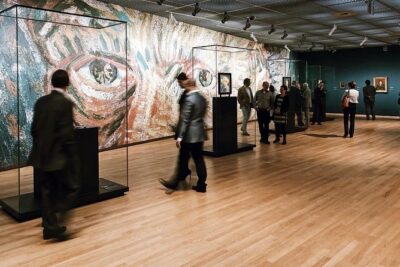 ★ 5.0Van Gogh Museum Amsterdam Exclusive Tour w/ Reserved EntryFrom $1731,760 reviews
 ★ 5.0Van Gogh Museum Tour Reserved Entry Semi PrivateFrom $1731,437 reviews
 ★ 4.9Van Gogh Museum Entry Ticket and Guided TourFrom $175681 reviews
 ★ 4.0Combo Ticket: Van Gogh Museum Ticket and 1-Hour Canal CruiseFrom $45676 reviews
 ★ 4.3Van Gogh & Rembrandt Captivating Experience EntryFrom $20615 reviews
 ★ 4.7Van Gogh Museum Guided Tour with EntryFrom $69535 reviews
Browse the lists this tour appears in