
Reviewed · AMSTERDAM MUSEUMS & GALLERIES
Rembrandt House & Neighborhood Exclusive Guided Walking Tour
Rembrandt walks start at a café. This exclusive guided tour threads Amsterdam’s canals and key sights into a visit with Rembrandt’s own home museum, and I like that you get both the neighborhood context and the inside details at a civilized pace. My other favorite part is the Het Rembrandthuis museum visit being guided and timed, not just a self-guided wander. The only real catch: you’ll walk a bit (plan on around 2 miles) and you’ll need to deal with museum security rules, including bag limits.
I also appreciate the route’s logic. You start in the old canal belt, move through places tied to Rembrandt’s artistic world, and then finish in Jodenbuurt at the house where he lived and worked from 1639 to 1656. It makes the art feel less like a museum object and more like a lived-in daily reality.
One more thing to know up front: this is a private group experience with one guide, and it runs rain or shine. If you’re expecting a laid-back stroll with zero effort, this may feel like a real tour day rather than a quick photo loop.
In This Review
- Key points before you go
- Why this Rembrandt House tour feels different from a hit-list
- Meeting at Cobra Café and pacing for a 2.5-hour walk
- Spiegelkwartier: the canal belt walk that sets the tone
- Keizersgracht and Museum Van Loon: Rembrandt’s artistic orbit
- Bloemenmarkt, Munttoren, and Rembrandtplein: icons in street scale
- The Amstel and Stopera: bridges, names, and a mix of eras
- Jodenbuurt: walking into the neighborhood that leads to the house
- Inside Het Rembrandthuis: the hour that makes the whole tour stick
- Guide factor: what a strong walkthrough feels like
- Price and value: is $159.21 per person worth it?
- Best for who: the travelers this tour matches
- Should you book Rembrandt House & Neighborhood?
- FAQ
- How long is the Rembrandt House & Neighborhood exclusive guided walking tour?
- What time does the tour start, and where does it meet?
- Is the tour in English?
- Is museum entry included, or do I pay separately?
- Will the tour run in bad weather?
- What should I know about bags and museum security?
- Are there any quiet or speaking restrictions inside the museum?
- Can Rembrandt’s House close, and what happens then?
- How do I handle cancellation if my plans change?
Key points before you go
- Private, English-led walking tour with entrance fees covered
- Canals of Amsterdam framing via Singelgracht and Spiegelgracht sights (UNESCO context)
- Museum Van Loon stop tied to Ferdinand Bol, Rembrandt’s favorite pupil
- Bloemenmarkt, Munttoren, and Rembrandtplein connect the streets to iconic Rembrandt imagery
- Finish inside Het Rembrandthuis for a guided 1-hour visit
- You’ll need a phone number for coordination and to pass security rules with small bags only
More of the museums worth the queue in Amsterdam
- Amsterdam: Madame Tussauds Ticket
★ 4.5 · 11,438 reviews - Amsterdam’s Weirdest Museum: Ripley’s Believe It or Not!
★ 4.5 · 4,920 reviews - Amsterdam: NEMO Science Museum Ticket
★ 4.4 · 2,979 reviews - Moco Museum Amsterdam Admission Ticket with Banksy and more
★ 4.0 · 1,745 reviews
Why this Rembrandt House tour feels different from a hit-list
Amsterdam is full of Rembrandt stops, but most tours treat his name like a series of postcards. This one does something smarter: it builds a little map in your head as you walk, using canals and neighborhoods as your “storyline.”
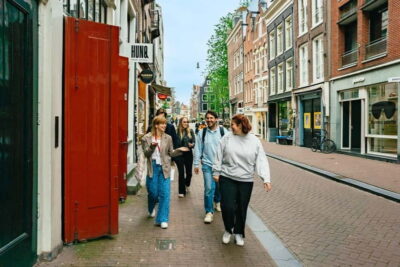
I like that the walking portion isn’t random. You start near the canal edges of the city center, then you step through the middle of the main canal system, and then you head toward Jodenbuurt. By the time you reach Rembrandt’s house, you’re not arriving in the dark—you understand where you are in the city’s geography and why that matters.
And the ending is the payoff. The museum visit is included and lasts about an hour, so you get time to look without feeling rushed. The guide’s job is to help you see what you’d probably miss on your own—details about Rembrandt’s artmaking life, the things he left behind, and the social world around him.
Meeting at Cobra Café and pacing for a 2.5-hour walk
The tour starts at Cobra Café, Hobbemastraat 18, 1071 ZB Amsterdam, at 1:30 pm. Expect a total duration of about 2 hours 30 minutes, and plan for moderate walking. The tour is described as suitable for travelers with moderate physical fitness, and the pace matches that: steady, not sprinting, but not slow enough for long coffee breaks.
A practical note: you’ll have a mobile ticket, and the provider requires your mobile phone number (with country code). That’s usually about quick coordination on the day, especially when you’re moving through busy streets and museum security.
Also, come prepared for rain or shine. You’re outside for the majority of the route, so a light waterproof layer is worth it even in good weather.
Spiegelkwartier: the canal belt walk that sets the tone
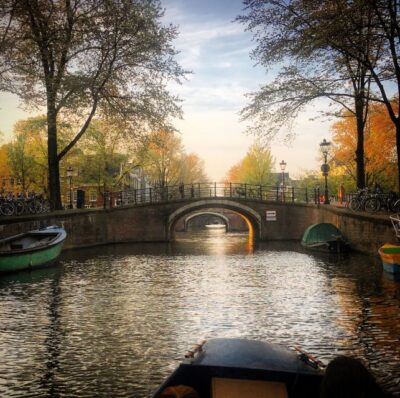
Stop 1 focuses on Spiegelkwartier, starting near the Singelgracht. This canal is described as forming the old outer defenses of Amsterdam’s city center area—so you’re not just looking at water. You’re getting an easy mental model for how the city grew and how the canals shaped street life.
Next you move to Spiegelgracht, part of the Canals of Amsterdam UNESCO World Heritage designation. This is where the tour leans into atmosphere: art galleries, antiques, and the sense of a neighborhood where visual culture is part of everyday scenery.
The “value” here is how the guide uses the canals as wayfinding. Instead of treating each stop as a standalone photo moment, you’re learning how Amsterdam’s water layout affects where art spaces, markets, and important buildings show up.
You might find this section best if you like city texture—small storefronts, canal-side views, and learning what certain waterways used to mean.
More of Amsterdam street by street, on foot




Keizersgracht and Museum Van Loon: Rembrandt’s artistic orbit
Stop 2 brings you to the Emperor’s Canal (Keizersgracht)—the middle of Amsterdam’s three main canals, named after Emperor Maximillian of Austria. It’s the description of the canal as the widest in the inner city, which helps you visualize the scale of what you’re seeing.
From there you head to Museum Van Loon, a canal-side house museum. Here’s the specific link you’ll appreciate: it’s known as the home of Ferdinand Bol, Rembrandt’s favorite pupil. Even if you don’t go inside Van Loon during this tour, the stop gives you a concrete connection between Rembrandt and the people around him, not just Rembrandt as a lone genius.
The drawback to consider for this segment is simple: the time at each stop is short (around 10 minutes for these outdoor/area moments). You’ll get direction and context, but you won’t be lingering in front of every window display or doorway.
Bloemenmarkt, Munttoren, and Rembrandtplein: icons in street scale
Next you walk through the Bloemenmarkt area (the flower market), and you’ll see the Munttoren, also called the Mind Tower. The tour description notes that Munttoren was originally part of one of Amsterdam’s main gates in the medieval city wall. That’s a clever detail because it turns a quick photo stop into something with a past you can actually picture.
Then comes Rembrandtplein, one of the city’s busiest squares. Here you’ll see a bronze-cast representation connected to Rembrandt’s most famous painting, The Night Watch. The tour notes it was displayed as part of the celebration of Rembrandt’s 400th birthday in 2006.
A small practical point: because Rembrandtplein is busy, you’ll likely experience it like a city square, not a quiet monument. If you prefer calm museum atmospheres, keep your eyes up for quick glimpses and let the guide orient you so you don’t waste time standing around.
The Amstel and Stopera: bridges, names, and a mix of eras
Stop 8 takes you to the Amstel River, with two notable bridges: the Skinny Bridge and the Blue Bridge. The Blue Bridge is named after a wooden blue bridge from the 17th century, which is exactly the kind of detail that makes Amsterdam’s street names feel like history you can carry.
Then you move toward the Stopera area—described as a building complex that houses both the city hall and the Dutch National Opera and Ballet. The construction took at least 60 years, which is a helpful fact because it signals that this is not a flash-in-the-pan modern spot. It’s Amsterdam’s version of mixing administration, performance culture, and architecture in one place.
This section works well if you’re the type of traveler who likes the contrast between canals and later city planning. You get old water routes, then you shift to a 20th-century-ish institutional anchor, and it keeps the tour from feeling like one long Rembrandt-only echo.
Jodenbuurt: walking into the neighborhood that leads to the house
As you head to Jodenbuurt (the former Jewish neighborhood), the tour focuses on historically important buildings that are currently preserved and managed by the Jewish Cultural Quarter. Even without an extended museum-style explanation, the area stop gives you a sense of place before you enter the house.
This matters because Rembrandt lived in an Amsterdam that was still changing rapidly. A strong tour helps you understand that you’re not visiting a frozen painting studio; you’re stepping into a working home inside a real city neighborhood.
If you’re hoping for a full lecture on the neighborhood’s later 20th-century history, note that the tour time at each segment is limited. You’re getting orientation, not a complete course.
Inside Het Rembrandthuis: the hour that makes the whole tour stick
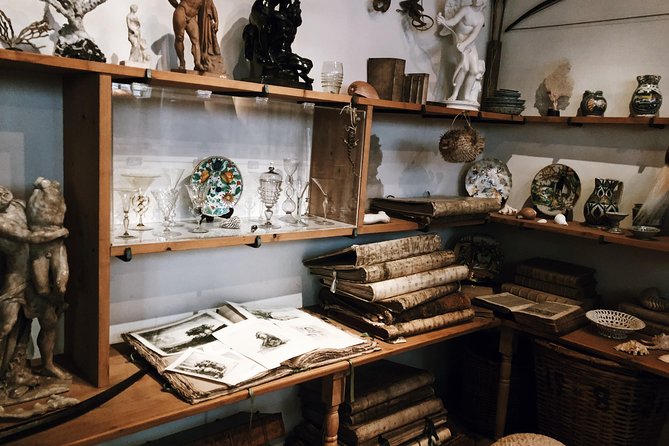
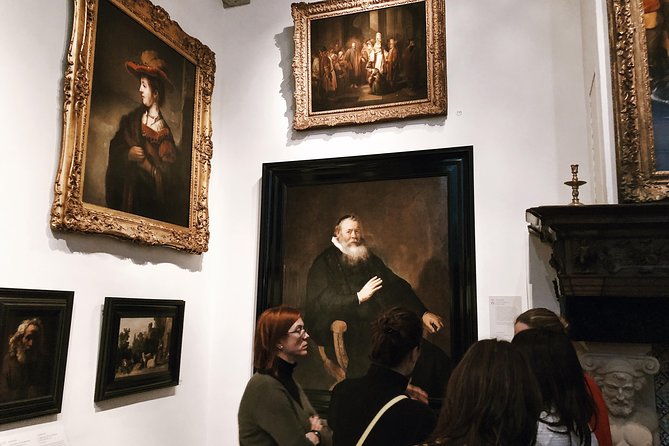
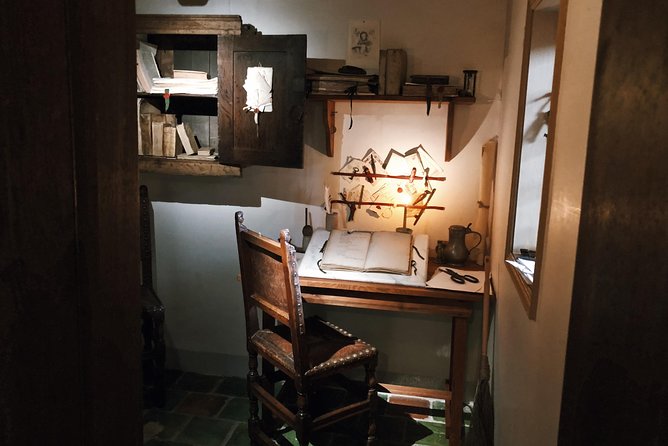
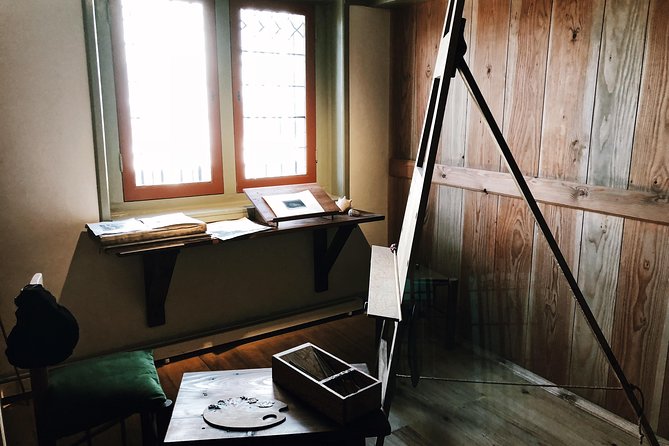
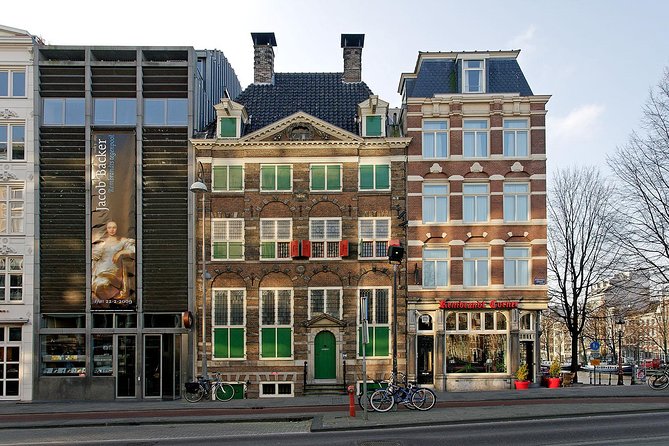
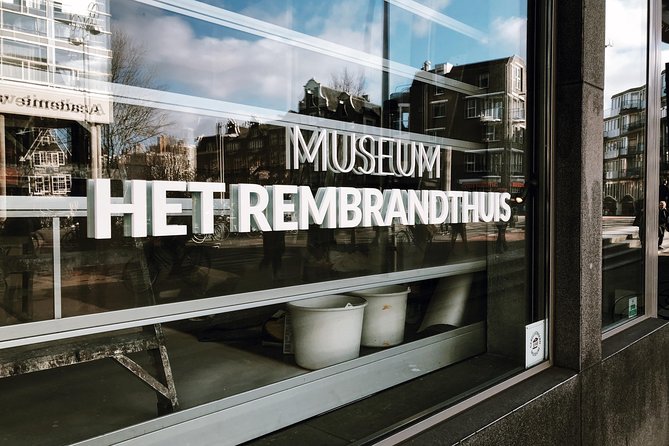
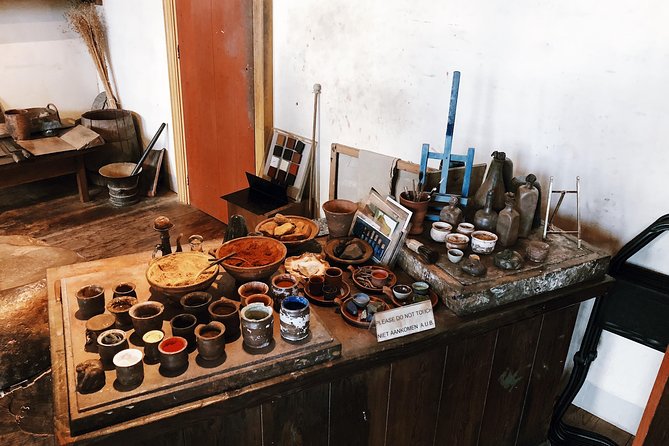
The tour ends with Museum Het Rembrandthuis at Jodenbreestraat 4, 1011 NK Amsterdam. This is where Rembrandt lived and worked between 1639 and 1656, and the museum’s collection includes Rembrandt’s etchings and paintings of his contemporaries.
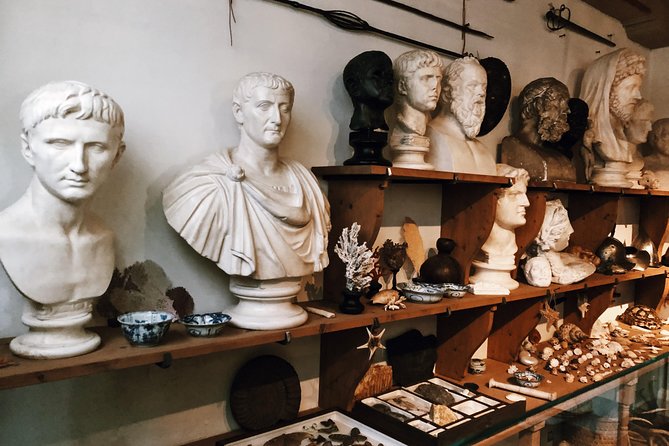
The museum portion is about 1 hour, and it’s the part that turns the walk into something memorable. You’ll see Rembrandt’s personal items and art, and you’ll get guided context for what you’re looking at—especially how his artistic development connects to the world outside his door.
One detail worth planning for: the museum has rules. The tour notes that no large bags or suitcases are allowed inside; only handbags or small thin bag packs can go through security. You’ll also want to dress appropriately for entry into some sites. If you’re traveling light, great. If you’re not, I’d use a hotel bag or locker strategy before you come, so you don’t lose time at security.
Also, some specific rooms inside the museum can be quiet or have restrictions on speaking. The guide will explain where that applies before you enter. So don’t worry—you’re not breaking rules without meaning to, but you should keep your voice low when prompted.
Guide factor: what a strong walkthrough feels like
A big part of the value here is the human element. In one experience I reviewed, the guide Haas came across as pleasant and sharp—someone who can connect the streets outside to the objects inside.
That shows up in small ways: the guide helps you look at Rembrandt’s home not just as a preserved building, but as a place that shaped how he worked. You also get help understanding why certain landmarks matter for the story the tour is telling.
If you want to get more out of your guide, ask one simple question during the walk: what detail should I be hunting for when we enter the house? Guides often steer you toward specific items or themes, which turns the final hour into a more intentional visit.
Price and value: is $159.21 per person worth it?
At $159.21 per person, this isn’t a bargain-basement group tour. But it has a few things that justify the price if your priorities match what’s included.
Here’s the value math that matters:
- All entrance fees are included, with the key museum stop being Het Rembrandthuis for about an hour.
- You get a guided museum visit plus the guided canal-and-neighborhood walking portion.
- It’s private for your group, meaning you’re not just squeezed into a big crowd where questions die in the air.
You’re also paying for time and setup. This itinerary is designed to stitch together several landmarks in roughly 2.5 hours. If you tried to recreate this on your own, you’d spend time figuring out route logic, transit timing, and what to care about once you’re inside the museum.
A smart way to decide: if you’re comfortable spending money for a guide to help you see more in less time, this fits. If you’re the type who loves slow wandering and doesn’t want to follow someone else’s schedule, you might prefer buying museum tickets and doing a self-guided canal walk.
Best for who: the travelers this tour matches
This tour is a strong fit if:
- You want Rembrandt without turning your day into a checklist.
- You like canals, architecture, and neighborhood context, not just single attractions.
- You want a guided museum hour with practical interpretation, plus outdoor sightseeing.
It may feel less ideal if:
- You dislike walking or aren’t comfortable with a moderate pace.
- You rely on large bags and don’t plan for museum security restrictions.
- You’re expecting long stops at each landmark instead of short, guided moments.
Should you book Rembrandt House & Neighborhood?
I think this is worth booking if you want the “why” behind what you’re seeing—canal geography, Rembrandt’s connections, and a guided house visit that turns into real understanding. The near-perfect rating score (4.9) supports that the experience is landing for many people, and the structure makes it hard for it to feel like a random city stroll.
Book it if your goal is: learn fast, see a lot, and still end with meaningful time inside the house.
Skip it if you’re traveling super light, hate security lines and bag rules, or you’d rather roam on your own with no guided interpretation.
FAQ
How long is the Rembrandt House & Neighborhood exclusive guided walking tour?
It runs for about 2 hours 30 minutes.
What time does the tour start, and where does it meet?
The meeting point is Cobra Café, Hobbemastraat 18, 1071 ZB Amsterdam, and the start time is 1:30 pm.
Is the tour in English?
Yes, the tour is offered in English.
Is museum entry included, or do I pay separately?
Entrance fees are included, including the Rembrandt House Museum (Het Rembrandthuis), which has an included guided museum visit of about 1 hour.
Will the tour run in bad weather?
Yes. The tour runs rain or shine.
What should I know about bags and museum security?
Rembrandt’s House has security rules: no large bags or suitcases are allowed inside. Only handbags or small thin bag packs are permitted through security.
Are there any quiet or speaking restrictions inside the museum?
Some rooms can be very quiet or restrict speaking. Your guide will explain which areas this applies to before you enter.
Can Rembrandt’s House close, and what happens then?
Rembrandt’s House may have occasional closures without prior warning. If the museum is delayed by more than 1 hour from the tour start time, an alternative is provided. The info notes that in these cases refunds or discounts are not provided.
How do I handle cancellation if my plans change?
The policy is free cancellation, and you must cancel at least 24 hours before the experience’s start time for a full refund.
More Tours in Amsterdam






More Tour Reviews in Amsterdam






Indoors Done Well: More Amsterdam Museums






Just added: fresh Amsterdam tour reviews





Amsterdam Museums & Galleries, compared.
 ★ 4.5Madame Tussauds TicketFrom $1911,438 reviews
 ★ 4.5Amsterdam’s Weirdest Museum: Ripley’s Believe It or Not!From $264,920 reviews
 ★ 4.4NEMO Science Museum TicketFrom $252,979 reviews
 ★ 4.0Moco Museum Amsterdam Admission Ticket with Banksy and moreFrom $271,745 reviews
 ★ 4.5Ticket to The Ultimate 5D Flight Experience at THIS IS HOLLANDFrom $281,413 reviews
 ★ 4.0Madame Tussauds Amsterdam Admission TicketFrom $25940 reviews
 ★ 4.5Body Worlds Amsterdam Admission TicketFrom $27860 reviews
 ★ 4.6Madame Tussauds & Amsterdam Dungeon Combo TicketFrom $34680 reviews
Browse the lists this tour appears in