
Reviewed · WALKING TOURS
Historical Walking Tour, private with local Dutch guide
Amsterdam clicks into place fast once you walk it. This private, English-language historical walk is built for getting oriented with a local Dutch guide, Anna, who has lived in the city for 25 years. I especially like how the route links medieval defenses to today’s streets, canals, and neighborhoods—so the map starts making sense quickly.
Two things I really liked: the pacing keeps you moving but still leaves room for questions, and Anna’s dry-humor storytelling makes the facts stick. One thing to consider: this is a steady walk for about 2 hours, and it’s not a great fit if you have trouble standing or walking.
In This Review
- Key things to know before you go
- Setting the tone: meeting at Schreiertower and reading old Amsterdam fast
- Stop 1: Weeping Tower as your medieval origin story
- Stop 2: Zeedijk and the water-defense logic of Amsterdam
- Stop 3: The Waag and the city gate mindset
- Stop 4: Oostindisch Huis and the spice trade behind modern business
- Stop 5: Het Kleinste Huis and Amsterdam’s symbolic scale
- Stop 6: Dam Square and the city’s two big centers of meaning
- Stop 7: The Canal Ring (Grachtengordel) and the merchant math of the Golden Age
- Stop 8: Jordaan—brown cafes, small streets, and local texture
- Stop 9: Westerkerk’s spire and the end near Anne Frank House
- Price and value: what $96.02 buys you in a private, English walk
- Who this private walk is best for (and who should skip it)
- Tips to get the most from Anna’s walking style
- Should you book this Amsterdam historical walking tour?
- FAQ
- How long is the historical walking tour in Amsterdam?
- Is this tour private or shared?
- What language is the tour offered in?
- Where do I meet the guide, and where does the tour end?
- Are admission fees included?
- Is bottled water provided during the tour?
- Are service animals allowed on this tour?
- Is the tour accessible for people who use mobility aids or walkers?
- Is the tour near public transportation?
- What is the cancellation policy for a full refund?
Key things to know before you go
- A “first-time orientation” route that connects Amsterdam’s medieval origins to the canal ring and Jordaan
- Anna (local since 25+ years) brings a lived-in perspective and answers questions on the spot
- Mostly quick stops (often around 5 minutes) with two longer segments for the canal ring and Jordaan
- All-fees-included pricing with free admission at the stops listed
- Private tour for just your group, so you can set the tone and adjust your pace
- Service animals welcome, and you’ll be near public transportation
More of Amsterdam street by street, on foot
- Amsterdam Anne Frank: Small-Group Walking Tour & Local Guide
★ 4.8 · 12,789 reviews - Anne Frank’s Story – Guided Walking Tour through Amsterdam
★ 5.0 · 11,619 reviews - Absolutely Amsterdam – the Essential Introductory Walking Tour
★ 5.0 · 3,629 reviews - Amsterdam: Anne Frank Guided Walking Tour in DE/EN/IT/ES
★ 4.9 · 3,107 reviews
Setting the tone: meeting at Schreiertower and reading old Amsterdam fast
You’ll meet your guide at Café the Schreiertower on Prins Hendrikkade (1012 AE). It’s a practical start: easy to find, central, and close enough to the action that you don’t waste your limited time getting there. The tour ends at Westerkerk on Prinsengracht (1016 DL), which is a smart finish point if you plan to keep exploring afterward near the Anne Frank House area.
From the first minutes, you’re not just collecting dates. You’re learning the logic of the city—where it came from, why people built where they did, and how the water shaped everything. Anna’s style (sharp, human, and very easy to follow) helps if you’re arriving jet-lagged. You’ll pick up context so you can later look at a canal house and know what you’re seeing.
This is also a good tour format if you want a city “base layer.” After two hours, you’ll know where the important landmarks sit relative to each other, and you’ll have a better sense of what you want to revisit. And because it’s private, Anna can steer the conversation toward what interests your group—art, architecture, trade, religion, or just how the city works day to day.
Stop 1: Weeping Tower as your medieval origin story
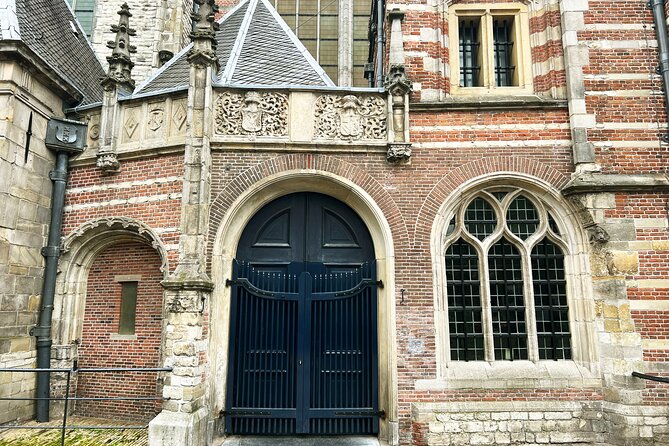
Your first stop is the Weeping Tower (Schreiertoren), a medieval watchtower and one of Amsterdam’s few remaining reminders of that early era. Here’s where you get the foundation: why Amsterdam grew where it did, and how people thought about security and survival long before the Golden Age canal ring.
This part matters because Amsterdam is a city of layers. If you start with only the famous canals, you miss the “why.” Standing near the tower, you can understand that Amsterdam didn’t begin as a postcard. It began as a settlement that had to manage risk—especially water and access.
The stop is short (around 5 minutes), so don’t expect a long lecture. Think of it as a quick orientation pin you’ll use later. When Anna points out later sites like gates, dikes, and merchant buildings, you’ll have the medieval starting point in your head.
Practical note: you’ll be outdoors and walking from stop to stop. Dress for weather and keep your pace comfortable—this tour is efficient, not slow and scenic.
Stop 2: Zeedijk and the water-defense logic of Amsterdam
Next comes Zeedijk, one of the oldest streets in Amsterdam. The key detail here is that it also functioned as a dike with locks, built to protect the city from flooding. That’s the Amsterdam theme you’ll keep hearing: the water isn’t scenery—it’s infrastructure.
This stop is only about 5 minutes, but it’s a powerful one for first-timers. Once you understand how a dike works, canals stop being just pretty views. You start to notice how the city balances living space with control of water levels and flow.
A nice part of Anna’s approach is that she ties this kind of engineering to the bigger story of power and planning. You don’t need to be an engineering fan. You just need to care about why a city is shaped the way it is. Zeedijk gives you that “aha” early, which makes the later stops about trade and wealth feel more grounded.
More trips where a local runs the whole day



Stop 3: The Waag and the city gate mindset
From there you’ll reach The Waag, a medieval city gate tied to a defensive wall and moat system. Again, it’s a short stop, but the point is big: this was a controlled boundary. City gates were where goods moved, rules enforced, and security mattered.
I like that this stop bridges the gap between daily life and big historic forces. You see a structure that looks like part of a museum route, but Anna explains it as something that once controlled movement and commerce. That makes Amsterdam’s later merchant wealth feel less random and more like a continuation of earlier priorities—protect, regulate, and profit.
If you enjoy architecture and “how cities were organized,” The Waag is one of those quick stops that pays off later when you walk and notice how Amsterdam channels movement through bridges, narrow streets, and concentrated landmarks.
Stop 4: Oostindisch Huis and the spice trade behind modern business
Oostindisch Huis is where the tour jumps from defenses to global trade—and it’s a standout. This building was an office and warehouse of the Dutch East India Company, founded in 1602. Anna helps you connect the dots between the spice trade, the rise of major commercial power, and how this era fed ideas that look familiar today: corporations and even the modern stock market concept.
What I like here is that you’re not only learning about spices. You’re learning about systems: how risk got organized, how wealth got structured, and how long-distance trade shaped institutions. Amsterdam wasn’t just where ships arrived. It was where business models formed around those arrivals.
This stop also works well if you’re curious about the “modern world’s origin stories.” You’ll leave with a sense that global trade didn’t only create flavor—it created finance, governance, and city growth.
Stop 5: Het Kleinste Huis and Amsterdam’s symbolic scale
Next is Het Kleinste Huis van Amsterdam, the smallest house in the city. Anna frames it not just as a quirky fact, but as a clue about how cities used space and display. It also sat next to a gate decorated with the city’s crest and other symbolic decorations, which helps you understand that Amsterdam used visual language to communicate identity and authority.
This stop is short (about 5 minutes), but it’s memorable because it gives you contrast. You go from huge economic ambitions at Oostindisch Huis to a tiny building that makes you think about streets as lived-in corridors, not just tourist scenery.
If you tend to like human-scale stories—who lived where, why spaces got shaped the way they did—this is a perfect palate cleanser between heavier history stops.
Stop 6: Dam Square and the city’s two big centers of meaning
Dam Square is Amsterdam’s old market square—the heart of the city. Today you’ll see two key anchors here: the Royal Palace area and the national Second World War monument.
What makes Dam Square feel different on a guided walk is that it’s both everyday and symbolic. Market squares are practical places, but they also become stages for national identity. Anna ties this location to how Amsterdam functioned as a center for commerce and how, later, it carried national grief and memory.
You’ll spend around 10 minutes here, which is long enough for Anna to point you toward what to notice. And because you’re stepping into the broader city rhythm, you’ll get a sense of how the “heart” of Amsterdam has kept working even as the meaning shifted across centuries.
Stop 7: The Canal Ring (Grachtengordel) and the merchant math of the Golden Age
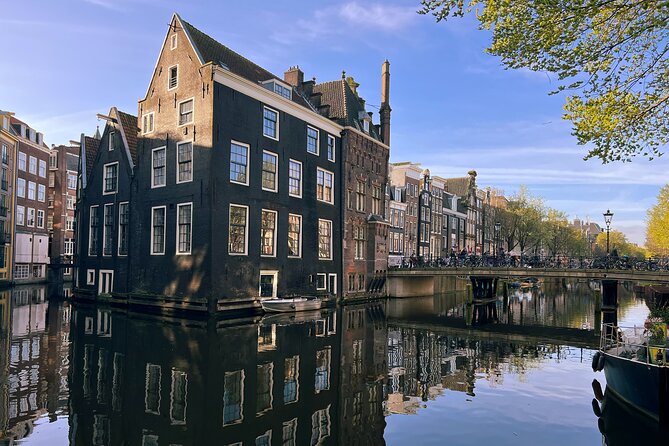
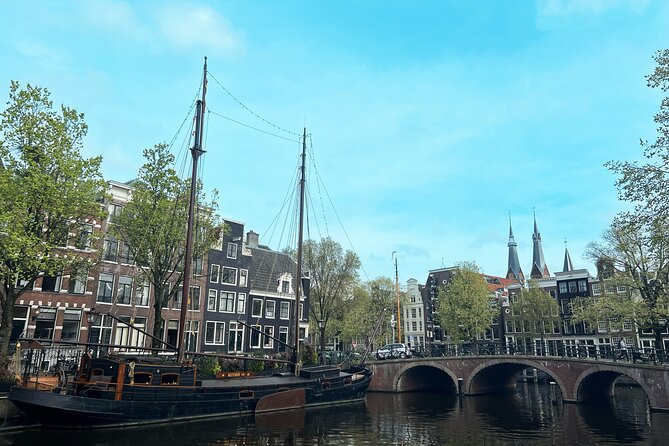
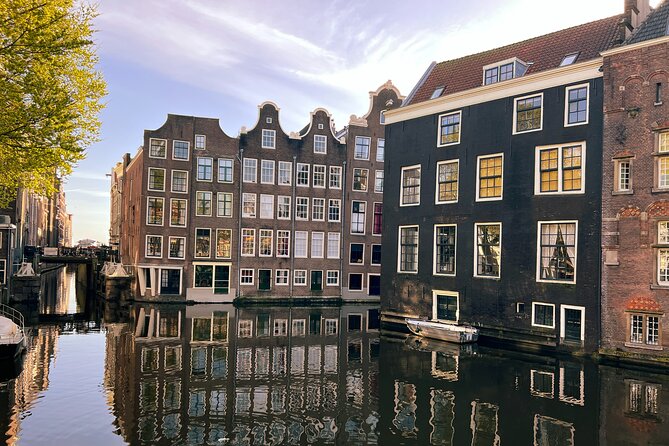
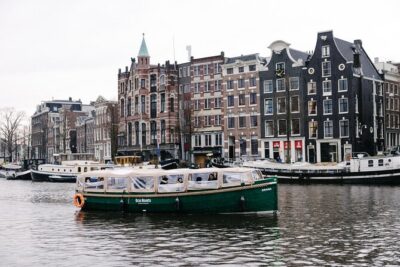
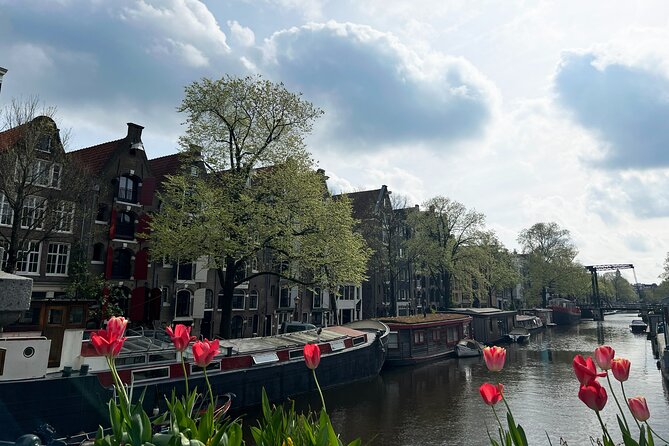
One of the best parts of this tour is the longer time at the Canal Ring (Grachtengordel), about 30 minutes. This is where you slow down enough to really see the idea behind it: the ring of canals was planned for the wealthy merchants of Amsterdam’s Golden Age.
You’ll look at fine canal houses in a northern baroque style and also notice the houseboat variety. That mix matters because it shows you Amsterdam’s classic tension: wealth and practicality, grandeur and living reality, planned design and everyday use.
This is the segment where I think the tour gives real value for photo-minded people. You’re not just getting famous scenery; you’re learning what makes the scenery “work.” Anna explains how this canal ring fit into Amsterdam’s geography and economic power, so the canals stop looking like random lines and start looking like a system.
Also, plan for movement. You’ll likely be adjusting to bicycles and foot traffic. It’s part of the city’s everyday life, so treat it as a normal Amsterdam walk, not a calm museum circuit.
Stop 8: Jordaan—brown cafes, small streets, and local texture
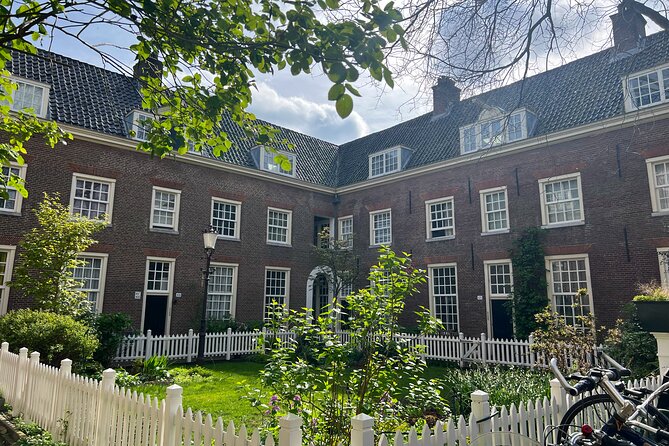
After the canals, you’ll head to Jordaan, another longer stop (about 30 minutes). Jordaan is known for picturesque streets, traditional brown cafes, and unique boutiques. On this part of the walk, Anna shifts from big-picture history to neighborhood character.
This is where the tour becomes more “Amsterdam right now.” You’ll see how older city patterns survive and adapt. Jordaan feels human-scale—streets you could wander for hours—and that’s exactly what you need after the denser historical stops.
Even if you’re short on time, this stop helps you decide where you want to spend your next afternoon. It’s easy to treat Amsterdam as only the major icons. Jordaan reminds you that the city’s personality lives in side streets, small storefronts, and the way people actually gather for coffee or a drink.
If you like local vibe as much as historical landmarks, you’ll probably find this segment one of the most satisfying.
Stop 9: Westerkerk’s spire and the end near Anne Frank House
You’ll finish at Westerkerk, a Dutch Protestant church known for its stylish design and iconic spire—one of the city landmarks that locals love. The stop is about 5 minutes, and it’s a solid ending point because it’s easy to continue your day in multiple directions.
What I like about ending here is that it gives closure on the tour’s theme of “built Amsterdam.” You’ve visited medieval structures, trade-era institutions, the civic heart, and the merchant canal world. Westerkerk brings the story forward into a landmark that’s visible, recognizable, and still meaningful in the city’s everyday navigation.
The tour ends in the vicinity of the Anne Frank House and Westerkerk church, which can be useful if you’ve already planned museum time. Even if you’re not going inside immediately, you now have a location anchor to orient your next steps.
Price and value: what $96.02 buys you in a private, English walk
At $96.02 per person for about 2 hours, you’re paying for a few high-value things at once: a private local guide, English commentary, and guided context that helps you connect landmarks. It’s not a bus-tour price, and that’s the point—your route is flexible, your questions get answered, and Anna can tailor what you focus on.
One nice value detail: the listed stops include free admission tickets, and the experience includes all fees and taxes. You’re not juggling small add-on costs while you’re trying to understand the story.
The only “watch-out” cost item is simple: bottled water isn’t included. If it’s warm, bring your own or plan to buy along the way. Also, since it’s a walking tour with no mobility aids provided, factor that into your comfort level.
If you’re the type who likes to understand what you’re seeing, a private guide at this price usually feels fair. If you only want quick photos with zero explanation, you might wonder if it’s worth it. For most first-timers, the orientation payoff is real.
Who this private walk is best for (and who should skip it)
This tour is a great fit if:
- You’re arriving to Amsterdam and want a map-to-story orientation fast
- You like history tied to the physical city—gates, dikes, churches, merchant buildings
- You value the guide’s personal angle; Anna’s lived-in perspective makes the places feel less like static monuments
- Your group wants privacy, so pacing and questions don’t get squeezed
It’s not recommended if:
- You struggle with walking or standing for about 2 hours
- You use a walker (mobility aids aren’t available for the tour)
Also, it’s outdoors and involves city streets, so consider shoe choice and weather layers. Amsterdam can be slippery when it’s damp.
Tips to get the most from Anna’s walking style
A few practical moves can make this tour even better:
- Wear comfortable shoes with grip; you’ll be on city pavement and adjusting around foot traffic and bikes
- If you have specific interests (architecture, trade, Jewish history beyond Anne Frank House, religion, city planning), tell Anna early and she can steer examples
- Bring a small snack if you’re sensitive to hunger; Anna may make time for small breaks, but bottled water is not included
- Bring a phone with enough battery; you’ll have a mobile ticket and you may want to save waypoints for later stops
And if you’re the type who likes humor in your history, Anna’s tone hits a nice balance: smart facts without sounding like a textbook.
Should you book this Amsterdam historical walking tour?
Yes—if you’re a first-timer who wants to understand Amsterdam instead of just tick off landmarks. This is strong value for a private walk because it turns a compact route into a clear mental map: medieval defenses, water control, global trade, civic space, the Golden Age canal plan, and the neighborhood texture of Jordaan.
I’d skip it only if your walking stamina is limited or if you need mobility aids—this is a straight-ahead walking tour. Otherwise, book it early in your trip. Doing it on arrival day is the kind of move that makes the rest of your Amsterdam time feel easier and more connected.
FAQ
How long is the historical walking tour in Amsterdam?
It lasts about 2 hours.
Is this tour private or shared?
This is a private tour/activity, so only your group participates.
What language is the tour offered in?
The tour is offered in English.
Where do I meet the guide, and where does the tour end?
You meet at Café the Schreiertower, Prins Hendrikkade 95, 1012 AE Amsterdam. The tour ends in the vicinity of Anne Frank House and Westerkerk, at Westerkerk, Prinsengracht 279, 1016 DL Amsterdam.
Are admission fees included?
All fees and taxes are included, and the stops listed show admission ticket as free.
Is bottled water provided during the tour?
No, bottled water is not included.
Are service animals allowed on this tour?
Yes, service animals are welcome.
Is the tour accessible for people who use mobility aids or walkers?
Mobility aids are not available. The tour is not recommended for participants who use a walker.
Is the tour near public transportation?
Yes, it’s near public transportation.
What is the cancellation policy for a full refund?
You can cancel for free up to 24 hours in advance of the experience start time for a full refund. If you cancel less than 24 hours before, the amount paid won’t be refunded.
More Amsterdam Walking Routes






More Tours in Amsterdam




More Tour Reviews in Amsterdam






Just added: fresh Amsterdam tour reviews





Walking Tours, compared.
 ★ 4.8Amsterdam Anne Frank: Small-Group Walking Tour & Local GuideFrom $2912,789 reviews
 ★ 5.0Anne Frank’s Story – Guided Walking Tour through AmsterdamFrom $3911,619 reviews
 ★ 5.0Absolutely Amsterdam – the Essential Introductory Walking TourFrom $53,629 reviews
 ★ 4.9Anne Frank Guided Walking Tour in DE/EN/IT/ESFrom $283,107 reviews
 ★ 4.8Anne Frank Guided Small Group Walking TourFrom $282,722 reviews
 ★ 4.9Cultural Highlights Walking TourFrom $302,629 reviews
 ★ 4.2Ganja Walking TourFrom $402,127 reviews
 ★ 5.0Anne Frank Walking Tour Amsterdam Including Jewish Cultural QuarterFrom $751,879 reviews
Browse the lists this tour appears in