
Reviewed · RED LIGHT DISTRICT TOURS
Amsterdam: Red Light District 1-hour Smartphone Audio Tour
One walk can teach you more than ten photos. This Dam Square to Nieuwmarkt audio route uses your phone to tell the neighborhood’s side of Amsterdam that lives beyond the windows. I especially like the offline map and the way the narration keeps pulling you toward real places like Oude Kerk and Waag at the end.
The trade-off is simple: this is not a guide focused on the sex-industry details people often expect. If that’s what you’re after, you may feel you wanted more on prostitution itself than on city storytelling and churches.
In This Review
- Key points worth knowing before you go
- Dam Square to Nieuwmarkt: the route that gives shape to the story
- What makes this Red Light District audio tour different
- A sensible pace through the oldest buildings and symbolic spots
- Café In’t Aepjen: a pause that makes the neighborhood feel human
- Ons’ Lieve Heer op Solder: the quietly wild address you’ll remember
- The route’s attention to sailors, merchants, and travelers
- Ending at Nieuwmarkt and the Waag building: closure with meaning
- Price and value: $7 for one-hour storytelling on your phone
- Practical nuts and bolts that can make or break it
- Who should book this, and who should skip it
- Should you book the Amsterdam Red Light District 1-hour audio tour?
- FAQ
- Where does the audio tour start?
- Where does the tour end?
- How far is Dam Square from Amsterdam Centraal?
- What’s included with the ticket?
- Are museum or site entry tickets included?
- What languages are available?
- Do I need headphones?
- How much space does the tour require on my phone?
- Is the audio tour available if I have no mobile signal?
- Is there a live guide?
- Is the tour suitable for children?
Key points worth knowing before you go
- Dam Square start, Nieuwmarkt finish: a clear route with a satisfying walk-through arc.
- Offline content with interactive map: designed to work when mobile signal gets weak.
- Respectful, heritage-led storytelling: you’re guided through history and architecture, not shopfront culture.
- Real landmarks in the script: Oude Kerk, Belle statue, Café In’t Aepjen, Ons’ Lieve Heer op Solder, Waag.
- Small-group product (up to 10): access is limited in a way that usually keeps the experience orderly.
The old town after dark: more Red Light District walks
- Amsterdam: Red Light District Tour in DE/EN/IT/ES/FR
★ 4.9 · 7,136 reviews - Amsterdam: Red Light Secrets Museum Entry Ticket
★ 4.2 · 5,722 reviews - Amsterdam Red Light District & Coffee Shop Tour
★ 4.6 · 4,134 reviews - Amsterdam: Red Light District Pub Crawl with Unlimited Shots
★ 4.1 · 2,130 reviews
Dam Square to Nieuwmarkt: the route that gives shape to the story
This tour is designed as a walk you can actually manage. It starts at Dam Square and ends in the Nieuwmarkt area by the Waag building. There’s no live guide waiting for you at a specific corner, so the route planning is baked into the audio experience.
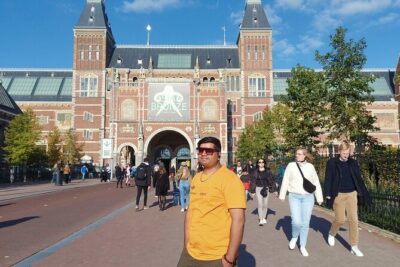
Dam Square is also a smart choice for a first stop. It’s the emotional and historical center of the city, tied to the origin story of Amsterdam around the Amstel River and the dam that helped the settlement grow. Starting there means you’re not dropped in the middle of a scene and left to guess what you’re seeing. You get a frame right away, then the streets tighten and the neighborhood history thickens.
For navigation, the tour’s offline features matter. The product includes offline content and an offline interactive map meant to help you avoid roaming charges. That’s important here because signal can be spotty in tight public areas. If you want the experience to feel smooth, download everything before you step off your comfortable, high-signal zone.
And yes, timing is part of the charm. The title says 1-hour, and that’s a realistic target if you press play, keep moving, and don’t linger too long at every doorway. I’d still plan a bit of buffer. Amsterdam rewards slow steps, and this area tempts you to pause for photos, to read street names, and to watch how locals move through the alleys.
What makes this Red Light District audio tour different
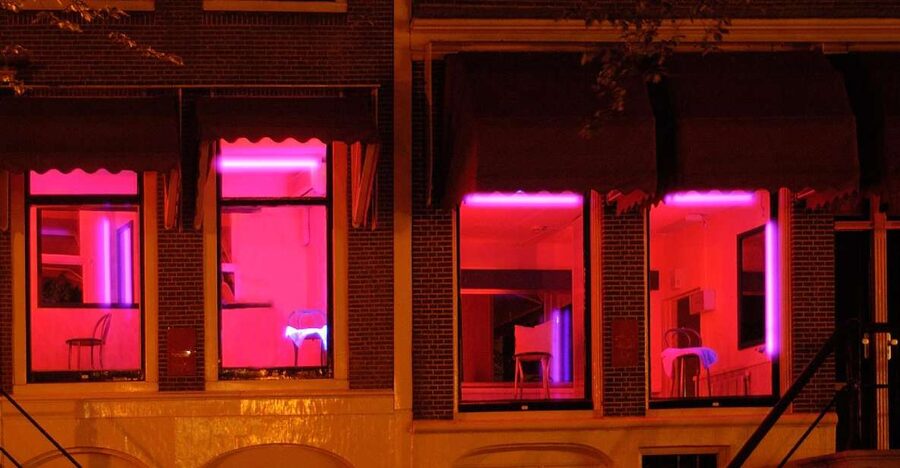
Most people know the Red Light District for one visual idea: shop windows. This tour chooses a different angle. It’s built around the neighborhood’s deep layers of history, guided by narration from your phone, focused on heritage rather than window-shopping.
That approach can be genuinely useful. You’ll notice how the area has always been part of Amsterdam’s urban brain: sailors, merchants, residents, and travelers all leave fingerprints on street layout and building use over time. When you get that context, the narrow lanes and old structures stop feeling random. They start making sense.
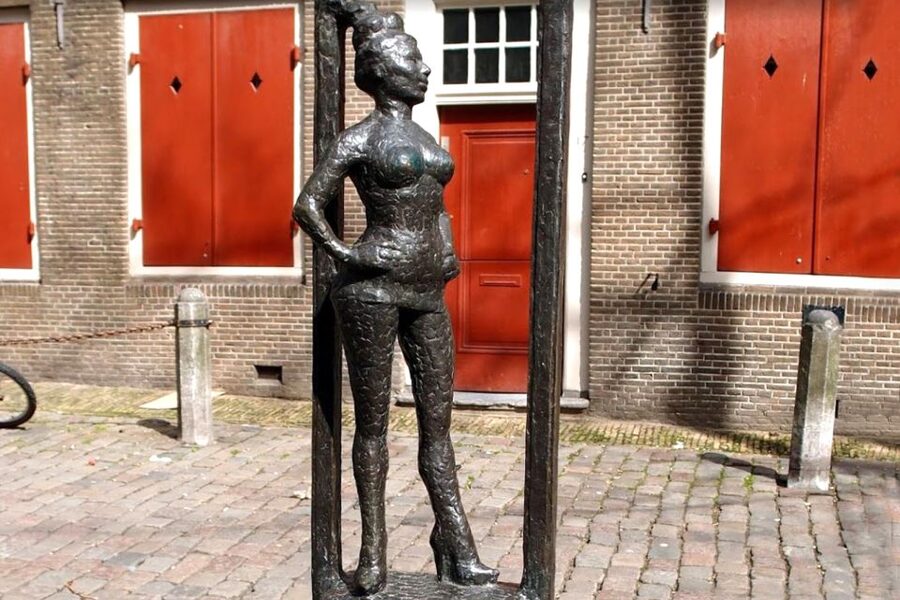
I also like the storytelling style described for the experience. It’s a fun, quirky concept, and it tries to stay respectful. Instead of turning everything into spectacle, it steers you toward meaningful symbols and specific buildings. It even calls out a small statue honoring sex workers’ rights: Belle. Whether you agree with the symbolism or simply want to understand the debate around the area, it’s the kind of detail you miss if you’re only scanning storefronts.
One more practical benefit: because it’s self-guided, you can spend extra time where the narration lands hardest for you. If a chapel story pulls you in, you can slow down there. If you’d rather skim through church history for the next alley connection, you can do that too.
A sensible pace through the oldest buildings and symbolic spots
The tour’s early stretch sets you up to understand the neighborhood as part of Amsterdam’s long timeline. You’ll move from the civic origin feel of Dam Square into the kind of street grid that’s old enough to feel organic, not planned.
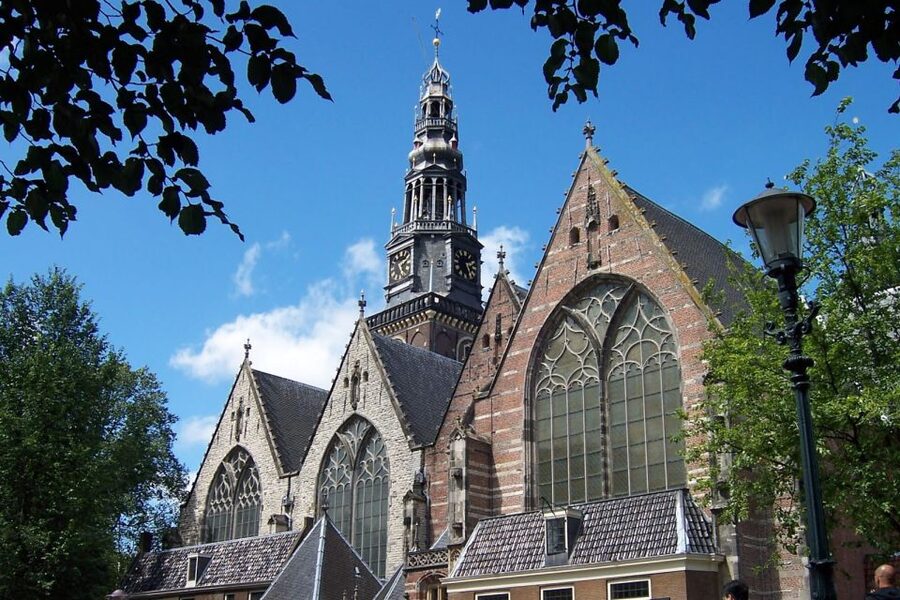
One of the big stops is Oude Kerk, described as Amsterdam’s oldest building. That matters because churches in this area aren’t just background. They signal how the city organized itself socially and spiritually, even while trade and migration constantly reshaped the streets.
Then there’s Belle, the small statue that honors sex workers’ rights. For many visitors, a symbol like this is both a history lesson and a conversation starter. You’re not being asked to accept one interpretation. You’re being told there is a history of rights, debate, and public visibility, and that this neighborhood carries political meaning as well as nightlife meaning.
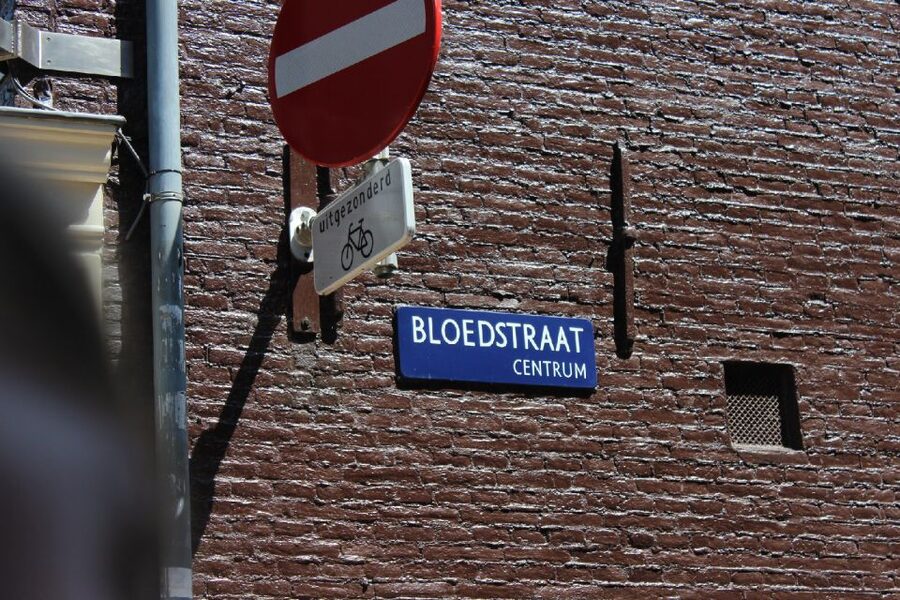
The narration also includes street and place names that sound like you should be hearing a story, not just reading a sign. Bloedstraat (Blood Street) is one example mentioned in the itinerary highlights. Even without going into private content, that kind of naming can clue you into how Amsterdam remembered events, people, and urban change.
And here’s where the offline format helps. You’re not constantly fiddling with data. You can focus on looking up at architecture, noticing where a street narrows, and getting comfortable with the walking rhythm.
Still deciding? A few more Amsterdam tours worth a look




Café In’t Aepjen: a pause that makes the neighborhood feel human
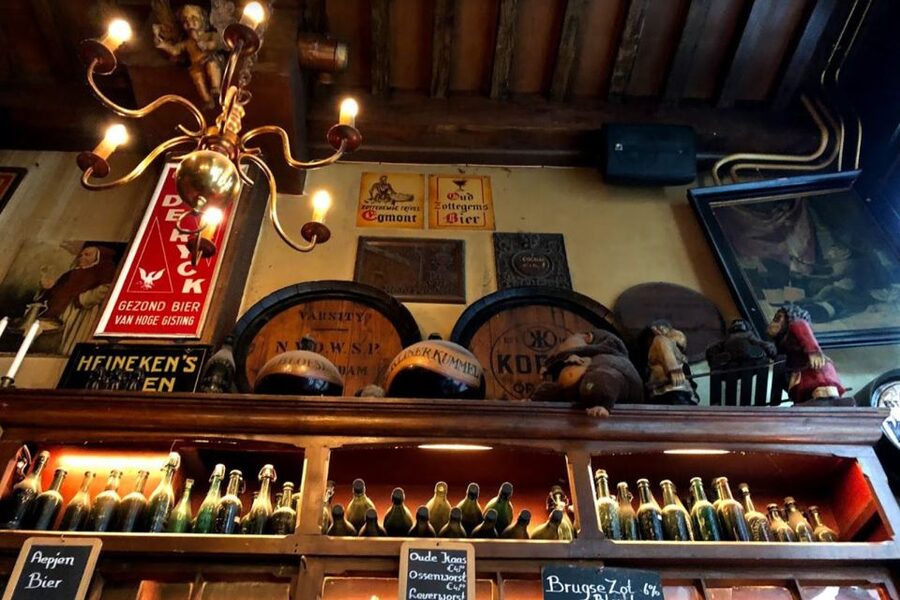
Not every audio tour includes a place where you can imagine everyday life. This one does, with Café In’t Aepjen called out as a highlight.
Even if you don’t stop for a drink (food and drinks are not included), the mention changes how you experience the streets. You start thinking beyond the hot-topic reputation and toward the idea that people have lived, worked, and socialized in this area for a long time. The Red Light District isn’t an empty stage. It’s a neighborhood with layers of routine.
This is also a good moment to regulate your pace. About 20–30 minutes into many self-guided walks, your feet start demanding decisions. If you feel you’re moving fast, this is a good time to slow down, listen carefully, and then continue when you’re ready.
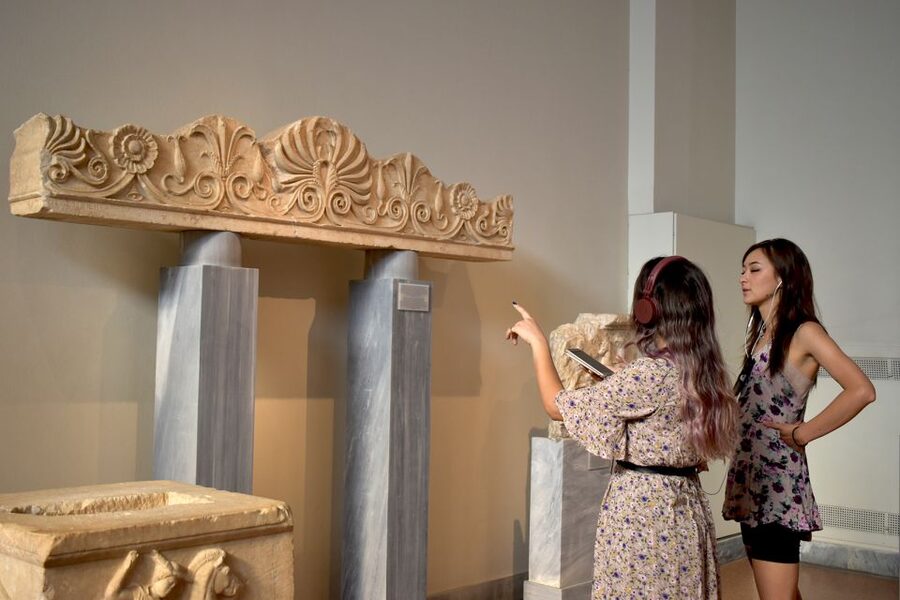
Since the tour is self-guided, you should still bring basic comfort gear. Headphones are not included, so pack them. You’ll want both a charged phone and a reliable audio volume so you don’t miss key points while you’re walking.
Ons’ Lieve Heer op Solder: the quietly wild address you’ll remember
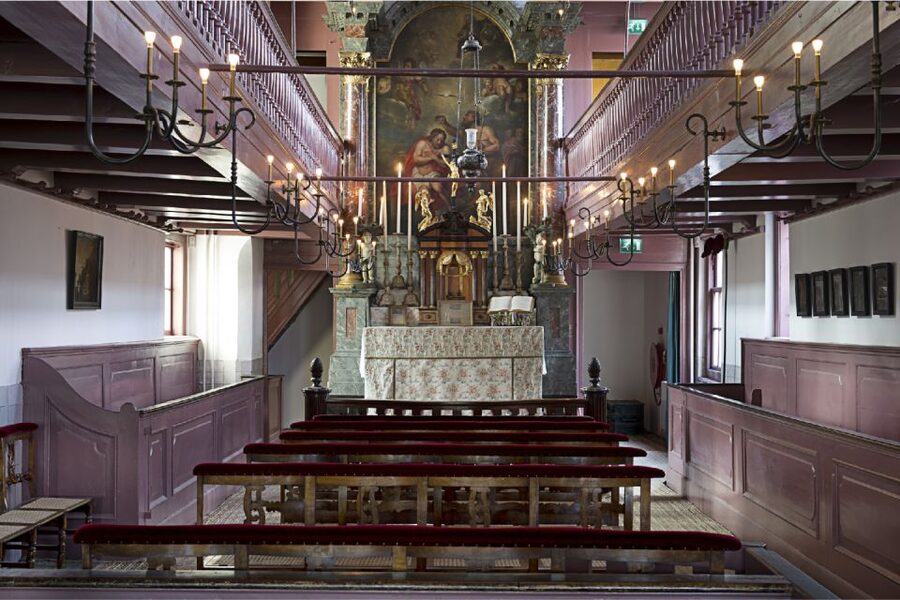
The tour’s highlight list includes Ons’ Lieve Heer op Solder, a chapel described as clandestine. That word choice matters. It sets you up for a building story that’s not just about faith, but about how people adapted when rules were stricter than they were comfortable with.
Even if you don’t go inside (site admission isn’t included), the narration can still make the place click. You’ll likely understand why a hidden chapel would be tied to power, tolerance, and survival. In Amsterdam, the “how did they manage that” factor is often the most satisfying part of history.
This is one of those stops where audio narration is better than a quick photo. Architecture tells a visible story. The narration adds the invisible one: what was happening socially, why people would hide something, and how the city’s identity evolves around those tensions.
Practical tip: if you want the audio to match what you’re seeing, stand still for a moment when the narration starts talking about a specific building. In busy street scenes, you can easily drift while listening. A one-minute stop can make the entire explanation land.
The route’s attention to sailors, merchants, and travelers
One of the most interesting aspects of this tour is that it names the kinds of people who shaped the area: sailors, merchants, residents, and travelers. That list may look simple, but it changes your walking lens.
When the narration frames the neighborhood as a crossroads, you start noticing details you’d otherwise ignore. Old street geometry becomes evidence of movement and arrival. Narrow alleys feel less like oddities and more like routes of daily life.
And this is where the small-group concept helps, even though you’re walking on your own timeline. The tour product limits participation (listed as up to 10 participants). In practice, that usually means you’re not dealing with huge crowd logistics. You can follow your audio prompts without being swallowed by a mass group.
If you prefer a calm, controlled experience in a place that can feel intense, this matters.
Ending at Nieuwmarkt and the Waag building: closure with meaning
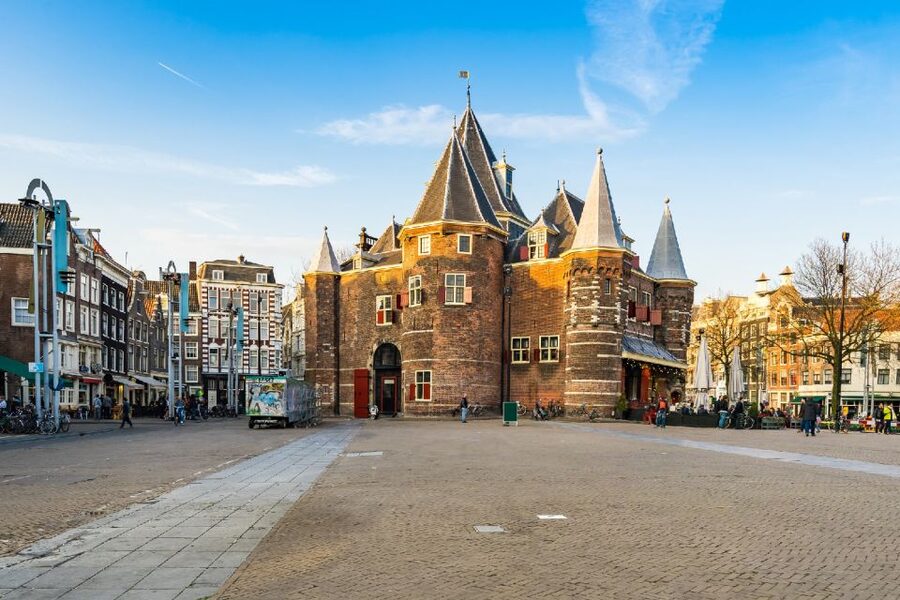
Your walk finishes at Nieuwmarkt, with the Waag building highlighted as a major endpoint. The narration explains the Waag’s changing roles: once a city gate, later a guildhall, now a symbol of Amsterdam’s evolving identity.
That arc is a great way to wrap up a tour. You start with the origin of Amsterdam’s urban story around Dam Square, then move through older sacred spaces, neighborhood symbols like Belle, and tucked-away chapels. By the time you reach Waag, the story shifts toward civic function and identity.
Nieuwmarkt also gives you an easy transition back into the normal city flow. Even if you don’t linger at the Waag, the area is where you can keep walking into other neighborhoods or connect to transit without feeling like you’re stuck at the edge of a tourist zone.
Just note one important limitation: tickets and entry into specific sites or museums are not included. The audio can guide you toward what to look for, but you’ll need to pay separately if you choose to enter.
Price and value: $7 for one-hour storytelling on your phone
At $7 per person, this is one of the cheaper ways to experience the Red Light District with context instead of just impressions. The value comes from the format: you get a self-guided route built around specific landmarks, delivered through offline audio and an offline interactive map.
What you’re not paying for matters, too. You’re not paying for a live guide. You’re not paying for site entrances. You’re not paying for headphones. But for the money, you are paying for structure: Dam Square start, Nieuwmarkt finish, and a set of stops that focus on heritage.
Think of it like this: if you can spare the one hour to walk and listen, you’ll likely come away with a better understanding than you’d get from drifting for an hour without narration. If you’re hoping for a sexually explicit explanation or a deep guided account of how prostitution works day-to-day, you might find the storytelling too centered on broader history.
That expectation mismatch shows up in the feedback quality: some people felt there wasn’t enough about the topic itself, and that the narration leaned heavily toward general city history and churches.
For me, that’s the core value call. This is a history-leaning, respectful audio walk. If that’s your match, $7 feels fair. If you want gossip-style detail, it’s probably overpriced emotional disappointment—at any price.
Practical nuts and bolts that can make or break it
This is an offline-friendly tour, but it’s still a smartphone experience. Here’s what I’d do so it works the way it’s supposed to.
Bring:
- Headphones (not included)
- A charged smartphone
Plan for:
- About 100–150 MB of storage space
- Phone compatibility checks: it requires an Android or iOS smartphone. It’s not compatible with Windows phones, and certain older devices (including iPhone 5/5C or older, iPod touch 5th gen or older, iPad 4 or older, and iPad mini 1st gen) are listed as not compatible.
Make offline happen:
- You might find internet access weak in public areas. Download the audio and the app content before you arrive.
Device rules:
- You book per device, not per participant. That means if you’re traveling with a group, each person likely needs their own device for their own audio.
After booking:
- You receive an email from the local partner with instructions to download/access the tour. Check spam too, because it sometimes lands there.
Also: the tour says it’s not suitable for children under 18. Keep that in mind if you’re traveling as a family.
Who should book this, and who should skip it
This tour fits best if you want:
- A self-guided walk with a clear start and finish
- A respectful, heritage-led interpretation of a famous neighborhood
- Specific architectural stops like Oude Kerk and Waag
- The convenience of offline audio so you don’t rely on shaky signal
You might skip it if you want:
- A very detailed, topic-heavy explanation of prostitution itself
- A live guide who can answer questions in real time
- Included headphones or included admissions
It’s also a good match if you like to walk your own pace. The narration format is built for you to control timing: pause when you want, keep moving when you don’t.
Finally, if you’re the kind of traveler who hates long tours with too much group management, self-guided audio in a compact area can feel more comfortable than a standard group walk.
Should you book the Amsterdam Red Light District 1-hour audio tour?
Book it if you want context. For $7, you’re getting a structured, offline-friendly route that names real landmarks and adds meaning to what you see on the street: Oude Kerk, Belle, Café In’t Aepjen, Ons’ Lieve Heer op Solder, Bloedstraat, and the Waag at Nieuwmarkt.
Skip it if your goal is detailed coverage of prostitution. Based on the tone and the highlighted focus (history and churches), this tour is more about Amsterdam’s neighborhood evolution than about explaining the sex industry in depth.
My practical bottom line: treat it like a history walk with respectful storytelling, not a documentary substitute. If that matches your curiosity, it’s a solid, low-cost way to understand a complicated corner of the city.
FAQ
Where does the audio tour start?
The tour starts at Dam Square. There is no meeting point.
Where does the tour end?
It ends in the Nieuwmarkt area at the Waag building.
How far is Dam Square from Amsterdam Centraal?
Dam Square is listed as a nine-minute walk from Centraal station.
What’s included with the ticket?
You get a self-guided smartphone audio tour, an activation link, and offline content with an offline interactive map.
Are museum or site entry tickets included?
No. Tickets or entry to specific sites or museums are not included.
What languages are available?
The audio tour is available in English, German, and Italian.
Do I need headphones?
Yes. Headphones are not included, so you should bring them.
How much space does the tour require on my phone?
The required storage space is listed as 100–150 MB.
Is the audio tour available if I have no mobile signal?
It’s designed for offline use. The instructions note that signal can be weak, so you should download before you go.
Is there a live guide?
No. This is a downloadable self-guided audio tour with no live guide.
Is the tour suitable for children?
No. It is listed as not suitable for children under 18.
More Tours in Amsterdam






More Tour Reviews in Amsterdam






The Red Light District After Dark




Just added: fresh Amsterdam tour reviews





Red Light District Tours, compared.
 ★ 4.9Red Light District Tour in DE/EN/IT/ES/FRFrom $287,136 reviews
 ★ 4.2Red Light Secrets Museum Entry TicketFrom $175,722 reviews
 ★ 4.6Amsterdam Red Light District & Coffee Shop TourFrom $294,134 reviews
 ★ 4.1Red Light District Pub Crawl with Unlimited ShotsFrom $242,130 reviews
 ★ 4.5Amsterdam Red Light District Pub CrawlFrom $241,497 reviews
 ★ 4.6Red Light District Tour in English or GermanFrom $341,228 reviews
 ★ 4.1After Dark Red Light District TourFrom $571,030 reviews
 ★ 5.0Private Amsterdam Red Light District and Coffee Shop TourFrom $41763 reviews
Browse the lists this tour appears in