
Reviewed · CANAL CRUISES
Amsterdam Sightseeing Canal Cruise with Audio Guide
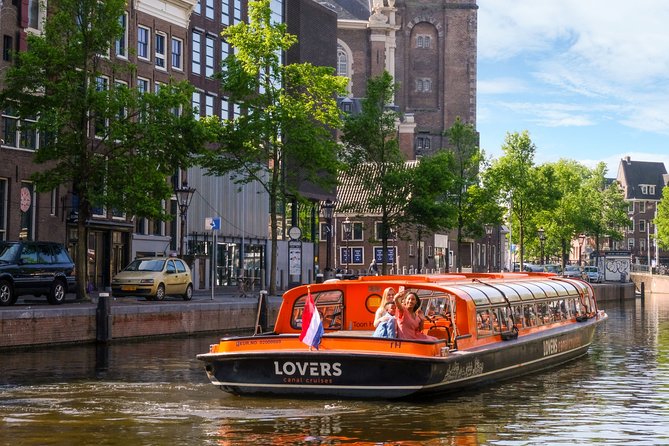
Canals in Amsterdam feel like a shortcut to the city. This 1-hour canal cruise gives you a glass-topped view of the canal belt, plus an audio guide that explains what you’re seeing as you move.
I especially like how the route hits multiple top sights in one go, including the Anne Frank House area and the Magere Brug, without you walking all day. I also like the flexibility: you can start from one of four departure points to match your itinerary, then finish back where you began.
The big trade-off is that the boat is covered and the window structure can limit photos and sightlines. Audio quality can also depend on noise levels and how well the headsets work.
In This Review
- Quick hits before you go
- How the glass-roof canal cruise moves you through Amsterdam
- Value for $16.74: what you’re really buying
- Choosing your departure point: Central Station, Anne Frank House, Rijksmuseum, Leidse Square
- Onboard comfort and audio: headsets, windows, and noise
- The UNESCO canal belt route: Keizersgracht, Herengracht, and Prinsengracht
- Keizersgracht: the widest canal with merchant power
- Herengracht: the elite canal people actually wanted
- Prinsengracht: the prince’s canal during Amsterdam’s big expansion
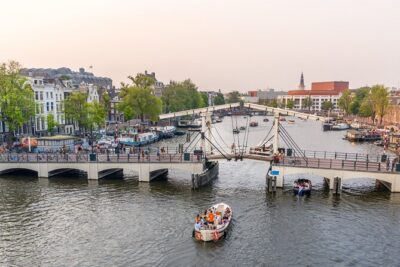
- Magere Brug and the Amstel River: the Skinny Bridge moment
- Anne Frank Huis and Westerkerk: history near the water
- Nine Straatjes and De Wallen: two very different neighborhoods from the canal
- 9 Straatjes: narrow streets, boutiques, and cafés
- De Wallen (Red Light District): old harbor roots to today’s regulated area
- Museum and waterfront beats: Rijksmuseum, Scheepvaartmuseum, NEMO, and Het IJ
- Rijksmuseum: Pierre Cuypers and the national art hub
- Scheepvaartmuseum: maritime history in a 17th-century warehouse
- NEMO Science Museum: Renzo Piano’s ship-like building
- Het IJ: from North Sea connection to today’s waterfront
- Bloemenmarkt: the floating flower market passing by on the Singel
- What I’d pack and how I’d time it
- Is this canal cruise worth booking for your trip?
- FAQ
- How long is the Amsterdam sightseeing canal cruise?
- What’s the price per person?
- Is the audio guide included, and what language is available?
- Do I need hotel pickup?
- Where can I start the cruise?
- When should I check in?
- How big is the group on the boat?
- Is food or drinks included?
- What weather does the cruise require?
- What’s the cancellation policy?
Quick hits before you go
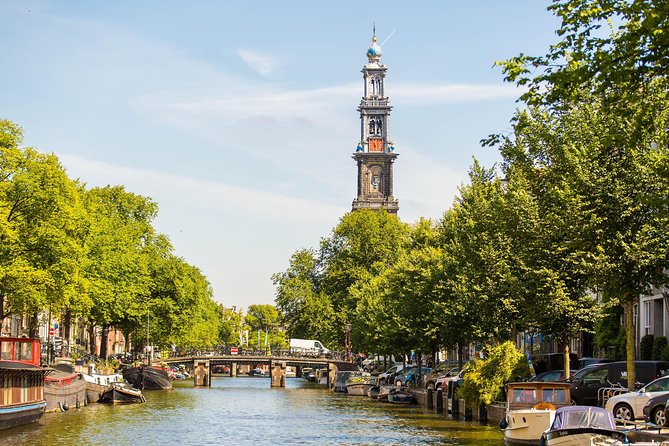
- Glass roof viewing: A lot easier to see canal houses and bridges up close than on lower open decks.
- Four departure points: Central Station, Anne Frank House, Rijksmuseum, or Leidse Square—pick what fits your day.
- UNESCO canal belt coverage: You get the merchant-canal story in a short, practical loop.
- Magere Brug and the Amstel River: A classic Amsterdam “photo moment” from the water.
- Audio guide in English (plus other languages): You can keep pace without a live guide holding the mic.
- Max 60 people: Still feels like a group, but not a massive crowd on the water.
More time on the water: other Amsterdam canal cruises
- Amsterdam Luxury Canal Cruise + Unlimited Drinks & Bites option
★ 5.0 · 30,518 reviews - Amsterdam: Heated Canal Cruise with Unlimited Drinks & Bite
★ 4.5 · 21,431 reviews - Amsterdam: 75 Minute City Canal Cruise with Audio Guide
★ 4.4 · 19,938 reviews - Amsterdam: City Centre Canal Cruise including Audioguide
★ 4.3 · 16,901 reviews
How the glass-roof canal cruise moves you through Amsterdam
This is a straightforward Amsterdam sightseeing canal cruise with an audio guide, designed for one thing: getting you great views fast. You show up at one of four departure points, board a glass-topped boat, and follow the narrated route for about an hour.
Because it’s an audio guide instead of a live script, you control your attention. If you’re the type who likes to look first and listen second, this format works well—you can keep your gaze on bridges, canal houses, and waterfront details while commentary fills in the context.
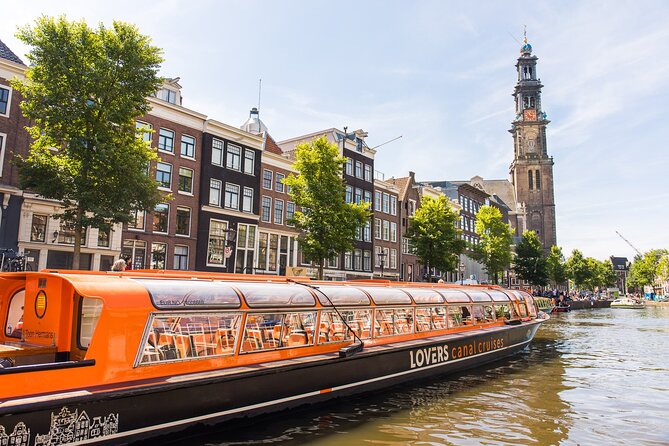
The boat itself matters for comfort. Many rides are warm enough to feel cozy (especially in cooler weather), and you may have the option to open a window depending on the boat and conditions. Just don’t expect a totally open-air experience.
Value for $16.74: what you’re really buying
At $16.74 per person for roughly an hour on the water, the value is mainly in time and convenience. You’re paying for a concentrated “overview loop” where major sights cluster close together along the canal network.
If your schedule is tight, a canal cruise can be one of the most efficient things you do in a city like Amsterdam. You’re not only sightseeing—you’re also getting orientation. After an hour on the canals, you tend to understand where neighborhoods sit and how the canal belt connects.
You’re also paying for an included audio guide in English. You don’t need data roaming or app setup. You just plug in and let the route talk you through what you see.
Choosing your departure point: Central Station, Anne Frank House, Rijksmuseum, Leidse Square
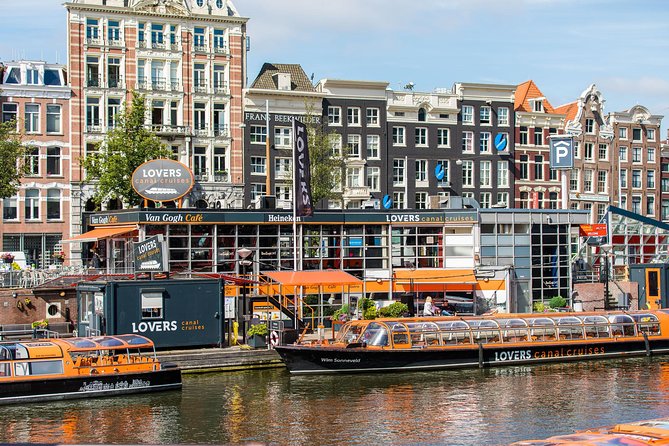
You can start at Central Station, the Anne Frank House area, the Rijksmuseum area, or Leidse Square. That’s a big deal in Amsterdam, because walking between major sights can add up quickly.
Here’s how I’d choose:
- Central Station works when you want a simple start near a transit hub and plan to keep moving afterward.
- Anne Frank House makes sense if your day is already centered around that historic area and you don’t want to backtrack.
- Rijksmuseum is a smart match for art-first days, especially if you plan to visit museums after.
- Leidse Square fits well if your itinerary is leaning toward cafés, nightlife areas, and a more central “evening stroll” vibe.
One practical note: check in at Lovers about 10 minutes before your reserved time. Also, on busy days with major events, the operator may direct you to a different departure point. Build a little buffer so you’re not rushing at the last minute.
Cover more ground: other Amsterdam sightseeing passes
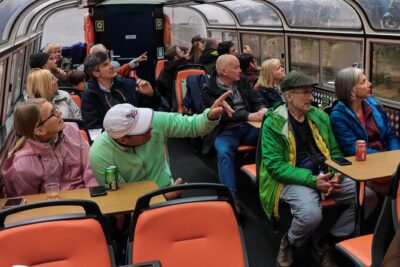
Onboard comfort and audio: headsets, windows, and noise
Let’s talk reality, not brochure promises.
The cruise is on a glass-roof boat, which is great for visibility—until you run into the window frame structure. Several people found that the overhead windows reduce the view for photos and some landmark spotting. If you’re picky about pictures, know that open-top boats often make photography easier.
Audio quality is usually a plus, but it’s not bulletproof. Some riders reported that headsets didn’t work well or they missed parts of the narration. Others described a noisy boat experience where children or loud conversations made it difficult to hear the recorded commentary.
What you can control:
- Sit where you have the clearest line of sight through the glass.
- Keep your headset volume up enough to cut through background sound.
- If it’s a lively day, plan to treat the audio as your background layer, not perfect narration.
Also, captains sometimes add extra info through announcements. Some people love that. If you’re trying to focus on the audio guide, the mix of announcements plus headset narration can feel distracting at times.
The UNESCO canal belt route: Keizersgracht, Herengracht, and Prinsengracht
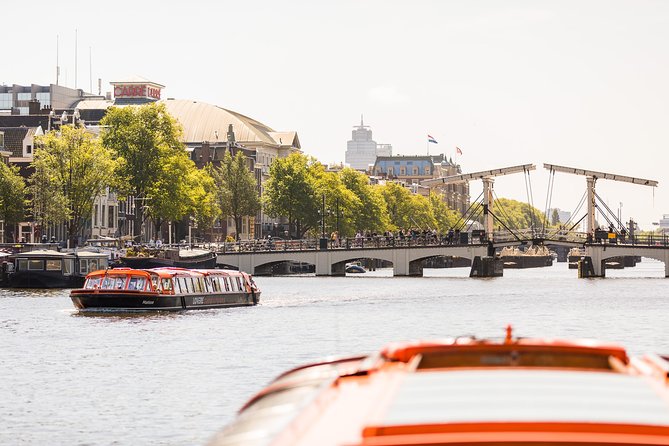
Most of the route follows Amsterdam’s famous canal belt, and the audio guide gives you the “why it matters” behind three key canals.
Keizersgracht: the widest canal with merchant power
As you glide along Keizersgracht, you’ll learn it was built in 1612 and was the widest of the main canals in the canal belt. The commentary also connects it to Amsterdam’s growth in wealth and trade, which helps you read the grand merchant houses along the water.
If you like architecture, this is the kind of segment where the narration really helps. Without it, canal houses can blend into each other visually. With it, you start noticing differences in scale and status.
Herengracht: the elite canal people actually wanted
Next comes Herengracht, dug in 1612 as the most prestigious canal. The audio describes it as lined with stately mansions, often called the Golden Bend.
This is a good moment to look at symmetry, building widths, and how the canal edge forms a boundary between street life and waterfront wealth. Even in a covered boat, you should get plenty of visual cues here.
Prinsengracht: the prince’s canal during Amsterdam’s big expansion
Then Prinsengracht enters the story as one of Amsterdam’s main canals, dug in the early 17th century during the major expansion of the Grachtengordel project. The name ties to the Prince of Orange, and the route frames it as a desirable residential area with elegant canal houses and cultural landmarks.
By the time you reach Prinsengracht, you usually feel you understand the canal belt layout. In a single hour, that’s a win.
Magere Brug and the Amstel River: the Skinny Bridge moment
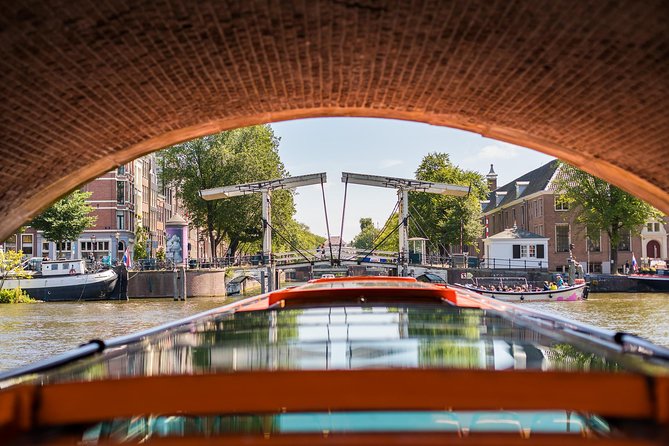
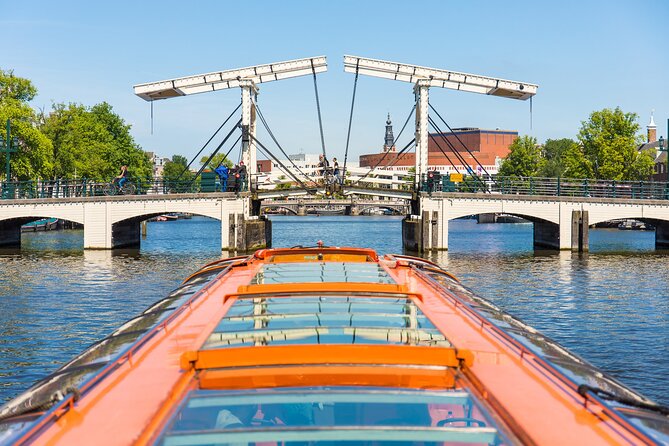
You’ll pass the Amstel River and the historic Magere Brug, also known as the Skinny Bridge. This is one of those Amsterdam sights that looks instantly familiar once you see it.
The bridge was originally built in 1691 and rebuilt in 1934 in the traditional style. The commentary also points out its nightly illumination, which is exactly why it becomes such a popular photo stop.
Even if your photo skills are average, this section is visually rewarding because the bridge spans the water in a way that frames the canal view. If it’s nighttime or evening light, the bridge lighting can do a lot of the work for you.
The trade-off is that on a busy boat or if the windows create glare, you may have to angle yourself to avoid reflections.
Anne Frank Huis and Westerkerk: history near the water
This is where the cruise becomes more than sightseeing photos.
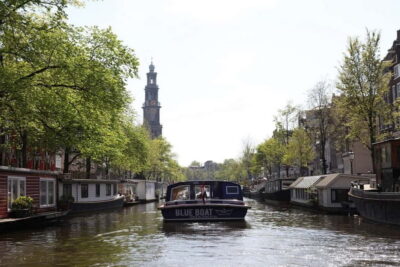
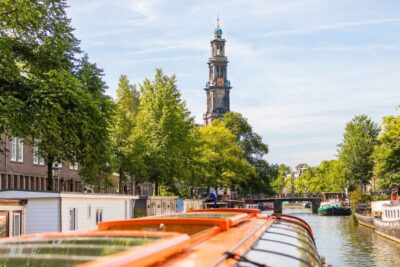
You’ll cruise in the area of Anne Frank House (Anne Frank Huis). The audio also connects nearby landmarks, including Westerkerk (Western Church). Westerkerk was completed in 1631 and is known for the Westertoren, its tall ornate tower.
In practical terms, this means you’re getting a guided “spotting list” while you slide past. You don’t have to decide in advance what to prioritize on foot, and you get a sense of how close key historic sites sit to the canal system.
One thing to keep in mind: because this area can be busy on land, the canal perspective can feel calmer. You’re still in the city, but you’re moving, which changes the mood.
Nine Straatjes and De Wallen: two very different neighborhoods from the canal
Amsterdam’s charm comes in layers, and this cruise hints at two distinct ones.
9 Straatjes: narrow streets, boutiques, and cafés
The audio highlights De 9 Straatjes (Nine Streets), described as a set of nine narrow streets in the canal belt known for unique boutiques, vintage shops, and cozy cafés. Even from the water, you can get a sense of the area’s tight, walkable scale.
If you’re the type who likes to browse, this is a useful teaser. You’ll likely want to get off later and explore on foot.
De Wallen (Red Light District): old harbor roots to today’s regulated area
Then there’s De Wallen, Amsterdam’s Red Light District, described as dating back to the 14th century when it served as a harbor area. The commentary frames today’s version as a regulated zone with historic buildings, legalized sex work, and a mix of tourism, nightlife, and cultural heritage.
This section can feel intense depending on your preferences. From the canal, you’ll see it at a distance, which can make the atmosphere easier to handle. Still, if this topic makes you uncomfortable, it’s smart to know it’s part of the route coverage.
Museum and waterfront beats: Rijksmuseum, Scheepvaartmuseum, NEMO, and Het IJ
The cruise doesn’t only cover the “pretty canal” part of Amsterdam. It also points at the city’s museums and maritime identity.
Rijksmuseum: Pierre Cuypers and the national art hub
You pass by Rijksmuseum, designed by Pierre Cuypers and officially opened in 1885. The commentary notes its blend of Gothic and Renaissance elements and that it houses the Netherlands’ national art and history collection.
If you’re considering a museum day, this cruise helps you decide whether you want the big-ticket art experience. Seeing the building area from the water gives you a quick sense of how prominent the museum precinct is.
Scheepvaartmuseum: maritime history in a 17th-century warehouse
The route includes Scheepvaartmuseum, located in a historic 17th-century warehouse. It’s devoted to Dutch maritime history, with ships, maps, and nautical artifacts, and it was renovated in 2011.
This part is great if you like stories of trade and travel. Amsterdam’s canal system isn’t just decoration—it grew around water-based life. This museum segment gives that idea a concrete anchor.
NEMO Science Museum: Renzo Piano’s ship-like building
You’ll also hear about NEMO Science Museum, designed by Italian architect Renzo Piano and opened in 1997. The audio description includes its iconic green, ship-like structure rising above the Oosterdok.
If you’re traveling with kids or you just like hands-on learning vibes, this stop is a helpful mental bookmark. It’s the kind of museum you might choose for a rainy day.
Het IJ: from North Sea connection to today’s waterfront
Finally, the route brings you toward Het IJ, described as a body of water and former bay that connects Amsterdam to the North Sea. Today it’s framed as a lively waterfront area with ferries, cultural venues, and recreational activities.
This segment ties back to why Amsterdam looks the way it does. Water isn’t a backdrop here. It’s infrastructure, history, and daily life.
Bloemenmarkt: the floating flower market passing by on the Singel
The cruise includes Bloemenmarkt, established in 1862. The commentary calls it the world’s only floating flower market, with stalls set on houseboats along the Singel canal.
This is one of those stops that feels simple but memorable. Even from a boat, you get the idea that Amsterdam turns commerce into something visible and playful. If you like bulbs and seasonal souvenirs, it’s the kind of place you might want to revisit after your cruise.
What I’d pack and how I’d time it
You don’t need a complicated plan, but a few choices will make your hour better.
Bring:
- A light layer. Even “warm and cozy” can turn chilly once the wind finds a gap.
- A phone camera strap or steady grip. Window frames and reflections can test your patience.
- Sunglasses if glare is an issue through the glass.
Timing tip:
- If it’s your first day, do this early. It gives you bearings fast.
- If you’re doing evening plans, consider a nighttime run. The bridge lighting and canal views can look extra good after dark.
Is this canal cruise worth booking for your trip?
Yes, for the right trip style.
Book this Amsterdam canal cruise if you want a low-effort overview of multiple major sights in about an hour, with an English audio guide included. It’s a strong choice when you’re balancing museum tickets, long walking days, and still want to see the canal belt.
Skip or rethink it if you care most about photography and need a totally open deck. Also, if your ideal tour is silent, pick a calmer time. Between noise and headset quirks, the audio experience depends on how the boat is running that day.
If you want a practical first-time city win, this is a solid bet—especially once you know what to watch for through the glass.
FAQ
How long is the Amsterdam sightseeing canal cruise?
It runs for about 1 hour.
What’s the price per person?
The price listed is $16.74 per person.
Is the audio guide included, and what language is available?
Yes. The audio guide is included and is offered in English (and several languages).
Do I need hotel pickup?
No, there’s no hotel pickup or drop-off included.
Where can I start the cruise?
You can make your own way to one of four departure points: Central Station, Anne Frank House, Rijksmuseum, or Leidse Square.
When should I check in?
Check-in is at Lovers about 10 minutes before your reserved time.
How big is the group on the boat?
The maximum group size is 60 travelers.
Is food or drinks included?
No food or drinks are included.
What weather does the cruise require?
It requires good weather. If it’s canceled due to poor weather, you’ll be offered a different date or a full refund.
What’s the cancellation policy?
You can cancel for a full refund up to 24 hours in advance of the experience start time, based on local time.
More Tour Reviews in Amsterdam

See More in a Day
Back on the Canals: More Amsterdam Cruises


Just added: fresh Amsterdam tour reviews




Canal Cruises, compared.
 ★ 5.0Amsterdam Luxury Canal Cruise + Unlimited Drinks & Bites optionFrom $1830,518 reviews
 ★ 4.5Heated Canal Cruise with Unlimited Drinks & BiteFrom $1821,431 reviews
 ★ 4.475 Minute City Canal Cruise with Audio GuideFrom $1819,938 reviews
 ★ 4.3City Centre Canal Cruise including AudioguideFrom $1716,901 reviews
 ★ 4.7Covered Canal Booze Cruise with Unlimited DrinksFrom $185,435 reviews
 ★ 5.0Amsterdam Canal Cruise in Open Boat with Unlimited Drinks OptionFrom $214,976 reviews
 ★ 5.0Amsterdam Newest Canal Cruise with local guide and small groupFrom $214,735 reviews
 ★ 4.6Van Gogh Museum Ticket and City Canal CruiseFrom $473,899 reviews
Browse the lists this tour appears in