
Reviewed · WALKING TOURS
Amsterdam City Center & History – Exclusive Guided Walking Tour
Amsterdam starts clicking after this walking loop. This exclusive guided city-center walk strings together big architectural landmarks and everyday canal details, so you get history that actually helps you navigate. I like the way the guide turns the sights into a map in your head, not just a list of stops, and you finish with practical ideas for what to do next.
I also love the energy behind it. The guides named in real bookings (Anita, Diana, and Pedro) are praised for staying upbeat and keeping the group moving, even with rain and wind—useful in a city where plans can change fast. One possible drawback: a number of stops are quick exterior looks, and some sights have admission not included, with limited interior access at places due to security.
In This Review
- Key things I’d watch for before you go
- A 2.5-hour Amsterdam primer that feels built for Day One
- Meeting at Prins Hendrikkade, finishing at Papeneiland (and why that matters)
- St. Nicholas Basilica and the Weeping Tower: faith, rules, and departures by ship
- Zeedijk, Nieuwmarkt, and De Waag: the sea wall, the market square, and a former city gate
- Trippenhuis and the Dutch East India Company: merchant power in real brick and wood
- Zuiderkerk, Rembrandthuis, and Stopera: Protestant ambition, artist days, and 60 years of planning
- Golden canals and gable stones: Dam Square to Herengracht to the Anne Frank corner
- Begijnhof and hofjes: quiet courtyards that slow your pace
- Noorderkerk and the final canal corner at Papeneiland
- Should you book this Amsterdam City Center & History walk?
- FAQ
- How long is the Amsterdam City Center & History guided walking tour?
- Is the tour offered in English?
- Is this tour private for just your group?
- Do I need to buy admission tickets for the stops?
- Does the tour run in bad weather?
- Can I cancel for a full refund?
Key things I’d watch for before you go
- A very focused, 2.5-hour route through the city center, so you don’t lose time zigzagging.
- Insider orientation at the stops, plus lots of tips for what to explore after.
- Private feel for your group (and guide attention is affected only if you pick the semi-private option).
- Weather-ready planning: it runs rain or shine, and the route can be adjusted for national celebrations.
- Architecture on foot: city gates, canal locks, church towers, and gable stones you can’t easily spot on your own.
- A sweet ending at Papeneiland, a brown café from 1642, said to serve the best apple pie in town.
More of Amsterdam street by street, on foot
- Amsterdam Anne Frank: Small-Group Walking Tour & Local Guide
★ 4.8 · 12,789 reviews - Anne Frank’s Story – Guided Walking Tour through Amsterdam
★ 5.0 · 11,619 reviews - Absolutely Amsterdam – the Essential Introductory Walking Tour
★ 5.0 · 3,629 reviews - Amsterdam: Anne Frank Guided Walking Tour in DE/EN/IT/ES
★ 4.9 · 3,107 reviews
A 2.5-hour Amsterdam primer that feels built for Day One
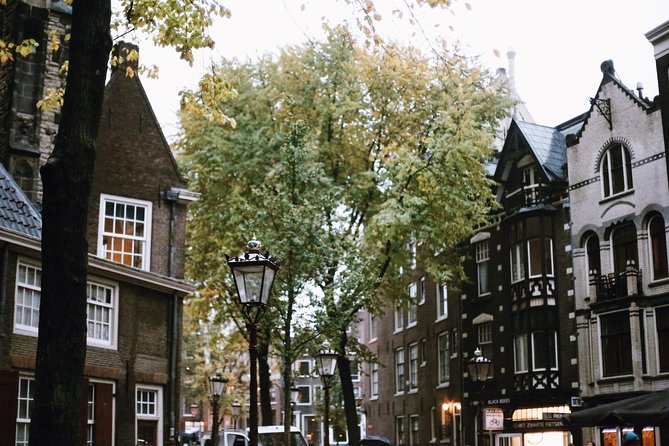
This is the kind of walking tour that works best when you’re still figuring out where everything sits. For $62.48 per person, you’re paying for a guide to give you a structure: what to notice, how neighborhoods connect, and which sights matter more than you’d guess from photos. At about 2.5 hours, it’s long enough to feel like you gained something, but short enough that you still have energy for canals, museums, and dinner afterward.
The value improves because it’s not just “point and look.” The tour is designed to explain why Amsterdam looks the way it does—religion, trade, wealth, and city planning all show up in the buildings. You also get a handoff of next-step advice: you leave with plenty of tips for where to go and what to see while you’re in the mood.
Two practical notes matter. First, this runs rain or shine, so wear shoes you’re willing to get a little muddy (Amsterdam weather has opinions). Second, you’re walking with a moderate fitness level requirement—so if you don’t like long foot time, pack a slower day for museums and keep this as your “move and learn” block.
Meeting at Prins Hendrikkade, finishing at Papeneiland (and why that matters)
The tour starts at Prins Hendrikkade 73, 1012 AD and ends at Papeneiland, Prinsengracht 2, 1015 DV. That start-to-finish flow helps you end in a classic canal corner area, not back where you began. In plain terms: you’ll walk into the day, then walk out near a place where you can keep exploring without backtracking.
Since there’s no hotel pickup or drop-off, plan your arrival like you would for any punctual city walk. The recommendation is Uber or taxi, which makes sense because Amsterdam’s canals can turn “two blocks away” into “five stops on foot” in bad weather. If you rely on public transit, it helps that the meeting point is noted as near public transportation.
Also, bring the basics the operator flags: comfortable shoes, a water bottle, and an umbrella if rain is in the forecast (and a hat in summer). And yes, skip large bags or suitcases. You’ll thank yourself when the route gets tight near older streets and courtyards.
St. Nicholas Basilica and the Weeping Tower: faith, rules, and departures by ship
The first stop is St. Nicholas Basilica, Amsterdam’s primary Roman Catholic church. It was built in the late 19th century after centuries of prohibition, which gives you a quick lesson in how religion was treated here—and how the city’s tolerance shifted over time. The building’s architectural mix reflects that change, so you’re not just seeing a landmark; you’re seeing a timeline.
From there you head toward the Schreierstoren, also called the Weeping Tower. This medieval structure is tied to a very human story: women bid farewell to loved ones departing by ship. You’re outside, but the meaning is the point. It’s one of those details that makes you look up at stonework and think about what happened there daily, not just how it looks in a brochure.
A consideration: the admission for the Weeping Tower isn’t included, and the stop is short. If you’re the type who loves lingering inside museums, keep in mind this tour is about walking, orientation, and quick historical context—so you’ll want separate plans for ticketed attractions.
More trips where a local runs the whole day



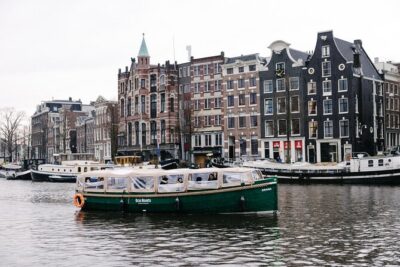
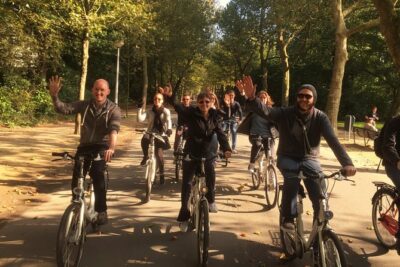
Zeedijk, Nieuwmarkt, and De Waag: the sea wall, the market square, and a former city gate
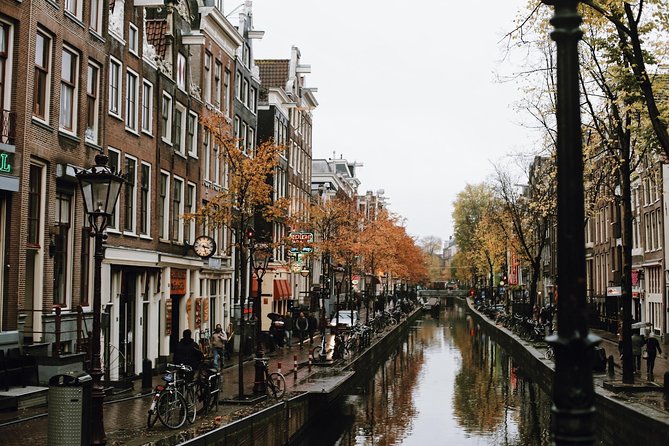
Zeedijk is a strong early stop because it explains why Amsterdam exists where it does. You’ll stroll along one of the city’s oldest streets, once a sea dike that held back the waters of the IJ. That’s not trivia. It helps you understand why so much of the city is shaped by water management.
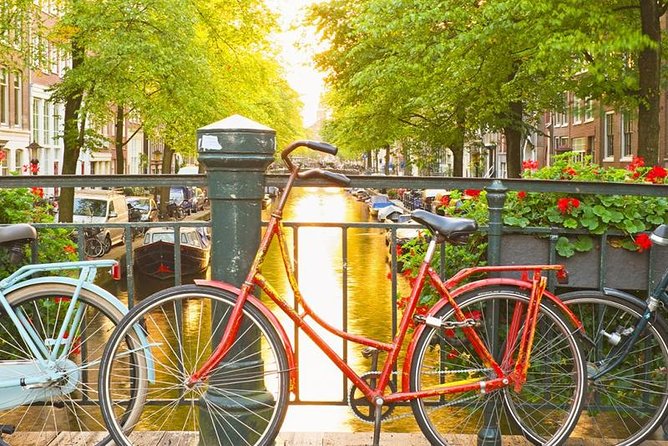
You’ll also see the Kolksluis, one of the city’s picturesque lock bridges. This is where the city’s engineering becomes part of the scenery. If you’re the kind of person who wonders how the canals actually work, this is the spot that makes the system feel real.
Next comes Nieuwmarkt, described as a lively nightspot and market square in the old city center. The reason it matters: it’s been a center for commerce and socializing since the 17th century, helped by its location just inside the old city gate. You get a sense of how trade and everyday life overlapped.
During the Nieuwmarkt section, you’ll also see De Waag, a 15th-century building that’s one of Amsterdam’s oldest remaining non-religious structures. It started as a city gate and part of the walls, then served as a guildhall, museum, and firestation. That range of uses is a clue to Amsterdam’s mindset: institutions change, but buildings keep getting reused.
A tip for your own pacing: because several of these stops are quick, listen closely when your guide points out what to look for on façades and street corners. This is where you’ll start spotting patterns that show up again later in the walk.
Trippenhuis and the Dutch East India Company: merchant power in real brick and wood
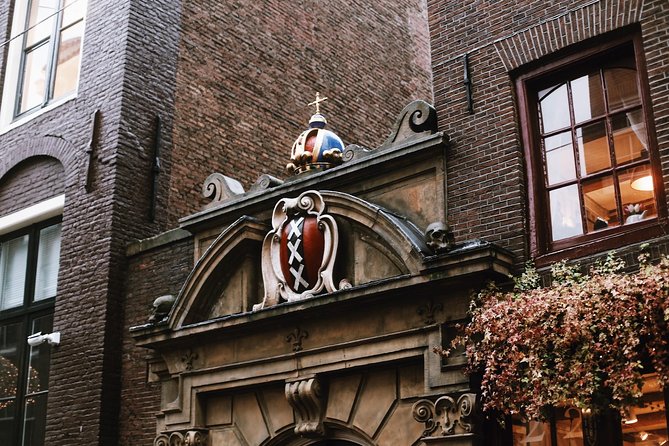
Amsterdam’s wealth didn’t arrive by accident. It shows up in buildings—and this tour points you straight to the evidence.
You’ll look at the Trippenhuis, labeled as Amsterdam’s grandest 17th-century mansion, once owned by the wealthy Trip family. Opposite it is the city’s smallest house, and the contrast is the lesson: Amsterdam’s architecture can be about status, land economics, and city rules at the same time.
Nearby, you’ll also spot the Kleine Trippenhuis, one of the narrowest houses in Amsterdam. The explanation you get is practical and memorable: high land taxes pushed construction upward, leading to tall, narrow shapes. That’s a detail you’ll never get from a postcard because it’s really about policy and money.
Then you move to the Oost-Indisch Huis, the Dutch East India Company’s headquarters. The tour gives you the big claim tied to the courtyard: it’s described as the birthplace of the world’s first multinational corporation. Whether you care about business history or not, it’s still a useful lens for Amsterdam. Trade isn’t separate from architecture here—it’s the reason you see grandeur in the first place.
For this area, pay attention to what’s said about access. Some stops note admission not included, and interior access can be limited due to security measures. So think of these sections as exterior architecture study with context, not a “walk into everything” experience.
Zuiderkerk, Rembrandthuis, and Stopera: Protestant ambition, artist days, and 60 years of planning
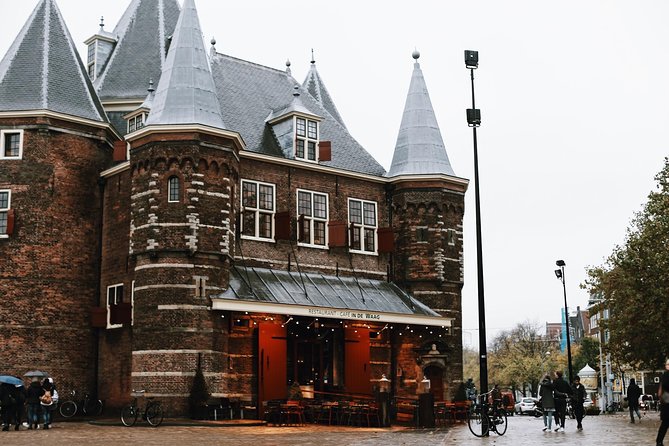
Churches and cultural buildings land in the middle of the walk for a reason: they show how Amsterdam organized belief, art, and civic life.
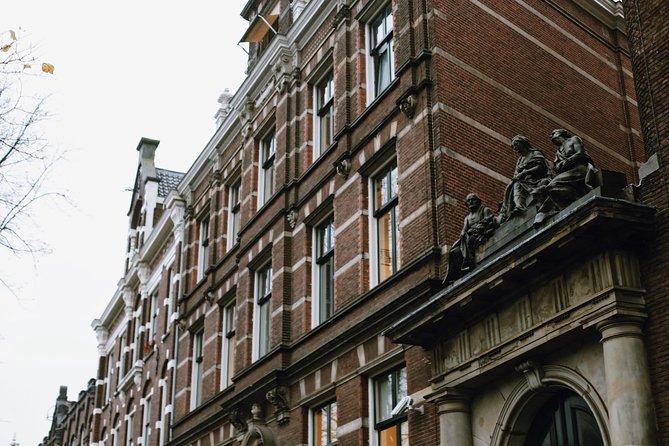
You’ll see Zuiderkerk, Amsterdam’s first purpose-built Protestant church, designed by Hendrick de Keyser. The landmark is the tower, and the guide context helps you connect the Protestant movement with city design—church architecture wasn’t just religious; it was a statement of civic identity.
Next is Museum Het Rembrandthuis, Rembrandt’s former home and studio, where he lived and worked for nearly 20 years. Even if you’re not going in, this is one of the stops where you’re likely to want a longer visit later. The quick orientation helps you understand why the building matters.
From there you’ll reach the Stopera complex: the National Opera & Ballet housed alongside the city hall. The construction is described as taking at least 60 years. That detail changes how you see it. This isn’t just a pretty building; it’s the result of long political and cultural planning.
A practical reality: several of these spots have admission not included. This tour is still worth it because the guide’s explanations help you decide what’s worth ticket money on a future day. If you go in with a list, you waste less time.
Golden canals and gable stones: Dam Square to Herengracht to the Anne Frank corner

Amsterdam’s center loves to throw iconic moments at you close together, so the guide’s job becomes helping you sort what you’re seeing.
At Dam Square, you get the historic heart of the city framed by the Royal Palace, the 15th-century New Church, and the National Monument to WWII victims. It’s the kind of place that can feel like a photo stop. With a guide, it turns into a story about what the city chose to build at its core—and what it chose to remember.
Then you’ll head toward Herengracht, focusing on the “Golden Bend,” lined with some of the richest and most ornate canal mansions from the Dutch Golden Age. You’re not touring museums here. You’re learning to read wealth on the streets—how design, location, and canal placement worked together.
The walk also pauses at the Anne Frank House, outside the building where she hid during WWII. The tour then points you next door to the Westerkerk, described as having the tallest church tower in Amsterdam. If you don’t have a ticket for the museum itself, this tour still gives you the right context for why that block matters.
One more street-level detail you won’t want to miss: De Drie Hendricken aan de Bloemgracht 87–91. You’ll look up to spot quirky gable stones carved with allegories and trade emblems. It’s the kind of decorative clue that makes you start scanning rooftops and façades without feeling like you’re working.
Begijnhof and hofjes: quiet courtyards that slow your pace
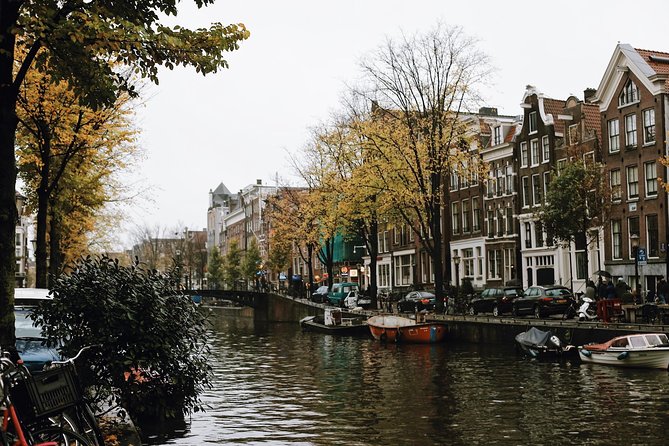
Some of the best moments on foot are the ones that make you stop moving. Two courtyard stops do that.
First is Begijnhof, a peaceful medieval courtyard once home to a community of devout women known as Beguines. You’ll also see one of Amsterdam’s oldest wooden houses here. This is where the city’s religious life shows up in a calmer form, tucked behind streets that otherwise feel nonstop.
Next you’ll visit the Coöperatieve Vereniging Karthuizerhof BA, described as the largest hofje in Amsterdam. Hofjes are almshouse courtyards, and this one was built around a tranquil courtyard for the city’s poor and elderly. It’s a different side of Amsterdam: not merchant glory, not church power, but care systems and daily life.
If you’ve been walking through major squares and towers, these courtyard pauses feel like a reset button. They also make the tour easier to enjoy on a grey day, because you’re not constantly bracing against wind.
Noorderkerk and the final canal corner at Papeneiland
The last big religious stop on the walk is Noorderkerk, a 17th-century Protestant church built for the Jordaan district. The standout detail is its unusual cross-shaped floor plan, tied to new ideals of Reformation worship.
It’s a good closing note because it shows that Amsterdam’s religious architecture didn’t stay in one style or one neighborhood. You’re seeing the city change across districts and across time.
Finally, the tour ends at Papeneiland, one of Amsterdam’s prettiest canal corners. You’ll be able to visit Het Papeneiland, a brown café from 1642, said to serve the best apple pie in town. This is a smart finish because you can turn your guide’s tips into an actual plan—coffee and a slice, then decide whether you want to aim for canals, museums, or a night market mood.
Should you book this Amsterdam City Center & History walk?
I’d book it if you want orientation fast and you like learning through real streets and buildings. It’s a strong choice for a first visit, and it also helps on a return trip because you start noticing the water defenses, trade clues, and architectural details you would normally miss.
I’d skip or reconsider if you’re chasing a lot of inside access at ticketed museums. Several stops have admission not included, and security rules can limit interior viewing. But if you want a guide-led route that helps you decide what deserves your ticket budget, this is a solid use of your time in Amsterdam.
FAQ
How long is the Amsterdam City Center & History guided walking tour?
It lasts about 2 hours 30 minutes.
Is the tour offered in English?
Yes, the tour is offered in English.
Is this tour private for just your group?
This is listed as a private tour/activity, and the guide being exclusively for you does not apply if you choose the SAVE! BOOK SEMI-PRIVATE option.
Do I need to buy admission tickets for the stops?
Admission varies by stop. Some places are listed as admission ticket free, while others are listed as admission ticket not included, and some sites may not allow interior visits due to security measures.
Does the tour run in bad weather?
Yes. It runs rain or shine, and the route may change during national celebrations while still aiming to see the highlights.
Can I cancel for a full refund?
Yes. You can cancel for a full refund up to 24 hours before the experience starts.
More Amsterdam Walking Routes






More Tours in Amsterdam




More Tour Reviews in Amsterdam






Just added: fresh Amsterdam tour reviews





Walking Tours, compared.
 ★ 4.8Amsterdam Anne Frank: Small-Group Walking Tour & Local GuideFrom $2912,789 reviews
 ★ 5.0Anne Frank’s Story – Guided Walking Tour through AmsterdamFrom $3911,619 reviews
 ★ 5.0Absolutely Amsterdam – the Essential Introductory Walking TourFrom $53,629 reviews
 ★ 4.9Anne Frank Guided Walking Tour in DE/EN/IT/ESFrom $283,107 reviews
 ★ 4.8Anne Frank Guided Small Group Walking TourFrom $282,722 reviews
 ★ 4.9Cultural Highlights Walking TourFrom $302,629 reviews
 ★ 4.2Ganja Walking TourFrom $402,127 reviews
 ★ 5.0Anne Frank Walking Tour Amsterdam Including Jewish Cultural QuarterFrom $751,879 reviews
Browse the lists this tour appears in