
Reviewed · WALKING TOURS
Amsterdam City Center Guided Walking Tour Semi-Private 12ppl Max
Amsterdam fits into one smart walking loop. You’ll cover a lot of ground in 2.5 hours with a semi-private group of 12 or fewer, plus the guide builds the story link between churches, trade, and canal-side neighborhoods as you move on foot. I especially like the way it’s set up for frequent photo stops and questions, so you don’t feel rushed past the important details.
The other big win for me is the balance of landmarks and everyday street views. You’ll see everything from the medieval city gate world to canal mansions, without needing museum tickets for every step. One consideration: many stops are brief and mostly street-level, and some sights may not be visitable inside due to security or time, so plan separate time if you want deeper entry experiences.
In This Review
- Key Things I’d Bookmark About This Tour
- A 2.5-Hour Jumpstart to Amsterdam’s Old Core
- Small Group Comfort: What the Walk Feels Like
- Your Route Stop by Stop: From Basilica to Papeneiland
- Stop 1: St. Nicholas Basilica (Prins Hendrikkade)
- Stop 2: Weeping Tower (Schreierstoren)
- Stop 3: Zeedijk and the Kolksluis lock bridge
- Stop 4: Nieuwmarkt (the old-city gate neighborhood)
- Stop 5: The Waag (15th-century building)
- Stop 6 & 8: Trippenhuis and Klein Trippenhuis (width vs. land taxes)
- Stop 7: Oost-Indisch Huis courtyard
- Stop 9: Zuiderkerk
- Stop 10: Museum Het Rembrandthuis (Rembrandt’s home)
- Stop 11: Stopera (National Opera & Ballet + city hall)
- Stop 12: Huis Aan De Drie Grachten
- Stop 13: Begijnhof
- Stop 14: Dam Square
- Stop 15: Herengracht Golden Bend
- Stop 16: Anne Frank House area + Westerkerk
- Stop 17: De Drie Hendricken (Bloemgracht)
- Stop 18: Rembrandt Square and The Night Watch bronze
- Stop 19: Noorderkerk
- Stop 20: Papeneiland (finish near apple pie)
- Price and Value: Why $59.28 Can Make Sense
- Who Should Book This Semi-Private Walking Tour?
- Tips to Make This Walk Go Smoothly
- Should You Book This Tour?
- FAQ
- How long is the Amsterdam city center guided walking tour?
- What is the maximum group size for this semi-private tour?
- Where does the tour start and end?
- What language is the tour offered in?
- Is admission included for the stops?
- Does the tour run in bad weather?
- Is hotel pickup or drop-off included?
- Is this tour suitable for wheelchair users or limited mobility?
- What should I bring for the tour?
- What happens if fewer than the minimum number of guests book?
- Can the route change due to events in the city?
Key Things I’d Bookmark About This Tour
- Semi-private size (max 12) means you can actually ask questions instead of shouting over a crowd
- Photo-friendly pacing with regular stops across bridges and canalside lanes
- A tight route that connects Amsterdam’s religious shift, trade history, and housing quirks
- Street-level highlights mixed with a few big architectural moments you can still appreciate from outside
- Rain or shine keeps your day on track in a city where weather changes fast
- Local-guide style you can feel in how the facts turn into real neighborhood context
More of Amsterdam street by street, on foot
- Amsterdam Anne Frank: Small-Group Walking Tour & Local Guide
★ 4.8 · 12,789 reviews - Anne Frank’s Story – Guided Walking Tour through Amsterdam
★ 5.0 · 11,619 reviews - Absolutely Amsterdam – the Essential Introductory Walking Tour
★ 5.0 · 3,629 reviews - Amsterdam: Anne Frank Guided Walking Tour in DE/EN/IT/ES
★ 4.9 · 3,107 reviews
A 2.5-Hour Jumpstart to Amsterdam’s Old Core
If you’re trying to get your bearings fast, this walk is a smart first-day move. You don’t just tick boxes. You walk through the same kinds of streets and waterfronts that shaped Amsterdam’s growth—starting from the area around the city’s old Roman Catholic presence and moving forward into Protestant landmarks, merchant buildings, and the canal-world that came from trade.
The route is built for momentum. In 2 hours 30 minutes, you’ll cover a big slice of the center, including bridges, cobblestone lanes, and canal junctions. That makes it useful even if you only have a couple of days in town, because the guide’s explanations help you understand what you’re looking at when you return later on your own.
This is also one of those tours where the guide’s job is interpretation. You’ll learn how Amsterdam grew from a watery, fishing-village kind of beginning into a major trade hub and international city. You can see that shift in the buildings: churches for spiritual power, guild and gate structures for civic power, and narrow houses and grand canal mansions for how money and land taxes played out in real architecture.
Small Group Comfort: What the Walk Feels Like
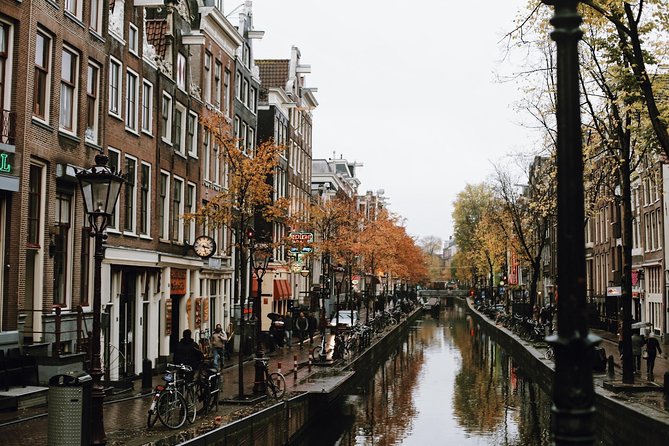
With a maximum of 12 people, the tour doesn’t turn into a long human line. You’ll get a guide who can answer questions on the spot, and you’ll have time to stop for photos without feeling like you’re constantly doing damage control for the pace.
It’s still a walking tour, though. The stops are deliberately short—often around 5 to 10 minutes—so this is best for people with moderate physical fitness and solid comfort on city streets. If you use a wheelchair or have walking disabilities, the tour isn’t recommended based on the provided guidance.
Practical note: the tour runs rain or shine. I’d treat this like a “carry your weather gear” day. A compact umbrella, a bottle of water, and comfortable shoes matter more here than in a museum day, since you’ll be out on foot the whole time.
Your Route Stop by Stop: From Basilica to Papeneiland
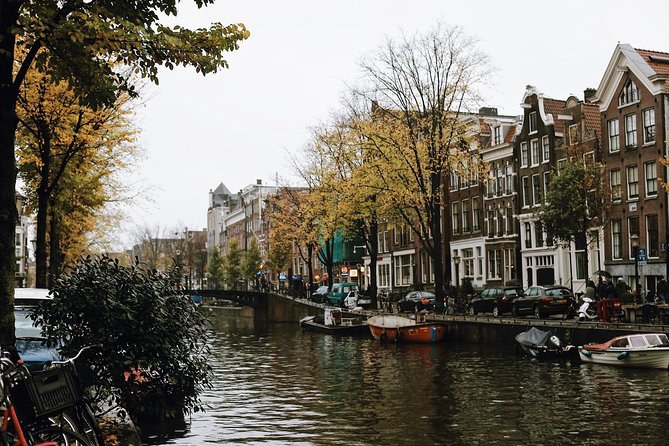
This itinerary is packed, so think of it as a guided orientation plus a set of mini “why this matters” moments.
More trips where a local runs the whole day



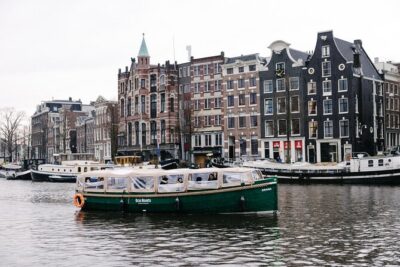
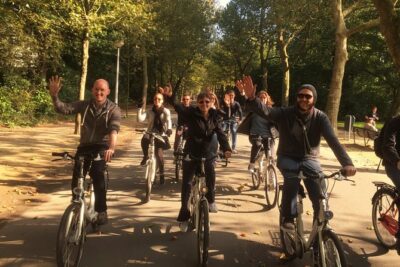
Stop 1: St. Nicholas Basilica (Prins Hendrikkade)
You start at the St. Nicholas Basilica, Amsterdam’s primary Roman Catholic church. The guide’s focus is on why it looks the way it does and what it says about the city’s changing religious landscape—built in the late 19th century after earlier centuries of prohibition.
Why it’s worth the stop: it sets a tone for the whole walk. You’re going to see Protestant architecture later, so this gives you a helpful contrast early on.
Stop 2: Weeping Tower (Schreierstoren)
Next is the Schreierstoren, also known as the Tower of Tears. The story here is emotional and practical: it’s tied to women bidding farewell to loved ones leaving by ship.
Drawback to note: you’re not touring inside; it’s a quick context stop.
Stop 3: Zeedijk and the Kolksluis lock bridge
Then you move to Zeedijk, one of the city’s oldest streets. The key idea: it began as a sea dike that helped hold back the waters of the IJ.
You’ll also see the Kolksluis, a picturesque lock bridge. This is where Amsterdam’s water-management past becomes visible in the street layout.
Stop 4: Nieuwmarkt (the old-city gate neighborhood)
You’ll reach Nieuwmarkt, a long-time center for commerce and social life since the 17th century. The square’s location just inside the old city gate made it a natural meeting spot for traders and shoppers.
Value for you: if you like markets and real city texture, this stop gives you a sense of where daily life happened historically—not just where tourists take photos.
Stop 5: The Waag (15th-century building)
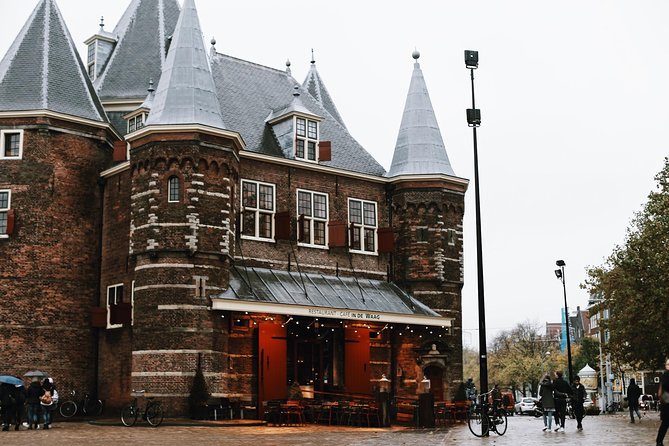
At Nieuwmarkt, the route also includes De Waag, a 15th-century non-religious building that once served as a city gate and part of the city walls. It later functioned as a guildhall, museum, and fire station.
Why I like this stop: it shows how buildings in Amsterdam had to evolve as the city’s needs changed. It’s a reminder that Amsterdam wasn’t static; it adapted.
Stop 6 & 8: Trippenhuis and Klein Trippenhuis (width vs. land taxes)
You’ll see the Trippenhuis and Klein Trippenhuis across from each other. The Trippenhuis is described as Amsterdam’s widest home, spanning about 22 meters, while the Klein Trippenhuis is famously narrow.
What this teaches you: housing patterns weren’t only about style. They were shaped by economics like land taxes, which pushed people toward tall, narrow designs to fit requirements.
Stop 7: Oost-Indisch Huis courtyard
Next is the Oost-Indisch Huis, the courtyard connected to the Dutch East India Company’s headquarters—framed as the birthplace of the world’s first multinational corporation.
Why this works on a walking tour: the guide ties business power directly to the city’s physical form. You can’t separate Amsterdam’s canals from what they helped the city trade.
Stop 9: Zuiderkerk
You’ll pass the Zuiderkerk, Amsterdam’s first purpose-built Protestant church. Designed by Hendrick de Keyser, it’s known for its elegant tower.
Quick takeaway: seeing a Protestant church after Catholic St. Nicholas helps you understand how religion and civic identity shifted over time.
Stop 10: Museum Het Rembrandthuis (Rembrandt’s home)
This stop is a pass-by focused on Rembrandt’s former home, Museum Het Rembrandthuis, where he lived and worked between 1639 and 1656.
If you’re hoping for a full museum visit, don’t count on it here. This walk is about orientation and outside appreciation more than ticketed deep time.
Stop 11: Stopera (National Opera & Ballet + city hall)
Then you’ll see the complex known as the Stopera, which houses the city hall and the Dutch National Opera and Ballet. The construction was described as taking at least 60 years.
Why it’s interesting: it’s a reminder that Amsterdam’s “newer” landmarks still grow out of old civic ambitions.
Stop 12: Huis Aan De Drie Grachten
You’ll look at Huis Aan De Drie Grachten, a rare 17th-century canal house at the junction of three canals, with façades facing in three directions.
This is one of those spots that makes you slow down just to orient your brain. The guide helps you picture how people lived in a space where water surrounded nearly everything.
Stop 13: Begijnhof
Next is Begijnhof, one of the oldest hofjes (almshouses) in Amsterdam. The story here focuses on the Beguines: unmarried women living together under vows of chastity, forming community in a secluded courtyard and garden. Today there are also two churches on the site.
Why it matters: this is a rare quiet-pocket topic in the middle of a dense city. Even if you only get a short visit, it reframes Amsterdam as not only trade and power, but also everyday shelter and community life.
Stop 14: Dam Square
Then comes Dam Square, one of the most famous public spaces in the city, with the Royal Place, the New Church, and the National Monument.
Practical note: Dam Square is busy by nature. The guide’s short stop keeps it manageable, but if you want photos without crowds, pick your moment and be patient.
Stop 15: Herengracht Golden Bend
You’ll see the Herengracht stretch called the Golden Bend, lined with the city’s richest and most ornate canal mansions from the Dutch Golden Age.
This stop is great for visual learning: it helps you understand what “power along the canals” looks like in real space, not just in postcards.
Stop 16: Anne Frank House area + Westerkerk
You’ll pause outside the Anne Frank House and learn what you should notice next door with the Westerkerk, including that it has the tallest church tower in Amsterdam.
Important reality check: the tour notes that some attractions can’t be visited from the inside due to security measures. Plan this as a viewing and context stop, not an entry ticket moment.
Stop 17: De Drie Hendricken (Bloemgracht)
You’ll look up at De Drie Hendricken aan de Bloemgracht 87-91, known for quirky gable stones carved with allegories and trade emblems.
If you like street art without the graffiti, this is your kind of stop. Amsterdam often tells its story in details above the sidewalk.
Stop 18: Rembrandt Square and The Night Watch bronze
Then you walk through Rembrandtplein, named after Rembrandt, with a bronze-cast representation of his most famous painting, The Night Watch. It’s tied to the 400th birthday celebration in 2006.
This is a fun “anchor moment” for the walk. You’re near the art story, but in public space.
Stop 19: Noorderkerk
Next is Noorderkerk, a 17th-century Protestant church built for the Jordaan district. It has an unusual cross-shaped floor plan reflecting Reformation ideals of worship.
The quick context is what makes it worthwhile: you start seeing how architecture was shaped by belief and practice.
Stop 20: Papeneiland (finish near apple pie)
The walk ends at Het Papeneiland area on Prinsengracht. The stop is described as a prettiest canal corner, with a brown café from 1642 said to serve the best apple pie in town.
You don’t need to order anything to enjoy the finish. But if you want a final bite after all that walking, this is a very logical place to do it.
Price and Value: Why $59.28 Can Make Sense
At $59.28 per person, you’re not paying for a museum ticket spree. You’re paying for a guided route that compresses a lot of Amsterdam context into one structured walk, using a small group limit and professional guide time.
For me, the value comes from three things:
- Efficiency. In one outing you cover Catholic and Protestant sites, old city structures, trade-era landmarks, and canal architecture in a way that’s hard to DIY without prior planning.
- Human explanations. A building’s facts mean more when someone connects them to how Amsterdam actually worked: water management, guild life, land-tax pressures, and trade power.
- You get “what to do next.” The tour is designed to leave you with tailored tips for the rest of your time in Amsterdam.
If you’re the type who loves to wander but also likes a plan, this sits in the sweet spot. If you’re only interested in one museum or one inside attraction, you might decide you’d rather spend your time buying a ticket and going deep in that one place. But if you want orientation plus stories, this price feels reasonable.
Who Should Book This Semi-Private Walking Tour?
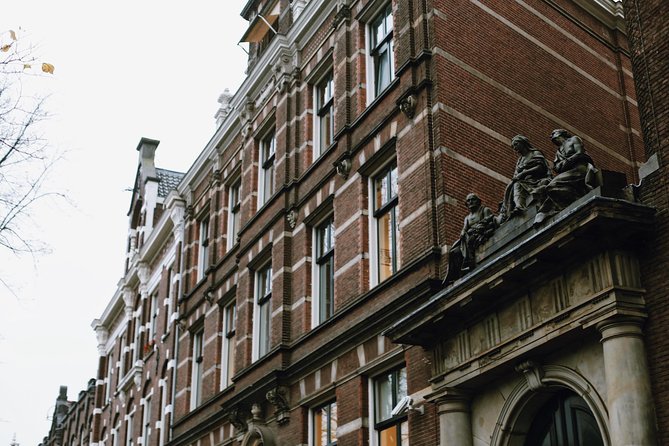
This tour is a great fit if:
- you want a first-look overview of Amsterdam’s center
- you like stories tied to real neighborhoods, not just isolated facts
- you prefer smaller groups for questions and photo stops
- you can walk comfortably for about 2.5 hours
It may be less ideal if:
- you expect to go inside most buildings (the format is short stops, and access can be limited by security)
- you need wheelchair-friendly routing (it’s not recommended for those using a wheelchair)
- you’re bringing large bags or suitcases (not allowed)
One more note: guide quality matters on this kind of route. Some groups have been led by guides such as Josje B. and Hanneke, and their style is described as engaging, local, and very focused on how Amsterdam’s water-based beginnings shaped everything that followed.
Tips to Make This Walk Go Smoothly
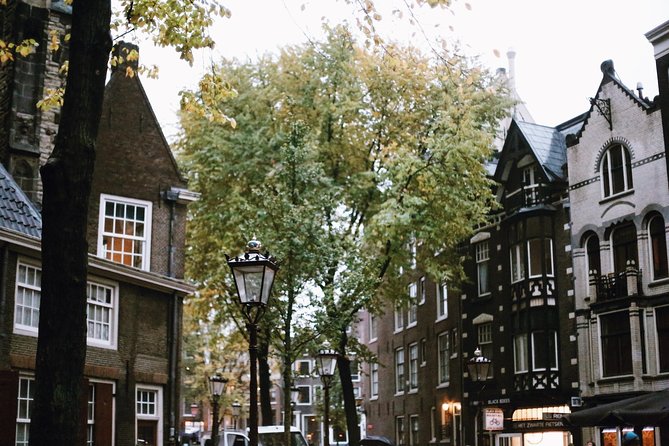
Here’s how to set yourself up for an easy win:
- Wear comfortable shoes. Cobblestones plus bridges add up.
- Bring a bottle of water. Stops are short, and the tour is rain or shine.
- Pack for weather. Umbrella for rain, and a hat in summer.
- Travel light. Large bags and suitcases aren’t allowed.
- Set expectations for access. Some sights may only be viewed from outside.
Also, pick your day wisely. This tour is popular enough that the average booking lead time is about 51 days, so if your dates are firm, book early rather than hoping for a last-minute slot.
Should You Book This Tour?
I’d book it if you want a guided route that helps you understand what you’re seeing in Amsterdam’s center, fast. The small-group format plus the mix of churches, trade-era buildings, canal architecture, and hidden-in-plain-sight details makes it feel like more than a checklist.
I’d skip it or pair it differently if your top priority is inside access for major attractions. This walk is excellent for context and street-level moments, but it doesn’t replace a full museum visit or a ticketed experience where you can stay longer.
If you’re deciding between wandering randomly and getting your bearings with a plan, this semi-private loop is a strong, practical choice.
FAQ
How long is the Amsterdam city center guided walking tour?
It’s approximately 2 hours 30 minutes.
What is the maximum group size for this semi-private tour?
The tour is semi-private with a maximum of 12 guests.
Where does the tour start and end?
It starts at Basilica of Saint Nicholas, Prins Hendrikkade 73, 1012 AE Amsterdam. It ends at The Papeneiland, Prinsengracht 2, 1015 DV Amsterdam.
What language is the tour offered in?
The tour is offered in English.
Is admission included for the stops?
Admission is not included for every stop. Some areas are listed as free, while others specify that tickets are not included.
Does the tour run in bad weather?
Yes. The tour runs rain or shine.
Is hotel pickup or drop-off included?
No. Hotel pickup and drop-off are not included.
Is this tour suitable for wheelchair users or limited mobility?
It is not recommended for those with walking disabilities or using a wheelchair.
What should I bring for the tour?
Comfortable shoes, a bottle of water, and an umbrella are recommended. A hat is recommended during summer. Large bags or suitcases are not allowed.
What happens if fewer than the minimum number of guests book?
If the tour doesn’t meet the minimum number to run, you’ll be offered an alternative date or a full refund.
Can the route change due to events in the city?
Yes. The route may be affected by national celebrations, and an alternative route will be provided to still see the highlights. In those cases, refunds or discounts aren’t provided.
More Amsterdam Walking Routes






More Tours in Amsterdam




More Tour Reviews in Amsterdam






Just added: fresh Amsterdam tour reviews





Walking Tours, compared.
 ★ 4.8Amsterdam Anne Frank: Small-Group Walking Tour & Local GuideFrom $2912,789 reviews
 ★ 5.0Anne Frank’s Story – Guided Walking Tour through AmsterdamFrom $3911,619 reviews
 ★ 5.0Absolutely Amsterdam – the Essential Introductory Walking TourFrom $53,629 reviews
 ★ 4.9Anne Frank Guided Walking Tour in DE/EN/IT/ESFrom $283,107 reviews
 ★ 4.8Anne Frank Guided Small Group Walking TourFrom $282,722 reviews
 ★ 4.9Cultural Highlights Walking TourFrom $302,629 reviews
 ★ 4.2Ganja Walking TourFrom $402,127 reviews
 ★ 5.0Anne Frank Walking Tour Amsterdam Including Jewish Cultural QuarterFrom $751,879 reviews
Browse the lists this tour appears in