
Reviewed · WALKING TOURS
Amsterdam Central Walking Tour
A winter walk in Amsterdam sounds simple—until you hear the stories. This 2-hour Amsterdam Central Walking Tour turns canals, bridges, and crooked façades into a guided street-level history lesson, with a proper local break baked in. I like that it keeps the group small (max 12, often fewer), so you can actually ask questions instead of shouting across a crowd.
Two things I’d count on: the route is packed with “how did Amsterdam even work?” details, like why the city’s tilted houses lean on wooden poles, and why spots like Spui and Spuistraat are tied to protests and squatting history. One consideration: it runs rain or shine, so if you hate wet cold walks, you’ll need to dress like it’s serious weather.
If you want Amsterdam in one focused, well-paced hit, this is a strong option. It’s also a smart way to orient yourself before you go off on your own—especially in areas like the Negen Straatjes and around Dam Square.
In This Review
- Key highlights worth showing up for
- 2 hours in the center: the value of a tightly planned walk
- Where you start: Nieuwezijds Kolk (and why that’s a smart choice)
- The canal-city mindset: what the early stops are really teaching
- Crooked Houses and wooden poles: the story behind Amsterdam’s weird angles
- Red Light District etiquette: respect, rules, and context
- Jordaan and the working-class feel: what the walk does for your understanding
- Westertoren: the skyline stop that turns into a history lesson
- Koepelkerk and copper-clad church details
- Grain, breweries, and the nickname behind Brouwersgracht
- Jan Roodenpoortstoren and what’s under a bridge
- Torensluis: the oldest bridge and the defensive wall link
- Bartolotti House: the mansion that signals wealth and taste
- Spui and Provo: protests, civil resistance, and how streets hold politics
- The Negen Straatjes: artisans to trend boutiques, in a single walk
- Kalverstraat: the shopping street that shows how mainstream Amsterdam is
- Anne Frank House area: the WWII context you shouldn’t skip
- Brown Café pit stop: the break that keeps the walk pleasant
- How the end works: finishing at Dam Square and walking back
- What I’d pack (and why): winter walking is part of the deal
- Who should book this (and who should choose a different format)
- Price check: $26 for 2 hours isn’t just cheap—it’s focused
- Should you book Yellow Bike’s Amsterdam Central Walking Tour?
- FAQ
- Where is the meeting point for the Amsterdam Central Walking Tour?
- How long is the tour?
- How much does it cost?
- Is the tour guided and what languages are offered?
- Does the tour include luggage storage?
- Is the café stop included in the price?
- Does the tour run in bad weather?
- What should I bring for this winter walk?
- How big are the groups?
- Is the tour wheelchair accessible?
- Can I get a full refund if I change my plans?
Key highlights worth showing up for
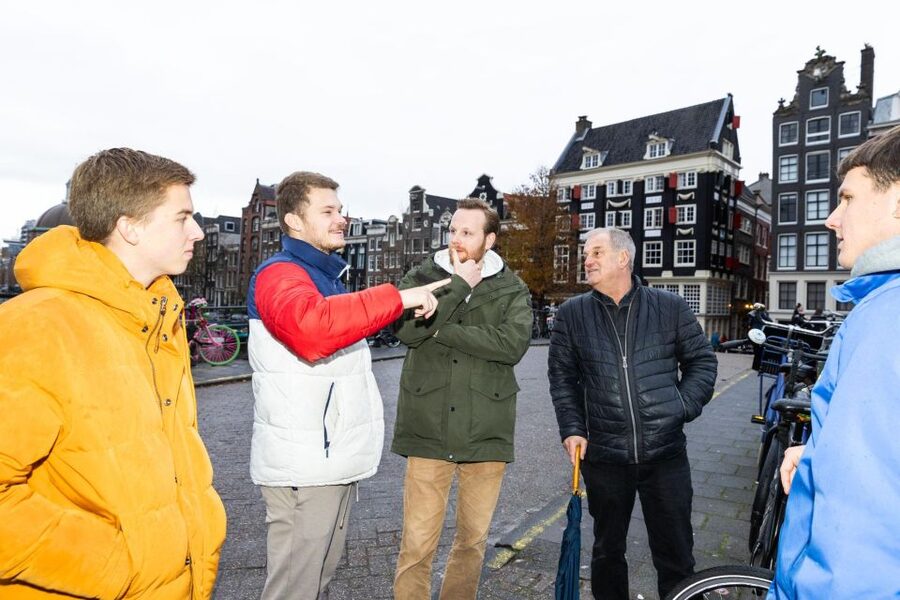
- Small-group size: capped at 12, and it can be even smaller.
- Local guide storytelling: you may be guided by people like Willem, Willen, or Sid, with a mix of old history and local perspectives.
- Red Light District etiquette: you’ll learn what’s expected, including no photos and no lingering.
- Canal-city engineering facts: stops like Nieuwe Haarlemmersluis and Brouwersgracht explain how the water and economy shaped the city.
- Iconic skyline and landmarks: Westertoren and the Anne Frank House area are part of the walk.
- A traditional Dutch café pit stop: a break is built in (drinks aren’t included).
More of Amsterdam street by street, on foot
- Amsterdam Anne Frank: Small-Group Walking Tour & Local Guide
★ 4.8 · 12,789 reviews - Anne Frank’s Story – Guided Walking Tour through Amsterdam
★ 5.0 · 11,619 reviews - Absolutely Amsterdam – the Essential Introductory Walking Tour
★ 5.0 · 3,629 reviews - Amsterdam: Anne Frank Guided Walking Tour in DE/EN/IT/ES
★ 4.9 · 3,107 reviews
2 hours in the center: the value of a tightly planned walk
For $26 and a 2-hour time window, this tour is aiming at one thing: helping you understand central Amsterdam fast, without burning a day. That’s not just convenience. In Amsterdam, the “meaning” of a street often comes from tiny context—who lived there, what the canal system did, why buildings are shaped the way they are.
You’re also not stuck with a busload pace. The tour keeps groups small, with a max of 12 participants and the real-life possibility of a smaller group. That matters when you’re walking past places that feel familiar on postcards but have rules, nuance, and uncomfortable truths in real life—like the Red Light District.
One more practical win: free luggage storage. If you’re arriving from the airport or you’ve been carrying a bag all day, you’ll appreciate not having to lug it around during the walk.
Where you start: Nieuwezijds Kolk (and why that’s a smart choice)
You’ll meet at Nieuwezijds Kolk 29, look for the Yellow Bike sign, and check in at the counter. Starting here makes the walk feel like a loop through the center, because you end back near Dam Square and then walk back to Yellow Bike at Nieuwezijds Kolk.
This matters because it keeps your “I’m lost” moments to a minimum. Amsterdam’s charm can also be its trap: you turn one corner and suddenly you’re in a different neighborhood with different vibes. A good starting hub helps you build a mental map quickly.
If you’re doing this in winter, the timing is also useful. The route is designed as a winter walk, and the tour runs rain or shine, so you’ll want that warm clothing, hat, gloves, and a scarf ready before you step out.
The canal-city mindset: what the early stops are really teaching
This tour doesn’t treat the center like a list of famous photos. It uses the streets to teach you how Amsterdam became Amsterdam—through land, water, trade, protest, and everyday life.
Expect a flow that mixes landmark moments with “wait, that’s why” facts. For example, you’ll learn how Amsterdam combats seawater intrusion through canal infrastructure tied to places like Nieuwe Haarlemmersluis. You’ll also hear how Brouwersgracht connects grain supply to breweries and why Amsterdam earned its nickname linked to alcohol culture.
Those details are the difference between sightseeing and understanding. You’ll start noticing patterns after a stop or two: where commerce sat, how the city shaped survival, and how power showed up in public spaces.






Crooked Houses and wooden poles: the story behind Amsterdam’s weird angles
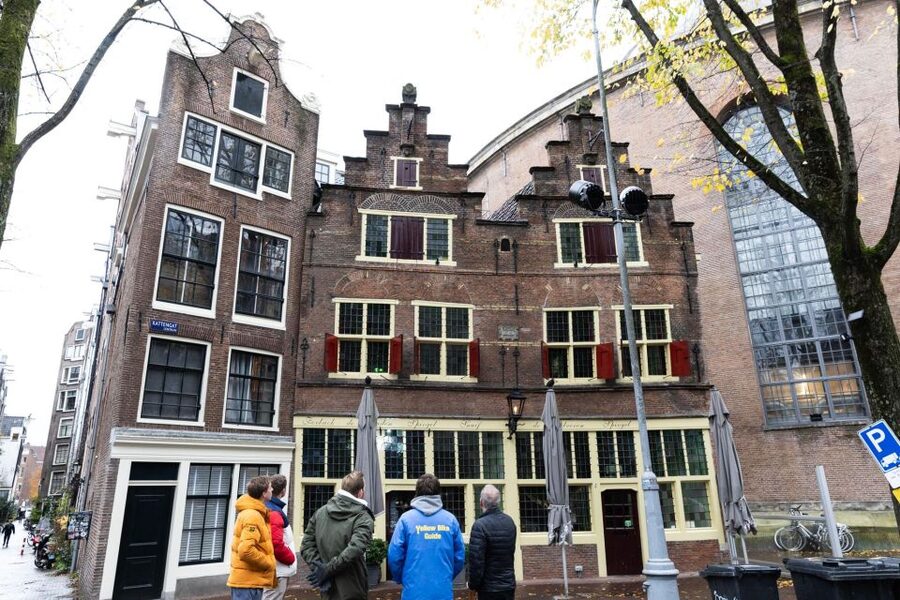
One of the classic moments you’ll hit is the Crooked Houses area, where you can see the tilted façades and hear the explanation: Amsterdam stands on wooden poles. It’s the kind of fact that sounds technical until you connect it directly to what you’re seeing with your own eyes.
Here’s the practical payoff: once you understand the city’s building logic, you stop assuming every leaning building is a random oddity. You start reading the city like a living system—water levels, ground conditions, and old construction methods all leave marks.
It’s a great early anchor stop because it helps you frame what you’ll see later: canals, bridges, and even tower stories start to feel connected instead of separate.
Red Light District etiquette: respect, rules, and context
You’ll also walk through the Westerlijke Wallen area (Amsterdam’s Red Light District). The tour frames it with respect and understanding. The practical rules you should expect: no photos and no lingering.
That may sound obvious, but it’s useful to know in advance because this is one of those places where one rude photo can sour the whole experience—not just for you, but for your guide and your group too.
Also, context matters here. Rather than treating it as a spectacle, you’ll learn about the area’s cultural meaning and how it fits into the city’s broader story of tolerance, rules, and public life.
Jordaan and the working-class feel: what the walk does for your understanding
The route naturally includes the Jordaan area, often described as a working-class enclave in Amsterdam’s past. Even without an “everything you need to know” lecture at every corner, just spending time near these streets helps you get the texture of how ordinary people lived.
In a place like Amsterdam, neighborhoods aren’t just vibes. They’re historical layers. The tour’s structure nudges you into thinking about who lived where, how that shaped local culture, and why that still shows up in today’s street layout.
Westertoren: the skyline stop that turns into a history lesson
You’ll get to Westertoren, described as Amsterdam’s tallest church tower. This is one of those moments where the city’s scale snaps into focus. Up close, towers are never just architecture; they’re navigation tools, identity markers, and symbols of who had the power to build tall.
If your travel style is more “show me why this matters” than “just point out landmarks,” this stop works well because you’ll learn the tower’s significance alongside the surrounding stories.
Koepelkerk and copper-clad church details
Another standout is Koepelkerk, the story behind the copper-clad Lutheran church and how Amsterdam’s resilience shows up after a massive fire. You’ll hear why the building’s materials and survival story matter, not just that it exists.
This kind of stop is ideal when the weather is cold. Something about a church story in winter feels right. You also get a mental break from the street-level bustle—even if you still keep walking.
Grain, breweries, and the nickname behind Brouwersgracht
At Brouwersgracht, the tour connects the supply chain: grain to breweries, and how that shaped the city’s identity—down to the nickname tied to alcohol. If you like history that explains cause and effect, you’ll enjoy this part.
It’s also a reminder that Amsterdam’s canals weren’t just pretty. They were work. Trade routes, shipping, storage, and the daily movement of goods shaped the canals as much as art and architecture did.
Jan Roodenpoortstoren and what’s under a bridge
You’ll visit Jan Roodenpoortstoren, with attention on the secrets under the bridge, including historic prison cells. This is one of the more story-heavy stops because it takes something you might skim past (a bridge-side structure) and turns it into evidence of how law, punishment, and city control worked.
If you’re the kind of traveler who likes to understand what’s hidden in plain sight, this is a strong segment.
Torensluis: the oldest bridge and the defensive wall link
At Torensluis, you’ll see the oldest bridge in Amsterdam and learn it was once part of the city’s defensive wall. Again, the point isn’t just the fact. It’s the mental shift.
You start to see Amsterdam’s defenses not as a museum exhibit, but as something embedded into everyday infrastructure. Bridges become security systems. Gates become living passages.
Bartolotti House: the mansion that signals wealth and taste
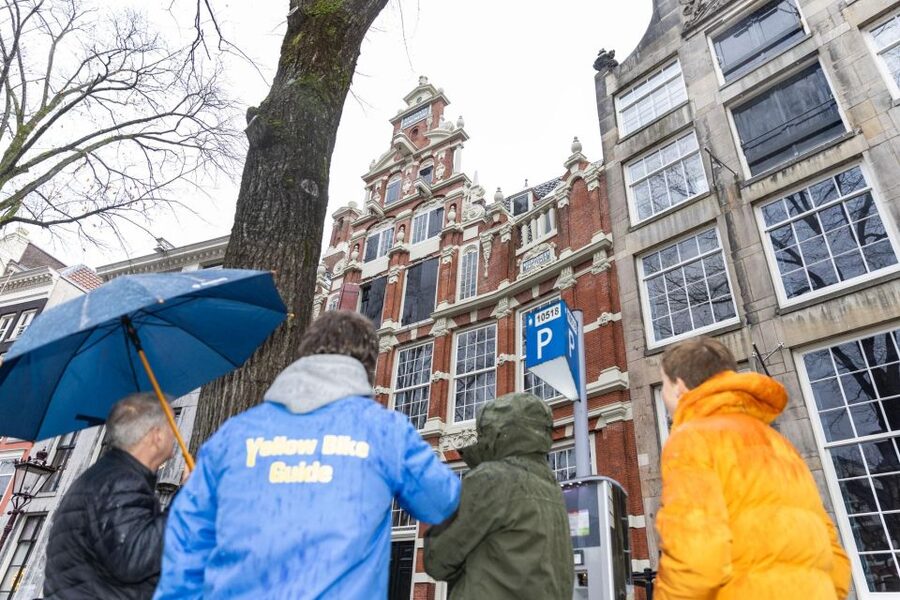
You’ll also admire the Bartolotti House, described as Amsterdam’s finest mansion, and hear the history behind it. This is the “okay, so who had the money?” stop.
Even if you’re not an architecture nerd, these mansion moments help you track the social side of the city’s story: who rose, who built, and what that looked like in stone, windows, and location.
Spui and Provo: protests, civil resistance, and how streets hold politics
A key part of the walk focuses on Spui, connected to the Provo statue and the events tied to civil resistance. You’ll also hear about student protests and cultural movements here.
And you’ll learn about Amsterdam’s squatting history along Spuistraat, which adds another layer: protest here isn’t just theoretical. It’s tied to how people claimed space, pushed back, and forced the city to negotiate change.
If you’re used to thinking of politics as something that happens in papers and parliaments, this section makes it feel local and physical—like it lives in the sidewalk cracks too.
The Negen Straatjes: artisans to trend boutiques, in a single walk
You’ll walk through the Negen Straatjes, a cluster of picturesque streets that were once home to artisans and now are known for trendy boutiques and cafés.
This is a good place to calibrate your Amsterdam expectations. Yes, it has the shopping energy. But it also gives you a chance to slow down and absorb street scale and layout.
Practical tip: this area can be busy depending on the day, so keep an eye on your guide and your group’s pace, especially if you’re photographing.
Kalverstraat: the shopping street that shows how mainstream Amsterdam is
You’ll also stroll down Kalverstraat, described as the most renowned shopping street in the Netherlands with upscale stores. This is the tour’s “Amsterdam as modern capital” chapter.
Even if you don’t plan to shop, it’s useful for orientation. It shows you where the city’s center of gravity sits—commercially—and how the streets connect to big public spaces like Dam Square.
Anne Frank House area: the WWII context you shouldn’t skip
The tour includes the Anne Frank House as a key stop for World War II context and her famous diary story. This segment is likely to land differently for different people, but the main value is that it gives you a guided narrative so you’re not just standing there reading plaques.
Just be ready for the emotional weight. Bring a little patience. This is history that deserves a slower mental pace than the usual “next stop” tourism.
Brown Café pit stop: the break that keeps the walk pleasant
You’ll take a break at Brown Café (often called the Pitstop), a traditional Dutch pub. The important detail: drinks aren’t included.
This matters because you’ll want to decide what kind of break you’re in the mood for. The café stop is there to give you warmth and a quick reset, but it’s not a free meal situation.
If you’re doing this mid-walk in winter, the café stop can genuinely change the experience from cold slog to “okay, I can enjoy this city.”
How the end works: finishing at Dam Square and walking back
The tour ends at Dam Square and then you walk back to Yellow Bike at Nieuwezijds Kolk. This is a nice finish because Dam Square is a natural jumping-off point for the rest of your day.
You’ll likely leave with two advantages: a sense of direction and a mental map of which neighborhoods you want to revisit without needing another guided session.
What I’d pack (and why): winter walking is part of the deal
The tour is designed as a winter walk, and it runs rain or shine, so the “what to bring” list isn’t optional fluff. Bring:
- Comfortable shoes (Amsterdam cobblestones will punish you)
- Warm clothing
- Hat, gloves, scarf
If your plan is to wear fashion boots or thin sneakers, swap them out. Comfort is what lets you focus on the stories instead of your feet.
Who should book this (and who should choose a different format)
This tour is a great fit if you:
- want a 2-hour orientation to central Amsterdam
- like history that connects buildings, water, and social life
- enjoy walking but don’t want a full-day commitment
- appreciate a guide who can mix facts with local context
It may not be the best fit if you have mobility constraints. The activity is listed as wheelchair accessible but also marked not suitable for people with mobility impairments. If that applies to you, you should double-check before booking so you’re not guessing about route conditions.
Price check: $26 for 2 hours isn’t just cheap—it’s focused
At $26 per person for a 2-hour guided walk with a local guide, free luggage storage, and a café break, the value is in the format. You’re paying for tight time management and interpretation, not for an all-day museum ticket.
You’re also getting small-group attention (max 12, often fewer), which tends to make the experience feel less like a lecture and more like a conversation with the city.
Yes, drinks at the café aren’t included. But that’s also part of the control. You can grab something warm without being forced into a set package.
Should you book Yellow Bike’s Amsterdam Central Walking Tour?
I’d book it if you want central Amsterdam in one guided hit—especially if this is your first time in the city or you want a winter-friendly plan that still covers heavy topics respectfully. The small group size, the variety (Westertoren, Jordaan, Spui/Provo, Anne Frank context, and canal-city engineering facts), and the built-in café break make it a good value for $26.
I’d skip it (or switch formats) if you know you struggle with cold wet walks or if mobility is an issue and you can’t confirm the route will work for you. Otherwise, this is one of those tours where you leave feeling like you understand the city’s logic, not just its landmarks.
FAQ
Where is the meeting point for the Amsterdam Central Walking Tour?
You’ll meet at Nieuwezijds Kolk 29. Look for Yellow Bike and check in at the counter.
How long is the tour?
The tour lasts 2 hours.
How much does it cost?
The price is $26 per person.
Is the tour guided and what languages are offered?
Yes, it’s a live guided tour, offered in Dutch and English.
Does the tour include luggage storage?
Yes. Free luggage storage is included.
Is the café stop included in the price?
The tour includes a break at a traditional Dutch café, but drinks are not included.
Does the tour run in bad weather?
Yes. The tour takes place rain or shine.
What should I bring for this winter walk?
Bring comfortable shoes, warm clothing, and a hat, gloves, and scarf.
How big are the groups?
Group size is capped at a maximum of 12 participants, and it’s often smaller.
Is the tour wheelchair accessible?
The activity is marked as wheelchair accessible, but it is also listed as not suitable for people with mobility impairments. If that’s relevant for you, you should verify fit before booking.
Can I get a full refund if I change my plans?
Yes. There’s free cancellation up to 24 hours in advance for a full refund.
More Amsterdam Walking Routes






More Tours in Amsterdam




More Tour Reviews in Amsterdam






Just added: fresh Amsterdam tour reviews





Walking Tours, compared.
 ★ 4.8Amsterdam Anne Frank: Small-Group Walking Tour & Local GuideFrom $2912,789 reviews
 ★ 5.0Anne Frank’s Story – Guided Walking Tour through AmsterdamFrom $3911,619 reviews
 ★ 5.0Absolutely Amsterdam – the Essential Introductory Walking TourFrom $53,629 reviews
 ★ 4.9Anne Frank Guided Walking Tour in DE/EN/IT/ESFrom $283,107 reviews
 ★ 4.8Anne Frank Guided Small Group Walking TourFrom $282,722 reviews
 ★ 4.9Cultural Highlights Walking TourFrom $302,629 reviews
 ★ 4.2Ganja Walking TourFrom $402,127 reviews
 ★ 5.0Anne Frank Walking Tour Amsterdam Including Jewish Cultural QuarterFrom $751,879 reviews
Browse the lists this tour appears in