
Reviewed · WALKING TOURS
5 hrs Golden Age Amsterdam Private Walking Tour With Local Guide
Amsterdam can feel like a puzzle box at first.
This private 5-hour walking tour lines up the city’s most important sights, from Centraal Station to the Begijnhof, with a local guide who makes the stories make sense. I especially love how the route mixes headline places with quieter corners, and how Aleks keeps the pace friendly for questions and photos. The main thing to weigh is how much ground you cover in one day, plus several major stops are ticketed separately.
You’re in a small group of up to 4, which changes the whole experience. When the guide tailors explanations to your pace, you spend less time “trying to keep up” and more time really looking—at canal edges, church façades, and the small details that explain how Amsterdam works.
Also, this walk touches sensitive topics. The Red Light District segment is short and guided with a clear, rules-based approach, but it’s still not a light detour. If you prefer a strictly upbeat route with zero discomfort, you may want a different tour focus.
In This Review
- Key things to know before you go
- From Centraal Station to the city’s wooden pole foundation
- The canal city’s grammar: grachten, bridges, and narrow houses
- Medieval walls and a customs building that once weighed goods
- Churches of multiple eras: Catholic, Protestant, and the hidden attic
- The political heart at Dam Square, then memory at the National Monument
- Red Light District context: history, policy, and staying on the right side of the line
- Anne Frank House and the ticket reality you need to plan for
- Jewish Quarter and memorials: Jodenbuurt with respectful framing
- The Amstel, bridges, and the view that ties it together
- Aleks and the human side of the tour
- Price and value: what $540.69 covers and what you still pay
- What this tour is best at (and where it might not fit)
- Should you book this Golden Age Amsterdam private walk?
- FAQ
- How long is the Golden Age Amsterdam Private Walking Tour?
- How many people are in a private group?
- Is pickup offered?
- Where does the tour start?
- What entrance fees are not included?
- Does Anne Frank House require advance booking?
- What is the cancellation policy?
Key things to know before you go
- Small group pace: maximum 4 people means questions actually fit into the day
- A real guide, not a script: Aleks adjusts explanations for different ages and interests
- Faith, secrets, and power: churches, the attic secret church, and the royal sites all connect
- Canals explained like a system: you’ll learn why grachten matter and how they’re maintained
- Amsterdam’s tough chapters included: prostitution policy and the Jewish Quarter both get respectful context
- Some big names cost extra: Anne Frank House, Royal Palace, and a couple churches require your own tickets
More of Amsterdam street by street, on foot
- Amsterdam Anne Frank: Small-Group Walking Tour & Local Guide
★ 4.8 · 12,789 reviews - Anne Frank’s Story – Guided Walking Tour through Amsterdam
★ 5.0 · 11,619 reviews - Absolutely Amsterdam – the Essential Introductory Walking Tour
★ 5.0 · 3,629 reviews - Amsterdam: Anne Frank Guided Walking Tour in DE/EN/IT/ES
★ 4.9 · 3,107 reviews
From Centraal Station to the city’s wooden pole foundation
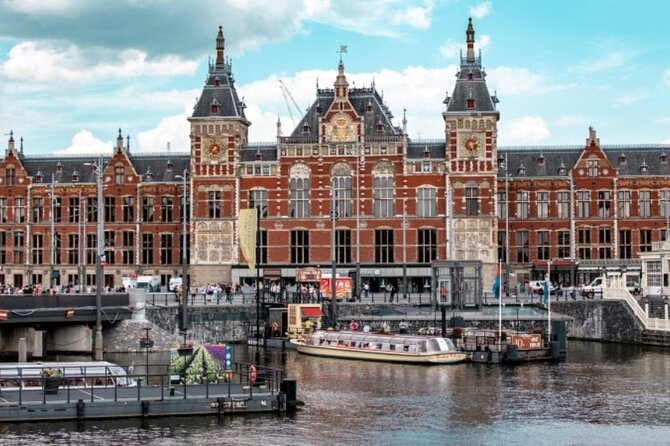
You start at Amsterdam Centraal, and that’s a smart move. The station building is late-19th century, but the real surprise is underneath: it sits on thousands of wooden poles—6,059, specifically—because Amsterdam had to solve the problem of building on soft ground. Your guide ties that engineering choice to the city’s long relationship with water and maintenance, so the tour starts with the logic behind the looks.
You also get a quick win for first-time visitors: wayfinding. In five hours, it helps to get oriented around major nodes (stations, squares, gates, and waterways), and Centraal gives you that baseline.
The canal city’s grammar: grachten, bridges, and narrow houses
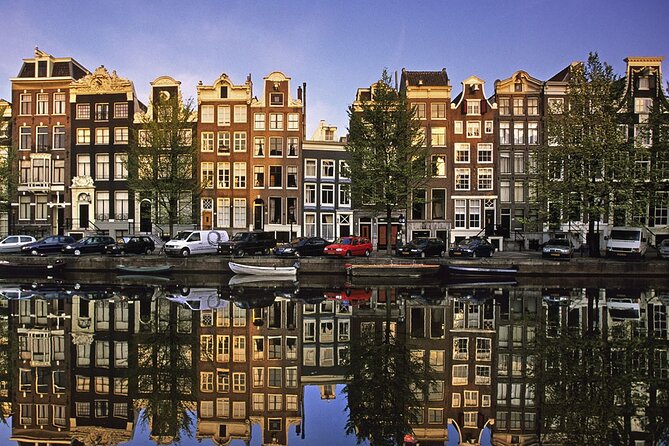
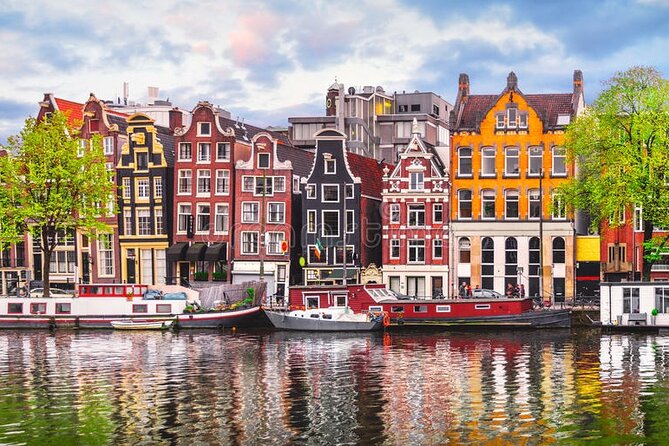
One of the best parts of Amsterdam walking tours is what you notice when someone points your eyes in the right direction. At the smallest house on canal Singel, you’ll hear why houses there look the way they do—tall, narrow, and sometimes leaning—and what that tells you about canal life.
The tour doesn’t treat canals like scenery. You’ll learn the meaning behind grachnen (the canal system), what the canals were for, and why ongoing maintenance matters. That’s a practical kind of history: once you understand canals as infrastructure, the city’s bends and bridges feel less random.
And from the look of the reviews, Aleks has a talent for turning these details into stories that land—whether you’re traveling solo, as a couple, or with kids who want the “why” behind everything.
Medieval walls and a customs building that once weighed goods
Next comes a stop tied to Amsterdam’s defensive past: the Weeping Tower area, once part of the medieval wall system dating to the 15th century. This spot also connects to a major “how Amsterdam mattered to the world” thread: it’s linked to Henry Hudson sailing north toward North America.
Then you hit De Waag (the Weigh Building / customs house). It started as a gate into the inner city and later became tied to guild life. The lesson is simple but useful: Amsterdam wasn’t only a trading port. It was a place that organized work, measured value, and ran the business of exchange through real buildings—some of which still stand in the same roles.
More trips where a local runs the whole day



Churches of multiple eras: Catholic, Protestant, and the hidden attic
Amsterdam’s religious map is complicated, and this tour does a good job making it feel understandable instead of overwhelming. You begin with St. Nicholas Basilica, described as the biggest Catholic temple in the Netherlands from the latter half of the 19th century. Even if you’ve seen plenty of church façades in Europe, hearing how this one fits into Catholic history in Amsterdam changes the way you read it.
The tour’s star for secret storytelling is the Ons’ Lieve Heer op Solder museum, the famed secret church in an attic. Even in a short stop, it’s the kind of place that makes the bigger city feel intimate: you’re watching how survival and faith hid in plain sight.
Then you move into Protestant space with landmarks like the Nieuwe Kerk. It began in the 15th century and still plays ceremonial roles for royal occasions, including weddings and crowning events. You also get another church close-up near the Anne Frank House area with Westerkerk, built in 1631 and known for a leaning tower. A detail Aleks can bring to the conversation is how it relates to royal weddings, and the nearby legend that connects Rembrandt’s burial—carefully noted as unproven.
Finally, the tour’s quietest spiritual reset is the Begijnhof. Beguines were a semi-religious sisterhood with life that sat between convent and everyday independence. You’ll also hear about another “secret Catholic church,” the oldest wooden house in Amsterdam, the English Church, and a legend involving sister Cornelia Arens and the Miracle of Amsterdam from 1345. It’s one of those stops where the guide’s pacing really matters, because you’re walking into a memorial space, not just viewing an attraction.
The political heart at Dam Square, then memory at the National Monument
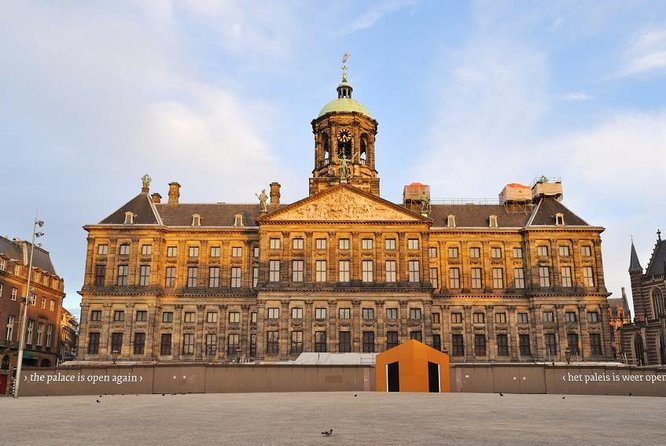
Dam Square is where Amsterdam shows you the scale of its power. The square sits at the city’s central and oldest core, and it’s surrounded by landmarks like the Royal Palace and New Church area, plus the National Monument nearby. In about ten minutes, you should be able to grasp why this square became the city’s public stage—market, ceremony, commemoration.
From there, you can choose the Royal Palace Amsterdam if you want to go inside. The palace is the former city hall from the mid-17th century and linked to royal residences. The ticket isn’t included, so this is one of your budget decisions.
A short walk later, the National Monument gives you the emotional gear shift. It’s a 22-meter memorial stand from 1956 honoring casualties of World War II and later armed conflicts. This stop works best when you don’t rush it. If you’re the kind of traveler who likes to take in what a place means, you’ll appreciate the way a guide can tie the monument to Amsterdam’s post-war identity.
Red Light District context: history, policy, and staying on the right side of the line
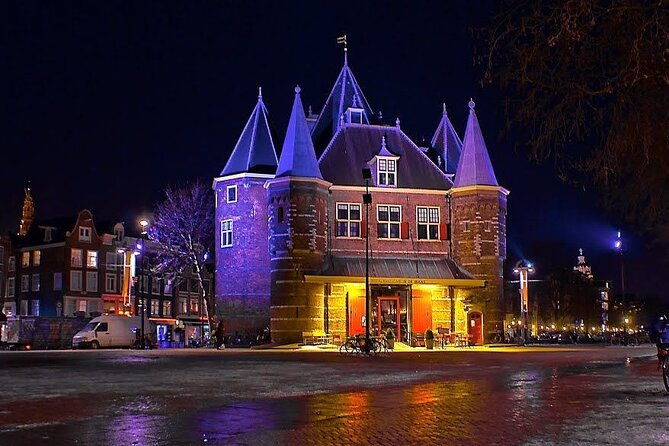
You’ll spend a short break in the Red Light District around De Wallen—about half an hour. This is not a voyeur-style stroll. The guide frames it through historical context and the real-world policy reality of prostitution and drug rules in the Netherlands. You’ll also get practical guidance on how to enjoy the area while staying within the law.
This part is worth treating as a cultural lesson, not a nightlife detour. You’ll learn what exists there now, how it evolved, and how the city thinks about regulation versus morality. And because the group stays small, the atmosphere tends to feel calmer than if you’re getting pushed around by larger crowds.
Anne Frank House and the ticket reality you need to plan for
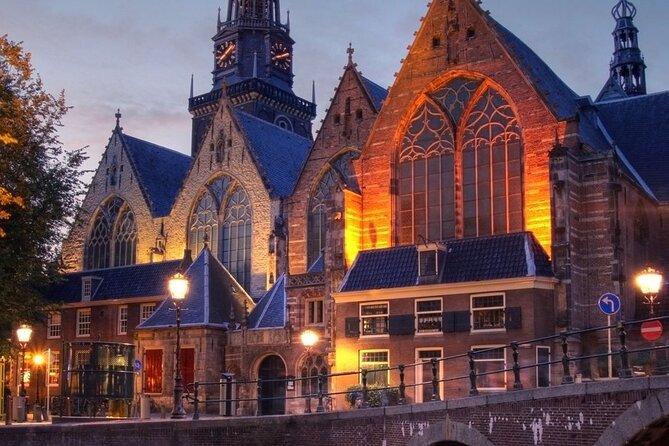
If your trip includes Anne Frank House, plan like a pro. The museum is ticketed and tickets are only available online, with guidance that you book at least 6 weeks in advance. That’s not a small detail—it’s the difference between seeing it and missing it.
This tour includes time in the area, but you’re responsible for your ticket. If you already have your timed entry, you’ll get a smoother flow and less stress. If you don’t, you might still get surrounding context, but the main draw stays out of reach without that advance booking.
Close by, Westerkerk can also become a meaningful part of the conversation. The tour’s structure helps you see how neighborhoods hold memory layers in close distance: churches, courtyards, memorials, and street views all come together in a short walk.
Jewish Quarter and memorials: Jodenbuurt with respectful framing
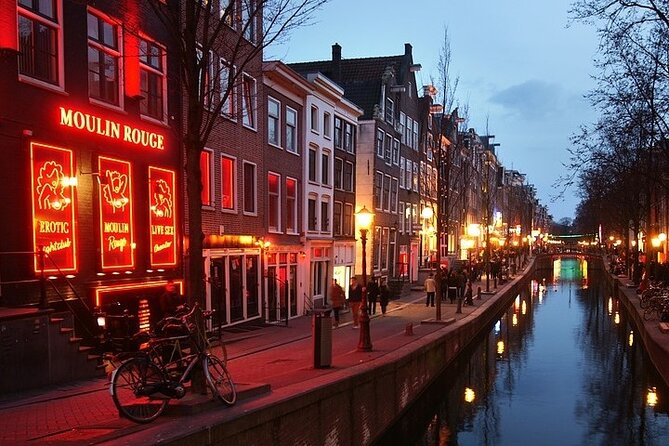
Jodenbuurt (also known as Plantage) is where the city’s story becomes heavier. The guide places it in context: from the end of the 16th century through World War II, many Jewish residents lived here, and the area connects to important community buildings and later Holocaust memorials.
This stop isn’t about checking boxes. It’s about understanding place. If you’re sensitive to the topic, you’ll likely appreciate that the tour doesn’t treat it like a quick photo stop. If you’re not, you’ll still come away with a clearer map of how Amsterdam links identity, tragedy, and remembrance in one district.
The Amstel, bridges, and the view that ties it together
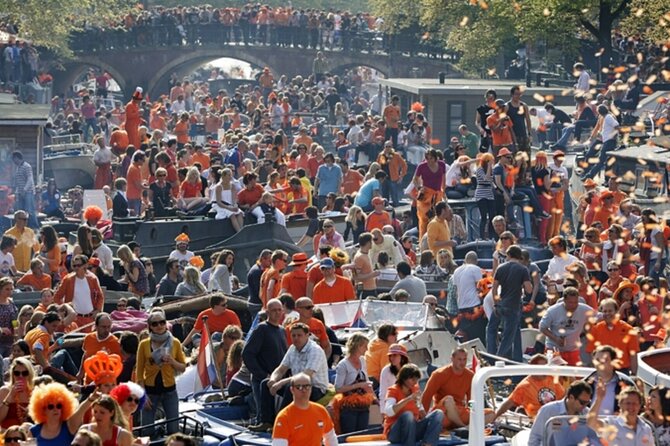
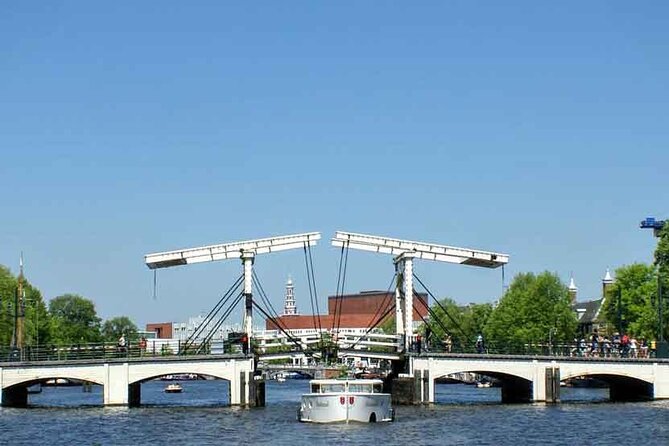
One of the easiest ways to understand Amsterdam is to look at the river. The tour gives you time at the Amstel for views over surrounding buildings and two notable bridges: the Blue Bridge and the Skinny Bridge. Even if you’ve seen river photos, seeing them in sequence with earlier canal lessons helps your brain connect the dots.
It also gives you a natural pause. After churches, squares, and hard history, the water view resets your energy, and it turns the city back into a place you can enjoy, not just study.
Aleks and the human side of the tour
The most consistent praise is about Aleks. People highlight that time with him “flies by,” and that he answers questions fully instead of rushing to the next stop. What stands out most is flexibility and adjustment: he can tailor how he explains Amsterdam based on who’s in the group, including families with children.
There’s also the language factor. Aleks is reported to speak perfect English and Slovak, plus multiple languages connected to the former Yugoslav republics. That matters because it usually makes explanations smoother and reduces the chance of misunderstandings. And because this is a small private group, you’re not stuck with a one-size-fits-all lecture.
If you like tours where the guide clearly loves the work—while still staying professional—you’ll probably feel it quickly with Aleks.
Price and value: what $540.69 covers and what you still pay
This tour costs $540.69 per group for up to 4 people, about 5 hours walking. The math is where the value really shows.
- If your group fills all 4 spots, you’re effectively paying about $135 per person for guided walking through a tight selection of Amsterdam highlights.
- If it’s just you and one other person, the per-person cost rises, and the deal depends more on how much you value having one-on-one routing and explanations.
Most stops on the route are free to enter, which helps. But several big-ticket items are not included. Based on the listed extra fees, you may need to budget for things like:
- Royal Palace Amsterdam: €10
- Westerkerk: €7
- Ons’ Lieve Heer op Solder: €16.50
- Anne Frank House: €16
- Nieuwe Kerk: €10
- Old Center: €13.50 for adults, with a reduced €7 for ages 13 to 18 and students (as provided)
If you end up paying for everything listed above, you’re looking at roughly €72.50 on top of the tour price per adult for those ticketed stops. That doesn’t make it overpriced by default, but it does mean you should plan your must-dos ahead of time so the day matches your interests.
What this tour is best at (and where it might not fit)
This is a strong first-time Amsterdam option. You’ll see the core landmarks, learn how canals and buildings relate to one another, and get context that’s hard to piece together on your own in a short visit.
It also fits families well, mainly because a guide who adapts the explanation helps kids stay engaged. For older travelers, it’s a good pace choice too, since the route includes shorter viewing windows and frequent orientation points.
Where it may not match your expectations is if you want long museum time inside major sites, or if you prefer a single-theme deep dive—art-only, architecture-only, or politics-only. This tour spreads your attention across the city’s main ideas. That’s the point, but it’s not the style for people who want hours inside one attraction.
Should you book this Golden Age Amsterdam private walk?
I’d book it if you:
- want an organized, small-group introduction to Amsterdam’s highlights and backstories
- like learning how the city works: canals, gates, churches, and neighborhoods
- appreciate a guide who answers questions and adapts to your group
I might skip or pair it with something else if you:
- only care about one or two major indoor attractions and hate ticket planning
- strongly dislike any mention of hard history or regulated adult districts
- want a slower day focused on fewer sites
If you do book, the best move is to decide early what ticketed stops you truly want—especially Anne Frank House—so your day stays relaxed.
FAQ
How long is the Golden Age Amsterdam Private Walking Tour?
It runs about 5 hours.
How many people are in a private group?
The maximum group size is 4 travelers.
Is pickup offered?
Yes, pickup is offered.
Where does the tour start?
It starts at Amsterdam Centraal railway station, Stationsplein, 1012 AB Amsterdam.
What entrance fees are not included?
Not included are tickets for Royal Palace Amsterdam, Westerkerk, Ons’ Lieve Heer op Solder, Anne Frank House, Nieuwe Kerk, and Old Center (with listed prices).
Does Anne Frank House require advance booking?
Yes. Tickets are only bookable online and should be booked at least 6 weeks in advance.
What is the cancellation policy?
You can cancel up to 24 hours in advance for a full refund. If you cancel less than 24 hours before the start time, the amount paid is not refunded.
More Amsterdam Walking Routes






More Tours in Amsterdam




More Tour Reviews in Amsterdam






Just added: fresh Amsterdam tour reviews





Walking Tours, compared.
 ★ 4.8Amsterdam Anne Frank: Small-Group Walking Tour & Local GuideFrom $2912,789 reviews
 ★ 5.0Anne Frank’s Story – Guided Walking Tour through AmsterdamFrom $3911,619 reviews
 ★ 5.0Absolutely Amsterdam – the Essential Introductory Walking TourFrom $53,629 reviews
 ★ 4.9Anne Frank Guided Walking Tour in DE/EN/IT/ESFrom $283,107 reviews
 ★ 4.8Anne Frank Guided Small Group Walking TourFrom $282,722 reviews
 ★ 4.9Cultural Highlights Walking TourFrom $302,629 reviews
 ★ 4.2Ganja Walking TourFrom $402,127 reviews
 ★ 5.0Anne Frank Walking Tour Amsterdam Including Jewish Cultural QuarterFrom $751,879 reviews
Browse the lists this tour appears in