
Reviewed · ANNE FRANK & JEWISH QUARTER
The Anne Frank Tour (Jewish Neighborhood & Amsterdam during WWII)
This is a 2-hour walk that connects Anne Frank’s story to real streets. I love the small group pace and the way the guide makes WWII feel human and specific. I also like that you get landmark context without spending your whole day stuck in lines. One possible drawback: this tour stays outside and you won’t enter the Anne Frank House.
You’ll start at the National Monument at Dam, then move through the Anne Frank area with a licensed English-speaking guide. The group stays under 10 people, so questions don’t get swallowed by the crowd.
In This Review
- Key points at a glance
- Price and Logistics: What $3.61 Buys You (And What It Doesn’t)
- The Start at Dam Square: Easy to Find, Full of Meaning
- Stop 1 Outside the Anne Frank House: The Street-Level Story of Hiding
- Stop 2 at Dam Square: Liberation, Then the Hard News
- Stop 3 at Westertoren: What You Can Hear Matters
- The Final Walk Through the WWII Neighborhoods: Seeing the City Around the Diary
- The Guide Experience: When Storytelling Uses Maps and Documents
- What You’ll Actually Spend Time Doing (So You Don’t Feel Rushed)
- Accessibility and Pace: Good for Most People, but Mind the Walking
- Should You Book This Anne Frank Tour?
- FAQ
- How long is the Anne Frank tour?
- Is the tour in English?
- Does this tour include entry to the Anne Frank House?
- Where does the tour start?
- How many people are in the group?
- Is there a tip expected?
- What if I need to cancel?
Key points at a glance
- Outside Anne Frank House, with clear context so you understand what you’re looking at
- Dam Square stop focused on what happened right after the city’s liberation
- Westertoren focus on sound—the churchbells Anne Frank could hear
- WWII Jewish neighborhood walk that frames daily life around hiding
- Mobile ticket and convenient transit access near Dam
Deeper into the Jewish Quarter and the war years
- Amsterdam Anne Frank: Small-Group Walking Tour & Local Guide
★ 4.8 · 12,789 reviews - Anne Frank’s Story – Guided Walking Tour through Amsterdam
★ 5.0 · 11,619 reviews - Amsterdam: Anne Frank Guided Walking Tour in DE/EN/IT/ES
★ 4.9 · 3,107 reviews - Amsterdam: Anne Frank Guided Small Group Walking Tour
★ 4.8 · 2,722 reviews
Price and Logistics: What $3.61 Buys You (And What It Doesn’t)
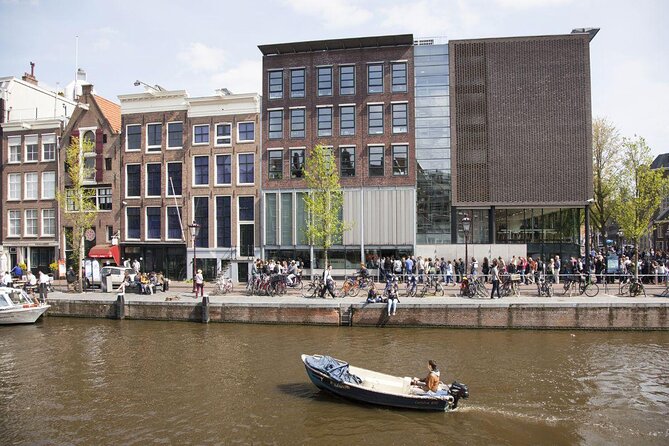
At $3.61 per person for an about-2-hour walk, the value is mainly in the storytelling and structure, not entrances. This is not a ticketed museum experience. The big historical anchor is the Anne Frank House area, but you view it from the street.
That matters for your planning. If what you want is the full Anne Frank House visit (the building and the specific interior experience), you’ll need to book that separately. This walk is designed to give you the “before you go in” context—or the “tickets not available” alternative—without pretending it’s the same thing.
The tour is offered in English and you get a mobile ticket. It’s near public transportation, and the maximum group size is 10, which is a big deal on a walking route like this. With a smaller group, the guide can slow down when people have questions, and you spend less time herding.
One small thing to keep in mind: the start time is fixed (11:00am). There’s no group wait-and-chill mode if you’re late. Plan to arrive a few minutes early at Dam.
The Start at Dam Square: Easy to Find, Full of Meaning
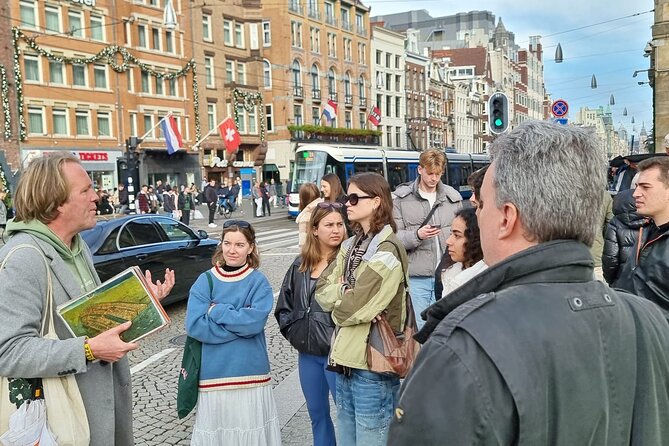
You meet at the National Monument at Dam (1012 JS Amsterdam). That location is more than convenient—it’s a strong “anchor point” for the story. Dam Square is one of those places where Amsterdam feels modern and public, which makes the WWII framing land harder.
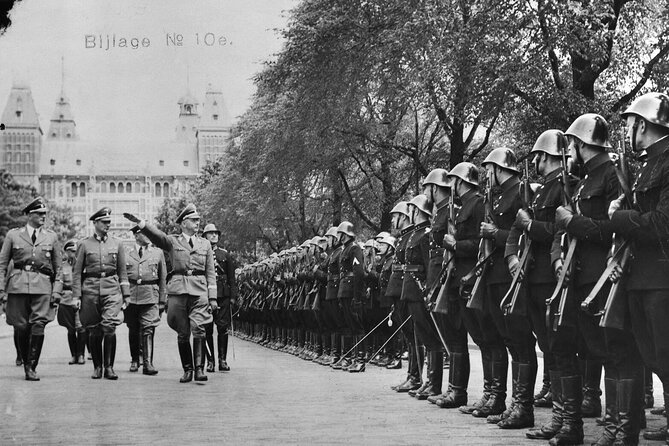
From here, you’ll set the tone for the walk: Amsterdam during the Nazi occupation, the Jewish community under pressure, and the daily reality behind the letters and diary pages people know today. Instead of treating Anne Frank as a distant name on a page, the guide helps you connect her to the city around her.
This opening is also a practical rhythm-setter. You’ll know what the guide plans to cover, and you’ll pick up the “listening for clues” habit that becomes useful for the later stops.
Stop 1 Outside the Anne Frank House: The Street-Level Story of Hiding
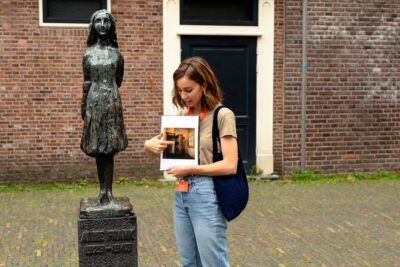
The first stop is the Anne Frank House area, where you do an outside visit only. You’re not going in. But the street-level approach has its own power.
The guide keeps the focus on what hiding meant in everyday terms: what the neighborhood looked like from the outside, what could be heard, and how risk shaped ordinary choices. You’ll also get Anne Frank’s diary used as a guide to interpret what you’re seeing—how her writing turns the tension of confinement into something vivid and readable.
This is where the route adds depth beyond a single famous building. As you continue through the neighborhood, the walk pulls in other wartime references—things like the Resistance Museum area and hints of secret bunkers around town. You’re not expected to memorize every location. Instead, you start to understand the larger pattern: Amsterdam’s resistance and survival weren’t abstract. They were woven into streets, corners, and buildings.
A quick note on emotional pacing: the topic is heavy, and the tour is built for attention, not jokes. If you’re traveling with kids or anyone who needs a softer pace, it can help to mention that early so the guide can adjust how much detail they share. Some guides are especially good at keeping the tone appropriate while still telling the truth.

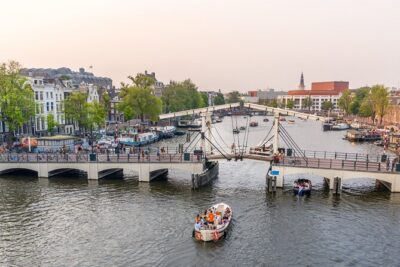


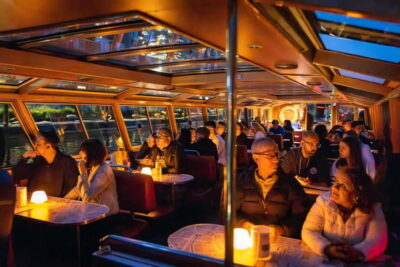
Stop 2 at Dam Square: Liberation, Then the Hard News
Dam Square is your second stop, and this part shifts the timeline. You’re looking at a public square, but the story here isn’t postcard-friendly.
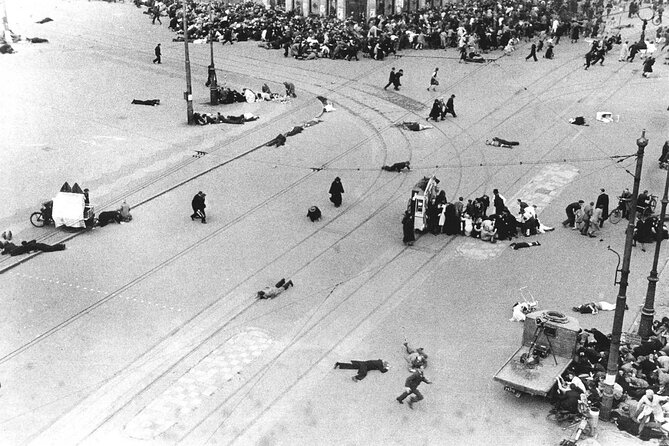
The guide discusses the shooting that happened in Amsterdam after the country’s liberation. That’s a crucial reminder: liberation doesn’t magically erase violence. The transition from occupation to freedom came with its own chaos and danger.
Why this stop works: it changes your mental picture. You stop thinking of WWII as only “during the hiding years” and start to see the broader period—the reality that the city’s story didn’t end on liberation day.
This is also a useful way to understand Amsterdam as a living place. It’s easy to treat history sites as isolated. This walk keeps dragging you back to the idea of a city moving through time.
Stop 3 at Westertoren: What You Can Hear Matters
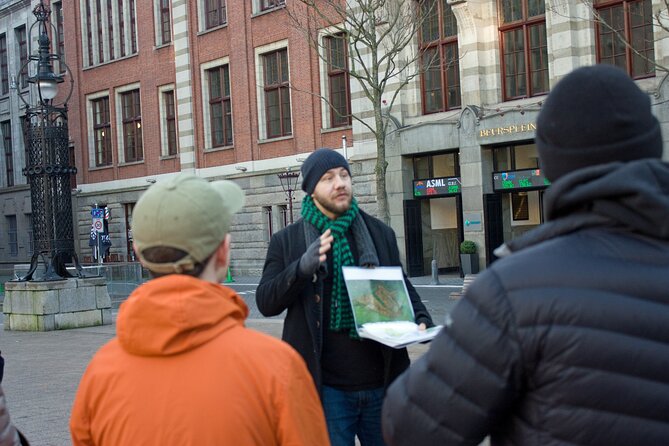
Next up is Westertoren, where the stop centers on churchbells. The tour ties the soundscape to Anne Frank’s hiding place—what she could hear, and how noise would have carried into the secret annex life.
This is a smart choice for a walking tour. It gets you to do something different than just look at buildings. It encourages you to imagine the physical experience: distance, muffled sound, and how the city’s rhythms would have filtered in.
The church is also a reminder that Amsterdam’s daily life didn’t disappear under occupation. Even in hiding, the world wasn’t silent. You’re meant to feel that tension: life continuing outside while life compresses inside.
The admission here is free as part of the walk, so you’re not paying extra just to access the views and context.
The Final Walk Through the WWII Neighborhoods: Seeing the City Around the Diary
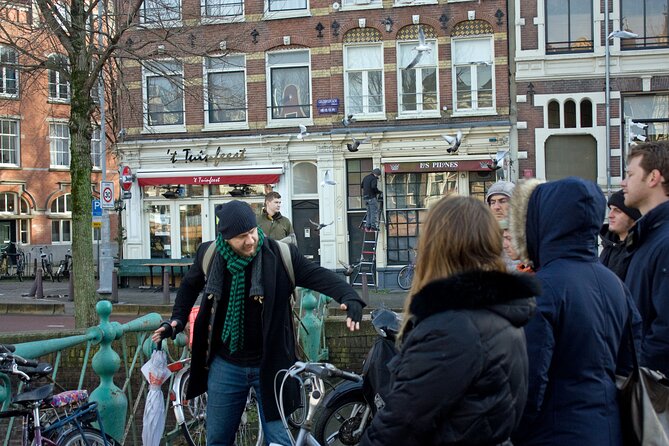
The tour continues for about an hour through the area where Anne Frank lived before and during the war, including the period when she was in hiding. This is the “pull it together” phase.
The guide asks the core questions you should keep in your head during this section: what could Anne Frank see from her hiding place, and what could she hear while writing? And what changed in Amsterdam around her as the occupation years progressed?
This is where the story becomes less about one site and more about atmosphere. Streets, building styles, and the geography of the neighborhood start to look like clues. You don’t need perfect visual matching. You’re learning the logic of the place—how Amsterdam’s structure shaped what hiding could realistically mean.
Also, this final walk tends to be where you get your best Q&A moments. Because the group stays small, you can ask for clarifications if something doesn’t click. If you prefer a more conversational style, this is often the segment where that happens.
The Guide Experience: When Storytelling Uses Maps and Documents
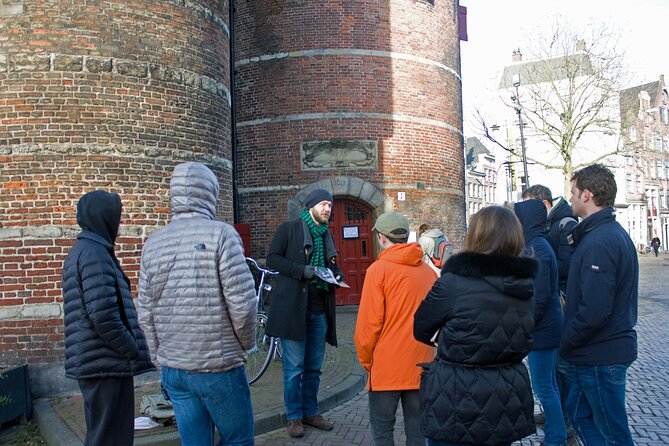
The quality of this kind of tour lives and dies by the guide. The best versions of this walk use more than speeches.
In the guide styles praised in past tours, you’ll see patterns like:
- using historical visuals such as documents and maps
- mixing factual timeline moments with personal perspective
- adjusting pacing for the group, including keeping details appropriate when needed
Some guide names that have come up as standouts include Sebastiaan, Marius, Craig, Iris, Jasmine, Wendy, Luc, Maurice, Max, and Miesch. You can’t count on the exact guide you’ll get, but those names are a signal of what kinds of storytelling skills the tour is capable of.
If you’re the type who loves context, you’ll likely appreciate a guide who answers questions directly and keeps the story flowing without turning it into a lecture.
What You’ll Actually Spend Time Doing (So You Don’t Feel Rushed)
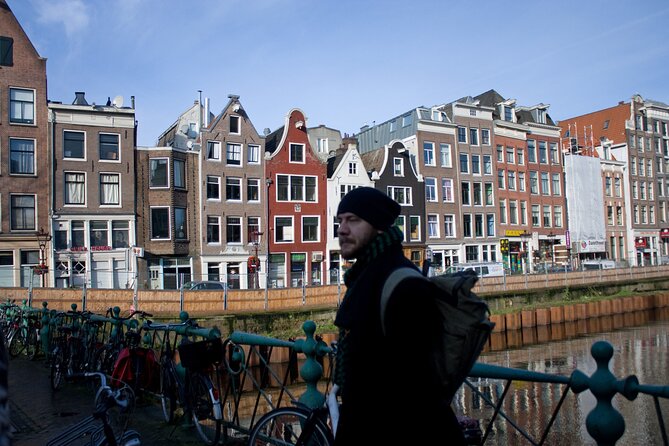
The tour runs around 2 hours total, with short, planned stops. Think of it as a focused route, not a slow meander.
A realistic expectation:
- You’ll spend about 20 minutes at the Anne Frank House outside stop (then keep walking).
- You’ll spend about 20 minutes at Dam Square.
- You’ll spend about 20 minutes at Westertoren.
- Then you’ll cover the final walking portion for about an hour to connect the neighborhoods to the diary questions.
This schedule is designed for attention. It’s fast enough to keep your energy up, but not so fast that you feel like you’re sprinting from one marker to another. Still, you’ll be walking, so wear comfortable shoes.
Accessibility and Pace: Good for Most People, but Mind the Walking
The tour is generally suitable for most people. Service animals are allowed. There’s no promise here of wheelchair-level smoothness beyond what you’d normally find on city sidewalks and curb cuts.
One practical tip: choose this tour if you’re okay with a steady walk through central Amsterdam streets. If mobility is a big concern, it’s worth planning a route with fewer long stops elsewhere on your day—don’t schedule it right after a museum marathon.
Also, be ready for emotional content. This is WWII and Jewish history in Amsterdam. Even when the guide keeps it clear and informative, the topic is painful. If you want lighter parts of the city after, keep them for later that day.
Should You Book This Anne Frank Tour?
I’d book it if you want:
- a guided introduction to Anne Frank’s life in Amsterdam that helps you interpret the area
- a small-group walk at a very low price relative to what you’re getting (story + landmarks + structure)
- a way to connect WWII context to specific places like Dam Square and Westertoren
- an option when you can’t or don’t want to commit to the Anne Frank House timed entry
I might skip or rethink it if:
- you’re expecting admission into the Anne Frank House itself (this walk stays outside)
- you only want ticket-based, inside-the-museum details
- you’re hoping for a casual sightseeing loop with light tone throughout
If you’re doing both, a common winning strategy is: take this walk for context first, then decide whether the House visit is right for you. If you can’t get House tickets, this tour becomes the “meaningful connection” you still need.
FAQ
How long is the Anne Frank tour?
It runs for approximately 2 hours.
Is the tour in English?
Yes, it’s offered in English.
Does this tour include entry to the Anne Frank House?
No. You stop at the Anne Frank House area, but you do not enter the house during this tour. House admission needs to be booked separately.
Where does the tour start?
The meeting point is the National Monument Dam, 1012 JS Amsterdam, Netherlands.
How many people are in the group?
The tour has a maximum of 10 travelers.
Is there a tip expected?
The tour includes a paid booking fee online, and guides may ask for tips at the end based on your experience.
What if I need to cancel?
You can cancel for a full refund up to 24 hours before the start time. If you cancel later than that, the amount you paid won’t be refunded.
More Tours in Amsterdam





More Tour Reviews in Amsterdam






The Jewish Quarter, Explored Further




Just added: fresh Amsterdam tour reviews





Anne Frank & Jewish Quarter, compared.
 ★ 4.8Amsterdam Anne Frank: Small-Group Walking Tour & Local GuideFrom $2912,789 reviews
 ★ 5.0Anne Frank’s Story – Guided Walking Tour through AmsterdamFrom $3911,619 reviews
 ★ 4.9Anne Frank Guided Walking Tour in DE/EN/IT/ESFrom $283,107 reviews
 ★ 4.8Anne Frank Guided Small Group Walking TourFrom $282,722 reviews
 ★ 5.0Anne Frank Walking Tour Amsterdam Including Jewish Cultural QuarterFrom $751,879 reviews
 ★ 5.0Anne Frank’s Last Walk & See Anne Frank House in Virtual RealityFrom $42957 reviews
 ★ 4.7Dutch WWII Resistance Museum Entry TicketFrom $21951 reviews
 ★ 5.0Anne Frank and Jewish Quarter Amsterdam Private Walking TourFrom $157684 reviews
Browse the lists this tour appears in