
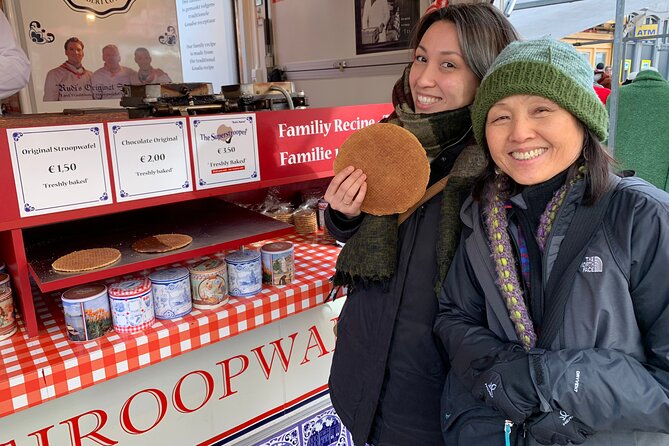
Reviewed · AMSTERDAM FOOD TOURS
Guided Walking Street Food Tour of De Pijp & Beyond
Food walks beat map apps every time. This guided street food experience helps you understand Amsterdam’s everyday rhythm as you walk, snack, and talk with your guide, in a style that leans local instead of tourist-y. It also keeps things social in a small group, which makes it easier to ask questions as you go.
What I love most is the mix of Albert Cuyp Market staples and neighborhood stops in De Pijp, plus the focus on small businesses and avoiding the loud, generic traps. You should expect to try at least seven street foods and a few drinks while picking up context for what you’re eating and why it matters. The only real watch-out: you’ll be on your feet for 4 to 5 hours and you’ll likely run into common Amsterdam favorites that include fish, so if you avoid seafood, plan your expectations.
In This Review
- Key Reasons This Walk Works So Well
- Why This De Pijp Street Food Walk Beats the Usual Amsterdam Plan
- Albert Cuyp Market: Getting Your Bearings and Your First Bites
- De Pijp Street Food Stops: Neighborhood Flavor Without the Tourist Trap
- What You Actually Eat: Seven Tastings, Plus Drinks
- The Walking Pace, Group Size, and Meeting Point Reality
- The Real Value: Learning Everyday Amsterdam Through Food
- Price and Value: Is $155.68 Worth It?
- Who Should Book This Tour (and Who Might Skip It)
- Should You Book Hungry Birds for the De Pijp Street Food Walk?
- FAQ
- What is the duration of the Guided Walking Street Food Tour of De Pijp & Beyond?
- What time does the tour start, and where do I meet?
- How much does the tour cost?
- What language is the tour offered in?
- How many people are in the group?
- What can I expect to eat and drink?
- What is the cancellation policy?
Key Reasons This Walk Works So Well
- Small group (up to 8): You get a more personal pace and room to ask questions.
- Market-first start: You begin at Albert Cuyp Market, where Dutch classics and international influences share the same stalls.
- Local De Pijp focus: The route targets everyday neighborhood spots, including Indonesian and Surinamese-style toko’s.
- At least 7 street food tastings plus drinks: You eat enough to feel you made a real dent, not just a sample flight.
- Your guide brings the vibe: People specifically called out guides like Sharmain for banter and Sara for being fun, with food tied to history and context.
Still hungry? More Amsterdam food walks and tastings
- Amsterdam: Traditional Dutch Syrup Waffle Making Workshop
★ 4.8 · 4,093 reviews - 10 Tastes of Amsterdam: Food Tour by UNESCO Canals and Jordaan
★ 5.0 · 3,020 reviews - Amsterdam: Light Festival Cruise + Stroopwafel & Hot Choco
★ 3.7 · 1,577 reviews - Amsterdam: Premium Henri Willig Cheese Tasting Experience
★ 4.7 · 1,106 reviews
Why This De Pijp Street Food Walk Beats the Usual Amsterdam Plan
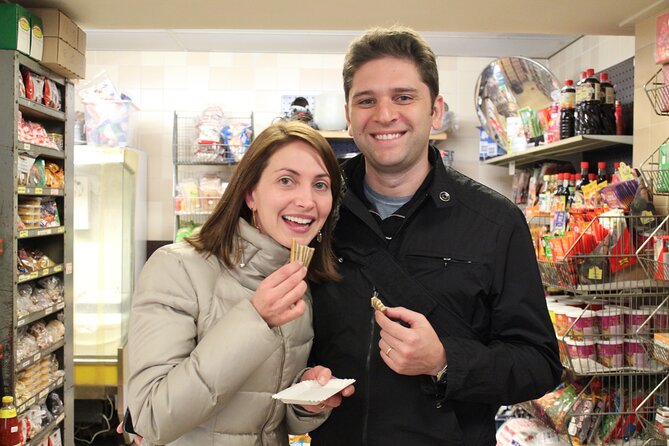
If Amsterdam is on your itinerary, you’ll probably see the big picture fast: canals, bikes, museums, postcard streets. This tour gives you the smaller picture you can’t easily piece together from a map. You’ll walk through De Pijp, one of the city’s more lived-in neighborhoods, and you’ll do it while eating what locals actually reach for.
The value is not just the food. It’s the way the guide connects it to daily life. You get to ask, and you also get explanations in plain language: what a place is known for, how flavors traveled, and what people tend to order when they want something quick. That matters because Amsterdam street food is not one single thing. It’s Dutch comfort foods sitting next to Indonesian, Surinamese, and other international influences.
Another practical plus: a group capped at 8 people means you’re not lost in a crowd. You move as a unit, stop often enough to feel like you’re progressing, and you’re not spending the tour constantly waiting for strangers to catch up.
Albert Cuyp Market: Getting Your Bearings and Your First Bites
You start at Albert Cuypstraat 75 at 11:00 am, and you head straight into one of the Netherlands’ best-known street market areas. This is the part that helps you understand Amsterdam’s food culture quickly, because you see variety in the open air: family businesses, newer food entrepreneurs, and vendors serving both Dutch and international picks.
At this first stop, you’ll likely run into some of the city’s most recognized snack foods. Expect things like herring, a broodje pom (a Dutch snack with a bread roll and a specific fried filling), kroket, and the ever-popular stroopwafel. The exact order of everything can shift, but the theme stays consistent: classic comfort meets international influence.
What makes this stop especially useful is timing. You begin here while the energy is building and you still have your appetite sharp. Even if you think you already know Amsterdam food, the market shows you how many versions of comfort snacks exist in one place. It’s a fast lesson in what people treat as normal, everyday eating.
One consideration: markets can be a little crowded, and you’re moving in and out of stall areas. If you hate standing close to others, you’ll want to keep your expectations realistic. Still, that’s part of the point. This is not a staged tasting room. It’s the real setting locals shop in.
De Pijp Street Food Stops: Neighborhood Flavor Without the Tourist Trap
After Albert Cuyp Market, the tour shifts into De Pijp, where narrow streets and local storefronts make the city feel more like a place people live in rather than something you just pass through. This is where your guide’s choices do the heavy lifting: small eateries, toko’s, and side-street favorites you’d miss if you only followed the most obvious sights.
You’ll hit a mix of:
- Dutch street food classics like fries, kroket, poffertjes, and stroopwafels
- local spots connected to Indonesian or Surinamese tastes, often via toko’s and smaller eateries
- newer international options, including Japanese-style sandwiches (sandos)
This is a smart route design because De Pijp itself is a blend. You’re not switching from one country’s food scene to a completely unrelated one every few minutes. Instead, the neighborhood’s influence shows up repeatedly: the snacks feel familiar, but the flavors keep expanding.
The biggest reason I like this part of the walk is what it avoids. When a tour skips small neighborhood shops, you end up paying for convenience and branding. Here, the route leans toward small businesses, and that tends to produce better stories and more interesting food.
If you’re the kind of eater who hates surprises, this is still workable because you’ll get guidance. But it’s not a strict menu tour, so it rewards curiosity. And if you’re sensitive to specific ingredients like fish, keep an eye on what’s in your portion and ask your guide if there’s an alternative option at each stop.
More of Amsterdam street by street, on foot


What You Actually Eat: Seven Tastings, Plus Drinks
The tour is built around a simple promise: you’ll try at least seven local street foods and a few drinks during a 4 to 5 hour walk. That’s the sweet spot for me. It’s long enough to feel like a real meal plan, but not so long that you’re just snack-shopping for the sake of it.
You can think of the food lineup in two layers:
1) Dutch comfort snacks
These are the foods that give you the Amsterdam baseline: fried treats, warm pastries, and sweet caramel notes. If you want stroopwafel and kroket on your trip, this is a practical way to check them off without hunting for the best sellers on your own.
2) International influences in Amsterdam’s everyday places
Stops include Indonesian and Surinamese-flavored toko offerings, plus at least one international direction like Japanese sandos. The benefit is that you learn Amsterdam isn’t frozen in one culinary moment. The city is constantly absorbing flavors through neighborhoods like De Pijp.
The drinks are a helpful detail too. Street food tastes different depending on what you pair it with. A guided walk is often better for pairing than a solo snack run, because your guide can steer you toward what makes sense as the flavors shift.
The Walking Pace, Group Size, and Meeting Point Reality
This is a walking tour, and it’s designed for a small group: maximum 8 travelers. That affects your experience in a good way. You’re not constantly stopping and starting while a big group shuffles around. You also get more responsive guidance when you ask, What is this? How do locals eat it?
The start time is 11:00 am and the meeting point is Albert Cuypstraat 75, 1072 CN Amsterdam. Plan to arrive a few minutes early so you’re not rushed at the beginning. Once you’re underway, the tour ends in a different location, so you’ll want to pay attention to the exact end details when you confirm your booking.
Because the duration is 4 to 5 hours, you should dress for comfortable walking and expect to stand at stalls while you’re served. The good news is that the stops are frequent enough that you’re not doing long, nonstop stretches.
Also, the tour is offered in English and you’ll receive a confirmation within 48 hours of booking when spots are available. If you’re traveling with mobility concerns, it’s worth noting there’s no detail provided about step-free routes, but the tour is generally intended for most travelers to participate. If you have special needs, you’ll want to ask directly before committing.
The Real Value: Learning Everyday Amsterdam Through Food
Food tours can be either educational or just a delivery system for snacks. This one aims for the first one, and the guide role is central. The experience is described as giving insights on everyday life in Amsterdam, and that’s exactly what makes the walk more satisfying than simply eating.
When you connect food to routine, you start noticing patterns:
- why certain snacks are popular for quick meals
- how neighborhoods like De Pijp shape what shows up on menus
- how international tastes become normal, not exotic
You’ll also pick up context around what you’re eating. People highlighted guide Sara for being fun and for making the learning feel tied to history and food context. That’s a rare combo. It’s not just facts dumped on you. The information lands because you’re eating in the place where it belongs.
And yes, the social side matters. One guide, Sharmain, was praised for banter and for reading the group well. When a guide can do that, the tour feels lighter. You’ll laugh a little, but you’ll also leave with clearer understanding of Amsterdam’s food culture.
Price and Value: Is $155.68 Worth It?
At $155.68 per person, you’re paying for more than a handful of snacks. You’re paying for:
- a guided route that includes both a major market start and De Pijp neighborhood stops
- a small group experience (up to 8)
- at least seven street food tastings plus drinks
- the guide’s explanations that turn eating into context
Street food prices in a place like Amsterdam add up fast when you’re buying on your own and trying to make sure you get good versions of everything. Even if you only partially match the list, the tour’s advantage is sequencing. You get an organized flow: Dutch favorites first, then neighborhood variety, then sweets and international twists.
Another value point: the tour is built to support small businesses rather than funnel you into big-ticket tourist stops. That helps your money land where it matters locally.
The only time I’d hesitate is if you already have a very specific meal plan and you’re just trying to fill space. If food is a core part of your Amsterdam day, this price usually makes sense because you’re not guessing—you’re getting a planned tasting walk.
Who Should Book This Tour (and Who Might Skip It)
This is a great fit if:
- you like walking and want to get your bearings in Amsterdam beyond the famous sights
- you enjoy street food and want a structured way to try more than a couple things
- you care about eating at small neighborhood businesses, not only high-visibility spots
- you want a guide to explain what you’re seeing and tasting
It may not be the best fit if:
- you avoid fish or are very strict about diet, because the classic lineup includes items like herring
- you prefer a sit-down meal instead of a walking-and-standing experience
- you don’t want a food-heavy afternoon
If you’re traveling with friends or family, the small group size helps keep it fun without feeling chaotic. Solo travelers also tend to like this setup because it’s easy to connect with the guide and the people in your group while you snack.
Should You Book Hungry Birds for the De Pijp Street Food Walk?
I’d book it if your Amsterdam trip has room for a true neighborhood-focused food day. The combination of Albert Cuyp Market and De Pijp is a smart one-two punch. You get market energy, then you move into streets where the food feels rooted in local life.
The strongest reasons to choose this tour are the things people consistently emphasize: the banter and group-reading, plus the guide’s ability to explain food in context. That means you don’t just eat; you understand what you’re eating and where it fits in Amsterdam.
If you’re on the fence, use this quick test: Can you handle 4 to 5 hours of walking and want to try multiple snacks in one go? If yes, you’ll probably have a standout food day.
FAQ
What is the duration of the Guided Walking Street Food Tour of De Pijp & Beyond?
It runs about 4 to 5 hours.
What time does the tour start, and where do I meet?
It starts at 11:00 am. You meet at Albert Cuypstraat 75, 1072 CN Amsterdam, Netherlands.
How much does the tour cost?
The price is $155.68 per person.
What language is the tour offered in?
The tour is offered in English.
How many people are in the group?
The tour has a maximum of 8 travelers.
What can I expect to eat and drink?
You’ll try at least seven local street foods and a few drinks.
What is the cancellation policy?
You can cancel for a full refund if you cancel up to 24 hours in advance of the experience start time.
More Tours in Amsterdam



More Tour Reviews in Amsterdam





Tasting Amsterdam, Stop by Stop




Just added: fresh Amsterdam tour reviews





Amsterdam Food Tours, compared.
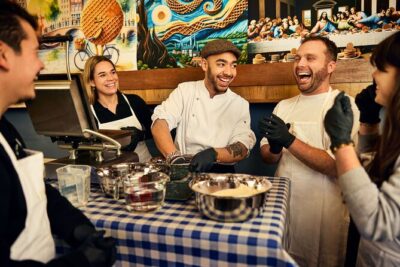 ★ 4.8Traditional Dutch Syrup Waffle Making WorkshopFrom $234,093 reviews
 ★ 5.010 Tastes of Amsterdam: Food Tour by UNESCO Canals and JordaanFrom $1023,020 reviews
 ★ 3.7Light Festival Cruise + Stroopwafel & Hot ChocoFrom $311,577 reviews
 ★ 4.7Premium Henri Willig Cheese Tasting ExperienceFrom $211,106 reviews
★ 5.0Amsterdam Traditional Dutch Syrup Waffle Making WorkshopFrom $27960 reviews
★ 4.7Premium Henri Willig Cheese Tasting ExperienceFrom $211,106 reviews
★ 5.0Amsterdam Traditional Dutch Syrup Waffle Making WorkshopFrom $27960 reviews
 ★ 4.9Zaanse Schans, Cheese Tasting & Volendam TourFrom $20679 reviews
 ★ 4.0Zaanse Schans and Cheese Tasting Guided Tour from AmsterdamFrom $45661 reviews
 ★ 4.7Dutch Cheese Tasting Experience with WineFrom $23658 reviews
Browse the lists this tour appears in