
Reviewed · RED LIGHT DISTRICT TOURS
Exclusive small-group Amsterdam Red Light District tour
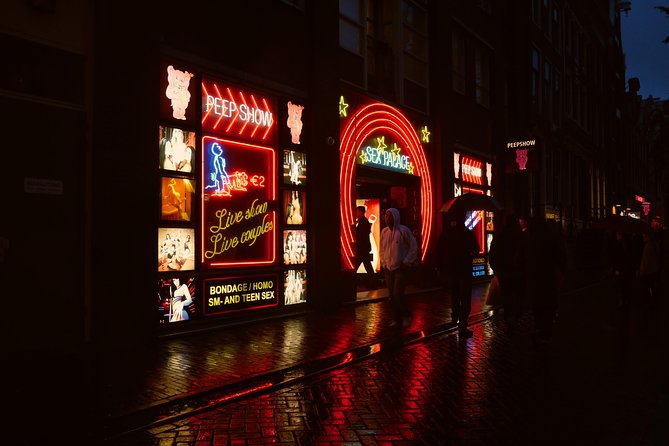
One street can tell a whole city’s story. This small-group walk through Amsterdam’s De Wallen area mixes street-level facts with old-city details, so you see the Red Light District as something historic and human, not just a headline. I like how the tour stays short (about 2 hours), which makes it realistic even on a tight itinerary.
Two things I especially like: you get a local, on-foot perspective that explains how the district took shape, and you also get Old Town stops tied to Amsterdam’s building history. A possible drawback is the topic is adult-focused, so if you want a purely academic or PG-rated experience, you may feel a bit uncomfortable at points.
In This Review
- Key highlights you’ll feel in the streets
- Entering the De Wallen story from a local perspective
- The route: how a two-hour walk stays focused
- Geldersekade to the Old Town: start where the city feels layered
- The Dam area and why it anchors so many stories
- Pub The Ape (Int Aepjen): the wooden-building survival story
- Waag: from city gate to guild space
- The smallest house and the VOC link
- A condom shop since 1987: the adult commerce angle, explained
- Guides who make the facts click: Adam and Aarre
- Price and value: what $63.67 buys you in 2 hours
- Who should book this De Wallen walking tour
- Should you book it
- FAQ
- How long is the Amsterdam Red Light District tour?
- Where do I meet for the tour?
- How much does the tour cost?
- Is the tour a small group?
- Do I need to print a ticket?
- What accessibility should I consider?
- Is free cancellation available?
Key highlights you’ll feel in the streets
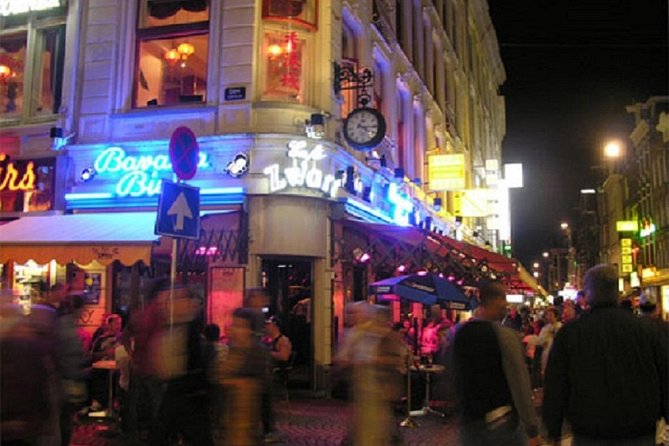
- Local view on De Wallen myths: you’ll hear how the district became what it is today
- Short and efficient timing: about 2 hours with your group staying on a tight route
- Old Town landmarks on the way: stops like Waag and the Old Town houses built on piles
- Guide quality comes through: many people rave about guides like Adam and Aarre
- Odd, useful details: from the wooden-building story at Pub The Ape to the condom shop since 1987
The old town after dark: more Red Light District walks
- Amsterdam: Red Light District Tour in DE/EN/IT/ES/FR
★ 4.9 · 7,136 reviews - Amsterdam: Red Light Secrets Museum Entry Ticket
★ 4.2 · 5,722 reviews - Amsterdam Red Light District & Coffee Shop Tour
★ 4.6 · 4,134 reviews - Amsterdam: Red Light District Pub Crawl with Unlimited Shots
★ 4.1 · 2,130 reviews
Entering the De Wallen story from a local perspective
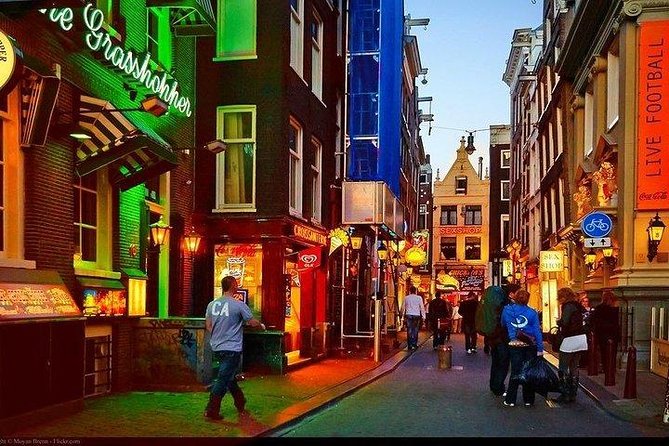
This is the kind of tour where you don’t just pass buildings. You walk narrow streets with a guide who explains what’s behind what you see, including the intersection of sex work, the area’s evolution, and Amsterdam’s broader street culture like coffeeshops. It’s a practical approach: you learn what you’re looking at as you’re looking at it.
The guide framing matters here. If you’ve only ever heard the Red Light District described as chaos or scandal, you’ll likely leave with a clearer sense of how the neighborhood developed over time. And because it’s a walking format, you’re not stuck reading a sign from across the street. You pick up street-level context.
This tour also works well because it’s built for time-crunched visitors. Two hours is long enough to understand the basic story thread, but short enough that you won’t feel stuck once you’ve had your fill of the topic.
The route: how a two-hour walk stays focused
You meet at Geldersekade 2HS (1012 BH), and the tour ends back at the same meeting point. That matters more than you might think. You avoid the stress of coordinating transit or hunting for a new meeting spot, which is a big deal when your day is already packed.
The walking pace is meant for standard visitors, and the tour is described as suitable for most travelers. There’s also a clear cap on group size: maximum of 32 travelers. That’s not a tiny private tour, but it’s still small enough for questions to land well.
If you’re someone who gets lost easily, you’ll probably like that the tour is structured around recognizable landmarks. The stops connect the neighborhood to older parts of Amsterdam, so the route feels like a story with chapters instead of a random walk.
Geldersekade to the Old Town: start where the city feels layered
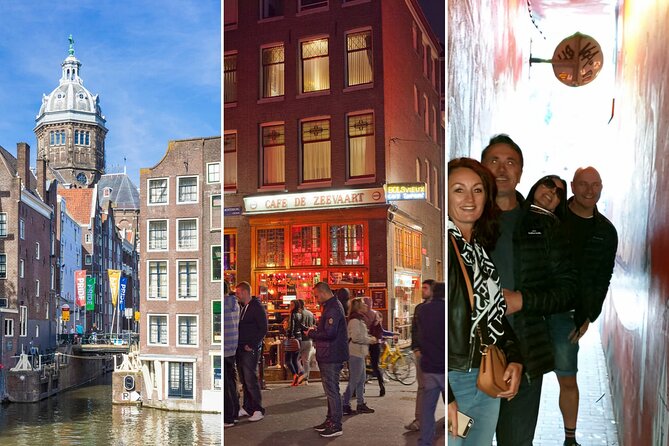
The tour’s first movement is about getting your bearings in a tricky-feeling neighborhood. You start with the Red Light District and Old Town from a local perspective, then you keep threading outward toward older Amsterdam landmarks. That “local eyes” approach is what helps the streets click.
As you walk, you’ll also learn how Amsterdam’s geography shaped its buildings. In other cities, you can blame everything on a medieval layout. Here, the ground itself matters.
One stop focuses on the city’s unusual foundation problem: Amsterdam sits on soil with a thick layer of fen and clay, so buildings are supported by wooden poles driven about 11 meters deep until they reach solid sand. The tour uses that fact to explain why you’ll see such a distinct building style across the city.
That’s a useful detail even if you’ve never studied Dutch engineering. It turns the city from “pretty canals” into “a place that solved real problems,” which makes the sights make more sense.






The Dam area and why it anchors so many stories
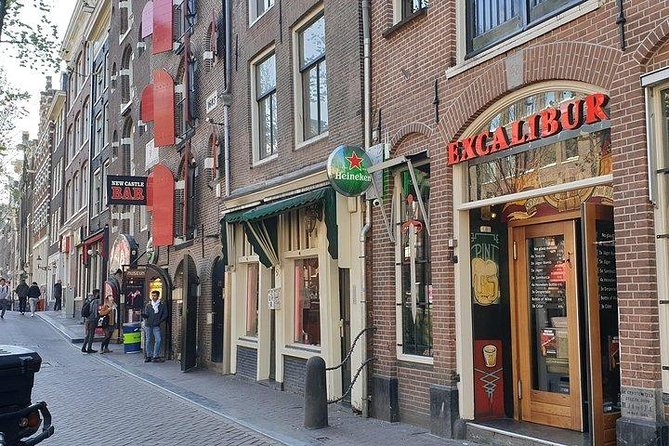
One of the stops ties in the Dam, described as part of the area that helped shape the city. Even without a long detour, connecting the Red Light District streets to Dam-area context helps you understand the neighborhood as part of Amsterdam’s oldest core.
The tour also points out that this part of the city is among the oldest, which is why you’ll encounter more layers of history as you move. When you’re walking, it’s easy to assume the oldest areas are just picturesque. Here, the point is that age is tied to how people lived, worked, built, and rebuilt.
If you like your history grounded in real streets, you’ll probably appreciate how quickly the tour makes the past feel present. You’re not only learning dates. You’re learning why the city looks the way it does.
Pub The Ape (Int Aepjen): the wooden-building survival story
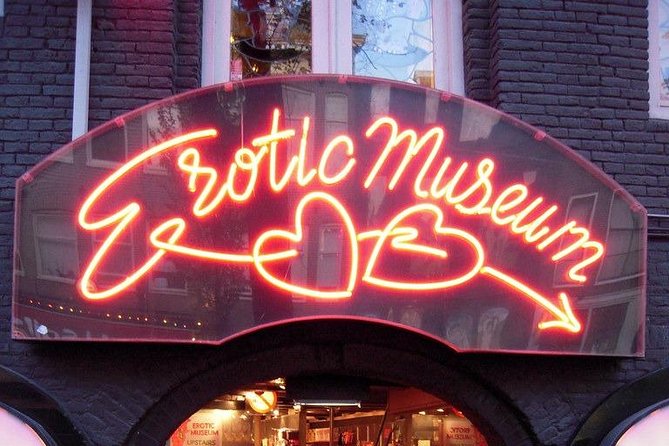
At Pub The Ape, also known as Int Aepjen, the guide tells a standout local tale: it was built around 1540, and it’s one of only two remaining wooden buildings in Amsterdam. That alone gives you a reason to look closer, because most visitors don’t expect to find wood surviving so long in a major city.
The story also mentions a huge fire in 1452. After that, authorities pushed for brick facades, which helps explain why wooden structures are rare today. So when you stand near Int Aepjen, you’re not just seeing a pub. You’re seeing a survival example from a shift in how the city chose to protect itself.
Practical tip: when your guide points out the age and construction background, take a second to look at details you might normally skip—shape, materials, and the way the building sits in its surroundings. Those seconds turn this stop from a fact into a memory.
Waag: from city gate to guild space
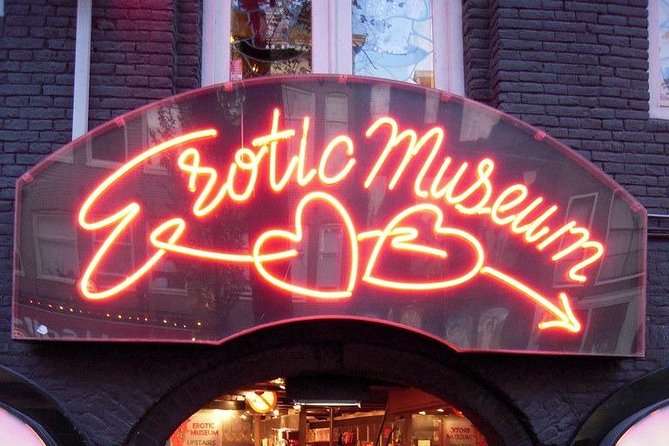
Next comes the Waag, described as a former city gate built around the 1400s. The tour also frames it as the second oldest building of Amsterdam, which gives the stop extra weight.
What I like about this part is how it explains function, not just appearance. The Waag used to be part of the defensive wall system. Later, it became a place for guilds and craftsmen’s organizations, with guild activity inside and around the square.
That’s a strong way to connect Amsterdam’s medieval structure to its later everyday life. In a Red Light District walk, it might be tempting to treat older landmarks as background. Here, the guide helps you see them as part of the same city organism—trade, work, governance, and streets all influencing one another.
If you enjoy architectural stops but don’t want a long museum plan, this is the right length.
The smallest house and the VOC link
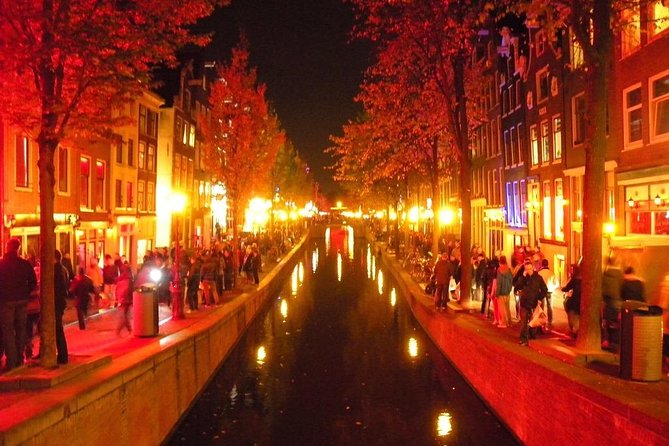
The tour includes the smallest house of Amsterdam, built around the 1700s. The story is especially interesting because it shifts use over time: it began as storage for the VOC trading company, then later people lived there for a very long time.
Even if you don’t know much about Dutch trade, the VOC reference helps you connect Amsterdam’s city layout to global commerce. A small house might sound like a quirky roadside fact, but it actually supports a bigger idea: Amsterdam’s wealth and movement weren’t abstract. They landed in real buildings and real spaces.
Practical note: since you’re in a walking tour format, you’ll see the house as part of a street sequence, not in isolation. That makes it easier to keep context in your head—this isn’t just a photo stop.
A condom shop since 1987: the adult commerce angle, explained
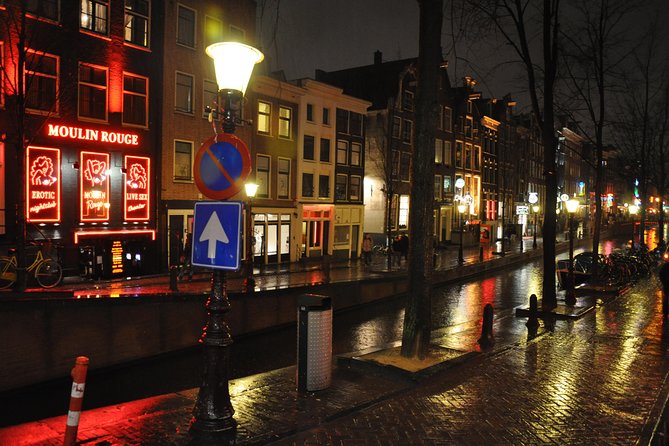
One stop is the world’s first condom shop special for condoms, said to be in place since 1987. The point isn’t shock value. It’s how the city supports the reality of adult services and personal protection right in the same urban ecosystem.
If you’re curious about how systems work, this stop can feel oddly satisfying. It’s a concrete example of how commerce evolves to meet local needs. You’ll likely find it helps your understanding of the neighborhood become more grounded, because it moves from mythy stories to everyday infrastructure.
This is also where the tour’s tone matters. It’s presented as a way to view the area from a local perspective, with adult topics treated as part of the city’s lived landscape.
Guides who make the facts click: Adam and Aarre
The experience really leans on the guide. People highlight guides including Adam and Aarre for being both entertaining and informative, with room for questions. That combo matters, because the subject can be sensitive and easy to misunderstand without context.
When a guide is good, you stop feeling like you’re collecting odd facts. You start seeing why each story was placed in the route. That’s the difference between a tour that’s just sights versus a walk that actually changes how you interpret the streets.
Also, if you want to tailor your time, one account notes that Aarre customized the tour to meet needs. That’s a hint that the provider aims for flexibility when possible.
Price and value: what $63.67 buys you in 2 hours
At $63.67 per person, this isn’t an ultra-budget walking tour. But for a 2-hour, small-group format with a structured route and adult-neighborhood interpretation, I think the price makes sense—especially if you would otherwise spend time researching on your own.
Here’s how the value adds up:
- You’re paying for a guided explanation of what you’re seeing, not just the walk.
- You get a tight time window, so you can fit it around museum hours or canal time.
- You receive a mobile ticket, which is practical for day-of logistics.
- The tour is capped at 32 travelers, which helps keep the experience from feeling like a transit crowd.
If you’re already planning to see Old Town anyway, this tour layers meaning onto that visit. It turns a “we saw the place” day into a “we understood the place” day.
Who should book this De Wallen walking tour
This one is a strong fit if you:
- Want a short Red Light District experience with context
- Appreciate walking tours where you learn as you go
- Like history that connects architecture and city layout, such as foundations on wooden piles
- Are comfortable with adult topics presented as part of city life
It may not be a great fit if you:
- Need a strictly accessible experience (it’s not recommended for travelers with limited mobility)
- Prefer tours that avoid adult-centered content entirely
Also, it helps if you’re curious about Amsterdam’s trade and building story, because the route includes landmarks like Waag and the VOC-linked smallest house.
Should you book it
I think you should book this tour if you want a guided, efficient way to understand Amsterdam’s Red Light District as part of the city’s broader history. The combination of De Wallen context plus Old Town landmarks makes it more than a one-note stroll.
If your goal is simply to say you passed through the area, you might not get your money’s worth. But if you want explanations you can carry with you as you keep exploring Amsterdam, this is a solid use of two hours.
FAQ
How long is the Amsterdam Red Light District tour?
It runs for about 2 hours.
Where do I meet for the tour?
You meet at Geldersekade 2HS, 1012 BH Amsterdam, Netherlands.
How much does the tour cost?
The price is $63.67 per person.
Is the tour a small group?
Yes. The maximum group size is 32 travelers.
Do I need to print a ticket?
No. A mobile ticket is provided.
What accessibility should I consider?
The tour is near public transportation, and most travelers can participate. It is not recommended for travelers with limited mobility.
Is free cancellation available?
Yes. You can cancel up to 24 hours in advance for a full refund.
More Tours in Amsterdam






More Tour Reviews in Amsterdam






The Red Light District After Dark



Just added: fresh Amsterdam tour reviews





Red Light District Tours, compared.
 ★ 4.9Red Light District Tour in DE/EN/IT/ES/FRFrom $287,136 reviews
 ★ 4.2Red Light Secrets Museum Entry TicketFrom $175,722 reviews
 ★ 4.6Amsterdam Red Light District & Coffee Shop TourFrom $294,134 reviews
 ★ 4.1Red Light District Pub Crawl with Unlimited ShotsFrom $242,130 reviews
 ★ 4.5Amsterdam Red Light District Pub CrawlFrom $241,497 reviews
 ★ 4.6Red Light District Tour in English or GermanFrom $341,228 reviews
 ★ 4.1After Dark Red Light District TourFrom $571,030 reviews
 ★ 5.0Private Amsterdam Red Light District and Coffee Shop TourFrom $41763 reviews
Browse the lists this tour appears in