
Reviewed · AMSTERDAM MUSEUMS & GALLERIES
Amsterdam: Stedelijk Museum (Private Tour with Art Historian)
Modern art can feel like a maze. Stedelijk Museum visits get a lot easier with a private art historian guiding you through the key modern and contemporary rooms.
I especially like how the tour moves through major art ideas in a clear sequence, so you don’t just catch names like Mondrian and van Doesburg floating around. I also like the way it links dramatic jumps in style—Expressionism, Surrealism, and then the bigger post-war shifts—so the museum feels like one story, not a pile of masterpieces.
The only real drawback is time. In about 1 hour 30 minutes, you will not have much room to linger on one single favorite work for ages.
In This Review
- Key highlights you can count on
- Museumplein start at 12:00: where this tour actually begins
- Stop 1 at Stedelijk: the modern-art map you’ll follow
- Early modernism and Dutch avant-garde: De Stijl with Mondrian and van Doesburg
- Expressionism and Surrealism: bold intensity, dreamlike logic
- Abstract Expressionism and post-war art: big gestures after WWII
- Pop Art and Minimalism: Warhol, Lichtenstein, Judd, and Flavin
- Contemporary art and Stedelijk Today: recent acquisitions and modern visual culture
- Why the art historian’s approach helps you see more (not just learn more)
- Price and value: $180.19 per group for up to four
- Practical tips so you enjoy the 90 minutes more
- Who should book this private Stedelijk Museum tour
- The one thing to accept before you go
- Should you book this Stedelijk Museum private tour?
- FAQ
- How long is the Stedelijk Museum private tour with an art historian?
- What is the group size for this tour?
- What language is the tour offered in?
- Is museum admission included?
- Where do we meet for the tour?
- What time does the tour start?
- What is the cancellation policy?
- Are service animals allowed?
Key highlights you can count on
- Private group (up to 4): you get a calmer pace than standard museum crowds.
- English-only format: you can ask questions and follow the themes without language stress.
- Big modern-art timeline: from early modernism and Dutch avant-garde to pop and Minimalism.
- Hands-on interpretation: the guide explains why these movements mattered, not just what they are.
- Stedelijk Today focus: you finish with a sense of where the museum has gone since the classics.
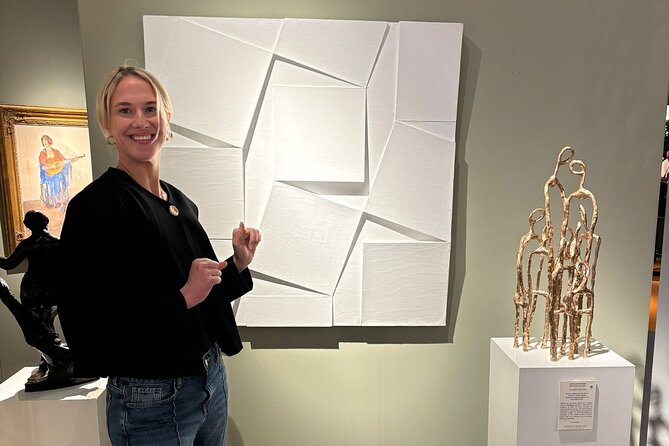
- Guide support that matters: past guests specifically praised Mercedes for helping them navigate, and Liz for passionate explanations.
More of the museums worth the queue in Amsterdam
- Amsterdam: Madame Tussauds Ticket
★ 4.5 · 11,438 reviews - Amsterdam’s Weirdest Museum: Ripley’s Believe It or Not!
★ 4.5 · 4,920 reviews - Amsterdam: NEMO Science Museum Ticket
★ 4.4 · 2,979 reviews - Moco Museum Amsterdam Admission Ticket with Banksy and more
★ 4.0 · 1,745 reviews
Museumplein start at 12:00: where this tour actually begins
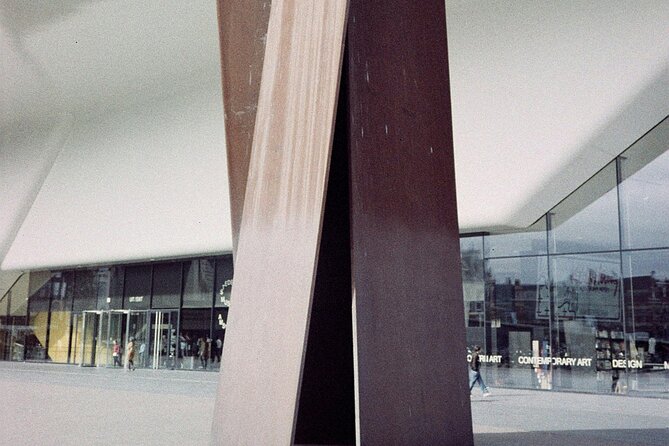
This tour meets at the front of the museum entrance on Museumplein for a short intro. The start point is Museumplein 6, 1071 Amsterdam. Your end point is back at the meeting area, so you’re not doing an awkward metro hunt afterward.
If you’re doing this as part of a longer Amsterdam day, the 12:00 pm start time is nice. It’s early enough to still explore on your own afterward, but late enough that you can grab coffee first and not feel rushed.
There’s also a ticket redemption point listed at Stedelijk Museum Amsterdam, Museumplein 10, 1071 DJ Amsterdam. Since the tour includes admission that’s listed as free, I’d treat that redemption stop as a quick handoff point where you confirm everything and get on track. If you arrive a few minutes early, you’ll feel less frazzled when it’s time to begin.
Stop 1 at Stedelijk: the modern-art map you’ll follow
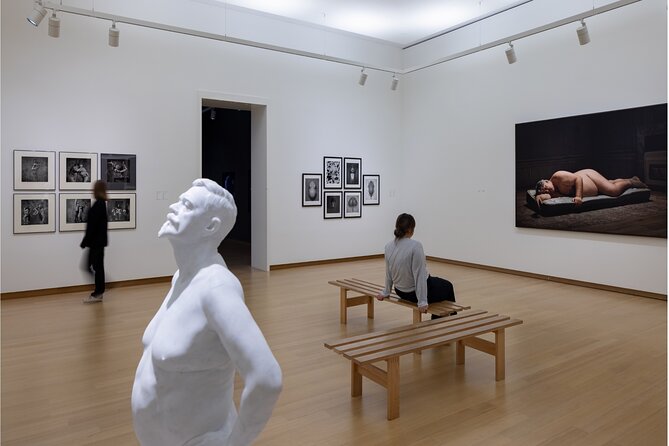
Your whole experience is essentially one guided circuit inside the Stedelijk Museum. It starts with a brief history and significance of the museum in modern and contemporary art—enough context to stop the place from feeling random.
Then you get a short overview of the major movements and artists you’ll see. This matters because the Stedelijk collection spans huge stylistic leaps. Without an “orientation brain,” it’s easy to bounce from room to room and only remember who you recognize. With the guide’s structure, you start connecting dots.
The tour is built for clarity. It’s not trying to teach every detail of art history. It’s trying to give you a workable framework so the museum makes sense as you walk.
Early modernism and Dutch avant-garde: De Stijl with Mondrian and van Doesburg
The first big stop in the story is Early Modernism & Dutch Avant-Garde. You’ll explore works by Mondrian and van Doesburg, with De Stijl as the key theme.
I like this section because it’s a natural entry point. If you’ve ever felt stuck thinking, I don’t get abstraction, this part gives you a reason the style exists. The tour frames how these artists helped revolutionize abstraction, so you can look past the shock of “why does this look like shapes?” and focus on what they were trying to do.
What to watch for here is mindset. The guide’s explanations push you to think about rules, simplification, and structure rather than expecting every work to feel emotional in the traditional sense. Even if you don’t become a lifelong De Stijl fan, you’ll leave with a clearer sense of what “abstraction” meant when it was new.
More private tours with a guide to yourself





Expressionism and Surrealism: bold intensity, dreamlike logic
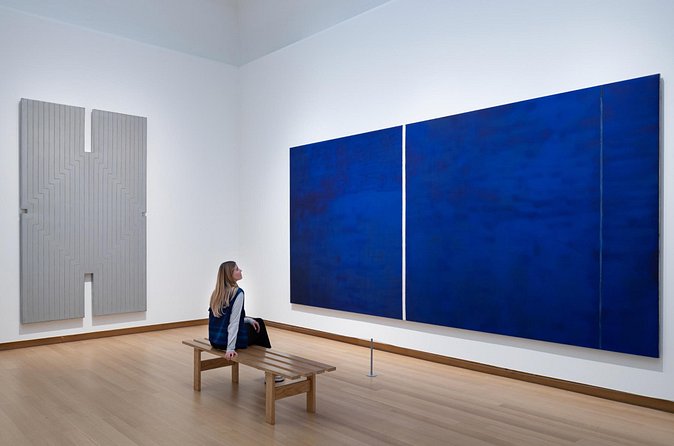
Next up is Expressionism & Surrealism, and it shifts the mood fast.
You’ll see art tied to German Expressionism, with artists such as Kirchner and Kandinsky. After that comes the dreamlike side of Surrealism, including Dalí.
This section is where the museum starts feeling more like theatre. Expressionism tends to hit you as intensity—gestures, emotional force, and a willingness to distort reality on purpose. Surrealism is different. It invites you into images that feel like logic is bending, and it can make your brain ask better questions than, Is this realistic?
A practical benefit: the guide doesn’t just toss names at you. The themes make it easier to tell what you’re looking at. When you understand what a movement is trying to communicate, you stop guessing and start noticing.
Abstract Expressionism and post-war art: big gestures after WWII
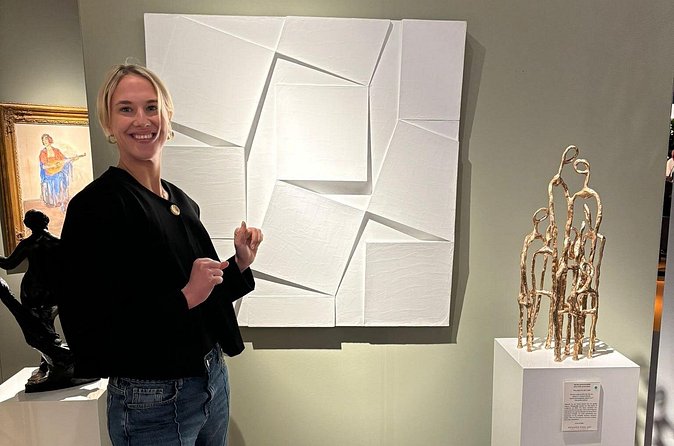
After the early and mid-century swings, the tour moves into Abstract Expressionism & Post-War Art. Here the featured artists include Pollock, Newman, and de Kooning.
This is a section you’ll appreciate even if you think you hate abstract art. Why? Because it’s framed as the post-WWII era’s response to the world. The tour’s language emphasizes the power of those works as post-war masterpieces, which nudges you to look for energy, intention, and impact rather than trying to force a familiar subject into each piece.
The biggest value for me in this part is that it keeps you from treating abstraction like a guessing game. Instead, you’re encouraged to consider the movement as a statement—about time, emotion, and the act of making art.
Pop Art and Minimalism: Warhol, Lichtenstein, Judd, and Flavin
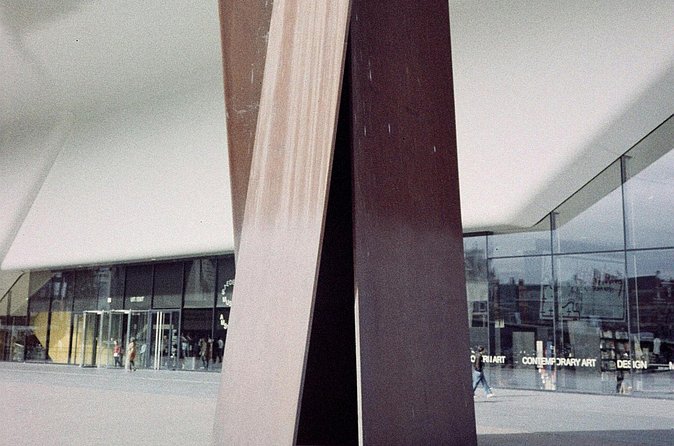
Then the tour flips again into Pop Art & Minimalism. You’ll encounter Warhol and Lichtenstein, and you’ll also see minimalist works connected to Judd and Flavin.
I like this pairing because it shows contrast. Pop often feels like art meeting popular culture at close range, while Minimalism can feel like art removing the noise and focusing on basic form and presence. Even in a short guided run, that shift helps you compare how different artists use simplicity—or loudness—to communicate.
If you tend to drift when you enter minimalist rooms, you’ll probably do better here because the guide ties it to the larger story. You get a reason to stand there longer, and you understand what the artist is emphasizing: not a plot, but the experience of looking.
Contemporary art and Stedelijk Today: recent acquisitions and modern visual culture
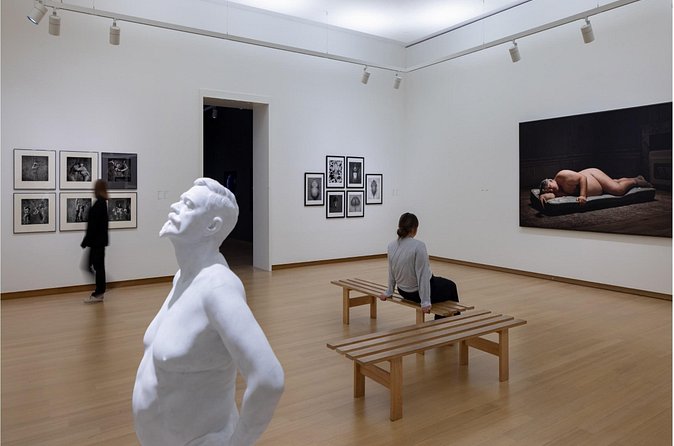
Finally, the tour brings you to Contemporary Art & The Stedelijk Today. This part focuses on recent acquisitions and the museum’s role in shaping modern visual culture.
This last section is smart because it prevents the tour from feeling stuck in the past. Modern art history can turn into a museum version of a lecture: old movements, dead ends, and you out the door. Instead, you end with a sense of the present—how the Stedelijk is still deciding what matters and why.
Practically, it also gives you an easy landing point. If you want to keep exploring after the tour, you have a sense of what to look for next: themes and curatorial direction rather than random browsing.
Why the art historian’s approach helps you see more (not just learn more)
A private tour with an art historian isn’t automatically better because of the ticket price. It’s better because of how it changes your pace inside the museum.
In the guide-led format here, you get explanations that connect each movement to the room you’re standing in. That sounds simple, but it’s the difference between walking through and actually understanding what you’re seeing.
Past guests praised guides by name—Mercedes for helping them navigate an overwhelming museum and for explaining themes and room highlights patiently. Another guide, Liz, received compliments for passion and for pointing out Vincent van Gogh works. You can treat those comments as evidence of the style you’ll likely experience: guided, warm, and focused on making the collection accessible.
One more detail that I think is worth your attention: because it’s a private group, you can ask quick questions without feeling like you’re holding up a crowd. That alone can make you enjoy art more, even if you’re not an expert.
Price and value: $180.19 per group for up to four
Let’s talk value without the fantasy math.
This tour costs $180.19 per group, and it’s designed for up to 4 people. If you split it among four friends or family members, you’re basically paying about $45 per person for 1 hour 30 minutes of guided interpretation in a major Amsterdam museum.
On top of that, admission is listed as free for this experience. That matters because museum ticket costs can add up fast, especially if you’re planning multiple museum stops in one day.
The best value angle is the private format. If you’re the kind of person who gets tired of reading placards, a guide can cut your time wasted on confusion. If you’re already a confident museum wanderer, you might prefer a self-guided visit. But if you want a structured modern-art storyline in a short amount of time, this price structure makes more sense.
Also: this is typically booked around 33 days in advance on average. That suggests it’s popular enough that planning ahead can help.
Practical tips so you enjoy the 90 minutes more
This is a short museum tour. That’s a good thing, but it affects how you should plan.
- Arrive a few minutes early so you’re not rushing during the intro on Museumplein.
- Wear comfortable shoes. You’ll be moving room to room for about 1 hour 30 minutes.
- Come with at least one style you want to understand—De Stijl, Surrealism, post-war abstraction, or something else. The guide can use that as a hook for what to emphasize.
If you care about mobility support, take note of the human side of the experience. One past guest highlighted Mercedes for going above and beyond for a parent’s wheelchair needs, making the visit smooth and stress-free. Also, service animals are allowed.
And since it’s near public transportation, you won’t feel trapped if your Amsterdam day goes slightly off-script.
Who should book this private Stedelijk Museum tour
This works best if you fit one (or more) of these profiles:
- You want a guided modern-art overview but don’t want to spend all afternoon researching before you arrive.
- You’re visiting Amsterdam and want one museum that gives you a structured view of modern and contemporary movements.
- Your group is small enough to prefer a private setting over joining a larger tour.
It’s also a great pick for first-timers who feel overwhelmed by big collections. The guide’s job here is to sort what matters and why it matters. If that’s your goal, you’ll likely enjoy the experience.
The one thing to accept before you go
You’re signing up for an overview, not a deep, slow crawl through every favorite room.
If you want to stand in front of one painting for an hour, this format won’t do that. But if you want a guided framework that makes the entire museum feel logical, it’s a strong match.
Should you book this Stedelijk Museum private tour?
I’d book it if you want an efficient, theme-driven way to understand modern art across eras without getting lost in names and dates. The combination of English-speaking interpretation, a private group up to 4, and a tightly structured journey through De Stijl, Expressionism, Surrealism, post-war abstraction, Pop Art, Minimalism, and Stedelijk Today is exactly how a lot of people wish their museum visits felt.
Skip it if your style is slow drifting and you want to control every minute with no plan at all. Also, if you’re already deeply expert in these movements, you might not gain as much from an organized route.
For most visitors, though, this is a smart value: a short guided storyline, admission listed as free, and the kind of support that can make a big museum feel manageable.
FAQ
How long is the Stedelijk Museum private tour with an art historian?
It’s about 1 hour 30 minutes.
What is the group size for this tour?
It’s a private tour/activity for your group only, up to 4 people.
What language is the tour offered in?
The tour is offered in English.
Is museum admission included?
Admission is listed as free for this experience.
Where do we meet for the tour?
Meet in front of the museum entrance on Museumplein. The start point is Museumplein 6, 1071 Amsterdam. The ticket redemption point is Stedelijk Museum Amsterdam, Museumplein 10, 1071 DJ Amsterdam.
What time does the tour start?
The start time shown is 12:00 pm.
What is the cancellation policy?
Free cancellation is available. You can cancel up to 24 hours before the experience start time for a full refund.
Are service animals allowed?
Yes, service animals are allowed.
More Tours in Amsterdam






More Tour Reviews in Amsterdam






Indoors Done Well: More Amsterdam Museums






Just added: fresh Amsterdam tour reviews





Amsterdam Museums & Galleries, compared.
 ★ 4.5Madame Tussauds TicketFrom $1911,438 reviews
 ★ 4.5Amsterdam’s Weirdest Museum: Ripley’s Believe It or Not!From $264,920 reviews
 ★ 4.4NEMO Science Museum TicketFrom $252,979 reviews
 ★ 4.0Moco Museum Amsterdam Admission Ticket with Banksy and moreFrom $271,745 reviews
 ★ 4.5Ticket to The Ultimate 5D Flight Experience at THIS IS HOLLANDFrom $281,413 reviews
 ★ 4.0Madame Tussauds Amsterdam Admission TicketFrom $25940 reviews
 ★ 4.5Body Worlds Amsterdam Admission TicketFrom $27860 reviews
 ★ 4.6Madame Tussauds & Amsterdam Dungeon Combo TicketFrom $34680 reviews
Browse the lists this tour appears in