
Reviewed · RED LIGHT DISTRICT TOURS
Amsterdam Red Light District tour with a private guide
A walk through Amsterdam’s De Wallen is more complicated than it looks. This private tour is built for a small group (up to 8) and focuses on the area’s history and street-level details, not just the usual postcard stuff.
I especially like that you can customize the walk to what you care about, and that the guide ties together what you’re seeing with clear context about how this old neighborhood works. One drawback to consider: based on guest feedback, some people felt the experience could have been self-guided, and there may be moments where the guide keeps things cautious about what’s allowed to be shown or discussed.
In This Review
- Key Things I’d Pay Attention To
- A Private De Wallen Walk Focused on Streets, Not Theater
- What You Actually Get in 2 Hours (And Why That Timing Works)
- The Meeting Point Matters More Than You’d Think
- Stop 1: De Wallen Streets and Current Reality
- The Dam and Amsterdam’s Wooden-Pole Reality
- Old Town Depth: Why This Part of the City Holds So Much Weight
- Pub The Ape (Int Aepjen): Wooden Building from Around 1540
- The Waag: From City Gate Defense to Guild Power
- The Smallest House of Amsterdam: VOC Storage to Long-Term Homes
- The Condom Shop Since 1987: A Modern Marker in an Old Neighborhood
- Customizable Means You Can Tailor the Questions
- Price and Value: When a Private Walk Makes Sense
- Who This Tour Fits Best
- Should You Book This Amsterdam Red Light District Private Tour?
- FAQ
- How long is the Amsterdam Red Light District tour?
- Is this tour private or shared?
- How many people can be in the group?
- What language is the tour offered in?
- Do I get a ticket on my phone?
- Are there admission fees for the stops?
- Where does the tour start and end?
- What’s the price?
- What is the cancellation policy?
Key Things I’d Pay Attention To
- Private, just your group (up to 8): less waiting, more questions.
- De Wallen context: history and how the neighborhood fits into Amsterdam’s older core.
- Stops beyond the obvious: wooden buildings, city-gate history, guild spaces, and the small-house story.
- Old Amsterdam building tricks: why the city literally sits on wooden poles.
- A modern twist in the middle of it all: a condom shop that’s been there since 1987.
The old town after dark: more Red Light District walks
- Amsterdam: Red Light District Tour in DE/EN/IT/ES/FR
★ 4.9 · 7,136 reviews - Amsterdam: Red Light Secrets Museum Entry Ticket
★ 4.2 · 5,722 reviews - Amsterdam Red Light District & Coffee Shop Tour
★ 4.6 · 4,134 reviews - Amsterdam: Red Light District Pub Crawl with Unlimited Shots
★ 4.1 · 2,130 reviews
A Private De Wallen Walk Focused on Streets, Not Theater
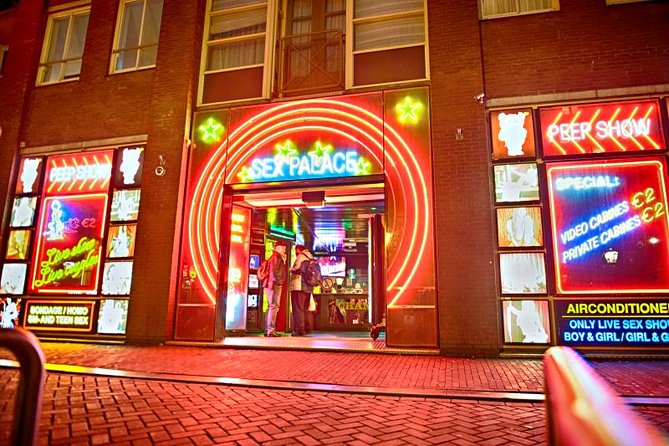
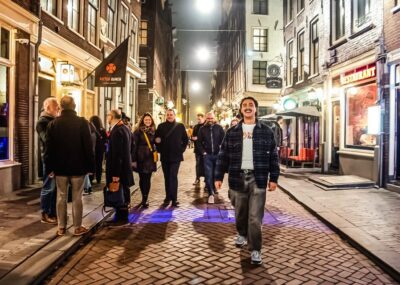
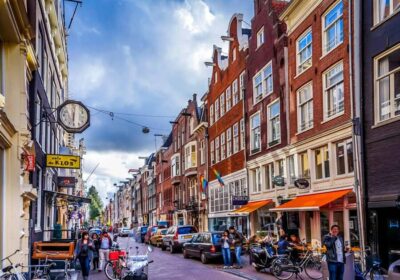
Amsterdam’s Red Light District can feel like two places at once: a maze of narrow streets packed with attention-grabbing sights, and an older neighborhood with real architecture and older city planning. This tour leans into that second side. You’re walking through the area with an expert guide who connects what you see to why it’s there and how Amsterdam built itself on difficult ground.
The biggest value of going private is simple: your guide can pace you, answer your questions, and steer the walk toward what you want to know. If you’re the type who notices details (doorways, building materials, street patterns), this kind of tour makes those details click.
What You Actually Get in 2 Hours (And Why That Timing Works)
The tour runs about 2 hours, and that’s a sweet spot for De Wallen. It’s long enough to get oriented and to hit multiple points of interest, but not so long that you end up drained from the intensity of the area.
Also, admission is free for the stops listed in the tour flow, so you’re paying for the guiding and storytelling, not entrance fees stacking up. For a group of up to 8, the price can feel reasonable if you split it with others who want the same kind of guided context.
The Meeting Point Matters More Than You’d Think
Your start location is at ParkBee Parking near NH Collection Amsterdam Barbizon Palace: Prins Hendrikkade 59, 1012 AD Amsterdam. The tour ends back at the meeting point, so you’re not stuck figuring out where the guide disappears.
Since it’s near public transportation, it’s easier to build into a busy day in Amsterdam. Still, I’d plan to arrive a few minutes early and be ready to walk right away—this is a neighborhood walk, not a sit-down tour.
More trips where a local runs the whole day



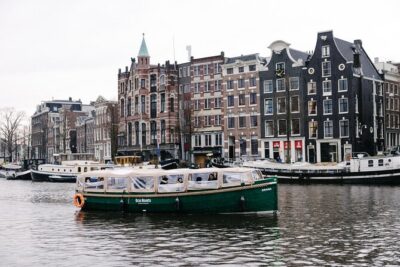
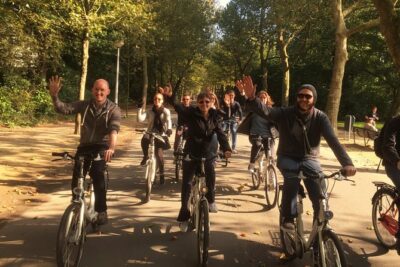
Stop 1: De Wallen Streets and Current Reality
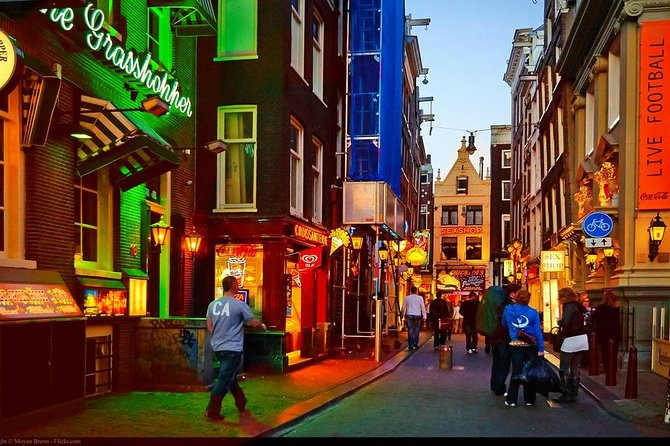
You start in the Red Light District itself, moving through narrow lanes where you’ll see the area’s main sights and the street layout up close. The point of this first segment is orientation: you get your bearings fast, and you learn how the neighborhood got its place in Amsterdam life.
This is also where expectations can vary. One strongly negative experience described a guide who kept the discussion cautious and made it sound like parts of the district were not legally tourable. You can’t predict how a specific guide will handle boundaries, but it’s worth knowing that the tour may focus more on history and the neighborhood’s role than on a free-for-all viewing session.
The Dam and Amsterdam’s Wooden-Pole Reality
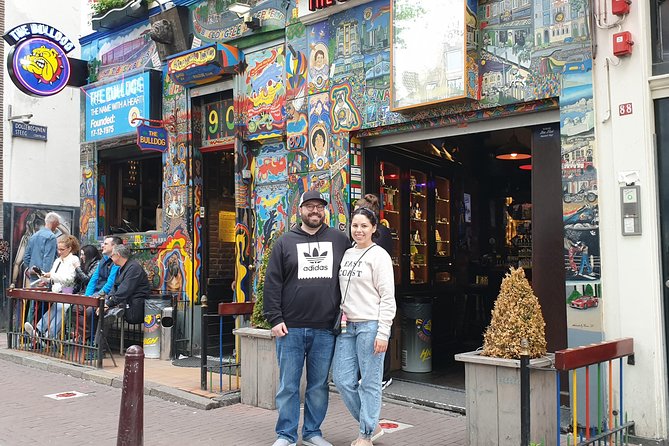
After the initial street walk, the tour brings you into a key concept that explains why Amsterdam looks the way it does: much of the city sits on a tricky mix of fen and clay, with solid sand roughly 11 meters deep in the ground.
The guide explains that older Amsterdam buildings were set on wooden foundation piles driven down through peat, water, and clay until they reach solid sand. This isn’t trivia for trivia’s sake. You get a practical understanding for why the city feels like it’s built on top of engineering—and why so many historic buildings have specific construction choices that still matter today.
If you’ve ever wondered why Amsterdam feels stable in places where it shouldn’t, this is the moment when the answer stops being vague.
Old Town Depth: Why This Part of the City Holds So Much Weight
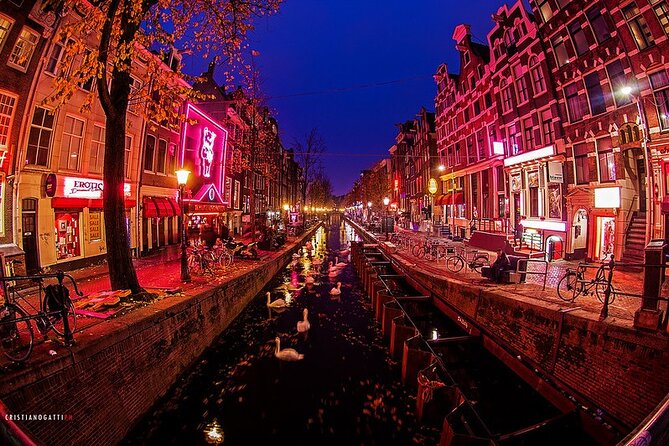
You’ll also hear that this area connects to the oldest part of the city, part of the Old Town fabric. That matters because the Red Light District isn’t just a modern attraction. It sits inside a longer story of streets evolving around trade, defense, and guild life.
In plain terms: you’re not only learning about sex commerce or nightlife. You’re learning about how Amsterdam’s urban DNA formed, then changed over centuries.
Pub The Ape (Int Aepjen): Wooden Building from Around 1540
One stop that’s genuinely interesting is Pub The Ape, known as Int Aepjen in Dutch. The tour describes it as built around 1540 and notes it’s one of only two remaining wooden buildings left in Amsterdam.
That becomes more meaningful because the tour also connects it to a turning point in building rules after a big fire in 1452. After that, the government pushed for brick facades. When you’re standing near (or oriented by) a surviving wooden structure, it hits differently. You’re seeing a remnant from a time when the city was still figuring out how to protect itself from disaster.
If you like your history with actual physical anchors, this stop is a good one.
The Waag: From City Gate Defense to Guild Power
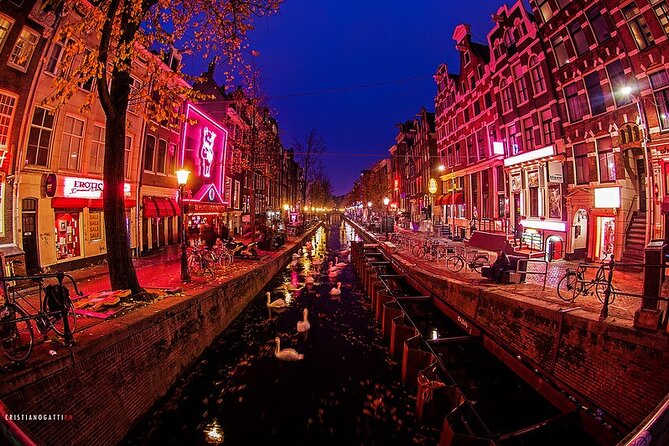
Another standout stop is the Waag, described as a former city gate of Amsterdam and part of the defensive wall. It was built around the 1400s and is called the second oldest building of Amsterdam in the tour notes.
Later, the Waag became a guild and craftsman hub. The idea here is easy to grasp: before modern commerce, cities ran on organized trades, and buildings like this weren’t just decorative. They were the infrastructure of local power and skill.
Even if you’re not a guild-history fan, it’s a great way to balance the modern headlines of the district with proof of older civic structure.
The Smallest House of Amsterdam: VOC Storage to Long-Term Homes
The tour also points out the smallest house of Amsterdam, built around the 1700s. First, it served as storage for the VOC trading company. Later, people lived there for a very long time.
This stop gives you a human scale to the city’s trading engine. Amsterdam was driven by commerce, but not everyone had spacious living. A tiny home used for storage first, then turned into long-term housing, tells you a lot about how people adapted when space was tight.
It’s the kind of detail that makes a walking tour feel like more than sightseeing.
The Condom Shop Since 1987: A Modern Marker in an Old Neighborhood
Yes, the tour includes a stop at a condom shop described as the world’s first specialized condom shop, in place since 1987. It also mentions that you can get size-customized condoms and special condom types.
Whether you find this part fascinating or awkward, it’s also useful. It shows how the district’s identity keeps evolving while the streets remain. The neighborhood holds different functions over time, and you’re watching that layering in real-world terms.
Customizable Means You Can Tailor the Questions
One of the strong selling points is that the private tour can be customized to suit your interests and needs. That matters because De Wallen history can be told many ways: architecture, civic planning, street-by-street context, or the social side of how the district operates.
If you prefer a respectful, historical framing, you can steer the guide there. If you’re more curious about the physical city (the buildings, materials, and what survives), you can push for more of that angle.
And if you want energy and direction, the guide you get can make a big difference. One guide name that comes up clearly in feedback is Stan, praised for showing streets people might miss on their own and making the experience work.
Price and Value: When a Private Walk Makes Sense
The price is $327.64 per group, with up to 8 people. That’s not cheap for a single person, but it can turn into decent value if you’re splitting with friends who want the same guided focus.
Here’s how I’d judge the value: you’re paying for (1) a private pace, (2) a guide who connects streets to history, and (3) a structured 2-hour route that saves you time from trial and error. If you’d otherwise spend hours reading and piecing together what you’re seeing, a guided walk can prevent a lot of frustration.
On the flip side, one negative experience argued the tour felt like you could do it yourself with maps and a guidebook. That’s a fair caution. If you’re comfortable going on your own and you don’t need a live explanation, you may not feel the added value.
Who This Tour Fits Best
This tour works best if you:
- want a private experience rather than a big group shuffle
- care about how the neighborhood fits into older Amsterdam (construction, city-gate buildings, guild spaces)
- like guides who can answer questions and adjust pace
It might feel less worth it if you’re expecting a mostly free-roam look at everything with minimal discussion, or if you strongly prefer self-guided exploration only.
Should You Book This Amsterdam Red Light District Private Tour?
I’d book it if you want a guided walk that explains why the streets and buildings matter, not just what the district is known for today. The mix of De Wallen street orientation and stop-and-learn moments (wooden-pole engineering, the Waag, Int Aepjen) gives it real texture.
I wouldn’t book it expecting a perfectly consistent, lawfully-permissible viewing free-for-all. The tour seems to focus on history and neighborhood context, and your guide’s approach can shape how much you feel you’re learning vs. simply walking.
If you’re going with a small group and you’re the type who enjoys city details, this is the kind of tour that can turn a strange district into something understandable.
FAQ
How long is the Amsterdam Red Light District tour?
It runs for about 2 hours.
Is this tour private or shared?
It’s a private tour. Only your group participates.
How many people can be in the group?
The tour price is for a group of up to 8.
What language is the tour offered in?
The tour is offered in English.
Do I get a ticket on my phone?
Yes. It’s a mobile ticket.
Are there admission fees for the stops?
The itinerary lists admission ticket free for the main stop.
Where does the tour start and end?
It starts at ParkBee Parking NH Collection Amsterdam Barbizon Palace, Prins Hendrikkade 59, 1012 AD Amsterdam and ends back at the meeting point.
What’s the price?
The price is $327.64 per group (up to 8).
What is the cancellation policy?
You can cancel for a full refund if you cancel at least 24 hours before the experience’s start time (free cancellation).
More Tours in Amsterdam






More Tour Reviews in Amsterdam






The Red Light District After Dark




Just added: fresh Amsterdam tour reviews





Red Light District Tours, compared.
 ★ 4.9Red Light District Tour in DE/EN/IT/ES/FRFrom $287,136 reviews
 ★ 4.2Red Light Secrets Museum Entry TicketFrom $175,722 reviews
 ★ 4.6Amsterdam Red Light District & Coffee Shop TourFrom $294,134 reviews
 ★ 4.1Red Light District Pub Crawl with Unlimited ShotsFrom $242,130 reviews
 ★ 4.5Amsterdam Red Light District Pub CrawlFrom $241,497 reviews
 ★ 4.6Red Light District Tour in English or GermanFrom $341,228 reviews
 ★ 4.1After Dark Red Light District TourFrom $571,030 reviews
 ★ 5.0Private Amsterdam Red Light District and Coffee Shop TourFrom $41763 reviews
Browse the lists this tour appears in