
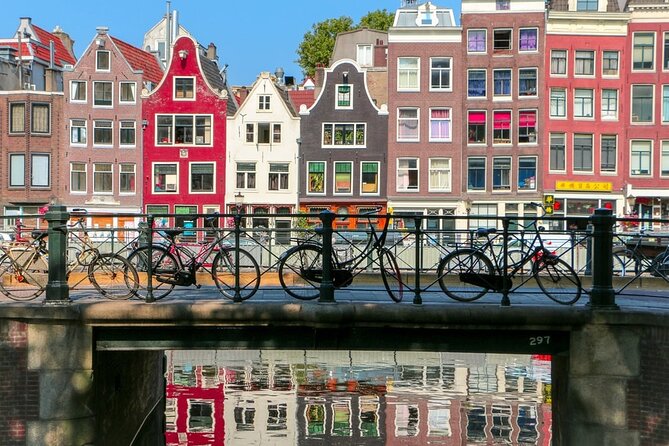
Reviewed · RED LIGHT DISTRICT TOURS
Amsterdam City Center, Red Light District and Coffee Shops Tour
Amsterdam makes sense after a smart walk. This 3-hour center-city tour with Alex turns big sights into a clear picture of daily life, and I love the way the Red Light District stop is handled with moderation and real context. The main watch-out: several major interiors cost extra, including the Royal Palace and Nieuwe Kerk, so factor that into your budget.
I also like that you get a practical route through the city core, with time to slow down at Dam Square, the National Monument, and the medieval corners around De Wallen and Chinatown. If you want Amsterdam explained in plain language—without turning it into a lecture—this format works well. One more consideration: the day has lots of short stops and walking breaks, so it’s best if you’re comfortable with a steady pace for a few hours.
In This Review
- Key Highlights You’ll Feel Right Away
- Dam Square: Your Quick Start to Amsterdam’s Main Stage
- Royal Palace Amsterdam: 17th-Century Power Built on Wooden Poles
- National Monument and Nieuwe Kerk: WWII Memory and Royal Ceremony
- De Wallen With Alex: How the Red Light District Talk Stays Real and Not Weird
- Coffee Shops and the “Contradictions Stop” Between Worlds
- Ons’ Lieve Heer op Solder: A Secret Church Moment in Minutes
- Fo Guang Shan in Chinatown: A Peaceful Detour You Can Feel
- Waag and Guild City Logic: Measuring Trade in a Medieval Building
- Weeping Tower and Henry Hudson: The City Wall Behind North America
- St. Nicholas Basilica and Centraal Station: Scale, Faith, and Movement
- What Makes This Tour Feel Worth It (Even at $347.05)
- Who This Tour Fits Best
- Final Verdict: Should You Book This Tour?
- FAQ
- How long is the Amsterdam City Center, Red Light District and Coffee Shops Tour?
- Is this a private tour?
- What’s the meeting point?
- Where does the tour end?
- Are entrance fees included?
- Are coffee or tea included?
- What time is the tour available?
- Can I get a refund if I cancel?
Key Highlights You’ll Feel Right Away
- Dam Square gets you oriented fast—old-meets-new landmarks all around the same central hub
- Royal Palace facts make the building click (including the 13,659 wooden poles detail)
- A moderated De Wallen talk covers prostitution and the Netherlands approach to light drugs
- Ons’ Lieve Heer op Solder adds a quick twist with the secret-church story
- Fo Guang Shan brings Chinatown into the center (and it’s the second biggest in Europe of its kind)
- Henry Hudson’s departure point gets context at the Weeping Tower and city wall area
The old town after dark: more Red Light District walks
- Amsterdam: Red Light District Tour in DE/EN/IT/ES/FR
★ 4.9 · 7,136 reviews - Amsterdam: Red Light Secrets Museum Entry Ticket
★ 4.2 · 5,722 reviews - Amsterdam Red Light District & Coffee Shop Tour
★ 4.6 · 4,134 reviews - Amsterdam: Red Light District Pub Crawl with Unlimited Shots
★ 4.1 · 2,130 reviews
Dam Square: Your Quick Start to Amsterdam’s Main Stage
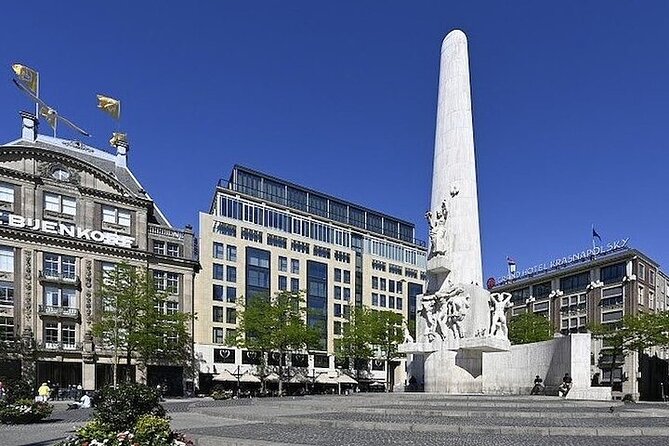
Dam Square is the right first stop because it’s where the city’s story feels physical. It’s central, historic, and surrounded by landmark buildings that show you how Amsterdam grew and re-shaped itself around this core. I like that the tour gives you around 20 minutes here, enough time to notice the setting without feeling rushed.
You’ll get pointed toward the Royal Palace area and key nearby sites, including the New Church (Nieuwe Kerk) direction, the National Monument focus, and the general “center-city” energy that makes Amsterdam feel like a living map. If you’ve only got a short time in town, starting at Dam Square helps you understand later stops with less head-scratching.
This square also sets the tone for the whole walk: Amsterdam isn’t one vibe. It’s medieval architecture near modern life, and major civic monuments near the places people talk about in hushed tones.
Royal Palace Amsterdam: 17th-Century Power Built on Wooden Poles
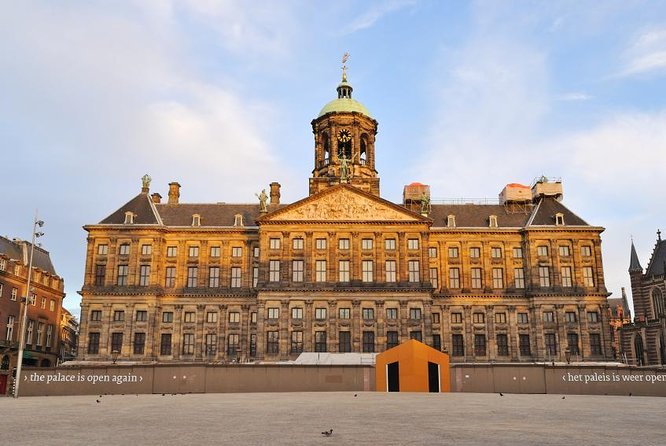
The Royal Palace visit is brief, but the details make it memorable. You’re standing at the former city hall from the mid-1600s, and you’ll hear why it was built on 13,659 wooden poles—an Amsterdam fact that instantly makes the place feel grounded in how the city works.
Even if you don’t go inside, I think the outside explanation is worth it. The Palace helps you connect Amsterdam’s wealth and governance with a very practical engineering reality: the ground here demands smart building.
You do need to plan for the entrance fee if you want the interior. The tour time at this stop is short (about 15 minutes), so you’ll want to decide quickly if you’ll pay to go in or prefer to keep moving and save your time for other parts of the route.
National Monument and Nieuwe Kerk: WWII Memory and Royal Ceremony

Next comes the National Monument, a strong pause point. It’s a national remembrance built around the casualties of World War II and subsequent armed conflicts, anchored by the 22 m (75 feet) high structure completed in 1956. It’s one of those places where you can feel the city honoring a shared past without needing a long stop.
From there you head toward Nieuwe Kerk. This is an older church site that traces back to the 15th century, and it’s still used for major royal ceremonies like weddings and crowning moments. That combo—past religious purpose plus ongoing ceremonial use—gives you a sense of continuity in Amsterdam’s official life.
Just like with the Royal Palace, the entrance to Nieuwe Kerk isn’t included. The stop is around 10 minutes, which is perfect for orientation and understanding why the building matters, even if you skip paying to enter.
The bigger picture: more Amsterdam city tours



De Wallen With Alex: How the Red Light District Talk Stays Real and Not Weird
De Wallen (the Red Light District) is the core contrast stop on this walk, and the structure matters. You’ll get a moderated break of about 30 minutes focused on prostitution and the Netherlands drug policy—covering history, what it looks like today, and a careful “yes and no” explanation around light drugs.
I like that the guide doesn’t treat the area as pure spectacle. Instead, you get context for how laws and public attitudes shaped what you’ll see, and you’ll hear friendly, practical advice about how to experience it without breaking any rules.
This is the moment where Amsterdam feels like its own contradiction: medieval city center landmarks just meters away from a place people associate with adult entertainment and legal gray areas. The best way to enjoy it is to let the guide set the boundaries for you, then stay respectful with your curiosity.
If you’re easily uncomfortable with adult-themed topics, this stop can feel intense. The tour still keeps it informative rather than sensational—but it is still De Wallen.
Coffee Shops and the “Contradictions Stop” Between Worlds
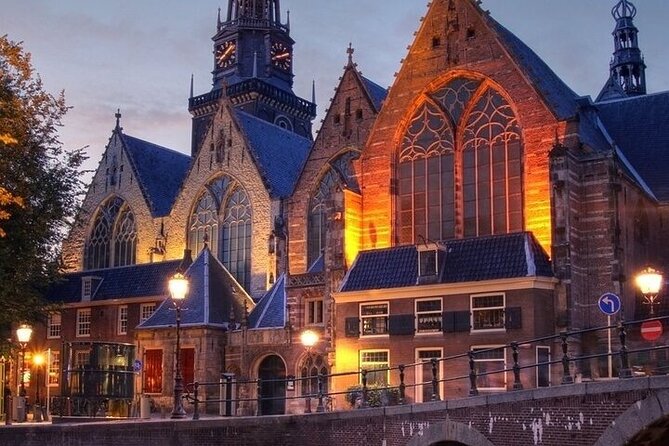
The tour doesn’t just name-drop. You get a short window where the city’s mixed character becomes obvious: you’ll pass and reference old church space nearby, coffee shops, cabins connected with prostitution, and the general cluster of museums, restaurants, and theaters around the area.
That’s useful because Amsterdam’s city center isn’t built like a museum campus. It’s built like neighborhoods where different functions overlap. Seeing that overlap in a single walk helps you understand why Amsterdam can feel both relaxed and complicated at the same time.
If you’re planning the day like a checklist, this is where you should shift gears. Treat it as a “make the city make sense” moment, not a place to rush photos or quick judgments.
Ons’ Lieve Heer op Solder: A Secret Church Moment in Minutes
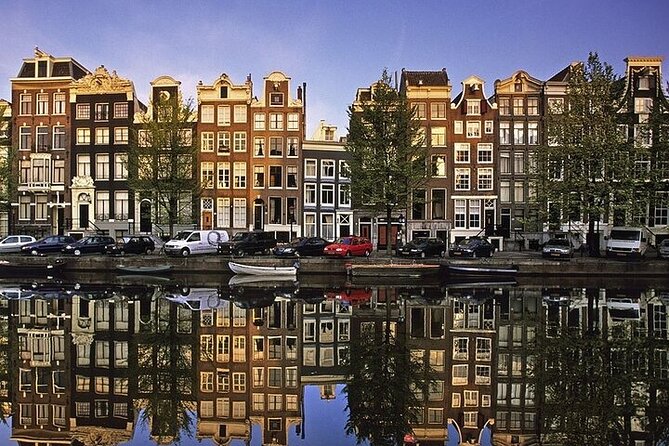
After De Wallen, the pace shifts. Ons’ Lieve Heer op Solder is described as the famous secret church in Amsterdam, restored and now operating as a museum. You only spend about 5 minutes here, so think of it as a spark, not the full experience.
Even if you don’t enter (entrance is not included), you’ll leave with the story in your head. Secret-church history is one of those Amsterdam ideas that instantly changes how you read the city—because you start noticing how much life here was shaped by rules, religion, and survival.
If you do want to go inside, you’ll need to pay the entrance fee separately. The stop is short, so the tour setup is really best for people who are curious and want the key context, then decide whether to extend independently.
Fo Guang Shan in Chinatown: A Peaceful Detour You Can Feel
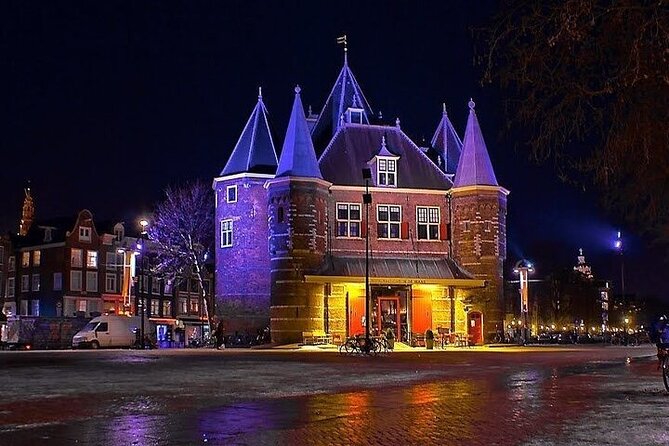
This is one of the stops that gives your brain a rest. Fo Guang Shan is a traditional Chinese Buddhist temple in Amsterdam’s Chinatown, and it’s stated as the second biggest in Europe of its kind. You’ll spend around 10 minutes here, and it works as a mood reset after the heavier topics of earlier stops.
I like this kind of stop because it refuses to reduce Amsterdam to only its most famous postcards. You learn how diverse religious and cultural life fits into the center without needing a long detour.
The entrance here is free, so you can take advantage of the moment without worrying about adding costs. Even in a short visit, the place helps you understand Amsterdam as a meeting point of communities, not only a single national story.
Waag and Guild City Logic: Measuring Trade in a Medieval Building
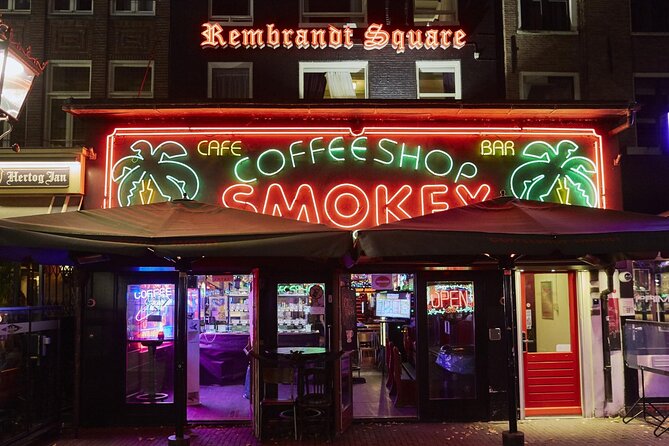
Waag is one of those buildings where the name tells you it once had a job. De Waag started as the city’s weigh-building and customs house, with headquarters for several guilds. Dating from the beginning of the 15th century, it also connects to the city’s older layout as one of the three gates to Amsterdam’s inner area.
Spending about 15 minutes here gives you more than a quick look. You start to grasp how trade, measurement, and regulation shaped city life. For me, it’s a reminder that Amsterdam’s growth wasn’t only about art and canals. It was also about systems—how goods moved, how businesses were organized, and who had authority.
This stop is free to visit (no entrance fee mentioned), so it’s a strong value moment: you’re learning something concrete without paying again.
Weeping Tower and Henry Hudson: The City Wall Behind North America
The Weeping Tower stop is short but smart. It’s tied to Amsterdam’s medieval wall built around the city from the 15th century, and the location is described as the point where Henry Hudson set sail on his journey to North America.
Even if the name sounds romantic, the value is the timeline. You’re connecting a piece of Amsterdam infrastructure with a major global moment. It helps you see the city not just as a cultural destination, but as a launchpad connected to exploration and trade.
You’ll spend around 10 minutes here and it’s a good pause between larger civic stops. Entrance is free, which also makes this a low-cost way to add bigger context to your walk.
St. Nicholas Basilica and Centraal Station: Scale, Faith, and Movement
St. Nicholas Basilica is the big Catholic landmark on the route. It’s described as the biggest Catholic temple in the Netherlands, dating from the second half of the 19th century. You’ll get about 15 minutes here, which is enough to understand its role in the city’s religious map without turning it into a long detour.
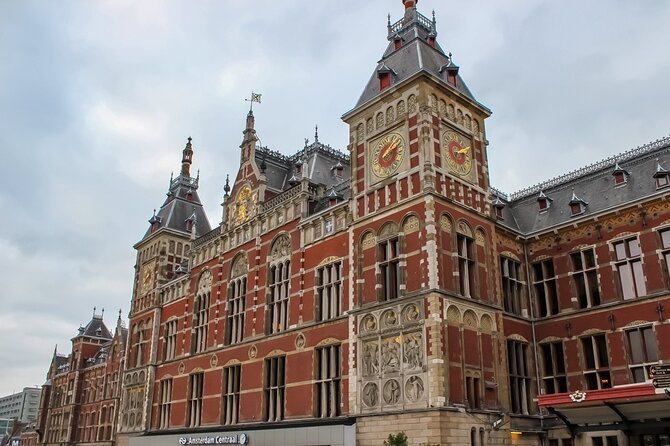
Then you head to Centraal Station, Amsterdam’s major rail hub. The station building dates to the second half of the 19th century, built in Dutch neoclassical style on 6,059 wooden poles. That wooden-pole theme you heard earlier at the Royal Palace now becomes a pattern you can actually track.
You’ll get about 10 minutes at the station area. For me, that’s the best way to end this kind of tour: with a place that feels modern in function but old in structure.
What Makes This Tour Feel Worth It (Even at $347.05)
The price is listed as $347.05 per group for up to 6 people. That matters because this isn’t a “per person” rate. If you fill the group capacity, the cost works out to roughly $58 per person for about 3 hours—good value for a private guide.
If it’s just 2 or 3 of you, the math changes. In that case, the tour is still likely worth it if you want the convenience of a tailored route and explanations that fit your questions. You’re paying for a person who can interpret Amsterdam’s contradictions—how the city can be both beautiful and controversial—while keeping the walk organized.
You also get coffee or tea included, either within the tour or after. That small extra makes a difference after lots of street-level walking, and it’s a nice touch when the weather turns.
Mobile tickets are included, so you’re not dealing with paper vouchers and last-minute confusion. The result is a tour that starts easily and keeps you moving.
Who This Tour Fits Best
This is a great match if you want:
- A guided orientation of Amsterdam’s center in a few hours
- Clear explanations of De Wallen and the Netherlands approach to sex work and light drug policy
- A route that mixes classic civic buildings with places like Fo Guang Shan and the Weeping Tower
- A private group setup with a guide who can talk through questions
It may be less ideal if you want a quiet, fully family-friendly walk with zero adult-topic discussion. The De Wallen stop is moderated, but it is still part of the experience.
If you like history that comes with practical meaning—engineering details like wooden poles, political context like WWII remembrance, and global connections like Henry Hudson—you’ll probably enjoy this format a lot.
Final Verdict: Should You Book This Tour?
If your goal is to understand central Amsterdam fast—real landmarks, real contradictions, and real context—this tour is a smart booking. I especially recommend it if you want the De Wallen topic handled in a moderated way, with a guide who can explain the rules and history without turning it into a stunt.
I’d book it when you have enough time to absorb it: give yourself a morning or early afternoon block so you’re not rushing the next thing. Just plan for extra entrance fees at the Royal Palace and Nieuwe Kerk if you decide you want interiors.
If you’d like, tell me your travel dates and group size, and I can help you decide whether to pay for palace/kerk entrances or focus on the free stops for the best value.
FAQ
How long is the Amsterdam City Center, Red Light District and Coffee Shops Tour?
It’s about 3 hours.
Is this a private tour?
Yes. It’s a private tour/activity, and only your group participates, up to 6 people.
What’s the meeting point?
The tour starts at Dam Square, Dam, 1012 Amsterdam, Netherlands.
Where does the tour end?
The activity ends back at the meeting point (Dam Square).
Are entrance fees included?
No. Entrance fees are not included for Ons’ Lieve Heer op Solder, Nieuwe Kerk, and Royal Palace Amsterdam.
Are coffee or tea included?
Yes. Coffee or tea is included either within or after the tour.
What time is the tour available?
The listed opening hours are 11:00 AM to 7:00 PM, Monday through Friday.
Can I get a refund if I cancel?
Yes. Free cancellation is available if you cancel up to 24 hours in advance for a full refund.
More Tours in Amsterdam






More Tour Reviews in Amsterdam






The Red Light District After Dark



Just added: fresh Amsterdam tour reviews





Red Light District Tours, compared.
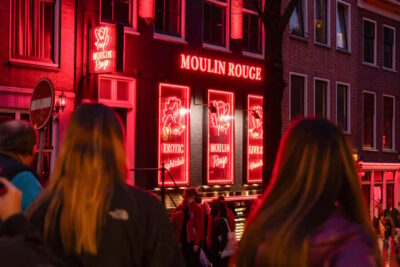 ★ 4.9Red Light District Tour in DE/EN/IT/ES/FRFrom $287,136 reviews
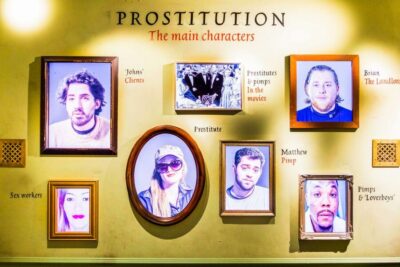 ★ 4.2Red Light Secrets Museum Entry TicketFrom $175,722 reviews
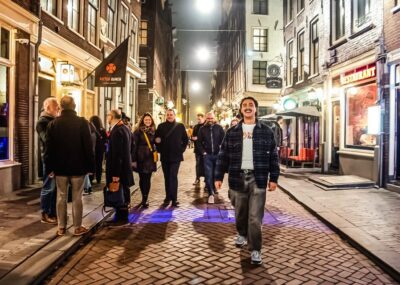 ★ 4.6Amsterdam Red Light District & Coffee Shop TourFrom $294,134 reviews
 ★ 4.1Red Light District Pub Crawl with Unlimited ShotsFrom $242,130 reviews
 ★ 4.5Amsterdam Red Light District Pub CrawlFrom $241,497 reviews
 ★ 4.6Red Light District Tour in English or GermanFrom $341,228 reviews
 ★ 4.1After Dark Red Light District TourFrom $571,030 reviews
 ★ 5.0Private Amsterdam Red Light District and Coffee Shop TourFrom $41763 reviews
Browse the lists this tour appears in