
Reviewed · VAN GOGH MUSEUM TOURS
Van Gogh Museum Private Tour
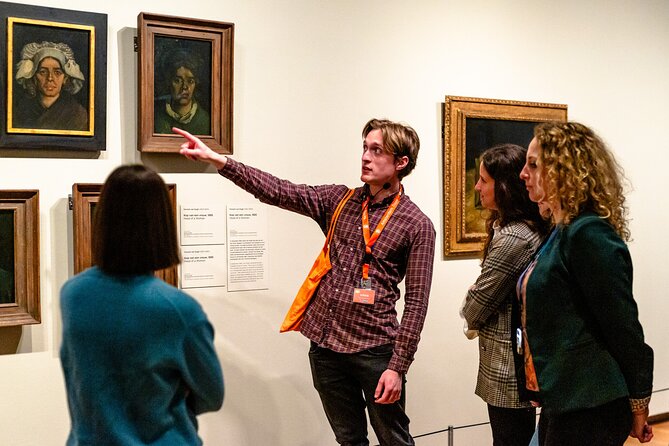
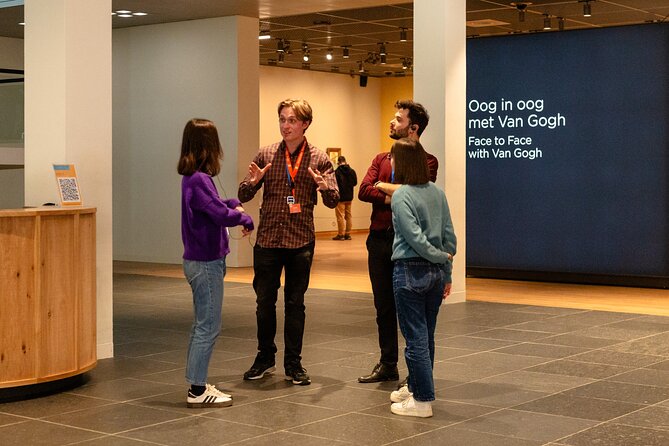
Van Gogh is easier when someone points. This private 2-hour tour in Amsterdam is built to help you move through the Van Gogh Museum efficiently, with a whisper system so you can hear your guide clearly as you study the big works. You’ll get an English-speaking guide, plus an included admission ticket—so you’re not wasting time sorting tickets or trying to decode the museum on your own.
Two things I really like about this setup are the pace and the attention. The guide keeps you on track through self-portraits and the major “chapters” of Van Gogh’s life, and you get real back-and-forth time instead of wandering in silence. One possible drawback: it’s a highlights-focused route, so if you want to linger for long stretches in just one room, this format may feel a bit fast.
In This Review
- Key things to notice before you go
- Entering the Van Gogh Museum with a private plan
- Meeting point at Cobra Café and how the timing works
- Stop-by-stop: what you’ll see (and why it’s arranged this way)
- Stop 1: Self-portraits and instant context
- Stop 2: Millet and Breton influences in the first-floor foyer
- Stop 3: Paris (1886–1888) and the people behind the paint
- Stop 4: Arles and the South of France (1888) in bold, recognizable works
- Stop 5: Saint-Rémy-de-Provence on Level 3
- Stop 6: The Auvers Room and the late works
- The $263.20 price: what value you’re paying for
- How to get the most out of the 2-hour experience
- Who should book this private Van Gogh Museum tour
- After the tour: museum rules that affect your plans
- Should you book the private Van Gogh Museum tour?
- FAQ
- How long is the private Van Gogh Museum tour?
- Is the tour private or shared with other groups?
- What language is the guide offered in?
- Does the price include museum admission?
- What’s included besides the guide?
- Is food included?
- Can I stay in the museum after the tour?
Key things to notice before you go
- Private guide + only your group: less waiting, more questions, more direct focus on what matters to you.
- Whisper system: you can hear instructions and stories clearly while you’re standing still in gallery space.
- Admission ticket included: you’re paying for the tour, not the hassle of buying museum entry separately.
- A time-sliced Van Gogh timeline: Paris, Arles, Saint-Rémy-de-Provence, and Auvers each get a focused stop.
- Quick museum break: the 2-hour length is ideal when you have other Amsterdam plans the same day.
More hours with Van Gogh and the masters
- Amsterdam: Van Gogh Museum Ticket and City Canal Cruise
★ 4.6 · 3,899 reviews - Amsterdam: Van Gogh Museum Ticket & Canal Cruise
★ 4.5 · 3,304 reviews - Van Gogh Museum Amsterdam Exclusive Tour w/ Reserved Entry
★ 5.0 · 1,760 reviews - Van Gogh Museum Tour Reserved Entry Semi Private
★ 5.0 · 1,437 reviews
Entering the Van Gogh Museum with a private plan
The Van Gogh Museum can be a lot, even if you’re a big fan. Not because it’s hard to enjoy, but because there’s so much to look at and not always an easy path through it. This tour solves that with a simple promise: you’ll see more than you likely would on your own, without turning your day into a marathon.
The private format matters. When your group is the only one in the experience, your guide can adjust how you move—slower for questions, faster when you’re ready to keep rolling. The guides named on this tour include Sylvia, Giulia, and Kiran, and their styles show up in the way the tour is described: interactive, patient, and geared toward making the paintings feel understandable, not just impressive.
You’re also not stuck with a basic audio handset. The tour includes a whisper system, which usually feels like a small upgrade that pays off instantly once you start walking from one room to the next. If you’ve ever had trouble hearing museum audio over foot traffic, you’ll appreciate this right away.
Meeting point at Cobra Café and how the timing works
The tour starts at Cobra Café, Hobbemastraat 18. That’s a handy launch point because it’s easy to get to using public transportation, and you can arrive early to settle your coat, grab water, or just orient yourself.
It runs about 2 hours. Each stop is time-boxed (mostly around 15–20 minutes), which is a big reason the experience works well. You get enough time to actually look at the works up close, but not so much time that you lose the thread of Van Gogh’s story.
There are six stops, all inside the museum’s permanent collection areas. If you like a clear structure—one topic at a time—this tour format is very likely to fit your brain. If you tend to get fixated on a single painting and want to stay there for 30–45 minutes, you may find yourself wishing the tour could slow down at certain moments.
Stop-by-stop: what you’ll see (and why it’s arranged this way)
More private tours with a guide to yourself


Stop 1: Self-portraits and instant context
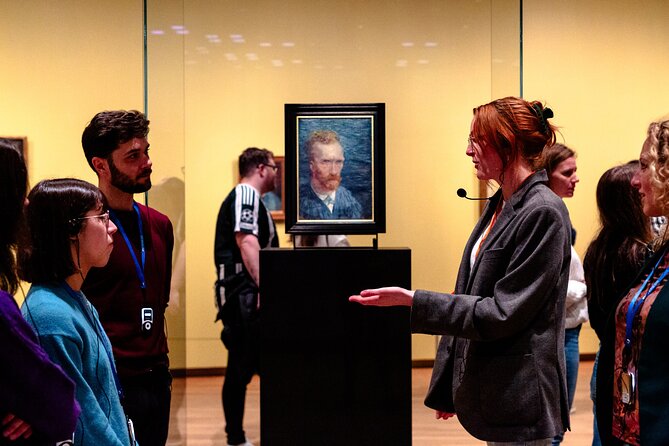
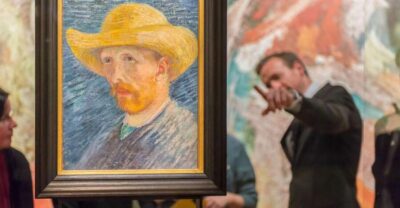
Your first stop is the Van Gogh Museum’s self-portrait focus. This is a smart opening because self-portraits do double duty: they show what Van Gogh looked like at different points, and they hint at what he was processing emotionally during those periods.
In practice, this first room helps you train your eye for his recurring visual habits—how he builds faces, how his expression reads, and how the mood changes from one work to another. Even if you’ve seen self-portraits online, seeing them in the museum, in order, makes the timeline feel real.
What to do with this moment: don’t rush. Look for changes in expression and composition, then keep those questions in your head as you move to the next gallery.
Stop 2: Millet and Breton influences in the first-floor foyer
Next comes a focused look at the first floor foyer, where you’ll see paintings connected to influences like Millet and Jules Breton. The works listed here include Woman Lifting Potatoes and the Wall of portraits, plus The Potato Eaters.
This part is valuable because it explains that Van Gogh didn’t start as a lone genius painting in a vacuum. He was learning from subjects and styles already in circulation, then bending them toward his own way of seeing.
If you’re the type who wants the “why” behind the famous style, this is one of the best uses of limited tour time. It helps you connect the later, bolder color and motion to earlier subjects and techniques.
Possible consideration: if you already feel totally solid on Van Gogh’s influences, you might want to use your guide’s explanations to ask more about specific connections to the later Arles and Paris works.
Stop 3: Paris (1886–1888) and the people behind the paint
Then the tour moves into the Paris years from 1886 to 1888. You’ll see Self Portrait with Felt Hat, Still Life with Absinthe, In the Café: Agostina Segatori in Le Tambourin, and Garden with Courting Couples.
This stop helps you understand Van Gogh as more than a sunflower-or-crows artist. Paris is where he’s in conversation with contemporary life—cafés, gatherings, nightlife, and everyday scenes. Even the listed still life with absinthe points to a world of modern habits and social settings.
You’ll also get help reading what changes between works. A private guide can connect the dots between scene choices and the mood in the brushwork, which is hard to do alone while you’re trying not to block other visitors.
Tip for you: when you reach the café scene, ask your guide what stands out about the composition or the mood. It’s usually the kind of question a good guide can make very clear without turning it into a lecture.
Stop 4: Arles and the South of France (1888) in bold, recognizable works
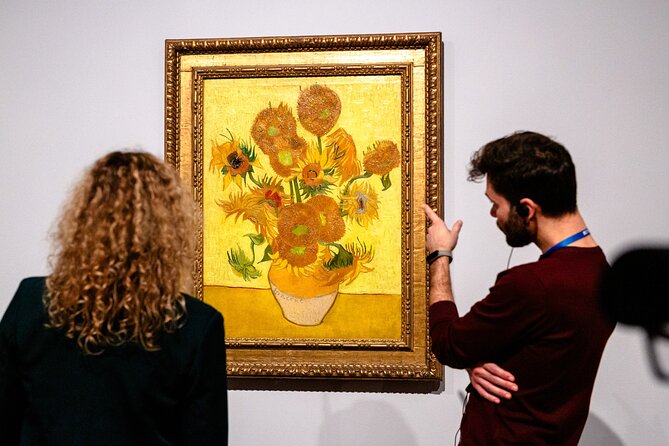
In 1888, Vincent moves to Arles, and this stop is built around that shift. You’ll see Sunflowers, Almond Blossoms, The Bedroom, The Yellow House, and also the section on Japanese Paintings – copies from prints.
This is where most people start to feel the “Van Gogh look” in a big way. Sunflowers and the almond imagery are instantly memorable, but the guide-led attention can help you spot what’s going on beneath the famous subject. And the listed items matter because they show different aspects of the Arles period: domestic life (The Bedroom), the home base and surroundings (The Yellow House), and a strong link to how he studied visual sources (Japanese Paintings – copies from prints).
The Japanese print influence gets special value here because it’s not just a fun fact. It helps you understand why certain compositions can feel so structured or patterned. If you’ve ever wondered how an artist can make something look both personal and designed, this is a strong place to ask.
Small note: Japanese works referenced as copies from prints are listed on this tour, so expect the explanation to focus on influence and adaptation rather than only original creation.
Stop 5: Saint-Rémy-de-Provence on Level 3
Next comes Level 3: Saint-Rémy-de-Provence. You’ll see Almond Blossoms, Wheatfield with a Reaper, Iris, and Pieta (After Delacroix).
This stop is powerful because it’s not only about beautiful scenery. The selected works listed here connect landscape with thought, memory, and mood shifts. Even with a short visit window, the guide’s job is to point out what changes in subject and tone as Vincent’s life moves through different phases.
Pieta (After Delacroix) is especially interesting for people who assume Van Gogh only painted modern-looking scenes. Seeing a work tied to Delacroix through a Van Gogh lens adds another layer to his interests and influences.
What to do with this stop: try to compare it to the Arles work you just saw. Ask your guide what feels similar, and what clearly changes in the emotional atmosphere.
Stop 6: The Auvers Room and the late works
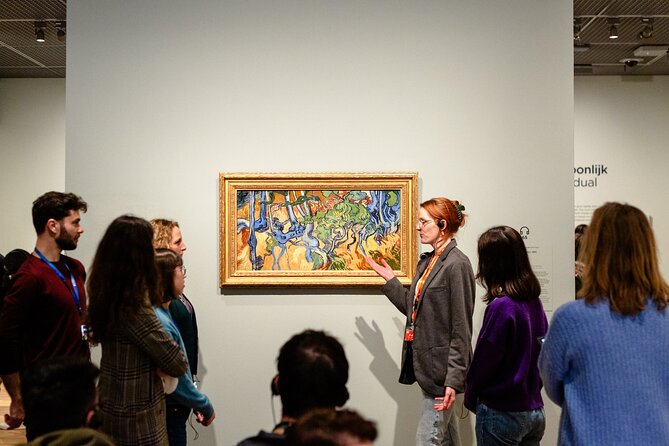
The final stop is the Level 3 Auvers Room. It includes Tree Roots and Wheatfield with Crows, with a slightly shorter time box listed at around 15 minutes.
Auvers is often where people slow down mentally. The room choices on this tour lean into late-stage intensity: natural forms that feel close and urgent, plus wheatfield scenes that carry a sharper edge. The guide can help you read the symbols without turning it into symbolism theater.
If you only have two hours, this last stop is the best place to ask one reflective question: what changed in Vincent’s approach, in the way he built scenes, or in what he chose to focus on.
Practical note: because this is the last stop, don’t save all your questions for the end. Ask while you’re in the rooms where your question has the most relevance.
The $263.20 price: what value you’re paying for
At $263.20 per person (for a private tour about 2 hours), this isn’t a budget add-on. The value comes from the combination of things that are included and things that are genuinely hard to replicate on your own.
First, the admission ticket is included. That sounds small, but it matters. It removes a friction point that can slow you down, especially if you arrive and realize you still need to line up or purchase entry while other plans are waiting.
Second, you’re paying for a private guide plus a whisper system. The whisper system is not flashy, but it can make the tour feel effortless. And in a museum, hearing clear explanations at the exact spot you’re looking is a big deal. It helps you connect story to painting without guessing.
Third, the private format can be good value if you’re traveling with a partner or a small group and you don’t want to share your experience with strangers. Even when a museum guide exists in audio form, the kind of question-and-answer style described for guides like Sylvia, Giulia, and Kiran tends to create better understanding than passive listening.
One caution on value: it’s still a highlights route. If you want to spend long hours with a few favorites, you might prefer self-guided time in the museum. This tour is best when you want direction, efficiency, and a structured overview.
How to get the most out of the 2-hour experience
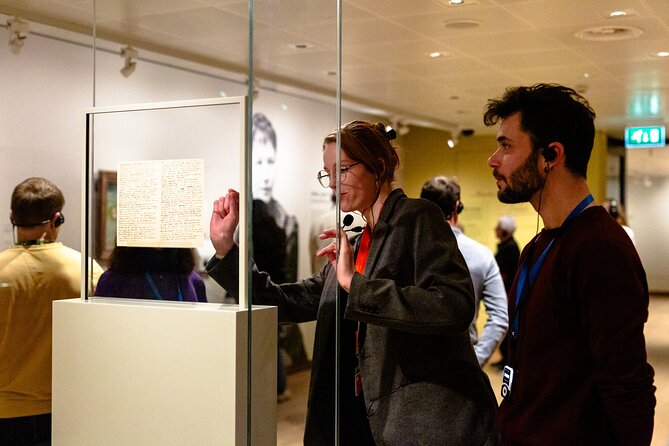
You’ll likely do best if you arrive ready to look. That means wearing comfortable shoes, having a rough sense of what you want to see—self-portraits, cafés, Arles scenes, or the late wheatfields—and then letting the guide lead you through those threads.
Use the time like this:
- Let the first stops set your mental timeline.
- Save your most personal questions for the sections that match your favorite period.
- In the last room, ask for one key takeaway you can take back outside the museum.
If you’re sensitive to crowds, a private tour still means you’ll be in public spaces with other visitors, but your guide can steer the rhythm. That reduces the stop-start feeling that often ruins museum days.
Who should book this private Van Gogh Museum tour
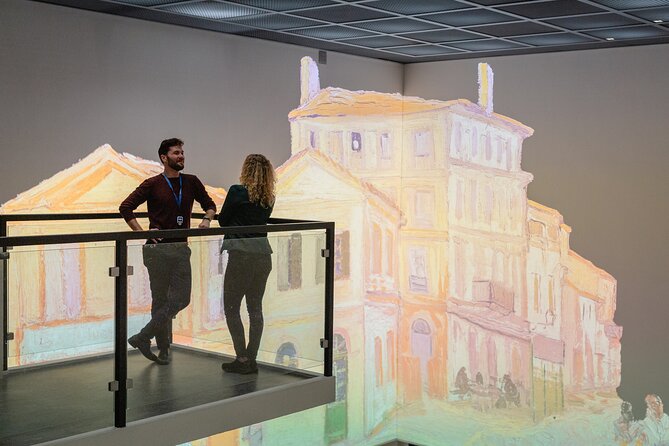
This tour is a strong match if:
- You want a guided Van Gogh introduction without spending half a day.
- You like being able to ask questions and get immediate clarification.
- You’re traveling with someone who wants the same highlights but may not want to research every piece beforehand.
It’s also a good fit for people who find museums easier when the route is pre-planned. The stop order you get—self-portraits, early influences, Paris, Arles, Saint-Rémy, then Auvers—keeps you oriented even if you don’t know the works by heart.
If you’re a serious Van Gogh scholar, this format may feel too short. You might want extra free time for repeated viewing. But as a guided “spine” for your museum visit, it’s a very practical way to build understanding fast.
After the tour: museum rules that affect your plans
There’s a specific rule after the visit: you’re not allowed to stay in the museum. The one exception is if you’re not carrying thick (winter-)jackets, suitcases, or large bags and liquids.
Translation: if you want any extra time beyond the guided route, plan to travel light. Bring a small bag, keep liquids minimal, and avoid bulky outerwear if possible. If you do have large items, accept that your tour time is the full window.
This matters because it changes how you should schedule the rest of your day around the museum. If you want photos, quiet time, or a second look at one favorite painting, you’ll need to build that into your route choices in advance.
Should you book the private Van Gogh Museum tour?
Book it if you want a guided, structured Van Gogh overview in a reasonable chunk of time. The mix of self-portraits, early peasant influences, Paris modern life, Arles signature works, and the late-stage Auvers rooms gives you a complete sense of the arcs without turning your day into an all-day commitment.
Skip it if your style is slow and solitary. If you prefer to wander without time limits, or you plan to spend long stretches studying the same painting, a self-guided visit may suit you better.
If you book, I’d do it with a simple mindset: treat the guide as your translator. You’ll get more meaning from the works because you’ll see not just what’s painted, but what the painting is trying to communicate in that moment of Van Gogh’s life.
FAQ
How long is the private Van Gogh Museum tour?
The tour runs for about 2 hours.
Is the tour private or shared with other groups?
It’s private. Only your group participates.
What language is the guide offered in?
The tour is offered in English.
Does the price include museum admission?
Yes. Admission tickets are included for the stops listed in the tour.
What’s included besides the guide?
You get a private tour guide for your chosen language and a whisper system.
Is food included?
No. Food and beverages are not included.
Can I stay in the museum after the tour?
You are not allowed to stay in the museum unless you are not carrying thick (winter-)jackets, suitcases or large bags and liquids. If you visit lightly with a small jacket and a small handbag, you can stay until closing time.
More Tours in Amsterdam






More Tour Reviews in Amsterdam






More Time with Van Gogh



Just added: fresh Amsterdam tour reviews





Van Gogh Museum Tours, compared.
 ★ 4.6Van Gogh Museum Ticket and City Canal CruiseFrom $473,899 reviews
 ★ 4.5Van Gogh Museum Ticket & Canal CruiseFrom $473,304 reviews
 ★ 5.0Van Gogh Museum Amsterdam Exclusive Tour w/ Reserved EntryFrom $1731,760 reviews
 ★ 5.0Van Gogh Museum Tour Reserved Entry Semi PrivateFrom $1731,437 reviews
 ★ 4.9Van Gogh Museum Entry Ticket and Guided TourFrom $175681 reviews
 ★ 4.0Combo Ticket: Van Gogh Museum Ticket and 1-Hour Canal CruiseFrom $45676 reviews
 ★ 4.3Van Gogh & Rembrandt Captivating Experience EntryFrom $20615 reviews
 ★ 4.7Van Gogh Museum Guided Tour with EntryFrom $69535 reviews
Browse the lists this tour appears in