
Reviewed · HISTORICAL TOURS
Small-Group Women’s History Tour in Amsterdam
Amsterdam has a second storyline for women.
This women’s history walking tour in Amsterdam’s historic center looks past the usual shortcuts and uses a trained storyteller to connect the city’s buildings with the people who shaped them. I really love the small group size, which keeps the mood intimate, and I love how the stories cover a wide range of women across centuries, not just one stereotype.
You’ll move at an easy walking pace for about 2 hours, with a mobile ticket and no added admission fees at the stops (you’re mostly viewing landmarks from the street and squares). One consideration: the tour needs good weather, so plan for a bit of outdoors time and dress for the conditions.
In This Review
- Key things I’d focus on before you go
- A women’s history tour that treats the city like a character
- Price and value: what $47.47 buys you
- Where you start and where you end (and why it matters)
- Stop-by-stop: from Centraal Station to Begijnhof
- Centraal Station: the old harbor setup
- Beurs van Berlage: women vs. the stock exchange machine
- Dam Square: a salacious story, kept tasteful
- Beurspoortje: motorcycles, queerness, and dangerous humor
- Nes: theater culture and a first Black female millionaire
- Equestrian statue of Queen Wilhelmina: monarch power and firsts
- Rokin: canal power, the Miracle, and The Women’s Riot
- Begijnhof: a women’s enclave, quiet if open
- How these stories connect into one Amsterdam worldview
- The guide factor: storytelling that stays specific
- Who this tour is best for
- Should you book this Amsterdam women’s history tour?
- FAQ
- How long is the Small-Group Women’s History Tour in Amsterdam?
- What’s the group size like?
- Where do I meet the guide?
- Where does the tour end?
- Do I need a ticket or booking confirmation on my phone?
- Is admission included for the stops?
- What if the weather is bad?
Key things I’d focus on before you go
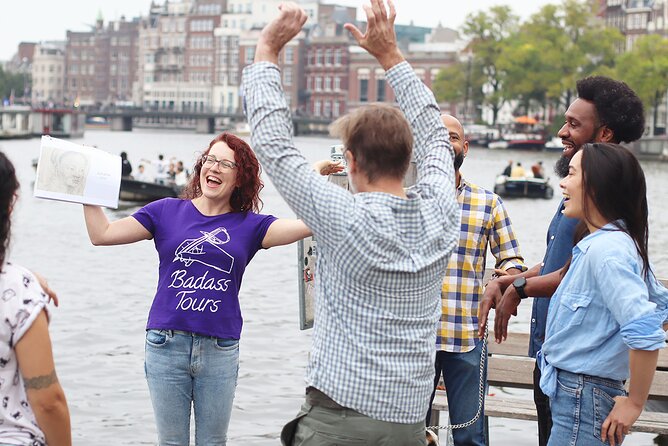
- Small group, max 12: you’ll get a more personal rhythm with the guide’s storytelling
- No entry tickets needed for the stops: you’re learning while seeing the city up close
- Bold themes beyond feminism 101: power at the stock exchange, culture, queerness, and religion all show up
- A stop at Dam Square that’s story-driven: you’ll hear a salacious but tasteful moment in Amsterdam’s past
- Beurspoortje’s plot twist: motorcycles, Amsterdam’s first modern gay bar, and Nazis under the table
- Begijnhof if open: you may finish in a calm women’s enclave right in the center
Still deciding? A few more Amsterdam tours worth a look
- Amsterdam Food and Cultural Tour with Tastings
★ 5.0 · 4,315 reviews - Amsterdam: Historic City Centre Canal Cruise
★ 4.3 · 659 reviews - Amsterdam: Haunted History and Ghost Walking Tour
★ 4.5 · 488 reviews - Amsterdam High-End Dutch Food & History Tour – Up to 8 guests
★ 5.0 · 482 reviews
A women’s history tour that treats the city like a character
Amsterdam is famous for canals, bicycles, and clever architecture. This tour treats the city like a living cast list. You’re not just learning names—you’re learning how women’s choices, strategies, and resistance shaped public life, culture, and power structures.
What I like is the tone. It’s thoughtful, but it’s also a little mischievous. The guide is there to keep the pace moving and make you look at familiar places with fresh eyes—especially around economic and political symbols, where women are often missing from the standard walking-tour script.
Price and value: what $47.47 buys you
At $47.47 per person for an approx. 2-hour small-group walk, you’re paying mainly for the human part: the storytelling and the guide’s background as an Amsterdam history nerd. The tour also notes that admission is free at the stops, so you’re not paying extra entry fees to “earn” the value.
In practical terms, this is good value if:
- you want a guided overview fast (it’s ideal on an early day)
- you like stories that connect buildings to real life
- you’re okay spending time outdoors rather than inside museums
It’s less ideal if you’re hunting for a totally silent, reflection-only experience. This is a narrative tour. You’ll hear specifics and juicy details—kept tasteful, but still unmistakably fun.
Where you start and where you end (and why it matters)
The tour begins at Prins Hendrikkade 48, 1012 AC Amsterdam. That’s an easy meetup area for orienting yourself because it’s near the center of things, close enough to link up with other plans afterward.
The walk ends outside the Begijnhof, near Spui (1012 Amsterdam). Ending near Begijnhof matters because it gives you a “full-circle” feeling: you start in a major landmark zone and finish at a quieter women’s enclave—if the Begijnhof is open for your final stop, which the tour notes as a possibility rather than a guarantee.
Plan for mostly walking in the historic center. It’s short-stop pacing—think landmark viewing plus story time—rather than long transit between distant sights.






Stop-by-stop: from Centraal Station to Begijnhof

You’ll hear a sequence of women’s stories tied to the city’s key landmarks. Below is what to expect, plus what each stop adds to the bigger picture.
Centraal Station: the old harbor setup
You start with an introduction across the old harbor from Amsterdam Centraal Station. This is a classic “get your bearings” moment. The guide frames the city’s layout and sets the theme: Amsterdam isn’t just trade and tourism—it’s also social power, and women have been involved in that story for centuries.
What to watch for here: how the guide links early framing to later stops. If you can picture the “why” behind the route, the rest of the tour clicks faster.
Beurs van Berlage: women vs. the stock exchange machine
Next up is Beurs van Berlage, where you’ll hear about two female fighters. Their stories connect to Amsterdam’s stock exchange world—both the newer and the older one now used as an event hall.
This stop is valuable because it pushes against a common assumption: that women’s history is only about private life. Here it’s about institutions, money, and how culture and economics collide. You’ll likely come away thinking differently about who gets to influence public systems.
Potential drawback: if you’re not into economic history at all, this stop can still feel dense. The guide’s job is to make it human, but you’ll get more out of it if you enjoy how power works.
Dam Square: a salacious story, kept tasteful
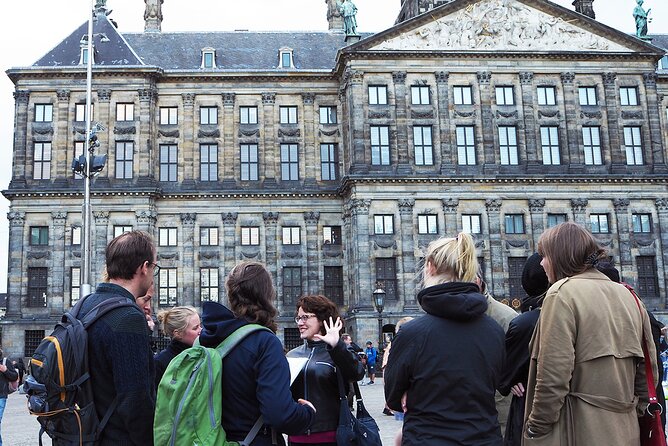
At Dam Square, the group takes in the hustle while the guide shares one of the tour’s most “salacious” stories from Amsterdam’s history—but tasteful.
Dam Square is one of the busiest public rooms in the city, so it’s a bit of a contrast: big public energy, then a sharper story moment. I like using a chaotic place for narrative lessons because it shows how history happens in the same spaces where people still move today.
Practical note: bring patience. You’ll hear the story over normal city noise. If you’re sensitive to crowds, aim to stand where you can see and hear the guide comfortably.
Beurspoortje: motorcycles, queerness, and dangerous humor
Around Beurspoortje, the tour shares a story built around one of the guide’s favorite “badasses.” The details you’re told include motorcycles, Amsterdam’s first modern gay bar, and a scene involving drinking Nazis under the table.
That mix tells you something about the tour’s approach. It’s not afraid of contradictions: serious resistance stories can include humor, bold identity, and street-level defiance. You’re learning how people survive oppressive systems—not only by confronting them, but also by refusing to behave how the oppressors expect.
If you like stories with attitude (and you’re okay with adult themes kept within tasteful storytelling), this is a highlight stop.
Nes: theater culture and a first Black female millionaire
Next is Nes, described as a hub for cutting-edge theater. Here, you’ll hear about powerful women—including the first Black female millionaire in the Americas, with a hint that she was not in the United States.
This is one of those “wait, really?” moments that changes how you understand the term American history. The tour’s value isn’t just that it names a notable figure—it’s that it forces you to connect wealth, art, and influence across borders.
If you’re the type who likes to do one or two extra readings afterward, this stop is a strong springboard.
Equestrian statue of Queen Wilhelmina: monarch power and firsts
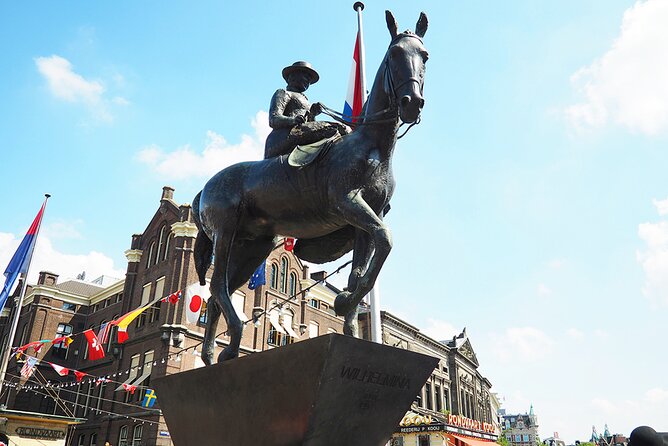
Then you stand by the equestrian statue of Queen Wilhelmina and learn about the Netherlands’ first queen regnant.
This is a straightforward historical landmark stop, but it’s still useful. It anchors the women’s history theme in visible power—literally on a statue pedestal—and gives you a timeline anchor to compare with later stories about resistance, religion, and culture.
Tip: don’t just look at the statue. Listen for how the guide frames it in relation to what you heard earlier.
Rokin: canal power, the Miracle, and The Women’s Riot
At Rokin, Amsterdam’s first main waterway, you learn about the Miracle of Amsterdam and how it led to The Women’s Riot.
Canals aren’t just scenic here; they’re connected to belief, survival, and community action. This stop matters because it connects infrastructure to social movements. It’s also a great example of how “women’s history” isn’t only about politics in parliament—it’s about collective pressure and moments when people refuse to accept the status quo.
If you like thematic links, this is the stop where the tour starts to feel like one coherent story rather than separate facts.
Begijnhof: a women’s enclave, quiet if open
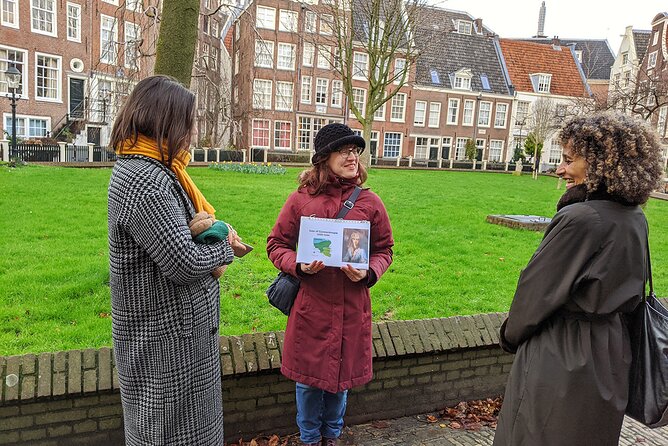
The final stop is the Begijnhof. If you’re lucky, it will be open, and you can experience an idyllic women’s enclave in the center of a noisy city.
This end point is a strong mood shift. After motorcycles and riots and big public squares, you finish where the atmosphere is calmer and more enclosed. Even if the courtyard isn’t open, the stop still signals the theme: women carved out spaces to live, work, and organize within the city.
How these stories connect into one Amsterdam worldview
A good women’s history tour doesn’t just “add women.” It changes how you read the city. This one does that by choosing stops that represent different power lanes:
- Economics (stock exchange sites)
- Public life (Dam Square)
- Identity and culture (the theater scene around Nes, plus the Beurspoortje story)
- Formal authority (Queen Wilhelmina)
- Community action (Rokin and The Women’s Riot)
- Enclave life (Begijnhof)
That mix is why the tour feels different from the usual “top ten women” approach. You see how women’s influence moved through institutions, markets, entertainment, spirituality, and public protest.
And because it’s storytelling-led, you’re not memorizing dry dates. You’re learning how decisions and risk-taking looked in different eras.
The guide factor: storytelling that stays specific
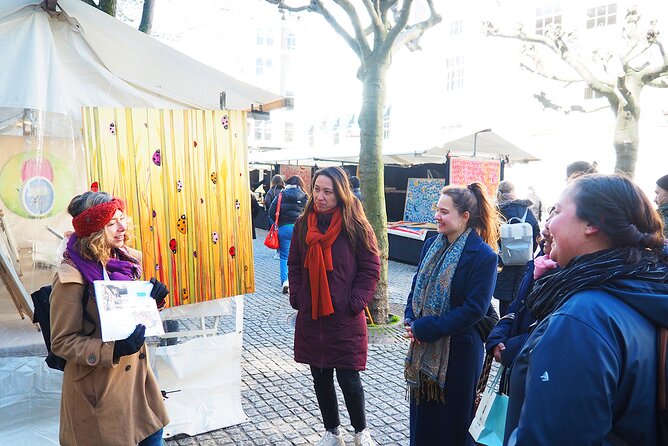
The tour is led by a trained storyteller and described as passionate, with the guide acting as an Amsterdam history nerd. One named guide that shows up in the information is Elyzabeth, so if you’re matched with a storyteller of that style, you can expect the stories to be grounded in place details and not just general commentary.
In a tour like this, the guide’s job is balancing entertainment with accuracy. The itinerary’s mix of serious and spicy elements suggests they know how to keep the tone engaging while still guiding you toward historical meaning.
Who this tour is best for
This is a great fit if you:
- want an early-day orientation to Amsterdam’s center using story, not map anxiety
- like women’s history that includes culture, rebellion, and power—not only activism slogans
- enjoy a guide who connects landmarks to what was at stake
It may be less ideal if you:
- want a purely academic experience with no “juicy” narrative tone
- dislike walking around busy squares like Dam Square
- are traveling on days when weather is unstable
Should you book this Amsterdam women’s history tour?
I’d book it if you want a 2-hour guided walk that changes how you see Amsterdam fast—especially if you’re curious about women who influenced society, culture, and institutions from multiple angles.
You should also book if your travel style is “tell me the story behind the building.” This tour delivers that in a small-group format, with a route that’s concentrated and easy to pair with the rest of your day.
If you’re okay with outdoor time and you want your history with personality, this is an easy yes.
FAQ
How long is the Small-Group Women’s History Tour in Amsterdam?
It runs for about 2 hours.
What’s the group size like?
It has a maximum of 12 travelers.
Where do I meet the guide?
You meet at Prins Hendrikkade 48, 1012 AC Amsterdam, Netherlands.
Where does the tour end?
The tour ends outside the Begijnhof. The listed end location is Spui, 1012 Amsterdam.
Do I need a ticket or booking confirmation on my phone?
You receive a mobile ticket.
Is admission included for the stops?
The itinerary notes admission ticket free for the stops, so you’re not paying separate entry fees for each landmark.
What if the weather is bad?
This experience requires good weather. If it’s canceled due to poor weather, you’ll be offered a different date or a full refund.
The Older Amsterdam, Toured Properly





More Tours in Amsterdam






More Tour Reviews in Amsterdam






Just added: fresh Amsterdam tour reviews





Historical Tours, compared.
 ★ 5.0Amsterdam Food and Cultural Tour with TastingsFrom $954,315 reviews
 ★ 4.3Historic City Centre Canal CruiseFrom $16659 reviews
 ★ 4.5Haunted History and Ghost Walking TourFrom $30488 reviews
 ★ 5.0Amsterdam High-End Dutch Food & History Tour – Up to 8 guestsFrom $157482 reviews
From Amsterdam: Volendam Heritage & Cheese Half-Day TourFrom $20461 reviews
★ 5.0Amsterdam High-End Dutch Food & History Tour – Up to 8 guestsFrom $157482 reviews
From Amsterdam: Volendam Heritage & Cheese Half-Day TourFrom $20461 reviews
 ★ 4.5Historic City Sightseeing Canal CruiseFrom $18444 reviews
 ★ 5.0Anne Frank and the Jewish History of Amsterdam Private TourFrom $95307 reviews
 ★ 5.0Luxury Canal Cruise with Historic VR ExperienceFrom $51305 reviews
Browse the lists this tour appears in