
Reviewed · AMSTERDAM MUSEUMS & GALLERIES
Rembrandt House & Neighborhood Guided Tour Semi-Private 8ppl Max
Rembrandt’s Amsterdam feels personal from the start. You’ll link UNESCO-listed canals with the places tied to Rembrandt and his world, then end inside Het Rembrandthuis to see his life at home. I especially like that this is built as a small-group, guide-led experience, not a busy herd, and that the house time includes the admission.
The only real catch is that you’ll be walking for about 2.5 hours with a moderate fitness level, and the tour isn’t recommended if you use a wheelchair or have significant walking limitations. Also, museum closures can happen, and while the operator promises an alternative if delays run long, refunds/discounts aren’t offered in those cases.
In This Review
- Key things to look forward to
- A 1:30 pm Rembrandt plan with a small-group pace
- Spiegelkwartier and the canal views that teach you the city
- Keizersgracht: the “wide middle canal” stop that changes your perspective
- Museum Van Loon, then the canalside thread to Rembrandt’s world
- Bloemenmarkt and the Munttoren: street landmarks with real purpose
- Rembrandtplein and the Night Watch bronze display
- Past Stopera toward Jodenbuurt: a route that changes tone
- Het Rembrandthuis: what you gain from the house museum time
- Price and value: what $159.21 buys you in Amsterdam terms
- Who should book this tour, and who might skip it
- Book it or skip it? My honest take
- FAQ
- FAQ
- What time does the tour start, and how long is it?
- Where do I meet the guide, and where does the tour end?
- Is the Rembrandt House Museum admission included?
- What languages is the tour offered in?
- Is hotel pickup or drop-off included?
- Do I need to pay for the flower market, bridges, or other stops?
- Is this tour suitable if I use a wheelchair?
Key things to look forward to
- A semi-private group (max 8) so you get attention and can actually hear your guide
- Het Rembrandthuis included with entrance fees handled for you
- Canal stops tied to Amsterdam’s city structure, not just photos
- Rembrandtplein and the Night Watch bronze display, tied to the 400th birthday celebration
- A guided neighborhood walk that shifts from canals to Jodenbuurt as the route continues
More of the museums worth the queue in Amsterdam
- Amsterdam: Madame Tussauds Ticket
★ 4.5 · 11,438 reviews - Amsterdam’s Weirdest Museum: Ripley’s Believe It or Not!
★ 4.5 · 4,920 reviews - Amsterdam: NEMO Science Museum Ticket
★ 4.4 · 2,979 reviews - Moco Museum Amsterdam Admission Ticket with Banksy and more
★ 4.0 · 1,745 reviews
A 1:30 pm Rembrandt plan with a small-group pace
This tour runs in the early afternoon, starting at 1:30 pm, and lasts about 2 hours 30 minutes. You’ll meet at Cobra Café, Hobbemastraat 18, then finish at Rembrandt House Museum, Jodenbreestraat 4. There’s no need to plan a separate admission ticket for the house because entrance fees are included.
The semi-private size matters in Amsterdam. In a bigger group, you’re often stuck waiting for the person in front to stop reading the plaque. With a max of 8 people, the guide can keep you moving through the streets and still slow down when questions pop up. If you like your history with real people and real streets, this format helps.
You also start and run rain or shine. That sounds like a marketing line, but in practice it means you should dress for the weather and bring your best “wet-day shoes,” because the route is a walking loop of canal-side streets and neighborhoods.
Spiegelkwartier and the canal views that teach you the city
Your first leg heads into the Spiegelkwartier area, beginning near the Singelgracht canal. This waterway is described as a former outer defense line around central Amsterdam, which is a useful lens: you’re not just seeing a pretty canal—you’re learning what it used to do for the city.
Next you’ll move to the Spiegelgracht, part of the Canals of Amsterdam UNESCO World Heritage site. Here, you’ll notice a mix of canal-side structure, and the route is set up so you can spot art galleries and antiques along the way.
This early section is also where the guide’s job is most important. Canals look similar at a glance, but your guide helps you connect names to the geography—like how the canals stitch together the inner center and what “outer defenses” means on the ground.
Keizersgracht: the “wide middle canal” stop that changes your perspective
From there you’ll move to the Emperor’s Canal, the Keizersgracht. In the description, it’s called the widest of Amsterdam’s three main inner-city canals, and it’s named after Emperor Maximillian of Austria. That kind of detail isn’t just trivia. It helps you read the city layout while you walk.
This is a short stop (about 10 minutes), but it works as a reset. You go from the UNESCO canal stretch to a canal that’s framed by name, width, and imperial connection—then you shift back into walking toward the next “Rembrandt-adjacent” point.
If you’re the kind of traveler who likes to understand the city’s logic before going deep into museum rooms, this section earns its time.
More trips where a local runs the whole day





Museum Van Loon, then the canalside thread to Rembrandt’s world
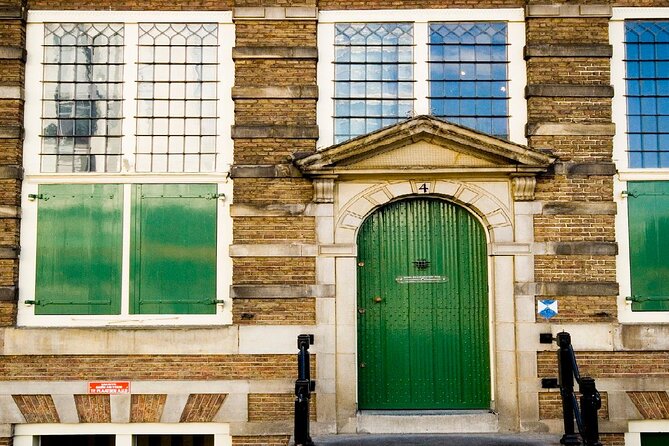
One of the more thoughtful moments on the route is the stop at Museum Van Loon. It sits in a canalside house along the Keizersgracht, and it’s noted as the home of Ferdinad Bol, described as Rembrandt’s favorite pupil.
Here’s how to make this work for you: even though it’s only a stop with a short duration, it sets a “circle of influence.” Rembrandt wasn’t painting in a vacuum, and Bol being tied to him through a house-museum connection helps you place Rembrandt in a network of artists.
Important practical note: this stop has an admission option that’s not included in the tour price. So you’ll be viewing from the outside as part of the walking tour timing, unless you separately decide to pay later.
Bloemenmarkt and the Munttoren: street landmarks with real purpose
From Van Loon’s canalside setting, the route moves toward the Bloemenmarkt, Amsterdam’s flower market. You’ll also see the Munttoren, nicknamed the “Mind Tower.” The description says the tower was originally part of one of the main gates in Amsterdam’s medieval city wall.
This is the kind of stop I recommend you take seriously, even if you normally skip market areas. The flower market is sensory and easy to photograph, but the real value is understanding the medieval city-wall connection. It’s a reminder that Amsterdam’s growth didn’t happen on a blank map—people built walls, gates, and water defenses, and those decisions still shape what you see today.
Also, pay attention to how quickly you’re moving between scenes. The tour keeps stops short, so if you want a photo, plan to take it on the move or ask the guide for a good side to stand on.
Rembrandtplein and the Night Watch bronze display
Next comes Rembrandtplein, the square named for Rembrandt, with a bronze-cast representation of his most famous painting, The Night Watch. The description also connects this display to the artist’s 400th birthday celebration in 2006.
This part of the tour gives you a strong “anchor image.” Even if you haven’t seen The Night Watch in person, seeing its bronze form in the square helps you remember what Rembrandt is famous for: group composition and the dramatic sense of action. It also gives you an emotional bridge right before you walk toward the Rembrandt House Museum area.
If you want to get the most out of this stop, don’t just look. Take 30 seconds to read the composition as you’d read a painting—who stands where, and how the group feels staged. Your guide will help connect that thinking to what you’ll see later.
Past Stopera toward Jodenbuurt: a route that changes tone
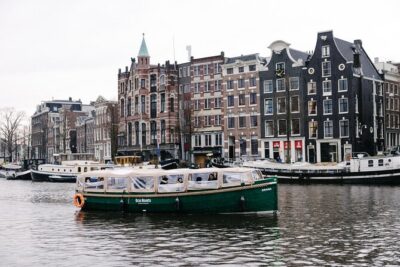
As you continue, you’ll walk by the Amstel River and see two bridges referenced on the route: the Skinny Bridge and the Blue Bridge. The description adds a nice accuracy point: the Blue Bridge isn’t actually blue now—it’s named after a wooden blue bridge that spun across the Amstel in the 17th century.
That small correction is exactly the kind of street-level detail a walking guide should provide. It stops you from building a mental picture that’s wrong.
Then you’ll head toward the Stopera, described as a building complex housing the city hall and the Dutch National Opera and Ballet. Construction took at least 60 years, which is another useful context detail. It signals that Amsterdam’s cultural institutions aren’t recent add-ons; they’re planned and long-running.
Finally, you shift toward the Former Jewish Neighborhood, known as Jodenbuurt. The route notes that important historically preserved buildings are managed by the Jewish Cultural Quarter. Even if your museum time is the main Rembrandt focus, this walk helps you understand the city as layered, not one-theme only.
This section is mostly about atmosphere and location context—so don’t expect a long stop at each point. The guide uses short time windows to keep the full plan on schedule.
Het Rembrandthuis: what you gain from the house museum time
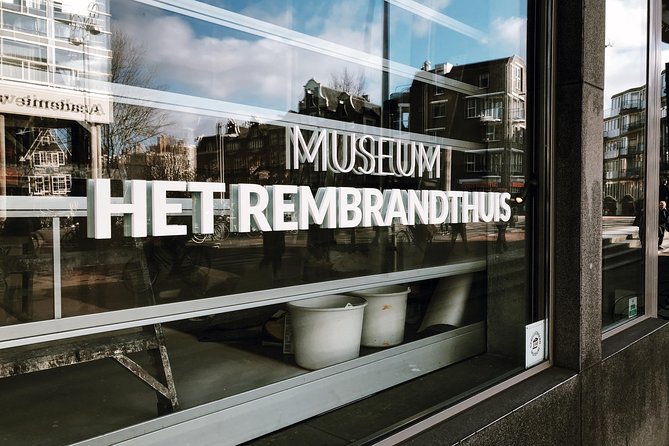
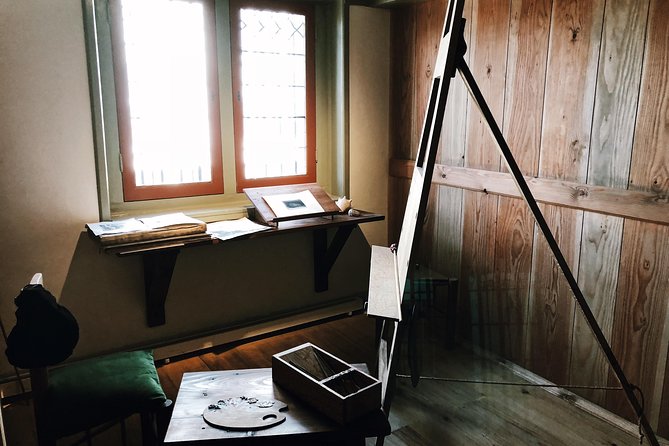
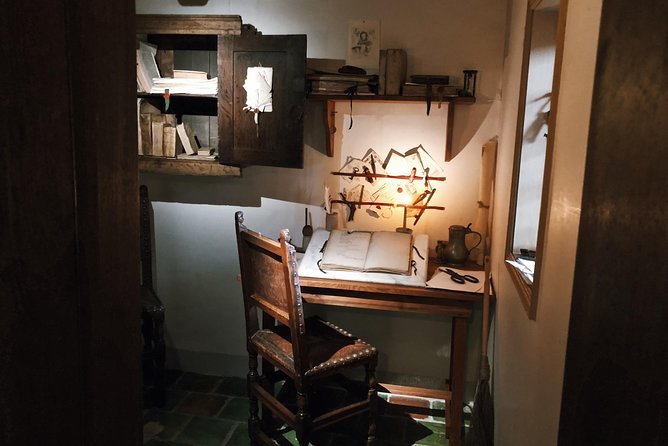
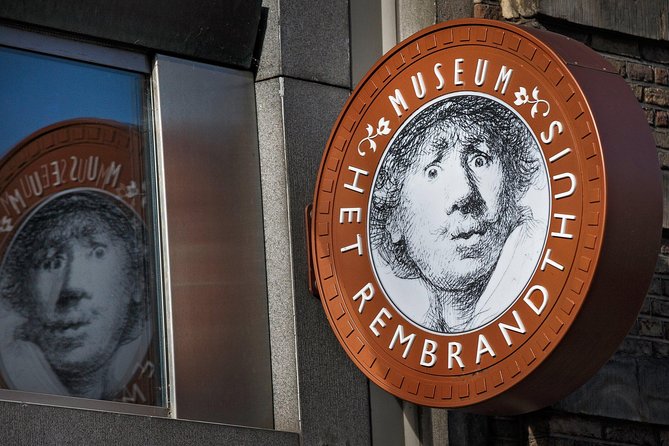
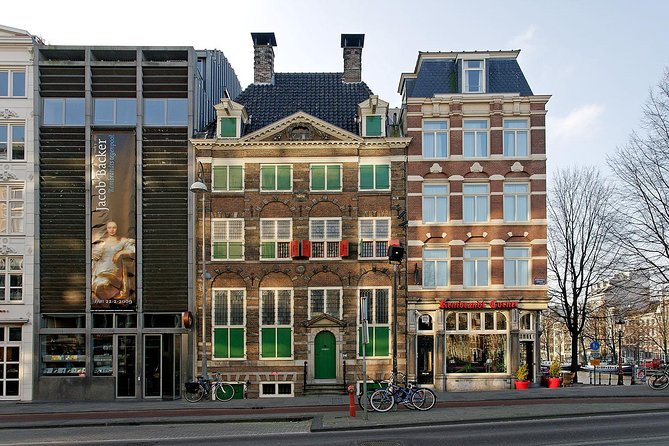
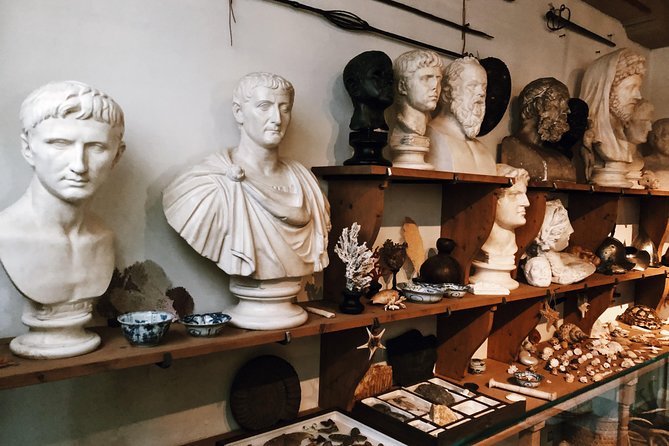
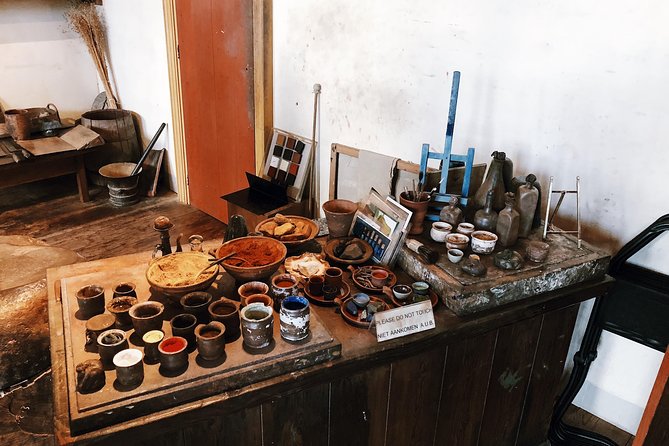
The tour’s main finish is the entrance to Museum Het Rembrandthuis (Rembrandt House Museum). You’ll learn that Rembrandt lived and worked there between 1639 and 1656. The museum collection is described as including Rembrandt’s etchings and paintings of his contemporaries.
This included time is the reason the tour is worth paying for. A walking tour gives you street context; the house museum gives you material context—where he worked and what the surviving pieces help you understand. If you’re a first-time Amsterdam visitor, this combination helps you avoid the common problem of seeing Rembrandt as only a name from books.
A few practical details matter here:
- You’ll face museum security, so no large bags or suitcases are allowed inside. The guidance says only handbags or small thin bag packs can go through security.
- You may encounter rooms where you should keep very quiet or where speaking is restricted. The guide will tell you which rooms before you enter those areas.
- In some cases, the museum has occasional closures without prior warning. If the museum opening is delayed by more than 1 hour from the tour start time, the operator says they’ll provide an appropriate alternative, but refunds/discounts aren’t offered for those situations.
For many people, those rules are minor. But in the real world, they change what you bring and how you plan your photos. Pack light if you can, and plan to take notes as you go, because the house’s layout is easy to walk through too quickly if you’re distracted.
Price and value: what $159.21 buys you in Amsterdam terms
At $159.21 per person for about 2.5 hours, this is positioned as a semi-private experience rather than a low-cost group bus situation. The practical value comes from two things:
- Entrances are included, and the Rembrandt House Museum visit is the key one.
- You’re paying for guide time with a max group size of 8, which usually means fewer pauses for re-grouping and a more personal pace.
You’ll still pass spots where entry isn’t included (like Museum Van Loon and the Stopera area). But the itinerary is designed so those are quick context stops, while the paid museum moment is the Rembrandthuis segment.
If you already know Amsterdam and you only want street photos, a free-walking route might tempt you. But if you want the city’s structure plus a genuine indoor Rembrandt experience with admission handled, this price starts to make sense.
One more reason I like paying for guided museum time: it saves you from guessing. Instead of walking into rooms with only a general idea, you get a guided narrative you can confirm with the objects on the walls.
Who should book this tour, and who might skip it
This works best if you:
- Want a Rembrandt-focused walk rather than a general highlights loop
- Like canals and neighborhoods, but still want your day to end with an indoor museum payoff
- Prefer a small-group setting where you can hear the guide without leaning into someone’s back
It might not be the right pick if:
- You have mobility limits and need wheelchair access; the tour is explicitly not recommended for those using a wheelchair or with walking disabilities
- You don’t want to follow museum security rules about bags and quiet rooms
Also, bring a mobile phone number with country code when booking. The tour notes it’s imperative for coordination. It’s a small admin point, but it matters if you want smooth check-in.
If you’re visiting in a season when weather is unpredictable, the rain-or-shine approach means you aren’t stuck canceling plans at the last minute.
Book it or skip it? My honest take
I’d book this tour if you want Rembrandt plus Amsterdam’s street logic in one package. The included Rembrandt House Museum time is the big win, and the max 8-person setup makes the walking portion feel manageable and personal. The canal stops also do more than decorate your photos—they help you understand the city’s shape and naming.
I’d think twice only if your mobility is limited or if you’re very sensitive to museum rules like bag restrictions and quiet-room behavior. And if you’re visiting around a time when you’re worried about museum closures, be aware that while an alternative can be offered for long delays, refunds/discounts won’t apply in those closure situations.
FAQ
FAQ
What time does the tour start, and how long is it?
It starts at 1:30 pm and runs for about 2 hours 30 minutes.
Where do I meet the guide, and where does the tour end?
You meet at Cobra Café, Hobbemastraat 18, 1071 ZB Amsterdam and the tour ends at Rembrandt House Museum, Jodenbreestraat 4, 1011 NK Amsterdam.
Is the Rembrandt House Museum admission included?
Yes. The tour includes entry to Museum Het Rembrandthuis, and entrance fees are listed as included.
What languages is the tour offered in?
The tour is offered in English.
Is hotel pickup or drop-off included?
No. The price doesn’t include hotel pickup or drop-off, and the guidance recommends using Uber or taxi.
Do I need to pay for the flower market, bridges, or other stops?
The itinerary includes both free and not-included stops. Entrance fees are included overall, but specific stops like Museum Van Loon are listed as not included.
Is this tour suitable if I use a wheelchair?
No. It’s not recommended for those with walking disabilities or using a wheelchair.
If you’d like, tell me what else you’re doing in Amsterdam that day (museum-heavy vs. mostly walking), and I can help you place this tour in the best order so you don’t feel rushed.
More Tours in Amsterdam






More Tour Reviews in Amsterdam






Indoors Done Well: More Amsterdam Museums






Just added: fresh Amsterdam tour reviews





Amsterdam Museums & Galleries, compared.
 ★ 4.5Madame Tussauds TicketFrom $1911,438 reviews
 ★ 4.5Amsterdam’s Weirdest Museum: Ripley’s Believe It or Not!From $264,920 reviews
 ★ 4.4NEMO Science Museum TicketFrom $252,979 reviews
 ★ 4.0Moco Museum Amsterdam Admission Ticket with Banksy and moreFrom $271,745 reviews
 ★ 4.5Ticket to The Ultimate 5D Flight Experience at THIS IS HOLLANDFrom $281,413 reviews
 ★ 4.0Madame Tussauds Amsterdam Admission TicketFrom $25940 reviews
 ★ 4.5Body Worlds Amsterdam Admission TicketFrom $27860 reviews
 ★ 4.6Madame Tussauds & Amsterdam Dungeon Combo TicketFrom $34680 reviews
Browse the lists this tour appears in