
Reviewed · WORKSHOPS
Kintsugi Workshop “The art of Imperfection”
Gold repairs. Quiet focus. Real craft.
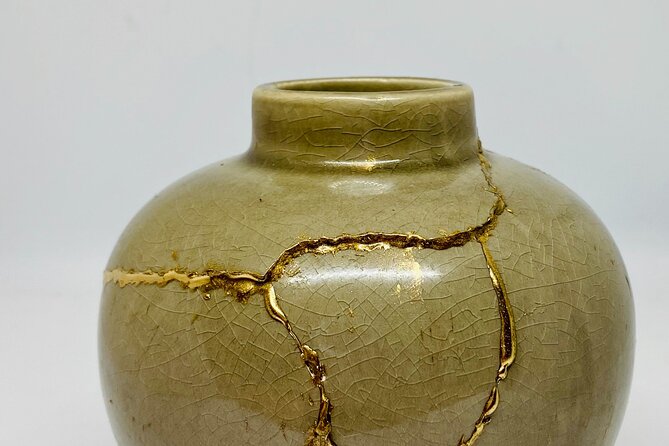
If you like hands-on activities that feel both meditative and practical, this Kintsugi workshop in Amsterdam is a standout. You’ll work with the Japanese idea of wabi-sabi, where cracks and flaws aren’t hidden. Instead, they get a place of honor with golden leaf glue patterns.
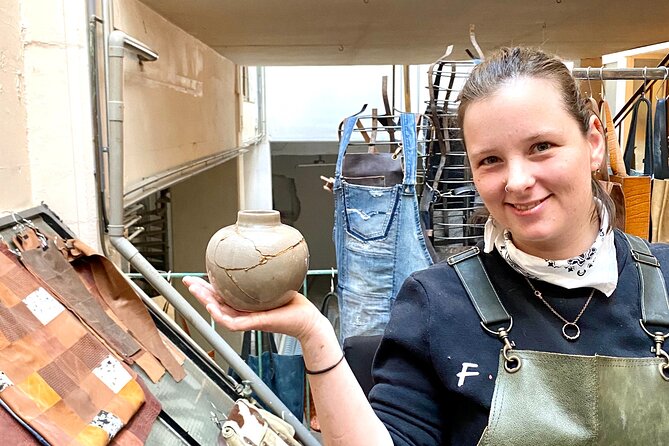
Two things I really like: first, the vibe is calm and welcoming, and you’re guided step-by-step through the process with care (the workshop is led by Annelies, who sets the tone quickly). Second, the workshop isn’t just about making something pretty; the symbolic plate-breaking and patient reassembly turns the technique into a mindset you can actually use outside the studio.
One consideration: you should plan for refreshments, because coffee and/or tea aren’t included.
In This Review
- Key highlights to know before you go
- Kintsugi in Amsterdam: what the golden repairs are really about
- Where you meet in central Amsterdam (and why location matters)
- The full 2-hour flow: plate break, careful reassembly, final look
- Golden leaf glue and the wabi-sabi technique you can reuse
- Price and value: what $90.11 really buys you
- Practical tips for your visit (so you enjoy it more)
- Who should book this Kintsugi workshop (and who might not)
- Should you book Kintsugi with a golden leaf focus in Amsterdam?
- FAQ
- How long is the Kintsugi workshop?
- Is the workshop offered in English?
- What is the cost per person?
- What does the workshop include?
- What is the group size?
- Can children join?
- Is free cancellation available?
Key highlights to know before you go
- Small group size (max 6) means you get real attention, not a rushed production line.
- English instruction makes it easy to follow the technique and the meaning behind it.
- Symbolic plate break helps shift your thinking from fixing to transforming.
- Golden leaf glue is the signature look that turns cracks into intentional design.
- All materials included, so you can focus on the work instead of shopping for supplies.
- 2 hours on a Wednesday afternoon fits nicely if you’re already in central Amsterdam.
More hands-on afternoons in Amsterdam
- Amsterdam: Traditional Dutch Syrup Waffle Making Workshop
★ 4.8 · 4,093 reviews - Amsterdam Traditional Dutch Syrup Waffle Making Workshop
★ 5.0 · 960 reviews - Amsterdam: Bols Cocktail Experience and Cocktail Workshop
★ 4.8 · 666 reviews - Amsterdam: Traditional Dutch Blue Tile Painting Workshop
★ 4.7 · 400 reviews
Kintsugi in Amsterdam: what the golden repairs are really about
Kintsugi is Japanese for repairing broken ceramics in a way that treats damage as part of the object’s story. The best version of this idea starts with a simple shift: you stop trying to erase the fracture and instead highlight it. In this workshop, you’ll see that philosophy made physical, with gold-toned adhesive and careful joining of shards.
Historically, Kintsugi traces back to the 15th century, when restored pottery and ceramics became a kind of visible history. Today, it aligns perfectly with modern design habits—natural materials, visible craft, and imperfections that look intentional rather than accidental. That’s why the result often feels less like a “repair” and more like a new artwork born from a break.
You’ll also get the mental side of it. The workshop is built around the idea that fractures can mark a fresh start. If you like experiences that leave you with a little perspective (not just a finished craft object), this one makes it hard to stay in purely tourist mode.
Where you meet in central Amsterdam (and why location matters)
You meet at Paleisstraat 107, 1012 ZL Amsterdam. This is central enough that you can pair it with other nearby activities, and it’s near public transportation, which is a big deal in a city where routes can get crowded fast.
The workshop runs for about 2 hours, and it ends back at the same meeting point. That simplicity helps you plan your day without a complicated schedule. It also matters for stress: you won’t spend your afternoon wandering to find where to return.
Bring your confirmation (you’ll get one after booking), but the practical note is that the workshop uses a mobile ticket. If you’re the type who hates sorting paper receipts mid-trip, that’s a nice touch.
Lastly, the group stays small (up to 6). That size is part of why the workshop feels personal instead of assembly-line.
The full 2-hour flow: plate break, careful reassembly, final look
The workshop is designed as a sequence—structured, but not rigid. You start with a serene introduction that sets the tone and explains what you’re going to do. You’re not just handed materials and told to go. You’ll be prepared for the big moment first, and that makes the hands-on part feel purposeful.
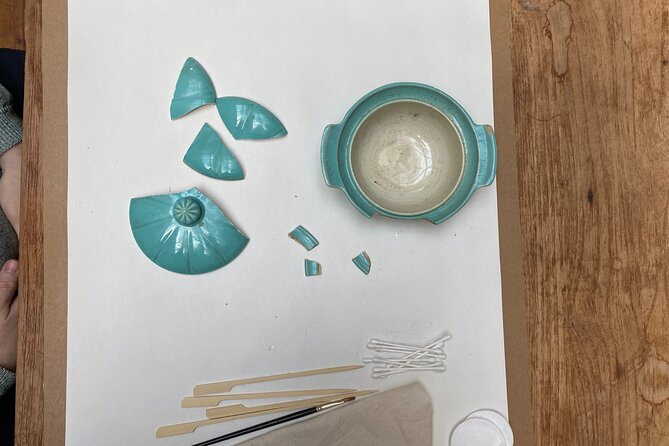
Then comes the symbolic act: you’ll break a plate as part of the session. Yes, that sounds a little intense if you don’t expect it. But in context, it’s the teaching tool—an immediate reset from perfection to possibility. It’s also a quick way to get everyone engaged, because you’re doing it together rather than watching someone else demonstrate.
After that, you shift into the slower part: patiently reassembling the shards. This is where you’ll notice the craft rhythm—lining up pieces, working with attention, taking your time instead of rushing. The goal isn’t speed. The goal is alignment and a clean, intentional outcome.
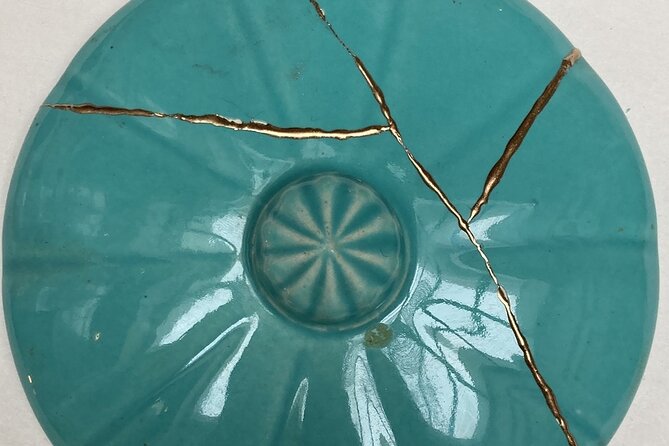
As you work, the material method builds the signature look. The workshop uses golden leaf style effects via the restoration approach (including the golden leaf glue look). When the final join begins to take shape, the whole room tends to get quieter. That’s a good sign. It means you’re learning the technique and absorbing the mindset at the same time.






Golden leaf glue and the wabi-sabi technique you can reuse
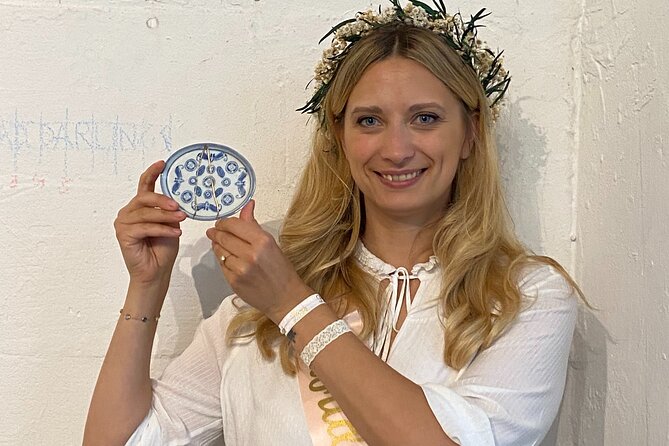
What makes Kintsugi special is that the joining line becomes part of the design. Cracks aren’t hidden; they’re highlighted with a contrasting material—here, the gold-toned effect. In this workshop, you’ll learn how that transformation happens through careful assembly and patience.
The practical value: you’ll come away with a repeatable way of thinking about imperfection. Even if you never glue a plate at home, you’ll remember how the process changes when you treat breakage as a starting point, not a failure. You may also leave with better hand coordination and focus. These workshops can be surprisingly good for motor skills, because you’re working with small pieces and controlled placement.
The bigger point is the metaphor. Kintsugi is often explained as a way to let go, embrace new beginnings, and find beauty in resilience. In a workshop like this, that’s not delivered as a speech. It’s built into the steps: break first, then rebuild thoughtfully.
You’ll also notice that the workshop aligns with modern values: natural, visible craftsmanship instead of hiding damage behind coatings. That’s why Kintsugi still feels current in interior design trends. It doesn’t try to look brand-new. It tries to look meaningful.
Price and value: what $90.11 really buys you
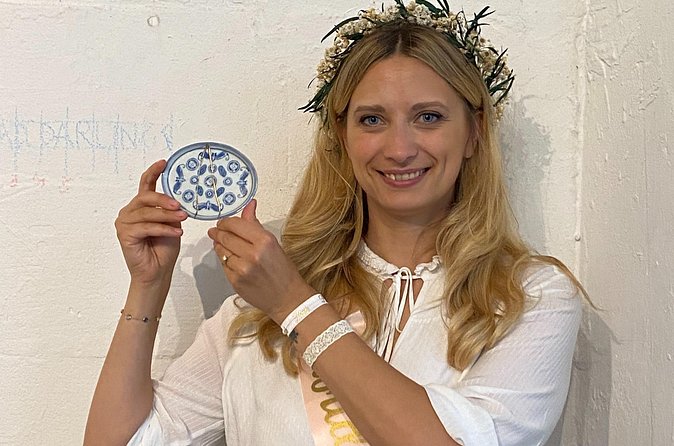
At $90.11 per person for roughly 2 hours, this isn’t “cheap-and-cheerful,” but it also isn’t overpriced for a small, guided, hands-on craft experience. The value starts with what’s included: all materials are provided. That means you don’t have to buy tools, glue, specialty supplies, or worry about missing parts of the process.
You’re also paying for instruction that fits the philosophy. Kintsugi isn’t a one-minute hack. It takes patience, and it helps to have a guide who can help you correct alignment before it becomes a mess.
The small group size (max 6) is part of the cost justification, too. In larger classes, you’re often stuck waiting. Here, you’re more likely to get timely coaching during the reassembly stage, when it matters most.
One more value point: the workshop is English, so you can learn the meaning without language friction. That turns the experience into something you can actually carry forward, instead of just taking photos and leaving.
Practical tips for your visit (so you enjoy it more)
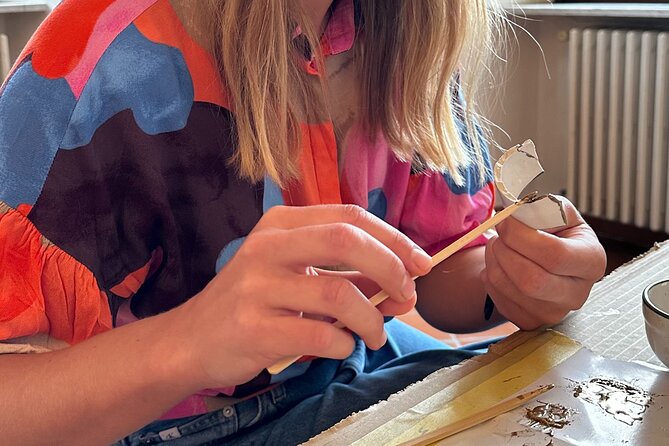
Plan around the timing: it runs on Wednesdays from 2:00 PM to 4:00 PM during the listed seasons. Since it’s booked about 90 days in advance on average, you’ll want to reserve early if you’re traveling in peak periods or you have a specific date in mind.
Since coffee and/or tea aren’t included, I’d grab a drink nearby before you go. It’ll help you stay relaxed during the hands-on portion, especially since you’ll be concentrating and working slowly.
Wear clothes that you don’t mind getting a little crafty. The workshop is not described as messy, but any session involving adhesives and handling shards benefits from comfortable basics. If you’re the type who sweats details, bring a small towel or wipes—just in case you want to tidy up after working closely with materials.
Also, since the workshop isn’t suitable for children under 10, plan for a more adult-focused environment. And if you have moderate physical fitness needs, keep in mind it’s a craft session that involves sitting, handling pieces, and working carefully for about two hours.
Who should book this Kintsugi workshop (and who might not)
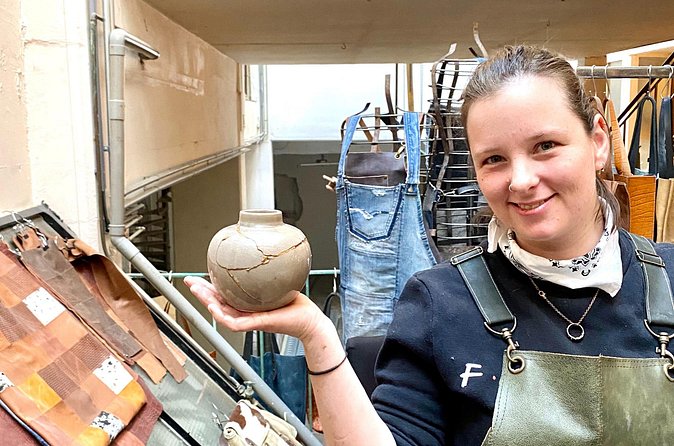
This is a great fit if you want a break from walking tours and museums and prefer doing something with your hands. If you enjoy mindful activities—calm focus, slow steps, and learning a technique with meaning—you’ll likely feel at home here.
It’s also ideal for people who like design and craft trends that celebrate natural materials and visible workmanship. The gold-line look is visually striking, and the process behind it gives you context beyond aesthetics.
You might skip it if you’re looking for a fast, casual activity with no structured steps. This workshop rewards patience. It’s also not meant for kids under 10, so families with younger children would need to find another option.
Finally, if you’re visiting Amsterdam with tight scheduling, note the specific Wednesday afternoon slot. It’s a small but real limitation—easy to manage if you’re flexible, annoying if you aren’t.
Should you book Kintsugi with a golden leaf focus in Amsterdam?
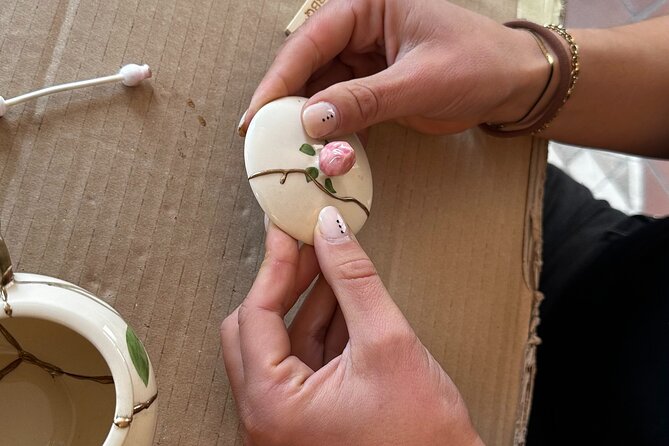
I think you should book this workshop if you want a hands-on Amsterdam experience with both craft skill and a built-in mindset lesson. The combination of small group size, English instruction, and golden leaf restoration work makes it more than a souvenir class. It’s a calm two hours where you leave with a stronger sense of how to treat imperfections—visually and mentally.
Book early if your dates are fixed. And plan for no included refreshments, since that’s the one practical snag. If those points don’t bother you, this is a very satisfying way to spend an afternoon in the city.
FAQ
How long is the Kintsugi workshop?
It lasts about 2 hours.
Is the workshop offered in English?
Yes, the workshop is offered in English.
What is the cost per person?
The price is $90.11 per person.
What does the workshop include?
All materials needed for the workshop are provided.
What is the group size?
The workshop has a maximum of 6 travelers.
Can children join?
The workshop is not suitable for children under the age of 10.
Is free cancellation available?
Yes. You can cancel up to 24 hours in advance for a full refund. If you cancel less than 24 hours before the start time, the amount paid is not refunded.
Craft a Dutch Keepsake





More Tour Reviews in Amsterdam






Just added: fresh Amsterdam tour reviews





Workshops, compared.
 ★ 4.8Traditional Dutch Syrup Waffle Making WorkshopFrom $234,093 reviews
★ 5.0Amsterdam Traditional Dutch Syrup Waffle Making WorkshopFrom $27960 reviews
★ 4.8Traditional Dutch Syrup Waffle Making WorkshopFrom $234,093 reviews
★ 5.0Amsterdam Traditional Dutch Syrup Waffle Making WorkshopFrom $27960 reviews
 ★ 4.8Bols Cocktail Experience and Cocktail WorkshopFrom $41666 reviews
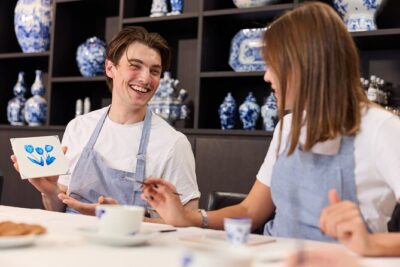 ★ 4.7Traditional Dutch Blue Tile Painting WorkshopFrom $25400 reviews
 ★ 4.53-Course Meal in Historic 1st Class Waiting RoomsFrom $61292 reviews
 ★ 4.9Make your own Dutch Stroopwafel WorkshopFrom $23280 reviews
★ 4.5Amsterdam Bols Cocktail Experience and Cocktail WorkshopFrom $4182 reviews
★ 5.0Amsterdam Traditional Dutch Blue Tile Painting WorkshopFrom $2871 reviews
★ 4.9Make your own Dutch Stroopwafel WorkshopFrom $23280 reviews
★ 4.5Amsterdam Bols Cocktail Experience and Cocktail WorkshopFrom $4182 reviews
★ 5.0Amsterdam Traditional Dutch Blue Tile Painting WorkshopFrom $2871 reviews
Browse the lists this tour appears in