
Reviewed · WORKSHOPS
Amsterdam: Traditional Dutch Blue Tile Painting Workshop
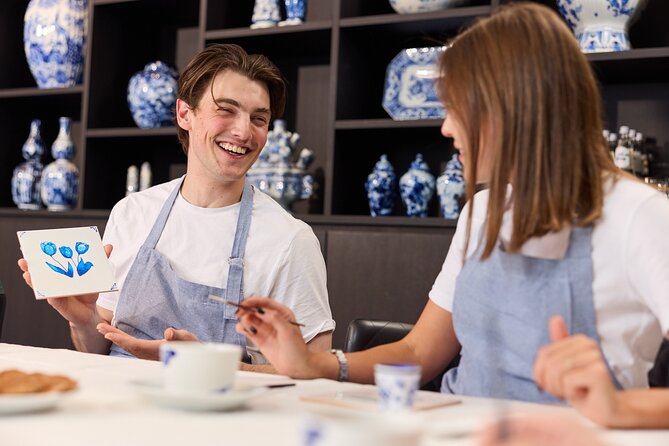
One blank ceramic tile can turn into real Dutch pride. This Blue Tile Painting Workshop gives you classic Delft Blue inspiration, guided instruction, and a handmade souvenir in just 75 minutes. I especially like the easy, beginner-friendly approach (stencils and step-by-step help), and I also like the small-group feel that keeps things relaxed. A fair consideration: you’re working on a set time limit, so super-precise lines take a bit of patience.
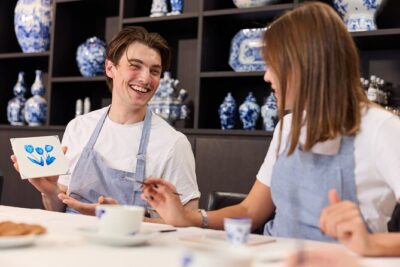
You’ll meet your instructor at the front door, get coffee/tea and stroopwafels, and spend the session painting blue-and-white patterns or your own design. The instructor is in English, and the materials are all included—tile, paints, brushes, and an apron—so you can focus on having fun instead of hunting supplies. If you want a quieter, hands-on activity that still feels very Amsterdam, this is a strong pick.
In This Review
- Key things I’d watch for
- Delft Blue Tile in 75 Minutes: what you’re really getting
- Meeting your instructor at the front door
- How Delftware and blue-and-white painting connects to the real craft
- The painting flow: brushes, stencils, and your final tile
- Tea, stroopwafels, and why the pace feels so good
- Price and value: why $25 makes sense here
- Who should book this workshop (and who should skip it)
- How to get the best result (without stressing)
- Should you book it?
- FAQ
- How long is the Amsterdam Blue Tile Painting Workshop?
- How much does it cost?
- Do I need any art experience?
- What will I paint, and can I take it home?
- Is the workshop taught in English?
- What’s included in the ticket price?
- Where do I meet the instructor?
- Is this activity suitable for kids?
- Do I need to stand in line to enter?
Key things I’d watch for
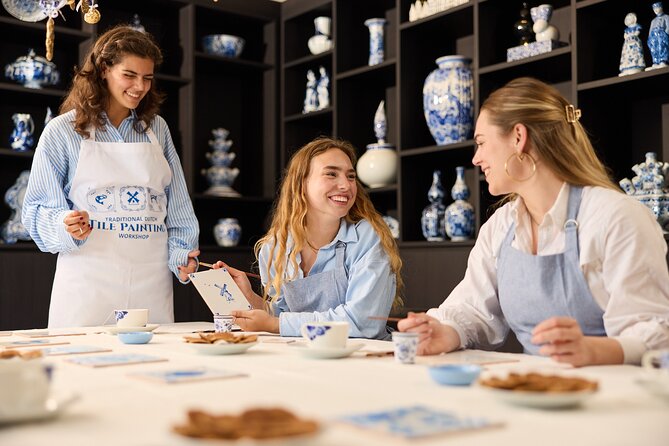
- Stencils help beginners: many participants report that stencils make the designs approachable, even if you worry about drawing.
- You’ll hear the Delftware story: the session ties the look of Delft Blue to the craft tradition behind it.
- You take the tile home: your finished tile is included, so this isn’t just a short-lived activity.
- Small-group pace: multiple reviews mention intimate groups, including cases that felt almost private.
- Refuel during the workshop: tea, coffee, and stroopwafels are part of the experience, not an afterthought.
- Instructors vary (but the vibe stays friendly): you might meet Martina, Erna, Peyaswani, Peya, or Belinda.
More hands-on afternoons in Amsterdam
- Amsterdam: Traditional Dutch Syrup Waffle Making Workshop
★ 4.8 · 4,093 reviews - Amsterdam Traditional Dutch Syrup Waffle Making Workshop
★ 5.0 · 960 reviews - Amsterdam: Bols Cocktail Experience and Cocktail Workshop
★ 4.8 · 666 reviews - Amsterdam: Traditional Dutch Blue Tile Painting Workshop
★ 4.7 · 400 reviews
Delft Blue Tile in 75 Minutes: what you’re really getting
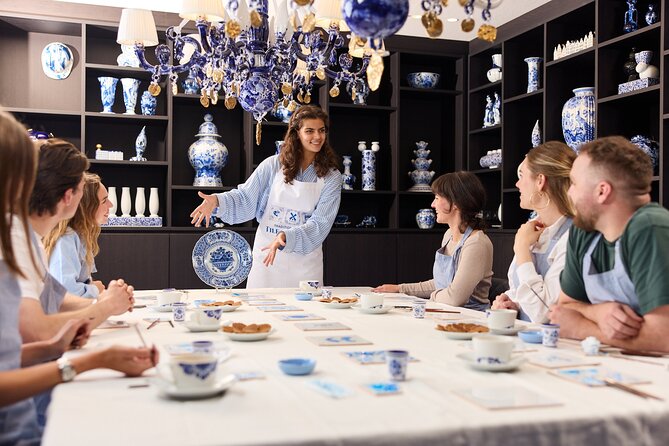
This workshop is built around one very practical idea: you don’t need art training to make something that looks authentically Dutch. You sit down with brushes and paint, learn a simple method, and create a decorative ceramic tile in the Delft Blue style—blue lines and details on a light background, the look that instantly signals the Netherlands to most people.
The main value for you is that it’s both structured and forgiving. The structure comes from guidance and technique—how to hold the brush, how to plan your blue shapes, and how to build the design without overthinking it. The forgiving part comes from the way many designs are supported with stencils, so your tile still looks crisp even if your freehand skills are… let’s say, still warming up.
The other value is time. At 75 minutes, you get a real activity without sacrificing half a day. That matters in Amsterdam, where your calendar can fill up fast with museums, canals, and long walks. This is the kind of stop that helps you slow the pace without turning into a big production.
Meeting your instructor at the front door
The experience starts right away: your instructor meets you at the front door. That’s a small detail, but it’s the kind that reduces travel stress. No confusing wayfinding. No searching for a venue inside a maze of canal-side streets. Just arrive, get settled, and start.
Instructors lead the whole process in English, and you may meet people like Martina, Erna, Peyaswani (also spelled Peya/Peyaswani in some confirmations), or Belinda. The common thread across these instructors is patience and hands-on guidance. Some participants even comment on extra warmth and humor, which fits the theme of the workshop: this is Dutch craft, but the atmosphere stays relaxed.
If you like activities where someone explains what’s happening and checks in as you go, you’ll probably enjoy this. And if you dislike being rushed, note the pacing: it’s designed to finish your tile within the session window, but there is still enough support to help you keep moving step by step.
How Delftware and blue-and-white painting connects to the real craft
This is not just paint-and-go. You’ll learn the story behind Delft Blue ceramics—why blue-and-white became such a signature style, and how the tradition shaped the look of Dutch decorative tiles.
What that means for you in the room is simple: you’re not painting randomly. You’re painting with context. When you understand why tulip-like shapes, windmill silhouettes, or decorative border patterns show up again and again, your design choices feel more intentional. Even if you pick a classic motif, you’ll know what it represents instead of just copying a picture.
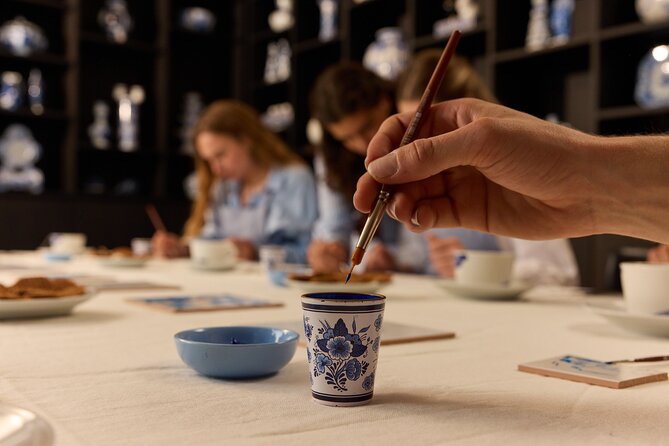
One practical bonus: the instruction often includes easy technique reminders that help you get cleaner results. For example, you’ll get taught approaches for using a brush to create more consistent lines and shapes. Several participants mention that the teachers demonstrate the steps clearly and encourage you as you paint, which is exactly what helps beginners avoid that stressful moment where you think you’ve ruined it.




The painting flow: brushes, stencils, and your final tile
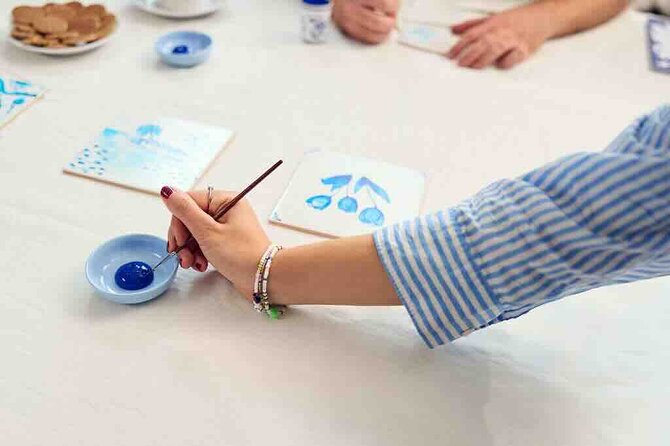
Here’s what the workshop typically feels like from start to finish:
1) Pick your design route
You’ll usually choose from a set of stencil or design options, which is one of the biggest reasons beginners do well here. If you’re worried about drawing, stencils give you a workable outline so you can concentrate on color, line quality, and detail.
2) Learn the basic technique
Your instructor explains how to load paint, how to handle the brush, and how to build the design in the right order. The goal is to get you from blank tile to a finished blue-and-white look without getting stuck at the first stroke.
3) Paint in a guided, low-pressure rhythm
You paint while the instructor circulates and offers help. This is where you’ll notice the small-group setting helps. If you’re stuck on one shape or line, you can get attention without the instructor disappearing to manage a crowd.
4) Add details and refine
This is the part where you either slow down and enjoy it, or you push to finish on time. A few participants note the session timing can feel tight if you want to perfect every line. That doesn’t mean it’s rushed—but it does mean you’ll want to pace yourself. If your inner perfectionist is loud, plan to prioritize the overall design over getting every detail razor sharp.
5) Wrap up and take it home
Your finished tile is yours to keep, and you’ll leave with a physical reminder of the day. Some reviews also mention receiving a small certificate souvenir, which adds a nice touch of closure—something small but memorable.
Tea, stroopwafels, and why the pace feels so good
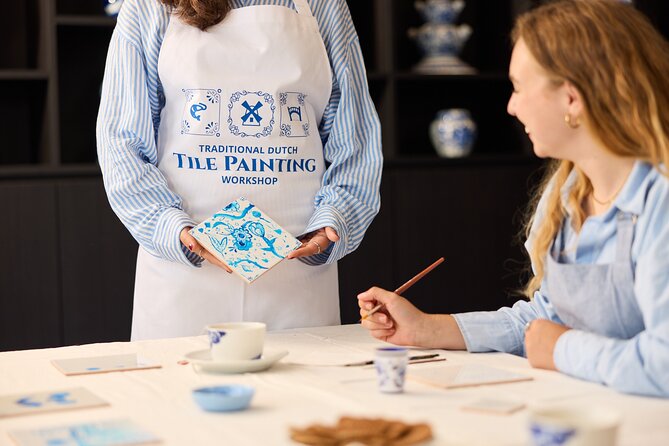
Amsterdam can be a lot: crowded streets, back-to-back attractions, and the constant question of what to do next. This workshop is different because it’s built for calm.
You’ll get coffee and tea, plus stroopwafels during the session. That simple food break changes the mood. It makes the workshop feel like a hosted experience, not a transaction. You can pause, look at your tile, and adjust without feeling like you’re racing a clock the whole time.
Also, many participants highlight the relaxed environment. Several reviews mention very small group sizes, including moments where it felt almost private. Even if your group isn’t tiny, the lesson format still tends to keep the atmosphere friendly, since everyone is focused on their own tile.
Price and value: why $25 makes sense here
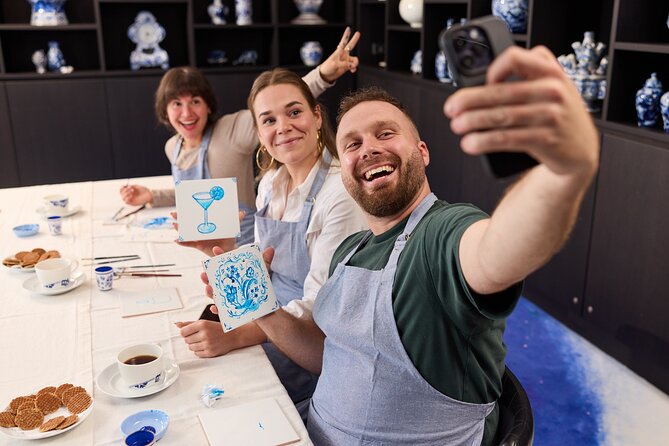
At $25 per person for a 75-minute hands-on workshop, the key question is: what do you actually get for that money?
You’re not just paying for instruction. Your price includes:
- your ceramic tile
- paints and brushes (and an apron)
- guidance from an English-speaking local instructor
- coffee/tea and stroopwafels
- a finished tile to take home
That combination is where the value shows. In Amsterdam, many activities charge similar prices for time, but you often don’t leave with a tangible craft souvenir. Here, you do. The tile becomes your personal “souvenir you made,” which feels more meaningful than a magnet or a mass-produced gift.
Also, because the workshop is beginner-friendly and often uses stencils, fewer people feel like they’re failing. You’re more likely to leave with something you’re proud to hang up or give away—which is a big part of what you’re paying for.
Who should book this workshop (and who should skip it)
This workshop is a great fit if you want:
- a creative activity that doesn’t demand drawing talent
- a souvenir you can use after the trip
- a break from museum hours and canal crowds
- something you can do as a couple, friends group, or solo
It also works well for families, but there’s one clear limitation: it’s not suitable for children under 4.
What might make you reconsider:
- If you need a very long, guided, museum-style experience, 75 minutes may feel short. The session is designed for finishing your tile, so it’s more focused than slow.
- If you’re extremely detail-obsessed and want perfect line work, be aware the timing can limit how much you can refine.
For most people, though, this is an efficient, enjoyable way to connect to Dutch craft without a big learning curve.
How to get the best result (without stressing)
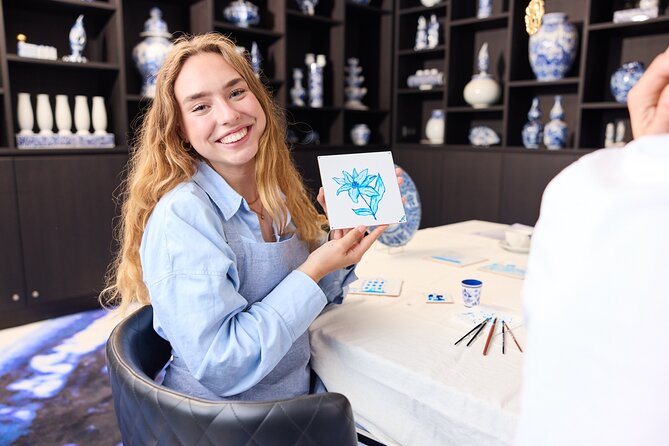
If you want your tile to look its best, here are a few practical tips that match how the workshop is taught:
- Commit to a design early. Don’t spend too long switching ideas once you start painting.
- Use the stencil as intended. If you’re given stencil options, trust them. That’s the shortcut to a clean look.
- Paint in layers of intent. Thin-to-thicker decisions matter more than trying to cram detail everywhere at once.
- Don’t overwork one section. If you keep going, you may smear or dull what you’ve already painted. Step back, then return with fresh focus.
- Bring the mindset of a maker, not a critic. The whole point is that the instructor helps you get to a finished tile within the time.
This workshop is designed so you can end with a result that feels right, not a perfect art project that never quite finishes.
Should you book it?
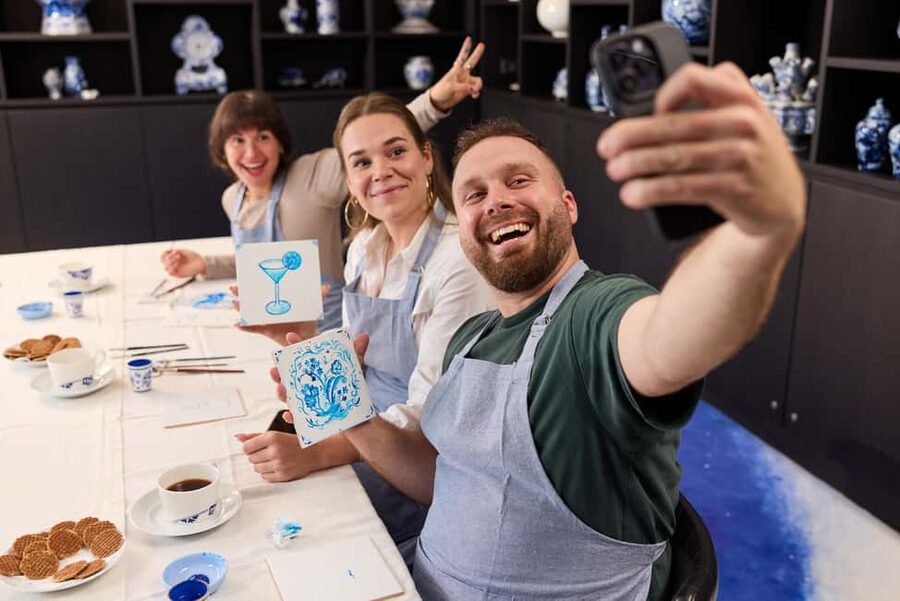
If you want a relaxing, genuinely Dutch souvenir experience, I think this is a strong yes. The combination of beginner-friendly technique, small-group support, and a take-home tile makes it good value for the time. And the history piece gives the activity meaning beyond a quick craft moment.
Skip it only if you’re chasing a big museum-style tour, or if you’re only interested in ultra-technical painting. Otherwise, it’s a smart choice for balancing Amsterdam’s sights with something hands-on, local, and calm.
FAQ
How long is the Amsterdam Blue Tile Painting Workshop?
The workshop lasts 75 minutes.
How much does it cost?
It costs $25 per person.
Do I need any art experience?
No experience is required. The class is designed so beginners can follow along.
What will I paint, and can I take it home?
You’ll paint your own decorative ceramic tile, and it’s included as a take-home souvenir.
Is the workshop taught in English?
Yes, the instructor speaks English.
What’s included in the ticket price?
You get the tile and painting materials (tile, paints, brushes, and apron), instructor guidance, and coffee, tea, and stroopwafels. You also take your finished tile home.
Where do I meet the instructor?
Your instructor meets you at the front door.
Is this activity suitable for kids?
It’s not suitable for children under 4.
Do I need to stand in line to enter?
The experience includes skip-the-ticket-line access.
Craft a Dutch Keepsake




More Tour Reviews in Amsterdam





Just added: fresh Amsterdam tour reviews





Workshops, compared.
 ★ 4.8Traditional Dutch Syrup Waffle Making WorkshopFrom $234,093 reviews
★ 5.0Amsterdam Traditional Dutch Syrup Waffle Making WorkshopFrom $27960 reviews
★ 4.8Traditional Dutch Syrup Waffle Making WorkshopFrom $234,093 reviews
★ 5.0Amsterdam Traditional Dutch Syrup Waffle Making WorkshopFrom $27960 reviews
 ★ 4.8Bols Cocktail Experience and Cocktail WorkshopFrom $41666 reviews
 ★ 4.53-Course Meal in Historic 1st Class Waiting RoomsFrom $61292 reviews
 ★ 4.9Make your own Dutch Stroopwafel WorkshopFrom $23280 reviews
★ 4.5Amsterdam Bols Cocktail Experience and Cocktail WorkshopFrom $4182 reviews
★ 4.9Make your own Dutch Stroopwafel WorkshopFrom $23280 reviews
★ 4.5Amsterdam Bols Cocktail Experience and Cocktail WorkshopFrom $4182 reviews
 ★ 5.0Amsterdam Traditional Dutch Blue Tile Painting WorkshopFrom $2871 reviews
 ★ 5.0Amsterdam Light Festival Winter Walk with Stroopwafel Workshop66 reviews
Browse the lists this tour appears in