
Reviewed · HISTORICAL TOURS
History & culture tour in Amsterdam with a local
Amsterdam can feel like a maze, but this walk gives it shape fast. You get a tight, local-led tour built around history and culture stops, and you’ll also pick up a classic treat: a Dutch Stroopwafel along the way. I like that the route hits big landmarks (Dam Square, Begijnhof, Centraal Station) without turning it into a museum marathon, and I like the small group size that makes questions feel normal. One thing to consider: each stop is brief, so if you want deep time in one place, you’ll probably want a second, longer activity later.
Guides matter on a history walk, and this one has a strong track record. Reviews specifically call out guides such as Manouk and Malik for friendly, adaptable guiding, including tours tailored to fit the needs of the group. With a maximum of 15 travelers and an English option, it’s a practical way to learn names, stories, and context while you keep moving.
In This Review
- Key Things I’d Put on Your Amsterdam Checklist
- Why This 2-Hour Amsterdam Walk Is a Great First-Day Plan
- Local Guide Energy: Why This Tour Feels Personal
- Beursplein: The City’s Name and the Trade Turn
- Dam Square and the Royal Palace: Power, Then War
- Begijnhof Courtyard: Religion, Tolerance, and Old Wooden Cottages
- House on the Three Canals: Canal Geometry and the Bicycle Bridge Story
- Nieuwmarkt and the Waag: Guild Power and the Dancing Houses
- Zeedijk and Chinatown: How Neighborhoods Change After Hard Times
- Centraal Station: Architecture and Why This Hub Mattered for Centuries
- The Stroopwafel Stop: A Small Taste With Real Cultural Value
- Price and Value: Is $30.07 Worth It?
- Who Should Book This Tour (and Who Might Skip It)
- Should You Book This Amsterdam History Tour With a Local?
- FAQ
- How long is the Amsterdam history and culture walking tour?
- What does it cost?
- Is the tour offered in English?
- How big is the group?
- Where do we meet?
- Is there a Stroopwafel included?
- Do I receive a mobile ticket?
- Can I cancel for free?
Key Things I’d Put on Your Amsterdam Checklist
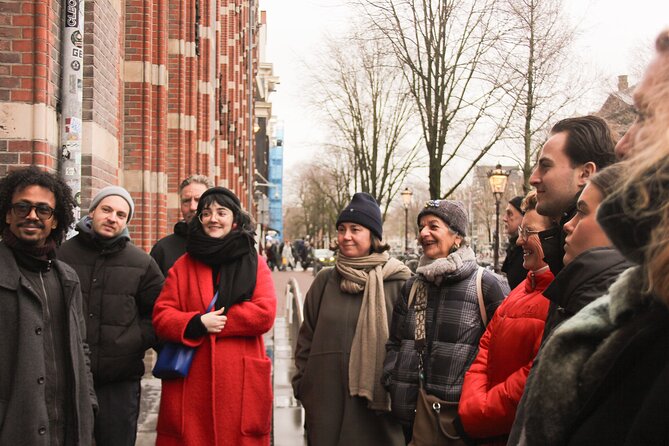
- Small group (max 15) keeps the walk lively and question-friendly
- Stroopwafel stop adds a real taste of Dutch everyday culture
- Canal-area highlights include the House on the Three Canals and Begijnhof courtyard
- WWII and royal-era context at Dam Square makes the city feel more real
- Chinatown history at Zeedijk shows how neighborhoods change over time
Still deciding? A few more Amsterdam tours worth a look
- Amsterdam Food and Cultural Tour with Tastings
★ 5.0 · 4,315 reviews - Amsterdam: Historic City Centre Canal Cruise
★ 4.3 · 659 reviews - Amsterdam: Haunted History and Ghost Walking Tour
★ 4.5 · 488 reviews - Amsterdam High-End Dutch Food & History Tour – Up to 8 guests
★ 5.0 · 482 reviews
Why This 2-Hour Amsterdam Walk Is a Great First-Day Plan
If it’s your first time in Amsterdam, your brain needs landmarks and timelines. This tour works because it’s designed like a guided route through the city’s major “story zones,” not a random wander. You’re walking around central sights at a comfortable pace, with stops planned for quick context and clear takeaways.
It’s also a good match for mixed travel styles. History lovers get plenty to chew on, but you’re not stuck indoors for hours. And since the tour runs about 2 to 2.5 hours, you can do it on day one, then spend the rest of your trip zooming in on whatever part hooked you.
Local Guide Energy: Why This Tour Feels Personal
This is a small-group walking tour with up to 15 travelers, and that changes everything. In a crowd, you hear details only when they’re shouted. Here, you can actually ask things and keep up with the guide’s threads—like how Amsterdam shifted from early settlement to trade powerhouse.
Reviews highlight that guides can tailor the walk. Manouk is noted for shaping the tour to fit the group, and Malik is mentioned as friendly and knowledgeable while customizing to needs. That flexibility matters, especially if your group includes people who want more history facts, more photo time, or a calmer pace.
Also, the guide leads in English, and the tour uses a mobile ticket. That’s a nice practical touch when you’re juggling multiple bookings.
Beursplein: The City’s Name and the Trade Turn
Your walk starts at Beursplein, and the opening sets up the big theme of Amsterdam: commerce and growth. You’ll learn where the city’s identity comes from and how it acquired its name—then connect that to the shift from a fishing village into a center of global economic power in the 17th century.
What I like about starting here is how it gives you a baseline. Once you hear that Amsterdam rose on trade, a lot of later details click into place: the way the city grew, the importance of rules and guilds, and even why certain buildings feel like they were built to impress business partners.
One practical note: the stop is short (around 10 minutes), so your best move is to keep your camera ready but listen first. The guide’s framing makes the rest of the day easier to understand.






Dam Square and the Royal Palace: Power, Then War
Next is Dam Square, one of those places where the city’s layers are visible even if you don’t know the dates yet. You’ll hear what Dam Square meant during Amsterdam’s formation and how it ties into the Royal Palace on the Dam.
Then the tour shifts toward the Second World War, with the square’s role discussed in a way that gives you historical gravity. This isn’t just a stop for photos. It’s a moment where Amsterdam turns from pretty canals and bicycles into a place with real political weight.
If you’re the kind of traveler who likes history that has consequences, this stop is for you. If you’re more into architecture only, you’ll still get enough story to make the buildings feel less random.
Begijnhof Courtyard: Religion, Tolerance, and Old Wooden Cottages
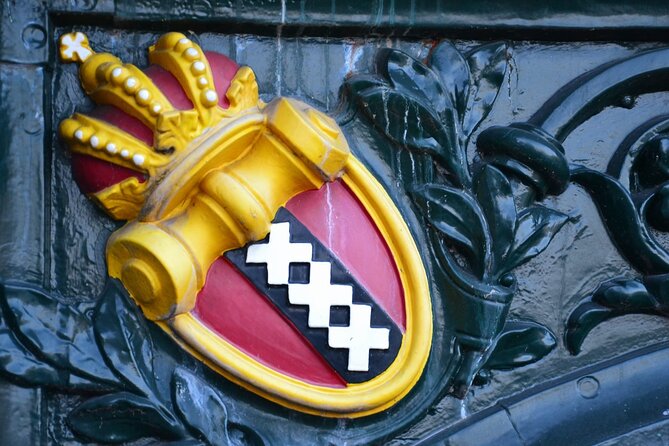
Begijnhof is one of the more atmospheric parts of central Amsterdam—quiet, tucked-away, and surprisingly calm. Here you learn about the religious history of the courtyard and what it reveals about Amsterdam’s tolerance.
This stop also gives you a close-up look at age. You’ll see one of Amsterdam’s oldest houses and hear about two wooden cottages, which adds a tangible sense of how life used to be. It’s not the loud kind of landmark. It’s the kind you appreciate by slowing your pace and looking around.
The drawback, if you’re being picky, is that it’s still a short visit (about 15 minutes). So don’t expect a long, reflective wander. Use that time to take in the feel of the place, then move on with more context than you would have without the guide.
House on the Three Canals: Canal Geometry and the Bicycle Bridge Story
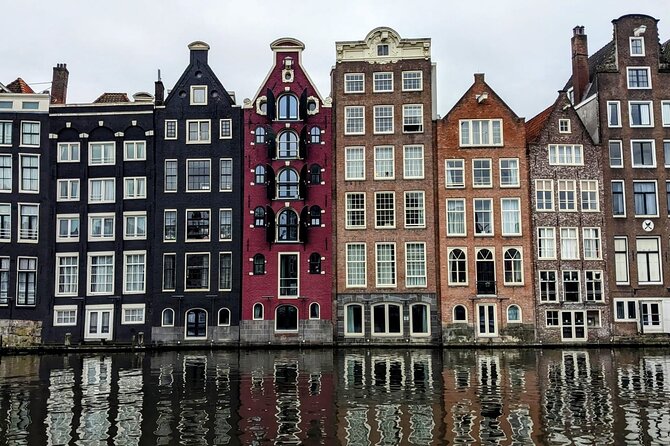
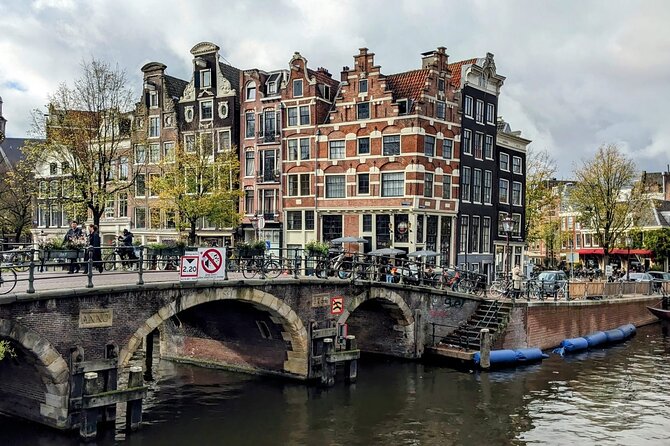
At the House on the Three Canals, you get a fascinating canal-zone detail: the idea behind a bicycle bridge and how that relates to the canal layout. This is the kind of information that’s hard to spot on your own—unless a guide points it out and tells you why it matters.
What I like here is that it connects “pretty architecture” to how people actually moved. Amsterdam isn’t just famous for canals; it’s famous for how those canals shaped everyday life, including routes for bikes and pedestrians.
Because the stop is brief (about 10 minutes), focus on the main visual: the house’s position and why canal-side design can produce odd-looking, memorable scenes. Then let the bridge detail explain the logic behind it.
Nieuwmarkt and the Waag: Guild Power and the Dancing Houses
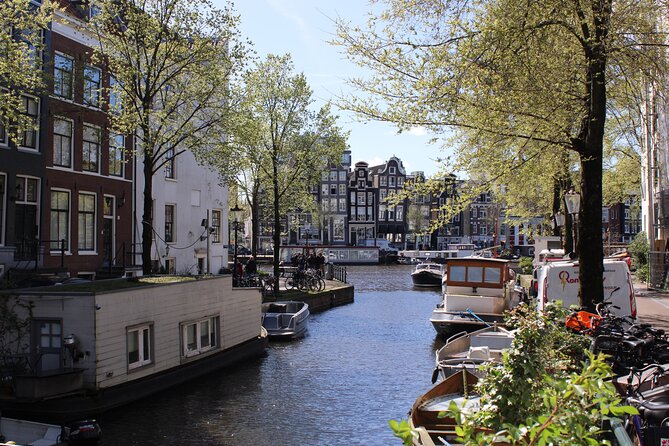
Nieuwmarkt is where the tour zooms in on the importance of guilds—a key ingredient in Amsterdam’s growth. You’ll discover the Waag, an older city gate that later became a guild hall. That transformation tells you a lot about how cities repurpose space when power and industry shift.
Then you’ll see the famous “dancing houses,” which helps you understand why Amsterdam can look playful even when the story beneath it isn’t.
This stop is about 10 minutes, so you won’t get a full lecture on every guild or regulation. But you will leave with a useful framework: Amsterdam’s economy wasn’t just open-market chaos. It had structure, organizations, and buildings that acted like business hubs.
Zeedijk and Chinatown: How Neighborhoods Change After Hard Times
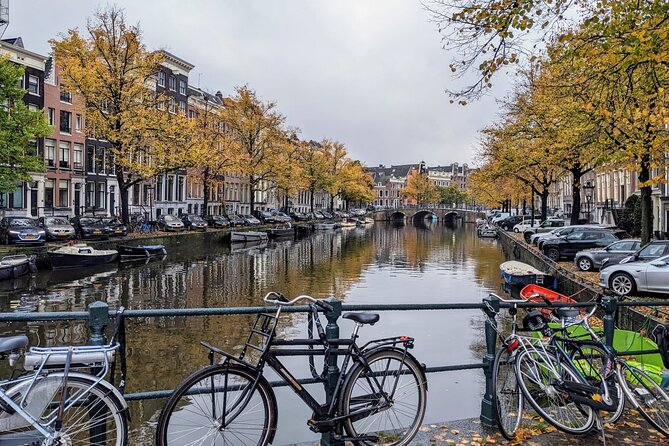
At Zeedijk, the tour brings up Chinatown and its 1970s reputation as one of the most dangerous areas in Amsterdam. You’ll learn about its decline and how the street transformed into a favorite spot for many Amsterdammers.
This is one of the more “human” stops on the route because it shows change over time, not just old-world charm. If you’re used to history being fixed in place, this gives you a clearer view of Amsterdam as a city that adapts—sometimes slowly, sometimes dramatically.
The stop lasts around 10 minutes, so use it as context for what you see now. Look at the street like it’s a before-and-after story: what’s the same, what feels new, and what likely replaced the old patterns.
Centraal Station: Architecture and Why This Hub Mattered for Centuries
Finally, you reach Centraal Station, and this is a strong closer. You’ll explore why it’s known for impressive architecture, and you’ll learn why its location mattered for centuries as a transportation hub—plus how it became a historical symbol of connection and prosperity.
This part of the tour feels like the city turning outward. Earlier stops focus on Amsterdam building itself and trading its way into importance. Here, you get the “global connections” angle: the station as a doorway, a meeting point, and a practical engine.
Since the station stop is about 10 minutes, it’s best to keep your eyes up and wide. Look at the structure and surroundings, then listen for how the guide connects design to movement and history.
The Stroopwafel Stop: A Small Taste With Real Cultural Value
You’ll enjoy a classic Dutch Stroopwafel during the walk. It’s not a random snack add-on. This kind of stop works well on a history tour because it breaks the mental load. You’re still learning, but now you’re also experiencing something that’s genuinely part of everyday Dutch food culture.
And if you’re planning to spend more time in the center after the tour, you can treat that Stroopwafel moment as your reminder: Amsterdam isn’t only about architecture. It’s also about daily rituals.
Price and Value: Is $30.07 Worth It?
At $30.07 per person for about 2 to 2.5 hours, the price is reasonable for a guided, small-group walking experience in central Amsterdam. The biggest value angle is that you’re paying for interpretation, not just movement.
Also, it’s helpful that the planned stops list free admission tickets, which means you’re not stacking extra entry fees on top of the tour cost. The tour also provides enough structure that you’re not guessing your way through the city on your own—especially on the first day.
One more practical point: this experience is often booked in advance. On average, it’s booked around 79 days ahead, so if your dates are firm, booking early is smart.
Who Should Book This Tour (and Who Might Skip It)
Book it if you want:
- A first-day overview that connects landmarks to real historical context
- A history and culture style walk without long museum commitments
- A small-group experience with an English-speaking guide
Consider skipping or pairing with something else if you:
- Want deep, time-consuming stops inside one major site
- Prefer self-guided wandering without scheduled explanations
- Are traveling with someone who hates walking for two hours (this is an on-foot tour)
Should You Book This Amsterdam History Tour With a Local?
Yes, if you’re the type of traveler who likes learning the meaning behind what you’re seeing. This tour is efficient: you get major central sights, clear story links, and a local-guide perspective that makes Amsterdam feel less like a postcard and more like a place with cause-and-effect.
It’s also a solid deal for the time. For $30.07, you’re buying a guided path through neighborhoods and landmark clusters that would take you much longer to piece together on your own.
My advice: do this early, then build the rest of your trip around the stop that grabs you most—Begijnhof quiet and tolerance stories, Dam Square’s WWII context, or the canal-and-station connection theme.
FAQ
How long is the Amsterdam history and culture walking tour?
The tour lasts about 2 to 2.5 hours.
What does it cost?
It costs $30.07 per person.
Is the tour offered in English?
Yes, it’s offered in English.
How big is the group?
The tour has a maximum of 15 travelers.
Where do we meet?
The meeting point is Beursplein, 1012 JW Amsterdam, Netherlands.
Is there a Stroopwafel included?
Yes, you get a classic Dutch Stroopwafel along the way.
Do I receive a mobile ticket?
Yes, it includes a mobile ticket.
Can I cancel for free?
Yes. Free cancellation is available, and you can cancel up to 24 hours in advance for a full refund.
The Older Amsterdam, Toured Properly





More Tours in Amsterdam






More Tour Reviews in Amsterdam






Just added: fresh Amsterdam tour reviews





Historical Tours, compared.
 ★ 5.0Amsterdam Food and Cultural Tour with TastingsFrom $954,315 reviews
 ★ 4.3Historic City Centre Canal CruiseFrom $16659 reviews
 ★ 4.5Haunted History and Ghost Walking TourFrom $30488 reviews
 ★ 5.0Amsterdam High-End Dutch Food & History Tour – Up to 8 guestsFrom $157482 reviews
From Amsterdam: Volendam Heritage & Cheese Half-Day TourFrom $20461 reviews
★ 5.0Amsterdam High-End Dutch Food & History Tour – Up to 8 guestsFrom $157482 reviews
From Amsterdam: Volendam Heritage & Cheese Half-Day TourFrom $20461 reviews
 ★ 4.5Historic City Sightseeing Canal CruiseFrom $18444 reviews
 ★ 5.0Anne Frank and the Jewish History of Amsterdam Private TourFrom $95307 reviews
 ★ 5.0Luxury Canal Cruise with Historic VR ExperienceFrom $51305 reviews
Browse the lists this tour appears in