
Reviewed · PRIVATE
Explore hidden streets with friends – Private Tour
Want Amsterdam without the crush? This private hidden-streets tour helps you see a calmer side of the city, with stops that mix courtyards, an antique-market style detour, and relaxed local coffee-shop vibes. You also get tailored recommendations for the rest of your trip, so you don’t just leave with photos—you leave with a plan.
I especially love how the tour connects everyday sights to big turning points in Amsterdam’s rise. You’ll learn about the origins of the city, including what’s described as the world’s first stock market, and you’ll connect that to how Amsterdam grew outward across the Canal Ring.
One thing to consider: this is a walking tour, about 2.5 hours over roughly 4 km, so comfortable shoes matter if you’re not used to city walking.
In This Review
- Key highlights worth planning for
- A private Amsterdam walk that trades crowds for courtyards
- Beursplein origins: stock market roots and the town-hall story
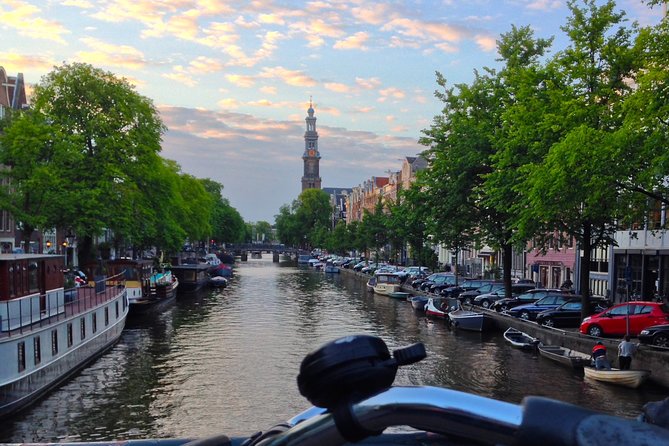
- Crossing the Canal Ring and spotting the city’s medieval expansion
- Jordaan’s hidden streets: where local life still feels close
- Karthuizerhof and the church for the poor: housing, care, and faith
- Westerkerk and Rembrandt: ending on art with a real address
- Price and value: is $101.15 worth a private guide?
- What you can expect on the ground: pacing, English, and tickets
- Who should book this, and who might skip it
- Should you book this hidden streets tour?
- FAQ
- How long is the tour?
- How far will I walk?
- Is this tour private?
- Where do I meet and where does it end?
- What language is the tour offered in?
- Is it possible to choose a start time?
- Do I need to buy admission tickets?
- What if my plans change—can I cancel?
Key highlights worth planning for
- A private, friend-style route through less-touristy streets and squares
- Karthuizerhof courtyard: built in 1650 for widows, often noted as early social housing
- Amsterdam’s trading origin story: learn about the city’s early stock-market role
- Canal Ring and medieval growth: cross the ring and understand expansion beyond the center
- Westerkerk finale with Rembrandt’s connection: he was buried there
- Easy pacing for most visitors: about 4 km total, mostly on foot, with frequent context stops
More private tours with a guide to yourself
- Rijksmuseum Amsterdam Small-Group Tour with Private Upgrade
★ 4.5 · 1,547 reviews - Van Gogh Museum Tour Reserved Entry Semi Private
★ 5.0 · 1,437 reviews - Private Amsterdam Red Light District and Coffee Shop Tour
★ 5.0 · 763 reviews - Anne Frank and Jewish Quarter Amsterdam Private Walking Tour
★ 5.0 · 684 reviews
A private Amsterdam walk that trades crowds for courtyards
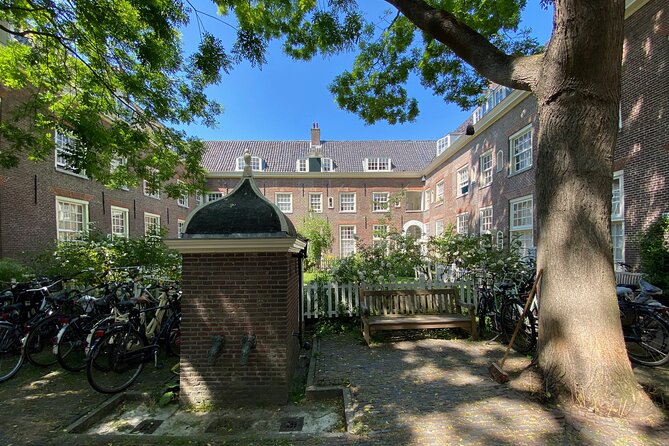
If you’ve ever stood in the middle of Amsterdam’s top sights and thought, I want the city behind this, you’ll like this format. It’s designed as a friend-with-strong-opinions kind of tour: you’re moving, but you’re also stopping often enough to understand what you’re looking at.
The biggest payoff is the shift in atmosphere. Instead of stacking attractions, you get secluded courtyards and quieter streets that feel more like daily life. Stops like Karthuizerhof are brief, but the setting sticks with you: you’re standing in a place built to solve real human problems, not just decorate a postcard.
The second strong point is that the guide doesn’t only point. You get history and context in a way that helps you see patterns—trade, growth, housing, and religion all show up as you walk. It’s also genuinely practical: you’ll walk out with a sense of where to go next, beyond the usual must-sees.
Beursplein origins: stock market roots and the town-hall story
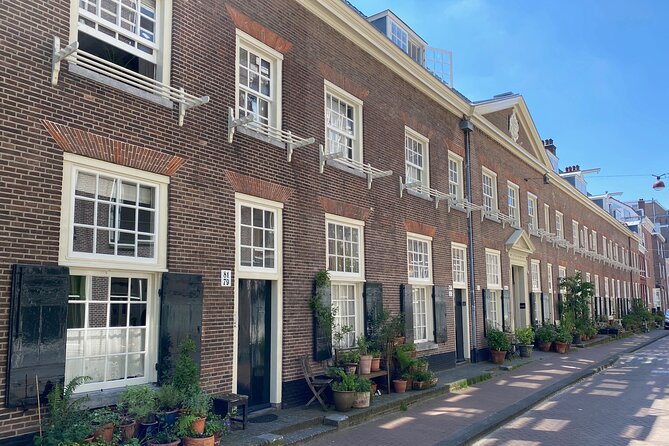
The tour starts at Beursplein 1-3, near the heart of Amsterdam’s trading-era energy. From there, you begin with the origins of the city and a key detail: Amsterdam is tied to what’s described as the world’s first stock market. Even if you’re not a finance person, it’s a useful lens. When a city builds institutions for trade, it changes everything—from who can invest to how the city expands.
Next, you learn about the importance and history of a central square, then you move to a famous building that originally served as the town hall of Amsterdam. That matters because it turns a big public space into something more specific: you start to see the city as run by decisions made in real places, not just events that happened long ago.
If you’re visiting for the first time, this opening helps you get your bearings fast. You’ll understand why Amsterdam’s center looks the way it does and why canals and civic buildings sit at the same emotional level as cathedrals and markets later on.
Crossing the Canal Ring and spotting the city’s medieval expansion
One of the most “Amsterdam” moments comes after you’ve built the background. You cross the Canal Ring and learn about how the city extended during medieval times. This is where the architecture stops being decoration and starts being evidence. The canals aren’t just pretty lines; they’re part of the city’s plan for movement, trade, and growth.
A small but helpful note: this canal-ring segment is marked as admission ticket free, which keeps the experience light on logistics. You’re not waiting around for tickets or entry checks. You’re out in the street, looking, listening, and connecting.
After the canal segment, the tour shifts into a shopping-and-street feel that’s a smart contrast. The nine streets you visit become a cozy area for shopping away from the heaviest tourist pressure. It’s not a hard sell shopping stop. Instead, it helps you experience the city as a place where people actually wander, browse, and pick up small things in between errands.






Jordaan’s hidden streets: where local life still feels close
Then you move into the Jordaan, and this is where the tour’s “away from the crowds” promise becomes real. The Jordaan portion is designed around hidden streets and squares, showing why this neighborhood is often described as more authentic Amsterdam than the busiest core.
You also get a practical skill out of this stop: learning how to read the neighborhood layout. Streets feel narrower, crossings feel slower, and courtyards appear like sudden breathing spaces. Even if you only spend a short time here, you’ll start to understand why locals like it: it doesn’t feel staged.
The tour also passes the Anne Frank House during the stroll through the Jordaan. You’re not told to treat it like a checklist item. Instead, you see it as part of a larger neighborhood story—so your visit (even from the outside) lands with more meaning than if you’d only approached it from far away.
And because the tour is private, the guide can adjust the pace. If you want extra time at the most photogenic corners or you’d rather keep moving, you’ll usually get that flexibility.
Karthuizerhof and the church for the poor: housing, care, and faith
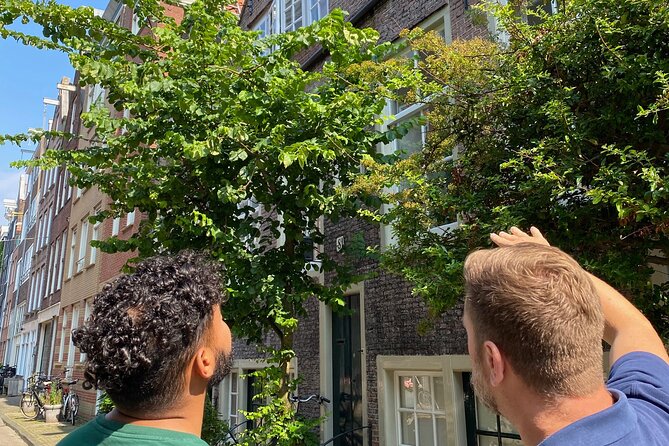
One of my favorite parts of this kind of tour is when it shifts from canals to people. Here, you get both.
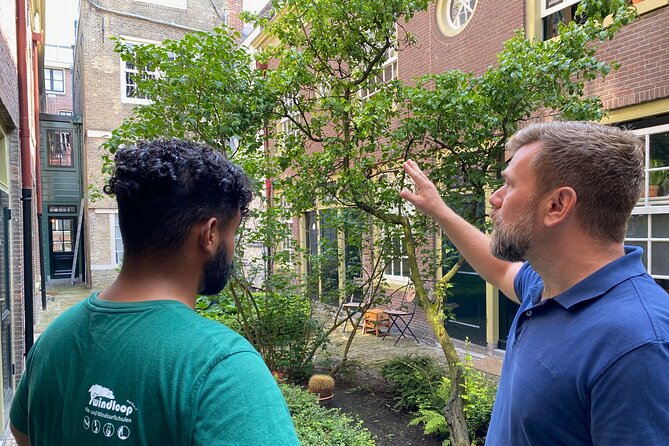
Karthuizerhof is a courtyard constructed in 1650 for widows. It’s often described as one of the first social housing projects in the world. That single detail changes how you experience the space. You’re not just looking at old brick. You’re looking at a solution the city created for a specific group of people—and that makes the courtyard feel quietly powerful.
Just after that, you learn about a church for the poor: why it was constructed exactly there. Again, it’s not a random church stop. The point is location and purpose. The guide ties religious building to social needs, which helps you understand why Amsterdam’s city planning has a moral and civic dimension, not only a commercial one.
There’s a good chance you’ll want to slow down here. Even though the courtyard time is brief, it’s the kind of stop that lets your mind catch up. If you’re the type who likes to connect history to real life—this is for you.
Westerkerk and Rembrandt: ending on art with a real address
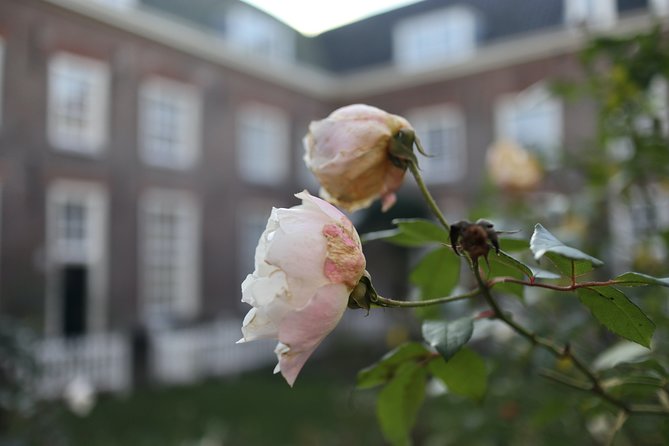
The tour’s final big anchor is the Westerkerk, described as a marvel of a church. You’ll also hear about Rembrandt’s connection: he was buried there. This is one of those details that gives you a stronger sense of place. Rembrandt isn’t just a name attached to paintings; he’s tied to a physical address within the city.
It’s a smart ending. By the time you reach Westerkerk, you’ve already covered trade origins, city growth, neighborhood texture, and social housing. So the church and the burial detail land as part of the same theme: Amsterdam shaped itself in stone and institutions.
The tour ends in Elandsgracht, which is handy if you want to continue exploring on foot in the same general area. And because the route is designed as one continuous walk (not hopping between distant stops), you spend your energy on noticing, not on transit.
Price and value: is $101.15 worth a private guide?
At $101.15 per person for about 2.5 hours, this isn’t the cheapest way to see Amsterdam—but it also isn’t trying to compete with budget group tours. The value comes from three things you’ll feel during the walk:
First, it’s private for your group. That usually means fewer bottlenecks and less time squeezed around strangers. You can ask practical questions, and you’re more likely to get a route that matches what you actually care about.
Second, you get a mix that group tours often struggle to balance: trading origins, canal-ring context, quiet neighborhood streets, and courtyards with purpose. When the story connects, the sights stick better.
Third, the tour explicitly includes value-adds like tailored recommendations for the rest of your vacation. That’s often where good guided tours pay off. If you know where to go next—what to skip, what to book, what to save for another day—you get extra value long after the walk ends.
A small consideration: if your group is cost-sensitive, you might compare it to a standard walking tour. But if your goal is quality of attention and a route that avoids the loudest crowds, this pricing starts to make sense quickly.
What you can expect on the ground: pacing, English, and tickets
This experience runs in English and offers multiple start times, so you can match it to your day. You’ll walk about 2.5 hours over roughly 4 km. That distance is reasonable, but it’s still real walking—plan for breaks only when the guide naturally pauses.
You’ll get a mobile ticket, which is one less thing to manage while you’re in Amsterdam. And confirmation is received at booking, so you’re not stuck waiting for last-minute email chaos.
The tour also says service animals are allowed, and it’s near public transportation, which matters if you’re trying to make the rest of your schedule smooth.
Who should book this, and who might skip it
This is a strong fit if you:
- Want a quieter Amsterdam route with courtyards and neighborhood streets rather than a hit-list sprint
- Like history when it explains why places look the way they do (trade → growth → civic buildings → social care)
- Appreciate a guide who can offer personal recommendations for what to do after the tour ends
You might consider a different option if:
- You prefer minimal walking, since this is about 2.5 hours on foot
- You want an attraction-by-attraction ticketed day (this tour is mostly about walking, seeing, and learning in context)
- Your group only wants the most famous exterior views and nothing beyond that
If your ideal Amsterdam is part street wander, part smart storytelling, this hits a good balance.
Should you book this hidden streets tour?
Yes—if you’re trying to see Amsterdam as more than a collection of famous backdrops. The mix of trade origins, canal-ring expansion, Jordaan atmosphere, and courtyards like Karthuizerhof gives you a feel for how the city works, not just what it looks like.
Book it especially if you value private attention and you want guidance that continues after the walk. If you’re comfortable walking about 4 km and you like your history tied to real places, this is one of the better ways to spend a morning or afternoon in Amsterdam without getting trapped in the worst crowd energy.
FAQ
How long is the tour?
It lasts about 2 hours 30 minutes.
How far will I walk?
You should be able to walk about 4 km (about 2.5 miles) during the tour.
Is this tour private?
Yes. It’s a private tour/activity, and only your group participates.
Where do I meet and where does it end?
You start at Beursplein 1-3, 1012 JW Amsterdam, Netherlands, and the tour ends at Elandsgracht, Amsterdam.
What language is the tour offered in?
The tour is offered in English.
Is it possible to choose a start time?
Yes. Multiple start times are available so you can fit it into your schedule.
Do I need to buy admission tickets?
The Canal Ring segment is listed as admission ticket free. The rest is primarily part of the walking experience as described.
What if my plans change—can I cancel?
Free cancellation is available up to 24 hours in advance for a full refund.
Your Own Guide, Your Own Pace






More Tours in Amsterdam






More Tour Reviews in Amsterdam






Just added: fresh Amsterdam tour reviews





Private, compared.
 ★ 4.5Rijksmuseum Amsterdam Small-Group Tour with Private UpgradeFrom $901,547 reviews
 ★ 5.0Van Gogh Museum Tour Reserved Entry Semi PrivateFrom $1731,437 reviews
 ★ 5.0Private Amsterdam Red Light District and Coffee Shop TourFrom $41763 reviews
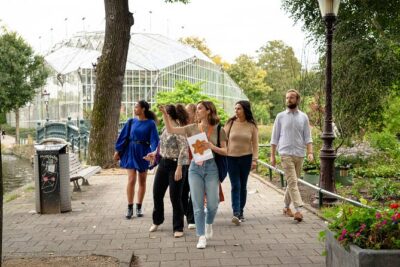 ★ 5.0Anne Frank and Jewish Quarter Amsterdam Private Walking TourFrom $157684 reviews
 ★ 4.5Amsterdam Airport & Non-Airport Private Transfer to City CenterFrom $60521 reviews
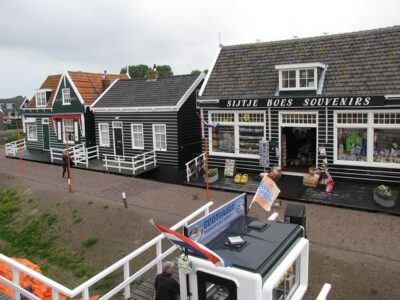 ★ 5.0Private Excursion to Zaanse Schans, Edam, Volendam and MarkenFrom $840420 reviews
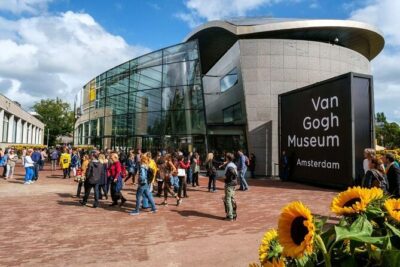 ★ 5.0Van Gogh & Rijksmuseum w/ Reserved Entry Semi-Private 8ppl MaxFrom $288419 reviews
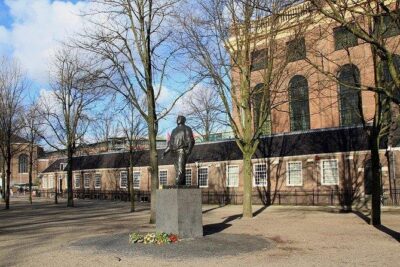 ★ 5.0Anne Frank and the Jewish History of Amsterdam Private TourFrom $95307 reviews