
Reviewed · HISTORICAL TOURS
Amsterdam: small group tour: History, humor & hidden gems
An 800-year story in a two-hour walk. This small-group Amsterdam tour uses sharp Axel humor to explain how the city became what it is today, from canal belt streets to quiet courtyards.
I love two things most: first, I like how Axel connects what you see on the ground to big turning points in Dutch life. Second, I like that you leave with practical recommendations for eating, drinking, and what to do next.
One consideration: it’s still a walking tour through central streets, so you’ll want comfortable shoes and you should expect uneven old-city surfaces. It also isn’t a fit if you need wheelchair access or step-free routing.
In This Review
- Key highlights I’d prioritize
- What You’re Actually Buying With This 2-Hour History Walk
- Finding Those Dam Boat Guys and Starting Without Confusion
- Canal Belt to Red Light District: Amsterdam’s Tough Lessons in Plain Sight
- VOC and Zuiderkerk: Trade Power and Religious Life in One Walk
- Stopera, Groenburgwal, and Spui: Reading Modern Amsterdam Next to Old Streets
- Begijnhof: The Courtyard Pause That Changes the Mood
- Amsterdam Museum and Dam Square: Finishing With Context, Not Just a Location
- Price and Value: Why $32 Can Actually Make Sense
- Who This Tour Fits Best (and Who Might Prefer Something Else)
- Final Call: Should You Book This Amsterdam History, Humor, and Hidden Courtyards Walk?
- FAQ
- How long is the Amsterdam History, Humor & Hidden Gems tour?
- What’s the meeting point for the walking tour?
- How big is the group?
- Is the tour guided in English?
- Are tickets or entrance fees included?
- Are food and drinks included?
- Is the tour suitable for wheelchair users or mobility impairments?
Key highlights I’d prioritize
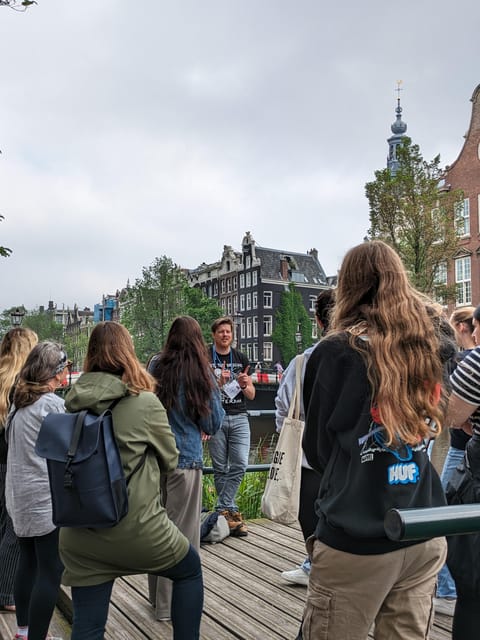
- Axel’s humor that keeps history moving without turning it into a lecture
- 800 years in 2 hours, with just enough pacing to ask questions
- Canal belt focus plus hidden courtyards, including time at Begijnhof
- Small group capped at 10, so your questions actually get answered
- Food and drink recommendations tailored to what you like (not generic lists)
- Ends at Dam Square, easy for tram and metro onward travel
Still deciding? A few more Amsterdam tours worth a look
- Amsterdam Food and Cultural Tour with Tastings
★ 5.0 · 4,315 reviews - Amsterdam: Historic City Centre Canal Cruise
★ 4.3 · 659 reviews - Amsterdam: Haunted History and Ghost Walking Tour
★ 4.5 · 488 reviews - Amsterdam High-End Dutch Food & History Tour – Up to 8 guests
★ 5.0 · 482 reviews
What You’re Actually Buying With This 2-Hour History Walk
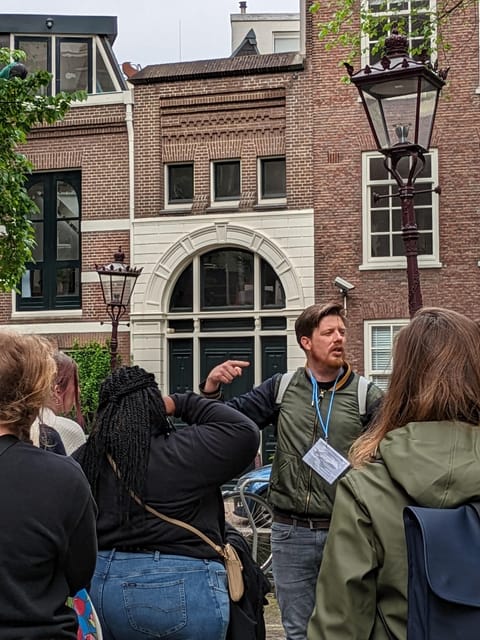
This is the kind of tour that helps you get your bearings fast. Amsterdam can feel like a film set the first time you arrive: canals, bridges, gables, and a lot of “where do I start?” energy. This walk gives you a starting spine—800 years of history—told in a way that stays readable in real time while you’re on your feet.
The main value is that it’s not just places and dates. Your local guide ties history to everyday Dutch culture: trade, religion, civic life, and the way Amsterdam organizes itself around water and community. If you enjoy facts but also like stories with a wink, this tour’s tone matters. Multiple reviews point to Axel’s mix of information + wit, including the kind of wordplay that makes you groan in the best way.
The other big value is the follow-through. You don’t just hear history; you also get local recommendations for where to eat and drink and what to do afterward. That matters because the best time to plan Amsterdam is while you’re still absorbing context. By the end, you’ll be able to choose your next neighborhood based on what you learned, instead of random guessing.
If you want a long museum day, this isn’t that. If you want an efficient orientation plus real context, it’s a strong fit.
Finding Those Dam Boat Guys and Starting Without Confusion
You meet at the office of Those Dam Boat Guys, and the walking tour starts from there too. It’s worth doing one simple thing: tell the staff you’re there for the WALKING tour, not the boat departure. That single step saves time and avoids the classic “where do we go?” moment.
The tour runs 2 hours, which is a sweet spot. Long enough to cover major story beats, short enough that you won’t feel like you’re glued to your phone for the whole day. Because it’s a small group capped at 10 participants, you’ll usually get more direct answers than you would on bigger group tours.
Plan to arrive about 10 minutes early and bring what you’d bring for a normal city stroll: comfortable walking shoes, camera, and weather-appropriate clothing. I also recommend carrying a water bottle, since Amsterdam weather can shift and walking keeps you warm faster than you expect.
One more note that affects your experience: the tour does not include entrance fees. That’s normal for a walk, but it means you should treat museum time and other sights as guided viewing rather than a ticketed museum marathon.
Canal Belt to Red Light District: Amsterdam’s Tough Lessons in Plain Sight
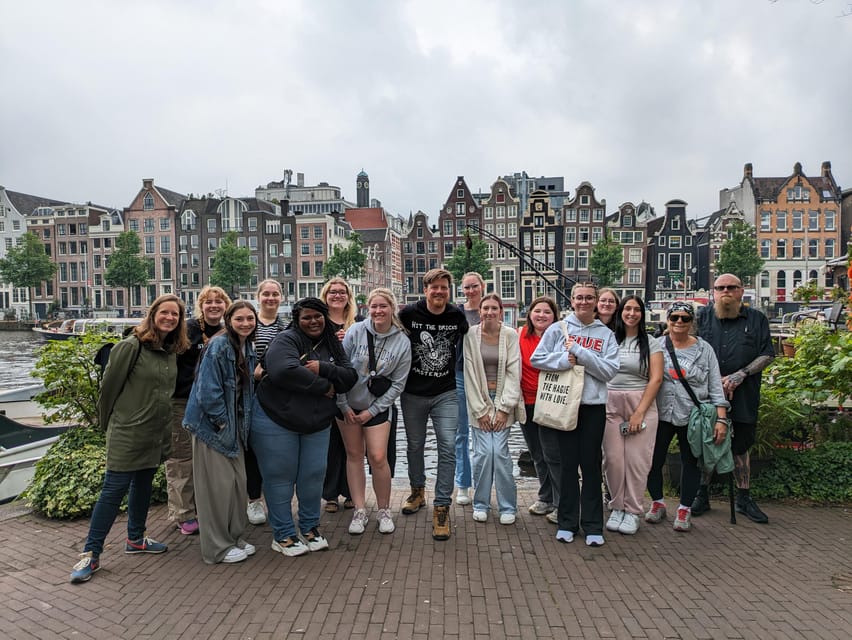
Your walk begins in the heart of the canal-belt area—an obvious choice, because the canals are basically the city’s bloodstream. You’re not just looking at pretty water. You’re learning why the city grew where it did, and how trade and power shaped the streets you’re standing on.
From there, the tour moves toward the Amsterdam Red Light District for guided context. This section is short, but it’s significant in the story of Amsterdam. The point isn’t shock. It’s understanding how a port city with money, migration, and regulation built its social systems over time. Keep expectations grounded: it’s part of the historical framework of the city, not a night-out plan. The tour’s overall pacing stays light enough that you still get to ask questions, rather than rushing past.
Next comes Burgwallen Oude Zijde, which is where Amsterdam’s older street fabric starts to feel real. Think compact blocks, canal-side architecture, and the sense that people lived and traded here long before today’s skyline. Your guide connects these older walls to Dutch culture, helping you see why Amsterdam’s identity is so tied to commerce and civic order.
If you only know Amsterdam from Instagram photos, this section helps you read the city. You start noticing patterns: where people would gather, where commerce would operate, and where the city’s power would show itself.






VOC and Zuiderkerk: Trade Power and Religious Life in One Walk
A standout stop is the VOC / Dutch East India Company segment. VOC isn’t just a name you’ve heard in passing—it’s one of the big reasons Amsterdam became a major player. It shaped wealth, shipping, and influence across oceans. On the ground, your guide helps connect that corporate history to the streets and institutions you can still sense today.
This is also where the humor helps. When history feels like big abstract forces, your brain tunes out. Axel’s style keeps it moving. Reviews repeatedly highlight his ability to explain political and historical events without losing people. That’s a big deal on a two-hour walk, because you don’t have time to restart attention.
Then you head to Zuiderkerk. A church stop might sound like a detour on a tour focused on canals and trade, but that’s exactly the point. Dutch society wasn’t only merchants and shipping; it was also shaped by religion, community rules, and public life. Standing near a historic church gives you a physical anchor for those themes.
After that, you pass Waterlooplein Market briefly. The time is short, but it’s a useful contrast. You’re moving from older institutions and trade storylines into the daily rhythm of the city. This helps you understand that Amsterdam’s history isn’t locked in the past. It’s part of how people move through the city now.
Stopera, Groenburgwal, and Spui: Reading Modern Amsterdam Next to Old Streets
The route includes the Stopera area, guided for a shorter segment. This building represents Amsterdam’s civic and cultural ambitions in a more modern form. It’s a reminder that the city didn’t freeze in the Golden Age. It kept rebuilding, shifting its priorities, and shaping public spaces for arts and community life.
Then comes Groenburgwal, with a photo stop. This is the kind of moment you’ll appreciate whether you’re a serious photographer or just trying to capture one good canal view. The guide’s value here is not the camera angle alone. It’s that you’re already understanding what you’re looking at, so the photo feels tied to context rather than random scenery.
From there, you move through the wider Binnenstad area and stop at Spui Square for guided context. Squares like Spui help you grasp how Amsterdam uses open public space. They also help break up the narrower streets so your legs and your attention get a small reset.
A practical way to use this section: slow down when your guide asks you to notice a detail. It might be a building rhythm, a canal-side pattern, or a clue about how people organized work and community. If you’re the type who likes to learn through looking, these stops reward you.
Begijnhof: The Courtyard Pause That Changes the Mood
If you’ve ever wanted to experience Amsterdam as more than canals and crowds, Begijnhof is the moment. The tour includes a guided visit here, and it’s one of the strongest “feel the city” stops on the route.
Why it works: you leave the open streets and enter a calmer pocket. Begijnhof is historically tied to the beguine community, so your guide uses it to explain social history—how people found structure and support in earlier centuries. It’s not just a pretty courtyard. It’s a lesson in how Amsterdam built spaces that weren’t solely about trade and public power.
You’ll also likely come away with a different sense of Amsterdam’s texture. The city is often seen as flashy and fast, but this pause shows how it can be quiet, inward, and community-focused too.
Also, this is a great spot to ask questions if something about the earlier stops left you curious. Begijnhof gives you a slower environment where it’s easier to concentrate on the story your guide is telling.
Amsterdam Museum and Dam Square: Finishing With Context, Not Just a Location
After Begijnhof, the walk includes time around the Amsterdam Museum area for guided context. Since entrance fees aren’t included, think of this as a guided look rather than a ticketed deep dive. Still, it’s a useful bridge. You’re moving from one specific historical site into a larger theme: the city’s own storytelling about itself.
Then you end at Dam Square. The tour finishes in the central square where you can carry on by tram, metro, taxi, or on foot if you feel like it. This finish matters more than you’d think. Many walking tours end in some out-of-the-way corner, leaving you to fight your way back. Here, you land in one of the easiest places to reconnect with the rest of your day.
Dam Square also acts like a narrative period at the end of a sentence. You’ve seen canals, trade power, religious life, civic culture, and social community spaces. Now you’re in a central public stage—exactly where Amsterdam often wants to show its identity.
Price and Value: Why $32 Can Actually Make Sense
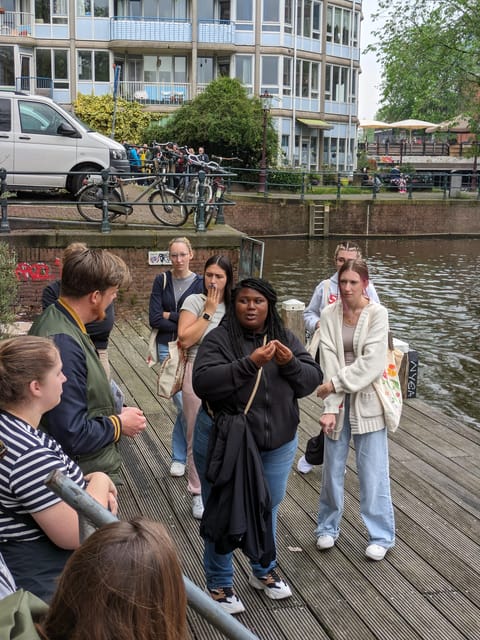
At $32 per person for a 2-hour small-group walk, you’re paying for three things:
1) A live local guide (and not a script-reading experience).
2) Time-saving structure for first-timers who want the big picture fast.
3) Customized recommendations for food, drink, and what to do next based on what you like.
Compared to paying for random entries and tours one by one, this is good value if you want orientation plus context. There are no included entrance fees, so you’re not paying extra for things you might not use. You’re basically buying storytelling, guidance through the most important central areas, and a cleaner path to planning the rest of your Amsterdam time.
One more value point: the group stays intimate at 10 participants, which helps with pacing and questions. That’s not a luxury detail. It affects whether you get answers that make your trip better.
Who This Tour Fits Best (and Who Might Prefer Something Else)
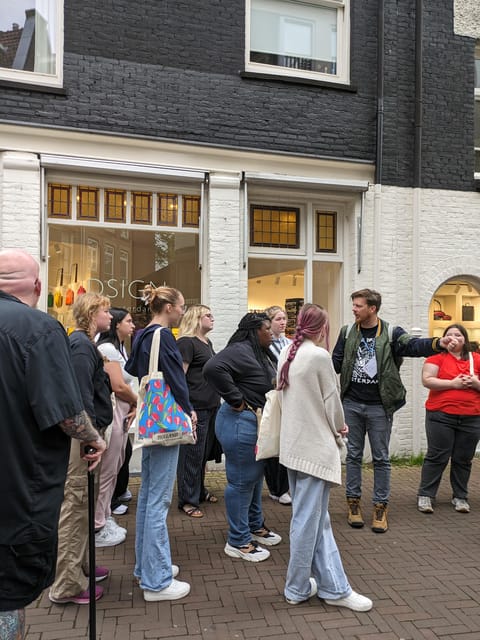
This is best for you if you:
- want a first-timer-friendly approach to Amsterdam’s history
- like humor in historical storytelling (Axel’s style is repeatedly praised)
- enjoy walking but don’t want a long, exhausting day
- want local tips for eating and drinking that match your tastes
- prefer small groups where you can ask questions
It may not fit if:
- you need wheelchair access or have mobility impairments (not suitable for wheelchair users)
- you have hearing impairment (not suitable)
- you’re traveling with children under 9 (not suitable)
- you’re very sensitive to adult-area context, since the walk includes the Red Light District area (handled with guided context, but it is still part of the city)
Also, alcohol and drugs are not allowed, and bachelor and bachelorette groups are not permitted. That tells you the tour is aiming for a respectful atmosphere.
And because the walk concentrates in central areas, it’s not physically punishing. One review highlighted that the walk stays within a narrow central zone and isn’t physically demanding. Still, you’re walking for two hours, so bring shoes you trust.
Final Call: Should You Book This Amsterdam History, Humor, and Hidden Courtyards Walk?
Yes, I’d book it if you want a tight, funny, city-reading experience. For $32, you’re getting a structured tour with a small group, a guide named Axel, and the kind of practical recommendations that help you plan the rest of the day immediately. Ending at Dam Square is also a smart move, since you can keep moving without backtracking.
I’d skip or swap to another style of tour if you dislike walking, need step-free accessibility, want a fully ticketed museum experience, or prefer adult-area avoidance. Otherwise, this is a strong way to turn Amsterdam from a photo collage into a place with a story you can actually remember.
FAQ
How long is the Amsterdam History, Humor & Hidden Gems tour?
It lasts 2 hours.
What’s the meeting point for the walking tour?
You meet at the office of Those Dam Boat Guys. Let the staff know you’re there for the WALKING tour.
How big is the group?
The group is limited to 10 participants.
Is the tour guided in English?
Yes, the tour is in English with a live guide.
Are tickets or entrance fees included?
No. Entrance fees to attractions are not included.
Are food and drinks included?
No. Food and drinks are not included, but you will receive local recommendations.
Is the tour suitable for wheelchair users or mobility impairments?
No. It is not suitable for wheelchair users or people with mobility impairments.
The Older Amsterdam, Toured Properly





More Tours in Amsterdam






More Tour Reviews in Amsterdam






Just added: fresh Amsterdam tour reviews





Historical Tours, compared.
 ★ 5.0Amsterdam Food and Cultural Tour with TastingsFrom $954,315 reviews
 ★ 4.3Historic City Centre Canal CruiseFrom $16659 reviews
 ★ 4.5Haunted History and Ghost Walking TourFrom $30488 reviews
 ★ 5.0Amsterdam High-End Dutch Food & History Tour – Up to 8 guestsFrom $157482 reviews
From Amsterdam: Volendam Heritage & Cheese Half-Day TourFrom $20461 reviews
★ 5.0Amsterdam High-End Dutch Food & History Tour – Up to 8 guestsFrom $157482 reviews
From Amsterdam: Volendam Heritage & Cheese Half-Day TourFrom $20461 reviews
 ★ 4.5Historic City Sightseeing Canal CruiseFrom $18444 reviews
 ★ 5.0Anne Frank and the Jewish History of Amsterdam Private TourFrom $95307 reviews
 ★ 5.0Luxury Canal Cruise with Historic VR ExperienceFrom $51305 reviews
Browse the lists this tour appears in