
Reviewed · 2-HOUR EXPERIENCES
2 Hours Private Amsterdam Rickshaw Tour
That first hour? You suddenly get your bearings.
This 2-hour private Amsterdam rickshaw tour is a smart way to see major sights without the usual Amsterdam grind of tram transfers and zig-zag walking. I like that it’s private for up to 2 people, so you move at your pace, stop for photos, and ask questions. You’re also riding somewhere cars and even some buses can’t, which makes the city feel closer and more personal.
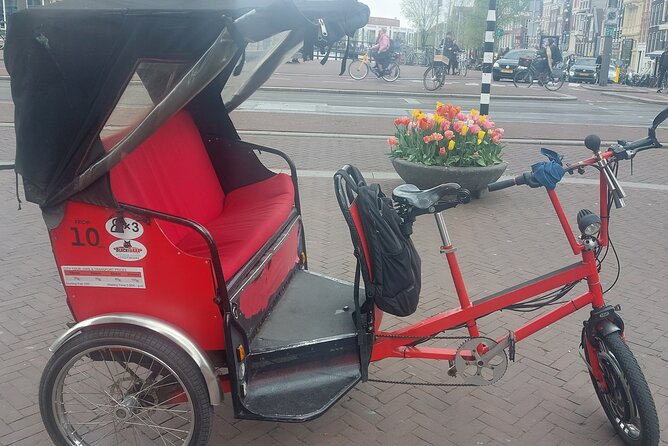
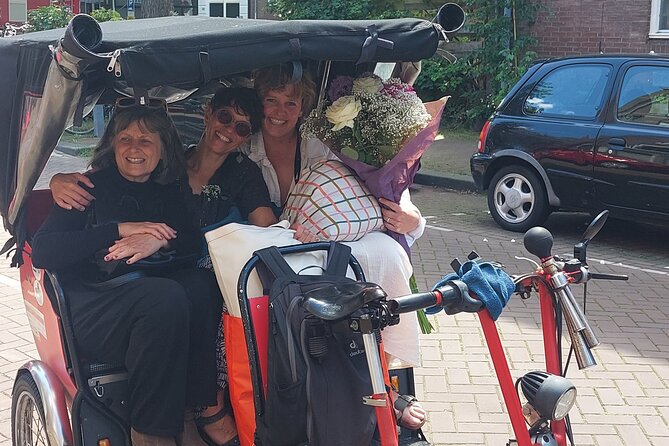
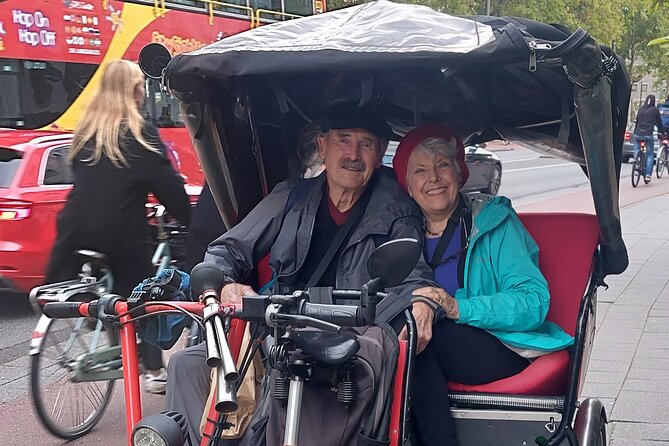
I also really like the way the guide handles the ride: in reviews you’ll see names like Lambros/Lampros, and the common theme is stops for photos plus clear explanations at the roadside. The rickshaw itself tends to be set up for comfort, with protection from rain/wind and even a blanket mentioned by past riders—very handy in early mornings or shoulder seasons.
One thing to consider: this is still only two hours, so you’re getting an overview, not a deep museum day. Also, the tour is weather-dependent, and museum entry is not included for places where tickets are required (the De Gooyer Windmill specifically notes that admission isn’t included).
In This Review
- Key points to know before you book
- Why a private rickshaw makes Amsterdam feel easier
- Pickup, timing, and how the 2 hours actually play out
- Dam Square and the Red Light District: watch for the shift in vibe
- Nieuwmarkt and Rembrandtplein: markets, metro lines, and night energy
- The skinny bridge and Amstel viewpoints: your best photo moment
- Museumplein and Anne Frank House: how to see big names without ticket stress
- Vondelpark and De Gooyer Windmill: green calm plus working-city details
- The Nine Streets (De 9 Straatjes): canal-side browsing at human speed
- Value and comfort: what $234.30 really buys you
- Who this tour fits best (and who should skip it)
- Should you book this Amsterdam rickshaw tour?
- FAQ
- How long is the 2-hour Amsterdam rickshaw tour?
- Is this tour private?
- How many people can ride in one rickshaw?
- Do you offer hotel or cruise pickup?
- What language is the tour guide?
- Is Wi-Fi provided during the ride?
- What if the weather is bad?
- Can I cancel for a full refund?
Key points to know before you book
- Private ride for up to 2 keeps the pace comfortable and the stops flexible
- Hotel or cruise pickup reduces stress, especially if you’re only in town briefly
- You’ll get a classic Amsterdam route that includes canal-side sights you can’t reach by boat
- Expect photo stops and short roadside explanations, not constant nonstop talking
- Wi-Fi on board helps with maps, messages, and planning your next stop
- Good weather matters; the experience may shift if conditions are poor
More private tours with a guide to yourself
- Rijksmuseum Amsterdam Small-Group Tour with Private Upgrade
★ 4.5 · 1,547 reviews - Van Gogh Museum Tour Reserved Entry Semi Private
★ 5.0 · 1,437 reviews - Private Amsterdam Red Light District and Coffee Shop Tour
★ 5.0 · 763 reviews - Anne Frank and Jewish Quarter Amsterdam Private Walking Tour
★ 5.0 · 684 reviews
Why a private rickshaw makes Amsterdam feel easier
Amsterdam looks compact on a map, but in real life it can wear you out fast. Trams crowd the streets, bridges create bottlenecks, and your feet keep discovering new cobblestone versions of pain. A rickshaw cuts through the city in a way that feels personal: you sit back, and the guide handles the routing while you focus on what’s around you.
This is especially valuable for a first visit. You’ll see several of the city’s most recognizable areas in one smooth loop, and you’ll also pass through spots that feel more local than the big-ticket postcard viewpoints.
It also helps that the tour is private. Two people can move differently than a small group of strangers. Want a second look at a bridge detail? Want extra time near a square for photos? With a private setup, those requests tend to fit the plan.
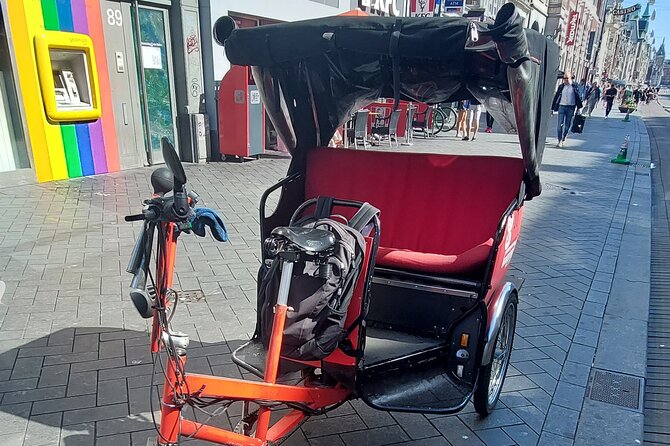
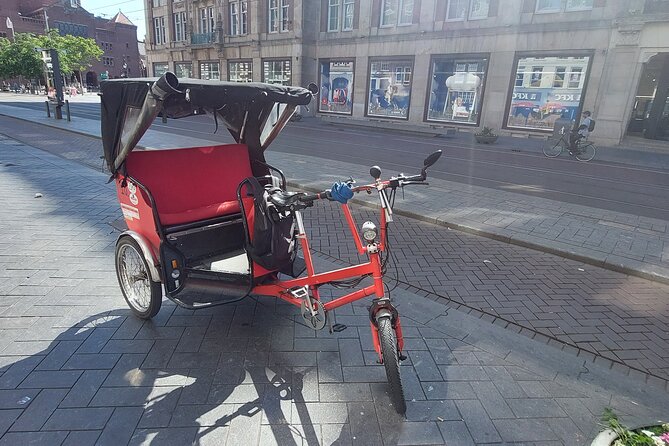
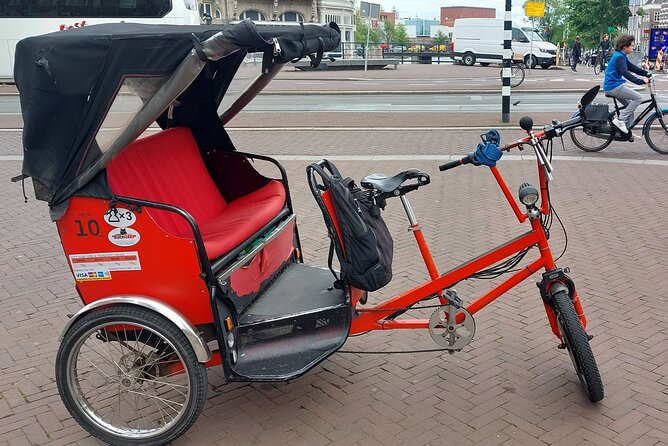
And if you care about comfort: reviews highlight a rickshaw that’s kept clean and built with rain/wind protection. People also mention a blanket during chillier weather. That’s not “luxury,” it’s just smart planning for a city that loves quick weather changes.
Pickup, timing, and how the 2 hours actually play out
The whole experience runs about 2 hours, and it starts with a pickup option. If you’re staying in central Amsterdam, the easiest move is hotel pickup, because it avoids confusion with streets, entrances, and the city’s habit of renaming things across a few blocks. If you’re on a cruise, pickup is also offered, with common docking locations like PTA for most sea cruises and De Ruyterkade Oost / De Ruyterkade west for many river cruises.
You’ll get a mobile ticket, and the tour is offered in English. On board, there’s also Wi-Fi, which is surprisingly useful in Amsterdam when you’re coordinating next-day plans or checking opening times for sites you want to revisit.
One practical timing tip: this tour works best when you want orientation rather than a schedule full of ticketed stops. Think of it like your “set the map in your head” window. Many people do it early in their stay so they can come back later with a clearer sense of what to prioritize.
As for pace: this isn’t constant sprinting. Expect frequent stops for photos and short explanations—past riders specifically call out the guide stepping off the rickshaw to talk rather than trying to explain everything while moving. That makes a big difference if you’re actually trying to learn something while taking in the street scene.
Dam Square and the Red Light District: watch for the shift in vibe
You start with Dam Square, a core part of the city since the 13th century, when a dam was built around the Amstel to help protect Amsterdam from flooding. It’s one of those locations where the layers are obvious: the square has long been a stage for politics, crowds, and pop culture.
You’ll also notice the modern entertainment side—this is a place for street performers and general spectacle. Past riders mention the inevitable pigeons too, which is Amsterdam’s version of an indoor joke. In spring, there may be a carnival setup or a colorful Ferris wheel. In summer, you might see mimers and other performers.
The payoff here is quick perspective. Dam Square teaches you something important: Amsterdam’s “serious history” and its “street theater” often overlap. That helps explain why the city can feel both traditional and playful at the same time.
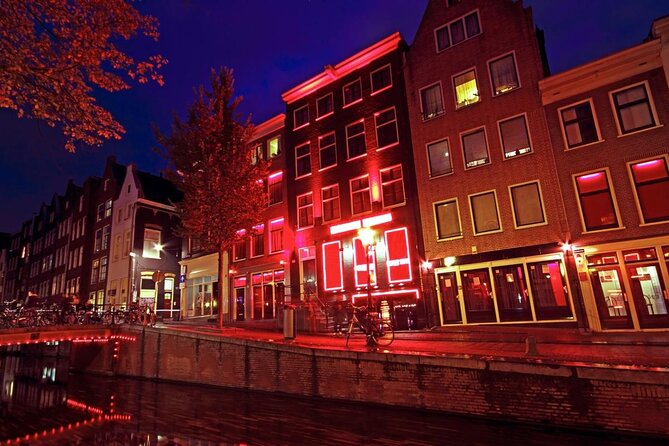
Then you move toward the Red Light District. Here’s the practical point you’ll want to keep in mind: it can look intense from a distance, but up close it often feels like a normal neighborhood with shops, museums, and a generally friendly atmosphere compared to the fear-based stories you might have heard. It’s also not only about nightlife—there are everyday rhythms and daytime curiosity.
If you’re sensitive to adult entertainment areas, you can still enjoy this segment as a study in how Amsterdam balances different kinds of street life. The key is to treat it like a neighborhood district, not a theme park.
Still deciding? A few more Amsterdam tours worth a look
Nieuwmarkt and Rembrandtplein: markets, metro lines, and night energy
Next up is Nieuwmarkt, in the old city center just east of the Red Light District. This square matters because it has a clear origin story: it was created by filling in surrounding canals, and it became a major trading and social spot as far back as the 17th century. That canal-to-square transformation is very “Amsterdam.” A lot of the city’s layout makes more sense once you understand how water shaped the streets.
Today, Nieuwmarkt stays useful, not just decorative. You’ll find a daily market, and on Saturdays there’s an organic food market. But the bigger daily draw tends to be simpler: cafés, restaurants, and coffeeshops surrounding the square make it a natural place to pause.
One detail worth knowing: the Nieuwmarkt metro stop is on the square, and its construction caused protests. That tells you something about Amsterdam too—major changes aren’t always celebrated instantly. Even if you don’t care about transit policy, it’s a reminder that city planning here has opinions.
From there, you’ll reach Rembrandtplein, one of the city’s busiest squares. It started as a butter and dairy market, but it’s long left the farm-fresh vibe behind. Now it’s more about nightlife and terraces than milk deliveries—people come for food, drinks, and a lively evening atmosphere.
For most visitors, the best way to enjoy Rembrandtplein is to use it as a contrast point. You’ll see how Amsterdam can shift from daytime markets and canal-side quiet to a strong night-energy district without changing “sight” language much. Squares are squares; it’s the use that changes.
The skinny bridge and Amstel viewpoints: your best photo moment
One of the most iconic rickshaw segments comes with the Skinny Bridge across the Amstel, opposite the Carré theatre. This is an Old Dutch wooden bridge known as a double-swipe (balanced) bridge. In plain terms, it’s one of those engineering details you’d miss if you were just snapping wide shots.
There’s also a story behind the name. Tradition says it’s tied to sisters called Mager who lived on opposite sides and wanted an easier way to visit each other. Another explanation is simply that the bridge was so narrow that passing each other was hard—and in Dutch, mager is associated with skinny. Either way, you get a human scale to what otherwise could feel like “just another bridge.”
This is the kind of stop that works well on a rickshaw. You’re positioned for viewing without needing to fight for a spot at the exact curb edge like you would when walking. And because the guide tends to pause for photo requests, you can capture it without turning it into a five-minute sprint.
Museumplein and Anne Frank House: how to see big names without ticket stress
Museumplein is the big public square tied to the Museumkwartier area. You’ll see several major anchors around it, including the Rijksmuseum, Van Gogh Museum, and Stedelijk Museum, plus the Concertgebouw. Even if you’re not entering any museum that day, the square gives you a clean mental map of where the city’s art world clusters.
This matters because Amsterdam museums are spread out in ways that can feel random at first. Museumplein helps you group the city into regions. It also gives you space to pause and absorb the scale—something you miss if you’re only moving quickly through the streets.
Next is the Anne Frank House, a writer’s house and biographical museum dedicated to Anne Frank, located on the Prinsengracht near Westerkerk. This is a stop with gravity. If you want to do more than look from outside, you’ll likely need to handle museum entry separately, since admission isn’t listed as part of the rickshaw experience.
Still, the value of this rickshaw stop is orientation. Many first-timers don’t realize just how close major life-story sites sit to the same canal network as shopping streets and cafés. Seeing it from the canal context helps the whole city connect.
Tip: if you plan to visit Anne Frank House later, treat this rickshaw time as your “where is it, what direction are the streets in, and what will be the easiest approach” session.
Vondelpark and De Gooyer Windmill: green calm plus working-city details
Amsterdam’s best reset after busy streets is Vondelpark. It’s the city’s largest park and also one of the most used. People come for dog-walking, jogging, roller-skating, music, and just sitting on the grass watching others do the same.
This is the kind of stop that helps the tour feel balanced. You start with high-density city centers, then you get to breathe for a bit in open space. There are also practical attractions here:
- an open-air theatre with free concerts in warmer months
- a statue of the poet Vondel
- a cast-iron music dome
- the Groot Melkhuis playground for kids
- a historical pavilion, with Vertigo opening in summer for terrace time
If you’re doing this tour in cooler weather, plan for the park chill. That’s one reason the blanket that gets mentioned in reviews is such a nice bonus—it keeps the “sitting still while the air bites” part from ruining the day.
Then you add De Gooyer Windmill, an 18th-century grain mill and the sole survivor of five windmills that once stood in the area. It was moved to its current spot in 1814, fully renovated in 1925, and today it’s a private home. Next to it, the former public baths became Brouwerij ’t IJ in 1985.
Two things to know here:
1) This is one of those Amsterdam stories where industry and daily life overlap.
2) The windmill includes a note that an admission ticket is not included, so if you want to go inside, you’ll need to plan that separately.
Even without entry, the stop still works because it gives you the city’s “water-to-industry-to-today” timeline in one location.
The Nine Streets (De 9 Straatjes): canal-side browsing at human speed
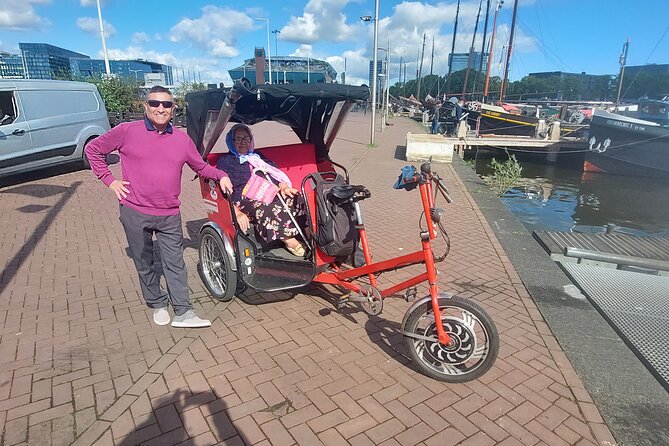
To finish with charm, you’ll reach De 9 Straatjes (the Nine Streets), the area between the Singel, Herengracht, Keizersgracht, and Prinsengracht. This is Amsterdam shopping at a more intimate scale: one-of-a-kind boutiques, cafés, and galleries tucked between canals.
The reason this stop is useful is simple: Amsterdam’s neighborhoods can feel confusing if you’re only relying on walking routes. This area is easy to visualize once you see it from the canal network, and it gives you a good “something to do later” idea.
For a lot of people, the best move after the rickshaw is to choose one or two streets you liked and linger. The tour doesn’t replace wandering. It sets you up so your wandering feels targeted, not random.
Value and comfort: what $234.30 really buys you
The price is $234.30 per group (up to 2) for about 2 hours. That’s not “cheap,” and it doesn’t pretend to be. What it is: a way to buy time and comfort.
If you’re traveling as a couple or with a friend, private transport becomes more reasonable because you’re not paying extra just to keep someone else comfortable. You also avoid the energy drain of walking big distances across cobblestones and over bridges—energy you can spend later on a café, a market stop, or a longer museum visit.
You’re also getting practical extras: Wi-Fi on board, English, and a ride designed to go where other vehicles can’t. Plus, pickup can dramatically reduce friction. In Amsterdam, “getting there” can take more brainpower than “seeing it.”
One more value angle: the guide’s stop-and-explain style. Reviews repeatedly highlight guides who pause, get off to talk, and respond to photo requests. In a short tour, that focus is what makes the difference between a drive-by slideshow and a real overview you can use later.
Who this tour fits best (and who should skip it)
This tour is a great match if:
- you have limited time and want main highlights plus context
- you’d rather sit and watch than do a lot of walking
- you want a private experience with flexible photo stops
- you’re doing Amsterdam with mobility limits or just want a break from cobblestones
It might not be your best move if you’re hoping for museum entry during the ride, because ticketed access isn’t included for things like the windmill, and Anne Frank House would require separate planning. It also isn’t a replacement for a full-day neighborhood deep dive.
Should you book this Amsterdam rickshaw tour?
If you want an efficient, comfortable Amsterdam intro, I’d say yes. This kind of private rickshaw is the sweet spot when your goal is orientation + highlights + photo moments in one afternoon or morning. The best part is how it helps you move through the city with less effort and more clarity.
Book it early in your trip if you can, so you’ll know where to return. If your schedule is tight, treat it as your map in motion: Dam Square, canal-side landmarks, a park reset, and a finish in the Nine Streets are a smart mix that makes the rest of your stay feel easier to plan.
If you’re sensitive to the adult-entertainment area, you may want to be mentally prepared before the Red Light District segment. But even then, it can still be worth it as a straightforward city-neighborhood look with a calm, practical guide.
FAQ
How long is the 2-hour Amsterdam rickshaw tour?
The tour lasts about 2 hours.
Is this tour private?
Yes. It’s a private tour/activity, and only your group participates.
How many people can ride in one rickshaw?
The maximum group size per rickshaw is 2 adults (up to 500 pounds total). It can also be 2 adults and up to 2 small children under 9, with a total weight up to 500 pounds.
Do you offer hotel or cruise pickup?
Yes. Traveler pickup is offered, including pickup from hotels in and around central Amsterdam and from common cruise docking locations.
What language is the tour guide?
The tour is offered in English.
Is Wi-Fi provided during the ride?
Yes. Wi-Fi is included on board.
What if the weather is bad?
This experience requires good weather. If it’s canceled due to poor weather, you’ll be offered a different date or a full refund.
Can I cancel for a full refund?
You can cancel up to 24 hours in advance for a full refund. If you cancel less than 24 hours before the experience starts, the amount paid is not refunded.
Your Own Guide, Your Own Pace



More Tours in Amsterdam






More Tour Reviews in Amsterdam






Just added: fresh Amsterdam tour reviews





2-Hour Experiences, compared.
 ★ 5.0Amsterdam 2 Hour Small-Group Canal Cruise with Dutch Snacks & BarFrom $481,058 reviews
 ★ 5.02-Hour Canal Cruise incl. Drinks & Dutch SnacksFrom $78695 reviews
 ★ 4.82-Hour Luxury Canal Cruise with Snacks & DrinksFrom $35344 reviews
 ★ 5.0Amsterdam 2-hour Private Canal Cruise with Live Guide and DrinksFrom $151296 reviews
 ★ 5.0Amsterdam 2-Hour Evening Cruise With Live Guide and BarFrom $51134 reviews
 ★ 4.72-Hour Sightseeing Tour by RickshawFrom $25981 reviews
 ★ 4.9Historic Amsterdam 2-Hour Private Tour with Local GuideFrom $23553 reviews
 ★ 4.9Captain For a Day 2-Hour Boat RentalFrom $17741 reviews
Browse the lists this tour appears in