
Reviewed · AMSTERDAM
Your Own Amsterdam: The Art Underground
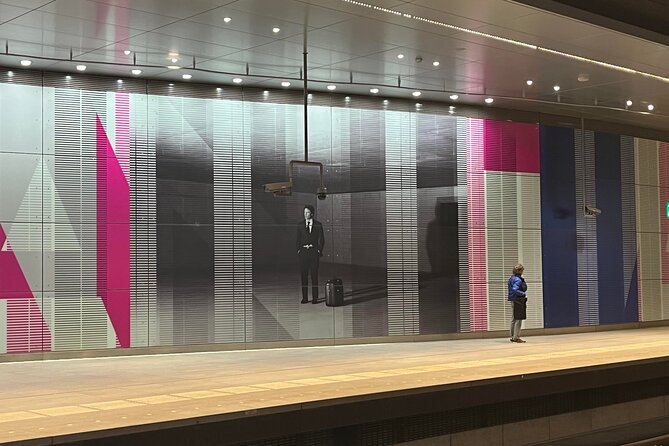
Public art in Amsterdam is everywhere, but this route goes underground. You’ll move through key stations and neighborhoods while a guide connects public artwork with the city’s big themes: trade and empire, colonial echoes, tulip-era myth-making, and even how the metro became a democratic art space. I like that it stays practical—short stop times, clear points to watch—and that it feels like you’re getting a guided map of what to notice in the built environment.
The potential drawback is simple: not everything is included, and you may need to budget for the metro. Underground metro tickets are listed as €9 per person, and a couple of stops note admission tickets not included, so check your plan before you go.
In This Review
- Key Points You’ll Actually Care About
- Entering Amsterdam’s Underground Art World (Without Losing Time)
- Centraal Station: Art on the Way In and History on the Way Through
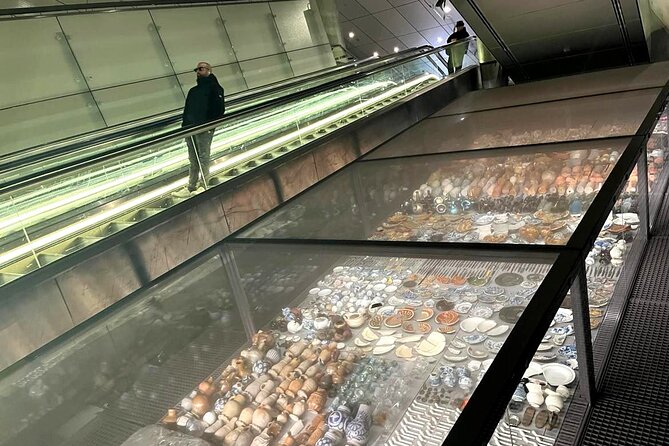
- Rokin Station Archaeology: When Commuting Meets 2,000 Years
- Vijzelgracht: Dutch 20th-Century Music in a Public-Space Setting
- Nieuwemarkt: Why Metro Construction Sparked Resistance
- Noorderpark and Amsterdam-Noord: Architecture, Ecosystems, and Art in the Open Air
- Price and Logistics: What You’re Paying For
- What the Guide Can Change: Maria’s Example
- Who Should Book This Tour (and Who Might Skip It)
- Should You Book This Art Underground Tour?
- FAQ
- How long is The Art Underground tour?
- Is this tour private?
- What language is the tour offered in?
- What’s included in the price?
- Do I need to buy metro tickets?
- Where does the tour start and end?
- Are admission tickets included for every stop?
- Is the tour suitable for most people?
- What’s the cancellation policy?
Key Points You’ll Actually Care About
- Private tour for your group: no mixing, no crowd shuffle, just your pace.
- Metro art history in plain language: you’ll understand how artwork gets chosen for stations.
- Archaeology in the middle of commuter routes: you’ll look for excavation traces at Rokin and connect them to Amsterdam’s long timeline.
- One part music, one part civic debate: Dutch 20th-century music and the pushback around early metro lines.
- Art linked to place and nature in Amsterdam-Noord: public art meets ecosystem talk, not just architecture talk.
Weighing your options? Here is how a few other Amsterdam tours compare.
- Amsterdam: Heineken Experience Ticket including 2 Drinks
★ 4.6 · 36,014 reviews - Amsterdam Classic Saloon Boat Cruise with Drinks and Cheese
★ 5.0 · 31,825 reviews - Amsterdam Luxury Canal Cruise + Unlimited Drinks & Bites option
★ 5.0 · 30,518 reviews - Amsterdam: Rijksmuseum Entry Ticket
★ 4.7 · 29,512 reviews
Entering Amsterdam’s Underground Art World (Without Losing Time)
This tour is built around a clear idea: Amsterdam’s art isn’t only in museums. It’s embedded in daily movement—on platforms, in station-adjacent spaces, and in public corners that most people pass while staring at their phone. Over about two hours, you hop through six stops, with roughly 15 minutes per location. That’s not a long sit-down museum schedule. It’s more like getting a set of smart lenses, then applying them quickly on-site.
What makes it worthwhile is the way the guide ties objects to context. At the surface, you’ll see artworks in transit spaces. Under that, you’ll hear how those works connect to Dutch history and identity—things like tulip mania, the Dutch East-India context, and colonialism’s afterlife. If you like art, but you also like why art exists in a place, this format fits.
The tour also helps you slow down in the right spots. Even when you’re outside, you’re not just taking photos and walking on. You’re given concrete details to look for in each station environment.
Centraal Station: Art on the Way In and History on the Way Through
Centraal Station is where the city’s scale hits you. More than ten million people pass through every year, which means the station’s artwork is doing real work: shaping how millions experience Amsterdam in motion. This stop is basically a crash course in how public art can reflect local climate and history while millions stream past.
You’ll also pick up the cultural backstory behind themes you often hear about but rarely connect visually. Expect the guide to connect artworks to stories such as:
- tulip mania (that famous period of speculation that became almost a cultural caution tale)
- Dutch East-India and colonial-era trade dynamics
- broader ideas of history and how a city narrates itself through public design
The practical tip here is to look for how the art sits in the human flow. In a station like Centraal, the artwork isn’t meant to be admired in silence for an hour. It’s designed to catch you in fragments—enough to make a point while you’re moving.
Drawback to keep in mind: because this is a busy station, you’ll want to pay attention quickly. The stop is about 15 minutes, so if you drift into sightseeing-mode at every corner, you’ll miss the guide’s key connections.
Rokin Station Archaeology: When Commuting Meets 2,000 Years
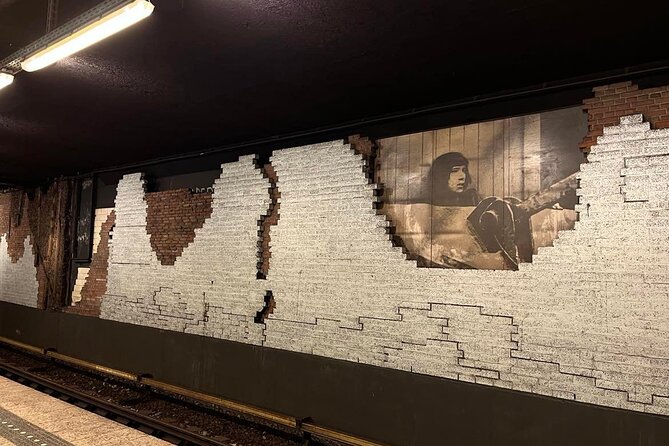
If Centraal is about scale and symbolism, Rokin is about depth. This is the stop where the tour leans into archaeology: excavations found here can be more than 2000 years old. The point isn’t to turn it into a dig documentary. It’s to show you how Amsterdam’s layers sit under everyday routes.
This stop is especially good if you’ve ever wondered how a city can look modern and still carry ancient traces. The guide frames the excavations as stories about Amsterdam and its citizens—how older life leaves evidence, then later generations build over it. That makes the artwork and station spaces feel less like decoration and more like a conversation with time.
One consideration: you’ll be in a transit environment. Your attention needs to land quickly on what the guide points out, since there isn’t always a museum-style display that screams look at me. But that’s also why the guided format matters. Without that guidance, it’s easy to walk past details that only make sense when you know they’re there.






Vijzelgracht: Dutch 20th-Century Music in a Public-Space Setting
At Vijzelgracht, the tour shifts to popular Dutch music of the 20th century. This is one of the clever turns in the route: you’re not only learning about history through big political events. You’re learning through culture—through what people listened to and valued.
Because this stop is marked as admission free, it’s also one of the easiest points to enjoy without worrying about extra entry. You’ll likely spend most of the time looking at how the station’s art environment makes a theme feel local rather than generic. Music is perfect for this, since it’s emotional and shared—but the Dutch 20th-century angle adds a distinct flavor that you won’t get just by seeing a random artwork.
Practical advice: treat this as a tone-setting stop. If the earlier archaeology-heavy moment makes you think in centuries, this one nudges you toward thinking in everyday culture—how art can be both background and identity.
Nieuwemarkt: Why Metro Construction Sparked Resistance
Then you hit Nieuwemarkt, and the tour gets more civic. The focus here is on an old metro station and what happened when the first metro lines were planned in the 1980s—specifically the strong resistance locals had, and how that still affects the city today.
This is a great stop if you like the behind-the-scenes side of urban life: roads, rail, funding, and the human reaction to change. It’s also an important reminder that even when the outcome becomes part of daily routine, the process wasn’t always welcomed.
The stop is listed as admission free, which helps you enjoy the moment without added logistics. But even without a ticket issue, it’s the commentary that makes it matter. You’re not only seeing a station. You’re hearing how infrastructure decisions ripple across decades—politically, socially, and spatially.
If there’s one thing to watch: don’t mentally collapse this into a single story. The tour’s strength is that it connects metro space to art choices and public debate, so keep listening as the guide moves from construction resistance to present-day impact.
Noorderpark and Amsterdam-Noord: Architecture, Ecosystems, and Art in the Open Air
After the station-centered stops, the route starts to broaden. Noorderpark brings in the Amsterdam School—a significant architectural style—and explains how it influenced modern architecture and society. This is one of those “you’ll start noticing patterns later” stops. Once you understand the Amsterdam School idea, the city’s designs start looking less random and more intentional.
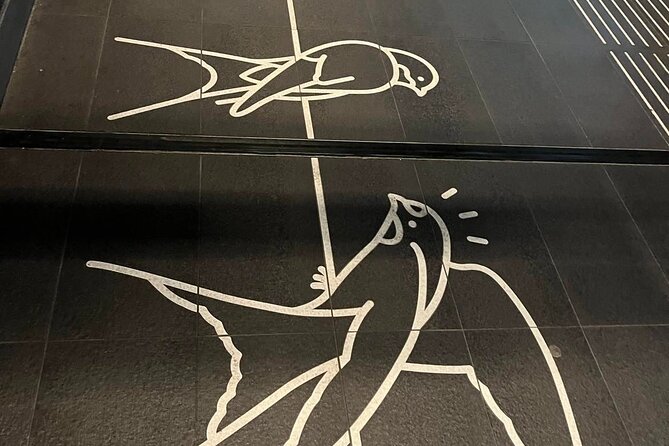
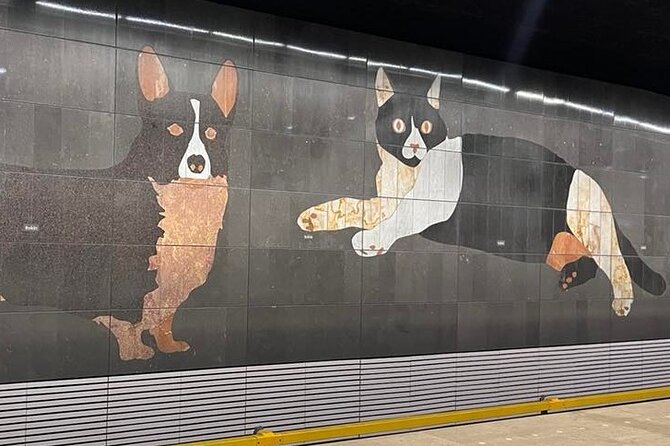
Then the tour finishes in Amsterdam-Noord, where the theme moves toward nature and public art. Here, you’ll talk about the local ecosystem, flora, and fauna—and how that appears in public art. That combination is refreshing. It’s not just art as an object. It’s art as a reflection of place, including how people interact with living systems.
This ending matters because it gives you a clean contrast: you started underground-ish, in the art world of transit spaces and layered history, then you close in an area where art relates to environment rather than just engineering. It’s the best way to leave with a sense of Amsterdam beyond “canals and bikes.”
A practical note: finishing in Amsterdam-Noord means you’ll need to plan your return. The tour end point is set, so match it with your dinner or next stop rather than treating it like a random drop-off.
Price and Logistics: What You’re Paying For
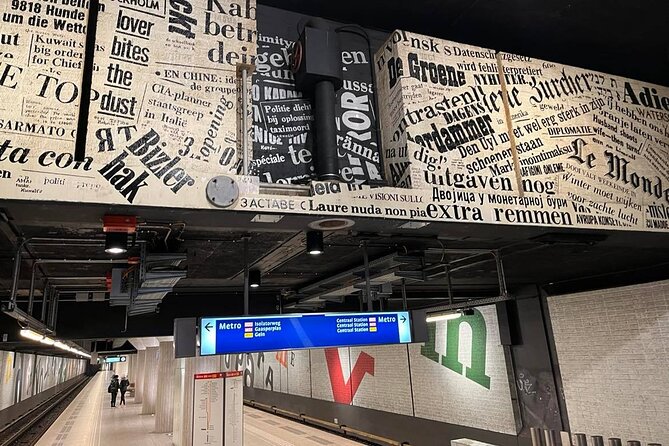
The price shown is $236.59 per person for a tour lasting about 2 hours. That number can feel steep if you’re comparing it to museum tickets or self-guided walks. The value comes from what’s included: a guide, plus a structured route that links art, archaeology, architecture, and civic history in a way you likely won’t assemble on your own in two hours.
Here’s the honest math of it:
- You’re paying for interpretation and time saved. The stops are chosen so the story connects step to step.
- You’re also paying for the private format. It’s not described as a small-group “maybe you’ll share with other people.” It’s described as private, meaning only your group joins the experience.
- Metro tickets are not included: underground metro tickets cost €9 per person and are listed separately. So your true budget is the tour price plus metro entry (as applicable to your plan on the day).
Also, the route includes stops marked as admission ticket not included and stops marked admission ticket free. In practice, that means you should be ready for a mixed setup. Don’t assume every stop is covered under one fee.
If you’re traveling solo, this can still be worth it if you really want the art-history-architecture connections. If you’re in a small group, the price can become easier to swallow, especially since group discounts are mentioned.
What the Guide Can Change: Maria’s Example
One of the best parts of this tour, based on a top-rated experience, is the guide style. In one account, Maria ran the route with strong patience and clarity. The key detail I’d use as a guide to your own expectations: she didn’t just point at artwork. She zoomed in on specific interest points around the areas you pass through.
That matters because it turns a station tour into a skills tour. You start noticing details like how station art and city design choices influence the feel of a neighborhood, including areas like de Pijp market. Another highlight from the same experience: Maria explained the history of the metro system and the democratic nature of choosing art for station spaces. That’s exactly the kind of context that helps public art feel intentional rather than random.
Who Should Book This Tour (and Who Might Skip It)
This fits you best if:
- You love art but want it tied to real place and real history.
- You enjoy architecture and civic systems, not just masterpieces behind glass.
- You like tours where you get a route and a lens, then you can keep exploring after the timer ends.
You might want to skip or swap to a different option if:
- You hate transit environments like stations and prefer quieter museum spaces.
- You want long, slow viewing time. This is short-stop and focused, not a lingering crawl.
- You’re strict about not paying extra beyond the listed tour cost, since metro tickets and some admission notes may add to the total.
Should You Book This Art Underground Tour?
I think you should book it if you want Amsterdam in a new register. You’ll trade the typical museum-only plan for a route that connects public art, archaeology, and urban life decisions. The structure is tight, so you get momentum without feeling like you’re sprinting all day.
Book with confidence if you value guidance. This isn’t the kind of tour where you can wander off and still get the full story. The guide is what stitches the stops together—especially when it comes to metro art choices and the way history shows up in station spaces.
Just budget for the likely extra costs: metro tickets aren’t included, and a couple stops may involve separate admission. Once you account for that, the price starts to make sense as an interpretation-packed, private two-hour plan that teaches you how to look at Amsterdam instead of only how to see it.
FAQ
How long is The Art Underground tour?
It’s listed as about 2 hours.
Is this tour private?
Yes. It’s a private tour/activity, and only your group will participate.
What language is the tour offered in?
It’s offered in English.
What’s included in the price?
The tour includes a guide.
Do I need to buy metro tickets?
Underground metro tickets are not included and are listed as €9 per person.
Where does the tour start and end?
It starts at Stationsplein 13a, 1012 AB Amsterdam and ends in Amsterdam-Noord.
Are admission tickets included for every stop?
No. Some stops note admission ticket not included, while other stops are marked as admission ticket free.
Is the tour suitable for most people?
The information states that most travelers can participate.
What’s the cancellation policy?
You get free cancellation. You can cancel up to 24 hours in advance for a full refund. If you cancel less than 24 hours before the start time, the amount paid is not refunded.










