

Reviewed · VAN GOGH MUSEUM TOURS
Van Gogh Museum Guided Visit Including Tickets
Two hours at Van Gogh Museum changes your eye. With guide Rolf and a ticket already handled, I like how the tour connects what you see to Vincent’s life instead of leaving you to guess on your own. You also walk straight into the Van Gogh Museum experience with less hassle.
I also love the way the visit frames Van Gogh alongside other major artists. You’ll move through works by Impressionists like Monet and Pissaro, plus names such as Gauguin and Toulouse-Lautrec, so the art history feels like real influence—not a list of famous paintings.
The main trade-off is time: it’s about 1–2 hours, and the museum is huge. If you’re the type who wants to linger, you’ll need extra time after the tour.
In This Review
- Key takeaways before you go
- Entering the Van Gogh Museum with tickets already sorted
- Meeting at Museumplein at 2:30 pm and planning your day
- The guided itinerary: what you’ll actually see inside the museum
- How the guide connects Vincent’s life to specific paintings
- Impressionists, Gauguin, and Toulouse-Lautrec: why it helps to see them together
- Small-group pacing: why up to 3 people feels calmer
- Price and value: $270.93 per person for a ticketed, guided experience
- Language, access, and who this tour fits best
- The one big caution: tickets and communication issues can happen
- Should you book this guided Van Gogh Museum visit?
Key takeaways before you go
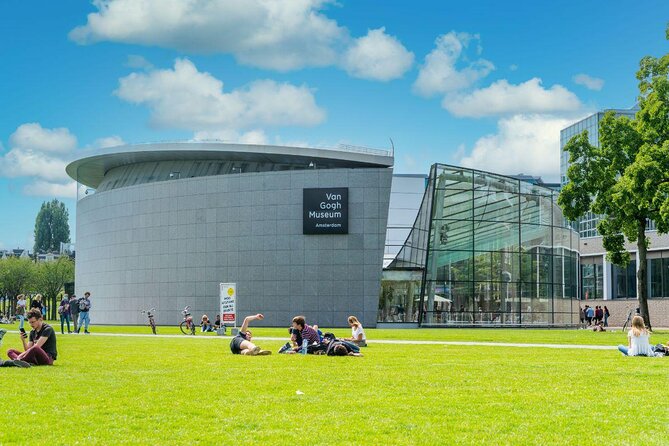
- Small group of up to 3 means more questions and a calmer pace inside the museum
- Admission is included, so you’re not stuck hunting for entry while tickets sell out
- Rolf’s storytelling links Vincent and Theo’s world to specific works you’re standing in front of
- Cross-artist context includes Monet, Pissaro, Gauguin, and Toulouse-Lautrec
- Family-friendly format works even if kids need shorter attention spans
More hours with Van Gogh and the masters
- Amsterdam: Van Gogh Museum Ticket and City Canal Cruise
★ 4.6 · 3,899 reviews - Amsterdam: Van Gogh Museum Ticket & Canal Cruise
★ 4.5 · 3,304 reviews - Van Gogh Museum Amsterdam Exclusive Tour w/ Reserved Entry
★ 5.0 · 1,760 reviews - Van Gogh Museum Tour Reserved Entry Semi Private
★ 5.0 · 1,437 reviews
Entering the Van Gogh Museum with tickets already sorted
This guided visit is built for one simple goal: get you into the museum and paying attention quickly. You meet at Van Gogh Museum (Museumplein 6, 1071 DJ Amsterdam), and the tour ends back at the same spot, so you’re not mentally juggling transit while you should be watching brushwork.
Tickets are part of the package, with a mobile ticket you can use on your phone. That matters in Amsterdam, where top museums can book up during peak periods. One of the best reasons to book ahead here is practical: even when you arrive in a busy stretch (think tulip season and King’s Day vibes), you can still end up with a plan that doesn’t depend on scoring last-minute entry.
The language is English, so you’ll get the full story without needing to translate art terms in your head. And because the group is capped at 3 travelers, you’re unlikely to feel like you’re in a big herd.
Meeting at Museumplein at 2:30 pm and planning your day
The start time is 2:30 pm, and the tour runs about 2 hours (it’s listed as 1–2 hours). That timing is useful: it gives you a slow morning, a lunch with your pace, and then a focused museum block in the afternoon.
You’ll be near public transportation, which is handy because Museumplein is a magnet area—lots to do around you, and easy to get to by transit if you’re staying anywhere central. If you like good flow, aim to arrive a few minutes early so you can settle in before you start moving.
Because the visit ends back where you began, you can treat the rest of the day as flexible time. If the museum made you want more, you can stay longer on your own afterward. If your feet are already tired, you’ll still be close to the action without having to figure out where your tour left you.
The guided itinerary: what you’ll actually see inside the museum
There’s one main stop: the Van Gogh Museum itself, and that’s where the tour earns its keep. Instead of a broad, rushed scan of every room, the focus is on helping you understand how Vincent’s life showed up in his art.
You’ll admire major paintings by Van Gogh and also works by artists that shaped the atmosphere around him—Impressionists like Monet and Pissaro show up alongside other big names such as Gauguin and Toulouse-Lautrec. That mix is more than decoration. It helps you notice what Van Gogh absorbed and argued with as he developed his own visual voice.
The tour is designed to give you story-and-sight alignment. In plain terms: you’re not just looking at paintings; you’re learning what was happening during the period you’re seeing. That makes a difference when you stand in front of a work and think, Okay… why does this look like that?
Still deciding? A few more Amsterdam tours worth a look






How the guide connects Vincent’s life to specific paintings
This is where I’d put my money if I were you—because a strong guide turns “famous art” into something personal. With Rolf, the emphasis is on Vincent’s troublesome life and how it reflects in what you see on the wall. You also get the connection to Theo, which helps you understand Vincent’s emotional and practical world instead of treating his output like a disconnected genius timeline.
What makes this approach click is that it gives you a way to look. After a good explanation, you start noticing patterns you’d probably miss alone: changes in color choices, shifts in style, and moments where you can feel the artist wrestling with something in real time.
And it isn’t just a lecture. The best moments in this kind of museum tour are when the guide points out a detail and you suddenly see it everywhere. One theme from the feedback is that Rolf is flexible and friendly, and that he keeps the group engaged rather than blasting through slides in monotone.
Impressionists, Gauguin, and Toulouse-Lautrec: why it helps to see them together
Van Gogh is often treated like a lone character in a dramatic movie. This tour prevents that trap by showing you how he sits in the larger art conversation.
You’ll encounter works connected to Impressionism through artists like Monet and Pissaro. Seeing that in the same museum visit helps you compare approaches: what counts as light, how movement or atmosphere gets handled, and how bold choices become believable on canvas.
Then you get that wider network feeling with Gauguin and Toulouse-Lautrec. That matters because Van Gogh didn’t invent everything from scratch—he absorbed, reacted, and borrowed inspiration while building something unmistakably his.
The practical payoff for you: when you leave, you’ll be able to talk about the paintings with more than one sentence. You’ll have context you can carry to other museum stops. Even if your itinerary includes only one big art day, this visit gives you a stronger mental map for what to notice next.
Small-group pacing: why up to 3 people feels calmer
A maximum of 3 travelers is a big deal in a museum. Crowds and noise can flatten your attention fast. With a small group, you’re more likely to get moments where the guide can address your questions and redirect the focus to the most important works in the room.
It also helps with pacing. Art doesn’t reward rushing. If your group is small, the guide can slow down when you need time to read a painting and speed up when you’re already grasping the thread.
For families, that matters even more. Kids often do fine in museums when someone gives them a way in. The tour’s story-first structure means they’re not stuck staring at frames with no entry point.
If you’re an art history lover, you’ll also appreciate that the tour isn’t only about life facts. It’s about how those facts show up visually—so the visit feels like understanding, not just memorizing.
Price and value: $270.93 per person for a ticketed, guided experience
Let’s talk money honestly. At $270.93 per person, this is not a budget add-on. It’s a premium guided ticket situation.
So is it worth it? I’d judge it based on what you’re buying:
- Admission included, which is often the bottleneck when tickets are sold out
- Time saved and less stress, especially if you arrive during peak demand
- A guide who connects Theo/Vincent story lines to the works you’re seeing
- A small group size, which usually means more attention and less rushing
One of the clearest value signals from the experience is that it works when you’re stuck. In one case, tickets were sold out during a busy period, and the guided access made the museum possible anyway. That’s not a guarantee for every situation, but it explains why people feel this was money well spent.
If you’re comfortable spending for curated attention, this fits. If you’d rather wander slowly on your own with a phone audio guide, you might spend less and still enjoy the museum. But you’ll give up the “why” that turns looking into understanding.
Language, access, and who this tour fits best
The tour is offered in English, and it’s described as suitable for most travelers. Service animals are allowed, and the meeting point is near public transportation, which covers a lot of the practical bases you’d normally check before booking.
Who I think will get the most out of it:
- Families looking for a structured visit where kids aren’t lost
- Art-history lovers who want the story behind the paintings, not only the facts
- People who want context so they can enjoy the museum even if they know just the basics
Who might want to skip or supplement:
- If you’re extremely detail-obsessed and plan to spend a long day in every gallery, the tour’s 1–2 hour length means you’ll likely want extra time after
- If you’re on a super tight budget, the price will feel steep
The one big caution: tickets and communication issues can happen
There is a downside to note. In one unhappy case, a guest reported that the guide did not have tickets and that they were trying to dispute charges. That’s not something I’d ignore.
How to protect yourself:
- Make sure you keep your confirmation details and use the mobile ticket as directed
- Double-check that your booking is actually confirmed before you head to the museum
- If something feels off at the meeting point, speak up quickly so the issue can be handled right away
The fact that most feedback is strongly positive suggests this is usually smooth. Still, when money and museum entry are involved, it’s smart to be alert.
Should you book this guided Van Gogh Museum visit?
I’d book it if you want to see more than famous paintings—you want the story threaded through what you’re standing in front of. The combination of admission included, Rolf’s connection of Vincent and Theo to specific works, and the small group pace makes this feel like guided understanding rather than a standard museum walk.
I’d think twice if you already plan to spend hours in the museum and prefer total freedom with no structure. You’ll still enjoy the art, but the “why this matters” part won’t land as fast without a guide.
If you’re traveling during a busy time or you’re worried about tickets, this is also a smart move. It’s priced like a premium experience, but it’s often exactly what turns a stressful museum day into a satisfying one.
More Tickets in Amsterdam






More Tour Reviews in Amsterdam




More Time with Van Gogh






Just added: fresh Amsterdam tour reviews





Van Gogh Museum Tours, compared.
 ★ 4.6Van Gogh Museum Ticket and City Canal CruiseFrom $473,899 reviews
 ★ 4.5Van Gogh Museum Ticket & Canal CruiseFrom $473,304 reviews
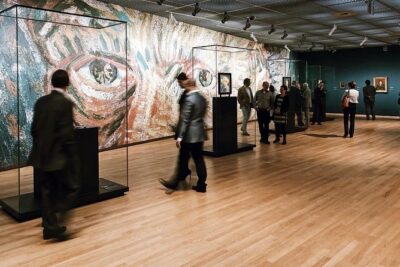 ★ 5.0Van Gogh Museum Amsterdam Exclusive Tour w/ Reserved EntryFrom $1731,760 reviews
 ★ 5.0Van Gogh Museum Tour Reserved Entry Semi PrivateFrom $1731,437 reviews
 ★ 4.9Van Gogh Museum Entry Ticket and Guided TourFrom $175681 reviews
 ★ 4.0Combo Ticket: Van Gogh Museum Ticket and 1-Hour Canal CruiseFrom $45676 reviews
 ★ 4.3Van Gogh & Rembrandt Captivating Experience EntryFrom $20615 reviews
 ★ 4.7Van Gogh Museum Guided Tour with EntryFrom $69535 reviews
Browse the lists this tour appears in