
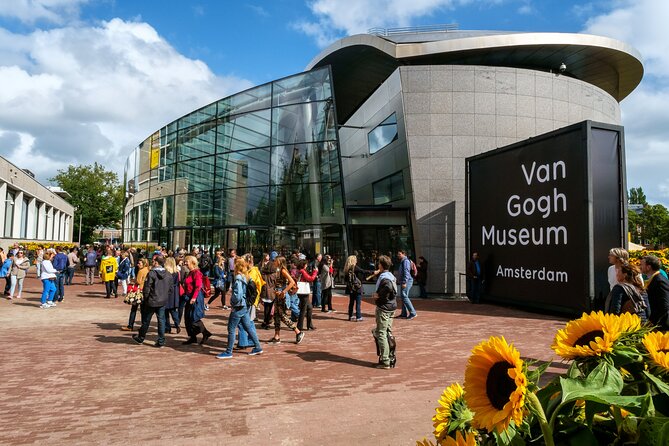
Reviewed · VAN GOGH MUSEUM TOURS
Van Gogh Museum Amsterdam Small Group Guided Tour
One of Europe’s best art museums feels even smarter with a guide. This small-group Van Gogh Museum tour turns the permanent collection into a clear timeline, with included museum entry and an easy way to hear your guide. I love that you get wireless headsets for consistent audio, and I also love the pace: you spend tight, focused time on key paintings rather than wandering aimlessly. One possible drawback: if you’re only chasing a couple of absolute favorites, 2 hours can feel short, and the route gives a solid chunk of time to self-portraits.
You can choose morning or afternoon, and the group stays capped at 14 adults, which keeps the experience personal without turning it into a private lecture. Guides for this tour are often praised for connecting Van Gogh’s life events to his painting choices, with names like Martina S, Clare, and Kawika showing up in standout guide feedback. Still, because it’s a structured highlights route, you might not see everything at a slow, museum-stroll pace during those two hours.
In This Review
- Why This Van Gogh Tour Works in Real Life
- Entering the Van Gogh Museum with a Clear Timeline Route
- Price and Value: Getting Included Admission Plus Expert Direction
- Meeting at Cobra Café and Ending Inside the Museum
- The Wireless Headsets: Comfort, Clarity, and Less Waiting
- Stop-by-Stop: Self-Portraits and Early Peasant Life
- Moving Through Paris (1886–1888): Theater in Paint
- Arles and the South of France (1888): Sunflowers to the Yellow House
- Level 3: Saint-Rémy-de-Provence and the Art of Change
- Level 3: Auvers Room and the Final Works
- What You’ll Notice If You Go in With the Right Mindset
- How Much Time You Should Set Aside After the Tour
- Who This Tour Suits Best
- One Consideration: The Route Is Built Around Highlights
- Should You Book This Van Gogh Museum Small Group Tour?
- FAQ
- How long is the Van Gogh Museum small group guided tour?
- Is museum admission included?
- What language is the tour offered in?
- How many people are in the group?
- Are headphones or an audio system provided?
- Where do I meet, and where does the tour end?
- Can I stay in the museum after the tour?
- Is this tour for adults only?
- What is the cancellation policy?
Why This Van Gogh Tour Works in Real Life
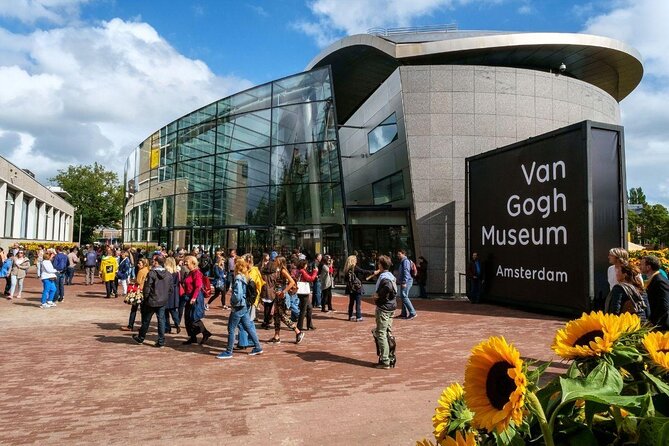
- Small group size (max 14) means questions stay easy, not awkward.
- Wireless/whisper-style headsets help you hear clearly even in a busy museum.
- Included museum admission saves hassle and money versus buying separately.
- A timeline route walks you through his shift from early subjects to Paris, then Arles, then Saint-Rémy, ending in Auvers.
- You can stay inside after the tour and keep exploring at your own speed, including special exhibitions afterward.
More hours with Van Gogh and the masters
- Amsterdam: Van Gogh Museum Ticket and City Canal Cruise
★ 4.6 · 3,899 reviews - Amsterdam: Van Gogh Museum Ticket & Canal Cruise
★ 4.5 · 3,304 reviews - Van Gogh Museum Amsterdam Exclusive Tour w/ Reserved Entry
★ 5.0 · 1,760 reviews - Van Gogh Museum Tour Reserved Entry Semi Private
★ 5.0 · 1,437 reviews
Entering the Van Gogh Museum with a Clear Timeline Route
At the Van Gogh Museum, the collection is big enough that it can swallow your time fast. What makes this tour feel different is that it’s built like a guided story, not a random list of famous paintings. You start with self-portraits and early subjects, then move forward through the major turning points in his life.
That timeline approach matters because Van Gogh’s style doesn’t change for no reason. It shifts with where he lived, who he met, and what he was trying to express. A good guide helps you connect those dots while you’re standing in front of the work, instead of trying to remember everything later.
Price and Value: Getting Included Admission Plus Expert Direction
The price is listed at $77.43 per person for roughly 2 hours. On paper, that’s not “cheap,” but the value comes from two things you actually get: a live guided route and admission included with the stop sequence.
If you’re going to the museum anyway, a guided highlights tour can be the difference between seeing paintings and understanding why they hit. And because the group is capped at 14, you’re more likely to get answers to questions rather than being shuffled along like luggage.
Meeting at Cobra Café and Ending Inside the Museum
The tour starts at Cobra Café, Hobbemastraat 18, 1071 ZB Amsterdam. It ends at Museumplein 6, 1071 DJ Amsterdam, and importantly, you finish inside the Van Gogh Museum so you can keep exploring until closing time.
This end-with-free-time detail is underrated. Two hours gives you the structure; staying afterward gives you the freedom to linger at the works that hooked you. I like planning tours where the guided part earns your interest, then you take over for the rest.
More trips where a local runs the whole day

The Wireless Headsets: Comfort, Clarity, and Less Waiting
This tour uses a whisper system (wireless/headset style), which is a practical win in a museum. It’s not just convenience. When you can hear your guide easily, you catch small details that make paintings feel more alive.
One standout benefit from the feedback is that the headset setup worked well even for people using hearing aids. That’s the kind of “small but real” advantage that can make a guided tour feel inclusive instead of frustrating.
Stop-by-Stop: Self-Portraits and Early Peasant Life
Your first stop is Van Gogh Museum’s self-portrait focus. You spend about 20 minutes here, and the goal is to look at how he presents himself early on. Self-portraits are like his visual notebook: they show how he learned to “see” and how he wanted viewers to connect with him.
Next, you shift to the first floor foyer where the tour ties in paintings connected to influences and everyday life. You’ll spend another about 20 minutes on works such as Woman Lifting Potatoes and a set of portrait-focused elements around peasant subjects, including the idea of faces as a kind of story.
This section matters because it sets up a major theme: Van Gogh didn’t start by painting sunflowers like a brand. He built his eye over time. Watching him move from human labor and rural scenes toward his later, more expressive style helps you understand that his breakthroughs weren’t random.
Moving Through Paris (1886–1888): Theater in Paint
Then the tour turns to the period when Vincent moves to Paris between 1886 and 1888. You get another focused 20-minute stop packed with works that feel more lively, more social, and more experimental.
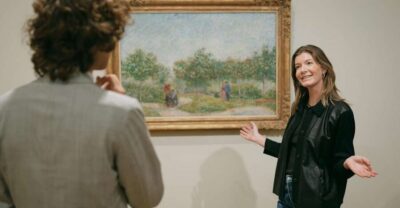
Expect to see pieces such as Self Portrait with Felt Hat and Still Life with Absinthe. You’ll also look at In the Café: Agostina Segatori in Le Tambourin, plus Garden with Courting Couples. The way these are grouped is the point: they show how Paris reshaped his subject matter and how he handled color and atmosphere.
A practical way to get more out of this section is to look at the mood of each scene. In cafés and garden moments, the “story” is in the quick cues: gesture, light, and how figures sit inside the painted space. A guide’s job here is to point out what to notice fast.
Arles and the South of France (1888): Sunflowers to the Yellow House
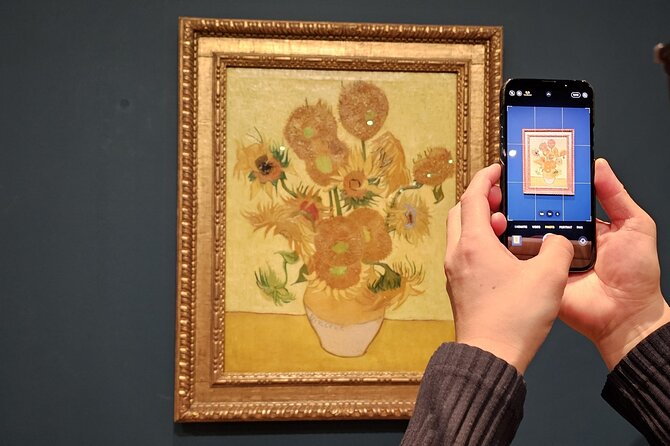
Next comes one of the biggest jumps in the collection: Arles and the South of France. You’ll spend about 20 minutes on this part, anchored around key works like Sunflowers and Almond Blossoms. These paintings are famous, but they’re also useful. In this guided format, you’ll see them as part of a shift toward bolder expression rather than just “the pretty posters.”
You’ll also see The Bedroom, plus Japanese paintings—copies from prints, and The Yellow House. That last trio is a helpful reality check: Van Gogh’s imagination wasn’t only about nature. It was also about interiors, personal spaces, and the ideas he borrowed and transformed.
One thing I like about this structure is how it keeps your attention from drifting. The museum can be overwhelming on your own. Here, each section has a purpose: show the place, show the subjects, and connect them to the emotional tone.
Level 3: Saint-Rémy-de-Provence and the Art of Change
At Level 3, the tour moves to Saint-Rémy-de-Provence, covering roughly 20 minutes. This section includes Almond Blossoms, Wheatfield with a Reaper, Iris, and Pieta (After Delacroix).
The works here don’t just look different. They feel different. You can see it in the way color and composition behave: less like “a scene you filmed” and more like “a moment he shaped.” With a guide, it’s easier to notice how he’s pushing beyond observation toward expression.
The presence of Pieta (After Delacroix) is also interesting because it shows connection to art he studied and referenced. It’s a reminder that even when Van Gogh feels intensely original, he’s still in conversation with the broader art world.
Level 3: Auvers Room and the Final Works
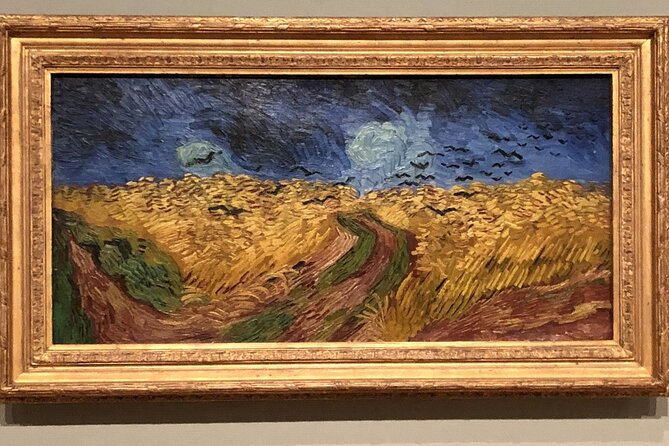
The last stretch is the Level 3 Auvers Room, with about 15 minutes focused on Tree Roots and Wheatfield with Crows. This ending is short on purpose. It’s not trying to exhaust the room; it’s trying to land the final mood and help you remember the overall arc.
In my view, the Auvers stop is best when you slow your eyes down for a minute. With a guide walking you through key cues, you can still take a moment to look longer at a single painting and decide what you think you see.
What You’ll Notice If You Go in With the Right Mindset
Even without a homework-style plan, you’ll get more from the tour if you treat it like pattern recognition. Ask yourself: What changed between Paris, Arles, and Saint-Rémy? How did the subjects shift, and how did his choices of color and composition support the mood?
This is where small-group guiding shines. When you can hear clearly and your guide can answer questions, you’re not stuck with confusion. You can also ask for clarification right where it matters—at the canvas—rather than later in a gift shop line.
How Much Time You Should Set Aside After the Tour
Since the tour ends inside the museum, I’d plan a serious follow-up. Two hours gives you the spine of the story, but the museum still has plenty to enjoy on your own after the official route.
If you’re the type who loves comparing styles, use the extra time to revisit the paintings that changed your attention. If you’re more into “famous works” and photos, use the free time for a second pass at the highlights that grabbed you during the guide section.
Who This Tour Suits Best
This tour is a strong fit if you:
- Love art and want a clear understanding of Van Gogh’s development
- Want to hear a guide without straining in a crowded gallery
- Prefer a structured route with just enough freedom afterward
- Travel with limited time in Amsterdam but want the museum to feel meaningful
It’s also a good pick if you like being around others at a manageable size. With up to 14 adults, you get interaction without the chaos.
If you’re the kind of visitor who hates any schedule at all, you might prefer a self-guided visit. But if you choose to book this, you can treat the tour as your “map” and then slow down after.
One Consideration: The Route Is Built Around Highlights
The tour focuses on major works and key eras. That’s great for most people, but it can be a mismatch if your personal checklist is very narrow.
Also, the self-portrait segment and early painting time are substantial. If you already know you want to skip around, a guided highlights plan may feel more rigid than you want. In that case, consider using the post-tour time to rebalance toward what you cared about most.
Should You Book This Van Gogh Museum Small Group Tour?
Yes, if you want a guided, story-driven visit that makes the museum feel organized and easier to absorb. The combination of live guide, included admission, and wireless/headset audio is exactly the kind of setup that turns a famous museum into a more satisfying experience.
I’d book it especially if you want your visit to go beyond surface-level appreciation and connect paintings to the big life shifts: Paris, Arles, Saint-Rémy, and the final works in Auvers. If you’re unsure, the best way to decide is simple: ask yourself whether you prefer seeing a timeline with direction, or wandering freely with no plan.
If you can only do one Van Gogh Museum activity, this is the one that gives you the most “why it matters” per hour.
FAQ
How long is the Van Gogh Museum small group guided tour?
It’s about 2 hours (approximately).
Is museum admission included?
Yes. The tour includes admission, with ticket access tied to the tour stops.
What language is the tour offered in?
The tour is offered in English.
How many people are in the group?
The group size is capped at a maximum of 14 travelers.
Are headphones or an audio system provided?
Yes. The tour includes a whisper system (a headset/wireless setup to help you hear the guide).
Where do I meet, and where does the tour end?
Meet at Cobra Café, Hobbemastraat 18, 1071 ZB Amsterdam. The tour ends inside the museum at Museumplein 6, 1071 DJ Amsterdam.
Can I stay in the museum after the tour?
Yes. The tour ends inside the Van Gogh Museum, and you can stay to explore on your own until closing time.
Is this tour for adults only?
Yes. It’s only available for adults 18 years or older.
What is the cancellation policy?
There is free cancellation. You can cancel up to 24 hours in advance for a full refund.
More Tours in Amsterdam




More Tour Reviews in Amsterdam



More Time with Van Gogh





Just added: fresh Amsterdam tour reviews




Van Gogh Museum Tours, compared.
 ★ 4.6Van Gogh Museum Ticket and City Canal CruiseFrom $473,899 reviews
 ★ 4.5Van Gogh Museum Ticket & Canal CruiseFrom $473,304 reviews
 ★ 5.0Van Gogh Museum Amsterdam Exclusive Tour w/ Reserved EntryFrom $1731,760 reviews
 ★ 5.0Van Gogh Museum Tour Reserved Entry Semi PrivateFrom $1731,437 reviews
 ★ 4.9Van Gogh Museum Entry Ticket and Guided TourFrom $175681 reviews
 ★ 4.0Combo Ticket: Van Gogh Museum Ticket and 1-Hour Canal CruiseFrom $45676 reviews
 ★ 4.3Van Gogh & Rembrandt Captivating Experience EntryFrom $20615 reviews
 ★ 4.7Van Gogh Museum Guided Tour with EntryFrom $69535 reviews
Browse the lists this tour appears in