
Reviewed · TOURS
Small Group Hidden Gems Tour in Amsterdam
One of Amsterdam’s best traits is its layered stories. This small-group route strings together major people and social change across the city, with free time at each stop and a guide who explains what you’re actually looking at. I like the max 12 travelers setup for real questions, and I like the story-first guiding style (think Elizabeth-style pacing that doesn’t feel rushed); the one drawback is that it’s still a walk, so you’ll be standing and moving at a city pace.
You get about 2 hours of guided history, in English, starting at Monument Megadlé JethomiemAmstel 23 (1011 PT) and ending in front of H’ART Museum at Amstel 51 (1018 EJ). You’ll use a mobile ticket, and the tour is designed to fit most people, with service animals allowed.
What makes this route especially worth your time: it doesn’t just point at famous buildings. It ties them to specific lives—like Spinoza’s exile, Black community life in 17th-century Amsterdam, and a Portuguese Jewish story connected to survival during the Inquisition—and then it keeps going. If you like connecting the dots between neighborhoods you thought you already understood, this is built for you.
In This Review
- Key highlights I’d plan around
- Price and what you’re really getting for $48.16
- Before you start: how the meeting and finish shape the experience
- Stop 1: Dutch National Opera & Ballet and the shock of firsts
- Stop 2: The Spinoza Monument and why exile can be personal
- Stop 3: Mozes en Aaronkerk and the memory of Amsterdam’s free Black community
- Stop 4: Portuguese Synagogue and survival stories tied to the Inquisition
- Stop 5: Hortus Botanicus and two Indonesian rebels with different lives
- Stop 6: De Burcht and the labor-rights angle on Amsterdam diamonds
- Stop 7: ARTIS Amsterdam Royal Zoo and the flamingo lesson
- Stop 8: University of Amsterdam campus and two famous voices
- Stop 9: H’ART Museum (formerly the Hermitage) and the art-world survival story
- What the guides do right: story energy without the sprint
- Who should book this tour (and who might prefer something else)
- Quick practical tips to make it feel smooth
- Should you book this Amsterdam small-group history tour?
- FAQ
- FAQ
- How long is the Small Group Hidden Gems Tour in Amsterdam?
- What language is the tour offered in?
- How many people are in the group?
- Where does the tour start and end?
- Is admission included for the stops?
- Does the tour run in bad weather?
Key highlights I’d plan around
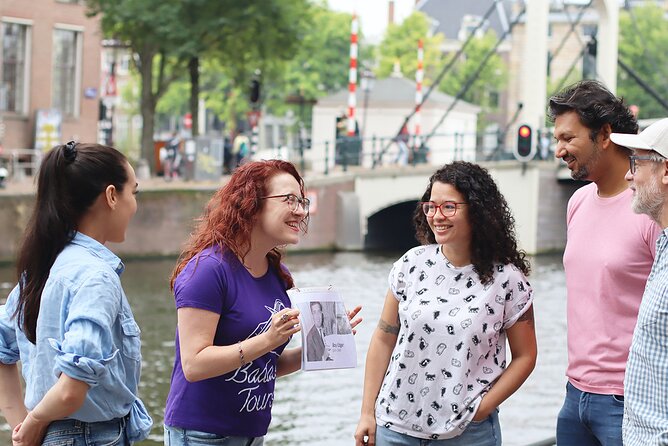
- Tight small-group size (up to 12) so you’re not shouting over a crowd
- Free-entry stops at every location so you’re paying for guidance, not museum fees
- A mix of themes: philosophy, LGBTQ+ history, Jewish stories, Black history, labor rights, and WWII memory
- Several “pass-by but with context” moments like ARTIS Zoo and the University of Amsterdam campus
- Strong guide energy in English, with names like Elizabeth, Tanja, and Astrid showing up in prior tour feedback
Weighing your options? Here is how a few other Amsterdam tours compare.
- Amsterdam: Heineken Experience Ticket including 2 Drinks
★ 4.6 · 36,014 reviews - Amsterdam Classic Saloon Boat Cruise with Drinks and Cheese
★ 5.0 · 31,825 reviews - Amsterdam Luxury Canal Cruise + Unlimited Drinks & Bites option
★ 5.0 · 30,518 reviews - Amsterdam: Rijksmuseum Entry Ticket
★ 4.7 · 29,512 reviews
Price and what you’re really getting for $48.16
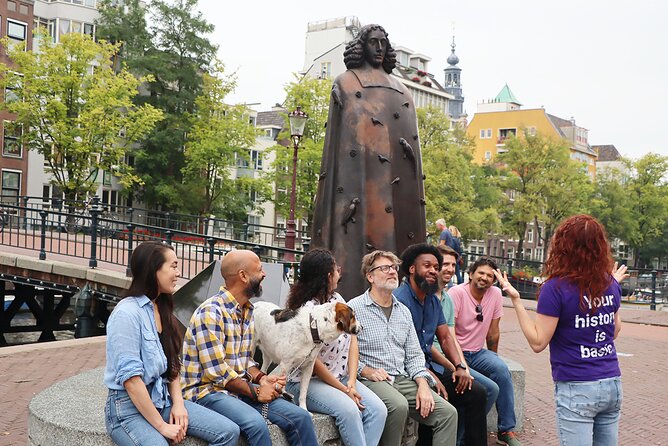
At $48.16 per person for about 2 hours, the math works best when you treat this as a guided walking education kit. You’re not just touring for photos—you’re paying for an expert to explain why each site matters and how the city’s social history fits together.
The big value lever is that admission is listed as free for every stop on the route. That means you’re not racing ticket lines or adding extra costs on top. In practical terms, you can spend the same time outdoors, hear the stories, and decide what you want to revisit later.
The second value lever is that it’s offered in English with a small max group size. That matters in Amsterdam. If you’ve done big group tours before, you know how quickly “interest” becomes “constant movement with no time to ask.” Here, the format gives you a better chance to actually understand what you’re seeing.
Before you start: how the meeting and finish shape the experience
This tour starts at Monument Megadlé JethomiemAmstel 23, 1011 PT Amsterdam, and it ends in front of H’ART Museum, Amstel 51, 1018 EJ. That end point is convenient because it sits in the same central area most visitors already want to explore after a walk.
Plan for a route that’s likely to feel busy, even when it’s calm. You’ll be moving between sites in a compact part of town, which is efficient. But it also means you’ll want comfortable shoes. If you’re the type who stops to read every plaque, you may need to slow yourself down and let the guide set the pace.
Also, the tour is mobile-ticket based. That’s a modern upgrade you’ll appreciate when you’re juggling transit, weather, and timing. Just make sure your phone has enough battery for the day.
Stop 1: Dutch National Opera & Ballet and the shock of firsts
The opening stop is Dutch National Opera & Ballet, and the story starts with a city grounding moment. The guide connects Amsterdam to a surprising headline: the world’s first gay marriage, tied to the building where it happened.
Why this matters: Amsterdam is often described through its canals and bikes. This stop forces a different lens early on—how legal and social change can happen in ordinary-seeming public spaces. Even if you’ve read about LGBTQ+ rights before, you’re still getting the “where and what exactly happened here” piece, which makes the story stick.
What to watch for while you’re there: keep your eyes on the building’s role as a civic stage. Opera houses sound fancy, but this one isn’t only about performance. It’s part of Amsterdam’s public life.
A practical note: the stop is listed at about 10 minutes, so you won’t get an extended inside look here. Instead, you’ll get the narrative frame and then move on.






Stop 2: The Spinoza Monument and why exile can be personal
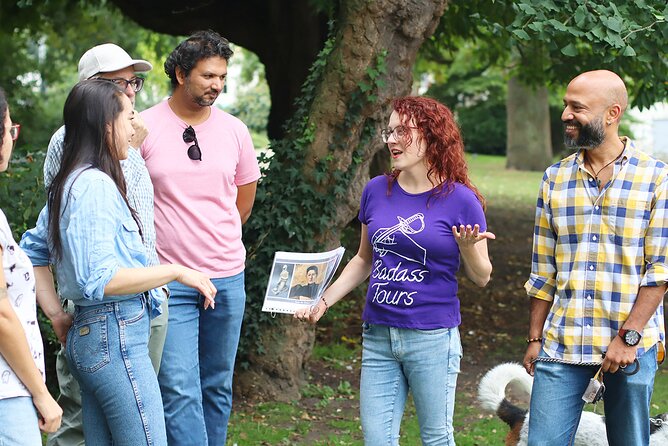
Next up is the Spinoza Monument, with a short stop (about 5 minutes) focused on Baruch Spinoza. You’ll hear how a titan of modern philosophy became an outcast in his own community.
This is one of those quick stops that can either feel like trivia or feel like a turning point—depending on how the guide tells it. The value here is the connection between ideas and human cost. Philosophy isn’t stuck on a page. It has consequences in real communities.
In practical terms, use this pause to think about Amsterdam’s reputation for tolerance. Spinoza’s story adds tension to the stereotype, and that tension is what makes the route feel honest.
Stop 3: Mozes en Aaronkerk and the memory of Amsterdam’s free Black community
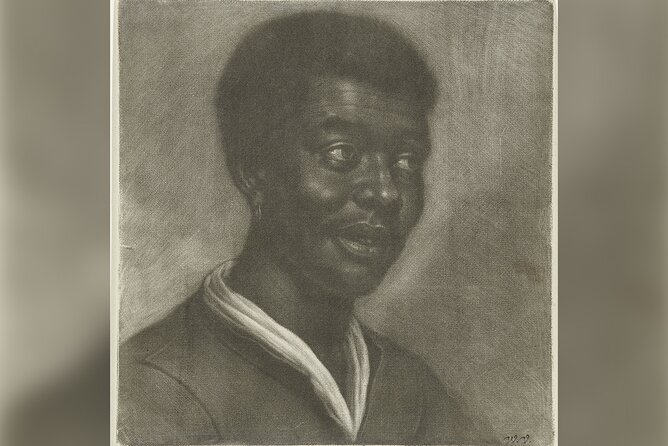
At Mozes en Aaronkerk, the tour turns to 17th-century Amsterdam and the life of a couple in the city’s free Black community.
This stop is only about 5 minutes, but the point isn’t length. The point is correction. Many visitors go home with a simplified idea of Amsterdam’s past. This is where you get a more accurate map of who lived in the city—and how freedom looked in daily life, not only in slogans.
What I’d do as you listen: try to picture the church setting as part of community networks, not just architecture. The best guides help you see the site as a social stage. When you do, even a short stop lands harder.
Stop 4: Portuguese Synagogue and survival stories tied to the Inquisition
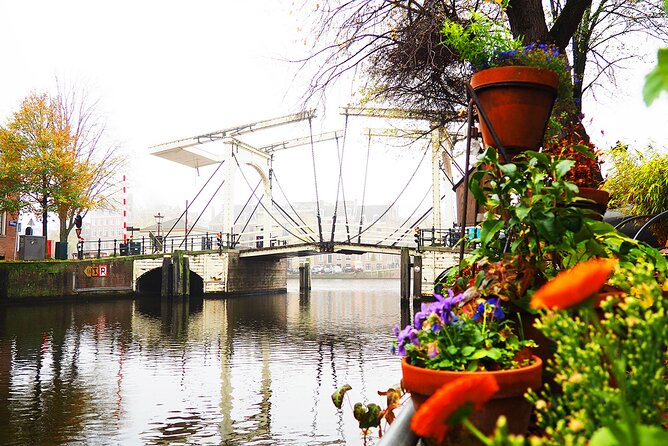
Then you step into the story world of the Portuguese Synagogue of Amsterdam (about 10 minutes). You’ll stand between historic synagogues as you hear about a heiress who created something like an underground railroad during the Spanish and Portuguese Inquisitions.
This is the kind of history that can’t be learned from a quick scroll. It involves networks, risk, and moral choices under pressure. The most useful part of a guided walk here is that you learn what the story means, not just the headline.
A quick caution: because it’s only 10 minutes, you’ll get the narrative arc, but not a full lecture. If this topic grabs you, plan to follow up later with your own reading or a longer visit to a synagogue museum/exhibit.
Stop 5: Hortus Botanicus and two Indonesian rebels with different lives
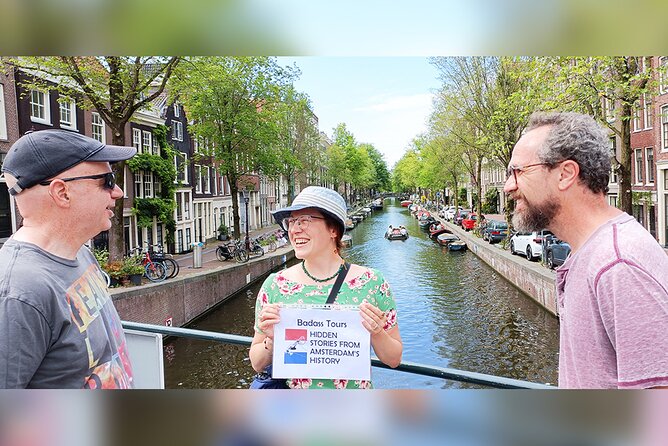
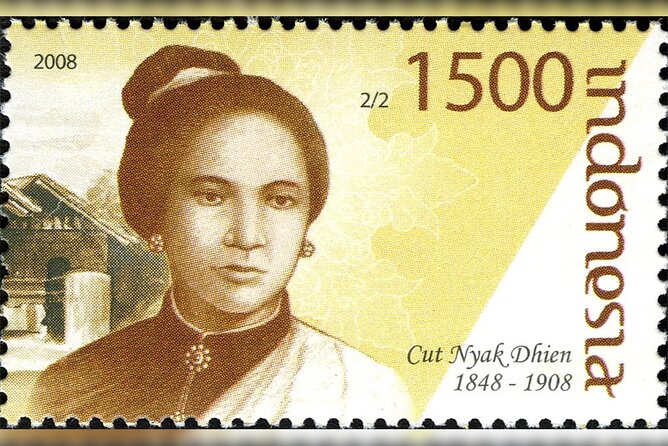
At Hortus Botanicus (about 10 minutes), the guide shares harrowing stories of two Indonesian rebels and revolutionaries—each with very different life paths.
Why I like this stop on a walking tour: it breaks the Amsterdam-only frame. You start seeing how global politics and colonial-era movements link to Dutch history. Botanic gardens sound calm. This one carries story weight.
What you can expect: you’ll be outside and listening, not browsing exhibits. So if you’re expecting a full garden walk, this won’t be that. Think of it as a story checkpoint that tells you which names and themes to look for afterward.
Stop 6: De Burcht and the labor-rights angle on Amsterdam diamonds
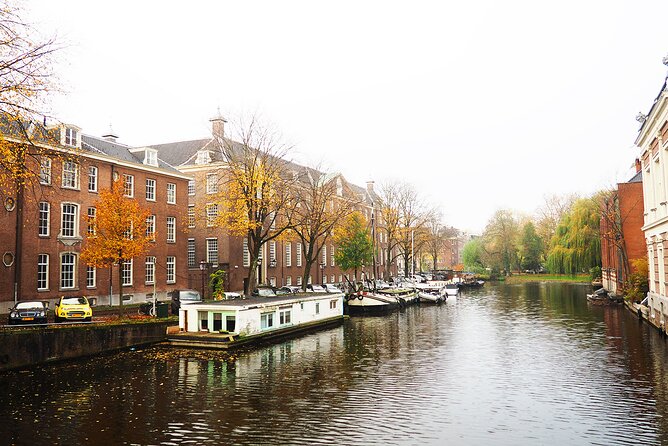
De Burcht is next (about 10 minutes), with a theme many visitors don’t connect: Amsterdam’s diamond history and a workers’ union that built this iconic building.
The key idea you’ll take with you is that civic rights didn’t appear by magic. They were built by people organizing for better conditions. The tour frames the union work as a foundation for rights citizens rely on today.
This stop is a great reminder that “history” isn’t only royal portraits and battlefield dates. Sometimes it’s workplace power, labor organization, and the long grind toward fair treatment.
Practical drawback: like several stops, the time here is short. You’ll want to pay attention early because the guide likely compresses the argument quickly. If you’re the type who needs slow context, you might want to note details for later.
Stop 7: ARTIS Amsterdam Royal Zoo and the flamingo lesson
At ARTIS Amsterdam Royal Zoo (about 30 minutes), you’ll pass by flamingos and hear about influential Amsterdammers. The tour includes artists and WWII resistance heroes, mixing culture and moral courage.
This is your longest stop on the itinerary, which makes sense. A zoo setting gives the guide more room to connect stories to sights without feeling rushed. The flamingos aren’t the point by themselves; they’re the scenic anchor while you learn who shaped Amsterdam.
How to use this time: let your mind switch tracks. You’re not only learning history—you’re practicing “watching while thinking.” Look at the animals and then listen for the human stories the guide links to them. That contrast helps the information hold better.
Also, because ARTIS is an outdoor-through-indoor environment, weather matters more here than at a street monument. The tour notes it requires good weather, so if your dates are iffy, consider building flexibility into your day.
Stop 8: University of Amsterdam campus and two famous voices
The next part moves through the main university campus (about 15 minutes). The story centers on an influential suffragist and a world-changing diplomat.
Why university stops work well on this kind of tour: universities concentrate ambition. People don’t just study ideas; they shape society. When you connect campus buildings to real political momentum, the campus becomes more than a backdrop.
Keep an eye out for the way the guide connects these people to broader change. Suffrage and diplomacy sound separate, but on a good tour they connect through civic action and public persuasion.
If you have any interest in women’s rights history or international diplomacy, this is the stop where you’ll get a quick, guided “why it mattered.”
Stop 9: H’ART Museum (formerly the Hermitage) and the art-world survival story
The finale is H’ART Museum (end point at Amstel 51, about 15 minutes on the route). The theme: one of the giants in the art world might not be known today if it weren’t for a relative who barely knew him. You’ll hear the fall-and-rise story behind that legacy.
This ending works because it reframes “famous art” as human risk and human choice. Legacies don’t always last on their own. Sometimes someone carries them forward even when the connection is weak, complicated, or belated.
After the tour ends, you’re in front of a museum, which makes it easy to keep going if this story hooks you. Even if you don’t go in immediately, you’ll likely know what to ask when you browse.
What the guides do right: story energy without the sprint
A repeated theme in the tour feedback is guide quality, including responsiveness and an inclusive tone. Names that come up include Elizabeth, Tanja, and Astrid, with praise for pacing and for answering questions without rushing people.
In your day-to-day planning, that matters more than you might think. A good Amsterdam walking guide can turn a short stop into a moment where you feel the city’s moral stakes. Guides who are patient—especially with mobility or hearing-related needs—make the difference between a tour you remember and a tour you forget.
If you care about learning from perspectives that don’t center only the most obvious names, this route is built for that. You’re covering philosophy, LGBTQ+ history, Black community life, Jewish survival, labor organizing, resistance during WWII, and social reform. That mix isn’t random. It’s the point.
Who should book this tour (and who might prefer something else)
Book this if:
- You want an Amsterdam history walking tour that connects people to place, fast.
- You enjoy short stops with strong storytelling, not long museum time.
- You like getting context before you explore on your own, especially around central areas like the Jewish quarter and the Amstel corridor.
You might want a different option if:
- You hate standing and prefer long indoor museum sessions.
- You’re expecting a deep museum-style “hands-on” experience at each site. This is mostly outside, story-focused, and timed.
- Your weather tolerance is low. The tour requires good weather, and part of the experience includes a zoo stop.
Quick practical tips to make it feel smooth
- Wear comfortable shoes. The stop times add up fast, even though total duration is about 2 hours.
- Take 30 seconds at each stop to get your bearings before the story starts. You’ll remember more.
- If one theme grabs you—Spinoza, the synagogue story, labor rights, or WWII resistance—plan to follow up later. This route gives you the map, not every footnote.
- Bring water. Even with a group of 12, walking and listening in Amsterdam can still dry you out.
Should you book this Amsterdam small-group history tour?
Yes, if you want a compact, English-guided walk that treats Amsterdam like a living social record—not just scenery. For $48.16, you get free admission listed at all stops, a small group (up to 12), and a guide approach that can handle serious topics with care.
I’d book it in particular if you’re the type who wants to understand why the city is the way it is. By the time you finish in front of H’ART Museum, you’ll have a set of names, conflicts, and ideas that make your next day of wandering much more meaningful.
FAQ
FAQ
How long is the Small Group Hidden Gems Tour in Amsterdam?
It runs for about 2 hours.
What language is the tour offered in?
The tour is offered in English.
How many people are in the group?
The tour has a maximum of 12 travelers.
Where does the tour start and end?
It starts at Monument Megadlé JethomiemAmstel 23, 1011 PT Amsterdam and ends in front of H’ART Museum (Hermitage Amsterdam), Amstel 51, 1018 EJ Amsterdam.
Is admission included for the stops?
The itinerary lists each stop with admission ticket free, so the tour is structured around locations where you don’t need to purchase entry.
Does the tour run in bad weather?
The tour requires good weather. If it’s canceled due to poor weather, you’ll be offered a different date or a full refund.
More Tours in Amsterdam






More Tour Reviews in Amsterdam






Just added: fresh Amsterdam tour reviews





Tours, compared.
 ★ 4.6Zaanse Schans, Edam, Volendam & Marken Bus TourFrom $3215,034 reviews
 ★ 4.8Amsterdam Anne Frank: Small-Group Walking Tour & Local GuideFrom $2912,789 reviews
 ★ 5.0Anne Frank’s Story – Guided Walking Tour through AmsterdamFrom $3911,619 reviews
 ★ 4.6Johan Cruijff ArenA Tour with Optional GuideFrom $328,954 reviews
 ★ 4.9Red Light District Tour in DE/EN/IT/ES/FRFrom $287,136 reviews
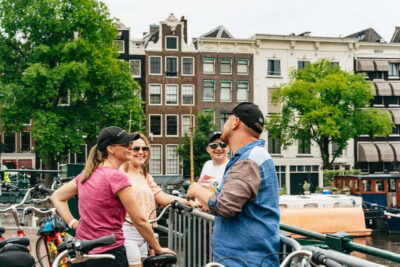 ★ 4.7Big Bike tour Amsterdam – See all in 3 unforgettable hoursFrom $344,929 reviews
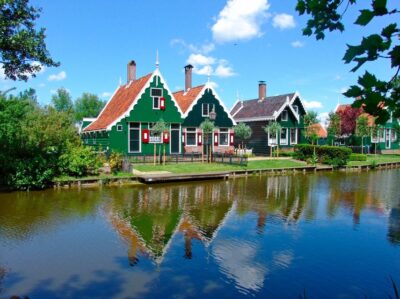 ★ 4.4Guided Zaanse Schans, Windmills & Cheese TourFrom $224,826 reviews
 ★ 4.0Windmill Tour from Amsterdam, Including Volendam & MarkenFrom $374,572 reviews