
Reviewed · RIJKSMUSEUM TOURS
Skip-the-line Rijksmuseum & Rembrandt House Semi-Private 8ppl Max
One museum day in Amsterdam can feel like three days. This small-group Rijksmuseum + Rembrandt House tour keeps you moving with skip-the-line entry and a guide who connects the art to the city. You’ll also get a guided walk through canal landmarks and Rembrandt-related corners, so the whole day feels like a theme—Rembrandt, Dutch art, and the neighborhoods around them.
Two things I like a lot: you get priority admission to avoid the worst waiting, and the group size tops out at 8, which means you’re not shouting over everyone else. The other big plus is the guide-led pacing through major highlights like The Milkmaid and The Night Watch, without making you feel lost in a museum that’s huge.
One drawback to consider: this is a walking-heavy day, and it’s not recommended for wheelchair users or people with walking disabilities. Also, if the Rijksmuseum has an unexpected closure and delays go past one hour, the plan can shift and the tour notes refunds/discounts may not apply.
In This Review
- Key points worth knowing before you go
- The day’s structure: art first, then Amsterdam in walkable doses
- Rijksmuseum: how to see the biggest masterpieces without getting swallowed
- Spiegelgracht and Keizersgracht: canals that turn the city into a map
- Museum Van Loon (outside focus) and why Ferdinand Bol matters
- Flower market, Munttoren, and Rembrandtplein: quick landmarks that stick
- Skinny Bridge, Blue Bridge, Stopera, and Jodenbuurt: city texture around the art
- Rembrandt House Museum: where the story becomes work, rooms, and time
- Price and value: what $287.18 buys you in real terms
- Who should book this tour (and who should skip it)
- Should you book it?
- FAQ
- How long is the tour?
- Is this a skip-the-line Rijksmuseum visit?
- What’s included in the price?
- Where do we meet and where does it end?
- What language is the tour offered in?
- How big is the group?
- Is it okay for wheelchair users or limited mobility?
- How far in advance is it usually booked?
Key points worth knowing before you go
- Skip-the-line priority helps you start the Rijksmuseum tour with less time stuck in queues.
- Max 8 people keeps the experience conversational, with more guide attention when you have questions.
- You’ll see major works like The Night Watch, The Milkmaid, and The Jewish Bride, plus lesser-known objects.
- A short canal-and-city walk ties the art to Amsterdam’s historic waterways and Rembrandt-related spots.
- The day ends at Rembrandt House Museum, where you can connect the paintings to the man’s working life (1639–1656).
- Bring a plan for security rules: no large bags inside the museum—only handbags or small thin packs.
Other ways into the Rijksmuseum, compared
- Amsterdam: Rijksmuseum Entry Ticket
★ 4.7 · 29,512 reviews - Amsterdam: City Canal Cruise and Rijksmuseum
★ 4.5 · 2,226 reviews - Rijksmuseum Amsterdam Small-Group Tour with Private Upgrade
★ 4.5 · 1,547 reviews - Amsterdam: Rijksmuseum Entry Ticket and Canal Cruise Combo
★ 4.3 · 1,276 reviews
The day’s structure: art first, then Amsterdam in walkable doses
This tour runs about 5.5 hours (with a lunch break built in) and is scheduled to go rain or shine. The core of the day is the Rijksmuseum visit, then you shift from galleries to the streets—canals, squares, and a few historically linked stops—before finishing at Rembrandt’s house museum.
For you, that order matters. The Rijksmuseum is where your brain needs the guide most; it’s also where the tour can pull you toward specific “anchors” so you don’t spend hours just trying to find the next room. Then, once you’ve seen the big names and key works, the outdoor stops land better because you’re mapping what you just learned onto real Amsterdam geography.
And because it’s a semi-private-style small group, you’ll likely get a more personal vibe than you would on a large bus tour. You’re not just “present” in the museum—you’re pointed to what to look at, and you get time to ask questions when something clicks.
Rijksmuseum: how to see the biggest masterpieces without getting swallowed
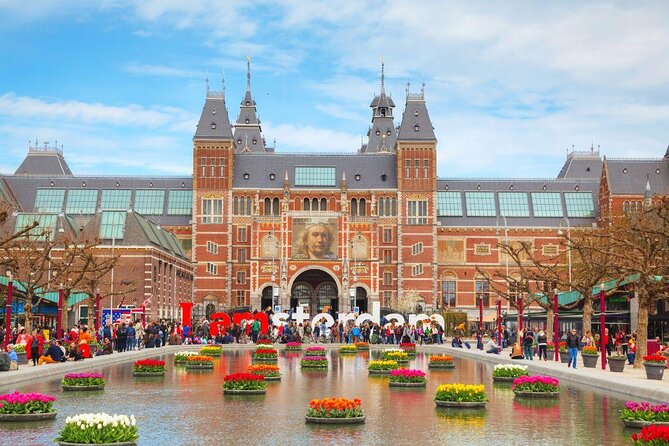
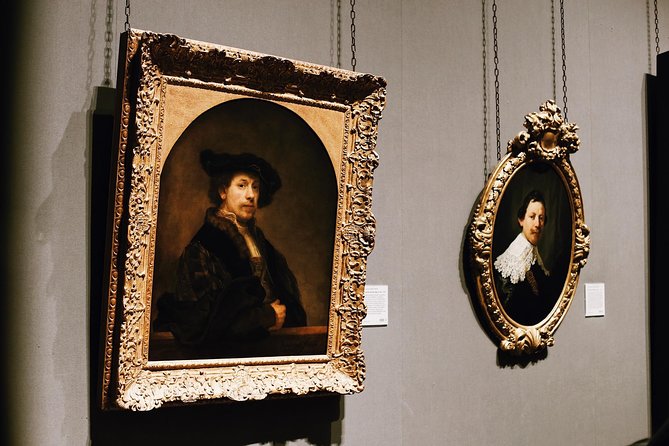
The Rijksmuseum portion lasts about 2 hours 30 minutes, and it’s built for first-timers who want direction. The museum is often compared to the Louvre in terms of scale, but the real value here is the guide’s selection: you’re not trying to cover everything—you’re getting a guided overview of Dutch culture over centuries through key paintings and artifacts.
You’ll focus on the major attractions while also getting the kinds of details people miss when they wander alone. A couple highlights that are specifically mentioned include:
- Rembrandt masterworks
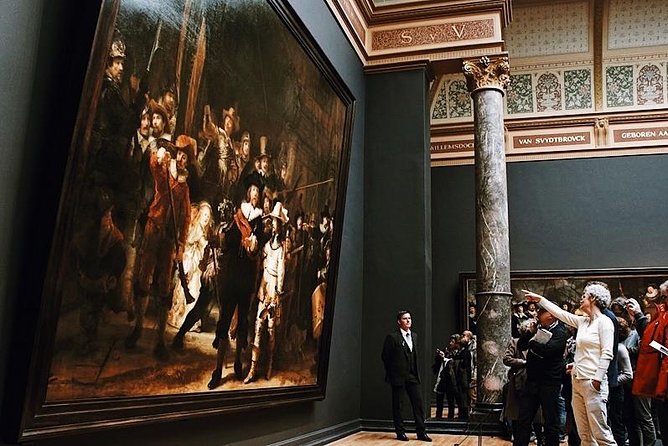
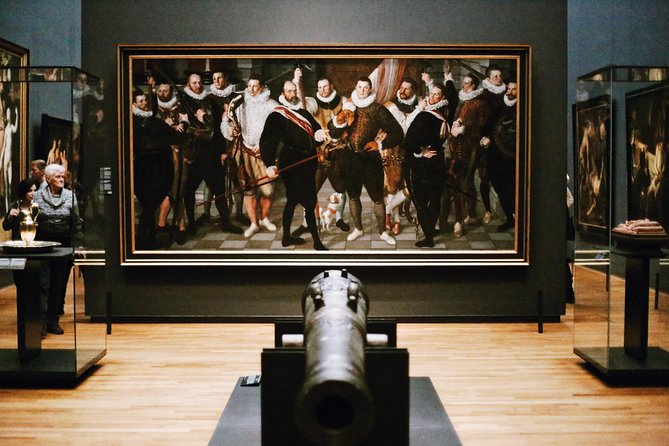
- The Night Watch
- The Jewish Bride
- The Syndics of the Drapers’ Guild
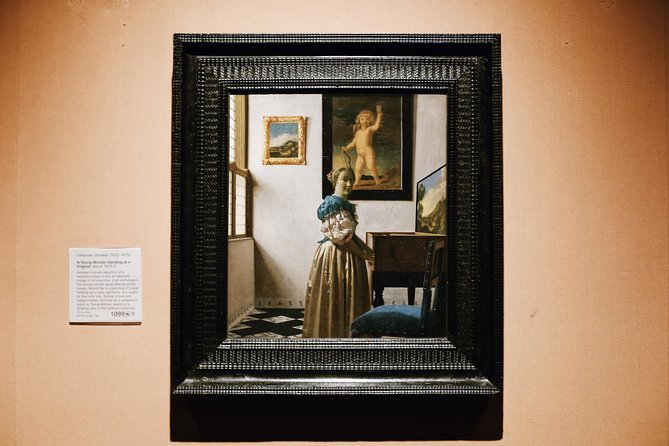
- Vermeer’s The Milkmaid
- A 19th-century library
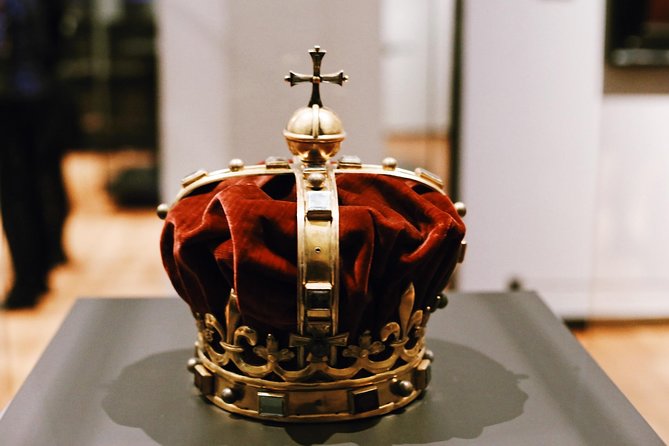
- 17th-century dollhouses, globes, ship replica, and Delft ceramics
That last set is sneaky-useful. Dollhouses, globes, and miniature Dutch objects can sound like a detour—but in a museum about the Dutch story, those items show how everyday imagination and worldliness fit together. If you like art history that’s about real objects and real life (not just big paintings), this part tends to be a favorite.
Also, plan for museum rules and rhythms. You may encounter quiet or restricted rooms where speaking is limited. Your guide will set expectations before you reach those spaces, which is a small but real quality-of-life detail. And remember the security note: no large bags or suitcases. If you’re traveling with a bigger pack, you’ll want to keep it minimal or plan for storage outside the museum area.
One more practical note: the tour says the Rijksmuseum can have occasional closures without warning. If that causes a delay of more than 1 hour from the start time, the provider will offer an appropriate alternative, but refunds/discounts aren’t guaranteed in those cases. That’s rare, but it’s good to know before you plan a tight day.
Spiegelgracht and Keizersgracht: canals that turn the city into a map
After the Rijksmuseum, you shift to a short walking segment built around Amsterdam’s waterways—exactly the kind of thing that makes the city feel like more than just “shops and bridges.” You’ll head along the Singelgracht canal, which borders the central part of Amsterdam and was once part of the outer defenses. Then you move to Spiegelgracht, named as part of the UNESCO-designated Canals of Amsterdam.
In plain terms: this is your chance to get bearings fast. When you see the canal system in a guided sequence, you start understanding why Amsterdam is shaped the way it is, and why historic neighborhoods cluster around these water lines.
You’ll also pass by the Emperor’s Canal (Keizersgracht), described as the middle of the three main canals and the widest in the inner city, named after Emperor Maximillian of Austria. Even though you’re only there briefly, this stop helps you build mental landmarks for later.
What’s the trade-off? Time is short at each canal point (about 10 minutes each area). If you want long photo breaks or slow wandering, you’ll have less flexibility here. Still, if you want a guided “city orientation” that fits into a 5.5-hour day, it works.
More of the museums worth the queue in Amsterdam






Museum Van Loon (outside focus) and why Ferdinand Bol matters
One quick detour brings you to Museum Van Loon, a canalside house on Keizersgracht. It’s known as the home of Ferdinand Bol, identified here as Rembrandt’s favorite pupil. That single connection can pay off later: once you’ve seen Rembrandt’s story in the museum, you’re reminded that he wasn’t working in a vacuum—his influence spread through students and followers who shaped the Dutch art scene.
This stop is brief (about 10 minutes), and admission isn’t included. So think of it as a visual context stop. You’re not meant to turn it into a separate museum day; you’re meant to connect the art lesson to a specific kind of place—an Amsterdam canal house linked to Rembrandt’s circle.
If you’re the type who likes to add extra indoor stops, you might regret that this one isn’t included. If you’re aiming for a tight art-focused schedule, it’s a smart way to keep the day moving.
Flower market, Munttoren, and Rembrandtplein: quick landmarks that stick
The walk continues through Bloemenmarkt (the flower market), with a view toward Munttoren, the “Mind Tower.” The tower is described as originally part of a medieval city wall gate. This is one of those Amsterdam details that’s easy to walk past when you’re alone, but very easy to appreciate when someone gives you the origin story.
From there, you reach Rembrandtplein, one of Amsterdam’s busiest squares, and you’ll see a bronze-cast representation of The Night Watch, noted as displayed as part of celebrations for Rembrandt’s 400th birthday in 2006.
This part is short (around 10 minutes), but it’s valuable. Seeing The Night Watch referenced in a public-space format helps you connect the museum version to how Rembrandt became a city symbol—big enough that the square is literally named for him.
Skinny Bridge, Blue Bridge, Stopera, and Jodenbuurt: city texture around the art
The tour keeps walking, and you’ll get a few more “Amsterdam won’t-mean-much-until-you-see-it” landmarks:
- The Amstel River, with a look at the Skinny Bridge and the Blue Bridge (named after a wooden blue bridge from the 17th century, not because it’s currently blue).
- The Stopera complex (Dutch National Opera & Ballet), described as a construction project that took at least 60 years.
- A walk toward Jodenbuurt, the former Jewish neighborhood area preserved and managed by the Jewish Cultural Quarter.
These stops aren’t deep museum replacements. They’re the connective tissue that helps you understand how art sits inside a living city—not inside a vacuum of tickets and timetables.
The key consideration here is energy. By the time you reach this section, you’ve already done the Rijksmuseum. If you’re used to museum days that include frequent breaks, you’ll want to plan your pace so you don’t feel rushed.
Rembrandt House Museum: where the story becomes work, rooms, and time
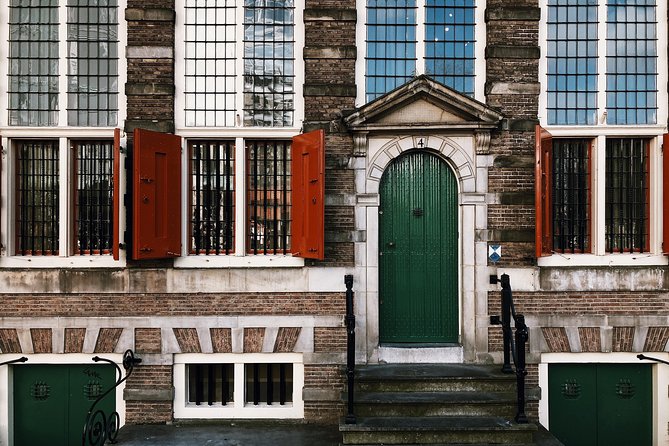
The day finishes at Museum Het Rembrandthuis, Rembrandt’s historical house and art museum, where he lived and worked between 1639 and 1656. This is about as direct a “follow the footsteps” stop as you can ask for, because you’re not just looking at Rembrandt’s paintings—you’re stepping into a place tied to his working life.
The tour notes that the museum’s collection includes Rembrandt’s etchings and paintings of his contemporaries. Even if you don’t consider yourself a hardcore Rembrandt fan, this last hour can be the most satisfying part because it turns the name on the label into a lived timeline: 1639 to 1656 is a specific span, and the house setting makes it easier to picture the work happening.
This stop lasts about 1 hour, and entry is free within the tour. That hour is also where small-group advantages show up: you’re more likely to get individual attention if you want help spotting what to look at, or if a certain artwork line of thought matters to you.
Price and value: what $287.18 buys you in real terms
At $287.18 per person for roughly 5 hours 30 minutes, this tour isn’t a bargain-basement deal. But it’s also not an overpriced “just walk around” experience. Here’s what you’re paying for, in practical terms:
- Skip-the-line priority admission for the Rijksmuseum experience
- Entrance fees are included
- A professional guide for a maximum of 8 people
- The structure includes city walking stops, then finishes at Rembrandt House Museum
- The tour runs rain or shine and includes a lunch break in the time estimate
If you value time, skip-the-line access is a big deal in a major museum. If you value context, the guided pacing and curated artwork selection matters. If you value a manageable group size, the max of 8 keeps it from turning into a herd.
Where the value question gets tricky is personal fit. If you hate walking, if museums aren’t your thing, or if you want a longer, slower Amsterdam experience with more open-ended browsing, you might feel the day is tightly scheduled. But for first-timers who want the big art anchors and then a guided city thread to connect it all, it’s priced like a “do it right” day rather than a casual stroll.
Who should book this tour (and who should skip it)
This tour is a strong fit if you want:
- A focused Amsterdam art day with major works like The Milkmaid and The Night Watch
- Less friction thanks to priority entry
- A guide who helps you understand what you’re seeing in both the museum and the streets
- A manageable small group size for questions and pacing
You might want to skip or rethink it if:
- You need wheelchair access or have walking limitations (the tour explicitly says it’s not recommended for wheelchairs or walking disabilities)
- You prefer long solo exploration time instead of structured stops
- You rely on large bags or suitcases (security limits inside the museum can be a hassle)
Should you book it?
Yes, if you want a guided day that’s built around Amsterdam’s two biggest Rembrandt connections—the Rijksmuseum highlights and Rembrandt’s house—plus a practical city walk to tie everything together. For first-timers, the tour’s real power is the pacing: you see the standouts, you get context for why they matter, and you leave with a mental map of the city.
If you’re the type who can’t stand tight schedules or you have mobility limits, look for a different format. But if you’re aiming for an efficient, thoughtful art-and-city day with priority access and a guide that can keep the story straight, this is an easy recommendation.
FAQ
How long is the tour?
It runs about 5.5 hours total (approx.), including a lunch break.
Is this a skip-the-line Rijksmuseum visit?
Yes. It includes skip-the-line access, with priority admission to help you avoid waiting in line.
What’s included in the price?
The tour includes the Rijksmuseum and Rembrandt House museum entrance fees, a professional guide, and the guided walking portion. Entrance fees are listed as included.
Where do we meet and where does it end?
Meet at Cobra Café, Hobbemastraat 18, 1071 ZB Amsterdam. The tour ends at Rembrandt House Museum, Jodenbreestraat 4, 1011 NK Amsterdam.
What language is the tour offered in?
The tour is offered in English.
How big is the group?
This experience has a maximum of 8 travelers.
Is it okay for wheelchair users or limited mobility?
No. The tour notes it is not recommended for walking disabilities or for wheelchair users.
How far in advance is it usually booked?
On average, it’s booked about 95 days in advance.
More Tour Reviews in Amsterdam






Indoors Done Well: More Amsterdam Museums






More Ways to See the Rijksmuseum





Just added: fresh Amsterdam tour reviews





Rijksmuseum Tours, compared.
 ★ 4.7Rijksmuseum Entry TicketFrom $3129,512 reviews
 ★ 4.5City Canal Cruise and RijksmuseumFrom $472,226 reviews
 ★ 4.5Rijksmuseum Amsterdam Small-Group Tour with Private UpgradeFrom $901,547 reviews
 ★ 4.3Rijksmuseum Entry Ticket and Canal Cruise ComboFrom $451,276 reviews
 ★ 4.3Go City Amsterdam Pass: Attractions Pass with RijksmuseumFrom $871,051 reviews
 ★ 5.0Rijksmuseum Amsterdam Exclusive Guided Tour w/ Reserved EntryFrom $108440 reviews
 ★ 5.0Van Gogh & Rijksmuseum w/ Reserved Entry Semi-Private 8ppl MaxFrom $288419 reviews
 ★ 5.0Van Gogh & Rijksmuseum w/ Reserved Entry Exclusive Guided TourFrom $288254 reviews
Browse the lists this tour appears in