
Reviewed · RIJKSMUSEUM TOURS
Rijksmuseum & Amsterdam City Center Semi-Private Tour 12ppl Max
Small groups beat big ones.
This semi-private tour mixes Rijksmuseum masterpieces with a guided walk through Amsterdam’s historic center. You get a museum deep start, then a smart route past the city’s major landmarks on foot.
I love the pace here. With a maximum of 8 guests, you’re not stuck waiting while a guide talks to someone else’s group. I also like that your Rijksmuseum time comes with entry handled up front, so you can focus on art and stories instead of lines.
One thing to consider: you’re walking cobblestones and historic lanes for hours. This isn’t built for wheelchair users or people who need step-free routes, so bring a good walking level and sensible shoes.
In This Review
- Key points before you go
- Semi-Private Size: Less Waiting, More Guide Time
- Rijksmuseum Entry Plan: Skip the Line and Get Oriented Fast
- Inside the Rijksmuseum: Rembrandt, Vermeer, and That 19th-Century Library
- The Midday Break: Lunch Is on You, So Plan Smart
- Amsterdam on Foot: Medieval Gates, Bridges, and the Way the City Works
- Churches and Old Walls: St. Nicholas Basilica, Weeping Tower, and Zeedijk
- Nieuwmarkt to the Waag: Market Energy and a 15th-Century Gatehouse
- Trippenhuis, East India Company Courtyard, and the Zuiderkerk Tower
- Canal Houses, Hofjes, and the Begijnhof Courtyard Calm
- Dam Square to Anne Frank House: Big Landmarks, Quiet Planning
- Ending at Karthuizerhof and Noorderkerk, Then Papeneiland
- Price and Value: What $286.56 Buys You (and Why It Can Be Worth It)
- Should You Book This Rijksmuseum and City Center Tour?
- FAQ
- Where is the meeting point and what time does the tour start?
- How long is the tour?
- Is the group small?
- What’s included in the price?
- Can I go back to the Rijksmuseum after the walking tour?
- Is lunch included?
- What if I need to cancel?
Key points before you go
- Max 8 guests means more personal attention and fewer delays
- Rijksmuseum entry is prebooked, helping you get in without the usual chaos
- A long guided route on foot covers canals, churches, squares, and hofjes
- Your ticket is valid all day, so you can return to the museum after the walk
- Lunch is on your own, but the plan still keeps the day moving
Other ways into the Rijksmuseum, compared
- Amsterdam: Rijksmuseum Entry Ticket
★ 4.7 · 29,512 reviews - Amsterdam: City Canal Cruise and Rijksmuseum
★ 4.5 · 2,226 reviews - Rijksmuseum Amsterdam Small-Group Tour with Private Upgrade
★ 4.5 · 1,547 reviews - Amsterdam: Rijksmuseum Entry Ticket and Canal Cruise Combo
★ 4.3 · 1,276 reviews
Semi-Private Size: Less Waiting, More Guide Time
Amsterdam is easy to fall in love with, but it’s also easy to feel rushed—especially around the big-name sights. This tour is designed to stop that problem. The group stays small (no more than 8), so you spend more of the day actually looking and listening, not just tracking where the group is headed next.
In a small group, you also get a better rhythm. The guide can answer quick questions, point out details without shouting, and adjust timing if someone needs an extra minute to read a plaque or catch a view. That matters at the Rijksmuseum, where you could easily burn half a day wandering randomly and still miss the most helpful context.
You should still expect a day with motion. It’s “rain or shine,” and it’s built around walking. If you’re prone to getting sore fast, I’d plan to stretch your legs during the lunch break and keep your pace steady on cobblestones.
Rijksmuseum Entry Plan: Skip the Line and Get Oriented Fast
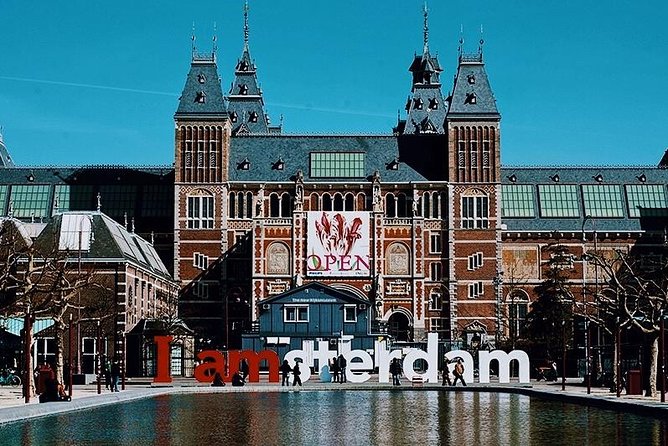
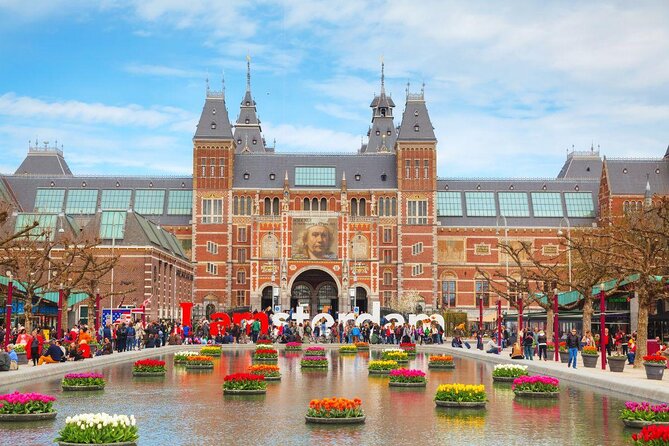
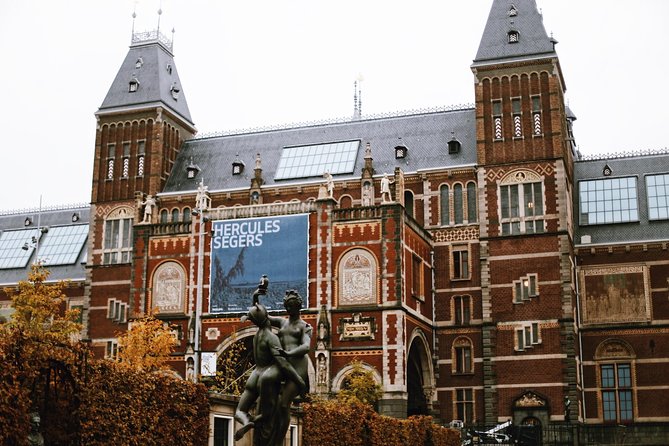
Your day starts at 10:00 am at the Rijksmuseum area, at the big I am Amsterdam sign outside the museum (then you’re guided from there). The goal is simple: get you inside early enough to feel in control.
The Rijksmuseum is often described as the Dutch version of a grand museum like the Louvre, but what makes it special is how it tells Dutch life through art and objects. The tour targets a selection of highlights from a collection that includes over 8,000 objects, then gives you names, themes, and context so your visit feels connected instead of scattered.
A big value point here: prebooking your entry. You’re still going through normal security and museum procedures, and some lines can form even when access is faster. But the plan is built to reduce the worst of the wait so you can get to what you came for.
You also get flexibility later. After the walking tour ends, your ticket stays valid all day, so you can return to the museum on your own time if there’s a room you want to revisit.
Inside the Rijksmuseum: Rembrandt, Vermeer, and That 19th-Century Library
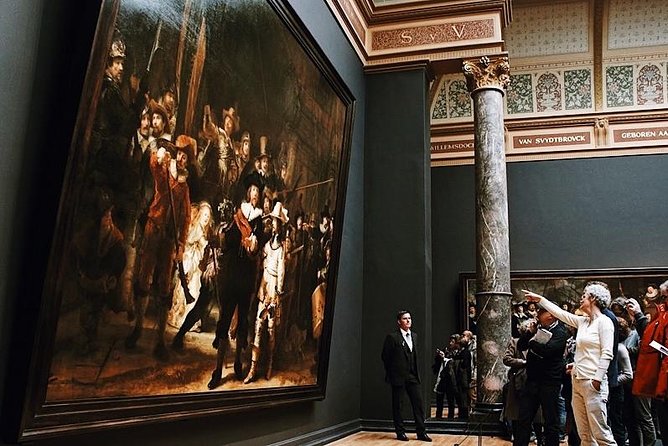
The museum portion runs about 2 hours 30 minutes, and it’s structured like a guided “getting your bearings” tour. The guide focuses you on key works and themes, especially around the Dutch Golden Age.
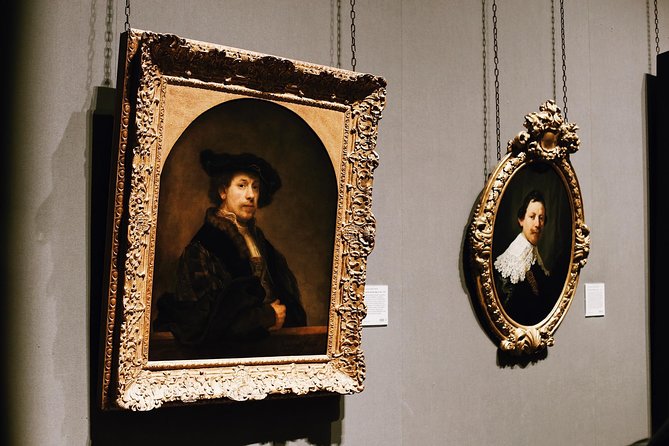
Expect plenty of Rembrandt and Vermeer. One highlight mentioned in the route is Vermeer’s The Milkmaid, plus discussion of Dutch domestic life through paintings and objects. You’ll also hear about Dutch art beyond the top posters—like 17th-century dollhouses, which are such a neat reminder that everyday life was worth serious attention back then.
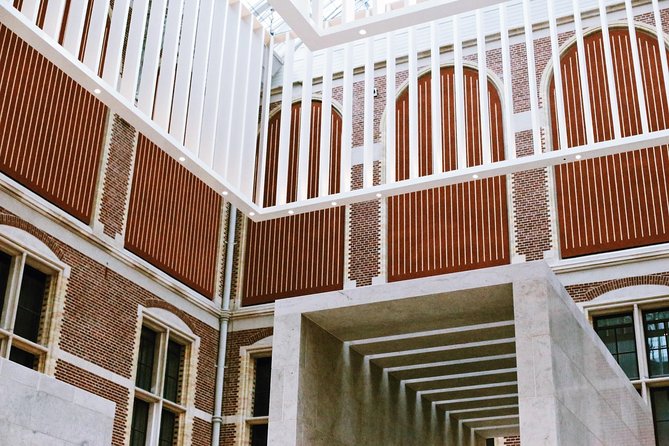
The tour doesn’t treat the museum like only paintings. It includes a stop for the 19th-century library—one of those spaces that can feel like a story machine. Even if books aren’t your thing, it’s a smart pause because it shifts you from “look at one masterpiece” to “see how culture was organized and preserved.”
Quick practical note: security rules matter. The museum doesn’t allow large bags or suitcases; you’ll need to stick to a handbag or small thin bag pack. Also, some rooms are quiet or have restricted speaking. The guide will explain the rules before you enter those areas, so you won’t feel awkward mid-sentence.
A small but useful bonus: by the end, you should be better at navigating the museum on your own—where to go next and how to connect what you see to the Dutch story you just heard.
The bigger picture: more Amsterdam city tours



The Midday Break: Lunch Is on You, So Plan Smart
After the museum, you get a lunch break where you’re on your own. That’s great in practice because you can choose what fits your budget and tastes—fast and casual, or sit-down and slow.
The practical downside: you’re starting fresh for the walking portion afterward. So don’t do the full gourmet marathon unless you’re built for it. Pick something close enough to get you back on track without stress.
If you want one move that makes the rest of the day easier: grab water and a snack you can eat quickly later. The route includes plenty of outside stops and photo windows, but you won’t be repeatedly stopping for long breaks.
Amsterdam on Foot: Medieval Gates, Bridges, and the Way the City Works
Once the museum time ends, the tour becomes a guided walk that’s meant to help you understand Amsterdam. The route connects historic layers—medieval walls, church culture, trade neighborhoods, and canal-era wealth—so the city doesn’t feel like a random list of pretty streets.
You’ll move through cobblestone lanes and across bridges, with stops timed for quick explanations and eye-level viewing. This is where a small group pays off again. With fewer people, you don’t have a huge pack blocking sidewalks or forcing constant stop-and-go crowd control.
The “Amstel” and medieval gate focus gives you a foundation for what you’re seeing. Amsterdam’s canals and bridges aren’t just scenery. They’re the backbone of how the city grew, traded, and defended itself.
One more thing: it’s a long day. Your best friend is steady shoes and a light mindset: you’re collecting impressions in motion, not trying to memorize every fact.
Churches and Old Walls: St. Nicholas Basilica, Weeping Tower, and Zeedijk
The first historic walking stops lean into religion, city defense, and community life.
St. Nicholas Basilica is where you start your outside-city narrative with a church tied to a political shift. It was built at the end of the 19th century, when Roman Catholics could again profess their faith in public after a long prohibition period. The building is described as a blend of styles and artistic movements—so you get a quick lesson in how architecture signals changing times.
Then you’ll see the Weeping Tower, also known as the Schreierstoren. It’s tied to the medieval city wall, but the story is the emotional part: the belief that women wept there when husbands left from the port for war or fishing. It’s one of those places where the city’s hard edges come through with a human angle.
Next is Zeedijk, the Chinatown area of Amsterdam. Here the guide frames the neighborhood as a street with markets, shops, and restaurants, plus a Zeedijk Buddhist temple that’s described as the largest Chinese-style Buddhist temple in Europe. Even in a quick stop, this helps you understand Amsterdam as a city with ongoing migration and community layers—not just a museum town.
Nieuwmarkt to the Waag: Market Energy and a 15th-Century Gatehouse

You’ll hit Nieuwmarkt, a square that’s been a center for commerce and social life since the 17th century. The key detail here is why it mattered: it sat just inside an old city gate, so traders and shoppers naturally used it as a meeting point for fresh produce and daily business.
From there, you’ll see De Waag. It’s a 15th-century building that originally served as part of Amsterdam’s city walls and gate system. Later roles include guildhall, museum, and even a firestation. That timeline is what makes this stop interesting. One building, multiple civic jobs—like the city repurposing itself as needs changed.
These stops are quick on purpose. You’re not stuck in one place too long, but you still get the “why it’s here” story so the streets make sense.
Trippenhuis, East India Company Courtyard, and the Zuiderkerk Tower

As the walk continues, you get architecture that shows how money shaped building style.
At Trippenhuis and its narrower neighbor, Klein Trippenhuis, you’ll see contrasting designs. The Trippenhuis is described as Amsterdam’s widest home at about 22 meters, while Klein Trippenhuis is one of the narrowest houses. The tour connects that narrowness to land taxes that favored tall, tight building footprints. It’s a practical reminder that city geography and taxation can show up right on a façade.
Then comes the Oost-Indisch Huis courtyard, linked to the Dutch East India Company. You’re shown the headquarters setting and told it’s connected to the birthplace of the world’s first multinational corporation. Even a short courtyard stop works because it ties Amsterdam’s art scenes to the trade networks that funded them.
Finally, Zuiderkerk gives you a Protestant landmark with a defining tower. The tour frames it as the first purpose-built Protestant church in Amsterdam, designed by Hendrick de Keyser. It’s the kind of sight that helps you understand the skyline, not just photograph it.
Canal Houses, Hofjes, and the Begijnhof Courtyard Calm
One of the nicest surprises on this walk is how often it slows down mentally, even when you’re moving physically.
Rembrandthuis is one of those “pass by, but notice” moments. You won’t spend long here, but you’re told it was Rembrandt’s home and workplace from 1639 to 1656, and that the museum collection includes Rembrandt’s etchings and paintings of his contemporaries. Even a brief sighting helps you connect the name you saw in the museum to a real place in the city.
Next, the Stopera (the building complex housing city hall and the Dutch National Opera and Ballet) shows you how Amsterdam planned big cultural space. The construction was described as a long project—at least 60 years—so it’s another reminder that city-scale planning takes patience, not just money.
Then you’ll see Huis aan de Drie Grachten, a rare 17th-century canal house with façades facing in three directions. It’s short, but it’s the kind of architectural oddity that makes you look up more often than you planned.
The most calming stop on this stretch is Begijnhof, a classic hofje (almshouse) built around a secluded courtyard and garden. The story here is the Beguines—unmarried women who lived together under vows of chastity. Today it’s also the site of two churches. This is where Amsterdam feels like it takes a breath, even if only for a few minutes.
Dam Square to Anne Frank House: Big Landmarks, Quiet Planning
After Begijnhof, the route goes into the “you’ve seen this on postcards” zone, but with guided context so it’s not just sightseeing.
Dam Square is one of the tour’s last big central stops. You’ll see major landmarks clustered there, including the Royal Place, New Church, and National Monument. The value of a guided stop is that the guide ties these buildings into Amsterdam’s civic identity, not just their faces.
Then comes Herengracht, specifically the Golden Bend of the canal. You’ll look at canal mansions lined along it, a reminder of the Dutch Golden Age wealth that shaped the city’s most dramatic streets.
You’ll also pause outside Anne Frank House. The tour keeps this respectful and brief—just enough time to make the connection to WWII history, then you move on to the next landmark. Nearby, you’ll see Westerkerk, noted in the route as having the tallest church tower in Amsterdam.
The stop at De Drie Hendricken on Bloemgracht adds a street-level art detail: gable stones carved with allegories and trade emblems. It’s a good moment to teach yourself to look up, because those carvings can turn a plain façade into a mini-history lesson.
Ending at Karthuizerhof and Noorderkerk, Then Papeneiland
The last stretch gives you hofje variety and a final architectural beat before a food-focused finish.
Coöperatieve Vereniging Karthuizerhof is described as the largest hofje in Amsterdam, built for the city’s poor and elderly around a tranquil courtyard. Hofjes are a big part of Amsterdam’s identity, and this stop helps you see that they’re not just quaint. They were real social structures.
Then Noorderkerk appears with an unusual cross-shaped floor plan, tied to Reformation ideals. It’s another “read the building” moment, not just a quick glance at a church.
Finally, the tour ends at Papeneiland on the Prinsengracht, with a mention of Het Papeneiland, a brown café from 1642 known for apple pie. The nice thing about ending here is you’re in a scenic canal spot where it’s easy to keep wandering after the tour concludes.
Price and Value: What $286.56 Buys You (and Why It Can Be Worth It)
At $286.56 per person for about 5.5 hours, this isn’t a budget stroll. But it’s not priced like a full-on private tour either. The value mainly comes from three things:
First, Rijksmuseum admission and a guided “best of” plan. Museums like this are expensive and time-consuming if you don’t know what to prioritize. The tour’s focus on key themes—Rembrandt, Vermeer, domestic life, and the 19th-century library—helps you leave with real context.
Second, semi-private group size. Paying more than a standard group tour makes sense when you’ll spend hours together in a focused setting. Less crowding usually means less wasted time.
Third, you’re getting a full walk of historic stops after the museum, including areas like Zeedijk/Chinatown and the hofjes. Many city walking tours stop at a few major sites. This one keeps moving through layers of Amsterdam: churches, gates, trade connections, and residential courtyards.
The one financial tradeoff: lunch isn’t included. That’s a small cost, but it can add up if you splurge. Still, it gives you flexibility instead of forcing a set menu you didn’t choose.
Should You Book This Rijksmuseum and City Center Tour?
I’d book this if you want the smartest first-day combo: Rijksmuseum priority + an organized Amsterdam walk that covers a lot without turning into a sprint. It’s especially a good fit for first-time visitors who want to understand what they’re seeing, not just take photos.
It’s also a solid choice if you’re traveling in a small group or as a couple/family and hate the big-bus feeling. The max 8-person format keeps the day practical and human—plus, the guide is set up for better interaction, and the museum part gets real attention.
Skip it (or plan differently) if you struggle with long periods of walking on uneven surfaces. This route is built for moderate fitness, and it’s not meant for wheelchairs.
If your priority is art plus a clear way to get oriented in the city, this tour is a strong, efficient option.
FAQ
Where is the meeting point and what time does the tour start?
The start time is 10:00 am. The tour information lists Cobra Café at Hobbemastraat 18 as the start point, and it also says you meet outside the Rijksmuseum at the letter I of the I am Amsterdam sign.
How long is the tour?
It runs for about 5 hours 30 minutes, with about 2 hours 30 minutes at the Rijksmuseum and time for the walking route plus a lunch break.
Is the group small?
Yes. It’s a semi-private tour with a maximum of 8 travelers.
What’s included in the price?
The tour includes a professional guide, the Rijksmuseum admission ticket, and all entrance fees. A mobile ticket is also provided. Lunch is not included.
Can I go back to the Rijksmuseum after the walking tour?
Yes. After the walking tour ends, your ticket is valid all day, so you can return to the Rijksmuseum on your own.
Is lunch included?
No. The tour includes a lunch break, but lunch is at your own expense.
What if I need to cancel?
You can cancel for a full refund up to 24 hours before the experience start time.
More Tours in Amsterdam






More Tour Reviews in Amsterdam






More Ways to See the Rijksmuseum


Just added: fresh Amsterdam tour reviews





Rijksmuseum Tours, compared.
 ★ 4.7Rijksmuseum Entry TicketFrom $3129,512 reviews
 ★ 4.5City Canal Cruise and RijksmuseumFrom $472,226 reviews
 ★ 4.5Rijksmuseum Amsterdam Small-Group Tour with Private UpgradeFrom $901,547 reviews
 ★ 4.3Rijksmuseum Entry Ticket and Canal Cruise ComboFrom $451,276 reviews
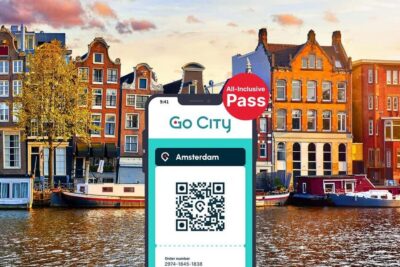 ★ 4.3Go City Amsterdam Pass: Attractions Pass with RijksmuseumFrom $871,051 reviews
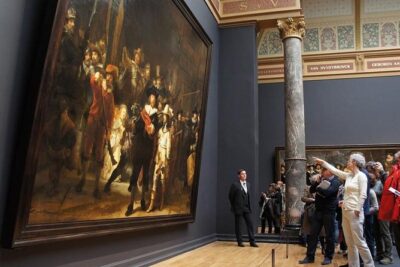 ★ 5.0Rijksmuseum Amsterdam Exclusive Guided Tour w/ Reserved EntryFrom $108440 reviews
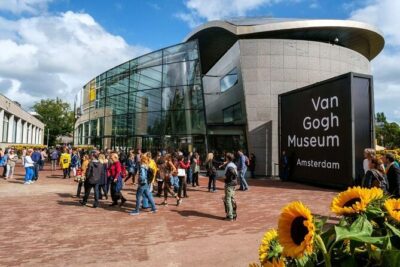 ★ 5.0Van Gogh & Rijksmuseum w/ Reserved Entry Semi-Private 8ppl MaxFrom $288419 reviews
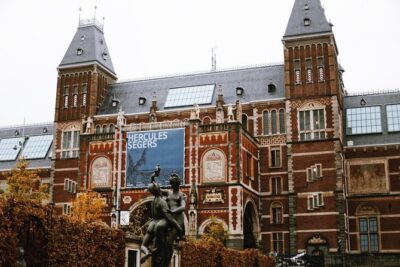 ★ 5.0Van Gogh & Rijksmuseum w/ Reserved Entry Exclusive Guided TourFrom $288254 reviews
Browse the lists this tour appears in