
Reviewed · AMSTERDAM
Explore hidden streets with friends
Amsterdam hides in plain sight. This walking tour is a smart way to get your bearings fast, then slip into side streets, courtyards, and churchyards most visitors never notice. You’ll learn why Beursplein mattered so much early on, cross the Canal Ring, and spend real time in the Jordaan.
What I like most is the mix of headline landmarks with quieter “how did this place work?” details. You’ll also get the benefit of a small group (max 10) and a guide who keeps things conversational, including lots of time for questions like Michael and Christian do in their tours.
One drawback to plan for: you’ll be walking for about 2.5 hours over roughly 4 km, so this is best for people who enjoy steady urban strolling more than frequent sit-down breaks.
In This Review
- Key highlights at a glance
- How Amsterdam’s hidden streets tour helps you read the city
- Beursplein origins: where Amsterdam’s trading story starts
- Dam Square and the town hall area: history tied to public life
- Crossing the Canal Ring: medieval expansion, explained on foot
- Nine Streets: shopping lanes that feel local, not tour-bus loud
- The Jordaan experience: hidden lanes, squares, and real neighborhood texture
- Karthuizerhof courtyard: widows, social housing, and a quiet pause
- Westerkerk and Rembrandt: merchants’ power and a famous burial
- What makes the guides’ style work: Michael and Christian in the spotlight
- Small group size and your ability to ask real questions
- Price and value: is $52.81 worth it?
- Practical walking tips before you go
- Who this Amsterdam walk suits best
- Should you book this hidden streets tour?
- FAQ
- How long is the hidden streets walking tour?
- Where does the tour start and end?
- How far will I walk?
- What group size should I expect?
- Is the tour offered in English?
- What are some of the key places you’ll see?
- Are there any paid admission tickets during the walk?
- What is the cancellation policy?
- Is this tour suitable if I need accessibility help?
Key highlights at a glance
- First stock market storytelling at Beursplein gives Amsterdam context right from the start
- Canal Ring crossing explains medieval expansion patterns without turning into a lecture
- Nine Streets + Jordaan lanes show shopping and daily life away from the biggest crowds
- Courtyard stop at Karthuizerhof connects architecture to social history (widows, 1650)
- Westerkerk and Rembrandt’s connection add weight to the church stop beyond photos
- Pass-by areas around Anne Frank House help you understand the neighborhood framing
Weighing your options? Here is how a few other Amsterdam tours compare.
- Amsterdam: Heineken Experience Ticket including 2 Drinks
★ 4.6 · 36,014 reviews - Amsterdam Classic Saloon Boat Cruise with Drinks and Cheese
★ 5.0 · 31,825 reviews - Amsterdam Luxury Canal Cruise + Unlimited Drinks & Bites option
★ 5.0 · 30,518 reviews - Amsterdam: Rijksmuseum Entry Ticket
★ 4.7 · 29,512 reviews
How Amsterdam’s hidden streets tour helps you read the city
I love tours that teach you how to look. This one does that by layering Amsterdam’s big turning points—trade, governance, neighborhoods—with the small physical things you can actually see: canal bends, narrow lanes, courtyards tucked behind facades.
You’ll also get a practical benefit: by the time you finish, you’ll know where you are and why that matters. Instead of wandering the Jordaan like a maze, you’ll understand how the area shaped daily life, and you’ll spot the kinds of details that make Amsterdam feel oddly personal even when it’s crowded.
The small group cap (up to 10) is not just a comfort perk. It’s what makes the guide’s back-and-forth style work—so you can ask why a square, a church, or a courtyard ended up exactly where it did.
Beursplein origins: where Amsterdam’s trading story starts
You begin at Beursplein 1-3, right by the heart of the city’s historic financial zone. The tour starts with the origins of Amsterdam and spotlights the world’s first stock market, which sets up everything else you’ll hear later about merchants, wealth, and how the city grew.
From there, the walk shifts toward the central public spaces that helped run the city. You’ll hear why the area around the central square matters, then you’ll pass by a major building that originally served as the town hall of Amsterdam—one of those landmarks where the exterior alone doesn’t tell the whole story.
If you’re the type who likes your sightseeing connected to cause and effect, this start is a win. It frames Amsterdam not as postcard scenery, but as a trading-and-governance machine that shaped streets, buildings, and neighborhoods.
Dam Square and the town hall area: history tied to public life
A lot of tours hit the big sights and move on. Here, the central-square portion is used to explain how the city organized power and community space—so you understand what you’re looking at when you’re standing there.
You’ll also get guided context for the building’s original role as the town hall. That detail matters because Amsterdam’s identity is closely tied to civic life—what gets built where, and who it serves.
For some people, the central area can feel overwhelming. The trick is that this tour uses it as a foundation, not a final destination. Once you understand the “why,” the later side streets feel more meaningful instead of random.






Crossing the Canal Ring: medieval expansion, explained on foot
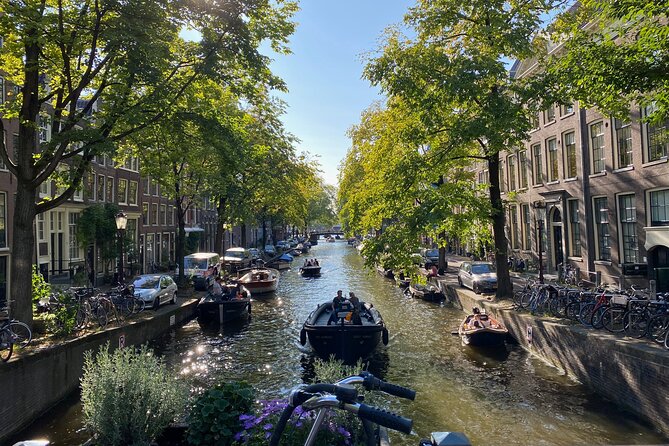
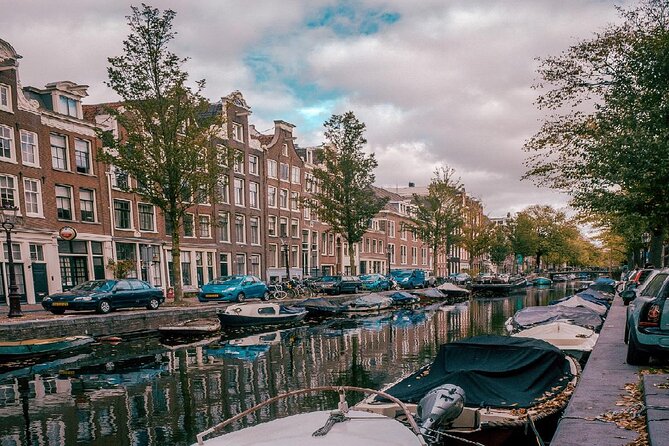
Next comes the Amsterdam Canal Ring crossing, with about an hour devoted to how the city extended during medieval times. You’re not just shown canals; you’re taught how Amsterdam’s growth patterns affected where people lived, where trade flowed, and how the city planned its connections.
This stop is also a great moment to catch the city’s rhythm. Canals here are not only scenery—they’re part of how Amsterdam organizes movement and land use, which is why the tour keeps it in the middle of the route rather than saving it for a quick photo moment.
The itinerary lists admission ticket free for this segment, which is reassuring if you prefer learning that doesn’t require adding more paid entries. You get the educational payoff without the hassle of ticket lines.
Nine Streets: shopping lanes that feel local, not tour-bus loud
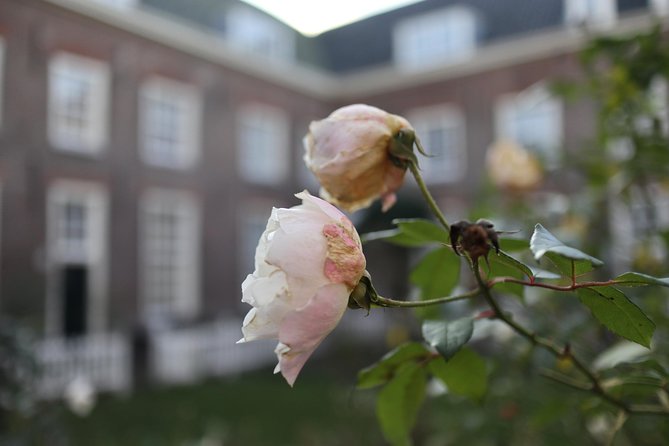
After the canal segment, you’ll move into a quieter shopping pocket known as the Nine Streets. The idea is simple and valuable: this area has become a cozy zone for shopping while steering you away from the worst of tourism crowds.
What you’ll notice isn’t just storefronts. It’s the scale and layout—narrow streets, side connections, and the way the neighborhood breathes at human speed. If your Amsterdam goal is to feel how people actually live between monuments, this section helps you shift modes from “sightseeing” to “wandering with purpose.”
Practical tip: go into this part ready to slow down. The Nine Streets reward careful walking and small pauses because the charm is in how the streets fold into each other.
The Jordaan experience: hidden lanes, squares, and real neighborhood texture
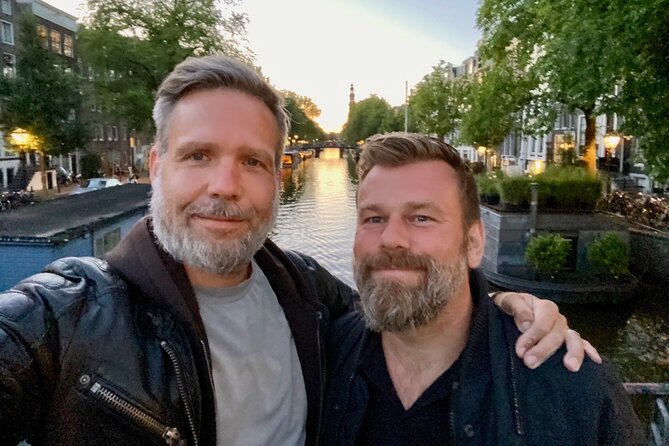
The tour’s longest “neighborhood chapter” is the Jordaan, where you’ll spend about 1 hour 20 minutes discovering hidden streets and squares. This is the area presented as remaining authentic Amsterdam, and the route is built to show you courtyards and side spaces that feel tucked away.
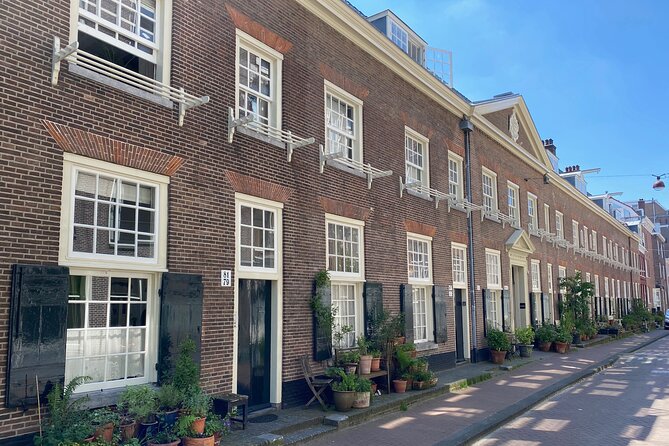
This is where the tour really earns its title. It doesn’t just point out pretty streets; it helps you understand why the Jordaan still reads like a working neighborhood. You’ll see how the city’s history shaped everyday layouts—streets that don’t feel like they were designed for crowds.
A memorable highlight here is the church for the poor, explained with why it was constructed exactly where it was. Even if you don’t enter the church, the guided explanation makes the building’s location feel logical rather than random.
You’ll also pass by the Anne Frank House area during the Jordaan stroll. You don’t need a full museum visit to benefit from this pass-by moment; it helps anchor the broader neighborhood context so you understand where personal stories sit inside a living city.
Karthuizerhof courtyard: widows, social housing, and a quiet pause
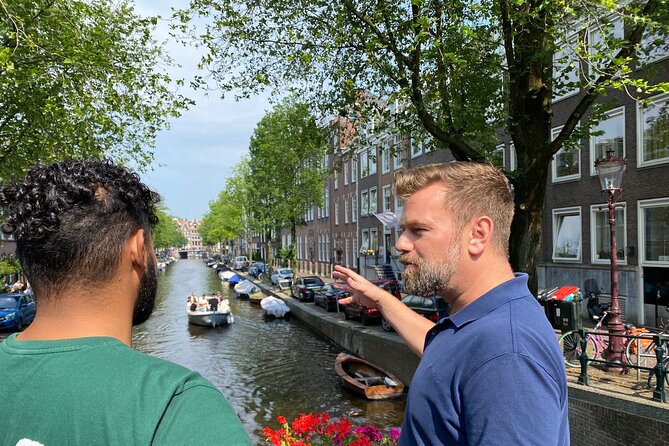
One of the most specific stops on the walk is Karthuizerhof, a courtyard constructed in 1650 for widows. The tour frames it as one of the first social housing projects in the world, which is heavy material, delivered in a place that still feels calm and enclosed.
This 10-minute courtyard stop is short on purpose. It’s a reset button. Between busier streets, you get a small window into how Amsterdam supported vulnerable residents through organized housing—long before modern social programs.
If you care about architecture that isn’t just pretty but also functional, this is the kind of stop that makes the whole tour click. Courtyards like this can look “just old” if you pass them without guidance. With context, they feel like a solution someone built for real lives.
Westerkerk and Rembrandt: merchants’ power and a famous burial
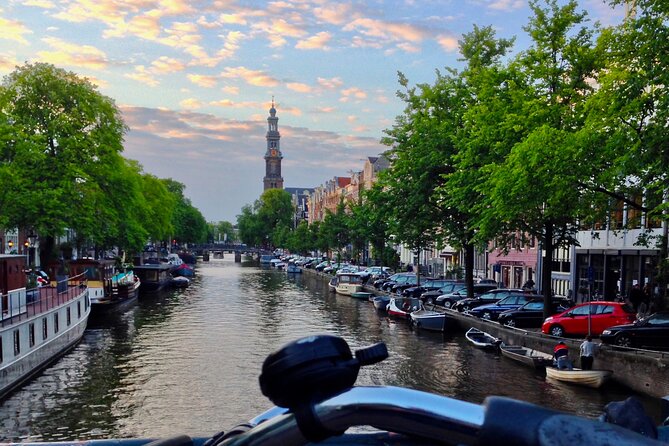
As you work through the Jordaan area toward the end, you’ll reach Westerkerk, described as a marvel church built by the rich merchants of Amsterdam. This is a chance to see how wealth expressed itself in stone, scale, and religious architecture.
The guide also connects the church to Rembrandt, noting that Rembrandt was buried here. That’s the kind of fact that changes how you view the building. It’s no longer just a big church on a skyline—it’s part of a bigger network of power and legacy.
Even if you’re not a church person, this stop is worth it because it ties back to the tour’s opening theme: Amsterdam grew because trade and money drove decisions. Westerkerk is a visible result of that mindset.
What makes the guides’ style work: Michael and Christian in the spotlight
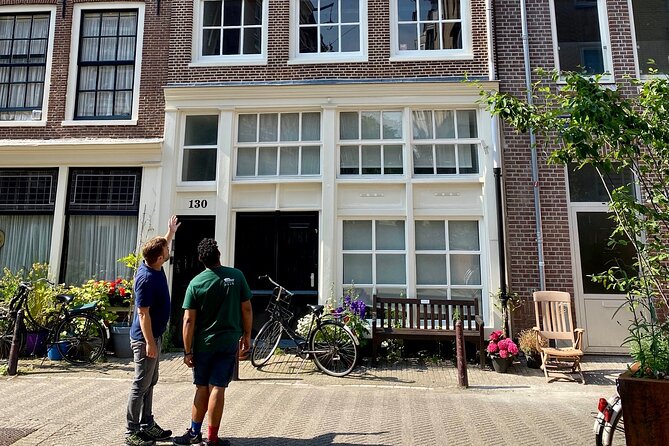
Two guide names pop up repeatedly: Michael and Christian. Both are praised for an informal, conversational approach that doesn’t sand off the details. The result is a tour that feels like a guided walk with a smart friend who genuinely enjoys the subject.
I especially like how the guides handle questions. If you drift from the exact topic, the guides are described as not shutting you down, but instead answering and connecting ideas. That flexibility is what keeps a 2.5-hour walk from turning into a script.
Another strength: the pace. You’ll hear feedback that the tour doesn’t rush. On a walking route with courtyards and churches, rushing is the enemy. Slow walking means you actually notice what you’re being told to notice.
Small group size and your ability to ask real questions
With a maximum of 10 travelers, you’re not lost in a crowd. You can ask follow-ups, and the guide can adjust the pace if the group has energy for more detail.
For people traveling with friends, this is especially useful. You’ll be able to compare notes with your group and still get individual attention rather than being swept along.
For solo travelers, it can feel like the difference between “joining a tour” and “having a guided conversation.” If you’re the type who asks, Why did that happen here? you’ll probably enjoy the format.
Price and value: is $52.81 worth it?
At $52.81 per person, you’re paying for a guided experience that lasts about 2 hours 30 minutes and covers several major-and-minor stops without an overwhelming museum-ticket add-on. The value is strongest if you want explanation, not just movement.
There are also hints of “cost control” baked into the structure. The itinerary marks admission ticket free for several key points, which suggests you won’t be hit with extra entry fees during the walk.
Most importantly, the tour’s value is in how it combines three things that are hard to get in one go: a clear introduction to Amsterdam’s origins, a walk through the Canal Ring and central square, and then a real dive into the Jordaan’s smaller lanes and courtyards.
And booking tends to happen early—on average, this tour is booked about 65 days in advance. That’s a sign it fits a popular planning window, especially for travelers who want a first-day orientation that still stays away from the most crowded sights.
Practical walking tips before you go
This experience asks you to walk about 2.5 miles / 4 km and stay on your feet for roughly 2.5 hours. Plan for a steady pace, not a stop-and-start shuffle.
Wear comfortable shoes you trust on cobblestones and uneven sidewalks. Bring layers for Amsterdam weather shifts, since the canal area can feel cooler than you expect.
The route ends at Elandsgracht after starting at Beursplein 1-3. If you’re planning dinner afterward, pick something nearby so you don’t spend your good mood fighting transit.
One more practical note: the tour is offered in English, is designed for most travelers, and service animals are allowed. It’s also stated as near public transportation, which makes it easier to tack onto the rest of your day.
Who this Amsterdam walk suits best
You’ll likely love this tour if you want a balanced Amsterdam day: big-picture context plus small street-level detail. It’s a good choice for first-timers who need bearings, and also for return visitors who want to see the city through a different lens than the usual canal-photo circuit.
It’s also ideal if you travel with friends and like talking while you walk. The format is built for conversation, not silent head-down touring.
If you’re looking for a super-fast highlight reel, you might feel it’s more thoughtful than urgent. But if you like your history tied to buildings you can stand in front of, this hits a good sweet spot.
Should you book this hidden streets tour?
If your ideal Amsterdam includes the Canal Ring, the Jordaan, and courtyards you’d never stumble into on your own, I’d book it. The price feels fair for a guide-led 2.5-hour route with free-entry style stops, a max 10 group size, and storytelling that stays human and conversational.
My only hesitation for some people is the walking time. If you want minimal walking or you need frequent long breaks, you may want a shorter option.
If not, this is one of those tours that makes the city feel more readable the moment you start walking—and keeps that feeling going until the last stop near Elandsgracht.
FAQ
How long is the hidden streets walking tour?
It’s approximately 2 hours 30 minutes.
Where does the tour start and end?
It starts at Beursplein 1-3, 1012 JW Amsterdam, Netherlands, and ends on Elandsgracht, Amsterdam.
How far will I walk?
You should be able to walk about 2.5 hours over a distance of 2.5 miles / 4 km.
What group size should I expect?
The tour has a maximum of 10 travelers.
Is the tour offered in English?
Yes, it’s offered in English.
What are some of the key places you’ll see?
You’ll learn about Amsterdam’s origins and the world’s first stock market, explore Dam Square and a historic town hall building, cross the Canal Ring, spend time in the Nine Streets and the Jordaan, visit Karthuizerhof, pass by the Anne Frank House, and see the Westerkerk.
Are there any paid admission tickets during the walk?
The itinerary lists admission tickets as free for the Canal Ring stop and other listed stops.
What is the cancellation policy?
You can cancel for free up to 24 hours before the experience starts for a full refund.
Is this tour suitable if I need accessibility help?
Service animals are allowed, it’s near public transportation, and most travelers can participate, but it does require the ability to walk about 2.5 hours.










