

Reviewed · CITY TOURS
e-Scavenger hunt Amsterdam: Explore the city at your own pace
Riddles turn Amsterdam into a game. This e-Scavenger hunt gets you exploring at your own pace, starting whenever you choose and routing you through major landmarks with smartphone-based tasks. I like the no-fixed-time flexibility and I especially like the riddle format that keeps kids (and adults) busy while you walk. One thing to consider: you’ll need your own smartphone and data, since those aren’t included.
You’re looking at about 3 hours of walking fun, with the core trail designed to guide you in roughly 2 hours. The good news is you can pause, stop, and resume—there’s no rush imposed on you—so you can handle crowds, weather, or a longer café break without derailing the day.
In This Review
- Key things that make this hunt worth your time
- Why the Qula e-Scavenger Hunt feels different in Amsterdam
- Price and group value for a 3-hour self-guided trail
- Stationsplein start: no fixed times, no time limit
- How the smartphone city trail actually works (and what you should prep)
- The route: from Canal Ring to De Wallen, with museums and neighborhoods in between
- Stop 1: Canal Ring (Grachtengordel)
- Stop 2: Anne Frank House
- Stop 3: Westerkerk
- Stop 4: Dam Square & Damstraat
- Stop 5: Old Center
- Stop 6: Royal Palace Amsterdam
- Stop 7: Rijksmuseum
- Stop 8: Van Gogh Museum
- Stop 9: The Jordaan
- Stop 10: Centraal Station
- Stop 11: Amsterdam Canal Ring
- Stop 12: Herengracht
- Stop 13: Red Light District (De Wallen)
- Stop 14: Leiden Square (Leidseplein)
- When Amsterdam gets busy: using the pause button and pacing the group
- Who should book this hunt (and who might not love it)
- Should you book the Qula e-Scavenger hunt in Amsterdam?
- FAQ
- How much does the e-Scavenger hunt in Amsterdam cost?
- How long does the trail take?
- Where do you start and end?
- Can I start at any time of day?
- Do I need a smartphone?
- Is it a private experience?
- What languages are available?
- Is there free cancellation?
Key things that make this hunt worth your time
- Start anytime (24/7): no reservations or set start times—pick your moment.
- Built for groups up to 6: split the cost with friends or family and keep the teamwork energy up.
- Smartphone trail with riddles: you’re solving assignments as you move between classic spots.
- Multi-language support: available in several major European languages.
- A looped route: it returns to the same meeting point, so planning is simpler.
The bigger picture: more Amsterdam city tours
- Amsterdam: 75 Minute City Canal Cruise with Audio Guide
★ 4.4 · 19,938 reviews - Amsterdam: City Centre Canal Cruise including Audioguide
★ 4.3 · 16,901 reviews - Amsterdam: Smoke and Lounge City Boat Cruise
★ 4.7 · 8,572 reviews - Amsterdam: City Card with Free Entrance & Public Transport
★ 4.3 · 4,145 reviews
Why the Qula e-Scavenger Hunt feels different in Amsterdam
Amsterdam is famous for “just walking and looking,” but that can turn into aimless wandering—especially when you’re traveling with kids or a group with different moods. This trail adds a structure that feels light. You’re not herded by a strict schedule. Instead, you’re working toward the next clue while still seeing the city up close.
What makes it work is that the route covers the kind of sights most people come for—canals, museums, and the historic center—while the riddles nudge you to look harder than you would on a casual stroll. The competition angle (trying to get a top score) is also a solid trick. It turns “we’re just walking” into “we’ve got a mission,” and that’s exactly the energy families need.
The other big win: you can start and stop whenever you want. Amsterdam days can get messy fast—rain, long lines, or simply hitting a crowd. This format lets you adapt without losing the whole plan.
Price and group value for a 3-hour self-guided trail
The price is $37.29 per group, up to 6 people. That matters because this isn’t priced like a per-person guided tour. It’s closer to a shared activity.
Here’s the practical way to think about value:
- If you use the full group size (6 people), you’re paying about $6.22 per person for roughly a 2–3 hour walk-and-game.
- If you’re a smaller group (say 2 people), it’s closer to $18.65 per person, which is still reasonable if you’re the type who enjoys exploring on foot and solving interactive prompts.
You’re not buying a live guide’s time. You’re buying a game layer plus a mapped route that keeps you moving through key areas. If your group likes wandering anyway, this adds entertainment without adding big cost.
Stationsplein start: no fixed times, no time limit
Your starting point is Stationsplein, 1012 AB Amsterdam, and the activity ends back at the meeting point. That round-trip setup is more helpful than it sounds. You don’t need to coordinate complicated logistics across the city—you just work your way through the trail and return to where you began.
Opening hours run 24/7, from midnight to 11:59 PM. In real life, that means you can:
- start early to beat crowds,
- switch to an afternoon slot if morning plans fall apart,
- or even do it later in the day if that fits your Amsterdam rhythm.
You also get true flexibility: there’s no time limit, and you can start, pause, and stop whenever you want. If someone in your group needs a break, wants to duck into a shop, or has to warm up indoors, you won’t feel like you’re failing a timed race.






How the smartphone city trail actually works (and what you should prep)
After booking, you receive an email with instructions to play the trail on your smartphone (Android or iPhone compatible). Once you’re at the starting point, you begin your quest through the city.
There are two practical items you should plan for before you go:
- Bring a smartphone you’re comfortable using for reading prompts and following directions.
- Plan for data (smartphone & data are not included).
If you’ve ever tried to navigate Amsterdam with a weak signal, you already know why this matters. You don’t need constant streaming or video. But you do need reliable connectivity so the trail can load and you can keep going from clue to clue.
The trail is also available in multiple languages (English, German, French, Dutch, Spanish, Italian, and more). That’s a big deal for mixed-language families or groups where everyone wants to understand the prompts without sharing translations.
One more practical note: it’s described as private, with only your group participating. So you’re not squeezed into someone else’s pacing or competing with strangers for attention.
The route: from Canal Ring to De Wallen, with museums and neighborhoods in between
This city trail runs as a walking loop through 14 stops. It covers the “big icons,” but also threads through different sides of central Amsterdam, which helps keep the day from feeling like one long photo line.
Below is what each stop tends to offer—and where it can be tricky.
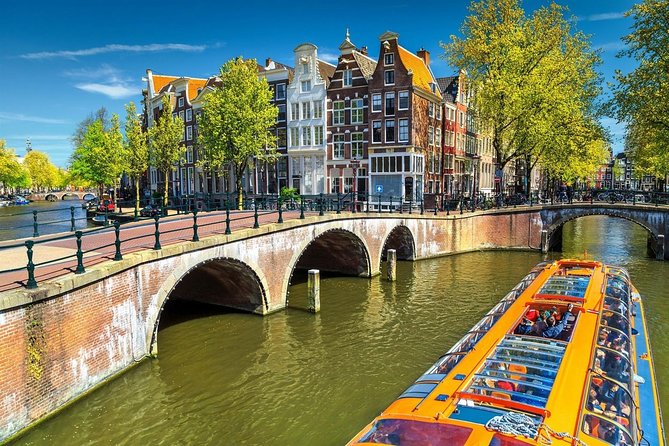
Stop 1: Canal Ring (Grachtengordel)
You start with the canals, which is smart. It sets the tone for Amsterdam: water, bridges, and classic façades. It also gives you visual reference points early, so later navigation feels easier.
A consideration: canal-ring areas can be crowded in peak hours, so if you’re doing this during busy times, keep your pace steady and don’t let the group bunch up.
Stop 2: Anne Frank House
This stop pulls you into one of the most emotionally significant Amsterdam landmarks. It’s a reminder that the city’s history isn’t just architecture—it’s people and stories tied to real places.
Practical tip: since this is a major site, expect foot traffic around the area. The trail’s game format helps here because you’re not just standing there waiting—you’re moving between prompts.
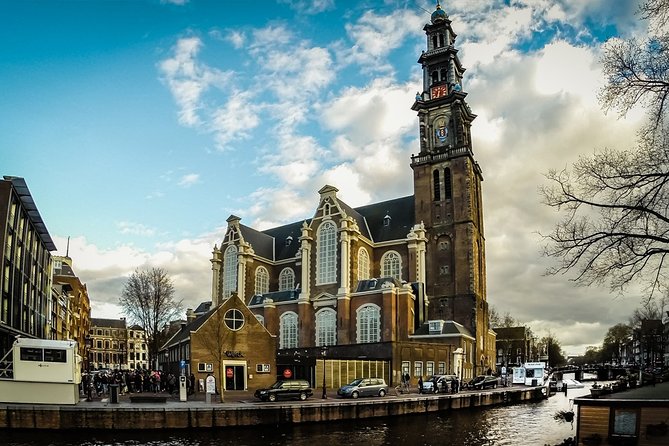
Stop 3: Westerkerk
Westerkerk is a prominent church landmark that gives the route variety. After the intense historical stop, it works well as a reset: you shift from story and memory to a sense of place and skyline.
Potential drawback: if the weather is bad, the open surroundings can feel chilly—so have a backup plan like a warm drink break when you finish the clue sequence.
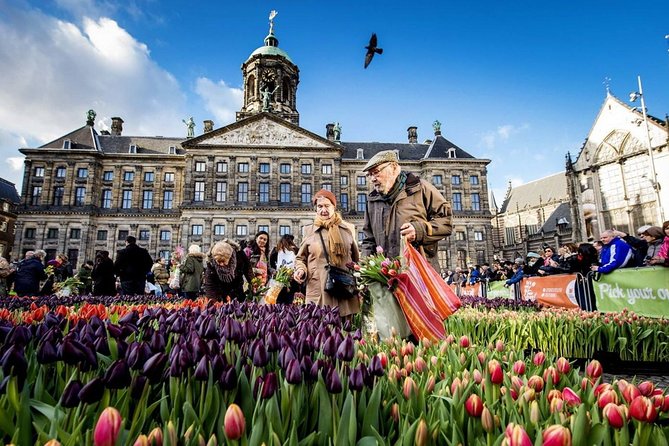
Stop 4: Dam Square & Damstraat
This is Amsterdam’s classic central hub. Dam Square and Damstraat are where the city’s energy shows up: foot traffic, shopping streets, and the feeling of being right in the middle of things.
Consideration: this is often busy. Your “game” approach is helpful because it keeps you focused on the next task instead of getting pulled into random detours that don’t match your timing.
Stop 5: Old Center
The trail then threads into the older core—exactly where Amsterdam’s street layout rewards slow walking. This is the part that tends to feel most like exploring, since you’re not only aiming for landmarks.
One drawback: the streets can be easy to navigate poorly if you’re rushing. The trail helps by guiding you, but your group should still stay alert to directions on the phone.
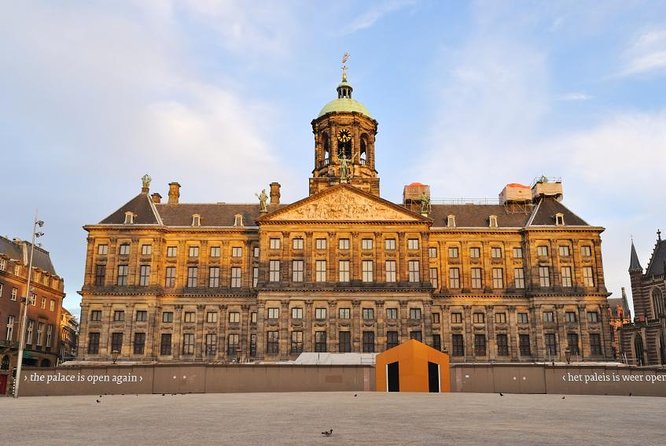
Stop 6: Royal Palace Amsterdam
This is the kind of stop that’s great for first-timers and still interesting for repeat visitors. Even if you’ve seen photos, seeing it in person gives you scale—how grand Amsterdam’s center can feel.
Practical note: the area around major civic buildings can be crowded. If you’re with kids, use the trail’s teamwork aspect: take turns reading clues and solving, so everyone feels involved.
Stop 7: Rijksmuseum
Rijksmuseum brings you into the art-museum big leagues. It’s one of the defining Amsterdam stops, and it adds cultural weight without turning the whole day into museum-only time.
Possible consideration: museum-adjacent streets can get jammed. If you hit that, rely on the trail’s structure to keep the group moving rather than lingering too long at the sidewalks.
Stop 8: Van Gogh Museum
This is a second major art landmark, which makes sense: two museum stops back-to-back give you a strong “cultural” arc in the middle of the hunt.
If your group isn’t museum-heavy, this segment is still worth it because the trail turns landmark time into problem-solving time, not just standing-and-looking.
Stop 9: The Jordaan
The Jordaan shifts the vibe. Instead of only monuments and museums, you’re walking through a more neighborhood-feeling stretch. That’s where Amsterdam starts to feel lived-in.
Consideration: neighborhood streets can be narrow. Keep your group compact so you don’t block others—or get separated during clue hunts.
Stop 10: Centraal Station
This stop is practical and dramatic. Centraal Station is a huge visual anchor in the city and it also changes how people experience the center—you feel the transit pulse.
One drawback: the station area can be hectic. If you’re doing this with kids, make sure everyone knows to stay together when you’re near escalators and exits.
Stop 11: Amsterdam Canal Ring
Back into the canals again—this time it feels like part two of the “Amsterdam is water” story. The repeat theme can be surprisingly useful: it gives you a chance to compare different canal stretches and street angles.
If you’re very familiar with Amsterdam already, this might feel a bit repetitive. Still, the trail’s prompts are what make it move forward instead of becoming another scenery lap.
Stop 12: Herengracht
Herengracht is where you start getting more of that classic canal-side grandeur. It’s a strong “walk-and-look” segment, especially if you enjoy architecture and the slow rhythm of canal bridges.
Practical tip: bring your best walking shoes. This is a “small steps add up” kind of route, and the trail keeps you moving rather than giving you lots of sit-down time.
Stop 13: Red Light District (De Wallen)
This stop is the most sensitive one on the route, so handle it thoughtfully. It’s an adult-oriented area, and it can feel intense in a way that’s different from museums and memorials.
Good news: because the trail keeps you on task, you can engage from a respectful distance and move along once your clue work is done. Keep your group together and avoid lingering if it’s not a topic your family enjoys.
Stop 14: Leiden Square (Leidseplein)
You finish near Leidseplein, which is a strong place to end the walk. It gives you an easy spot to grab a snack or plan what comes next without needing to travel across town.
A consideration: depending on timing, the area can be busy. Ending with crowds can be fun or stressful—so check your pace and plan your post-hunt dinner.
When Amsterdam gets busy: using the pause button and pacing the group
Amsterdam can be a lot—crowds, cyclists, construction, and sudden sidewalk squeeze points. The smartest way to enjoy this hunt is to treat it like a flexible route, not a race.
Here’s how I’d manage the day:
- Plan for slower walking than you think you need. Even with a trail designed for about 2 hours of guided routing, a group of friends or a family can stretch it to the full 3 hours.
- Use pauses as part of the game. If it starts raining or someone is cold, you don’t have to “power through” to keep up.
- Stay organized as a team. Assign roles: one person reads the clue, one checks the map on the phone, and everyone else keeps walking. It cuts down on confusion.
Also, your results may depend on your group’s tolerance for puzzles. If you want the most fun, embrace the silly bits and keep things moving even when you don’t get a clue instantly.
Who should book this hunt (and who might not love it)
This trail is a great fit if you want a self-guided Amsterdam day with an interactive layer. It’s especially useful for:
- families who need structure to keep kids engaged,
- friend groups who enjoy friendly competition,
- travelers who like learning in small chunks while walking between major sights.
It may feel less exciting if you already know Amsterdam extremely well and you’re hoping for brand-new information at every stop. In that case, the main value is still the scavenger-game experience and the route convenience, but the “surprise factor” can be smaller.
If you’re sensitive to adult-area topics, use judgment around De Wallen. The trail does include it, so you’ll want to decide in advance how your group wants to handle that part of the walk.
And since it’s designed to be user-friendly for hearing impaired travelers and works with a smartphone format, it’s a practical option for a range of needs—just remember that you still need your own device and data.
Should you book the Qula e-Scavenger hunt in Amsterdam?
Book it if you want:
- an affordable, shared activity for up to 6 people,
- a route that hits the main Amsterdam highlights without locking you into tours or start times,
- and a fun way to keep everyone walking and looking.
Skip it if:
- you hate puzzle games or you need a live guide to keep things going,
- you don’t want to rely on your phone and connectivity,
- or your group strongly prefers to avoid adult-oriented areas like De Wallen.
If your goal is a hands-on, flexible Amsterdam day—one that turns sightseeing into a mission—this is a smart use of a few hours.
FAQ
How much does the e-Scavenger hunt in Amsterdam cost?
It costs $37.29 per group (up to 6 people).
How long does the trail take?
It takes about 3 hours (approx.). The trail guides you along the best spots within about 2 hours, but you can keep going as you like since there’s no time limit.
Where do you start and end?
You start at Stationsplein, 1012 AB Amsterdam, Netherlands. It ends back at the same meeting point.
Can I start at any time of day?
Yes. The trail is available 24/7, and you pick your own day and time. There are no fixed starting times.
Do I need a smartphone?
Yes. You play on your smartphone, and the smartphone is not included. The tour also notes that data isn’t included.
Is it a private experience?
Yes. It’s a private tour/activity, and only your group participates.
What languages are available?
The trail is offered in multiple languages including English, German, French, Dutch, Spanish, Italian, and more.
Is there free cancellation?
Yes. You can cancel for a full refund if you cancel at least 24 hours before the experience starts. If you cancel within 24 hours, it’s not refunded.
If you want, tell me who’s in your group (ages and how many people) and when you plan to go, and I’ll suggest the best way to time this hunt for crowds and energy.
Amsterdam Highlights in a Single Day






More Tour Reviews in Amsterdam






Just added: fresh Amsterdam tour reviews





City Tours, compared.
 ★ 4.475 Minute City Canal Cruise with Audio GuideFrom $1819,938 reviews
 ★ 4.3City Centre Canal Cruise including AudioguideFrom $1716,901 reviews
 ★ 4.7Smoke and Lounge City Boat CruiseFrom $278,572 reviews
 ★ 4.3City Card with Free Entrance & Public TransportFrom $794,145 reviews
 ★ 4.6Van Gogh Museum Ticket and City Canal CruiseFrom $473,899 reviews
 ★ 4.4City Canal Cruise and Heineken ExperienceFrom $443,133 reviews
 ★ 4.5City Canal Cruise and RijksmuseumFrom $472,226 reviews
 ★ 4.7Relaxed City Highlights Guided Bike TourFrom $341,069 reviews